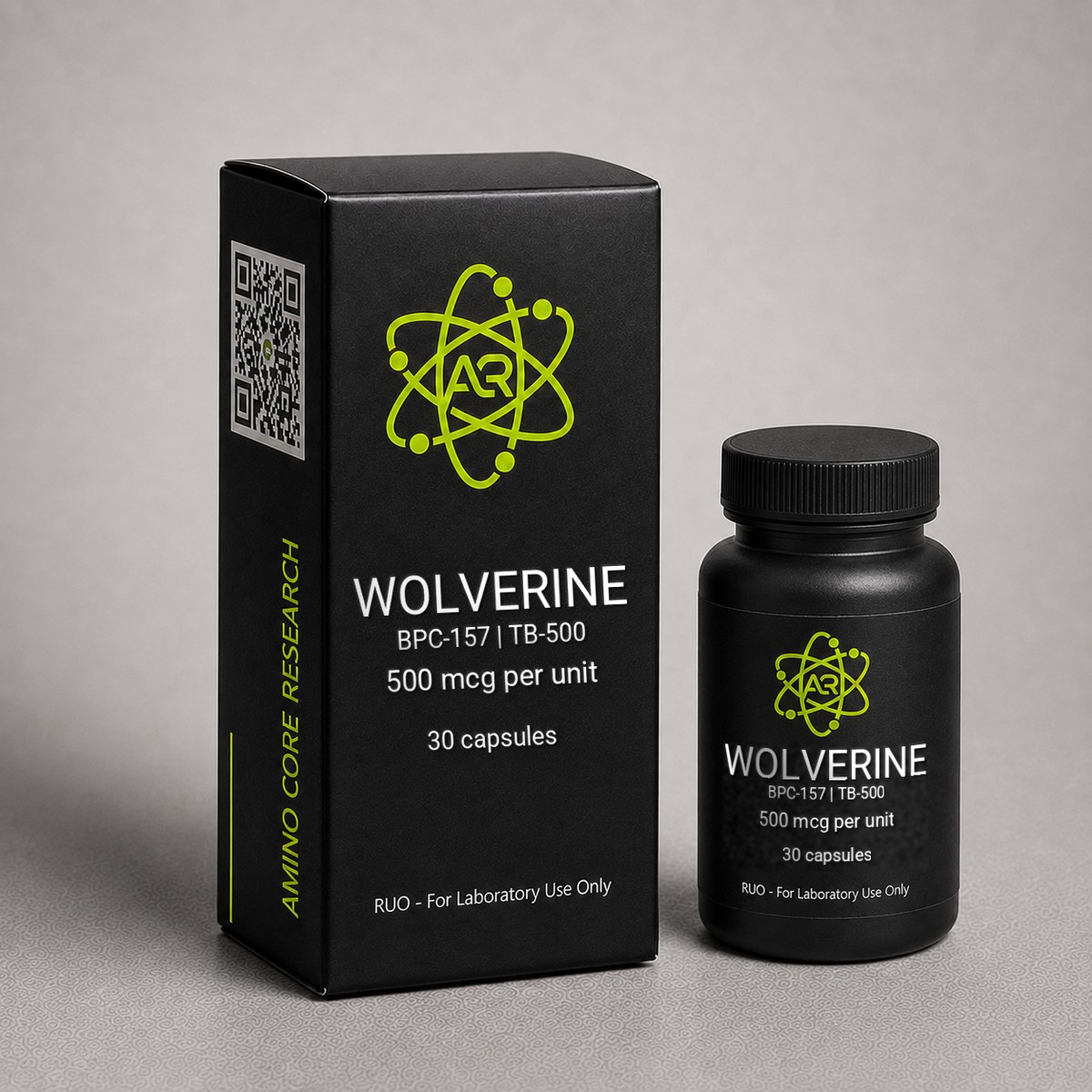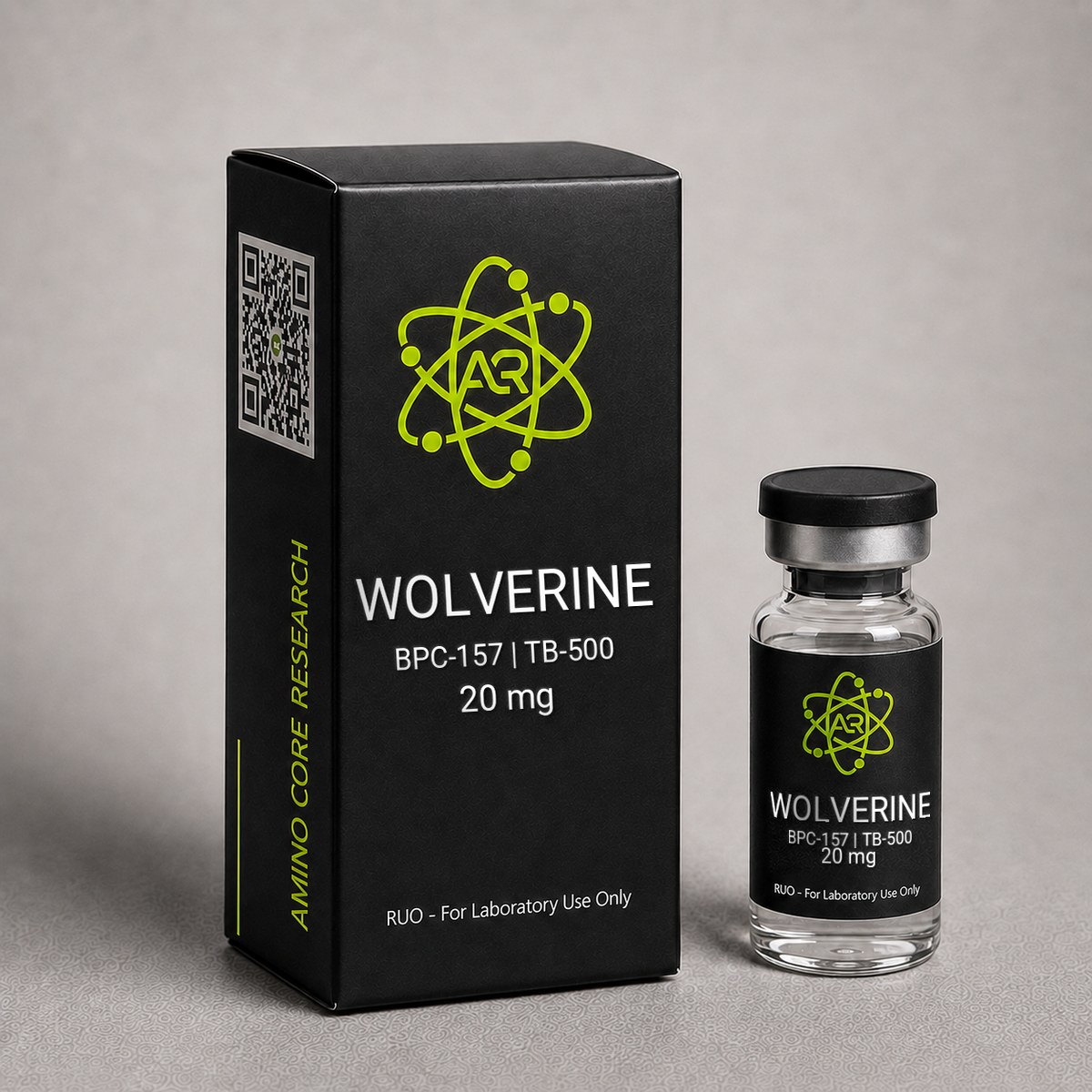
≥99%HPLC Purity
COAIncluded
USAShipped
AC-KLW
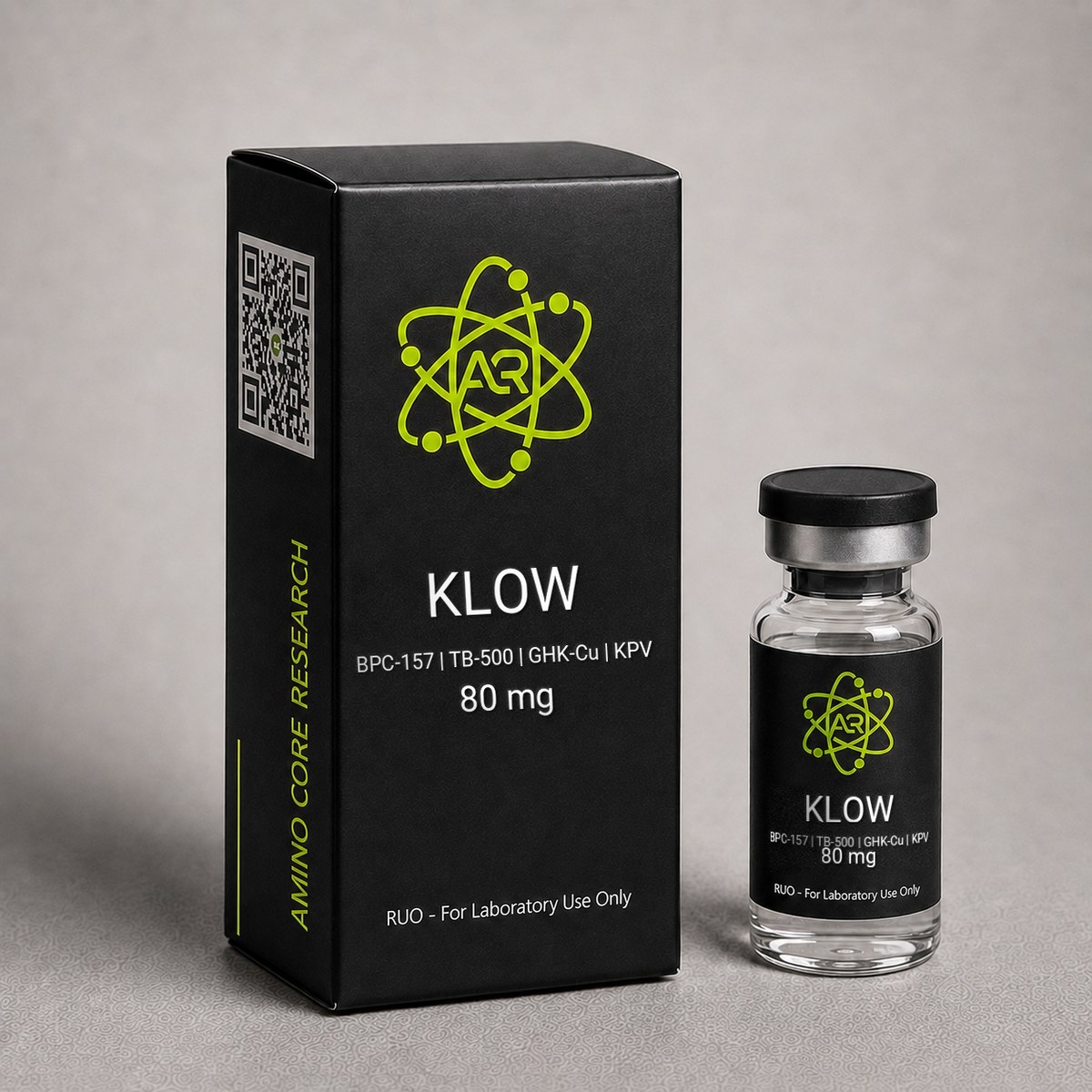
KLOW - BPC-157 | TB-500 | GHK-Cu | KPV Peptide
Four-peptide research blend combining BPC-157, TB-500, GHK-Cu and KPV — spanning angiogenesis (FAK-paxillin, VEGF), actin remodeling, copper-dependent matrix signaling, and melanocortin/NF-κB-mediated immune modulation in a single lyophilized vial.
$122.50
In stock — ships next business day
Best price — free shipping & bac water included
| Simple Peptide | AminoCore ✓ all‑in | |
|---|---|---|
| 80mg price | $140.00 | $122.50 |
| Shipping | +$13.00 | FREE |
| Bac Water | +$30.00 | FREE |
| Total paid | $183.00 | $122.50 save up to $60.50 |
Quick Facts
| SKU | ACR-BL-BTGK |
|---|---|
| CAS Number | 137525-51-0 (BPC-157) · 77591-33-4 (TB-500/Tβ4) · 89030-95-5 (GHK-Cu) · 67247-12-5 (KPV) |
| Molecular Formula | BPC-157 C₆₂H₉₈N₁₆O₂₂ + TB-500 C₂₁₂H₃₅₀N₅₆O₇₈S + GHK-Cu C₁₄H₂₂CuN₆O₄ + KPV C₁₆H₃₀N₄O₄ |
| Molecular Weight | BPC-157 1,419.53 · TB-500 4,963.44 · GHK-Cu 403.9 (Cu complex) · KPV 342.44 g/mol |
| Sequence | BPC-157: GEPPPGKPADDAGLV | TB-500 (Tβ4): SDKPDMAEIEKFDKSKLKKTETQEKNPLPSKETIEQEKQAGES | GHK-Cu: Gly-His-Lys·Cu²⁺ | KPV: Lys-Pro-Val |
| Purity | ≥99% |
| Physical Form | Lyophilized Powder |
| Storage | Store at -20°C |
What is the KLOW Research Blend?
KLOW is a four-peptide research blend combining BPC-157 (15 aa, MW 1,419.53 g/mol, CAS 137525-51-0), TB-500 / thymosin β-4 (43 aa, MW 4,963.44 g/mol, CAS 77591-33-4), GHK-Cu (copper tripeptide complex, MW ~403.9 g/mol, CAS 89030-95-5), and KPV (Lys-Pro-Val, α-MSH 11-13, MW 342.44 g/mol, CAS 67247-12-5) in a single co-lyophilized vial. The blend covers FAK-paxillin migration, actin remodeling, copper-dependent matrix signaling, and NF-κB-mediated inflammation pathways. AminoCore Research supplies KLOW at ≥99% HPLC purity, with per-lot Certificate of Analysis, for laboratory research use only.
KLOW is a four-peptide research blend formulated for investigators studying how regenerative, matrix-signaling, and immune-modulatory pathways interact in preclinical models. The blend combines BPC-157 (Body Protection Compound-157, 15 aa, MW 1,419.53 g/mol), TB-500 (thymosin β-4, 43 aa, MW 4,963.44 g/mol), GHK-Cu (copper-bound tripeptide, ~403.9 g/mol as Cu²⁺ complex), and KPV (Lys-Pro-Val, α-MSH 11-13 fragment, MW 342.44 g/mol) in a single lyophilized vial.
The scientific rationale reflects four distinct but convergent pathways. BPC-157 has been investigated for FAK–paxillin-mediated cell migration, nitric oxide homeostasis, and VEGF-driven angiogenesis (BPC-157 mechanism of action). TB-500 is studied for G-actin sequestration and endothelial migration (TB-500 research applications). GHK-Cu research focuses on copper-dependent matrix metalloproteinase modulation, TGF-β signaling, and antioxidant gene expression (GHK-Cu mechanism of action). KPV is characterized in NF-κB and melanocortin-1 receptor (MC1R) studies relevant to colitis and dermal inflammation models.
KLOW extends the three-peptide GLOW blend by adding KPV, introducing explicit anti-inflammatory and immunomodulatory chemistry to the tissue-repair stack. Researchers comparing KLOW, GLOW, and WOLVERINE can isolate the incremental contribution of copper-peptide and α-MSH chemistry in the same model system. A deeper narrative on the blend rationale is available in the companion article KLOW blend: BPC-157 + TB-500 + GHK-Cu + KPV.
Mechanism of Action — Four Convergent Pathways
Each peptide in the KLOW blend has been independently characterized in published research. The mechanistic rationale for combining them in a single preparation is that their signaling pathways are largely non-overlapping but converge on wound-microenvironment biology.
BPC-157 — FAK-paxillin and nitric oxide. BPC-157 has been shown to increase phosphorylation of focal adhesion kinase (FAK) and paxillin without altering total protein levels, a pattern consistent with activation rather than induction. In parallel, published models describe apparent modulation of nitric oxide synthase (NOS) activity and upregulation of VEGF in granulation tissue. See What is BPC-157? and BPC-157 mechanism of action for the full pathway map.
TB-500 — actin remodeling and endothelial migration. TB-500 (full-length thymosin β-4 in most research preparations) contains the N-terminal actin-binding motif that sequesters G-actin and supports cytoskeletal remodeling during endothelial cell migration. Studies by Malinda et al. (1999) and Goldstein et al. (2005/2012) report effects on angiogenesis, corneal repair, and cardiac progenitor mobilization. See What is TB-500? and the comparison TB-500 vs BPC-157.
GHK-Cu — copper-dependent matrix signaling. The GHK tripeptide has high affinity for Cu²⁺ and the copper complex is the research-relevant species. Pickart and colleagues describe modulation of ~4,000 genes including upregulation of antioxidants (SOD2, MT1X), DNA repair factors, and anti-inflammatory mediators, alongside TGF-β and metalloproteinase effects on the dermal extracellular matrix. See GHK-Cu mechanism of action and GHK-Cu molecular structure.
KPV — NF-κB and melanocortin signaling. KPV (Lys-Pro-Val) is the C-terminal tripeptide of α-MSH. Published research reports suppression of NF-κB nuclear translocation and downregulation of TNF-α, IL-6, and IL-1β in intestinal epithelial and immune-cell models. Dalmasso et al. (2008) used orally delivered KPV-loaded nanoparticles in DSS- and TNBS-induced colitis models and reported reductions in inflammation scores at microgram doses. This provides the explicit anti-inflammatory dimension absent from the three-peptide GLOW preparation.
Why a blend. The four pathways (FAK-paxillin migration, actin remodeling, copper-matrix signaling, NF-κB suppression) sit at different layers of the tissue response — initial cell migration, cytoskeletal reorganization, matrix deposition, and inflammatory tone. Investigators studying compound-interaction or pathway-complementarity use KLOW to expose a preparation to all four layers simultaneously rather than running four parallel reconstitutions.
Research & Clinical Studies
BPC-157 Tissue Repair and Angiogenesis Research
The BPC-157 component carries the most extensive preclinical literature of the four. Seiwerth et al. (1997) reported that BPC-157 treatment of murine skin, colon anastomosis, and sponge-implantation models was associated with increased collagen fiber counts, reticulin development, and blood vessel formation relative to controls.
Huang et al. (2015) investigated BPC-157 in alkali-burn wound healing and reported apparent effects on granulation tissue formation, re-epithelialization, and collagen deposition. The authors observed increased VEGF expression and influenced HUVEC proliferation and migration. ERK1/2 phosphorylation and downstream c-Fos, c-Jun, and Egr-1 responses were also documented.
Chang et al. (2011) used cultured tendon fibroblasts under H₂O₂ oxidative stress and reported that BPC-157 exposure was associated with cell-survival, migration, and increased phosphorylation of FAK and paxillin without changes in total protein levels — a pattern consistent with activation of an existing signaling pathway. The deep-dive on this family of studies is summarized in BPC-157 research guide.
In the context of the KLOW blend, the BPC-157 component supplies the FAK-paxillin and VEGF-related signals described above; investigators comparing KLOW with WOLVERINE (BPC-157 + TB-500 only) can parse the added contribution of GHK-Cu and KPV to the same endpoints.
TB-500 (Thymosin β-4) Actin Remodeling Research
The TB-500 component is supplied as the full-length 43-amino-acid thymosin β-4 peptide in most research catalogs, including AminoCore. The research peptide name "TB-500" reflects historical nomenclature in equine studies; the molecular species is Tβ4.
Malinda et al. (1999) reported that topical application of Tβ4 was associated with faster re-epithelialization in full-thickness murine wounds relative to vehicle controls. Goldstein et al. (2005, 2012) reviewed cardiac, corneal, and dermal models in which Tβ4 administration was associated with endothelial migration, reduced apoptosis, and recruitment of epicardial progenitor cells.
Mechanistically, Tβ4 contains an N-terminal KLKKTET motif that binds monomeric G-actin; in published cell-migration assays, Tβ4 has been associated with regulated disassembly and polymerization cycles that support lamellipodial extension. Sosne et al. (2007) reported effects in corneal debridement models at sub-milligram topical doses.
Within KLOW, the TB-500 component supplies cytoskeletal-remodeling signals that complement BPC-157's FAK-paxillin activation. The direct comparison between the two is summarized in BPC-157 vs TB-500 comparative analysis.
[1] Malinda KM, et al. Thymosin β4 accelerates wound healing. J Invest Dermatol. 1999;113(3):364-8.
[2] Goldstein AL, Hannappel E, Kleinman HK. Thymosin β4: actin-sequestering protein moonlights to repair injured tissues. Trends Mol Med. 2005;11(9):421-9. PubMed ↗
GHK-Cu Copper-Peptide Matrix Remodeling Research
The GHK-Cu component contributes copper-dependent signaling chemistry distinct from the proteinogenic peptides in the blend. Pickart et al. (2015, 2018) summarize transcriptomic data in which GHK-Cu exposure was associated with modulation of ~4,000 human genes, including upregulation of antioxidants (SOD2, MT1X, MT2A), DNA-repair enzymes, and anti-inflammatory mediators.
Downstream of transcriptomic effects, GHK-Cu research describes modulation of TGF-β, metalloproteinases (MMP-2, MMP-9, TIMPs), and collagen-I and -IV synthesis in dermal fibroblast and skin-equivalent models. The copper ion is load-bearing for many of these effects; the free tripeptide GHK shows partial activity, but the Cu²⁺ complex is the species typically characterized in the literature (GHK-Cu molecular structure).
The comparative GHK-Cu-versus-BPC-157 discussion in GHK-Cu vs BPC-157 notes that the two compounds target different layers of the repair cascade — BPC-157 at the migration and angiogenic stages, GHK-Cu at the later matrix-deposition and antioxidant stages — which is part of the combinatorial rationale for KLOW.
For handling, the copper ion is sensitive to chelators and acidic conditions; see the GHK-Cu handling and storage article for compound-specific guidance that also applies to the GHK-Cu fraction within KLOW.
[1] Pickart L, Margolina A. Regenerative and protective actions of the GHK-Cu peptide. Int J Mol Sci. 2018;19(7):1987. PubMed ↗
[2] Pickart L, Vasquez-Soltero JM, Margolina A. The human tripeptide GHK-Cu in prevention of oxidative stress and degenerative conditions of aging. Biomed Res Int. 2015;2015:324832. PubMed ↗
KPV (α-MSH 11-13) Anti-Inflammatory Research
The KPV tripeptide (Lys-Pro-Val) is the C-terminal three residues of α-melanocyte-stimulating hormone (α-MSH 11-13). Brzoska et al. (2008) and subsequent reviews describe KPV's interaction with the melanocortin system and its role as an anti-inflammatory fragment that preserves α-MSH's immune-regulatory activity without the pigmentary effects of the full hormone.
Dalmasso et al. (2008) reported that orally delivered KPV-loaded PLGA nanoparticles were associated with reduced inflammation in DSS- and TNBS-induced murine colitis models at microgram doses. The authors described reduced NF-κB activation, reduced TNF-α, IL-6, and IL-1β, and accelerated mucosal healing relative to vehicle controls.
Subsequent in-vitro studies in intestinal epithelial lines (Caco-2, HT-29) and immune cells (THP-1, murine macrophages) reported that KPV exposure was associated with inhibition of NF-κB nuclear translocation, reduced iNOS expression, and reduced pro-inflammatory cytokine output. KPV has also been studied in dermal inflammation models relevant to atopic and psoriatic research.
Within the KLOW blend, KPV contributes an immune-modulatory signal that is absent from the GLOW three-peptide preparation. Investigators comparing KLOW with GLOW in the same model system can isolate the incremental effect of melanocortin/NF-κB chemistry on their chosen endpoints.
[1] Dalmasso G, et al. PepT1-mediated tripeptide KPV uptake reduces intestinal inflammation. Gastroenterology. 2008;134(1):166-78. PubMed ↗
[2] Brzoska T, et al. α-Melanocyte-stimulating hormone and related tripeptides: biochemistry, anti-inflammatory and protective effects. Endocr Rev. 2008;29(5):581-602.
Chemical & Physical Properties
The KLOW vial is a co-lyophilized preparation of four peptides. Each component has its own molecular identity; the table below summarizes the verified parameters for the individual peptides, which researchers use when calculating per-component concentrations after reconstitution.
| Component | Sequence / Form | Molecular Formula | Molecular Weight | CAS |
|---|---|---|---|---|
| BPC-157 | Gly-Glu-Pro-Pro-Pro-Gly-Lys-Pro-Ala-Asp-Asp-Ala-Gly-Leu-Val (15 aa) | C₆₂H₉₈N₁₆O₂₂ | 1,419.53 g/mol | 137525-51-0 |
| TB-500 (Tβ4) | Ac-SDKPDMAEIEKFDKSKLKKTETQEKNPLPSKETIEQEKQAGES (43 aa, N-acetyl) | C₂₁₂H₃₅₀N₅₆O₇₈S | 4,963.44 g/mol | 77591-33-4 |
| GHK-Cu | Gly-His-Lys · Cu²⁺ complex | C₁₄H₂₂CuN₆O₄ | ~403.9 g/mol (as Cu²⁺ complex) | 89030-95-5 |
| KPV | Lys-Pro-Val (α-MSH 11-13, 3 aa) | C₁₆H₃₀N₄O₄ | 342.44 g/mol | 67247-12-5 |
| Form | Lyophilized sterile powder, co-lyophilized | |||
| Purity | ≥99% per HPLC per individual component lot (COA included) | |||
| Solubility | Bacteriostatic water or sterile water for injection (research-grade) | |||
| Appearance | White to faint blue lyophilized cake (blue tint attributable to the GHK-Cu fraction) | |||
BPC-157 is notable for its stability in human gastric juice (stable at pH 1.0 for >24 hours in published work), which is not representative of the other three components. The GHK-Cu fraction contributes the faint blue coloration characteristic of copper-peptide complexes.
Handling & Reconstitution Guidelines
Follow standard aseptic technique for the laboratory environment. Because KLOW is a co-lyophilized four-peptide blend, the reconstitution protocol treats the vial as a single preparation rather than four independent solutions.
- Allow the vial to reach room temperature (15–25 °C) before opening to minimize condensation on the lyophilized cake.
- Reconstitute with bacteriostatic water for injection (BWFI, 0.9% benzyl alcohol) or sterile WFI depending on protocol requirements. A typical working concentration is achieved by adding 2–3 mL of solvent to the standard vial.
- Add solvent slowly down the inner wall of the vial — do not direct the stream at the lyophilized cake.
- Swirl gently to dissolve. Do not shake or vortex. TB-500 contains a methionine residue susceptible to oxidation, and agitation accelerates peptide degradation.
- Allow the vial to sit undisturbed for 30–60 seconds; the GHK-Cu fraction may produce a faint blue tint as it solubilizes.
- Inspect visually. The solution should be clear to faintly blue. Cloudy or particulate-containing solutions should not be used.
For per-component concentration calculations, researchers typically use the published mass fraction listed on the COA; the four components are present in a defined ratio established at the lyophilization step. The peptide reconstitution calculator can be used to convert total-vial mass to working concentration when the per-component mass is known.
Compound-specific handling notes: the methionine in TB-500 should be protected from light and oxidative conditions; the copper ion in GHK-Cu is sensitive to strong chelators (EDTA, DTPA) and acidic conditions below pH 4; BPC-157 is exceptionally stable across a wide pH range and is typically the most robust component of the blend.
Storage & Stability Information
The lyophilized KLOW vial is stable when stored per the conditions below. Stability parameters reflect the least-stable component of the blend (TB-500, due to methionine oxidation susceptibility), so the stored preparation should be managed conservatively.
- Lyophilized, long-term: −20 °C, protected from light, in the original sealed vial. Stable for 24+ months under these conditions.
- Lyophilized, short-term: 2–8 °C for up to 90 days.
- Transit / room temperature: acceptable for <30 days for the lyophilized form; freeze upon receipt.
- Reconstituted, refrigerated: 2–8 °C, used within 14–21 days. BWFI-reconstituted solutions are typically the longest-stable research-use preparation.
- Reconstituted, frozen: avoid repeated freeze-thaw cycles. If freezing is required, aliquot in single-use volumes.
Compound-specific stability notes that apply to the KLOW preparation:
- TB-500: methionine residue susceptible to oxidation — protect from oxygen exposure and light. See TB-500 handling and storage guide.
- GHK-Cu: copper ion sensitive to acidic conditions below pH 4 and to strong chelators — avoid buffers that contain EDTA, DTPA, or citrate above trace concentrations. See GHK-Cu handling and storage.
- BPC-157: exceptionally stable — published work reports stability at pH 1.0 for >24 hours. See BPC-157 stability and storage.
- KPV: short tripeptide, generally stable in lyophilized form; avoid prolonged exposure to strongly basic conditions.
Frequently Asked Questions
What is the KLOW research peptide blend?
What is the difference between KLOW and GLOW?
The GLOW blend contains three peptides (BPC-157, TB-500, GHK-Cu). KLOW adds KPV, the α-MSH 11-13 tripeptide, which contributes NF-κB-suppression and melanocortin-related anti-inflammatory chemistry that GLOW lacks. Investigators comparing KLOW with GLOW in the same model can isolate the incremental contribution of KPV on inflammation endpoints.
What is the difference between KLOW and WOLVERINE?
WOLVERINE contains only BPC-157 and TB-500 (two peptides). KLOW adds GHK-Cu (copper-dependent matrix signaling) and KPV (NF-κB suppression) on top of the WOLVERINE foundation. Comparing WOLVERINE, GLOW, and KLOW side-by-side is a common design for parsing which combinations contribute to a given laboratory endpoint.
Why is KPV included in KLOW?
KPV (Lys-Pro-Val) is the C-terminal three residues of α-melanocyte-stimulating hormone (α-MSH 11-13). Published research describes NF-κB suppression, reduced TNF-α, IL-6, and IL-1β output, and anti-inflammatory activity in colitis and dermal-inflammation models. In KLOW, KPV supplies immune-modulatory chemistry distinct from the tissue-repair and matrix pathways covered by the other three components.
What are the molecular weights of the KLOW components?
BPC-157: 1,419.53 g/mol (C₆₂H₉₈N₁₆O₂₂). TB-500 (thymosin β-4, 43 aa): 4,963.44 g/mol (C₂₁₂H₃₅₀N₅₆O₇₈S). GHK-Cu: ~403.9 g/mol as Cu²⁺ complex (C₁₄H₂₂CuN₆O₄). KPV: 342.44 g/mol (C₁₆H₃₀N₄O₄). Per-component masses in each vial are reported on the accompanying COA.
How is KLOW reconstituted?
Allow the vial to reach room temperature, then add 2–3 mL of bacteriostatic water for injection (BWFI) slowly down the inner wall. Swirl gently — do not shake or vortex, as TB-500 contains a methionine residue susceptible to oxidation. The reconstituted solution is typically clear to faintly blue (the blue tint reflects the GHK-Cu fraction). See the peptide reconstitution calculator for per-component concentration calculations.
How should KLOW be stored?
Lyophilized KLOW is stored at −20 °C long-term, 2–8 °C short-term (up to 90 days), and can tolerate <30 days at transit temperatures before freezing. Reconstituted KLOW is stored at 2–8 °C and typically used within 14–21 days. Avoid repeated freeze-thaw cycles. Storage follows the least-stable component (TB-500, due to methionine oxidation susceptibility).
Can individual components of KLOW be purchased separately?
For laboratory and research use only. This product is not for human or veterinary use. It is not a drug, supplement or food.
This product is not FDA approved for any indication, and is not intended to diagnose, treat, cure, or prevent any disease. All product information is derived from published preclinical research and does not constitute medical advice or claims.