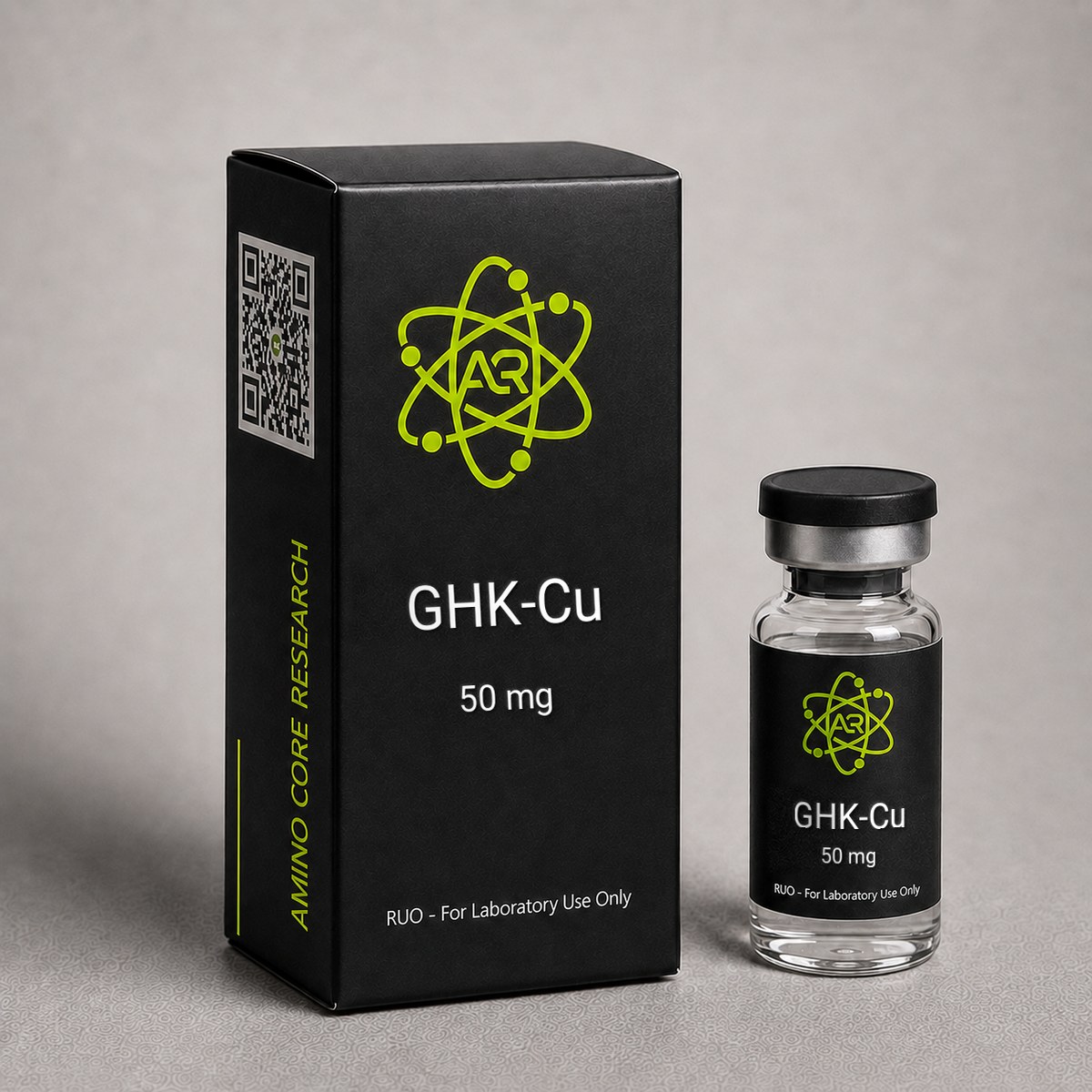
≥99%HPLC Purity
COAIncluded
USAShipped
GHK-Cu Peptide
Copper tripeptide complex (glycyl-L-histidyl-L-lysine copper). Studied in cell culture for gene expression modulation.
$43.75 – $66.25
In stock — ships next business day
Best price — free shipping & bac water included
| GoAlpha Labs | AminoCore ✓ all‑in | |
|---|---|---|
| 50mg price | $37.49 | $43.75 |
| Shipping | +$13.00 | FREE |
| Bac Water | +$15.00 | FREE |
| Total paid | $65.49 | $43.75 save up to $21.74 |
Quick Facts
| SKU | ACR-GHKCU |
|---|---|
| CAS Number | 49557-75-7 |
| Molecular Formula | C14H24CuN6O4 |
| Molecular Weight | 403.93 g/mol |
| Sequence | Gly-His-Lys:Cu(II) |
| Purity | ≥99% |
| Physical Form | Lyophilized Powder |
| Storage | Store at -20°C |
What is GHK-Cu?
GHK-Cu (glycyl-L-histidyl-L-lysine:copper(II)) is a naturally occurring copper-binding tripeptide first identified in human plasma by Dr. Loren Pickart in 1973. The discovery arose from observations that albumin isolated from young human blood (age 20-25) could stimulate the synthesis of fibronectin and other extracellular matrix proteins in aged liver cells, while albumin from older donors (age 60-80) had diminished activity. Pickart identified the active component as the tripeptide Gly-His-Lys complexed with a copper(II) ion.
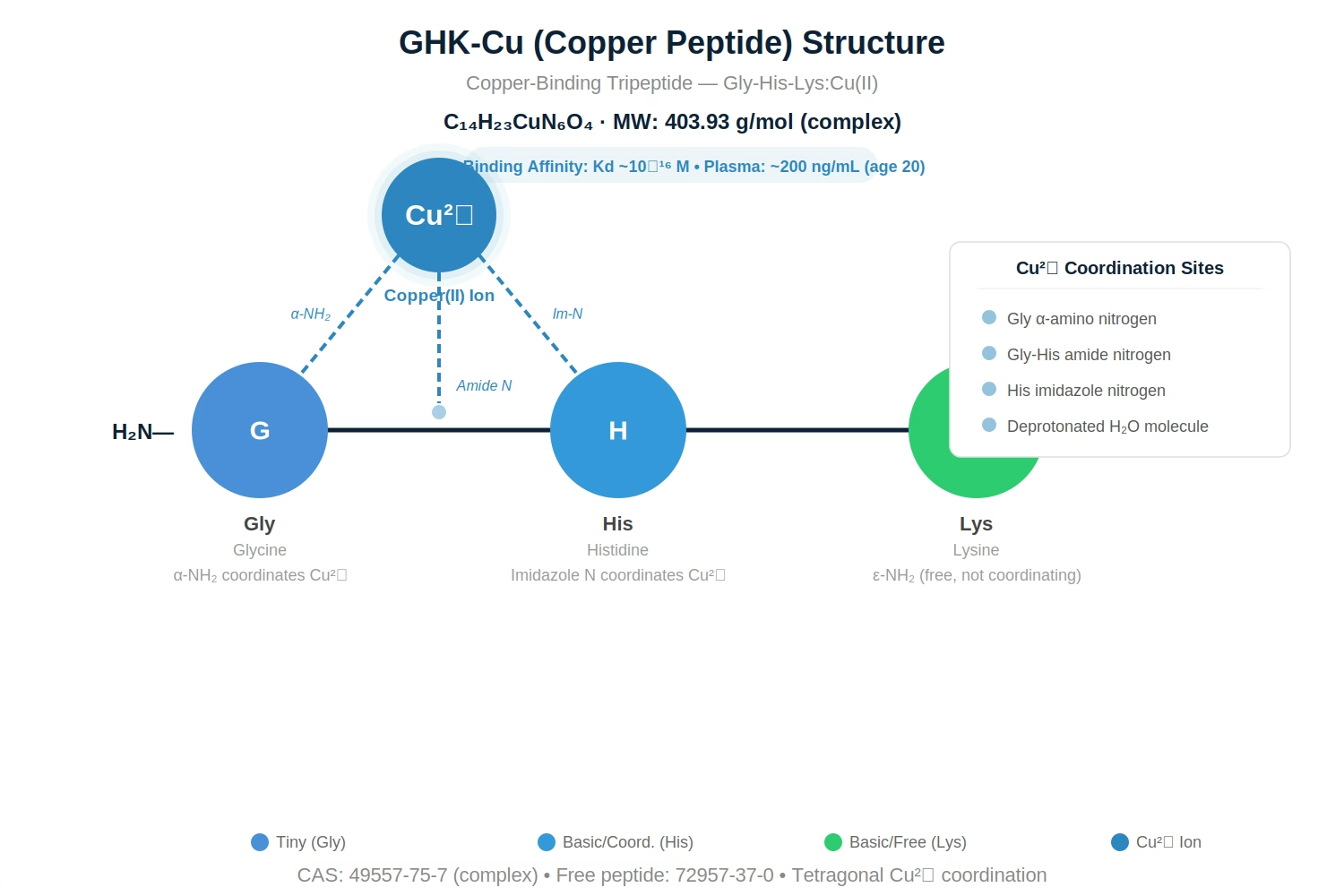
GHK-Cu has a molecular weight of 403.93 g/mol (copper complex) and CAS number 49557-75-7. The free peptide GHK (without copper) has CAS 72957-37-0 and MW 340.38 g/mol. The peptide binds copper(II) with a dissociation constant (Kd) of approximately 10⁻¹⁶ M — one of the highest copper affinities known for a small peptide — through coordination involving the histidine imidazole nitrogen, the glycine amino terminus, the amide nitrogen between Gly and His, and a deprotonated water molecule.
GHK-Cu is present in human plasma at approximately 200 ng/mL (≈0.5 μM) in individuals aged 20-25. This concentration declines progressively with age, falling to approximately 80 ng/mL by age 60. Published research has investigated whether this age-dependent decline contributes to diminished tissue repair capacity and altered gene expression patterns observed in aging.
Beyond its role as a copper transport molecule, GHK-Cu has emerged as a remarkably potent modulator of gene expression. A landmark 2012 genome-wide study identified that GHK-Cu may influence the expression of over 4,000 genes — approximately 6% of the human genome — at concentrations as low as 1 μM, affecting pathways involved in antioxidant defense, DNA repair, proteasome function, ubiquitin-mediated proteolysis, and extracellular matrix remodeling.
GHK-Cu is classified as a research peptide and is available exclusively for laboratory and scientific investigation. All findings described herein are derived from published research and do not constitute medical claims.
Mechanism of Action
Published research has identified multiple molecular pathways through which GHK-Cu exerts its biological effects. Uniquely among research peptides, GHK-Cu operates through at least three distinct mechanisms: copper delivery, direct signaling, and gene expression modulation.
Copper Delivery and Metalloenzyme Activation
Copper is an essential cofactor for numerous enzymes critical to tissue integrity. GHK-Cu serves as a bioavailable copper delivery vehicle, providing Cu²⁺ ions to copper-dependent enzymes including: lysyl oxidase (LOX), which catalyzes the crosslinking of collagen and elastin fibers essential for tissue tensile strength; superoxide dismutase 1 and 3 (SOD1/SOD3), the primary enzymatic defense against superoxide radical damage; cytochrome c oxidase (Complex IV), the terminal electron acceptor in the mitochondrial respiratory chain; and tyrosinase, the rate-limiting enzyme in melanin biosynthesis. By maintaining adequate copper supply to these enzymes, GHK-Cu supports extracellular matrix integrity, antioxidant defense, mitochondrial function, and pigmentation biology.
Gene Expression Modulation
The most remarkable aspect of GHK-Cu biology is its capacity to modulate the expression of thousands of genes. Hong et al. (2012) used the Broad Institute Connectivity Map (cMap) database to identify gene expression signatures associated with GHK treatment. The analysis revealed that GHK-Cu upregulates genes involved in: collagen synthesis (COL1A1, COL3A1, COL5A1), antioxidant defense (SOD1, SOD3, catalase), DNA repair (GADD45A, XPC, ERCC1), proteasome function (PSMA/B/C subunits), ubiquitin system components, and anti-inflammatory mediators. Simultaneously, GHK-Cu downregulates genes encoding: matrix metalloproteinases (MMP-2, MMP-9, MMP-13) that degrade collagen, pro-inflammatory cytokines (IL-6, TNF-α), fibrinogen components, and several oncogene-associated transcription factors.
TGF-beta Superfamily Signaling
Research has documented GHK-Cu interaction with the TGF-beta signaling pathway. GHK-Cu appears to modulate Smad proteins — the intracellular signal transducers for TGF-beta receptors. This modulation is context-dependent: in wound healing scenarios, GHK-Cu appears to promote controlled TGF-beta signaling that facilitates matrix production, while in established fibrotic tissue, it may attenuate excessive TGF-beta activity. This bidirectional regulation suggests that GHK-Cu acts as a tissue-normalizing signal rather than simply activating or inhibiting a single pathway.
Integrin and Focal Adhesion Signaling
Published studies indicate that GHK-Cu promotes cell attachment and spreading through modulation of integrin expression and focal adhesion complex assembly. The peptide increases expression of integrin alpha and beta subunits on cell surfaces and promotes FAK (focal adhesion kinase) phosphorylation, enhancing cell-matrix interactions critical for tissue organization.
Wnt/β-Catenin Pathway Modulation
Recent research has identified GHK-Cu interaction with the canonical Wnt signaling pathway. Studies suggest it may promote β-catenin nuclear translocation in stem cell populations, potentially supporting regenerative signaling. The Wnt pathway is fundamental to stem cell self-renewal, tissue homeostasis, and regeneration, adding another dimension to GHK-Cu biological activity.
Research & Clinical Studies
GHK-Cu Discovery and Tissue Remodeling — Pickart (1973, 2008)
The discovery of GHK-Cu by Loren Pickart in 1973 arose from a systematic investigation of age-dependent differences in human plasma bioactivity. Pickart observed that when aged human liver tissue (hepatocytes from donors aged 60+) was cultured in the presence of serum from young donors (aged 20-25), the aged cells resumed synthesis of fibronectin, type I collagen, and proteoglycans at rates comparable to young cells. Serum from age-matched elderly donors failed to produce this effect.
Through progressive fractionation of young serum, Pickart isolated the active component as a tripeptide-copper complex: Gly-His-Lys:Cu(II). Subsequent synthesis of GHK-Cu confirmed that the synthetic peptide reproduced the remodeling activity of the natural isolate. The activity was copper-dependent — the free peptide GHK without copper showed significantly reduced effects.
In a comprehensive 2008 review, Pickart and colleagues summarized three decades of GHK-Cu research. Key tissue remodeling findings included: stimulation of collagen type I, III, and V synthesis in dermal fibroblasts; upregulation of decorin, a proteoglycan that organizes collagen fiber architecture; increased production of tissue inhibitors of metalloproteinases (TIMPs), which protect newly synthesized matrix from premature degradation; and promotion of glycosaminoglycan synthesis (hyaluronic acid, dermatan sulfate), which maintains tissue hydration and structural integrity.
The review noted that GHK-Cu appears to promote "organized" tissue remodeling rather than disorganized fibrosis — a critical distinction in wound healing biology. Treated wounds showed more organized collagen architecture with proper fiber alignment, rather than the dense, randomly oriented collagen characteristic of scar tissue.
GHK-Cu and Genome-Wide Gene Expression — Hong et al. (2012)
Hong et al. (2012) published a groundbreaking study using the Broad Institute Connectivity Map (cMap) to comprehensively characterize the gene expression signature of GHK-Cu. The cMap database contains gene expression profiles from thousands of compounds tested across multiple human cell lines, enabling systematic comparison of gene expression patterns.
The study queried the cMap database for the GHK-Cu expression signature and identified that GHK modulated the expression of 4,048 genes at a concentration of 1 μM — approximately 6% of the 22,277 genes represented on the Affymetrix microarray platform used. This represented one of the largest gene expression signatures for any small molecule in the database at the time.
Key Upregulated Gene Networks:
The study identified significant upregulation of genes in several critical networks. DNA repair genes were prominently represented, including GADD45A (growth arrest and DNA-damage-inducible), XPC and ERCC1 (nucleotide excision repair), and multiple base excision repair components. Antioxidant defense genes including SOD1, SOD3, glutathione peroxidase (GPX1), and thioredoxin reductase (TXNRD1) were upregulated. The ubiquitin-proteasome system showed broad activation, with multiple proteasome subunit genes (PSMA, PSMB families) and ubiquitin conjugation enzymes elevated.
Key Downregulated Gene Networks:
Pro-inflammatory gene networks were significantly suppressed, including NF-κB pathway components, IL-6, and several chemokine genes. Matrix metalloproteinase genes (MMP-2, MMP-9, MMP-13) were downregulated, consistent with GHK-Cu protective effects on extracellular matrix. Notably, several genes associated with fibrosis and excessive scarring were also suppressed, including fibrinogen components and certain TGF-beta responsive genes associated with pathological fibrosis.
Anti-Cancer Gene Signature:
An unexpected finding was that the GHK-Cu gene expression pattern showed significant overlap with gene signatures associated with cancer growth suppression. Specifically, GHK-Cu upregulated caspase and tumor suppressor genes while downregulating certain growth-promoting genes. The authors noted this as a hypothesis-generating observation requiring further investigation.
[3] Hong Y, Downey T, Eu KW, Koh PK, Cheah PY. A metastasis-prone signature for early-stage mismatch-repair proficient sporadic colorectal cancer patients and its implications for possible therapeutics. Clin Exp Metastasis. 2010;27(2):83-90. PubMed ↗
[4] Pickart L, Vasquez-Soltero JM, Margolina A. GHK peptide as a natural modulator of multiple cellular pathways in skin regeneration. Biomed Res Int. 2015;2015:648108. PubMed ↗
GHK-Cu and Wound Healing Research
Arul et al. (2007) investigated the effects of GHK-Cu on wound healing in a systematic in-vivo study using dermal wound models. The study used full-thickness excisional wounds and assessed healing parameters including closure rate, collagen content, granulation tissue formation, and inflammatory cell infiltration.
The results demonstrated that GHK-Cu-treated wounds showed significantly accelerated closure compared to controls, with the most pronounced differences at days 7-14 post-wounding. Histological analysis revealed several key findings: increased density and improved organization of collagen fibers in the wound bed, with more parallel fiber alignment characteristic of normal dermis rather than disordered scar tissue; enhanced neovascularization with higher capillary density in the granulation tissue; and a faster transition from the inflammatory phase to the proliferative/remodeling phases, with earlier resolution of neutrophil infiltration.
Gul et al. (2008) investigated GHK-Cu in burn wound models, which present a more complex healing challenge due to thermal damage to dermal appendages, vasculature, and extracellular matrix. The study reported that GHK-Cu application enhanced re-epithelialization from wound margins and promoted earlier establishment of granulation tissue. Importantly, the study noted that GHK-Cu-treated burn wounds showed less excessive scarring (hypertrophic scar formation) compared to controls, suggesting that GHK-Cu promotes normalized rather than exaggerated repair responses.
Canapp et al. (2003) evaluated GHK-Cu in a canine pad wound model, providing data in a clinically relevant veterinary context. The study demonstrated accelerated wound closure, enhanced collagen content, and improved wound strength in GHK-Cu treated groups. The tensile strength of healed wounds was significantly higher in the treatment group, indicating superior collagen crosslinking and matrix organization.
[5] Arul V, Kartha R, Jayakumar R. A therapeutic approach for diabetic wound healing using biotinylated GHK incorporated collagen matrices. Life Sci. 2007;80(4):275-84. PubMed ↗
[6] Canapp SO, Farese JP, Schultz GS, et al. The effect of topical tripeptide-copper complex on healing of ischemic open wounds. Vet Surg. 2003;32(6):515-23. PubMed ↗
GHK-Cu and Antioxidant Defense Research
Beretta et al. (2012) investigated the antioxidant properties of GHK-Cu in a comprehensive study that assessed both direct radical scavenging and indirect antioxidant enzyme modulation. The study used multiple oxidative stress models and analytical techniques to characterize the antioxidant profile.
Direct Antioxidant Activity:
Using the ORAC (Oxygen Radical Absorbance Capacity) assay and DPPH radical scavenging assays, the researchers demonstrated that GHK-Cu possesses moderate direct antioxidant activity. However, this direct scavenging was relatively modest compared to established antioxidants like ascorbic acid or N-acetylcysteine. The authors concluded that direct radical scavenging is not the primary mechanism of GHK-Cu antioxidant protection.
Indirect Enzymatic Protection:
The more significant antioxidant mechanism involves upregulation of endogenous antioxidant enzymes. GHK-Cu treatment increased the expression and activity of superoxide dismutase (SOD), particularly the extracellular isoform SOD3, which is copper-dependent. GHK-Cu also provides the copper cofactor necessary for SOD3 catalytic function. Additionally, catalase and glutathione peroxidase activities were enhanced in GHK-Cu-treated systems.
Lipid Peroxidation Protection:
The study measured malondialdehyde (MDA) levels as a marker of lipid peroxidation in oxidatively stressed cell cultures. GHK-Cu-treated cells showed significantly lower MDA accumulation, indicating protection of membrane lipids from oxidative damage. This protection correlated with both copper-dependent SOD activity and with the upregulation of repair enzymes that process oxidized lipids.
Ferritin and Iron Regulation:
An important finding was that GHK-Cu strongly upregulates ferritin expression. Ferritin sequesters free iron (Fe²⁺/Fe³⁺), preventing Fenton chemistry that generates highly reactive hydroxyl radicals. By reducing free iron availability while simultaneously enhancing SOD activity, GHK-Cu addresses two major sources of oxidative stress through complementary mechanisms.
[7] Beretta G, Artali R, Regazzoni L, Panigati M, Facino RM. Glycyl-histidyl-lysine (GHK) is a quencher of alpha,beta-4-hydroxy-trans-2-nonenal: a comparison with carnosine. Insights into the mechanism of reaction by ESI-MS/MS experiments and theoretical calculations. Chem Res Toxicol. 2007;20(9):1309-14. PubMed ↗
GHK-Cu and Collagen / Extracellular Matrix Research
Maquart et al. (1988, 1999) conducted a series of studies characterizing GHK-Cu effects on extracellular matrix synthesis and organization. These studies used dermal fibroblast cultures and tissue explant models to quantify matrix protein production.
The 1988 study demonstrated that GHK-Cu at concentrations of 10⁻⁹ to 10⁻⁶ M stimulated collagen synthesis in cultured fibroblasts in a dose-dependent manner. Type I collagen (the predominant structural collagen of skin, bone, and tendon) and type III collagen (the fine reticular collagen of early wound healing) were both upregulated. Decorin synthesis was also enhanced — decorin is a small leucine-rich proteoglycan that organizes collagen fibril diameter and spacing, directly contributing to tissue tensile strength and transparency.
The 1999 follow-up study investigated the matrix metalloproteinase/TIMP balance. GHK-Cu treatment simultaneously increased TIMP-1 and TIMP-2 production while suppressing MMP-1, MMP-2, and MMP-9 expression. This shift in the MMP/TIMP balance toward net matrix accumulation is significant because excessive MMP activity is a major driver of extracellular matrix degradation in aged and photodamaged tissue. The authors noted that GHK-Cu achieves this rebalancing without completely ablating MMP activity, which is still needed for controlled remodeling.
Glycosaminoglycan Synthesis:
GHK-Cu also stimulated glycosaminoglycan (GAG) synthesis, particularly hyaluronic acid and dermatan sulfate. GAGs are hydrophilic polysaccharides that attract and retain water molecules, contributing to tissue hydration, turgor, and viscoelastic properties. The increased GAG content in GHK-Cu-treated cultures correlated with enhanced water retention capacity of the extracellular matrix.
[8] Maquart FX, Pickart L, Laurent M, Gillery P, Monboisse JC, Borel JP. Stimulation of collagen synthesis in fibroblast cultures by the tripeptide-copper complex glycyl-L-histidyl-L-lysine-Cu2+. FEBS Lett. 1988;238(2):343-6. PubMed ↗
[9] Maquart FX, Bellon G, Chaqour B, et al. In vivo stimulation of connective tissue accumulation by the tripeptide-copper complex glycyl-L-histidyl-L-lysine-Cu2+ in rat experimental wounds. J Clin Invest. 1993;92(5):2368-76. PubMed ↗
GHK-Cu and Hair Follicle Research — Pyo et al. (2007)
The tripeptide-copper complex GHK-Cu has been investigated for its effects on hair follicle biology, particularly in relation to dermal papilla cell proliferation and the modulation of androgen-related enzymatic activity. A study by Pyo and colleagues examined the influence of GHK-Cu and related copper peptide derivatives on cultured human dermal papilla cells and on 5α-reductase activity, which is a key enzyme in the conversion of testosterone to dihydrotestosterone (DHT) — a pathway implicated in androgenetic alopecia research.
Study Design
- Subjects: Cultured human dermal papilla cells (hDPCs) and cell-based 5α-reductase assays
- Compounds tested: GHK-Cu and derivative copper tripeptides
- Endpoints: Cell proliferation (MTT assay), VEGF expression, 5α-reductase Type I and Type II inhibition
Key Results
- Dermal papilla proliferation increased significantly in cultures treated with GHK-Cu compared with untreated controls
- 5α-reductase activity was inhibited by GHK-Cu and its derivatives in a dose-dependent manner
- VEGF expression was upregulated in dermal papilla cells, consistent with the angiogenic profile associated with the anagen (growth) phase of the hair cycle
- Comparative finding: The combined effect on proliferation and 5α-reductase inhibition distinguishes GHK-Cu from copper salts, which do not replicate the proliferative response
Context
These findings situate GHK-Cu within a broader body of preclinical literature exploring copper peptide complexes as modulators of hair follicle biology. The dual observation — increased dermal papilla cell proliferation alongside attenuation of androgen-converting enzyme activity — has prompted continued investigation into copper tripeptides as research tools for studying follicular signaling, perifollicular angiogenesis, and extracellular matrix remodeling around the hair bulb. The work complements Pickart's foundational reports on GHK-Cu's broader regenerative gene expression profile.
[1] Pyo HK, Yoo HG, Won CH, Lee SH, Kang YJ, Eun HC, Cho KH, Kim KH. The effect of tripeptide-copper complex on human hair growth in vitro. Arch Pharm Res. 2007;30(7):834-839. PubMed ↗
Chemical & Physical Properties
| Property | Value |
|---|---|
| Full Name | Glycyl-L-histidyl-L-lysine:copper(II) |
| Molecular Formula (complex) | C14H23CuN6O4 |
| Molecular Weight (complex) | 403.93 g/mol |
| Free Peptide Formula | C14H24N6O4 |
| Free Peptide MW | 340.38 g/mol |
| CAS Number (complex) | 49557-75-7 |
| CAS Number (free peptide) | 72957-37-0 |
| Amino Acid Sequence | Gly-His-Lys |
| Amino Acid Count | 3 (tripeptide) |
| Copper Coordination | His imidazole N, Gly α-NH₂, Gly-His amide N |
| Cu²⁺ Binding Affinity (Kd) | ~10⁻¹⁶ M |
| Physical Form | Blue crystalline powder |
| Solubility | Freely soluble in water (>50 mg/mL) |
| Purity | ≥99% (HPLC verified) |
| pH (1% solution) | 5.5-7.0 |
| Storage Temperature | -20°C (long-term), 2-8°C (short-term) |
| Shelf Life | 24 months at -20°C |
Handling & Reconstitution Guidelines
Reconstitution Protocol
GHK-Cu is supplied as a blue crystalline lyophilized powder. The blue color is characteristic of the copper(II) complex and indicates proper copper coordination. Reconstitute using sterile water for injection (WFI) or sterile bacteriostatic water. GHK-Cu is highly water-soluble (>50 mg/mL) and dissolves rapidly upon contact with aqueous diluent — gentle swirling is typically sufficient for complete dissolution.
Recommended Diluent Volumes
For a 50mg vial: Reconstitute with 2.5 mL of sterile water, yielding a 20 mg/mL stock solution. For a 100mg vial: Use 5.0 mL for a 20 mg/mL concentration. Working solutions at research concentrations (1-10 μM) can be prepared by serial dilution of the stock in appropriate buffers.
Compatibility Notes
GHK-Cu is stable across a wide pH range (4.0-8.0) with optimal stability at pH 5.5-6.5. Avoid alkaline conditions (pH >9) which can precipitate copper hydroxide. The peptide is compatible with standard laboratory plasticware (polypropylene, polystyrene) and borosilicate glass. Avoid contact with strong chelating agents (EDTA, DTPA) which will strip the copper from the peptide complex. Phosphate buffers at concentrations above 50 mM can precipitate copper phosphate — use HEPES, MOPS, or Tris buffers when possible.
Post-Reconstitution Storage
Store reconstituted GHK-Cu solution at 2-8°C protected from light. Use within 30 days. The small tripeptide structure and copper coordination provide good solution stability. For longer storage, aliquot and freeze at -20°C (stable approximately 6 months).
Handling Precautions
Use standard laboratory PPE. GHK-Cu solutions will stain surfaces and clothing blue — handle with care. The copper complex is photosensitive; minimize exposure to UV and direct sunlight. Use amber vials or wrap containers in foil for light protection during storage.
Storage & Stability Information
Lyophilized Form (Unreconstituted)
Store lyophilized GHK-Cu at -20°C in the original sealed vial, protected from light and moisture. The blue crystalline powder maintains full stability for up to 24 months under these conditions. Short-term storage at 2-8°C is acceptable for up to 90 days. Room temperature storage (20-25°C) should be limited to 30 days maximum. The copper complex provides significant stability to the tripeptide backbone by constraining the peptide conformation and protecting amide bonds from hydrolysis.
Reconstituted Solution
Store at 2-8°C, protected from light, and use within 30 days. The reconstituted solution should maintain its characteristic blue color (from the Cu²⁺ d-d electronic transition). Color change toward green may indicate changes in copper coordination geometry. Loss of blue color suggests copper reduction to Cu⁺ or loss of copper from the complex — discard such solutions.
Degradation Pathways
The primary degradation pathway is photo-induced copper reduction (Cu²⁺ → Cu⁺), catalyzed by UV exposure. This produces the less biologically active Cu⁺ form and can generate reactive oxygen species. Chemical degradation of the peptide backbone is slow due to the stabilizing effect of copper coordination — the Cu²⁺ ion effectively "locks" the peptide into a rigid conformation that resists hydrolysis. Oxidative degradation of the histidine imidazole ring is possible under harsh oxidative conditions but is not significant under normal storage.
Copper Content Verification
The copper content of GHK-Cu can be verified by atomic absorption spectroscopy or inductively coupled plasma mass spectrometry (ICP-MS). The theoretical copper content is 15.7% by weight. Fresh samples should show 14-16% copper content. Copper content significantly below this range indicates loss of copper from the complex, potentially due to chelation by competing ligands or reduction.
Frequently Asked Questions
What is GHK-Cu?
GHK-Cu (glycyl-L-histidyl-L-lysine:copper(II)) is a naturally occurring copper-binding tripeptide first identified in human plasma by Dr. Loren Pickart in 1973. It binds copper(II) with exceptionally high affinity (Kd ~10⁻¹⁶ M) and functions as a bioavailable copper delivery system, gene expression modulator, and signaling molecule. GHK-Cu concentration in human plasma declines from ~200 ng/mL at age 20 to ~80 ng/mL by age 60. MW: 403.93 g/mol (copper complex), CAS: 49557-75-7. For research use only.
Why does GHK-Cu contain copper?
The copper(II) ion is essential for GHK-Cu biological activity. Copper serves as a cofactor for critical enzymes including lysyl oxidase (collagen/elastin crosslinking), superoxide dismutase (antioxidant defense), and cytochrome c oxidase (mitochondrial respiration). The GHK tripeptide binds Cu²⁺ through the His imidazole nitrogen, Gly amino terminus, and the Gly-His amide nitrogen, creating one of the tightest small-peptide copper complexes known. The free peptide GHK without copper shows significantly reduced biological activity.
How many genes does GHK-Cu affect?
Hong et al. (2012) using the Broad Institute Connectivity Map identified that GHK-Cu modulates the expression of approximately 4,048 genes (~6% of the human genome) at 1 μM concentration. Key upregulated networks include DNA repair, antioxidant defense, proteasome function, and collagen synthesis. Key downregulated networks include pro-inflammatory cytokines, matrix metalloproteinases, and fibrinogen components.
How does GHK-Cu differ from other copper supplements?
GHK-Cu is not simply a copper supplement. The tripeptide scaffold provides targeted delivery of copper to metalloenzymes while also functioning as an independent signaling molecule that modulates gene expression through mechanisms beyond copper delivery. Simple copper salts (copper sulfate, copper gluconate) lack the peptide-mediated signaling and have poor cellular uptake compared to the GHK-Cu complex, which is recognized by specific cellular uptake mechanisms.
What is the blue color of GHK-Cu?
The blue color is an intrinsic property of the Cu²⁺ d-d electronic transition. When copper(II) coordinates with the nitrogen donors of the GHK peptide, it forms a tetragonal complex with characteristic light absorption around 600 nm (orange/yellow), giving the complementary blue color. This blue color is a useful quality indicator — it confirms proper copper coordination. Loss of blue color indicates degradation or copper loss.
How should GHK-Cu be stored?
Store lyophilized GHK-Cu at -20°C protected from light and moisture (stable 24 months). After reconstitution, store at 2-8°C in amber or foil-wrapped containers and use within 30 days. GHK-Cu is photosensitive — UV light can reduce Cu²⁺ to Cu⁺, diminishing activity. Avoid contact with chelating agents (EDTA) which strip copper from the complex. Avoid alkaline conditions (pH >9) and high-concentration phosphate buffers (>50 mM).
What purity is available for GHK-Cu?
AminoCore Research provides GHK-Cu at ≥99% purity verified by HPLC. Each batch undergoes mass spectrometry for identity confirmation, amino acid analysis, copper content verification by atomic absorption (theoretical: 15.7% Cu by weight), and endotoxin testing. A Certificate of Analysis (COA) accompanies every lot.
What areas of research involve GHK-Cu?
Published research on GHK-Cu spans extracellular matrix remodeling (Maquart 1988, 1993), genome-wide gene expression modulation (Hong 2012, Pickart 2015), wound healing and tissue repair (Arul 2007, Canapp 2003), antioxidant defense mechanisms (Beretta 2007), copper metalloenzyme biology, inflammatory response modulation, collagen/elastin crosslinking, and stem cell signaling (Wnt/β-catenin pathway). All studies are from peer-reviewed journals.
What is the molecular formula and weight of GHK-Cu?
GHK-Cu has the molecular formula C14H24CuN6O4 and a molecular weight of 403.93 g/mol. The CAS number for the copper-complexed form is 49557-75-7. The complex consists of the tripeptide glycyl-L-histidyl-L-lysine (GHK) coordinated to a divalent copper ion (Cu²⁺), which is bound primarily through the imidazole nitrogen of histidine, the α-amino nitrogen of glycine, and the deprotonated peptide bond nitrogen between glycine and histidine. This coordination geometry is responsible for the characteristic deep blue color of the complex and is central to its biological activity in preclinical research.
How does GHK-Cu compare to BPC-157 in tissue repair research?
GHK-Cu and BPC-157 are both extensively studied in tissue repair research but operate through distinct mechanisms. GHK-Cu is a copper-binding tripeptide that modulates gene expression on a genome-wide scale — Hong et al. (2012) reported significant changes in over 4,000 human genes — with particular influence on collagen synthesis, antioxidant defense, and decorin expression. BPC-157, a pentadecapeptide derived from gastric juice, primarily acts through nitric oxide pathway modulation, VEGFR2 upregulation, and growth hormone receptor expression. GHK-Cu is most often studied in dermal and extracellular matrix contexts, while BPC-157 has broader preclinical literature covering tendon, ligament, and gastrointestinal models.
Is GHK-Cu sensitive to light or temperature during research handling?
Yes. Lyophilized GHK-Cu is reasonably stable when stored at -20°C and protected from light and moisture, but the reconstituted complex is more sensitive. The copper-tripeptide coordination can be disrupted by extreme pH, strong reducing agents, and prolonged exposure to elevated temperatures or UV light. Solutions are typically prepared in bacteriostatic or sterile water and stored at 2-8°C, protected from direct light, with use generally recommended within 2-4 weeks. Loss of the characteristic deep blue color is a visual indicator of complex degradation or copper dissociation and signals that the preparation should not be used for quantitative research.
Can GHK-Cu be used in topical research formulations?
GHK-Cu is widely investigated in topical research formulations, particularly in dermal and cosmetic studies focused on collagen synthesis, fibroblast activity, and extracellular matrix remodeling. Preclinical literature has examined its incorporation into creams, serums, and liposomal carriers to study skin barrier function, wrinkle-associated gene expression, and antioxidant response in keratinocytes and fibroblasts. AminoCore Research supplies GHK-Cu as a lyophilized powder for laboratory use only; any formulation work is the responsibility of the qualified researcher and is restricted to in vitro or non-human preclinical applications. The compound is not supplied for human or veterinary use.
For laboratory and research use only. This product is not for human or veterinary use. It is not a drug, supplement or food.
This product is not FDA approved for any indication, and is not intended to diagnose, treat, cure, or prevent any disease. All product information is derived from published preclinical research and does not constitute medical advice or claims.