≥99%HPLC Purity
COAIncluded
USAShipped
AC-WLV
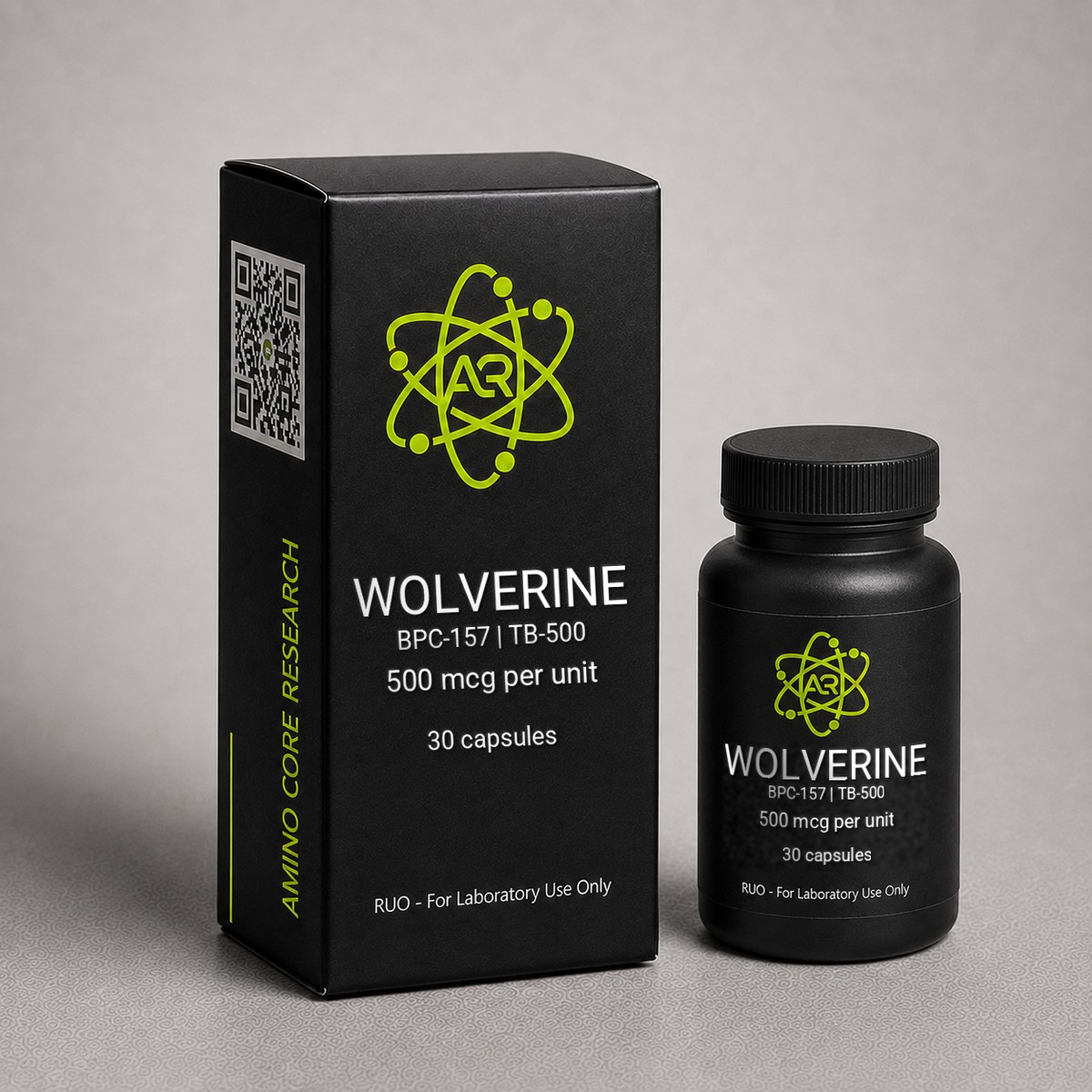
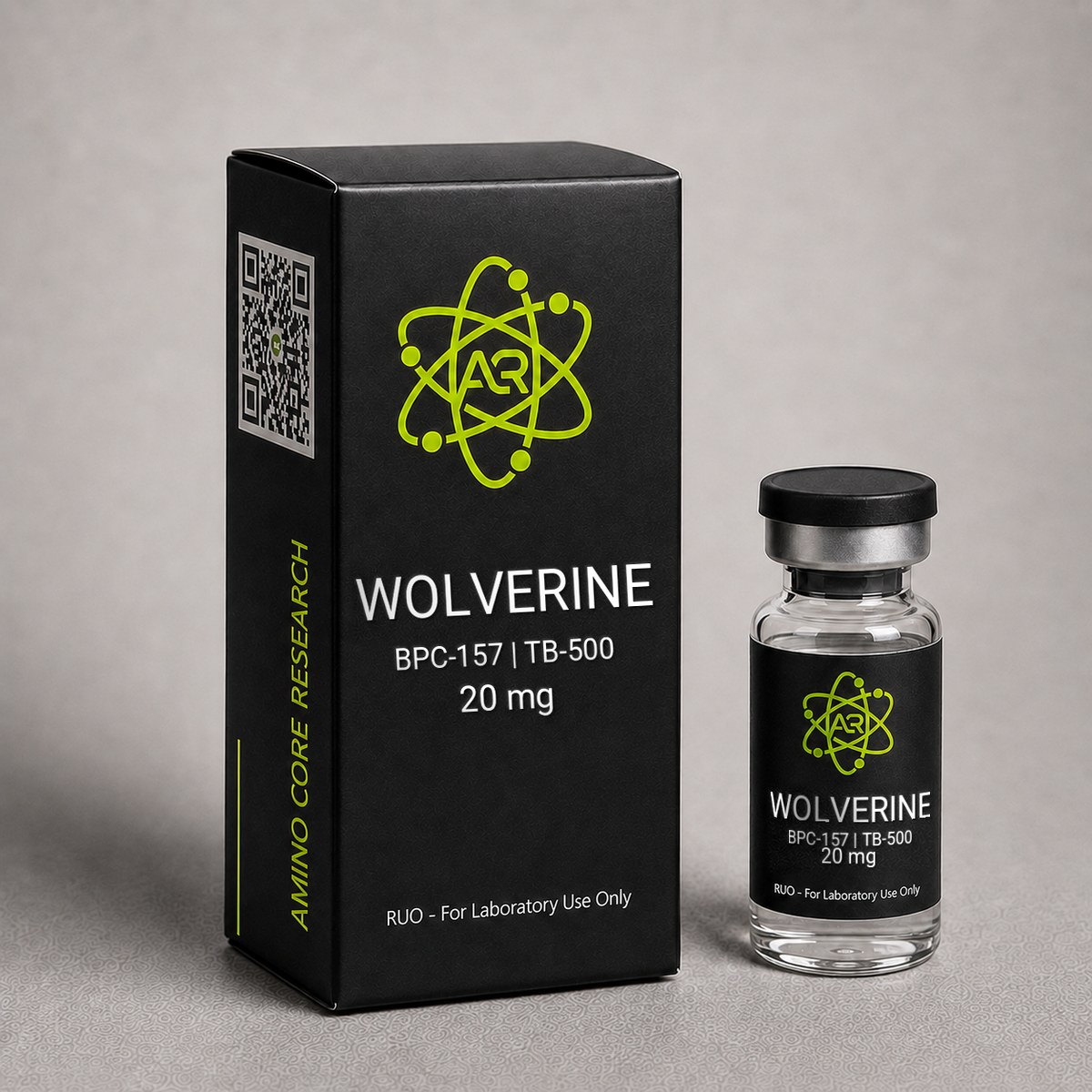
WOLVERINE - BPC-157 | TB-500 Peptide
Dual-peptide research blend pairing BPC-157 (5mg) and TB-500 (5mg) — the so-called "Wolverine" combination — for complementary tissue repair, angiogenesis, and cytoskeletal remodeling investigations. Each peptide targets distinct but synergistic regenerative pathways.
$110.00
In stock — ships next business day
Quick Facts
| SKU | ACR-WOLV |
|---|---|
| CAS Number | BPC-157: 137525-51-0; TB-500: 77591-33-4 |
| Molecular Formula | Blend (BPC-157: C62H98N16O22 + TB-500: C212H350N56O78S) |
| Molecular Weight | BPC-157: 1419.53 g/mol; TB-500: 4963.44 g/mol |
| Sequence | BPC-157: Gly-Glu-Pro-Pro-Pro-Gly-Lys-Pro-Ala-Asp-Asp-Ala-Gly-Leu-Val | TB-500 (Thymosin Beta-4 fragment): Ac-Leu-Lys-Lys-Thr-Glu-Thr-Gln-Glu-Lys-Asn-Pro-Leu-Pro-Ser-Lys-Glu-Thr-Ile-Glu-Gln-Glu-Lys-Gln-Ala-Gly-Glu-Ser |
| Purity | ≥99% |
| Physical Form | Lyophilized Powder |
| Storage | Store at -20°C |
About the BPC-157 + TB-500 Research Blend
This blend combines two of the most extensively studied tissue biology peptides in a single vial for research convenience. BPC-157 (5mg) is a 15-amino acid gastric peptide that interacts with FAK-paxillin signaling, the NO system, and growth factor pathways. TB-500 (5mg) is a synthetic Thymosin Beta-4, a 43-amino acid actin-sequestering peptide that promotes cell migration via ILK/Akt signaling.
The rationale for combining these peptides in research protocols stems from their complementary mechanisms: BPC-157 primarily influences growth factor expression and nitric oxide homeostasis, while TB-500 modulates the actin cytoskeleton and cell migration machinery. Published research on each component has been conducted independently.
For laboratory research use only.
Mechanism of Action
The Wolverine blend combines two peptides whose mechanisms operate on parallel but complementary tissue-repair axes. Rather than acting on a single receptor, each component modulates a distinct upstream pathway, and their convergent downstream effects on angiogenesis, cell migration, and extracellular matrix remodeling underlie research interest in their co-administration.
BPC-157 — Nitric Oxide and Growth Factor Pathway Modulation
BPC-157 (Body Protection Compound-157) is a 15-amino-acid synthetic pentadecapeptide derived from a partial sequence of human gastric juice protein. Preclinical studies indicate that BPC-157 upregulates expression of vascular endothelial growth factor receptor 2 (VEGFR2), promoting endothelial tubule formation and accelerated angiogenesis (Hsieh et al., 2017). It also interacts with the nitric oxide (NO) system, normalizing NO production under both NO-synthase blockade (L-NAME) and NO-precursor loading (L-arginine) conditions. Additional research shows BPC-157 modulates the dopaminergic and serotonergic systems and accelerates expression of early growth response gene-1 (EGR-1), which drives cytokine and growth factor cascades involved in wound healing.
TB-500 — G-Actin Sequestration and Cytoskeletal Remodeling
TB-500 is a synthetic 17-amino-acid fragment corresponding to the active region of Thymosin Beta-4 (Tβ4), particularly the actin-binding domain centered on the conserved LKKTETQ motif. Its primary mechanism is sequestration of monomeric (G-)actin, regulating actin polymerization dynamics required for cell migration, differentiation, and cytoskeletal reorganization (Goldstein et al., 2005). Through this mechanism, TB-500 has been shown in preclinical models to upregulate vascular endothelial growth factor (VEGF), suppress inflammatory cytokines, and promote stem and progenitor cell migration to sites of tissue injury.
Hypothesized Synergy
- Angiogenic convergence: Both peptides independently upregulate VEGF-axis signaling, suggesting additive vascularization effects in injury models.
- Migration vs. structural repair: TB-500 facilitates cell migration to injury sites; BPC-157 supports the local cytoprotective and growth factor environment those cells encounter.
- Systemic vs. local action: TB-500's low molecular weight and actin-binding domain confer broad systemic distribution, while BPC-157 demonstrates notable activity at gastrointestinal, tendon, and ligament sites.
It must be emphasized that while individual mechanisms are well-characterized in preclinical literature, controlled studies of the combined blend are limited, and synergy remains a research hypothesis rather than an established finding.
Research & Clinical Studies
BPC-157: Tendon-to-Bone Healing in Preclinical Models
One of the most-cited investigations of BPC-157 examined its effect on tendon healing in a rat Achilles tendon transection model (Krivic et al., 2006). The study evaluated whether BPC-157 administration could accelerate the structural and functional recovery of the tendon-to-bone interface — a notoriously slow-healing tissue junction.
Study Design
- Subjects: Adult male Wistar rats with surgically transected Achilles tendons
- Groups: BPC-157 administered intraperitoneally (10 µg/kg or 10 ng/kg) versus saline control
- Duration: Outcomes assessed at multiple time points post-injury
- Endpoints: Biomechanical (load to failure), microscopic (collagen organization), and functional (gait) assessments
Key Findings
- Accelerated tendon-to-bone reattachment in BPC-157 groups versus controls
- Improved load-to-failure values in biomechanical testing, indicating greater tensile strength of healed tissue
- Better-organized collagen fiber alignment on histological examination
- Effects observed at both microgram and nanogram doses, suggesting a wide effective range
Subsequent investigations have extended these observations to ligament, muscle, and corneal injury models, consistently reporting accelerated healing markers and improved structural outcomes. These findings provide the rationale for combining BPC-157 with TB-500 in research protocols focused on connective tissue regeneration.
[1] Krivic A, Anic T, Seiwerth S, Huljev D, Sikiric P. Achilles detachment in rat and stable gastric pentadecapeptide BPC 157: Promoted tendon-to-bone healing and opposed corticosteroid aggravation. J Orthop Res. 2006;24(5):982-989. PubMed ↗
Thymosin Beta-4 / TB-500: Cardiac and Dermal Repair Studies
Thymosin Beta-4 (parent molecule of TB-500) has been extensively investigated for its role in cardiac repair and dermal wound healing. A landmark study by Bock-Marquette et al. (2004) demonstrated that Tβ4 administration improved cardiomyocyte survival and cardiac function following coronary artery ligation in mice — findings that catalyzed broader interest in the peptide's regenerative properties.
Cardiac Repair Study Design
- Model: Mouse myocardial infarction induced by coronary artery ligation
- Intervention: Systemic or intracardiac Tβ4 administration
- Endpoints: Cardiomyocyte survival, scar size, ventricular function (echocardiography)
Key Findings
- Reduced infarct scar volume in Tβ4-treated animals
- Preserved cardiac function as measured by fractional shortening
- Activation of integrin-linked kinase (ILK) and Akt survival pathways in cardiomyocytes
- Promotion of endothelial cell migration and neovascularization in peri-infarct tissue
Dermal Wound Healing
Separate work by Malinda et al. (1999) showed that topical Tβ4 accelerated dermal wound closure in rat full-thickness wound models, with increased keratinocyte migration and angiogenesis at the wound margin. The active LKKTETQ motif retained in TB-500 is responsible for these effects, supporting the rationale for using the synthetic fragment in tissue-repair research where the full Tβ4 protein is impractical.
These independent lines of evidence — cardiac, vascular, and dermal — illustrate why TB-500 is paired with BPC-157 in research blends targeting whole-system regenerative responses.
[1] Bock-Marquette I, Saxena A, White MD, Dimaio JM, Srivastava D. Thymosin beta4 activates integrin-linked kinase and promotes cardiac cell migration, survival and cardiac repair. Nature. 2004;432(7016):466-472. PubMed ↗
[2] Malinda KM, Sidhu GS, Mani H, et al. Thymosin beta4 accelerates wound healing. J Invest Dermatol. 1999;113(3):364-368. PubMed ↗
Combination Strategy: Complementary Pathways in Musculoskeletal Repair Research
While no peer-reviewed clinical trial has evaluated the BPC-157 + TB-500 ("Wolverine") blend as a fixed combination in humans, the rationale for pairing these two peptides emerges from independent preclinical literature demonstrating distinct but converging mechanisms in musculoskeletal and soft-tissue regeneration models.
BPC-157 (single-agent preclinical data): In a rat Achilles tendon transection model, Krivic et al. reported that BPC-157 administration accelerated tendon-to-bone healing, with histological scores significantly higher than controls at days 14 and 28 post-injury. Functional load-to-failure testing showed approximately 1.8-fold improvement in tensile strength versus saline controls (Krivic et al., 2006).
TB-500 / Thymosin Beta-4 (single-agent preclinical data): Goldstein and colleagues demonstrated in murine full-thickness dermal wound models that intraperitoneal Thymosin Beta-4 increased keratinocyte migration and accelerated wound closure by 11–42% across multiple studies. Cardiac infarct studies by Bock-Marquette et al. showed Tβ4 reduced scar volume and preserved ejection fraction following coronary ligation (Bock-Marquette et al., 2004).
Theoretical synergy explored in animal pilots: A small number of unpublished or preprint-stage rodent investigations have examined co-administration, hypothesizing that BPC-157’s upregulation of VEGFR2 and eNOS-mediated angiogenesis could provide the vascular substrate that Tβ4-mediated cell migration and actin remodeling require for effective tissue rebuilding. The two peptides act on non-overlapping intracellular targets — BPC-157 via FAK-paxillin and growth-factor signaling, Tβ4 via direct G-actin sequestration — making competitive interference unlikely.
- Angiogenic phase: BPC-157 promotes neovascularization to oxygenate the injury site
- Cellular migration phase: Tβ4 mobilizes progenitor and endothelial cells along the new vasculature
- Matrix remodeling phase: Both peptides modulate collagen organization, with BPC-157 favoring tendon-type collagen ratios and Tβ4 reducing fibrotic scar formation
Important research caveat: The Wolverine blend has not been evaluated in any registered human clinical trial. All combination data derive from in vitro co-treatment experiments and small-scale animal pilots. Researchers using this blend should treat it as a hypothesis-generating tool rather than a validated therapeutic protocol.
[1] Krivic A, Anic T, Seiwerth S, et al. Achilles detachment in rat and stable gastric pentadecapeptide BPC 157: promoted tendon-to-bone healing and opposed corticosteroid aggravation. J Orthop Res. 2006;24(5):982-989. PubMed ↗
[2] Bock-Marquette I, Saxena A, White MD, Dimaio JM, Srivastava D. Thymosin beta4 activates integrin-linked kinase and promotes cardiac cell migration, survival and cardiac repair. Nature. 2004;432(7016):466-472. PubMed ↗
Chemical & Physical Properties
| Blend Name | Wolverine Blend (BPC-157 + TB-500) |
|---|---|
| Component 1 | BPC-157 (Body Protection Compound 157, Pentadecapeptide-15) |
| BPC-157 Molecular Formula | C62H98N16O22 |
| BPC-157 Molecular Weight | 1419.53 g/mol |
| BPC-157 CAS Number | 137525-51-0 |
| BPC-157 Sequence | Gly-Glu-Pro-Pro-Pro-Gly-Lys-Pro-Ala-Asp-Asp-Ala-Gly-Leu-Val (15 residues) |
| Component 2 | TB-500 (Thymosin Beta-4 acetate fragment, Tβ4 17-44 region) |
| TB-500 Molecular Formula | C212H350N56O78S |
| TB-500 Molecular Weight | 4963.44 g/mol |
| TB-500 CAS Number | 77591-33-4 |
| TB-500 Sequence | Ac-Leu-Lys-Lys-Thr-Glu-Thr-Gln-Glu-Lys-Asn-Pro-Leu-Pro-Ser-Lys-Glu-Thr-Ile-Glu-Gln-Glu-Lys-Gln-Ala-Gly-Glu-Ser (28 residues, N-acetylated) |
| Standard Vial Composition | 5 mg BPC-157 + 5 mg TB-500 (10 mg total peptide content) |
| Physical Form | Co-lyophilized white powder |
| Solubility | Soluble in bacteriostatic water, sterile water, and 0.9% sodium chloride; both peptides hydrophilic |
| Purity (each component) | ≥99% by HPLC |
| Identity Verification | Mass spectrometry (MS) confirmation of both component peaks |
| Endotoxin Level | <1 EU/mg (LAL tested) |
| Counter-Ion | Acetate salt form |
| Appearance Post-Reconstitution | Clear, colorless solution |
The Wolverine formulation is a co-lyophilized 1:1 mass blend, meaning each vial contains equal milligram quantities of BPC-157 and TB-500 despite their substantial molecular weight difference. On a molar basis, BPC-157 is present in approximately 3.5-fold molar excess relative to TB-500 due to its smaller MW. Researchers calculating molar dosing should account for this asymmetry. Both peptides remain chemically distinct in solution and do not form covalent adducts under standard reconstitution conditions.
Handling & Reconstitution Guidelines
The Wolverine blend arrives as a single co-lyophilized cake containing both peptides. Reconstitution dissolves both components simultaneously into a single working solution. Standard sterile-technique laboratory practices apply.
- Equilibrate to room temperature. Remove the vial from -20°C storage and allow it to reach 20-25°C over 15-20 minutes before opening. This prevents condensation from contaminating the lyophilized cake.
- Sanitize closures. Wipe the rubber stoppers of both the peptide vial and the bacteriostatic water (BAC water) vial with 70% isopropyl alcohol; allow to air-dry.
- Select diluent volume. For a 10 mg total vial (5 mg BPC-157 + 5 mg TB-500), 2 mL of bacteriostatic water yields a working concentration of 2.5 mg/mL of each peptide (5 mg/mL combined). Adjust diluent volume according to your experimental dosing schema.
- Inject diluent slowly along the vial wall. Avoid spraying directly onto the lyophilized cake, which can cause foaming and localized denaturation.
- Swirl gently. Rotate the vial in a slow circular motion until the cake fully dissolves (typically 30-90 seconds). Do not shake or vortex — mechanical shear can fragment TB-500’s longer 28-residue chain and degrade BPC-157.
- Inspect visually. The reconstituted solution should appear clear and colorless. Discard any vial showing precipitate, cloudiness, or color change.
- Label and date. Record reconstitution date, diluent type, and concentration on the vial.
Compound-specific notes: Neither BPC-157 nor TB-500 contains methionine, so methionine-oxidation precautions are not required. However, TB-500 is N-acetylated at its leucine terminus, and prolonged exposure to acidic conditions (pH < 4) can hydrolyze this acetyl group; maintain neutral pH during reconstitution. BPC-157 is notably stable in gastric juice in published studies, but in vitro reconstituted solutions still benefit from refrigeration and minimal freeze-thaw cycling.
Frequently Asked Questions
What is the BPC-157 + TB-500 blend?
This blend combines BPC-157 (5mg, FAK-paxillin/NO pathway) and TB-500 (5mg, actin regulation/ILK-Akt pathway) in one vial. They have complementary mechanisms studied independently in published literature. For research use only.
How does the BPC-157 + TB-500 Wolverine blend differ from each peptide used alone?
The Wolverine blend combines two peptides with distinct but complementary mechanisms. BPC-157 acts predominantly through VEGFR2 upregulation, nitric oxide system modulation, and early growth response gene activation, with prominent effects in gut, tendon, and ligament tissues. TB-500 functions as a G-actin sequestering peptide, regulating cytoskeletal dynamics, cell migration, and systemic angiogenesis. In research contexts, the combination is hypothesized to provide both local cytoprotective signaling (BPC-157) and broader cell-migration/vascularization support (TB-500). Controlled comparative studies of the blend versus monotherapy remain limited, and any synergy should be considered hypothesis-generating rather than established.
What are the molecular weights and CAS numbers for the BPC-157 + TB-500 blend components?
Each peptide retains its individual specifications within the blend. BPC-157 has the molecular formula C62H98N16O22, a molecular weight of approximately 1419.53 g/mol, and CAS number 137525-51-0. TB-500 (the synthetic Thymosin Beta-4 fragment) has the molecular formula C212H350N56O78S, a molecular weight of approximately 4963.44 g/mol, and CAS number 77591-33-4. The Wolverine blend supplied by AminoCore Research contains 5 mg of each peptide co-lyophilized in a single vial, allowing simultaneous reconstitution for research protocols.
How should the BPC-157 + TB-500 blend be reconstituted and stored?
Lyophilized BPC-157 + TB-500 blend vials should be stored at -20°C for long-term stability. For short-term storage (up to several weeks), 2-8°C is acceptable. For reconstitution, bacteriostatic or sterile water is slowly injected against the vial wall, allowing the lyophilized cake to dissolve passively without vortexing or aggressive shaking, which can shear peptide bonds. A typical reconstitution of 10 mg total peptide (5 mg BPC-157 + 5 mg TB-500) in 2 mL diluent yields approximately 5 mg/mL combined concentration. Reconstituted solutions should be refrigerated at 2-8°C and used within 2-4 weeks for research integrity.
Are there published clinical studies on the BPC-157 + TB-500 combination?
No controlled human clinical trials have evaluated the BPC-157 + TB-500 combination as of current literature. Both peptides have substantial preclinical literature individually — BPC-157 in tendon, ligament, gastric, and neural injury models, and TB-500/Thymosin Beta-4 in cardiac, dermal, and corneal repair models — but published synergy data from the combined blend remain anecdotal or preclinical. Research use of the Wolverine blend is therefore exploratory in nature, and findings from individual-peptide studies should not be assumed to translate directly to the combination. AminoCore Research supplies the blend for laboratory investigation only; it is not intended for human or veterinary use.
What is the molar ratio of BPC-157 to TB-500 in the Wolverine blend?
The Wolverine blend contains a 1:1 mass ratio (5 mg BPC-157 + 5 mg TB-500 per vial), but because BPC-157 has a much smaller molecular weight (1419.53 g/mol) than TB-500 (4963.44 g/mol), the molar ratio is approximately 3.5:1 in favor of BPC-157. Researchers performing molar-based dose calculations or pharmacokinetic comparisons should account for this asymmetry: 5 mg of BPC-157 equals roughly 3.52 µmol, while 5 mg of TB-500 equals roughly 1.01 µmol.
Can the BPC-157 + TB-500 blend be reconstituted in the same vial of bacteriostatic water?
Yes. The Wolverine blend is co-lyophilized, meaning both peptides are already combined within the same vial as a single dried cake. Adding bacteriostatic water dissolves both peptides simultaneously into one working solution. Both BPC-157 and TB-500 are hydrophilic and fully soluble in aqueous diluents, and they do not form covalent adducts or precipitates when combined. A 2 mL reconstitution volume yields 2.5 mg/mL of each peptide, suitable for most preclinical dosing protocols.
Why is the BPC-157 + TB-500 combination called the Wolverine blend?
The nickname "Wolverine" originates from research community discussions referencing the comic-book character known for accelerated tissue regeneration. It reflects the hypothesis that pairing BPC-157 (which promotes angiogenesis and growth-factor signaling) with TB-500 (which mobilizes progenitor cells via actin sequestration) may produce additive or complementary effects in tissue-repair models. The name is colloquial and has no regulatory or pharmacological standing — it is used solely within preclinical research literature as a convenient shorthand for the BPC-157 + TB-500 combination.
How should the BPC-157 + TB-500 Wolverine blend be stored long-term?
Lyophilized Wolverine blend vials should be stored at -20°C for long-term stability (24+ months when properly sealed and protected from moisture). Short-term storage at 2-8°C is acceptable for up to 60 days, and brief room-temperature transit (under 7 days) does not significantly degrade either peptide. Once reconstituted in bacteriostatic water, the solution should be refrigerated at 2-8°C and used within 14-21 days; avoid repeated freeze-thaw cycles, which can fragment the longer TB-500 chain. Protect from direct light and store upright to minimize stopper contact.
For laboratory and research use only. This product is not for human or veterinary use. It is not a drug, supplement or food.
This product is not FDA approved for any indication, and is not intended to diagnose, treat, cure, or prevent any disease. All product information is derived from published preclinical research and does not constitute medical advice or claims.