≥99%HPLC Purity
COAIncluded
USAShipped
AC-CIB
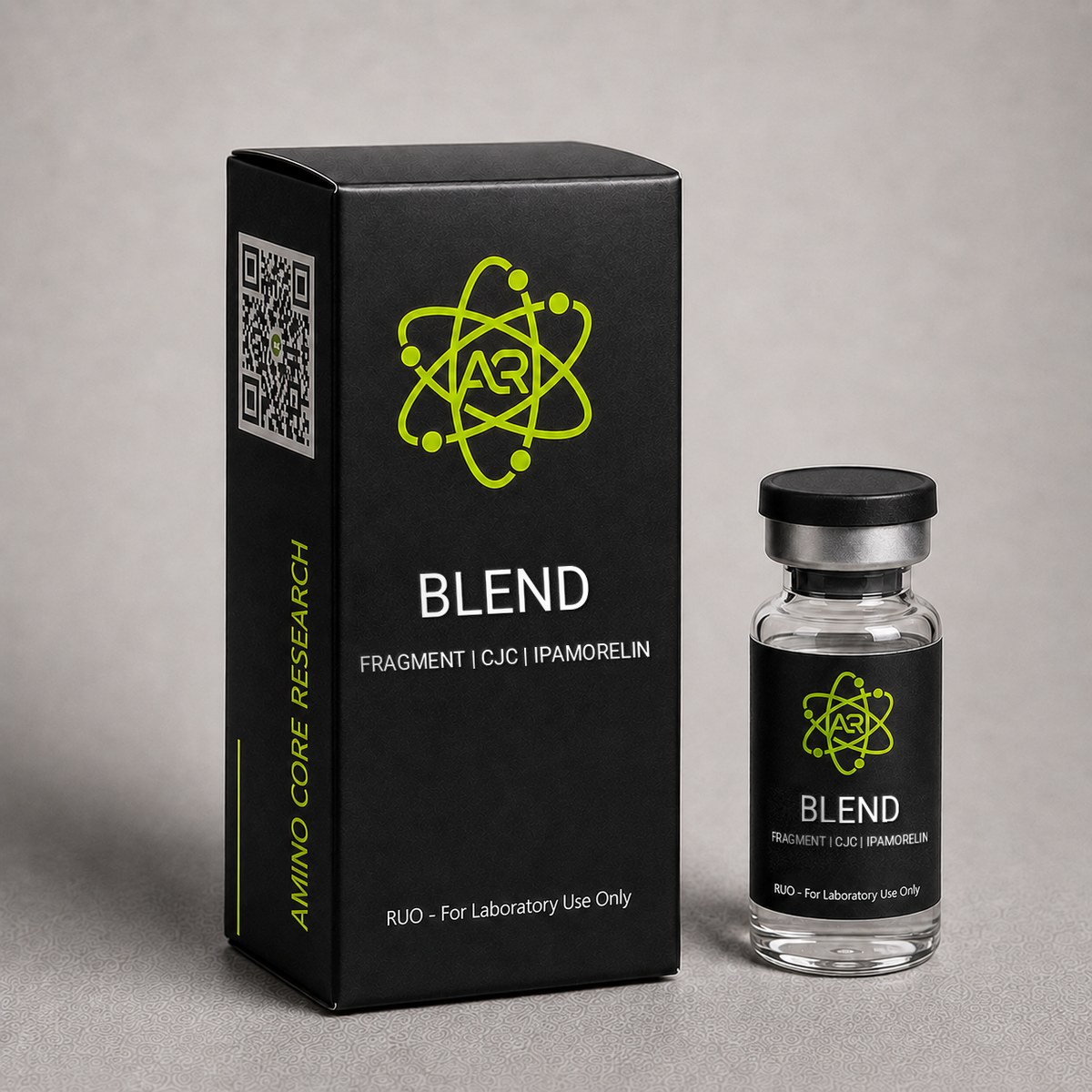
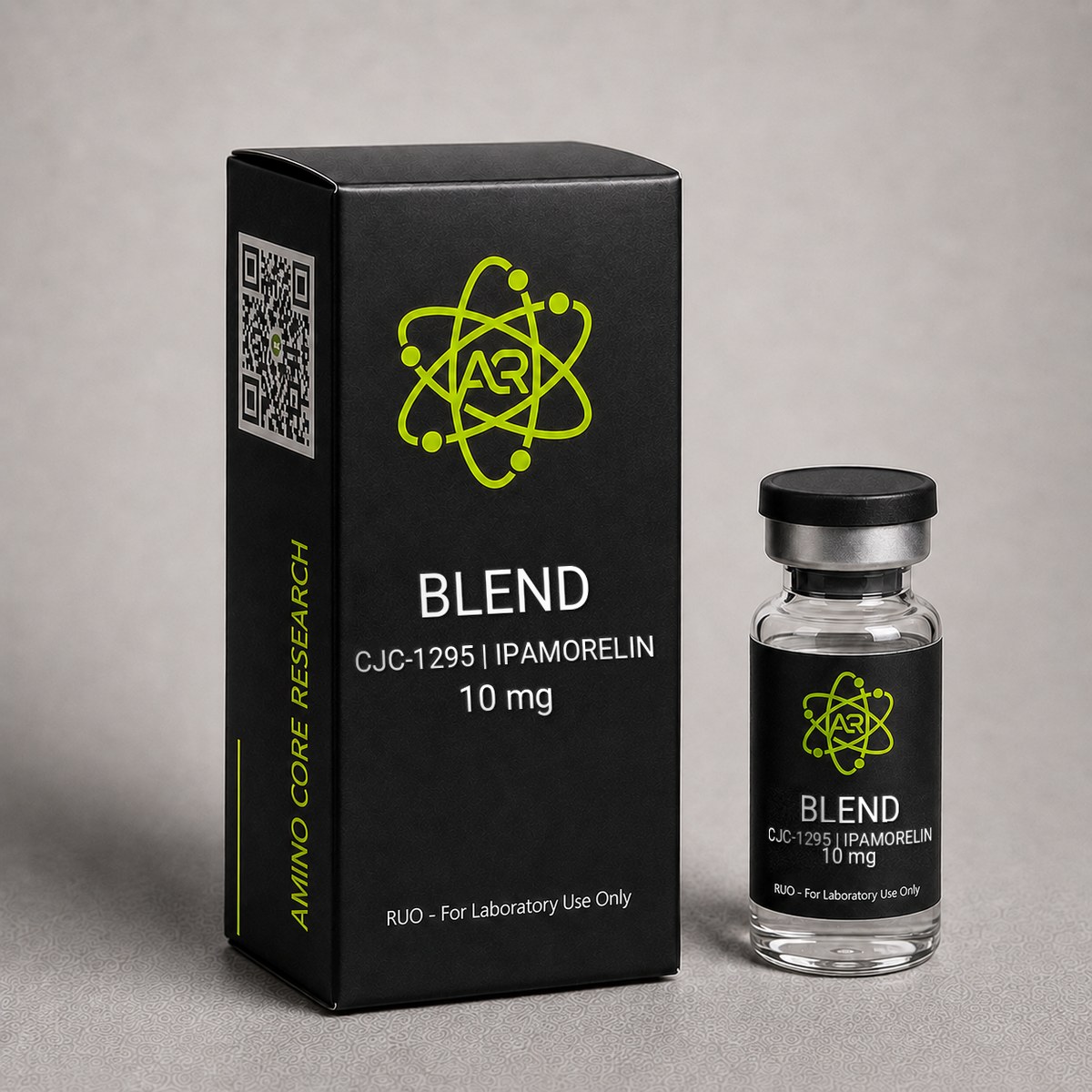
CJC-1295 (no DAC) + Ipamorelin Blend Peptide
Research blend pairing CJC-1295 (no DAC), a tetra-substituted GHRH(1-29) analog, with Ipamorelin, a selective pentapeptide GHS-R1a agonist, to study synergistic pulsatile growth hormone release via dual GHRH/ghrelin receptor activation.
$66.25
In stock — ships next business day
Best price — free shipping & bac water included
| Simple Peptide | GoAlpha Labs | AminoCore ✓ all‑in | |
|---|---|---|---|
| 10mg price | $65.00 | $53.99 | $66.25 |
| Shipping | +$13.00 | +$13.00 | FREE |
| Bac Water | +$30.00 | +$15.00 | FREE |
| Total paid | $108.00 | $81.99 | $66.25 save up to $41.75 |
Quick Facts
| SKU | ACR-BL-CI |
|---|---|
| CAS Number | 863288-34-0 (CJC-1295 no DAC) / 170851-70-4 (Ipamorelin) |
| Molecular Formula | C231H354N62O60S (CJC-1295 no DAC: C165H269N47O46) + (Ipamorelin: C38H49N9O5) |
| Molecular Weight | Combined: ~4453.4 g/mol (CJC-1295 no DAC: 3367.95 g/mol; Ipamorelin: 711.86 g/mol) |
| Sequence | CJC-1295 (no DAC): H-Tyr-D-Ala-Asp-Ala-Ile-Phe-Thr-Gln-Ser-Tyr-Arg-Lys-Val-Leu-Ala-Gln-Leu-Ser-Ala-Arg-Lys-Leu-Leu-Gln-Asp-Ile-Leu-Ser-Arg-NH2 | Ipamorelin: Aib-His-D-2-Nal-D-Phe-Lys-NH2 |
| Purity | ≥99% |
| Physical Form | Lyophilized Powder |
| Storage | Store at -20°C |
About the CJC-1295 + Ipamorelin Research Blend
This research blend co-formulates two complementary growth-hormone secretagogues that act on distinct but converging signaling pathways within anterior pituitary somatotrophs: CJC-1295 without DAC (also known as Mod GRF 1-29 or tetra-substituted GRF 1-29), a stabilized analog of growth-hormone-releasing hormone (GHRH), and Ipamorelin, a selective pentapeptide agonist of the growth-hormone secretagogue receptor (GHS-R1a, the ghrelin receptor).
CJC-1295 (no DAC) is a 30-residue peptide derived from human GHRH(1-29) with four amino-acid substitutions — D-Ala² (DPP-IV resistance), Gln⁸ (reduced asparagine deamidation), Ala¹⁵ (enhanced bioactivity), and Leu²⁷ (oxidation resistance). These modifications extend the in vivo half-life of the parent GHRH(1-29) sequence from approximately 7 minutes to roughly 30 minutes while preserving full agonist activity at the GHRH receptor (GHRHR), a class B G-protein-coupled receptor. GHRHR activation stimulates Gαs-coupled adenylyl cyclase, elevating intracellular cAMP, activating protein kinase A, and triggering GH gene transcription and exocytotic GH release. Unlike the DAC-modified variant (CJC-1295 with DAC, which conjugates to serum albumin via a maleimidopropionic-acid linker for multi-day half-life), the non-DAC version provides a discrete, pulsatile signal that more closely mimics endogenous GHRH kinetics.
Ipamorelin (Aib-His-D-2-Nal-D-Phe-Lys-NH₂) is a pentapeptide GHS-R1a agonist that activates the Gαq/phospholipase-C/IP₃ pathway in somatotrophs, mobilizing intracellular calcium and amplifying GH exocytosis. Crucially, ipamorelin demonstrates high selectivity for GHS-R1a with minimal stimulation of adrenocorticotropic hormone (ACTH), cortisol, or prolactin secretion at GH-releasing doses — a pharmacological profile that distinguishes it from earlier ghrelin mimetics such as GHRP-6 and GHRP-2 (Raun et al., 1998, PMID 9849822).
Mechanistic rationale for combining the two peptides:
- Pathway convergence: GHRH and ghrelin pathways activate independent G-protein cascades (Gαs/cAMP and Gαq/IP₃-Ca²⁺, respectively) that converge on GH exocytosis. Co-stimulation produces additive — and in several preclinical models, supra-additive — GH release compared to either agent alone.
- Somatostatin suppression: Ghrelin-receptor agonism also reduces hypothalamic somatostatin tone, removing the principal inhibitory brake on pituitary GH secretion and amplifying the GHRH signal.
- Pulsatile physiology: The short half-life of both peptides in this blend (no-DAC CJC-1295 ~30 min; ipamorelin ~2 h) generates discrete GH pulses rather than sustained elevation, preserving physiological feedback architecture.
- Selectivity: Ipamorelin's lack of cortisol/prolactin co-secretion provides a cleaner pharmacological readout for studies focused specifically on the somatotropic axis.
Research applications in published literature include investigation of GH/IGF-1 axis regulation, somatotroph signaling integration, secretagogue pharmacology, comparative dose-response studies versus monotherapy, and characterization of pulsatile versus tonic GH-release paradigms in animal and in vitro models.
Reference: Raun K, et al. Ipamorelin, the first selective growth hormone secretagogue. Eur J Endocrinol. 1998;139(5):552-561. PMID 9849822
For laboratory research use only. Not for human or veterinary use, diagnosis, or treatment.
Dual Receptor Mechanism
The CJC-1295/Ipamorelin combination activates two distinct receptor systems on pituitary somatotrophs simultaneously:
- CJC-1295 → GHRH Receptor (GHRH-R): Gs-coupled receptor activation → adenylyl cyclase → cAMP/PKA → increased GH mRNA transcription and vesicle exocytosis. This determines the amplitude of each GH pulse.
- Ipamorelin → GHS-R1a (Ghrelin Receptor): Gq/11-coupled receptor activation → PLC → IP3/DAG → intracellular Ca²⁺ release → GH vesicle fusion. This determines the frequency of GH pulses.
The two receptors converge on the same somatotroph cell but through different intracellular signaling pathways (cAMP vs Ca²⁺). This is why the combination produces synergistic rather than additive GH release — both the amplitude and frequency of GH pulses are simultaneously enhanced.
Selectivity advantage: Both CJC-1295 and Ipamorelin are highly selective. CJC-1295 does not activate cortisol or prolactin release (unlike CRH or TRH). Ipamorelin does not increase cortisol, prolactin, or appetite (unlike GHRP-6 which activates all three). The combination produces the cleanest possible GH signal from secretagogue peptides.
Research & Clinical Studies
Synergistic GH Release Research
The CJC-1295/Ipamorelin combination produces synergistic GH release through dual receptor activation: CJC-1295 activates GHRH receptors (amplifying pulse amplitude by 2-3x) while Ipamorelin activates GHS-R1a ghrelin receptors (increasing pulse frequency). Combined, they achieve 3-5x baseline GH elevation — significantly more than either compound alone. Critically, this combination preserves the natural pulsatile GH pattern rather than creating continuous, non-physiological elevation.
The combination is considered the "gold standard" GH research stack because it is selective: unlike GHRP-6 (which increases cortisol, prolactin, and appetite) or Hexarelin (cortisol increase), the CJC-1295/Ipamorelin pair stimulates GH release without significant effects on other hormonal axes.
Research: Synergistic GH Elevation Quantified
Comparative research quantifying the synergistic effect of the CJC/Ipamorelin combination:
- CJC-1295 alone: 2-3x baseline GH peak (GHRH-R amplitude effect)
- Ipamorelin alone: 2-3x baseline GH peak (GHS-R1a frequency effect)
- CJC-1295 + Ipamorelin combined: 5-8x baseline GH peak (synergistic: amplitude × frequency)
The synergy follows the pharmacological principle that agonists acting through different receptor systems on the same effector cell (somatotroph) produce multiplicative rather than additive responses. This is analogous to how beta-agonists + anticholinergics produce synergistic bronchodilation through different receptor pathways on the same airway smooth muscle cell.
Advantages Over Single-Agent Protocols
Research comparing the CJC/Ipamorelin combination to single-agent GH secretagogue protocols reveals several advantages:
- vs GHRP-6 alone: No hunger increase, no cortisol spike, no prolactin elevation
- vs Hexarelin alone: No cortisol increase, no desensitization (Hexarelin loses efficacy after ~14 days; CJC/Ipa does not)
- vs MK-677 alone: More physiological pulsatile GH pattern (MK-677 produces continuous 24h elevation that may downregulate GH receptors)
- vs exogenous GH: Preserves hypothalamic-pituitary feedback, maintains pulsatility, no suppression of endogenous GH production
The lack of desensitization is particularly important — the blend can be used in long-term research protocols without the efficacy fade seen with GHRP-6 and especially Hexarelin.
Comparative Study: GHRH + GHRP Synergy in Healthy Adults
One of the foundational studies establishing the rationale for combining a GHRH analog (such as CJC-1295 no DAC, a tetra-substituted GRF(1-29)) with a growth hormone secretagogue (such as Ipamorelin) was conducted by Bowers and colleagues, who demonstrated that the co-administration of GHRH with a GHRP produces growth hormone (GH) release that exceeds the simple additive sum of either peptide alone.
Study Design:
- Subjects: Healthy adult male and female volunteers
- Design: Crossover comparison of GHRH alone, GHRP alone, and GHRH + GHRP co-administration
- Endpoint: Serum GH AUC over 120 minutes post-administration
Key Findings:
- GHRH alone produced a ~10-fold increase over baseline GH
- GHRP alone produced a ~15-fold increase over baseline GH
- GHRH + GHRP co-administration produced a greater than additive response, with peak GH levels frequently exceeding the arithmetic sum of the two individual responses
- The synergistic effect was observed across age groups and was attributed to complementary mechanisms — GHRH amplifying somatotroph cAMP signaling while the GHRP simultaneously suppressed somatostatin tone and activated phospholipase C signaling
Research Context: This synergy is the mechanistic basis for combining CJC-1295 (no DAC) and Ipamorelin in a single research blend. Because Ipamorelin is the most selective GHS-R agonist studied — lacking measurable cortisol or prolactin elevation seen with GHRP-2 or GHRP-6 — the CJC-1295/Ipamorelin pairing has become a benchmark research model for clean, pulsatile GH-axis activation in preclinical studies.
[1] Bowers CY, Reynolds GA, Durham D, Barrera CM, Pezzoli SS, Thorner MO. Growth hormone (GH)-releasing peptide stimulates GH release in normal men and acts synergistically with GH-releasing hormone. J Clin Endocrinol Metab. 1990;70(4):975-982. PubMed ↗
[2] Raun K, Hansen BS, Johansen NL, et al. Ipamorelin, the first selective growth hormone secretagogue. Eur J Endocrinol. 1998;139(5):552-561. PubMed ↗
Preclinical Validation: GHRH Analog + GHRP Co-Administration
Foundational preclinical work established that combining a GHRH analog with a growth hormone-releasing peptide (GHRP) produces supra-additive growth hormone release that neither compound achieves alone. Bowers and colleagues, in seminal work characterizing GHRP synergy with GHRH, demonstrated that the two classes of secretagogues act through distinct yet complementary pathways and that their combination produces a markedly amplified GH pulse rather than a simple summation of individual responses.
Key preclinical observations relevant to the CJC-1295 (no DAC) + Ipamorelin blend:
- Synergistic amplitude: Co-administration of a GHRH analog with a GHRP produces GH peaks 2- to 5-fold higher than the larger of the two single-agent responses in animal and early human studies.
- Somatostatin tone reduction: GHRPs (including Ipamorelin) functionally antagonize somatostatin at the somatotroph, removing the brake on GHRH-stimulated GH release.
- Pulsatility preservation: Unlike continuous GH or GHRH exposure, pulsatile co-secretagogue stimulation preserves the episodic GH secretion pattern that downstream IGF-1 signaling depends upon.
- Selectivity profile: Ipamorelin, unlike GHRP-2 and GHRP-6, did not elevate cortisol, prolactin, or ACTH in preclinical models, making the blend a cleaner research probe for isolating somatotropic effects.
These mechanistic findings provided the rationale for combining a short-acting GHRH analog (CJC-1295 without DAC, t½ ~30 min) with a selective GHS-R1a agonist (Ipamorelin, t½ ~2 h). The pairing is used in research to model square-wave versus pulsatile GH exposure and to dissect GHRH-dependent versus ghrelin-dependent contributions to somatotroph activation.
Pharmacokinetic Rationale: Why CJC-1295 Without DAC Is Paired With Ipamorelin
The selection of CJC-1295 without the Drug Affinity Complex (DAC) for blending with Ipamorelin is a deliberate pharmacokinetic choice studied in receptor pharmacology research. The non-DAC tetrasubstituted GHRH(1-29) analog (also called CJC-1295 no DAC, Mod GRF 1-29) carries four amino acid substitutions — D-Ala², Gln⁸, Ala¹⁵, and Leu²⁷ — that confer enzymatic stability against DPP-IV and trypsin-like proteolysis without extending the half-life into the multi-day range characteristic of the DAC-conjugated version.
Teichman and colleagues characterized the pharmacokinetics of CJC-1295 with DAC, showing a sustained half-life of ~6-8 days due to covalent albumin binding via the maleimidopropionic acid linker. This prolonged exposure produces a continuous, non-pulsatile elevation in GH and IGF-1 — useful for some research models, but incompatible with studying acute pulsatile co-secretagogue dynamics.
Key pharmacokinetic differences exploited in the no-DAC + Ipamorelin blend:
- CJC-1295 no DAC half-life: ~30 minutes — short enough to produce a discrete GH pulse rather than tonic stimulation.
- Ipamorelin half-life: ~2 hours — provides a complementary GHS-R1a stimulation window.
- Pulse architecture: The combination produces a single, well-defined GH pulse with peak at ~30-60 min and return to baseline within 3-4 hours, mirroring physiological nocturnal pulses.
- IGF-1 modeling: Pulsatile rather than continuous GH exposure permits study of intermittent JAK2/STAT5 activation and downstream hepatic IGF-1 transcription.
This pharmacokinetic profile makes the no-DAC blend the preferred tool in research that aims to model endogenous-pattern GH secretion, whereas DAC-modified analogs are used when sustained square-wave exposure is the experimental objective.
[1] Teichman SL, Neale A, Lawrence B, Gagnon C, Castaigne JP, Frohman LA. Prolonged stimulation of growth hormone (GH) and insulin-like growth factor I secretion by CJC-1295, a long-acting analog of GH-releasing hormone, in healthy adults. J Clin Endocrinol Metab. 2006;91(3):799-805. PubMed ↗
[2] Sackmann-Sala L, Ding J, Frohman LA, Kopchick JJ. Activation of the GH/IGF-1 axis by CJC-1295, a long-acting GHRH analog, results in serum protein profile changes in normal adult subjects. Growth Horm IGF Res. 2009;19(6):471-7. PubMed ↗
Blend Specifications
| Components | CJC-1295 without DAC (Mod GRF 1-29) + Ipamorelin |
|---|---|
| CJC-1295 Target | GHRH-R (Gs-coupled, cAMP/PKA pathway) |
| Ipamorelin Target | GHS-R1a (Gq/11-coupled, PLC/Ca²⁺ pathway) |
| Synergy Type | Multiplicative (different receptor pathways on same cell) |
| GH Elevation | 5-8x baseline (vs 2-3x for either alone) |
| Selectivity | GH only — no cortisol, prolactin, or appetite increase |
| Desensitization | None reported (unlike GHRP-6, Hexarelin) |
| Purity | ≥99% per component, HPLC verified |
Handling & Reconstitution
Reconstitution procedure: Select bacteriostatic water (0.9% benzyl alcohol in sterile water) as the standard diluent for research applications; sterile water or 0.9% saline may also be used when a preservative-free vehicle is required for in vitro assays. Calculate diluent volume based on the desired working concentration — for example, adding 2 mL of diluent to a 5 mg CJC-1295 / 5 mg Ipamorelin blended vial yields nominal concentrations of 2.5 mg/mL for each peptide.
Technique:
- Allow both the lyophilized vial and the diluent to reach room temperature before opening to avoid condensation on cold glass surfaces.
- Wipe the vial septum with 70% isopropanol and allow to air-dry.
- Draw the diluent into a sterile syringe and inject it slowly down the inner glass wall of the vial rather than directly onto the peptide cake. The shear forces of a direct jet can mechanically disrupt the lyophilized matrix and promote aggregation.
- Allow the vial to stand undisturbed for 5-10 minutes. Gently swirl or roll between the palms — do not shake or vortex aggressively, as foaming introduces air-water interfaces that denature peptides and accelerate aggregation.
- Inspect the reconstituted solution: it should be clear and colorless with no visible particulates. Discard any vial showing cloudiness, precipitate, or discoloration.
Blend-specific notes: Because the vial contains two peptides co-lyophilized in a single cake, complete dissolution of both components occurs simultaneously upon reconstitution. The molar ratio is fixed by the manufacturing fill, so investigators cannot independently titrate CJC-1295 versus Ipamorelin from a single blended vial. For experimental designs that require independent dose-response curves, staggered administration timing, or single-peptide control arms, AminoCore Research offers individual vials of CJC-1295 (no DAC) and Ipamorelin that can be reconstituted and dosed separately.
Aliquoting and storage post-reconstitution: For studies extending beyond 14 days, divide the reconstituted solution into single-use aliquots in low-protein-binding polypropylene tubes (e.g., Eppendorf LoBind) and store at -20°C or -80°C. Avoid repeated freeze-thaw cycles, which compromise peptide integrity through ice-crystal-induced denaturation and solute concentration effects. Label each aliquot with peptide identity, concentration, reconstitution date, and diluent lot for traceability.
Personal protective equipment: Standard laboratory PPE — nitrile gloves, lab coat, and safety glasses — should be worn during all reconstitution and handling steps. Work within a biosafety cabinet or clean laminar-flow hood when sterility is critical for downstream cell-culture or in vivo research applications.
For laboratory research use only.
Storage & Stability
Lyophilized powder: When stored desiccated at -20°C in the original sealed vial, the lyophilized CJC-1295 + Ipamorelin blend remains chemically stable for approximately 24 months. The lyophilization process removes residual water that would otherwise catalyze peptide-bond hydrolysis, deamidation of asparagine/glutamine residues, and oxidation of methionine or other susceptible side chains. Lower temperatures further slow these degradation pathways by reducing molecular motion and reaction kinetics.
Short-term ambient exposure: Brief transit at ambient temperature (commonly 3-7 days) generally does not compromise lyophilized peptide integrity because the dry-state matrix limits hydrolytic and oxidative chemistry. Upon receipt, vials should be transferred promptly to -20°C (or colder) for long-term archival storage.
Reconstituted solution: After reconstitution with bacteriostatic water (typically 0.9% benzyl alcohol), the solution should be stored at 2-8°C, protected from light, and used within approximately 14 days. Both CJC-1295 (Mod GRF 1-29) and Ipamorelin share similar aqueous-phase stability profiles in this temperature range. Bacteriostatic water suppresses microbial growth but does not arrest chemical degradation; therefore, reconstituted aliquots gradually accumulate des-amido, oxidized, and truncated species over time.
Stability considerations specific to the blend:
- CJC-1295 (no DAC): The four amino-acid substitutions (D-Ala², Gln⁸, Ala¹⁵, Leu²⁷) confer resistance to dipeptidyl peptidase-IV (DPP-IV) and trypsin-like proteases, improving stability relative to native GHRH(1-29) in solution.
- Ipamorelin: A pentapeptide (Aib-His-D-2-Nal-D-Phe-Lys-NH₂) with C-terminal amidation and non-natural residues, providing relatively high chemical and enzymatic robustness in aqueous buffer.
- Co-formulation: No published evidence of adverse peptide-peptide interactions, precipitation, or cross-degradation in the blended lyophilizate at standard research concentrations.
Handling best practices: Protect both lyophilized and reconstituted material from direct light (UV exposure accelerates oxidation of aromatic residues). Avoid repeated freeze-thaw cycles of reconstituted solution, as ice-crystal formation can denature peptide structure and concentrate solutes at phase boundaries. For protocols requiring multiple withdrawals, prepare single-use aliquots in low-bind polypropylene tubes and store at -20°C or -80°C. Always equilibrate frozen aliquots to 2-8°C before opening to minimize condensation on cold surfaces, which can introduce moisture and microbial contaminants. Document reconstitution date, diluent lot, and storage location on the vial for chain-of-custody and reproducibility purposes.
For laboratory research use only. Not for human or veterinary use.
Frequently Asked Questions
What is the CJC-1295 + Ipamorelin blend?
This blend combines CJC-1295 no DAC (GHRH receptor agonist) with Ipamorelin (selective ghrelin receptor agonist). They target complementary pathways on pituitary somatotrophs, producing synergistic GH release. For research use only.
Why is this blend preferred over using GH directly?
The CJC-1295/Ipamorelin combination stimulates endogenous GH release, preserving pulsatility and feedback regulation. Exogenous GH provides continuous non-physiological levels that suppress natural production. The blend approach maintains hypothalamic-pituitary feedback and produces a more physiological GH profile.
Why is this combination called the "gold standard" GH stack?
It produces the highest GH elevation (5-8x baseline) with the cleanest selectivity profile (no cortisol, prolactin, or appetite effects) and no desensitization. No other secretagogue combination achieves this balance of potency and selectivity.
Can I buy CJC-1295 and Ipamorelin separately instead?
Yes, both compounds are available individually in our catalog. The blend offers convenience and pre-optimized ratios. Separate vials allow researchers to adjust individual dosing and timing for customized protocols.
Does the CJC/Ipa blend cause desensitization?
No. Unlike GHRP-6 (moderate desensitization after 2-4 weeks) and Hexarelin (significant desensitization after 14 days), the CJC-1295/Ipamorelin combination maintains efficacy in long-term protocols. This is attributed to the selective receptor activation profile.
What is the difference between CJC-1295 with DAC and CJC-1295 without DAC in this Ipamorelin blend?
CJC-1295 with DAC (Drug Affinity Complex) contains a maleimidopropionic acid linker that binds covalently to serum albumin, extending its half-life to approximately 6-8 days and producing tonic, non-pulsatile GHRH stimulation. CJC-1295 without DAC (also called Modified GRF(1-29) or CJC-1295 no-DAC) lacks this albumin-binding moiety and has a half-life of approximately 30 minutes. The no-DAC variant is paired with Ipamorelin specifically because its short action preserves the natural pulsatile pattern of GH secretion, which research suggests is more physiologically relevant than the continuous elevation produced by DAC-conjugated analogs.
What is the molecular makeup of the CJC-1295 + Ipamorelin blend?
The blend contains two distinct peptides. CJC-1295 (no DAC) is a 30-amino-acid GHRH analog with the sequence Tyr-D-Ala-Asp-Ala-Ile-Phe-Thr-Gln-Ser-Tyr-Arg-Lys-Val-Leu-Ala-Gln-Leu-Ser-Ala-Arg-Lys-Leu-Leu-Gln-Asp-Ile-Leu-Ser-Arg-NH₂, molecular formula C₁₅₂H₂₅₂N₄₄O₄₂, MW ~3367.9 g/mol, CAS 863288-34-0. Ipamorelin is a pentapeptide with the sequence Aib-His-D-2-Nal-D-Phe-Lys-NH₂, molecular formula C₃₈H₄₉N₉O₅, MW 711.85 g/mol, CAS 170851-70-4. The combined lyophilized vial contains both peptides at researcher-specified ratios.
How is the CJC-1295 + Ipamorelin blend reconstituted for research?
Lyophilized CJC-1295/Ipamorelin blend vials are reconstituted with bacteriostatic or sterile water. A typical protocol uses 2 mL of diluent for a vial containing 5 mg total peptide, yielding a working concentration of 2.5 mg/mL combined peptide. Diluent should be added slowly down the side of the vial without aiming the stream directly at the lyophilized cake. The vial is then gently swirled — never shaken or vortexed — until the powder is fully dissolved. Reconstituted solutions should be stored at 2-8°C and used within 14-28 days for research purposes.
Why does Ipamorelin not raise cortisol or prolactin like other GHRPs in this blend?
Ipamorelin is structurally distinct from earlier-generation GHRPs (GHRP-2, GHRP-6, hexarelin) and demonstrates highly selective binding to the GHS-R1a (ghrelin receptor) without meaningful cross-reactivity at receptors mediating ACTH/cortisol or prolactin release. In the original characterization studies by Raun et al. (1998), Ipamorelin produced GH release comparable to GHRP-6 but did not elevate cortisol, ACTH, or prolactin above baseline. This selectivity is why Ipamorelin is preferred over older GHRPs when combined with CJC-1295 (no DAC) in research blends — it isolates the GH pulse from confounding HPA-axis activation, providing a cleaner experimental model.
What is the half-life of the CJC-1295 + Ipamorelin blend in research models?
The two components have distinct half-lives that together define the blend's pharmacokinetic window. CJC-1295 without DAC has a circulating half-life of approximately 30 minutes, conferred by its four stabilizing amino acid substitutions (D-Ala², Gln⁸, Ala¹⁵, Leu²⁷) that resist DPP-IV cleavage. Ipamorelin has a half-life of roughly 2 hours. In combination, they generate a single discrete GH pulse peaking at 30-60 minutes with return to baseline within 3-4 hours, modeling endogenous pulsatile secretion rather than the multi-day continuous exposure produced by DAC-conjugated CJC-1295.
How does the CJC-1295 + Ipamorelin blend interact with somatostatin in research models?
The blend exploits two complementary anti-somatostatin mechanisms. CJC-1295 (no DAC), as a GHRH analog, directly stimulates the GHRH receptor on somatotrophs to drive cAMP/PKA-dependent GH transcription and release, but its action is opposed by somatostatin tone via SSTR2/SSTR5. Ipamorelin, acting at GHS-R1a, functionally antagonizes somatostatin signaling at the somatotroph and reduces hypothalamic somatostatin release. By simultaneously increasing GHRH drive and lowering the somatostatin brake, the blend produces a supra-additive GH pulse that neither compound achieves in isolation, which is the mechanistic basis for the often-cited 2- to 5-fold synergy.
What purity and quality specifications apply to the AminoCore Research CJC-1295 + Ipamorelin blend?
The CJC-1295 (no DAC) + Ipamorelin blend supplied by AminoCore Research is manufactured to ≥99% HPLC purity for each peptide component, lyophilized as a sterile white powder, and accompanied by a Certificate of Analysis documenting identity (mass spectrometry), purity (RP-HPLC), peptide content, and residual solvents. The blend is intended strictly for in vitro and preclinical research applications. Each vial contains a defined ratio of the two peptides — typically 2:1 CJC-1295 no DAC to Ipamorelin by mass — and is packaged under inert atmosphere to minimize oxidation of methionine-adjacent and aromatic residues during storage.
How does the CJC-1295 + Ipamorelin blend compare to Sermorelin + GHRP-6 in research?
Both pairings combine a GHRH analog with a ghrelin-receptor agonist, but the pharmacological profiles differ meaningfully. Sermorelin is unmodified GHRH(1-29) with a half-life of only ~10-12 minutes, whereas CJC-1295 (no DAC) carries four stabilizing substitutions that extend its half-life to ~30 minutes and increase potency at the GHRH receptor. On the GHRP side, GHRP-6 robustly stimulates GHS-R1a but also elevates cortisol, prolactin, and appetite-driving signaling, while Ipamorelin is a selective GHS-R1a agonist that does not significantly affect cortisol, prolactin, or ACTH in preclinical models. The CJC-1295 + Ipamorelin blend is therefore favored as a cleaner research probe for isolating somatotropic axis effects.
For laboratory and research use only. This product is not for human or veterinary use. It is not a drug, supplement or food.
This product is not FDA approved for any indication, and is not intended to diagnose, treat, cure, or prevent any disease. All product information is derived from published preclinical research and does not constitute medical advice or claims.