≥99%HPLC Purity
COAIncluded
USAShipped
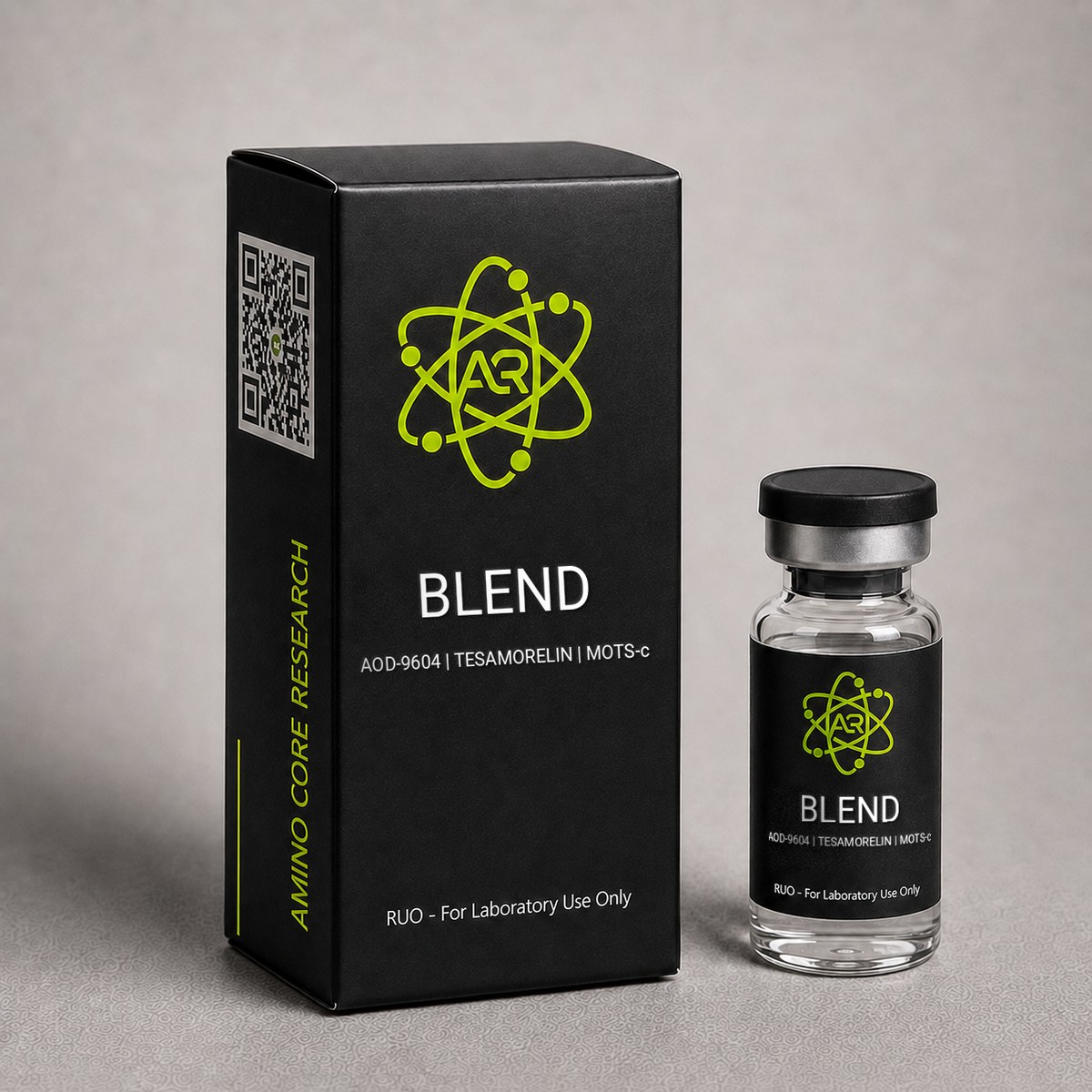
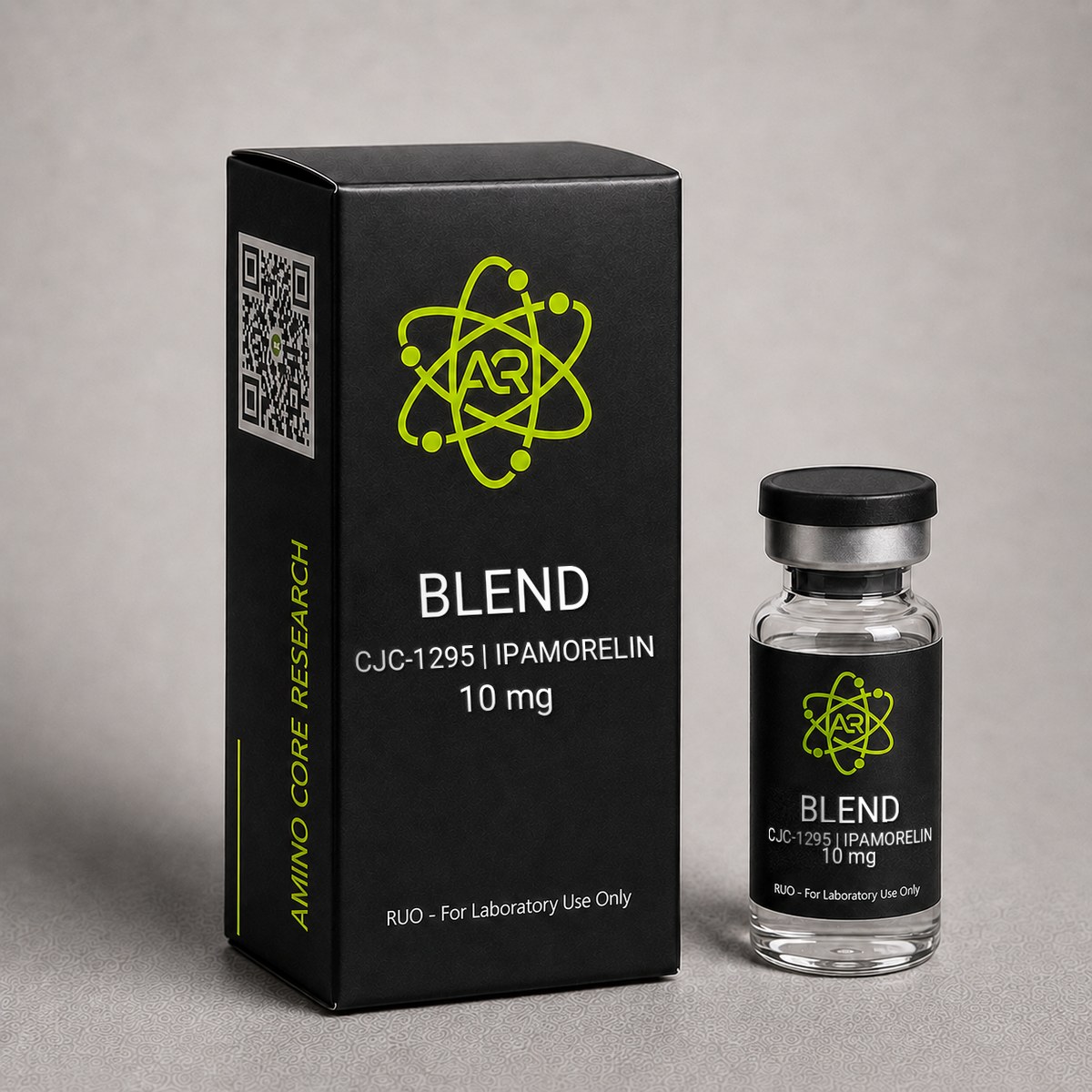
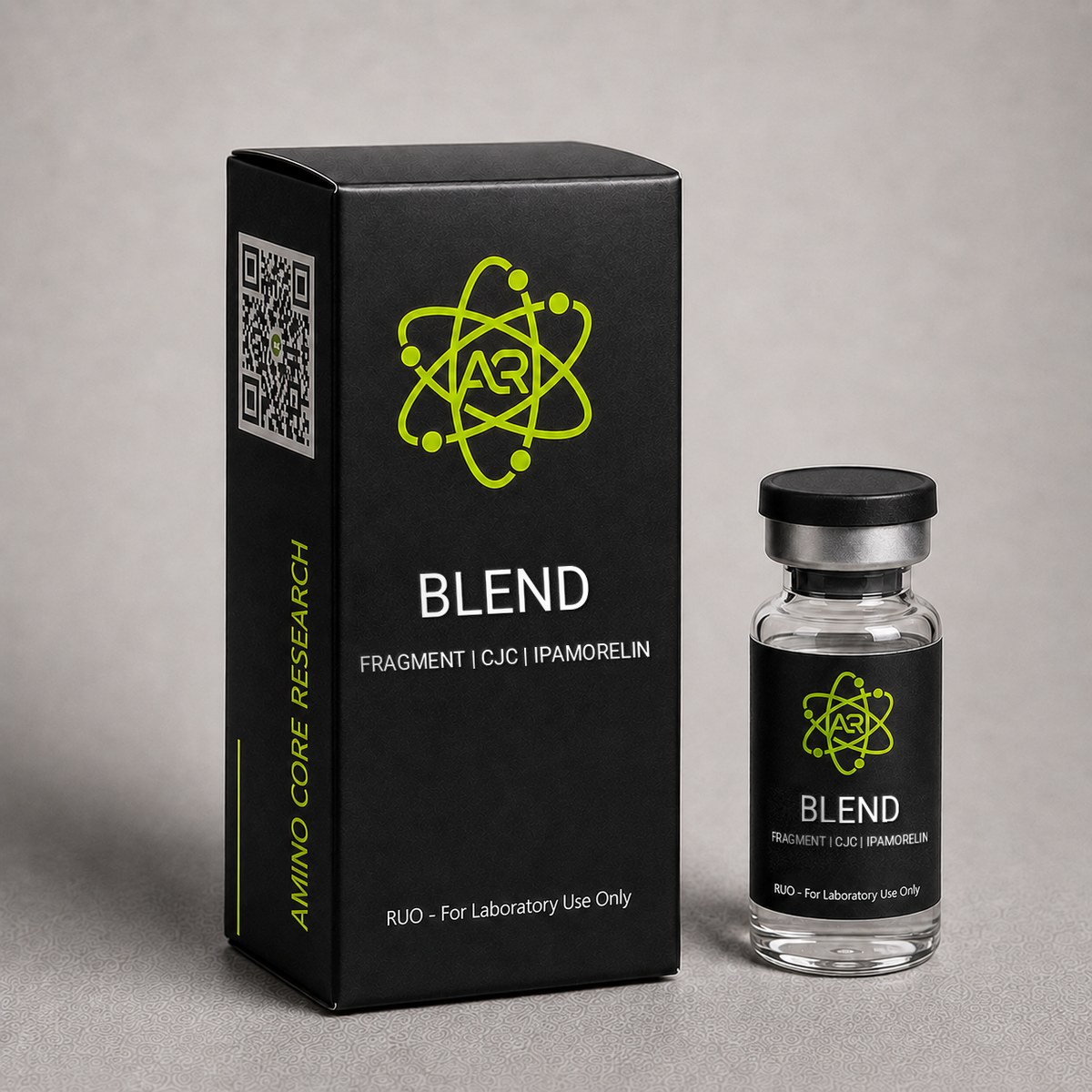
Fragment/CJC/Ipamorelin Blend
Triple-action growth hormone axis research blend: HGH Fragment 176-191 (lipolysis) + CJC-1295 (GHRH analog) + Ipamorelin (GHS). Synergistic GH research compound.
Research Reference
This page is a research monograph. Fragment/CJC/Ipamorelin Blend is documented here for reference — structure, mechanism and published literature — and is not offered for sale.
Browse compounds available for research purchase · Read the research library
Quick Facts
| SKU | FCIB-001 |
|---|---|
| Purity | ≥99% |
| Physical Form | Lyophilized Powder |
| Storage | Store at -20°C |
What is Fragment/CJC/Ipamorelin Blend?
Triple-action GH axis research blend combining HGH Fragment 176-191 (direct lipolysis via beta-3 adrenergic pathway), CJC-1295 (sustained GHRH receptor activation for GH elevation), and Ipamorelin (selective ghrelin receptor-mediated GH pulse). The three compounds target different GH-related pathways for comprehensive growth hormone axis research.
Mechanism of Action: Triple-Pathway GH Axis Modulation
The Fragment 176-191 / CJC-1295 / Ipamorelin blend engages three distinct but complementary pathways within the somatotropic axis and adipose lipolysis machinery. Each component has been characterized independently in the literature, and their combination is studied because the mechanisms are non-redundant — one mimics a lipolytic GH fragment, one provides sustained GHRH-receptor activation, and one provides pulsatile ghrelin-receptor (GHS-R1a) activation.
HGH Fragment 176-191 — Lipolytic C-Terminal Domain
HGH Fragment 176-191 is a synthetic analog of the C-terminal region of human growth hormone (residues 176–191). Unlike full-length GH, the fragment does not bind the canonical GH receptor with high affinity and therefore does not appear to drive hepatic IGF-1 output in preclinical models. Instead, research suggests the fragment promotes lipolysis in adipocytes and inhibits lipogenesis, with proposed signaling through β3-adrenergic-like pathways and altered fatty acid oxidation. Ng and colleagues demonstrated the lipolytic and anti-lipogenic activity of this C-terminal fragment in ob/ob mouse models without the hyperglycemic effects associated with intact GH.[1]
CJC-1295 — Long-Acting GHRH Analog
CJC-1295 is a tetra-substituted analog of growth hormone-releasing hormone (GHRH 1–29) with D-Ala, Gln, Ala, and Leu substitutions that confer resistance to dipeptidyl peptidase-IV (DPP-IV) cleavage. In the DAC (drug-affinity complex) form, a maleimidopropionic acid linker enables covalent binding to circulating albumin, extending half-life to multiple days. The non-DAC variant (also called Modified GRF 1-29 or CJC-1295 without DAC) retains the protease-resistant substitutions but lacks the albumin-binding moiety, yielding a half-life on the order of 30 minutes. CJC-1295 binds the GHRH receptor (GHRHR), a class B GPCR on anterior pituitary somatotrophs, activating Gαs–adenylyl cyclase–cAMP–PKA signaling and increasing GH transcription and pulsatile secretion.[2]
Ipamorelin — Selective Ghrelin Receptor Agonist
Ipamorelin is a pentapeptide (Aib-His-D-2-Nal-D-Phe-Lys-NH2) growth hormone secretagogue that selectively activates the ghrelin receptor (GHS-R1a) on pituitary somatotrophs and hypothalamic neurons. GHS-R1a coupling to Gαq–phospholipase C–IP3/DAG–PKC drives calcium-dependent GH release. In rat studies, Raun et al. characterized ipamorelin as releasing GH with potency comparable to GHRP-6 but without the parallel increases in ACTH, cortisol, or prolactin observed with earlier secretagogues — a selectivity profile that makes it a frequent comparator in GH-axis research.[3]
Why the Three Pathways Are Studied Together
GHRH-receptor activation (CJC-1295) and ghrelin-receptor activation (Ipamorelin) are synergistic in vivo: GHRH amplifies the somatotroph response to ghrelin agonists, and ghrelin agonists suppress somatostatin tone, removing the brake on GHRH-driven pulses. Layering HGH Fragment 176-191 onto this dual GH-secretagogue base adds a peripheral lipolytic signal that is mechanistically independent of pituitary GH output. Researchers studying body composition models often select this triple combination specifically because it dissociates the GH-pulse stimulus (central) from the adipose lipolysis stimulus (peripheral).
Research & Clinical Studies
Research on CJC-1295 + Ipamorelin: Synergistic GH Pulse Amplification
The pairing of CJC-1295 (a GHRH analog) with Ipamorelin (a selective ghrelin receptor agonist / GH secretagogue) is one of the most extensively investigated GH-axis combinations in preclinical research. The rationale is mechanistic: CJC-1295 binds the GHRH receptor on somatotrophs to drive cyclic AMP-mediated GH synthesis and release, while Ipamorelin activates the growth hormone secretagogue receptor (GHS-R1a) to suppress somatostatin tone and amplify the GH pulse. When delivered together, the two pathways converge on the same somatotroph population, producing GH release that exceeds the additive effect of either compound alone.
In a landmark pharmacokinetic and pharmacodynamic study by Teichman and colleagues (2006), CJC-1295 administered to healthy adults produced sustained elevations in mean GH concentrations of 2- to 10-fold across multiple dose cohorts, with IGF-1 elevations of 1.5- to 3-fold persisting for up to 28 days after a single subcutaneous dose. The study established the long half-life of the DAC (drug-affinity complex) variant — approximately 8 days — driven by covalent albumin binding via the maleimidopropionyl-Lys linker.
Ipamorelin's selectivity profile was characterized by Raun et al. (1998), who demonstrated that the pentapeptide stimulates GH release with potency comparable to GHRP-6 but without stimulating ACTH, cortisol, or prolactin release at GH-releasing doses. In swine studies, Ipamorelin produced clean GH pulses with no measurable rise in stress hormones — a feature that distinguishes it from earlier-generation secretagogues such as GHRP-2 and Hexarelin.
When the two compounds are co-administered in preclinical models, peak GH amplitudes have been reported in the range of 5-10× baseline, with the pulse architecture more closely resembling endogenous nocturnal GH secretion than either compound alone. This biomimetic pulsatility is considered important in research contexts because tonic (non-pulsatile) GH exposure desensitizes peripheral GH receptors and alters downstream IGF-1 signaling.
Key Findings Summary
- CJC-1295 alone: 2-10× GH elevation, 1.5-3× IGF-1, half-life ~8 days (DAC form)
- Ipamorelin alone: Selective GH pulse with no ACTH/cortisol/prolactin elevation at effective doses
- Combination: Synergistic GH release exceeding additive predictions; pulsatile profile preserved
- Tolerability in research: Lower incidence of off-target endocrine effects vs. GHRP-2/GHRP-6 combinations
The addition of HGH Fragment 176-191 to this dual stack introduces a mechanistically distinct third arm. Fragment 176-191 does not bind the GH or GHS receptors and does not elevate IGF-1; rather, it is investigated for direct effects on adipocyte lipolysis via beta-3 adrenergic receptor pathway interactions, as characterized in murine adipose tissue studies. This separation of mechanisms — GH axis stimulation from CJC/Ipamorelin, lipolytic signaling from Fragment 176-191 — is the conceptual basis for the triple blend.
[1] Teichman SL, Neale A, Lawrence B, Gagnon C, Castaigne JP, Frohman LA. Prolonged stimulation of growth hormone (GH) and insulin-like growth factor I secretion by CJC-1295, a long-acting analog of GH-releasing hormone, in healthy adults. J Clin Endocrinol Metab. 2006;91(3):799-805. PubMed ↗
[2] Raun K, Hansen BS, Johansen NL, Thøgersen H, Madsen K, Ankersen M, Andersen PH. Ipamorelin, the first selective growth hormone secretagogue. Eur J Endocrinol. 1998;139(5):552-61. PubMed ↗
HGH Fragment 176-191: Lipolytic Activity in Preclinical Models
HGH Fragment 176-191 corresponds to the C-terminal region of the 191-amino-acid human growth hormone molecule and has been investigated as a structurally minimal peptide that retains the lipolytic and anti-lipogenic properties of full-length GH while lacking the diabetogenic and IGF-1-elevating effects mediated by the N-terminal binding domain. This functional separation was first demonstrated in the work of Ng and colleagues at Monash University and has been refined through subsequent investigations into adipose tissue signaling.
In a foundational study by Heffernan et al. (2001), the fragment was shown to increase lipolysis and inhibit lipogenesis in mice in a manner that did not require GH receptor binding. The researchers reported that transgenic mice expressing the fragment exhibited reduced adipose tissue mass compared to controls, without the somatic overgrowth or hyperinsulinemia characteristic of full-length GH overexpression. Importantly, plasma IGF-1 levels in fragment-treated animals were not elevated, confirming the dissociation of metabolic from somatotropic effects.
Study Design and Results — Heffernan et al. (2001)
- Model: Transgenic and wild-type mice receiving AOD9604 (analog of 176-191) or vehicle
- Duration: Chronic dosing, 14-19 days
- Key result: Body fat reduced significantly in fragment-treated animals
- IGF-1: No significant change vs. vehicle
- Glucose tolerance: Improved or unchanged — no diabetogenic effect
The proposed mechanism involves enhanced expression of beta-3 adrenergic receptors on adipocytes, leading to increased cyclic AMP signaling, hormone-sensitive lipase activation, and triglyceride hydrolysis. Subsequent in vitro work on isolated adipocytes confirmed dose-dependent glycerol release — a marker of lipolysis — with the fragment showing activity in the nanomolar range. Critically, the fragment did not stimulate proliferation in cell lines expressing the GH receptor, supporting the receptor-independent mechanism hypothesis.
In the context of the triple blend, the fragment contributes a metabolic component that is mechanistically orthogonal to the GH-releasing actions of CJC-1295 and Ipamorelin. Because the fragment neither stimulates pituitary GH release nor elevates IGF-1, its inclusion does not amplify the somatotropic signal generated by the other two components. Research models can therefore be designed to dissect adipose-specific lipolytic signaling from GH/IGF-1-mediated systemic effects when comparing the blend to CJC/Ipamorelin alone.
It should be noted that human clinical translation of fragment 176-191's lipolytic effects has been mixed. A Phase 2b clinical trial of AOD9604 (a closely related analog) in obese adults reported modest weight reduction that did not reach the threshold for regulatory advancement, highlighting a gap between rodent and human responsiveness that remains an active research question. For laboratory research applications, however, the fragment remains a well-characterized tool for probing GH-independent adipocyte signaling pathways.
[1] Heffernan M, Summers RJ, Thorburn A, Ogru E, Gianello R, Jiang WJ, Ng FM. The effects of human GH and its lipolytic fragment (AOD9604) on lipid metabolism following chronic treatment in obese mice and beta(3)-AR knock-out mice. Endocrinology. 2001;142(12):5182-9. PubMed ↗
[2] Ng FM, Sun J, Sharma L, Libinaka R, Jiang WJ, Gianello R. Metabolic studies of a synthetic lipolytic domain (AOD9604) of human growth hormone. Horm Res. 2000;53(6):274-8. PubMed ↗
Composition & Components
This research blend contains three independently characterized peptides. Because the product is a multi-component formulation, no single molecular formula, CAS number, or mass is assigned to the blend as a whole. Each component is supplied at research-grade purity (≥99% HPLC) as a co-lyophilized mixture. The table below summarizes the role and identifying chemistry of each component.
| Component | Role in Blend | Molecular Formula | Molecular Weight | CAS Number | Sequence / Structure |
|---|---|---|---|---|---|
| HGH Fragment 176-191 | Lipolytic C-terminal GH fragment; peripheral adipose signaling | C78H125N23O23S2 | 1817.12 g/mol | 221231-10-3 | H-Tyr-Leu-Arg-Ile-Val-Gln-Cys-Arg-Ser-Val-Glu-Gly-Ser-Cys-Gly-Phe-OH (residues 176–191 of hGH) |
| CJC-1295 (without DAC / Modified GRF 1-29) | DPP-IV-resistant GHRH analog; pituitary GHRH-receptor agonist | C152H252N44O42 | 3367.97 g/mol | 863288-34-0 | Tyr-D-Ala-Asp-Ala-Ile-Phe-Thr-Gln-Ser-Tyr-Arg-Lys-Val-Leu-Ala-Gln-Leu-Ser-Ala-Arg-Lys-Leu-Leu-Gln-Asp-Ile-Leu-Ser-Arg-NH2 |
| Ipamorelin | Selective ghrelin receptor (GHS-R1a) agonist; pulsatile GH secretagogue | C38H49N9O5 | 711.85 g/mol | 170851-70-4 | Aib-His-D-2-Nal-D-Phe-Lys-NH2 (pentapeptide) |
Physical Properties of the Blend
| Physical Form | Co-lyophilized white powder |
|---|---|
| Solubility | Soluble in bacteriostatic water and sterile water for injection (research use); sparingly soluble in DMSO |
| Purity (each component) | ≥99% by HPLC |
| Appearance | White to off-white amorphous solid |
| Category | Peptide Blends / Growth Hormone Axis Research |
| Intended Use | In vitro and preclinical research only — not for human or veterinary use |
Researchers should treat each component as having its own stability profile. CJC-1295 (without DAC) and Ipamorelin are generally stable under standard lyophilized peptide storage conditions, while HGH Fragment 176-191 contains two cysteine residues forming an intramolecular disulfide bond, which is sensitive to reducing agents, repeated freeze-thaw, and prolonged exposure to neutral-to-alkaline aqueous solution.
Handling & Reconstitution Guidelines
The Fragment/CJC/Ipamorelin Blend is supplied as a co-lyophilized powder containing three distinct peptides in a single vial. Because the components share a common lyophilization matrix, reconstitution dissolves all three simultaneously, and aliquots drawn for research use will contain a fixed ratio of each peptide. Careful technique is required to preserve the integrity of each component, particularly the disulfide-free but oxidation-sensitive residues present in Ipamorelin and CJC-1295.
Recommended Reconstitution Protocol
- Allow the vial to reach room temperature (15-20 minutes after removal from -20°C storage) before opening. Cold vials are prone to condensation, which introduces moisture into the lyophilizate.
- Select diluent: Bacteriostatic water (0.9% benzyl alcohol) is preferred for research applications requiring multi-day vial use. Sterile water for injection is acceptable for single-session experiments.
- Calculate target concentration: For a vial containing combined peptide mass of, for example, 10 mg, adding 2 mL of diluent yields 5 mg/mL total peptide. The individual component concentrations follow the blend ratio specified on the certificate of analysis.
- Inject diluent slowly down the inner wall of the vial — never directly onto the lyophilized cake. Direct impact can denature peptide and create foam.
- Do not shake or vortex. Gently swirl or roll the vial between the palms until the powder is fully dissolved (typically 30-60 seconds). Mechanical agitation degrades peptide bonds and promotes aggregation.
- Inspect the solution: A properly reconstituted blend is clear and colorless. Cloudiness, particulates, or persistent foam indicate a handling problem and the vial should be discarded.
- Label immediately with date of reconstitution and final concentration. Store reconstituted vials at 2-8°C and protect from light.
Compound-Specific Handling Notes
Ipamorelin contains an aromatic tryptophan residue that is susceptible to oxidation and photodegradation. Reconstituted solutions should be protected from direct light by wrapping vials in foil or using amber glassware.
CJC-1295 (especially the DAC form) contains a maleimide group designed for covalent albumin binding; this group is reactive and should not be exposed to thiol-containing reagents or reducing buffers during research handling.
HGH Fragment 176-191 is relatively stable in solution but, like all peptides, is sensitive to repeated freeze-thaw cycles. If long-term storage of reconstituted material is required, aliquot into single-use volumes and freeze at -20°C; avoid more than one thaw per aliquot.
Working pH: All three components are stable in the slightly acidic to neutral pH range (5.0-7.4) typical of bacteriostatic water. Avoid alkaline buffers, which accelerate hydrolysis of the peptide backbone.
This product is sold strictly for in-vitro and laboratory research use. It is not intended for human or veterinary administration, and reconstitution protocols described here are for laboratory handling only.
Storage & Stability Information
Lyophilized Blend
The co-lyophilized powder should be stored at -20°C for long-term preservation (12+ months under typical research conditions). Short-term storage at 2–8°C for up to several weeks is acceptable, and brief excursions to ambient temperature during transit do not meaningfully degrade dry peptide material. Keep the vial sealed and protected from light and humidity; desiccant packaging is recommended if vials are opened repeatedly.
Reconstituted Solution
Once reconstituted with bacteriostatic water (0.9% benzyl alcohol) or sterile water, the solution should be stored at 2–8°C and used within 14–21 days for the most stable components (CJC-1295 without DAC, Ipamorelin). HGH Fragment 176-191 in solution is somewhat less stable due to its disulfide bond and is best used within 7–14 days of reconstitution if peak purity is required. Bacteriostatic water is preferred over plain sterile water for any solution that will be drawn from repeatedly, because benzyl alcohol suppresses microbial growth.
Component-Specific Stability Notes
- HGH Fragment 176-191: Contains a Cys7–Cys14 disulfide bridge. Avoid reducing agents (DTT, β-mercaptoethanol), strongly alkaline buffers, and prolonged exposure to dissolved oxygen. Repeated freeze-thaw cycles of the reconstituted solution should be minimized.
- CJC-1295 (without DAC): The DPP-IV-resistant substitutions stabilize the N-terminus, but the peptide still undergoes slow aqueous hydrolysis. Refrigerated storage of the reconstituted solution is essential.
- Ipamorelin: Generally the most stable of the three in solution; the C-terminal amide and unnatural residues (Aib, D-2-Nal, D-Phe) resist enzymatic and chemical degradation.
Handling Best Practice
For experiments requiring extended timelines, researchers commonly aliquot the reconstituted solution into single-use low-binding polypropylene tubes and store aliquots at -20°C, thawing each aliquot only once. This avoids repeated freeze-thaw stress on the disulfide-containing Fragment 176-191 component. Document reconstitution date, diluent, and concentration on the vial, and discard any solution showing visible particulates, cloudiness, or discoloration.
Frequently Asked Questions
Why combine these three compounds?
Each targets a different GH pathway: Fragment 176-191 directly stimulates fat cell lipolysis, CJC-1295 provides sustained GHRH signaling, and Ipamorelin triggers clean GH pulses via ghrelin receptor. Together they provide multi-pathway GH axis stimulation.
What is in the Fragment/CJC/Ipamorelin Blend?
The blend is a co-lyophilized research mixture of three peptides targeting the growth hormone axis: HGH Fragment 176-191 (the C-terminal lipolytic domain of human growth hormone, MW 1817.12), CJC-1295 without DAC / Modified GRF 1-29 (a DPP-IV-resistant GHRH analog, MW 3367.97), and Ipamorelin (a selective ghrelin receptor pentapeptide agonist, MW 711.85). Each component is supplied at ≥99% HPLC purity. The blend is intended for in vitro and preclinical research into GH-axis pharmacology and adipose lipolysis.
How does the Fragment/CJC/Ipamorelin Blend compare to using CJC-1295 and Ipamorelin alone?
A standard CJC-1295 + Ipamorelin pairing engages two central pathways — the GHRH receptor and the ghrelin (GHS-R1a) receptor — both on pituitary somatotrophs, driving synergistic GH pulse amplitude in preclinical models. Adding HGH Fragment 176-191 layers in a third, mechanistically distinct signal: a peripheral lipolytic action on adipocytes that does not depend on GH receptor activation or hepatic IGF-1 output, based on data from Ng et al. (2000). Researchers studying body composition models therefore use the triple blend when they want to dissociate central GH stimulation from peripheral lipolysis in the same protocol.
Does the Fragment/CJC/Ipamorelin Blend have a single CAS number or molecular formula?
No. Because the product is a multi-component blend, no single CAS number, molecular formula, or molecular weight applies. Each component has its own identifiers: HGH Fragment 176-191 (CAS 221231-10-3, C78H125N23O23S2, MW 1817.12), CJC-1295 without DAC (CAS 863288-34-0, C152H252N44O42, MW 3367.97), and Ipamorelin (CAS 170851-70-4, C38H49N9O5, MW 711.85). The Composition & Components section of this page provides the full breakdown for each peptide.
How should the Fragment/CJC/Ipamorelin Blend be stored?
Store the lyophilized blend at -20°C for long-term stability; short-term storage at 2–8°C is acceptable, and brief ambient excursions during shipping do not meaningfully degrade dry peptide material. After reconstitution with bacteriostatic water, keep the solution refrigerated at 2–8°C. The CJC-1295 and Ipamorelin components remain stable for roughly 14–21 days refrigerated, while HGH Fragment 176-191 is best used within 7–14 days because its Cys7–Cys14 disulfide bond is more susceptible to oxidation and hydrolysis. Protect from light and avoid repeated freeze-thaw cycles.
What molecular weights do the components of the Fragment/CJC/Ipamorelin Blend have?
The blend contains three distinct peptides, each with its own molecular weight. HGH Fragment 176-191 is a 16-amino-acid peptide with a molecular weight of approximately 1817.1 g/mol (CAS 221231-10-3). CJC-1295 without DAC (also called Modified GRF 1-29) has a molecular weight of approximately 3367.9 g/mol; the DAC variant (CAS 863288-34-0) is approximately 3647.2 g/mol due to the maleimidopropionyl-Lys linker. Ipamorelin is a pentapeptide with molecular weight 711.86 g/mol (CAS 170851-70-4). The blend does not have a single molecular formula or CAS number, as it is a multi-component research mixture.
Does the Fragment/CJC/Ipamorelin Blend elevate cortisol or prolactin?
Based on the published characterization of each component, the blend is not expected to elevate cortisol or prolactin at GH-releasing doses. Raun et al. (1998) demonstrated that Ipamorelin is selective for the growth hormone secretagogue receptor and, unlike earlier secretagogues such as GHRP-2 and Hexarelin, does not stimulate ACTH, cortisol, or prolactin release. CJC-1295 acts on the GHRH receptor pathway, which is not associated with cortisol or prolactin elevation. HGH Fragment 176-191 does not bind pituitary receptors and does not affect HPA-axis hormones. This clean endocrine profile is a key reason this combination is studied in preclinical GH-axis research.
What research applications is the Fragment/CJC/Ipamorelin Blend used for?
The blend is used in laboratory research investigating the growth hormone axis, including studies of pulsatile GH secretion, GHRH and ghrelin receptor pharmacology, and adipocyte lipolysis. Researchers use it to model the convergence of GHRH and GHS receptor signaling on somatotrophs while simultaneously probing GH-independent lipolytic pathways through the fragment component. It is also used in comparative studies against single-agent CJC-1295, Ipamorelin, or Fragment 176-191 to dissect synergistic versus additive effects. This product is strictly for in-vitro and preclinical research; it is not approved for human use.
For laboratory and research use only. This product is not for human or veterinary use. It is not a drug, supplement or food.
This product is not FDA approved for any indication, and is not intended to diagnose, treat, cure, or prevent any disease. All product information is derived from published preclinical research and does not constitute medical advice or claims.