The Short Answer on Cartalax
Cartalax is a synthetic tripeptide, Ala-Glu-Asp, belonging to the peptide bioregulator family and associated with connective and cartilage tissue.
Here is the part most pages about this compound leave out: a PubMed search returns no published study whose title names Cartalax. The material circulating about it is drawn from work on the bioregulator class in general, not from experiments on this specific tripeptide. This page states that plainly, because a researcher choosing a compound needs to know where the evidence stops.
Research use only. Cartalax is supplied for laboratory research. It is not for human or veterinary use, holds no marketing authorisation, and no therapeutic claim is made for it.
What Is Actually Established
Three things can be stated without extrapolation.
- Its structure. Ala-Glu-Asp, a tripeptide. This is a matter of chemistry, verified by the certificate of analysis supplied with each batch.
- Its family. It belongs to the set of short peptides associated with the research programme at the St Petersburg Institute of Bioregulation and Gerontology, which proposes gene-expression regulation as the shared mechanism for the class (Khavinson et al., Molecules 2021, PMID 34834147).
- Its tissue association. Within that framework it is described as connective-tissue associated. This is a classification within the family's own scheme, not an experimental finding about the compound.
What Is Not Established
Everything else. There is no published study naming Cartalax that establishes a biological effect, a mechanism specific to this sequence, a safety profile, or any amount for any context or species.
Class-level papers — the systematic review above, the gene-expression work (PMID 27909961), the cell-differentiation work (PMID 31808038) — describe the family. Citing them as though they were findings about Cartalax would be a category error, and it is a common one in material written about this compound.
That distinction matters for research design. If an experiment needs a compound with an established effect to compare against, Cartalax is not that compound. If the experiment is about characterising an under-studied member of the family, then the absence of prior work is the reason to choose it.
Structure and Laboratory Handling
- Sequence. Ala-Glu-Asp (tripeptide).
- Form. Lyophilised powder, ≥98% purity, third-party certificate of analysis per batch.
- Storage. Sealed vial at −20 °C, protected from light.
- Reconstitution. Bacteriostatic water down the vial wall, never onto the powder cake. Do not shake.
- After reconstitution. Refrigerate at 2–8 °C.
- Concentration. Vial mass divided by diluent volume — see the reconstitution calculator.
Better-Characterised Alternatives in the Family
If compound-specific published work matters for the design, these members of the same family have studies naming them directly: Vilon (Lys-Glu, thymic and immune), Pancragen (Lys-Glu-Asp-Trp, pancreatic), Epithalon (Ala-Glu-Asp-Gly, pineal and telomere-associated) and Thymalin.
The full family, grouped by physiological system with the evidence position for each, is on our peptide bioregulator overview.
Proposed Mechanism: What the Bioregulator Framework Claims, and Its Evidential Basis
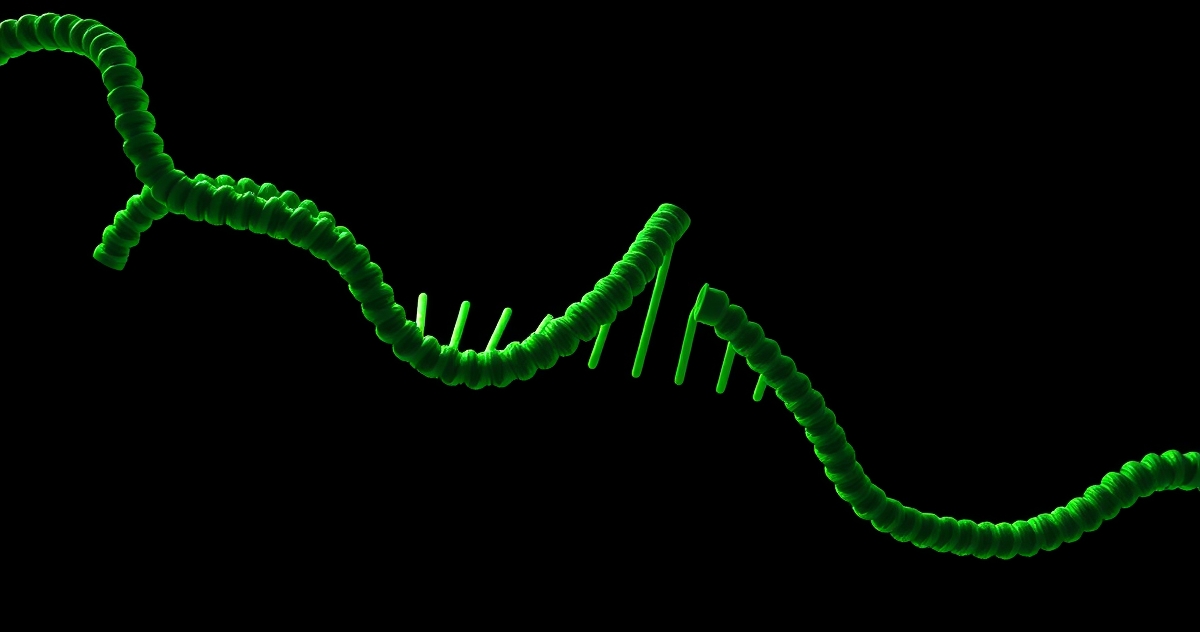
The St. Petersburg Institute of Bioregulation and Gerontology group proposes a shared mechanism for short peptide bioregulators: that di- and tripeptides of this class interact with double-stranded DNA via a sequence-non-specific electrostatic mechanism, altering the accessibility of chromatin to transcription factors and thereby modulating gene expression in a tissue-selective manner.[4] The proposal is grounded in circular dichroism and UV-absorption spectroscopy experiments showing that several short peptides from this family alter the melting profile of calf-thymus DNA in vitro.[4] A subsequent review extended the claim to suggest that peptide–histone interactions may contribute to chromatin remodelling.[5]
Three clarifications are essential before applying any of this to Cartalax (Ala-Glu-Asp) specifically.
First, the experiments were not performed on Ala-Glu-Asp. The DNA-interaction data in Khavinson et al. (2015) were collected on Epitalon (Ala-Glu-Asp-Gly) and a small set of other sequences.[4] Extending those findings to Cartalax because the two peptides share three of their residues is an inference, not a measurement. The fourth residue in Epitalon (Gly) alters the peptide's dipole moment, H-bonding capacity, and conformational flexibility relative to the truncated tripeptide — differences that are experimentally consequential at the scale of DNA groove interactions.
Second, the downstream tissue selectivity claim for Cartalax has no dedicated mechanistic data. The connective-tissue association is a classification within the family's own taxonomy; it has not been validated by, for example, a chromatin-immunoprecipitation or reporter-gene assay using Ala-Glu-Asp in chondrocyte or fibroblast lines.
Third, DNA-interaction studies are in vitro and use non-physiological DNA substrates. Whether the proposed mechanism operates in intact cells, and at what intracellular peptide concentrations, remains untested for any member of the class under conditions that would satisfy a standard receptor-pharmacology framework.[5] The mechanism should therefore be labelled proposed — not established — and stated as such in any research design that invokes it.
A researcher using Cartalax as a tool compound to probe this proposed mechanism should note that the absence of Cartalax-specific binding data means any positive result would simultaneously constitute the first evidence for the mechanism in this sequence and a candidate experimental artefact requiring orthogonal validation.
Evidence Density Comparison: Cartalax Against Better-Studied Tripeptide Bioregulators
Placing Cartalax in the context of the broader bioregulator family makes its evidence gap concrete rather than abstract. The table below compares four sequences by the number of indexed publications, the highest study tier available, and whether human data exist. PMIDs for representative studies are provided where they exist; absence of a PMID in the Cartalax row is itself the finding.
| Compound | Sequence | Indexed studies (approximate, PubMed 2025) | Highest evidence tier | Human data? | Representative PMID |
|---|---|---|---|---|---|
| Epitalon | Ala-Glu-Asp-Gly | >40 | Small human trial (telomere length, lymphocyte assay) | Yes (limited) | 12374906[6] |
| Vilon | Lys-Glu | ~15 | Rodent in vivo | No indexed trial | 27909961[5] |
| Thymalin (Thymus peptide complex) | Mixture; not a single sequence | >30 (complex) | Human observational (Soviet-era cohort data) | Yes (observational) | 31808038[7] |
| Cartalax | Ala-Glu-Asp | 0 (sequence-specific) | Not applicable — no indexed study names this compound | No | None identified |
Several observations follow from this comparison.
Epitalon, the sequence most structurally similar to Cartalax, has the deepest evidence base in the family and is the compound from which most of the mechanistic claims for the class are actually derived.[6] A researcher whose hypothesis concerns the Ala-Glu-Asp motif specifically should consider whether Epitalon — which contains that motif plus a C-terminal glycine — is a more tractable starting point, given that positive controls and comparator data already exist for it.
The Soviet-era and post-Soviet human data that exist for some family members (Thymalin, Epithalamin) come predominantly from observational registries and open-label trials, study designs that sit low in the evidence hierarchy and that have not been independently replicated in Western regulatory frameworks.[7] That caveat applies to the entire family and does not single out Cartalax — but for Cartalax the situation is more extreme: the class-level caveats apply and there is no compound-specific data beneath them.
The practical implication for a research programme is that Cartalax is currently a hypothesis rather than a tool compound with a validated assay. Any laboratory intending to use it would, in effect, be conducting first-in-sequence characterisation work.