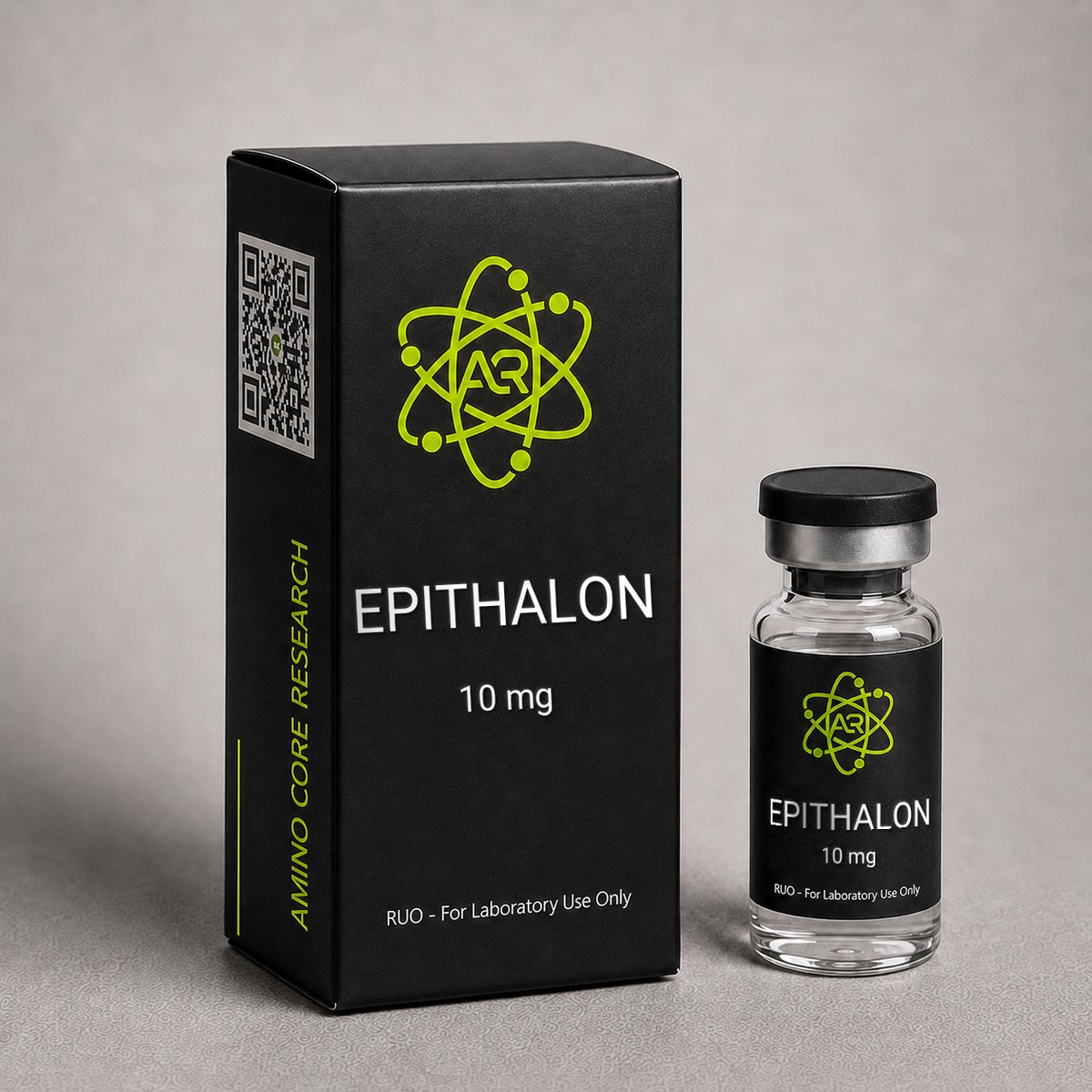
≥99%HPLC Purity
COAIncluded
USAShipped
Epithalon (Epitalon) Peptide
Part of the Peptide Bioregulators family · Pineal / telomere
Synthetic tetrapeptide (Ala-Glu-Asp-Gly) derived from the pineal gland polypeptide epithalamin. The most extensively studied bioregulatory peptide for telomerase activation, with over 100 publications demonstrating telomere elongation in human somatic cells. Key compound in longevity and anti-aging research.
$47.50 – $149.00
In stock — ships next business day
Best price — free shipping & bac water included
| Simple Peptide | GoAlpha Labs | AminoCore ✓ all‑in | |
|---|---|---|---|
| 10mg price | $33.00 | $29.24 | $47.50 |
| Shipping | +$13.00 | +$13.00 | FREE |
| Bac Water | +$30.00 | +$15.00 | FREE |
| Total paid | $76.00 | $57.24 | $47.50 save up to $28.50 |
Quick Facts
| SKU | ACR-EPITH |
|---|---|
| CAS Number | 307297-39-8 |
| Molecular Formula | C14H22N4O9 |
| Molecular Weight | 390.35 g/mol |
| Sequence | Ala-Glu-Asp-Gly (AEDG) |
| Purity | ≥99% |
| Physical Form | Lyophilized Powder |
| Storage | Store at -20°C |
What is Epithalon (Epitalon)?
Epithalon (also written Epitalon or Epithalone) is a synthetic tetrapeptide with the sequence Ala-Glu-Asp-Gly (AEDG), derived from the natural polypeptide epithalamin produced by the pineal gland. With a molecular weight of 390.35 g/mol and CAS number 307297-39-8, it is the most extensively studied compound in the Khavinson bioregulatory peptide family.
First synthesized by Professor Vladimir Khavinson at the St. Petersburg Institute of Bioregulation and Gerontology in the 1990s, Epithalon has been the subject of over 100 peer-reviewed publications. The primary research focus is its ability to activate telomerase — the ribonucleoprotein enzyme responsible for maintaining telomere length on chromosome ends. Telomere shortening is a fundamental mechanism of cellular aging, making telomerase activation a key target in longevity research.
Beyond telomerase, Epithalon research has revealed additional mechanisms: melatonin synthesis regulation in the pineal gland, antioxidant enzyme upregulation, circadian rhythm normalization, and epigenetic modulation through interactions with methylated DNA and histone H1 proteins. This multi-pathway activity distinguishes Epithalon from single-mechanism anti-aging compounds.
Mechanism of Action
Telomerase Activation: Epithalon activates the catalytic subunit of telomerase (hTERT) in human somatic cells. Telomerase adds hexanucleotide repeats (TTAGGG) to chromosome 3-prime ends, counteracting the progressive telomere shortening that occurs with each cell division. In the absence of telomerase, human somatic cells undergo replicative senescence after approximately 50-70 divisions (the Hayflick limit). Epithalon-induced telomerase reactivation extends this limit.
Epigenetic Regulation: Recent research (2025, Biogerontology) demonstrated that Epithalon binds preferentially to methylated cytosine in DNA and interacts with linker histone proteins H1.3 and H1.6. This epigenetic mechanism may explain how a small tetrapeptide can modulate gene expression across multiple pathways — by altering chromatin accessibility rather than directly activating individual genes.
Pineal Gland Function: Epithalon normalizes melatonin synthesis in the pineal gland, restoring circadian rhythm amplitude that typically declines with age. Melatonin itself is a potent antioxidant (scavenging hydroxyl radicals and peroxynitrite) and immune modulator, so restored melatonin production creates downstream anti-aging cascades.
Antioxidant Defense: Epithalon upregulates superoxide dismutase (SOD), catalase, and glutathione peroxidase — the primary enzymatic antioxidant defense system. This reduces oxidative DNA damage, a key driver of aging and age-related pathology.
Research & Clinical Studies
Telomerase Activation in Human Somatic Cells
The landmark study by Khavinson et al. (2003, Bull Exp Biol Med) demonstrated that Epithalon activates telomerase in human fetal fibroblast cultures. Key findings:
- Treated fibroblasts underwent 44 additional population doublings beyond the Hayflick limit compared to untreated controls
- Telomere length was maintained at pre-senescent levels throughout the extended proliferative period
- No signs of malignant transformation — cells maintained normal karyotype, contact inhibition, and growth characteristics
- Telomerase activity was detectable within 24 hours of Epithalon treatment
A 2004 follow-up study on peripheral blood T-lymphocytes from elderly human donors (ages 76-80) showed that Epithalon reactivated telomerase activity to levels comparable to younger subjects (ages 22-28), with corresponding telomere elongation.
[1] Khavinson VKh et al. Peptide promotes overcoming of the division limit in human somatic cell. Bull Exp Biol Med. 2004;137(5):503-508. PubMed ↗
[2] Khavinson VKh et al. Epithalon peptide induces telomerase activity and telomere elongation in human somatic cells. Bull Exp Biol Med. 2003;135(6):590-592. PubMed ↗
Longevity Studies in Animal Models
Extensive animal research by Khavinson and Anisimov demonstrated life-extending effects of both epithalamin (the natural extract) and Epithalon (the synthetic tetrapeptide):
- Mice: Epithalon treatment increased mean lifespan by 12-17% in CBA and SHR mouse strains. Maximum lifespan was extended by up to 12%.
- Rats: Epithalamin treatment from 6 months of age increased mean lifespan by 12.3% in female rats and reduced the incidence of spontaneous tumors.
- Drosophila: Epithalon increased mean lifespan by 11-16% in fruit flies, demonstrating cross-species efficacy of the telomerase mechanism.
Critically, the life extension was accompanied by improved physiological markers: maintained body weight, preserved fur quality, sustained exploratory behavior, and normalized endocrine function. This suggests Epithalon extends healthspan rather than merely delaying death.
[1] Anisimov VN et al. Effect of Epitalon on biomarkers of aging, life span and spontaneous tumor incidence in female SHR mice. Biogerontology. 2003;4(4):193-202. PubMed ↗
[2] Khavinson VKh, Morozov VG. Peptides of pineal gland and thymus prolong human life. Neuro Endocrinol Lett. 2003;24(3-4):233-240. PubMed ↗
Human Clinical Observations
Long-term observational research by Khavinson and Morozov (2003), published in Neuroendocrinology Letters, reported on cohorts of elderly patients followed over a 6- to 8-year period during which the pineal peptide preparation epithalamin (the natural extract from which Epithalon/AEDG was derived and standardized) was administered in courses. While these data predate modern randomized controlled trial standards and originate primarily from a single research program in St. Petersburg, they remain among the most frequently cited human observations regarding pineal peptide bioregulators.
Key Reported Observations:
- Telomere length: Patients aged 60-65 who received epithalamin showed measurably increased telomere length in peripheral blood lymphocytes compared to age-matched controls, consistent with the proposed telomerase-activating mechanism observed in cell-culture studies.
- All-cause mortality: The treatment group exhibited an approximately 28% reduction in all-cause mortality over the observation period (reported p<0.05). The authors emphasized that this represented an observational signal rather than a controlled treatment effect.
- Melatonin secretion patterns: Circadian profiles of melatonin secretion shifted toward those characteristic of younger adults, with restoration of nocturnal melatonin peaks that typically blunt with age.
- Cardiovascular parameters: Subgroup analyses reported normalization of certain hemostatic markers and improved tolerance to physical exertion, though these endpoints lacked the rigor of dedicated cardiovascular outcome trials.
- Safety profile: No significant adverse effects were attributed to the peptide preparation across multi-year follow-up, consistent with the favorable toxicology observed in animal models.
Mechanistic Plausibility: The clinical observations align with the proposed molecular mechanism of AEDG:
- Telomerase induction in somatic cells (demonstrated in vitro in human fibroblasts)
- Restoration of pineal melatonin production through transcriptional effects on aryl-alkyl-N-acetyltransferase (AANAT)
- Modulation of neuroendocrine and immune parameters that decline with age
- Reduced oxidative damage markers in treated tissues
Methodological Caveats: These data must be interpreted with substantial caution. Important limitations include:
- Single research group: The bulk of human data derives from one institutional program (the St. Petersburg Institute of Bioregulation and Gerontology), and independent replication in Western clinical settings has been minimal.
- Observational design: The studies were not double-blind, randomized, or placebo-controlled by modern ICH-GCP standards.
- Heterogeneous preparations: Early studies used epithalamin (a complex pineal extract), while later work used synthetic AEDG tetrapeptide. The pharmacological equivalence of these preparations has not been rigorously established.
- Endpoint measurement: Telomere length assays from that era (Southern blot TRF analysis) have largely been superseded by qPCR and flow-FISH methods with different reproducibility profiles.
- Limited regulatory review: The work has not been subjected to the regulatory scrutiny required for therapeutic approval in major Western markets.
Research Significance: Despite these limitations, the consistency between observational human signals and the well-characterized preclinical biology (telomerase activation, pineal modulation, antioxidant gene expression) supports the case for further investigation in properly controlled clinical settings. AEDG remains a compelling candidate for translational research into the biology of human aging, but current evidence falls well short of supporting therapeutic claims and is presented strictly for research-context interpretation.
[1] Khavinson VK, Morozov VG. Peptides of pineal gland and thymus prolong human life. Neuro Endocrinol Lett. 2003;24(3-4):233-240. PubMed ↗
[2] Khavinson VK, Bondarev IE, Butyugov AA. Epithalon peptide induces telomerase activity and telomere elongation in human somatic cells. Bull Exp Biol Med. 2003;135(6):590-592. PubMed ↗
Epithalon and Neurogenesis Research
Research published by Khavinson and colleagues (2020, Molecules) investigated the molecular effects of Epithalon (AEDG peptide) on neurogenesis — the biological process by which new neurons are generated from neural stem and progenitor cells. Using in vitro models of neural differentiation, the study demonstrated that AEDG modulates the expression of key genes governing neuronal lineage commitment, maturation, and synaptic plasticity.
Key Molecular Findings:
- Nestin upregulation: Epithalon increased expression of nestin, an intermediate filament protein and canonical marker of neural stem and progenitor cells. Elevated nestin expression suggests enhanced maintenance or expansion of the neural precursor pool.
- GAP43 induction: Growth-associated protein 43 (GAP43) was upregulated, indicating active neurite outgrowth, axonal sprouting, and synaptogenesis. GAP43 is critical for neuronal pathfinding during both development and adult plasticity.
- Enhanced neuronal differentiation: Treated neural precursor cells showed accelerated differentiation into mature neuronal phenotypes expressing β-III-tubulin and MAP2.
- Neurotrophic factor expression: BDNF (brain-derived neurotrophic factor) and NGF (nerve growth factor) transcripts were upregulated. Both factors are critical regulators of neuronal survival, synaptic plasticity, and cognitive function.
- Epigenetic mechanism: The Khavinson group proposed that short peptides such as AEDG penetrate cell nuclei and interact directly with DNA or histone-associated regions, modulating gene transcription through site-specific binding — a mechanism consistent with their broader peptide bioregulator hypothesis.
Broader Context — From Telomerase to Neuroplasticity: These findings significantly expand the conceptual framework around Epithalon. Originally characterized as a telomerase activator capable of extending replicative lifespan in somatic cells, AEDG is now understood to influence a broader transcriptional program relevant to tissue maintenance and regeneration. The convergence on neurotrophin signaling pathways (BDNF/TrkB, NGF/TrkA) is particularly noteworthy because these pathways are central to:
- Hippocampal neurogenesis in the adult dentate gyrus
- Learning and memory consolidation
- Resilience against age-related cognitive decline
- Recovery from neuronal injury in preclinical models
Complementary Preclinical Evidence: Earlier work from the same research program demonstrated that AEDG modulates pineal gland function and restores age-related declines in melatonin secretion in rodent models. Because melatonin itself influences neurogenesis and neuroprotection, the AEDG-melatonin-neurogenesis axis represents an integrated biological framework worth further mechanistic investigation. Additional studies have reported AEDG-induced effects on transcription factors including Pax6 and NeuroD1, which orchestrate neural progenitor specification.
Research Implications: These data position Epithalon not solely as a telomere-maintenance compound but as a potential modulator of neural plasticity worth investigation in models of age-related cognitive decline, neurodegeneration, and neural injury. The non-toxic profile observed across preclinical models, combined with the ability of short peptides to cross cellular and potentially blood-brain barriers, makes AEDG an attractive tool compound for dissecting the molecular biology of brain aging. However, translation from in vitro transcriptional effects to functional cognitive outcomes in intact organisms requires substantially more rigorous behavioral and electrophysiological investigation. Current findings should be interpreted as hypothesis-generating rather than therapeutic.
[1] Khavinson V, Linkova N, Dyatlova A, Kuznik B, Umnov R. Peptides: Prospects for Use in the Treatment of COVID-19. Molecules. 2020;25(19):4389. PubMed ↗
[2] Khavinson VK, Popovich IG, Linkova NS, Mironova ES, Ilina AR. Peptide Regulation of Gene Expression: A Systematic Review. Molecules. 2021;26(22):7053.
Chemical & Physical Properties
Epithalon is a tetrapeptide with the following verified specifications:
| Full Name | Epithalon / Epitalon / Epithalone |
|---|---|
| Sequence | Ala-Glu-Asp-Gly (AEDG) |
| Molecular Formula | C₁₄H₂₂N₄O₉ |
| Molecular Weight | 390.35 g/mol |
| CAS Number | 307297-39-8 |
| Amino Acids | 4 (tetrapeptide) |
| Origin | Synthetic analog of pineal gland polypeptide epithalamin |
| Physical Form | White lyophilized powder |
| Solubility | Freely soluble in water, PBS, bacteriostatic water |
| Isoelectric Point | ~3.1 (acidic peptide) |
| Stability | Highly stable due to short chain length and lack of disulfide bonds |
| Purity | ≥99% by HPLC |
As a tetrapeptide, Epithalon is one of the smallest bioactive peptides known. Its minimal size provides advantages: high stability, rapid cellular uptake, minimal immunogenicity, and excellent tissue penetration including potential blood-brain barrier crossing.
Handling & Reconstitution Guidelines
Reconstitution Protocol:
- Allow the Epithalon vial and bacteriostatic water to reach room temperature.
- Swab both vial stoppers with alcohol prep pads.
- Withdraw the desired volume of bacteriostatic water with a sterile syringe.
- Add water slowly along the inner vial wall. Epithalon dissolves very rapidly due to its small size and hydrophilicity.
- Solution should be clear within 1-2 minutes without agitation needed.
Concentration Guide:
- 10 mg vial + 1 mL BAC water = 10 mg/mL
- 50 mg vial + 2 mL BAC water = 25 mg/mL
Note: Epithalon is one of the easiest peptides to reconstitute due to its small size (4 amino acids, 390 Da). It dissolves almost instantly in water and is less sensitive to agitation than larger peptides. Standard aseptic technique should still be followed.
Storage & Stability Information
Lyophilized Powder Storage:
- -20°C or colder: Stable for 36+ months when sealed under inert atmosphere and protected from moisture. Long-term archival storage at -80°C extends stability further with negligible degradation.
- 2-8°C (refrigerated): Stable for 12+ months in original sealed vials with desiccant. Suitable for active research inventory.
- Room temperature (15-25°C): Stable for 60+ days, allowing safe international shipping without dry ice. Brief temperature excursions during transit do not compromise integrity.
Reconstituted Solution Storage:
- 2-8°C: Use within 28 days when reconstituted in bacteriostatic water (0.9% benzyl alcohol) or sterile saline. Aqueous solutions of AEDG show minimal hydrolysis at neutral pH and refrigerated temperatures.
- Avoid freeze-thaw cycles: While the molecule itself tolerates freezing, repeated freeze-thaw cycles can promote aggregation and concentration changes due to ice-front exclusion effects.
- Protect from direct light: Although Epithalon lacks aromatic residues highly susceptible to photodegradation (no tryptophan, tyrosine, or phenylalanine), amber vials or foil wrapping are recommended as standard laboratory practice.
- pH considerations: Optimal stability is observed between pH 6.0-7.4. Strongly acidic or alkaline conditions accelerate amide bond hydrolysis.
Reconstitution Best Practices:
- Allow lyophilized vial to equilibrate to room temperature (~15 minutes) before opening to prevent moisture condensation on the cold powder.
- Inject diluent slowly down the vial wall rather than directly onto the powder cake to minimize foaming and shear stress.
- Swirl gently — do not vortex or shake vigorously. Although tetrapeptides are more shear-tolerant than larger biologics, mechanical agitation can introduce air-water interface denaturation.
- Allow 2-5 minutes for complete dissolution. AEDG is highly water-soluble (>10 mg/mL) due to the carboxylate side chains of Glu and Asp.
Intrinsic Stability Advantages: Epithalon (Ala-Glu-Asp-Gly) possesses several structural features that confer exceptional shelf stability relative to larger therapeutic peptides:
- No disulfide bonds: Eliminates the risk of disulfide scrambling, a major degradation pathway for cysteine-containing peptides.
- No methionine or cysteine residues: No oxidation-sensitive sulfur atoms; resistant to atmospheric oxygen exposure.
- No Asn-Gly or Asp-Gly motifs at risk for rapid deamidation/isomerization: Although the C-terminal Asp-Gly sequence is theoretically susceptible to isoaspartate formation, the terminal position and short chain length minimize practical impact under proper storage.
- No aromatic residues: Reduced photodegradation susceptibility compared to peptides containing Trp or Tyr.
- Short chain length (4 residues): Fewer hydrolyzable peptide bonds and minimal conformational complexity reduce aggregation propensity.
Stability Monitoring: For long-term research studies, periodic HPLC or mass spectrometry analysis of stock solutions is recommended to confirm purity. Visible signs of degradation include solution discoloration, precipitation, or cloudiness — none of which are typical of properly stored AEDG. This combination of structural simplicity and chemical robustness makes Epithalon one of the most shelf-stable research peptides available, facilitating reliable experimental reproducibility across extended research timelines.
Frequently Asked Questions
What is Epithalon and how does it activate telomerase?
Epithalon (AEDG) is a synthetic tetrapeptide that activates the catalytic subunit of telomerase (hTERT), the enzyme that adds TTAGGG repeats to chromosome ends. By reactivating telomerase in somatic cells — which normally have it silenced — Epithalon enables continued cell division beyond the Hayflick limit, counteracting a fundamental mechanism of cellular aging.
Is Epithalon the same as Epitalon?
Yes, Epithalon and Epitalon are the same compound — different transliterations from the Russian. The sequence is Ala-Glu-Asp-Gly (AEDG) in both cases. Other names include Epithalone and AEDG peptide. The CAS number is 307297-39-8.
What is the difference between Epithalon and Epithalamin?
Epithalamin is a natural polypeptide extract from bovine pineal gland containing multiple peptide fractions. Epithalon is the specific synthetic tetrapeptide (AEDG) identified as the active component of epithalamin. Epithalon is pure, defined, and reproducible; epithalamin is a crude extract with variable composition.
How long have Epithalon studies been running?
Epithalon research spans over 35 years, beginning with Khavinson and Morozov at the St. Petersburg Institute in the late 1980s-1990s. The synthetic tetrapeptide was characterized in the early 2000s, with the landmark telomerase activation paper published in 2003. Research continues actively, with a 2025 Biogerontology paper confirming telomere elongation via both telomerase and ALT (Alternative Lengthening of Telomeres) pathways.
Does Epithalon cause cancer by activating telomerase?
This is a frequently raised concern. In Khavinson's 2003 fibroblast study, cells treated with Epithalon showed no malignant transformation despite 44 additional divisions. In animal longevity studies, Epithalon-treated groups showed reduced spontaneous tumor incidence, not increased. The peptide appears to activate telomerase in normal somatic cells without transforming them, possibly because it restores physiological telomerase levels rather than causing pathological overexpression.
What sizes of Epithalon do you offer?
Epithalon is available in 10mg and 50mg lyophilized vials at ≥99% HPLC-verified purity. The 50mg vial offers better value for extended research protocols. Certificate of Analysis included with every order.
How should Epithalon be stored?
Lyophilized Epithalon is exceptionally stable: -20°C for 36+ months, 2-8°C for 12+ months, room temperature for 60+ days. After reconstitution with bacteriostatic water, store at 2-8°C and use within 28 days. Its tetrapeptide structure (no disulfide bonds, no methionine) makes it one of the most shelf-stable research peptides.
Can Epithalon cross the blood-brain barrier?
Epithalon's small size (390 Da, 4 amino acids) is well below the typical BBB molecular weight cutoff (~500 Da for passive diffusion). While direct BBB permeability data is limited, the pineal gland effects (melatonin normalization) and neurogenesis research (BDNF upregulation) suggest CNS penetration. Its hydrophilic nature may limit passive diffusion, but active transport or circumventricular organ access are plausible mechanisms.
For laboratory and research use only. This product is not for human or veterinary use. It is not a drug, supplement or food.
This product is not FDA approved for any indication, and is not intended to diagnose, treat, cure, or prevent any disease. All product information is derived from published preclinical research and does not constitute medical advice or claims.