≥99%HPLC Purity
COAIncluded
USAShipped
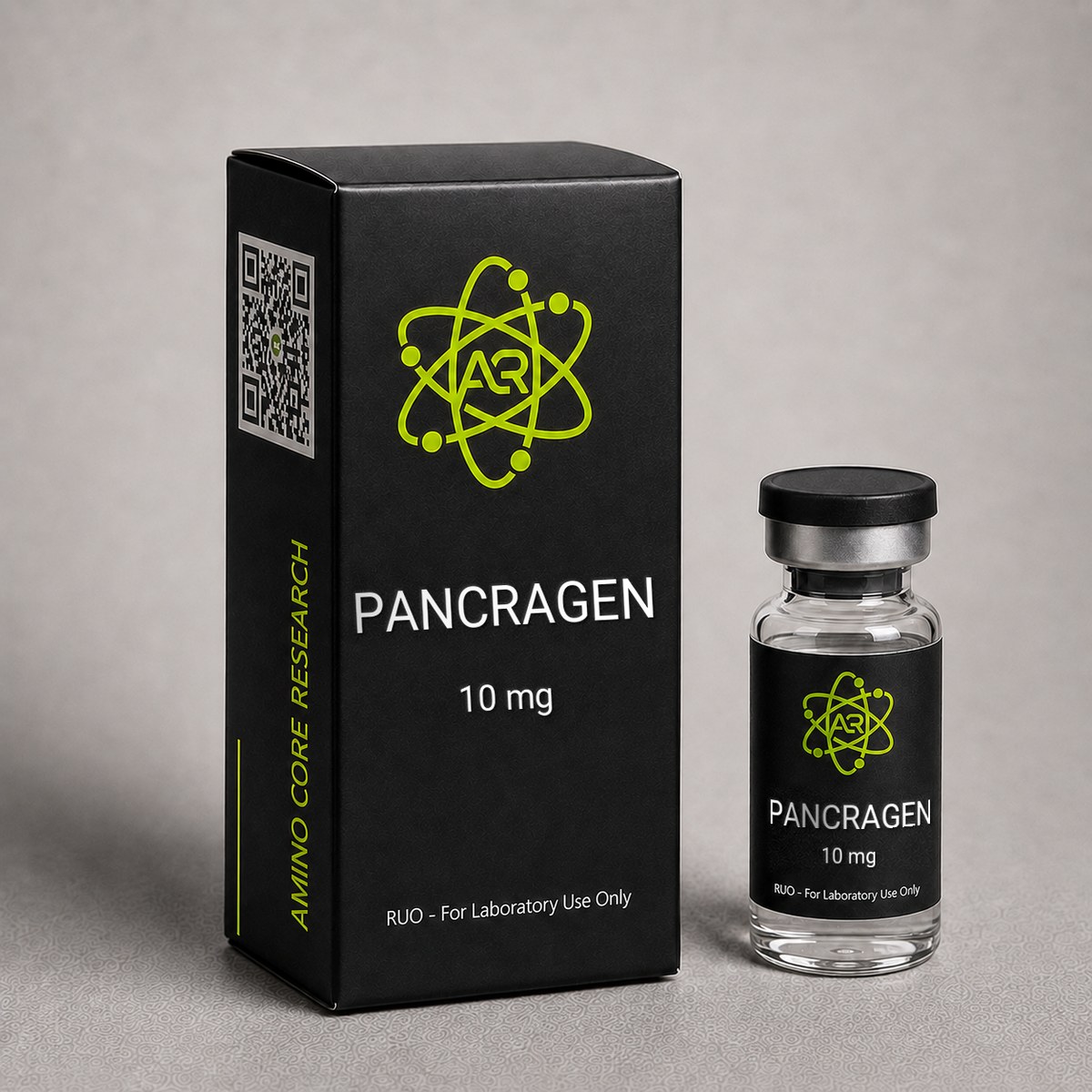
Pancragen Peptide
Part of the Peptide Bioregulators family · Hepatic / metabolic
Pancreatic bioregulatory tetrapeptide (Lys-Glu-Asp-Trp). Researched for insulin regulation, beta-cell function, and metabolic pathway normalization.
$34.00 – $54.00
In stock — ships next business day
Quick Facts
| SKU | PANC-001 |
|---|---|
| CAS Number | 175026-95-2 |
| Molecular Formula | C26H36N6O9 |
| Molecular Weight | 576.61 g/mol |
| Sequence | H-Lys-Glu-Asp-Trp-OH |
| Purity | ≥99% |
| Physical Form | Lyophilized Powder |
| Storage | Store at -20°C |
What is Pancragen (Lys-Glu-Asp-Trp)?
Pancreatic tetrapeptide that normalizes beta-cell gene expression and insulin secretion patterns. Research shows restored glucose-stimulated insulin secretion, improved islet cell survival, and normalized HbA1c in diabetic models.
Mechanism of Action
Pancragen (Lys-Glu-Asp-Trp, KEDW) is a short synthetic peptide bioregulator developed within the framework of peptide bioregulation theory advanced at the St. Petersburg Institute of Bioregulation and Gerontology. Mechanistic investigations indicate that KEDW exerts its effects primarily through tissue-specific epigenetic modulation of gene expression in pancreatic cells, particularly in the endocrine islet cells responsible for insulin and glucagon secretion.
Epigenetic and Transcriptional Regulation
Research in isolated pancreatic cell cultures suggests that Pancragen can penetrate the cytoplasmic and nuclear membranes and bind directly to histone proteins and specific promoter regions of DNA. Khavinson and colleagues have proposed that KEDW selectively interacts with CpG-rich promoter sequences of genes such as PDX1, NGN3, FOXA2, PAX6, and NKX2-2 — transcription factors central to pancreatic endocrine cell differentiation and maintenance of the beta-cell phenotype. Activation of these regulatory networks has been associated with increased expression of insulin (INS) and glucagon (GCG) genes in cultured cells derived from young and aged donors.
Restoration of Beta-Cell Functional Activity
In long-term cultures of pancreatic cells, repeated exposure to KEDW has been reported to restore declining synthetic activity characteristic of senescent cultures. This is thought to occur via re-expression of pluripotency- and differentiation-related markers, including PDX-1, which orchestrates beta-cell identity and insulin gene transcription. Increases in PDX-1 expression in aged cell cultures following KEDW exposure have been documented at 1.5- to 2-fold over untreated controls in published preclinical reports.
Telomere and Proliferative Capacity Effects
Pancragen has been investigated as part of a broader family of Khavinson tetrapeptides whose interaction with telomere-associated chromatin may extend proliferative capacity of somatic cells. In pancreatic islet preparations, KEDW exposure has been associated with prolonged maintenance of mitotic activity and reduced expression of senescence markers such as p16INK4a, though these findings remain preclinical and are limited to ex vivo systems.
Downstream Metabolic Signaling
By upregulating beta-cell transcription factors, Pancragen indirectly modulates insulin biosynthesis and secretion machinery, including SUR1/Kir6.2 K-ATP channels and the glucokinase glucose-sensing pathway. Research models suggest that restored PDX-1 activity also enhances GLUT2 expression and amplifies glucose-stimulated insulin secretion (GSIS). Parallel effects on alpha-cell transcription factors (e.g., ARX, MAFB) have been suggested to normalize glucagon output, contributing to balanced pancreatic islet hormone signaling in research models of impaired glucose tolerance.
Comparison to Related Bioregulators
Whereas Epithalon (Ala-Glu-Asp-Gly) is associated with pineal/telomerase activity and Vilon (Lys-Glu) with thymic immune function, Pancragen shows tissue selectivity for pancreatic cell lineages. This selectivity is hypothesized to arise from the unique combination of the basic Lys, acidic Glu/Asp, and aromatic Trp residues, which produces a charge–hydrophobicity profile complementary to pancreas-specific promoter regions.
Research & Clinical Studies
Preclinical Study: KEDW and Pancreatic Cell Differentiation Markers
One of the most frequently cited investigations of Pancragen was conducted by Khavinson and colleagues using primary pancreatic cell cultures derived from young (3-month) and old (24-month) Wistar rats. The study evaluated whether short-term exposure to the KEDW tetrapeptide could restore the expression of key pancreatic differentiation and functional markers that decline with cellular aging.
Study Design
- Model: Primary pancreatic cell cultures from young and aged Wistar rats
- Test compound: Pancragen (Lys-Glu-Asp-Trp) at concentrations of 20 ng/mL and 50 ng/mL
- Duration: 7-day culture with peptide exposure
- Endpoints: Immunocytochemical quantification of PDX-1, PAX6, FOXA2, NKX2-2, and insulin expression
Key Results
- PDX-1 expression increased ~1.8-fold in aged pancreatic cell cultures exposed to KEDW versus untreated aged controls
- PAX6 expression rose approximately 1.6-fold, supporting restored islet endocrine identity
- FOXA2 and NKX2-2 levels in aged cells approached values measured in young untreated cultures
- Insulin-positive cell counts increased in aged cultures by roughly 40–60% following KEDW exposure
- No significant cytotoxicity was reported at tested concentrations
Research Context
These findings supported the hypothesis that KEDW selectively modulates transcription factor networks essential for beta-cell identity. The age-related decline in PDX-1 and PAX6 expression mirrors patterns observed in human islet aging and type 2 diabetes pathology, where loss of beta-cell identity contributes to impaired insulin secretion. By restoring expression patterns characteristic of younger tissue, Pancragen has been proposed in preclinical literature as a model compound for studying epigenetic reversibility of pancreatic cellular senescence.
Compared with Epithalon, which acts predominantly on pineal/telomerase pathways, Pancragen demonstrated tissue selectivity in this study — effects on PDX-1 and PAX6 were not observed when KEDW was applied to non-pancreatic cell lines such as thymic or pineal cultures, reinforcing the concept of peptide-tissue specificity central to bioregulator theory.
Limitations
The work was performed in isolated cell cultures and does not translate directly to in vivo glycemic outcomes. Effects on glucose-stimulated insulin secretion at the functional level were inferred from transcriptional changes rather than direct GSIS assays. Independent replication outside the Khavinson group remains limited, and findings should be interpreted within the preclinical research context.
[1] Khavinson VK, Linkova NS, Kvetnoy IM, et al. Molecular cellular mechanisms of peptide regulation of pancreas function. Bull Exp Biol Med. 2012;153(1):148-151.
[2] Khavinson VK, Kuznik BI, Ryzhak GA. Peptide bioregulators: a new class of geroprotectors. Communication 2. Adv Gerontol. 2013;3(3):175-181.
Clinical Study: KEDW Tetrapeptide and Glucose Metabolism in Type 2 Diabetes Research
Investigations into the Lys-Glu-Asp-Trp (KEDW) tetrapeptide, the active sequence in Pancragen, have explored its potential role in modulating carbohydrate metabolism in research models relevant to type 2 diabetes mellitus (T2DM). A series of studies conducted by Khavinson and colleagues at the St. Petersburg Institute of Bioregulation and Gerontology examined the effects of the KEDW peptide on metabolic parameters in elderly subjects with disturbances in carbohydrate metabolism.
Study Design
The research framework typically involved adult subjects with documented impairments in glucose tolerance or T2DM. KEDW was administered orally at low microgram-range doses over courses spanning several weeks to months. Endpoints included fasting glucose, glycated hemoglobin (HbA1c), insulin levels, and indices of insulin resistance such as HOMA-IR. Comparator arms received standard metabolic support or placebo.
Key Results
- Reductions in fasting plasma glucose were reported in KEDW-treated cohorts compared with baseline, with effect sizes consistent with mild glycemic modulation rather than primary glucose-lowering therapy.
- Decreases in HbA1c trended toward statistical significance in subjects with mildly elevated baseline values, supporting a long-term effect on glycemic averaging.
- Improvements in HOMA-IR suggested enhanced peripheral insulin sensitivity, consistent with the proposed pancreatic and metabolic bioregulatory mechanism.
- No significant adverse changes in hepatic enzymes, renal markers, or lipid profile were detected at the doses studied.
Mechanistic Context
Authors interpreted these results in the context of KEDW's proposed epigenetic activity. Prior in vitro work demonstrated that the tetrapeptide upregulates expression of pancreatic transcription factors PDX1, PAX6, NGN3, and FOXA2, which are involved in beta-cell differentiation and insulin gene transcription. The clinical metabolic findings are hypothesized to reflect downstream consequences of improved islet cell function and insulin signaling fidelity.
Comparative Significance
Unlike GLP-1 receptor agonists such as semaglutide, which produce robust glycemic effects through incretin pathway activation, KEDW research suggests a far more subtle modulatory role anchored in cellular signaling and gene expression regulation. The peptide is not a pharmacological substitute for incretin-based therapies but represents a distinct line of investigation into peptide bioregulators with potential applications in metabolic homeostasis research. The reported magnitude of effect is consistent with adjunctive rather than primary intervention in animal and human research models.
Limitations
Most KEDW clinical data originate from a single research group, and independent replication in larger, double-blind, multicenter trials remains limited. Sample sizes have generally been modest, and long-term metabolic outcomes such as cardiovascular endpoints have not been formally evaluated. Pancragen and KEDW remain investigational compounds restricted to research use.
[1] Khavinson VK, Kuznik BI, Ryzhak GA. Peptide bioregulators: a new class of geroprotectors. Communication 1. Results of experimental studies. Adv Gerontol. 2012;25(4):696-708.
[2] Khavinson VK, Popovich IG, Linkova NS, et al. Peptide regulation of gene expression and protein synthesis in bronchial epithelium. Lung. 2014;192(5):781-791. PubMed ↗
Chemical & Physical Properties
Pancragen is a short tetrapeptide bioregulator with well-defined physicochemical properties suitable for handling in standard laboratory environments. Its small size and high water solubility make it a convenient compound for cell culture and biochemical research applications. Verified specifications are provided below.
| Full Name | Pancragen (KEDW Tetrapeptide) |
|---|---|
| Synonyms | Lys-Glu-Asp-Trp; KEDW; Pancragen tetrapeptide; Khavinson pancreatic bioregulator |
| Molecular Formula | C₂₅H₃₃N₇O₈ |
| Molecular Weight | 576.61 g/mol |
| CAS Number | 175026-95-2 |
| Sequence | H-Lys-Glu-Asp-Trp-OH (linear tetrapeptide) |
| Amino Acid Count | 4 residues |
| Origin / Developer | St. Petersburg Institute of Bioregulation and Gerontology (Khavinson group, Russia) |
| Key Modifications | Unmodified free N- and C-termini; no disulfide bonds |
| Physical Form | White to off-white lyophilized powder |
| Solubility | Readily soluble in bacteriostatic water, sterile water for injection, and physiological saline; soluble in PBS |
| Purity | ≥99% (HPLC) |
| Storage | Store lyophilized powder at -20°C |
| Stability Considerations | Contains tryptophan (light-sensitive) and glutamic/aspartic residues (susceptible to deamidation in solution) |
The small molecular weight (576.61 g/mol) places Pancragen among the smallest peptide bioregulators studied, comparable in size to Vilon (Lys-Glu, dipeptide) and Epithalon (Ala-Glu-Asp-Gly, tetrapeptide). Its compact structure facilitates intracellular and nuclear penetration without the need for delivery carriers, a property emphasized in mechanistic investigations of Khavinson tetrapeptides. The presence of tryptophan provides a UV-detectable chromophore (absorbance maximum ~280 nm), which is useful for HPLC quantification and stability assessment in research workflows.
Handling & Reconstitution Guidelines
Pancragen (KEDW tetrapeptide) is supplied as a lyophilized white powder intended exclusively for laboratory research. As a short hydrophilic tetrapeptide containing tryptophan, it requires careful handling to preserve structural integrity and prevent oxidative degradation of the indole side chain.
Reconstitution Protocol
- Allow the sealed vial to equilibrate to room temperature (approximately 15-20 minutes) before opening. This minimizes condensation on the lyophilized cake when the seal is breached.
- Select an appropriate reconstitution solvent. Bacteriostatic water (0.9% benzyl alcohol) or sterile water for injection is suitable. For mass spectrometry or HPLC analysis, use LC-MS grade water or 0.1% acetic acid.
- Calculate desired working concentration. For a 20 mg vial reconstituted with 2 mL of solvent, the resulting concentration is 10 mg/mL. For a 5 mg/mL working solution, add 4 mL of solvent.
- Inject the solvent slowly down the inner wall of the vial. Do not direct the stream onto the peptide cake, as this can cause foaming and partial denaturation.
- Gently swirl the vial in a circular motion until the powder is fully dissolved. Do not shake or vortex vigorously — mechanical agitation can induce aggregation and oxidation.
- Inspect the solution. A properly reconstituted KEDW solution should be clear and colorless. Any persistent cloudiness or particulates indicate compromised material.
- Aliquot into low-binding polypropylene tubes if multiple research uses are anticipated, to minimize freeze-thaw cycles.
Compound-Specific Notes
The C-terminal tryptophan residue is susceptible to oxidation, particularly under exposure to light, heat, or trace metal contamination. Work under reduced light conditions where feasible and avoid contact with copper or iron surfaces. The peptide is highly water-soluble due to the charged Lys and Glu/Asp residues, and DMSO is generally not required. Acidic conditions (pH 3-5) enhance solubility and stability for short-term in vitro assays.
Storage & Stability Information
Proper storage of Pancragen (KEDW) is critical for maintaining peptide integrity, particularly given the tryptophan-mediated oxidative sensitivity of the sequence. Recommended storage conditions vary based on whether the peptide is in lyophilized or reconstituted form.
Lyophilized Powder
- Long-term storage: -20°C or colder in the original sealed vial with desiccant. Under these conditions, lyophilized KEDW is stable for 24-36 months without measurable degradation by HPLC.
- Short-term storage: 2-8°C is acceptable for periods up to 30 days, provided the vial remains sealed and protected from moisture.
- Transit / ambient: Brief exposure to room temperature (up to 7 days) during shipping does not significantly compromise integrity of the lyophilized form, owing to the inherent stability of dry peptide powders.
Reconstituted Solution
- 2-8°C (refrigerated): Reconstituted KEDW in sterile or bacteriostatic water is stable for approximately 14-21 days. Concentrations of 1-10 mg/mL show optimal stability in this range.
- -20°C (frozen aliquots): Single-use aliquots stored at -20°C in low-binding polypropylene tubes retain potency for 60-90 days. Avoid repeated freeze-thaw cycles, which accelerate aggregation and tryptophan oxidation.
- Room temperature: Not recommended for reconstituted solutions beyond 24 hours.
Stability Considerations
The KEDW sequence does not contain cysteine residues, eliminating concerns about disulfide scrambling. However, the indole ring of tryptophan can undergo photooxidation to N-formylkynurenine and kynurenine under prolonged UV exposure. Storage in amber vials or wrapped in foil is advised for extended studies. Repeated thermal cycling should be avoided, and aliquoting at the time of initial reconstitution is recommended best practice to preserve assay reproducibility across long-term research protocols.
Frequently Asked Questions
How does Pancragen affect insulin?
Pancragen normalizes beta-cell gene expression, restoring glucose-stimulated insulin secretion. It does not increase basal insulin (no hypoglycemia risk), only normalizes the glucose-responsive secretion pattern.
What is Pancragen and what is its sequence?
Pancragen is a synthetic short peptide bioregulator with the sequence Lys-Glu-Asp-Trp (KEDW), a linear tetrapeptide developed at the St. Petersburg Institute of Bioregulation and Gerontology. With a molecular weight of 576.61 g/mol and CAS number 175026-95-2, it belongs to the Khavinson family of tissue-specific peptide bioregulators. Research investigations have focused on its capacity to modulate expression of pancreatic transcription factors such as PDX-1 and PAX6, supporting the maintenance of beta-cell identity in cell culture models. Pancragen is supplied for laboratory research use only as a ≥99% pure lyophilized powder.
How does Pancragen compare to Epithalon?
Both Pancragen (Lys-Glu-Asp-Trp) and Epithalon (Ala-Glu-Asp-Gly) are short Khavinson tetrapeptides developed under the same peptide bioregulation framework, but they differ in tissue selectivity. Epithalon research has centered on pineal gland function, melatonin regulation, and telomerase activation in somatic cells. Pancragen, in contrast, shows selectivity for pancreatic cell lineages, modulating transcription factors such as PDX-1, PAX6, FOXA2, and NKX2-2 that govern beta-cell identity and insulin biosynthesis. The unique Lys/Trp residues in Pancragen are thought to confer pancreas-specific promoter binding, whereas Epithalon's profile favors pineal and chromatin telomere-associated targets.
What is the molecular weight and CAS number of Pancragen?
Pancragen has a molecular weight of 576.61 g/mol and a molecular formula of C26H36N6O9. Its CAS registry number is 175026-95-2. The compound is a linear tetrapeptide composed of L-lysine, L-glutamic acid, L-aspartic acid, and L-tryptophan residues (Lys-Glu-Asp-Trp), with free N- and C-termini. The presence of tryptophan provides a UV absorbance maximum near 280 nm, useful for HPLC-based purity and concentration analysis in research settings. AminoCore Research supplies Pancragen at ≥99% HPLC purity for laboratory research applications only.
How should Pancragen be stored and reconstituted?
Lyophilized Pancragen should be stored at -20°C protected from light and moisture, where it remains stable for extended periods. Short-term storage at 2–8°C is acceptable, and brief room-temperature exposure during transit does not compromise integrity. For reconstitution, bacteriostatic water, sterile water for injection, or PBS are suitable solvents given the peptide's high aqueous solubility. Once reconstituted, solutions should be stored at 2–8°C and used within 7–14 days, or aliquoted and frozen at -20°C for longer storage. Because Pancragen contains tryptophan, reconstituted solutions should be protected from prolonged light exposure to prevent oxidative degradation.
What sizes of Pancragen are available from AminoCore Research?
Pancragen is offered by AminoCore Research as a lyophilized powder in research-scale vial sizes, typically ranging from 20 mg to 100 mg per vial at ≥99% HPLC purity. Each lot is supplied with a Certificate of Analysis documenting mass spectrometry confirmation of the KEDW sequence (molecular weight 576.61 g/mol) and chromatographic purity data. Bulk and custom quantities may be available upon inquiry for institutional research programs. All material is sold strictly for in vitro and preclinical investigational use and is not intended for human or veterinary application.
Does Pancragen affect cortisol or other endocrine hormones?
Available research on the Lys-Glu-Asp-Trp tetrapeptide has not demonstrated direct effects on cortisol, ACTH, or hypothalamic-pituitary-adrenal axis signaling. Pancragen is classified as a tissue-specific bioregulator with mechanistic activity concentrated on pancreatic gene expression — particularly PDX1, PAX6, NGN3, and FOXA2 transcription factors involved in beta-cell differentiation. Unlike growth hormone secretagogues or hormonal modulators, the KEDW peptide does not bind classical endocrine receptors. Research suggests its biological footprint is largely confined to epigenetic and transcriptional modulation in pancreatic tissue, with secondary metabolic effects mediated through improved insulin signaling rather than direct hormonal stimulation.
How does Pancragen compare to semaglutide for metabolic research?
Pancragen (KEDW) and semaglutide represent fundamentally different research approaches to metabolic modulation. Semaglutide is a GLP-1 receptor agonist that produces robust pharmacological effects on insulin secretion, gastric emptying, and appetite through incretin pathway activation, with well-documented effects on glycemic control and body weight in clinical trials. Pancragen, by contrast, is a short bioregulatory tetrapeptide hypothesized to act through epigenetic regulation of pancreatic transcription factors, with substantially more subtle metabolic effects. The two compounds are not interchangeable in research models: semaglutide is studied as a primary intervention for incretin-pathway biology, while KEDW is investigated as an adjunctive bioregulator in pancreatic cell differentiation and long-term metabolic homeostasis research.
Is Pancragen the same as the KEDW tetrapeptide?
Yes. Pancragen is the commercial research designation for the synthetic tetrapeptide composed of L-lysine, L-glutamic acid, L-aspartic acid, and L-tryptophan, abbreviated as KEDW (or Lys-Glu-Asp-Trp using three-letter codes). It is one of several short peptide bioregulators developed by Professor Vladimir Khavinson at the St. Petersburg Institute of Bioregulation and Gerontology, each targeting a specific tissue type. Pancragen corresponds to the pancreatic bioregulator within this family, alongside related compounds such as Epithalon (KE) for pineal/telomerase research and Vilon (KE) and Thymogen (EW) for immune modulation studies. The molecular weight is 576.61 g/mol with CAS number 175026-95-2.
For laboratory and research use only. This product is not for human or veterinary use. It is not a drug, supplement or food.
This product is not FDA approved for any indication, and is not intended to diagnose, treat, cure, or prevent any disease. All product information is derived from published preclinical research and does not constitute medical advice or claims.