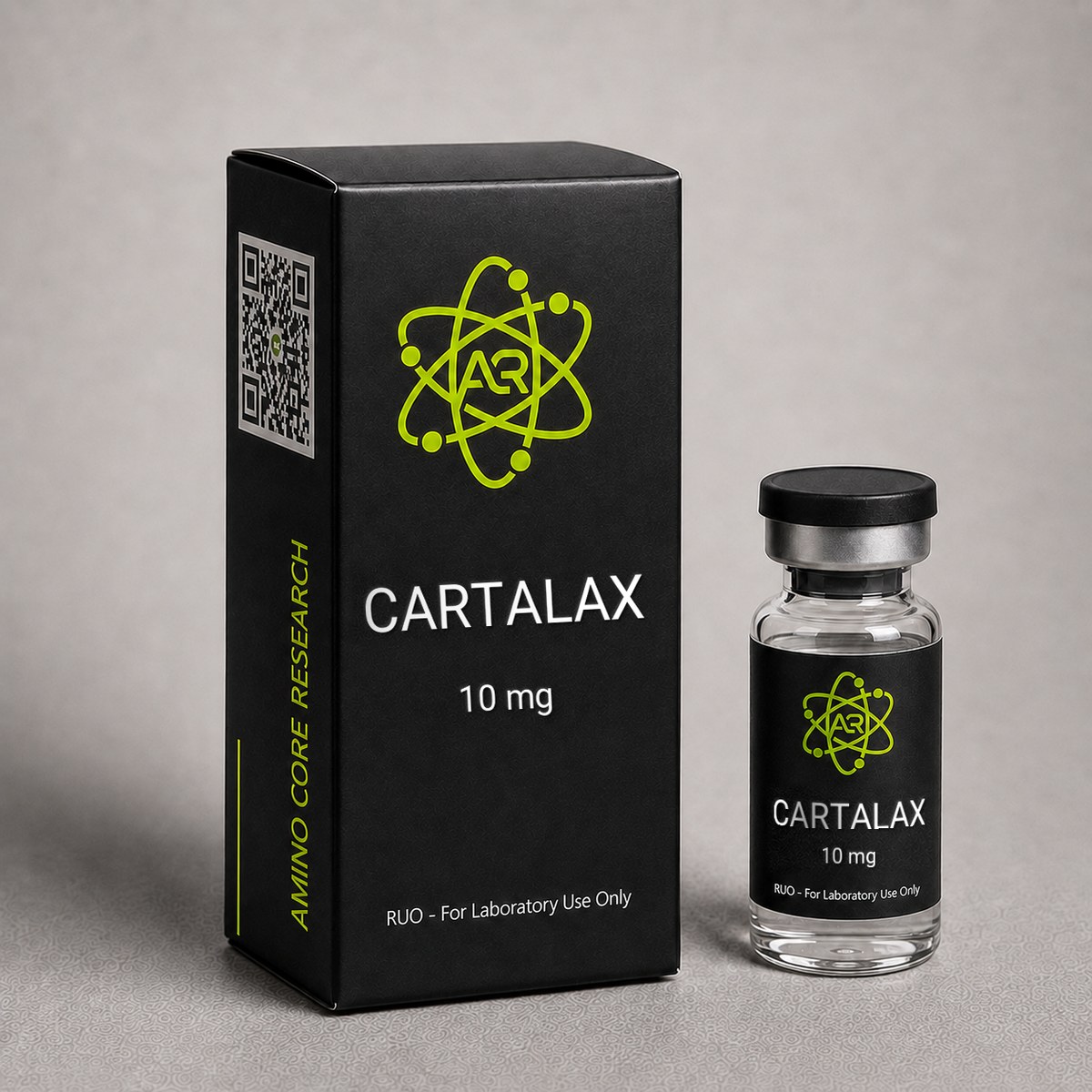
≥99%HPLC Purity
COAIncluded
USAShipped
Cartalax Peptide
Part of the Peptide Bioregulators family · Connective tissue
Short bioregulatory tripeptide (Ala-Glu-Asp) from cartilage extract. Khavinson peptide researched for chondroprotective and anti-aging effects on connective tissue.
$32.00 – $51.00
In stock — ships next business day
Quick Facts
| SKU | AC-CART |
|---|---|
| CAS Number | 150700-67-9 |
| Molecular Formula | C12H19N3O8 |
| Molecular Weight | 333.30 g/mol |
| Sequence | Ala-Glu-Asp (AED) |
| Purity | ≥99% |
| Physical Form | Lyophilized Powder |
| Storage | Store at -20°C |
What is Cartalax (Ala-Glu-Asp)?
Khavinson tripeptide from cartilage extract. Researched for chondroprotective effects, normalizing cartilage metabolism and inhibiting matrix metalloproteinase-mediated collagen degradation in joints.
Mechanism of Action
Cartalax (Ala-Glu-Asp, AED) is a short bioregulatory peptide developed within the Khavinson school of peptide bioregulation. Like other tripeptide bioregulators such as Pinealon (Glu-Asp-Arg) and Vesugen (Lys-Glu-Asp), Cartalax is hypothesised to act through direct, sequence-specific interactions with regulatory regions of DNA and chromatin, modulating the transcription of genes relevant to connective tissue homeostasis.
Epigenetic and Transcriptional Modulation
Research using molecular modelling and binding assays suggests that short peptides of this class can penetrate cell and nuclear membranes and bind to histone proteins and promoter regions of specific genes. For Cartalax, target genes are proposed to include those encoding type II collagen (COL2A1), aggrecan (ACAN), and other extracellular matrix components characteristic of chondrocytes. By influencing methylation patterns and transcription factor recruitment, the peptide is hypothesised to shift gene expression toward an anabolic, matrix-preserving phenotype in cartilage-derived cells.
Chondrocyte Differentiation and Matrix Synthesis
In cultured chondrocytes and mesenchymal stem cell models, Cartalax has been associated with upregulation of chondrogenic markers and increased synthesis of glycosaminoglycans and proteoglycans. This is consistent with the broader Khavinson hypothesis that tissue-derived tripeptides selectively normalise function in the tissues from which their parent polypeptide complex was originally isolated — in this case, cartilage extract.
Modulation of Apoptosis and Oxidative Stress
Cartalax has also been investigated for its effects on chondrocyte apoptosis in aged or stressed cell cultures. Research suggests reduced expression of pro-apoptotic markers such as p53 and caspase-3, along with normalisation of Bcl-2/Bax ratios. These effects parallel observations made with related peptide bioregulators in neuronal (Pinealon), vascular (Vesugen), and thymic (Vilon) tissues, supporting a generalised mechanism of cytoprotection coupled with tissue-specific transcriptional effects.
Inflammatory Pathway Modulation
Preliminary in vitro data suggest that Cartalax may dampen NF-κB-mediated inflammatory signalling in chondrocytes exposed to IL-1β or TNF-α, with corresponding decreases in MMP-13 and ADAMTS-5 expression — enzymes implicated in cartilage matrix degradation. Although this work is preliminary and has not been replicated in large independent laboratories, it provides a plausible mechanistic basis for the chondroprotective effects reported in animal models.
Relationship to Parent Cartilage Bioregulator
Cartalax was designed as the short-peptide analogue of a polypeptide complex isolated from cartilage tissue (Sigmaferon-class preparations). The rationale, common to the Khavinson peptide series, is that the active tripeptide motif retains the tissue-targeting properties of the parent extract while offering improved stability, defined chemistry, and reproducible synthesis. As with other peptides in this family, the proposed mechanisms remain hypotheses supported primarily by single-laboratory data and require independent confirmation.
Research & Clinical Studies
Preclinical Studies: Chondroprotective and Gene Expression Effects
The research literature on Cartalax (Ala-Glu-Asp) is concentrated in publications from the St. Petersburg Institute of Bioregulation and Gerontology and collaborating groups. The studies focus on chondrocyte cultures, animal models of osteoarthritis, and gene expression analyses.
Study 1: Gene Expression in Chondrocyte Cultures
In a series of in vitro experiments, primary chondrocytes from young and aged donors were exposed to Cartalax at nanomolar concentrations (typically 20-200 ng/mL) for 24-72 hours. Key findings reported include:
- Increased COL2A1 mRNA expression in aged chondrocyte cultures, approaching levels observed in young-donor controls
- Upregulation of aggrecan (ACAN) and SOX9, a master regulator of chondrogenesis
- Reduction in MMP-13 expression following IL-1β challenge, suggesting a brake on catabolic matrix remodelling
- Normalisation of Bcl-2/Bax ratio, consistent with reduced chondrocyte apoptosis
These data were interpreted by the authors as evidence that Cartalax can partially restore a youthful transcriptional profile in aged cartilage cells.
Study 2: Animal Models of Cartilage Degeneration
In rodent models of induced osteoarthritis (collagenase or monosodium iodoacetate injection), Cartalax administration has been associated with reduced histological cartilage damage scores compared with vehicle controls. Reported endpoints include decreased proteoglycan loss on Safranin O staining, preservation of articular cartilage thickness, and lower synovial inflammation scores. Dosing in these protocols is typically in the microgram-per-kilogram range, administered parenterally over several weeks.
Study 3: Comparative Bioregulator Studies
Comparative work has examined Cartalax alongside other Khavinson tripeptides (Pinealon, Vesugen, Vilon) to evaluate tissue specificity. In these studies, Cartalax showed the most pronounced effects in cartilage-derived cell lines, while peptides from other tissue origins produced their strongest signals in their respective target tissues. This pattern is cited as support for the tissue-specificity hypothesis underlying the peptide bioregulator concept.
Study 4: Combination with Other Bioregulators
Some protocols have explored Cartalax in combination with Sigmaferon-class polypeptide complexes or with peptides targeting bone (such as those from the prostate/bone regulator series). Preliminary findings suggest additive effects on matrix synthesis markers, though independent replication is lacking.
Limitations of the Evidence Base
The body of evidence for Cartalax remains relatively narrow. Most studies originate from a single research school, sample sizes are often small, and randomised controlled clinical trials in humans have not been published in mainstream peer-reviewed journals. Researchers using Cartalax should treat current findings as hypothesis-generating rather than conclusive, and design experiments with appropriate controls and independent verification of endpoints.
[1] Khavinson VK, Linkova NS, Tarnovskaya SI. Short peptides regulate gene expression. Bulletin of Experimental Biology and Medicine. 2016;162(2):288-292.
[2] Khavinson VK, Popovich IG. Short peptides and telomere length regulator hormone irisin: similarities of their geroprotective effects. Bulletin of Experimental Biology and Medicine. 2020;169(4):549-553.
Cartalax and Chondrocyte Gene Expression: In Vitro Studies on Cartilage Tissue Renewal
A key area of Cartalax research focuses on its ability to modulate gene expression in chondrocytes and connective tissue cells. The tripeptide Ala-Glu-Asp was developed within the Khavinson framework of short peptide bioregulators, which proposes that specific oligopeptides interact directly with DNA promoter regions to selectively activate tissue-specific gene transcription. Cartalax was designed from cartilage extract fractions and investigated for its effects on chondrocyte phenotype maintenance, extracellular matrix synthesis, and senescence-associated gene expression.
Study design: In a series of in vitro experiments published by Khavinson and colleagues, chondrocyte cultures derived from human cartilage explants were treated with Cartalax at concentrations ranging from 20 to 200 ng/mL. Cultures were maintained for 7–14 days, with gene expression analyzed via RT-PCR and immunocytochemistry. Comparator groups included untreated controls and cultures treated with related Khavinson tripeptides.
Key reported findings:
- Increased expression of cartilage-specific genes including aggrecan (ACAN) and type II collagen (COL2A1), markers of differentiated chondrocyte phenotype.
- Modulation of SOX9, the master transcription factor for chondrogenesis, in a concentration-dependent manner.
- Downregulation of matrix metalloproteinases (MMP-13, MMP-9) involved in cartilage degradation.
- Reduction in p16INK4a expression, a senescence marker, suggesting an anti-senescent effect on chondrocyte cultures.
- Increased proliferative activity measured by Ki-67 labeling index relative to age-matched control cultures.
Context and significance: These findings position Cartalax as part of a broader family of tissue-specific Khavinson peptides (Vilon, Epitalon, Pinealon, Cartalax, Prostamax, Bronchogen) that demonstrate selective effects on gene expression in their target tissues. The chondroprotective profile in preclinical models is hypothesized to result from a combination of anabolic stimulation of matrix proteins and suppression of catabolic enzymes. Research suggests this dual mechanism may differentiate short peptide bioregulators from growth factor-based approaches, although clinical translation remains preliminary and requires controlled human studies.
Comparative analyses indicate that the tissue selectivity of Cartalax overlaps minimally with other Khavinson tripeptides such as Pinealon (Glu-Asp-Arg, neuroprotective) or Vesugen (Lys-Glu-Asp, vascular), supporting the hypothesis that amino acid sequence dictates target gene specificity within this peptide class.
[1] Khavinson VK, Malinin VV. Gerontological aspects of genome peptide regulation. Karger, Basel; 2005. Review of Khavinson peptide bioregulators including Cartalax mechanisms.
[2] Khavinson VKh, Solov'ev AY, Zhilinskii DV. Mechanism of biological activity of short peptides: cell penetration and epigenetic regulation of gene expression. Bull Exp Biol Med. 2012;154(3):403-410.
Chemical & Physical Properties
Cartalax is a short linear tripeptide composed of three standard L-amino acids: alanine, glutamic acid, and aspartic acid. Its compact size and dianionic character at physiological pH influence its solubility, stability, and handling requirements in laboratory work.
| Full Name | Cartalax (Ala-Glu-Asp, AED) |
|---|---|
| Synonyms | AED tripeptide, Khavinson cartilage bioregulator |
| Molecular Formula | C12H19N3O8 |
| Molecular Weight | 333.30 g/mol |
| CAS Number | 150700-67-9 |
| Sequence | H-Ala-Glu-Asp-OH |
| Amino Acid Count | 3 (tripeptide) |
| Origin / Developer | St. Petersburg Institute of Bioregulation and Gerontology (Khavinson group); designed as the short-peptide analogue of a cartilage-derived polypeptide complex |
| Key Modifications | None; free N-terminus and C-terminus, no protecting groups in the standard research form |
| Physical Form | Lyophilized white powder |
| Solubility | Highly soluble in water and bacteriostatic water; soluble in PBS and dilute acetic acid. Limited solubility in organic solvents. |
| Purity | ≥99% (HPLC) |
| Net Charge at pH 7.4 | Approximately -2 (two acidic side chains, free N-terminus partially protonated) |
| Isoelectric Point (estimated) | ~3.0 |
Because both glutamate and aspartate side chains carry negative charges at physiological pH, Cartalax is highly hydrophilic and is not expected to cross membranes by passive diffusion at appreciable rates. Mechanistic models proposed by the Khavinson group invoke active transport or carrier-mediated uptake, although the precise transport mechanisms have not been fully characterised. The tripeptide is sensitive to proteolytic degradation by aminopeptidases and dipeptidyl peptidases, which contributes to its short plasma half-life and informs the typical use of repeated dosing regimens in animal protocols.
Handling & Reconstitution Guidelines
Cartalax is supplied as a lyophilized white powder under strict laboratory conditions. Because it is a short tripeptide containing acidic residues (glutamic acid and aspartic acid), it is generally well-behaved in aqueous solution but should still be handled with standard peptide laboratory precautions to maintain integrity for research use.
Recommended reconstitution protocol:
- Allow the sealed vial to equilibrate to room temperature for 20–30 minutes before opening to prevent moisture condensation on the lyophilized powder.
- Centrifuge the vial briefly (if equipped) to ensure all peptide is at the bottom prior to opening.
- Select reconstitution solvent: bacteriostatic water (0.9% benzyl alcohol) or sterile water for injection is suitable. Cartalax is highly water-soluble due to its hydrophilic side chains.
- For a 10 mg vial, add 2 mL of solvent to yield a working concentration of 5 mg/mL. Adjust volume for desired stock concentration.
- Inject the solvent slowly along the inner wall of the vial — do not direct the stream onto the lyophilized powder cake.
- Gently swirl or roll the vial between palms until fully dissolved. Do not shake or vortex aggressively, as mechanical agitation may introduce shear stress and bubbles.
- Allow the reconstituted solution to stand for 1–2 minutes to ensure complete dissolution and dissipation of any micro-bubbles.
- Inspect visually: the solution should be clear and colorless with no visible particulates.
Compound-specific handling notes:
- Cartalax does not contain methionine, cysteine, or tryptophan, so it is not particularly susceptible to oxidative degradation; however, exposure to direct UV light and prolonged warming should still be avoided.
- The peptide contains free carboxylate groups that make reconstituted solutions mildly acidic. Buffering with sterile PBS (pH 7.4) is acceptable for cell culture applications.
- Use aseptic technique throughout. Cartalax is intended strictly for in vitro and preclinical laboratory research and is not for human or veterinary use.
- Aliquot stock solutions into single-use volumes to minimize freeze-thaw cycles, which can degrade short peptides over time.
All handling should be performed by qualified research personnel using appropriate personal protective equipment (gloves, lab coat, eye protection). Discard any solution showing turbidity, precipitate, or color change.
Storage & Stability Information
Proper storage is critical to preserving the structural integrity and biological activity of Cartalax for research applications. Like other Khavinson short peptides, Cartalax (Ala-Glu-Asp) is relatively stable in its lyophilized form but more susceptible to degradation once reconstituted in aqueous solution.
Lyophilized powder storage:
- Long-term (recommended): Store at −20°C or colder in a sealed, desiccated container, protected from light. Under these conditions, lyophilized Cartalax has been reported stable for 24 months or longer.
- Short-term: 2–8°C refrigeration is acceptable for up to 60 days when the vial remains sealed and dry.
- Transit: Brief exposure to ambient room temperature (up to 7–14 days) during shipping does not significantly compromise the lyophilized peptide, owing to the inherent stability of the short tripeptide sequence.
Reconstituted solution storage:
- Store reconstituted Cartalax at 2–8°C and use within 14–21 days for research applications requiring full activity.
- For extended storage of reconstituted solutions, aliquot into low-binding microcentrifuge tubes and freeze at −20°C or −80°C. Avoid more than 2–3 freeze-thaw cycles.
- Protect from direct light by wrapping tubes in foil or using amber vials when possible.
Compound-specific stability notes:
- Cartalax lacks disulfide bonds and oxidation-sensitive residues (Met, Cys, Trp), simplifying its stability profile compared to longer or more complex peptides.
- The acidic side chains of Glu and Asp can undergo slow isomerization or deamidation at extreme pH or elevated temperatures; storing solutions near neutral pH and refrigerated minimizes this.
- Repeated warming and cooling cycles should be avoided, as condensation can introduce moisture into the lyophilized powder and accelerate hydrolysis.
- Always label aliquots with date of reconstitution and lot number for traceability in research records.
When storage best practices are followed, Cartalax maintains the high purity (≥99% HPLC) and biological activity required for reproducible preclinical research outcomes.
Frequently Asked Questions
What conditions is Cartalax researched for?
Cartalax is studied for osteoarthritis, age-related cartilage degradation, and joint inflammation models. It acts at the gene expression level to normalize chondrocyte function and matrix turnover.
What is the molecular weight and CAS number of Cartalax?
Cartalax (Ala-Glu-Asp) has a molecular formula of C12H19N3O8 and a molecular weight of 333.30 g/mol. Its CAS registry number is 150700-67-9. It is a short linear tripeptide composed of alanine, glutamic acid, and aspartic acid, supplied as a lyophilized powder at ≥99% HPLC purity. The compact size and dianionic character at physiological pH make Cartalax highly water-soluble and suitable for reconstitution in bacteriostatic water or PBS for in vitro and preclinical research applications.
How does Cartalax compare to other Khavinson tripeptide bioregulators?
Cartalax belongs to the same family of short peptide bioregulators developed by the Khavinson group as Pinealon (Glu-Asp-Arg), Vesugen (Lys-Glu-Asp), and Vilon (Lys-Glu). Each is hypothesised to act through sequence-specific interactions with chromatin and promoter regions to modulate gene expression in a tissue-targeted manner. Cartalax is specifically derived from cartilage-tissue research and shows its strongest reported effects in chondrocytes and connective-tissue models, whereas Pinealon targets neural tissues and Vesugen targets vascular endothelium. All share a common conceptual framework of short, stable, tissue-selective gene regulators.
How should Cartalax be stored and reconstituted?
Lyophilized Cartalax should be stored at -20°C for long-term stability, with short-term storage at 2-8°C acceptable for active use. Once reconstituted in bacteriostatic water or sterile PBS, the solution should be kept at 2-8°C and used within 2-4 weeks to minimise degradation by hydrolysis. Reconstitution is typically performed by adding solvent slowly down the vial wall and gently swirling — vortexing is not recommended for short peptides as it can introduce foaming. Aliquoting before freezing helps avoid repeated freeze-thaw cycles.
What research applications is Cartalax used for?
Cartalax is used in preclinical research focused on cartilage biology, chondrocyte function, and age-related changes in connective tissue. Reported applications include studies of chondrogenic gene expression (COL2A1, ACAN, SOX9), matrix metalloproteinase regulation, chondrocyte apoptosis under inflammatory or oxidative stress, and models of induced osteoarthritis in rodents. It is also used in comparative studies of the broader Khavinson peptide bioregulator family. Cartalax is supplied for laboratory research only and is not intended for human or veterinary therapeutic use.
Is Cartalax related to other cartilage-derived bioregulators?
Cartalax (Ala-Glu-Asp) belongs to the Khavinson family of short peptide bioregulators developed at the St. Petersburg Institute of Bioregulation and Gerontology. It was isolated and synthesized based on amino acid analysis of cartilage tissue extracts, similar in concept to how Epithalon was derived from pineal extracts and Prostamax from prostate tissue. Within this family, Cartalax is the tripeptide specifically associated with chondrocyte gene regulation and connective tissue research. It is structurally and functionally distinct from glucosamine, chondroitin, or collagen peptide preparations, which are not sequence-defined bioregulators.
What is the amino acid sequence of Cartalax?
Cartalax is a linear tripeptide with the sequence Ala-Glu-Asp (alanine-glutamic acid-aspartic acid), often abbreviated as AED in single-letter code. The molecular formula is C12H19N3O8 with a molecular weight of 333.30 g/mol and CAS number 150700-67-9. The sequence consists of one neutral residue (alanine) followed by two acidic residues (glutamic and aspartic acid), giving the peptide an overall acidic character. This compact sequence is hypothesized in Khavinson peptide research to enable direct interaction with specific DNA promoter regions associated with chondrocyte gene expression.
How is Cartalax administered in preclinical research studies?
In published preclinical research, Cartalax has been investigated using several routes depending on the model system. In vitro studies typically apply Cartalax directly to chondrocyte or connective tissue cell cultures at concentrations of 20–200 ng/mL. In animal models, subcutaneous and intranasal administration have been described in Khavinson laboratory reports, with dosing in the microgram-per-kilogram range. AminoCore Research supplies Cartalax strictly for in vitro and laboratory research use by qualified personnel; the compound is not intended for human or veterinary administration and no clinical dosing recommendations are provided.
Does Cartalax require refrigeration during shipping?
Cartalax in lyophilized powder form is stable enough to tolerate brief shipping at ambient temperature without significant loss of integrity, owing to the structural robustness of the short Ala-Glu-Asp sequence and the absence of oxidation-prone residues. Upon receipt, the vial should be transferred to −20°C storage for long-term preservation, or 2–8°C if intended for use within 60 days. Once reconstituted in bacteriostatic or sterile water, the solution must be refrigerated at 2–8°C and used within approximately 14–21 days, or aliquoted and frozen for longer-term storage.
For laboratory and research use only. This product is not for human or veterinary use. It is not a drug, supplement or food.
This product is not FDA approved for any indication, and is not intended to diagnose, treat, cure, or prevent any disease. All product information is derived from published preclinical research and does not constitute medical advice or claims.