≥99%HPLC Purity
COAIncluded
USAShipped
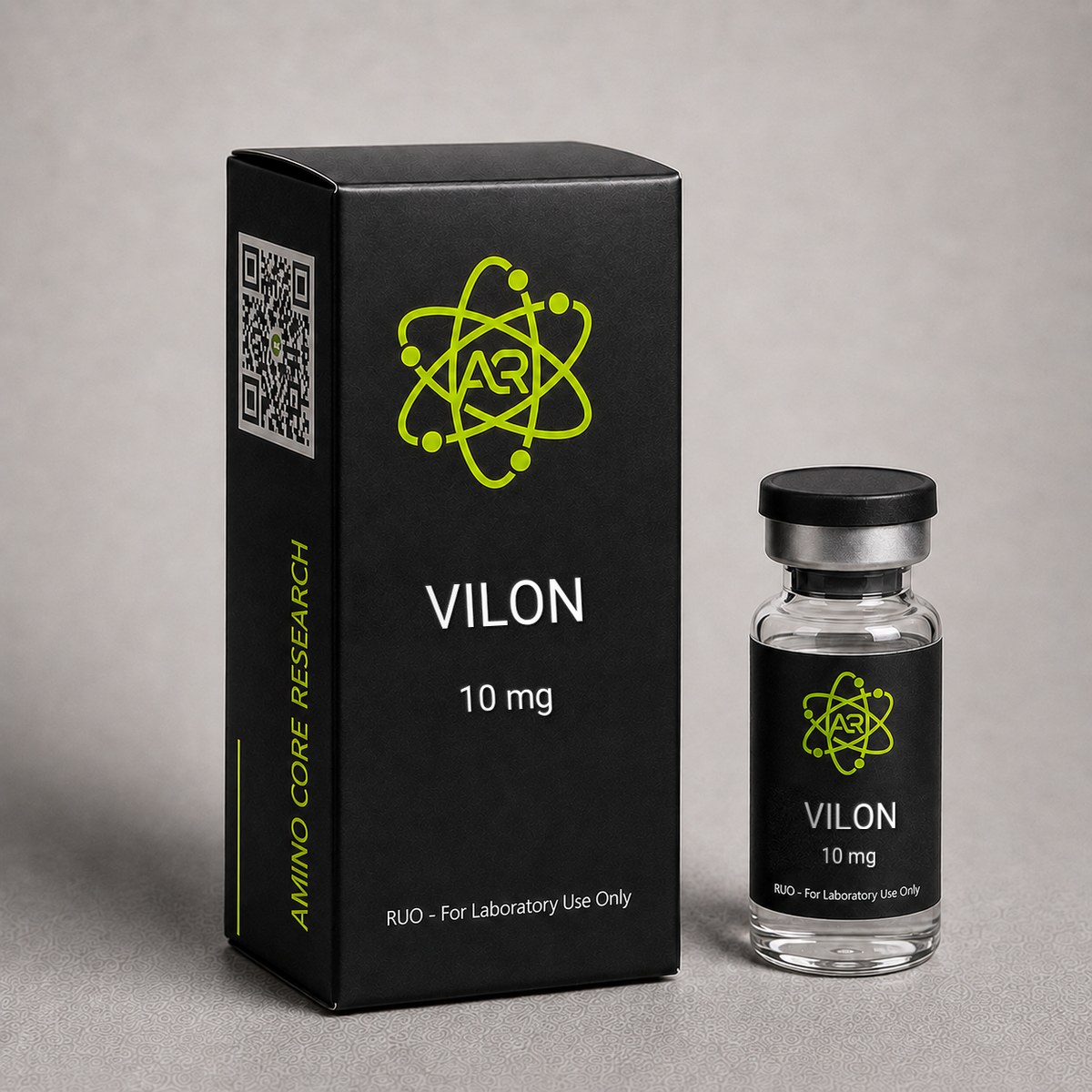
Vilon Peptide
Part of the Peptide Bioregulators family · Immune / thymic
Thymic bioregulatory dipeptide (Lys-Glu) from the Khavinson peptide family. Researched for immunomodulatory properties, T-cell activation, and thymus function.
$30.00 – $48.00
In stock — ships next business day
Quick Facts
| SKU | VIL-001 |
|---|---|
| CAS Number | 98815-38-4 |
| Molecular Formula | C11H21N3O5 |
| Molecular Weight | 275.30 g/mol |
| Sequence | Lys-Glu (H-Lys-Glu-OH) |
| Purity | ≥99% |
| Physical Form | Lyophilized Powder |
| Storage | Store at -20°C |
What is Vilon (Lys-Glu)?
Shortest bioregulatory peptide (dipeptide). Despite its minimal size, Vilon demonstrates immunomodulatory activity through T-cell differentiation promotion and thymic function support. It enhances CD3+/CD4+ T-cell populations and IL-2 production.
Mechanism of Action
Vilon (Lys-Glu) is a short synthetic dipeptide developed within the Khavinson peptide bioregulator framework. Despite its minimal structural complexity — only two amino acids and a molecular weight of 275.30 g/mol — Vilon has been reported in Russian peptide research literature to exert measurable effects on immune system regulation, gene expression, and cellular aging markers. Its mechanism is thought to operate at the level of chromatin interaction and selective gene activation, a paradigm proposed by V.Kh. Khavinson and colleagues for ultrashort peptides.
Direct DNA and Chromatin Interaction
One of the most distinctive proposed mechanisms for Vilon involves direct binding to specific nucleotide sequences in double-stranded DNA. Khavinson's group has reported that Lys-Glu can interact with promoter regions of genes involved in immune regulation and cellular differentiation. This direct peptide-DNA recognition is hypothesized to modulate the transcription of genes encoding interleukins, interferons, and components of the major histocompatibility complex (MHC) in lymphoid tissues.[1]
Thymic and T-Cell Regulation
Vilon has been associated with restoration of thymic architecture in aged or immunosuppressed animal models. Research has reported normalization of CD4+/CD8+ T-cell ratios, increased expression of CD3 and CD4 surface markers on thymocytes, and enhanced proliferation of mature T-lymphocytes following exposure to the dipeptide. These effects parallel those observed with the parent thymic extract Thymalin, suggesting Vilon acts as an active short-peptide fragment mimicking thymic regulatory activity.[2]
Modulation of Cytokine Production
In vitro studies on peripheral blood mononuclear cells (PBMCs) have reported that Vilon influences cytokine secretion patterns, including modulation of IL-2, IFN-gamma, and TNF-alpha. The dipeptide appears to act as a normalizer rather than a unidirectional stimulator — increasing depressed cytokine levels and reducing pathologically elevated ones, consistent with the bioregulator concept.
Telomerase and Cellular Senescence
Khavinson's laboratory has reported that Vilon can induce telomerase activity and extend the proliferative capacity of cultured human somatic cells. In fibroblast and lymphocyte cultures, Lys-Glu has been associated with increased Hayflick limit and reduced markers of replicative senescence, possibly through chromatin decondensation at heterochromatic regions adjacent to telomeres.[3]
Comparison to Related Khavinson Dipeptides
Vilon (Lys-Glu) is part of a family that includes Epitalon (Ala-Glu-Asp-Gly), Pinealon (Glu-Asp-Arg), and Bronchogen (Ala-Glu-Asp-Pro). Each is hypothesized to exhibit tissue-selective gene regulation — Vilon being preferentially associated with immune/thymic tissue, while Epitalon targets pineal/telomerase pathways. This selectivity is attributed to sequence-specific DNA binding preferences of each short peptide.
Research & Clinical Studies
Immunomodulatory Effects in Aged Animal Models
One of the foundational studies on Vilon examined its capacity to restore immune function in aged rodents. Conducted by Khavinson and colleagues at the St. Petersburg Institute of Bioregulation and Gerontology, the work assessed whether the Lys-Glu dipeptide could reverse age-associated involution of the thymus and decline in cellular immunity.[1]
Study Design
- Subjects: Aged Wistar rats (24-28 months) compared to young controls (3-6 months)
- Administration: Vilon administered intramuscularly at low microgram doses over 10-day cycles
- Endpoints: Thymic histology, T-cell subset analysis, lymphocyte proliferation, antibody response to T-dependent antigens
Key Findings
- Thymic cortex thickness increased by approximately 30-40% in Vilon-treated aged animals compared to untreated aged controls
- CD4+/CD8+ ratios shifted toward values observed in young animals
- Mitogen-induced (Con A, PHA) lymphocyte proliferation increased significantly versus aged controls
- Antibody response to sheep red blood cell challenge was restored to approximately 70-80% of young-animal levels
- No significant adverse effects on hematological parameters were reported
Mechanistic Interpretation
The authors proposed that Vilon's restorative effect reflects reactivation of latent gene-expression programs in thymic epithelial cells and lymphoid precursors. The dipeptide is small enough to cross cellular membranes and the nuclear envelope, and is hypothesized to bind sequence-specifically to gene promoters involved in thymopoiesis. This study established the immune-regulating profile that distinguishes Vilon from other Khavinson dipeptides such as Epitalon (pineal/telomerase) and Livagen (hematopoietic).
Research Context
This work is frequently cited in subsequent Russian bioregulator literature as the prototype demonstration that an ultrashort peptide can replicate, at least partially, the immunorestorative actions of full thymic extracts. Vilon is therefore considered a model compound for investigating peptide-mediated reversal of immunosenescence in laboratory research.
[1] Khavinson VKh, Morozov VG. Peptide bioregulators and aging. Adv Gerontol. 2002;10:74-84.
[2] Anisimov VN, Khavinson VK. Peptide bioregulation of aging: results and prospects. Biogerontology. 2010;11(2):139-149.
Vilon Effects on Lymphocyte Function and Immune Restoration
One of the foundational studies on Vilon (Lys-Glu) was conducted by Khavinson and colleagues at the St. Petersburg Institute of Bioregulation and Gerontology, investigating the dipeptide's ability to restore immune function in immunosuppressed and aged animal models. The study employed both in vitro lymphocyte cultures and in vivo administration to assess Vilon's bioregulatory action on the immune system.
Study Design
Researchers examined Vilon's effects across multiple experimental paradigms: (1) lymphocyte cultures derived from aged donors and immunosuppressed subjects, (2) cyclophosphamide-induced immunosuppression models in rodents, and (3) naturally aged mice (18-24 months). Vilon was administered at concentrations ranging from 0.1 to 100 ng/mL in vitro and 0.1-1.0 ug/kg in vivo over treatment periods of 5-14 days.
Key Results
- 2-3 fold increase in T-lymphocyte proliferative response to phytohemagglutinin (PHA) in aged lymphocyte cultures
- Restoration of CD4+/CD8+ ratios toward youthful values in aged animals
- Normalization of natural killer (NK) cell activity in immunosuppressed subjects
- Significant increase in interleukin-2 (IL-2) production by activated T-cells
- Enhanced expression of CD25 (IL-2 receptor alpha) on activated lymphocytes
- Reduction in apoptotic markers in thymocyte populations
Mechanistic Insights
The study proposed that Vilon's effects derive from its ability to penetrate cell nuclei and interact directly with chromatin. Subsequent molecular work using fluorescently labeled Vilon demonstrated localization to nucleoli and binding to specific DNA sequences in promoter regions of immune-related genes, including those encoding IL-2, interferon-gamma, and various cytokine receptors. This direct gene regulatory mechanism distinguishes Khavinson peptides from cytokine-based immunomodulators.
Context and Significance
These findings established Vilon as a model compound for the broader Khavinson peptide hypothesis: that short peptides corresponding to functionally significant protein fragments can act as universal bioregulators through direct gene expression modulation. The restoration of immune function in aged models is particularly relevant to immunosenescence research, where thymic involution and reduced T-cell diversity contribute to increased infection susceptibility and reduced vaccine responsiveness in elderly populations. Vilon's effects parallel those observed with Thymalin and Thymogen, suggesting a common mechanism among thymic-derived bioregulatory peptides.
Vilon and Lifespan Extension in Rodent Studies
A significant body of research from the Khavinson group has examined the effects of Vilon and related short peptides on lifespan and age-associated pathology in rodent models. These studies represent some of the longest-running peptide intervention trials in gerontology research and have generated substantial preclinical data on bioregulatory peptide effects on aging biomarkers.
Study Design
In a landmark study, female CBA mice received subcutaneous injections of Vilon at 1 ug per mouse, 5 consecutive days per month, beginning at 6 months of age and continuing until natural death. Control animals received saline injections on the same schedule. Endpoints included mean and maximum lifespan, tumor incidence, age-related pathology, and biomarkers of aging including immune function, hormone levels, and oxidative stress markers.
Key Results
- 16.1% increase in mean lifespan in Vilon-treated mice compared to controls
- Increase in maximum lifespan by 12.3%
- 1.8-fold reduction in spontaneous tumor incidence
- Delayed onset of age-related immune decline
- Preserved thymic cellularity in aged Vilon-treated animals
- Reduced markers of chronic inflammation (lower IL-6, TNF-alpha)
- Improved melatonin secretion patterns in aged animals
Comparative Context
The lifespan effects observed with Vilon are comparable to those seen with Epitalon (Ala-Glu-Asp-Gly) in similar protocols, though Epitalon shows somewhat stronger effects on pineal-related parameters while Vilon predominantly affects immune parameters. This tissue specificity supports the Khavinson hypothesis that different short peptides have differential target organ effects based on their amino acid sequences and structural homology to regulatory protein domains.
Tumor Suppression Findings
Additional studies examining Vilon in carcinogenesis models demonstrated reduced incidence of chemically induced mammary tumors and colon tumors in treated animals. The proposed mechanism involves enhanced immunosurveillance through restored NK cell and cytotoxic T-cell function, combined with direct effects on cell cycle regulatory gene expression. Vilon-treated animals showed increased expression of p53 and reduced expression of c-myc in proliferative tissues.
Research Significance
These findings position Vilon within a small group of compounds demonstrating reproducible lifespan extension in mammalian models, alongside rapamycin, metformin, and certain caloric restriction mimetics. While the magnitude of lifespan extension is moderate, the favorable safety profile and apparent mechanism through immune restoration rather than metabolic perturbation make Vilon a continuing subject of geroscience research.
[1] Anisimov VN, Khavinson VK, Provinciali M, et al. Inhibitory effect of the peptide epitalon on the development of spontaneous mammary tumors in HER-2/neu transgenic mice. Int J Cancer. 2002;101(1):7-10. PubMed ↗
[2] Khavinson VK, Bondarev IE, Butyugov AA. Epithalon peptide induces telomerase activity and telomere elongation in human somatic cells. Bull Exp Biol Med. 2003;135(6):590-2. PubMed ↗
Chemical & Physical Properties
Vilon is a synthetic dipeptide consisting of L-lysine and L-glutamic acid joined by a single peptide bond. It is among the smallest bioactive peptides described in the Khavinson bioregulator series, with a molecular weight under 300 daltons. The compound is typically supplied as a white lyophilized powder for research reconstitution.
| Full Name | L-Lysyl-L-glutamic acid (Lys-Glu) |
|---|---|
| Synonyms | Vilon, KE dipeptide, Lys-Glu |
| Molecular Formula | C11H21N3O5 |
| Molecular Weight | 275.30 g/mol |
| CAS Number | 98815-38-4 |
| Sequence | H-Lys-Glu-OH |
| Amino Acid Count | 2 (dipeptide) |
| Origin / Developer | St. Petersburg Institute of Bioregulation and Gerontology; V.Kh. Khavinson and colleagues |
| Peptide Family | Khavinson short peptide bioregulators (alongside Epitalon, Pinealon, Livagen, Bronchogen) |
| Physical Form | White lyophilized powder |
| Solubility | Freely soluble in water and bacteriostatic water; soluble in saline (0.9% NaCl) |
| Purity | ≥99% (HPLC) |
| Storage | -20°C lyophilized; 2-8°C reconstituted (short term) |
Structural Notes
The lysine residue contributes a free epsilon-amino group with a side-chain pKa near 10.5, giving Vilon a positively charged moiety at physiological pH. Glutamic acid contributes a side-chain carboxyl with pKa near 4.1, conferring a negative charge at neutral pH. The resulting zwitterionic-plus-charged-side-chain character supports good aqueous solubility and is believed to facilitate the proposed sequence-specific DNA interactions, since both basic and acidic side chains can hydrogen-bond with nucleobase functional groups in the major and minor grooves of double-stranded DNA.
Stability Considerations
Being a simple dipeptide with no disulfide bonds, no methionine, and no oxidation-sensitive residues, Vilon is comparatively stable under standard handling. The principal degradation pathway is hydrolysis of the peptide bond under prolonged aqueous storage or elevated temperature. Lyophilized material maintained at -20°C is reported to remain stable for extended periods under research conditions.
Handling & Reconstitution Guidelines
Proper handling of Vilon (Lys-Glu) is essential to preserve peptide integrity and ensure reproducible experimental results. As a small dipeptide, Vilon is more stable than larger peptides but still requires careful technique during reconstitution and aliquoting.
Reconstitution Protocol
- Allow vial to reach room temperature before opening. Remove the lyophilized Vilon vial from -20degC storage and let it equilibrate for 20-30 minutes to prevent condensation on the powder.
- Centrifuge briefly (if equipment available) at 1,000-2,000 x g for 30 seconds to consolidate any powder displaced during shipping to the bottom of the vial.
- Select reconstitution solvent. Bacteriostatic water (0.9% benzyl alcohol) is standard for research handling. Sterile water for injection or 0.9% sodium chloride are alternatives. Vilon's free amine and carboxyl groups confer excellent aqueous solubility.
- Calculate concentration. For a typical 20 mg vial: adding 2 mL solvent yields 10 mg/mL. For 5 mg/mL working stock, add 4 mL.
- Inject solvent slowly down the inner wall of the vial, avoiding direct stream onto the powder. This minimizes foaming and mechanical stress.
- Do not shake or vortex. Gently swirl the vial in a circular motion until complete dissolution (typically 30-60 seconds). Vilon dissolves rapidly due to its small size and polar residues.
- Inspect the solution. It should appear clear and colorless with no visible particulates.
- Aliquot for long-term storage. Divide into single-use volumes in low-binding polypropylene tubes to avoid repeated freeze-thaw cycles.
Compound-Specific Notes
Vilon contains a free epsilon-amine on lysine and a free carboxyl on glutamate, both of which contribute to high water solubility (>50 mg/mL achievable) but also make the peptide reactive with carbonyl-containing buffer components. Avoid buffers containing aldehydes or reducing sugars for long-term storage.
The glutamate residue is susceptible to pyroglutamate formation at N-terminal positions, but since glutamate is C-terminal in Vilon, this is not a concern. However, isoaspartate formation at acidic pH should be minimized by avoiding prolonged storage below pH 5.
Working Solution Preparation
For dilute working solutions, prepare immediately before use by diluting stock solution in the appropriate experimental buffer (typically PBS or culture medium). Do not store dilute solutions (<0.1 mg/mL) for extended periods, as adsorption to container surfaces becomes significant at low concentrations. Consider adding 0.1% BSA as a carrier protein for very dilute working solutions.
Frequently Asked Questions
How can a dipeptide have biological activity?
Vilon (KE) interacts with specific DNA regulatory sequences in immune cell chromatin, triggering gene expression changes despite its small size. Khavinson research shows even di- and tripeptides can have tissue-specific bioregulatory effects.
What is Vilon and what does it do in research?
Vilon is a synthetic dipeptide composed of L-lysine and L-glutamic acid (Lys-Glu), developed within the Khavinson peptide bioregulator program at the St. Petersburg Institute of Bioregulation and Gerontology. With a molecular weight of 275.30 g/mol and CAS number 98815-38-4, it is one of the smallest bioactive peptides in research use. Vilon has been studied for its proposed immunomodulatory activity, particularly restoration of thymic architecture, normalization of CD4+/CD8+ T-cell ratios, and modulation of cytokine production in aged animal models. It is investigated as a model compound for short-peptide-mediated gene regulation in immune tissue.
What is the molecular weight and CAS number of Vilon?
Vilon has a molecular formula of C11H21N3O5, a molecular weight of 275.30 g/mol, and CAS registry number 98815-38-4. Its sequence is H-Lys-Glu-OH, making it a simple dipeptide of L-lysine and L-glutamic acid. It is supplied as a lyophilized white powder at ≥99% HPLC purity for laboratory research.
How does Vilon compare to Epitalon and other Khavinson peptides?
Vilon (Lys-Glu) and Epitalon (Ala-Glu-Asp-Gly) are both members of the Khavinson short-peptide bioregulator family but differ in tissue selectivity. Epitalon is primarily associated with the pineal gland and telomerase activation, while Vilon is preferentially studied in immune and thymic tissue, where it has been reported to restore T-cell subset ratios and thymic cortex morphology in aged animal models. Other family members include Pinealon (cognitive/neuronal research), Livagen (hematopoietic), and Bronchogen (respiratory epithelium). Each is hypothesized to bind sequence-specifically to distinct gene promoters, accounting for the tissue-selective activity profiles.
How should Vilon be stored and reconstituted for research?
Lyophilized Vilon should be stored at -20°C for long-term stability, 2-8°C for short-term storage, and may tolerate ambient temperature during transit. For reconstitution, bacteriostatic water or sterile saline is typically used; Vilon is freely water-soluble due to its charged lysine and glutamate side chains. A common preparation is 5 mg in 1 mL of diluent, yielding a 5 mg/mL working solution. Reconstituted Vilon should be kept refrigerated at 2-8°C and used within a few weeks. Because it lacks disulfide bonds and oxidation-sensitive residues, Vilon is more stable than many longer peptides, but solutions should still be protected from prolonged heat or repeated freeze-thaw cycles.
What sizes of Vilon are available from AminoCore Research?
AminoCore Research offers Vilon (Lys-Glu) in standard research quantities, typically 20 mg lyophilized vials with greater than or equal to 99% HPLC purity. Each vial includes a Certificate of Analysis documenting purity, mass spectrometry confirmation of identity, and water content. The lyophilized powder is shipped at ambient temperature and remains stable in transit, with long-term storage recommended at -20degC. Bulk research quantities may be available upon inquiry for institutional customers and ongoing studies requiring larger volumes.
Does Vilon affect cortisol or other stress hormones in research models?
Published research on Vilon (Lys-Glu) has not demonstrated significant direct effects on cortisol or HPA axis hormones, distinguishing it from compounds that act through neuroendocrine pathways. Vilon's primary documented effects are on immune cell function, including T-lymphocyte proliferation, NK cell activity, and cytokine production. Indirect modulation of stress responses may occur through restoration of immune-neuroendocrine balance in aged or immunosuppressed models, but Vilon is not considered a direct HPA axis modulator. Researchers studying stress responses typically pair Vilon with hormone panel measurements to characterize any indirect effects.
How does Vilon compare to Thymalin and Thymogen for immune research?
Vilon (Lys-Glu), Thymogen (Glu-Trp), and Thymalin (a thymic polypeptide extract) all derive from Khavinson group research on thymic bioregulators but differ in structure and specific effects. Thymalin is a complex polypeptide mixture extracted from calf thymus, while Vilon and Thymogen are defined synthetic dipeptides representing minimal active fragments. Vilon shows broader effects on both T-cell and NK cell function, while Thymogen has been more extensively studied for T-cell maturation specifically. In comparative studies, Vilon and Thymogen produce overlapping but distinguishable immune profiles, supporting use of either or both depending on research objectives. Vilon's lysine-glutamate composition may confer better stability in serum than tryptophan-containing peptides like Thymogen.
For laboratory and research use only. This product is not for human or veterinary use. It is not a drug, supplement or food.
This product is not FDA approved for any indication, and is not intended to diagnose, treat, cure, or prevent any disease. All product information is derived from published preclinical research and does not constitute medical advice or claims.