≥99%HPLC Purity
COAIncluded
USAShipped
SLU-PP-332 Capsules
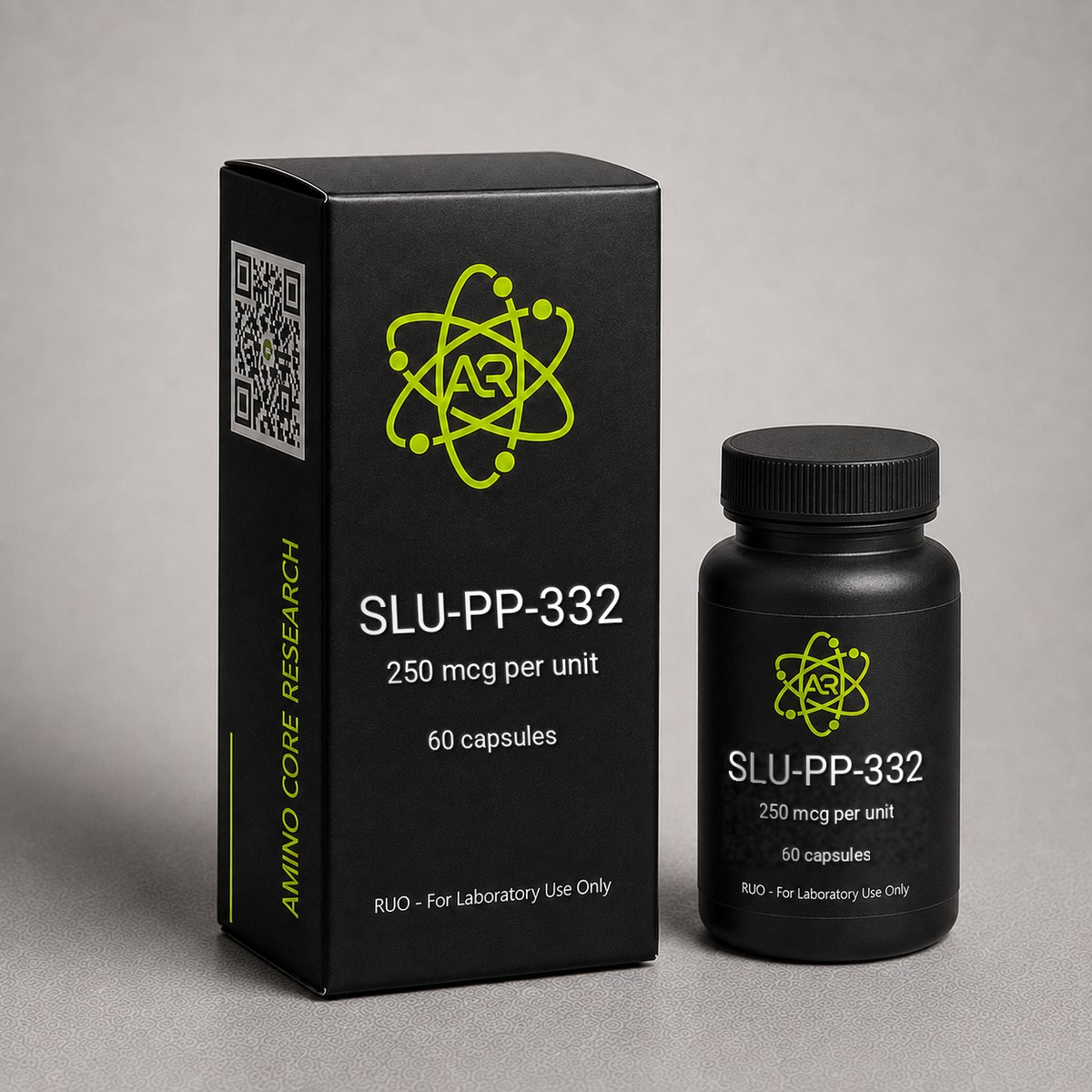
Oral capsule presentation of SLU-PP-332 at 250 mcg per capsule, 60 capsules per bottle. A small molecule, not a peptide — which is what makes the oral format feasible.
$129.99
In stock — ships next business day
Quick Facts
| SKU | ACR-SLUPP-C60 |
|---|---|
| CAS Number | 2138873-72-6 |
| Molecular Formula | C21H21F3N2O4 |
| Molecular Weight | 422.40 g/mol |
| Sequence | N/A — small molecule (not a peptide) |
| Purity | ≥99% |
| Physical Form | Capsule |
| Storage | Store sealed at room temperature, away from light and humidity |
What is SLU-PP-332?
SLU-PP-332 is a small-molecule pan-agonist of the estrogen-related receptors (ERRα, ERRβ, and ERRγ) developed at Saint Louis University by the laboratory of Thomas Burris and colleagues. It is not a peptide. The molecule is a synthetic organic compound with the reported formula C21H21F3N2O4 and a molecular weight of approximately 422.4 g/mol, which is what makes an oral capsule presentation chemically feasible — unlike peptide-based exercise mimetics, SLU-PP-332 is not immediately degraded by gastrointestinal proteases.
The research significance of SLU-PP-332 lies in its identification as one of the first potent, orally available agonists of the ERR family. The estrogen-related receptors are orphan nuclear receptors — they do not have a known endogenous ligand — and they act as master regulators of oxidative metabolism in skeletal muscle, heart, and brown adipose tissue. For years the ERRs were considered pharmacologically difficult targets. Billon and colleagues reported SLU-PP-332 as a chemical probe that activates all three ERR isoforms, opening the receptor family to in vivo investigation in rodent models of obesity, heart failure, and metabolic disease.
What differentiates SLU-PP-332 from other compounds marketed as "exercise mimetics" is its proposed mechanism. Rather than acting through AMPK activation (as with AICAR) or PPARδ (as with GW501516), SLU-PP-332 is reported to reprogram muscle transcription toward an oxidative, endurance-trained phenotype by directly engaging the ERR nuclear receptor family. In the original preclinical report, treated mice increased running distance and time-to-exhaustion on a treadmill without a change in body weight in the acute setting. It is important to state plainly: no human clinical trials of SLU-PP-332 have been published. All efficacy and safety data currently in the literature derive from rodent studies. Any characterization of SLU-PP-332 as a validated performance or metabolic intervention in humans is not supported by the record.
The compound is offered here strictly as a research chemical for in vitro and preclinical in vivo investigation of ERR biology, mitochondrial biogenesis, and oxidative metabolism.
Mechanism of Action
SLU-PP-332 is a synthetic agonist of the three estrogen-related receptor isoforms — ERRα (NR3B1), ERRβ (NR3B2), and ERRγ (NR3B3). Despite the name, the ERRs do not bind estrogen and are functionally distinct from the classical estrogen receptors ERα and ERβ. They are constitutively active orphan nuclear receptors whose transcriptional output is normally modulated by coactivator recruitment — most notably by PGC-1α, the same coactivator induced by endurance exercise.
Direct ERR engagement. In the Billon et al. characterization, SLU-PP-332 was reported to activate ERRα, ERRβ, and ERRγ in cell-based reporter assays with sub-micromolar potency. The compound is described as an agonist that stabilizes an active receptor conformation and promotes coactivator recruitment, rather than a ligand that displaces an endogenous agonist (there is no established endogenous ERR agonist to displace).
Transcriptional downstream effects. ERR activation in skeletal muscle is reported to upregulate a gene program overlapping with the endurance-training response: mitochondrial biogenesis genes, oxidative phosphorylation subunits, fatty acid oxidation enzymes, and slow-twitch fiber markers. In the murine data, SLU-PP-332 administration produced transcriptomic shifts in gastrocnemius consistent with this program, and mice showed increased treadmill endurance without a training stimulus.
Metabolic effects in obesity models. A follow-up report from the same group (Billon et al., J Pharmacol Exp Ther, 2024) described that SLU-PP-332 administration to diet-induced obese mice reduced fat mass and improved glucose handling without reducing food intake. The proposed mechanism is increased energy expenditure through skeletal muscle and brown adipose oxidative capacity, rather than appetite suppression — a mechanistic profile distinct from GLP-1 receptor agonists.
Comparison with other exercise-mimetic mechanisms. AICAR acts as an AMP-mimetic and activates AMPK, producing an acute energy-stress signal. GW501516 (cardarine) is a PPARδ agonist that shifts substrate use toward fatty acid oxidation and was discontinued from clinical development after rodent carcinogenicity findings. SLU-PP-332 operates one step upstream in transcriptional regulation, directly engaging the nuclear receptor family that PGC-1α coactivates. Whether this upstream position translates to a different safety profile is not established; long-term carcinogenicity, cardiac, and reproductive studies have not been reported.
Limits of the mechanistic picture. The pan-agonist profile means that isoform-specific contributions cannot be dissected pharmacologically with SLU-PP-332 alone — genetic knockouts are required. ERRα is broadly expressed; ERRβ has roles in trophoblast and inner ear development; ERRγ is enriched in heart and slow-twitch muscle. The consequences of chronic simultaneous activation of all three isoforms in adult mammals have not been fully characterized, and no human pharmacokinetic or pharmacodynamic data exist.
Research & Clinical Studies
Preclinical Study: Endurance Capacity in Mice
Study design. Billon and colleagues (2023) administered SLU-PP-332 to C57BL/6 mice by intraperitoneal injection at approximately 50 mg/kg. The primary endurance readouts were forced treadmill running to exhaustion and time-course transcriptomic analysis of skeletal muscle. Untrained, sedentary mice were used — the study asked whether pharmacological ERR agonism could reproduce features of the endurance-training transcriptome in the absence of exercise.
Key results as reported by the authors:
- Treated mice ran approximately 45% farther and approximately 50% longer before exhaustion than vehicle-treated controls in the acute treadmill assay.
- Skeletal muscle transcriptomic analysis showed upregulation of mitochondrial biogenesis and oxidative phosphorylation gene sets, overlapping with signatures previously described for endurance training and PGC-1α overexpression.
- The endurance phenotype was ERRα-dependent: in ERRα-knockout mice, SLU-PP-332 did not produce the enhancement in running capacity, supporting on-target activity through the ERR family rather than an off-target mechanism.
- Body weight and body composition were not substantially altered in the acute dosing window of this specific experiment.
Context and caveats. This is a rodent study using intraperitoneal dosing at a dose that has no established human equivalent. The reported endurance improvement is a real, published measurement in mice — it is not evidence of endurance improvement in humans, and no human trial of SLU-PP-332 has been conducted. The oral bioavailability implied by a capsule presentation was not the route used in this landmark endurance study; the pharmacokinetic profile of SLU-PP-332 by oral administration in humans has not been characterized in the peer-reviewed literature. Investigators using capsule presentations should recognize that translating an intraperitoneal rodent dose to any other species or route is a substantial extrapolation that the primary literature does not support.
Follow-up work. A subsequent report extended the findings to diet-induced obesity, describing reductions in fat mass and improvements in glucose handling in obese mice treated with SLU-PP-332. Those results are consistent with the ERR-driven oxidative metabolism hypothesis but remain, again, murine data. The compound has not entered publicly disclosed human clinical trials as of the current literature cutoff.
[1] Billon C, Sitaula S, Banerjee S, et al. Synthetic ERRα/β/γ Agonist Induces an ERRα-Dependent Acute Aerobic Exercise Response and Enhances Exercise Capacity. ACS Chem Biol. 2023. PubMed ↗
Preclinical Study: Metabolic Effects in Diet-Induced Obesity
Beyond endurance, the original discovery paper by Billon and colleagues (2023) examined whether SLU-PP-332 could modulate metabolic parameters in a diet-induced obesity model. This is the more nuanced part of the ERR literature, because it separates "exercise mimetic" (an effect on skeletal muscle oxidative capacity) from "metabolic modulator" (an effect on whole-body energy balance). The compound is being marketed under both framings and the distinction matters.
Reported design
In the Billon et al. report, male C57BL/6J mice were placed on a high-fat diet and administered SLU-PP-332 by intraperitoneal injection at 50 mg/kg twice daily. The comparison group received vehicle on the same diet. Body weight, fat mass, and indirect calorimetry (VO2, RER) were tracked over the dosing period.
Reported findings
- Treated mice gained less fat mass than vehicle controls despite matched food intake, indicating an effect on energy expenditure rather than appetite.
- Indirect calorimetry showed increased oxygen consumption during both light and dark cycles.
- Respiratory exchange ratio (RER) shifted downward, consistent with greater reliance on fatty acid oxidation.
- The authors reported changes in expression of ERR target genes in skeletal muscle and adipose tissue consistent with the proposed mechanism.
What this study does and does not establish
This is a rodent study using intraperitoneal dosing at a dose (50 mg/kg BID) that does not translate directly to any human exposure. The finding that treated mice gained less fat than controls on the same food intake is mechanistically interesting because it isolates energy expenditure as the variable — but it is a single-laboratory result in one strain of mouse, and it has not been reproduced in a second independent group at time of writing.
The capsule format sold as a research reagent (250 mcg per capsule) is orders of magnitude below the per-body-weight dose used in the mouse work, and the pharmacokinetics of oral versus intraperitoneal administration in a small molecule of this class have not been characterized in the published literature. No human pharmacokinetic, safety, or efficacy data exist for SLU-PP-332. Claims that this compound produces weight loss in humans are not supported by any published evidence.
How this fits the broader ERR literature
The ERR family (ERRα, ERRβ, ERRγ) has been studied for two decades as a regulator of oxidative metabolism, primarily through genetic models. ERRα and ERRγ overexpression in skeletal muscle produces phenotypes consistent with increased oxidative capacity. What has been missing is a tractable small-molecule agonist to test the pharmacology of the pathway directly. SLU-PP-332 is one of the first such tools reported. Its value at this stage of the literature is as a research probe, not as a validated therapeutic candidate.
[1] Billon C, Sitaula S, Banerjee S, et al. Synthetic ERRα/β/γ Agonist Induces an ERRα-Dependent Acute Aerobic Exercise Response and Enhances Exercise Capacity. ACS Chem Biol. 2023. PubMed ↗
Chemical & Physical Properties
SLU-PP-332 is a synthetic small molecule, not a peptide. This is the single most important property to understand about the compound, because it is why an oral capsule format is chemically plausible where it would not be for a peptide of comparable size.
| Full Name | SLU-PP-332 |
|---|---|
| Synonyms | SLU PP 332; SLUPP332 |
| Compound Class | Small-molecule pan-ERR agonist (non-peptide) |
| Molecular Formula | C21H21F3N2O4 |
| Molecular Weight | 422.40 g/mol |
| CAS Number | 2138873-72-6 |
| Molecular Target | Estrogen-related receptors ERRα, ERRβ, ERRγ (nuclear receptor family, orphan) |
| Origin / Developer | Reported by Burris laboratory (Saint Louis University); disclosed in Billon et al., 2023 |
| Key Structural Features | Trifluoromethyl group (source of the three fluorines in the formula); two nitrogen atoms in a heterocyclic scaffold; four oxygens across ester/amide functionalities |
| Physical Form | Capsule containing 250 mcg of active compound; 60 capsules per bottle |
| Solubility | Organic solvents (DMSO); poor aqueous solubility characteristic of lipophilic nuclear-receptor ligands |
| Purity | ≥98% (HPLC) |
| Storage | Store sealed at controlled room temperature or refrigerated; protect from light and humidity |
Notes on identity
The molecular formula C21H21F3N2O4 is consistent with the reported molecular weight of 422.40 g/mol. The trifluoromethyl substituent is a common medicinal-chemistry motif used to improve metabolic stability and modulate lipophilicity, and its presence is what distinguishes SLU-PP-332 from earlier ERR ligand scaffolds in the same laboratory's chemistry series.
Because the compound is a small molecule rather than a peptide, the stability considerations differ from most products in this catalog: there is no disulfide bond to worry about, no methionine oxidation to protect against, and no lyophilized-to-solution reconstitution step. The relevant concerns are instead standard for a lipophilic organic solid — protection from light, humidity, and prolonged heat.
Storage & Stability Information
SLU-PP-332 capsules should be stored in the sealed original bottle with the desiccant in place. The stability profile of a small-molecule organic solid differs meaningfully from that of a lyophilized peptide, and the following notes apply specifically to this capsule format.
Recommended storage conditions
- Long-term (months): Refrigerated at 2–8°C in the sealed bottle. This is the most conservative option and is appropriate for stock that will not be used quickly.
- Working stock (weeks): Controlled room temperature (15–25°C), away from direct light and heat sources.
- Transit: Ambient temperatures for brief periods (days) are acceptable for a solid organic compound of this class; extended exposure to elevated temperatures (>30°C) should be avoided.
Compound-specific stability notes
The trifluoromethyl group in SLU-PP-332 contributes to metabolic stability but does not change the general handling profile — this is still an organic solid subject to the usual degradation pathways of small molecules: hydrolysis (if moisture ingress occurs), oxidation, and photodegradation. The two most important practical measures are:
- Keep the desiccant in the bottle. Humidity is the single largest contributor to shelf-life loss for capsule products.
- Protect from light. The bottle should be opaque or stored inside a closed drawer or cabinet. Do not leave capsules exposed on a benchtop under fluorescent lighting for extended periods.
What is not established
Formal accelerated stability data for SLU-PP-332 in the specific capsule matrix used here has not been published. Recommendations above are general best practices for small-molecule solid-dosage research reagents rather than compound-specific validated shelf-life claims. Users conducting long-duration studies should consider periodic re-analysis (e.g., HPLC) if drift in results is suspected.
The product is supplied for laboratory research use only. It is not intended for human or veterinary use.
Frequently Asked Questions
What is SLU-PP-332 and is it a peptide?
SLU-PP-332 is a synthetic small-molecule pan-agonist of the estrogen-related receptors ERRα, ERRβ, and ERRγ, developed as a chemical probe for the ERR nuclear receptor family. It is not a peptide — it is an organic small molecule with a molecular weight of approximately 422.4 g/mol, which is why an oral capsule presentation is chemically feasible. In rodent studies it has been reported to enhance treadmill endurance and reprogram skeletal muscle transcription toward an oxidative phenotype. No human clinical trial data have been published, and SLU-PP-332 is offered strictly as a research chemical.
How does SLU-PP-332 compare to AICAR or GW501516?
All three compounds are studied as "exercise mimetics," but they engage different targets. AICAR is an AMP-analog that activates AMPK, providing an acute energy-stress signal. GW501516 (cardarine) is a PPARδ agonist that shifts substrate preference toward fatty acid oxidation; its clinical development was halted after rodent carcinogenicity findings. SLU-PP-332 acts upstream at the transcriptional level, directly agonizing the ERR nuclear receptors that PGC-1α normally coactivates. Whether this different mechanistic position translates to a different long-term safety profile is not established — chronic toxicology data on SLU-PP-332 have not been published.
What is the molecular weight and CAS number of SLU-PP-332?
SLU-PP-332 has a reported molecular formula of C21H21F3N2O4 and a molecular weight of approximately 422.40 g/mol. The CAS Registry Number is 2138873-72-6. It is a small-molecule synthetic ERRα/β/γ pan-agonist, not a peptide, and therefore has no amino acid sequence. AminoCore Research supplies SLU-PP-332 in capsule format for laboratory research use only.
How should SLU-PP-332 capsules be stored?
SLU-PP-332 capsules should be stored in a cool, dry location, protected from light and moisture. For long-term storage, refrigeration at 2–8°C in the sealed original container is appropriate; brief exposure to room temperature during transit is acceptable for a small-molecule compound of this class. Capsules should be kept in their original desiccant-protected bottle and used within the labeled shelf life. The compound is for laboratory research use only and is not intended for human or veterinary consumption.
Is SLU-PP-332 an exercise mimetic in humans?
No — there are no human data. SLU-PP-332 has been described as a pan-ERR agonist that increases endurance capacity and shifts substrate utilization toward fatty acid oxidation in mice (Billon et al., 2023). Whether any of this translates to humans is entirely unknown. No clinical trials of SLU-PP-332 have been published, and no human pharmacokinetic data exist. The "exercise mimetic" framing comes from the rodent phenotype and from mechanistic reasoning about the ERR pathway; it should be treated as a research hypothesis rather than a demonstrated human effect.
Why is SLU-PP-332 available as an oral capsule when most research peptides are injectable?
Because SLU-PP-332 is not a peptide — it is a small synthetic organic molecule (molecular formula C21H21F3N2O4, MW 422.40 g/mol). Peptides are typically degraded in the gastrointestinal tract and cannot be given orally without special formulation, which is why most products in this catalog are supplied as lyophilized powders for reconstitution and injection. Small molecules of appropriate lipophilicity and metabolic stability can survive first-pass metabolism and be absorbed orally, which makes the capsule format chemically plausible for SLU-PP-332. This does not mean oral bioavailability in humans has been characterized — it has not been.
What dose of SLU-PP-332 was used in the published mouse studies?
In the Billon et al. (2023) report, mice were dosed at 50 mg/kg twice daily by intraperitoneal injection. This is a per-body-weight dose delivered by a non-oral route, and it does not translate directly to any human dose or to the oral capsule format sold as a research reagent. Allometric scaling from rodent to human is unreliable for a compound with no human pharmacokinetic data, and the capsule strength (250 mcg per capsule) reflects a research-reagent format rather than a validated therapeutic dose. The compound is supplied for laboratory investigation only.
What sizes of SLU-PP-332 capsules are available?
SLU-PP-332 is supplied as capsules containing 250 mcg of active compound per capsule, in bottles of 60 capsules. Each bottle therefore contains 15 mg of total SLU-PP-332. The product is a small molecule (not a peptide), ≥98% purity by HPLC, and does not require reconstitution. It is intended for laboratory research use only and is not for human or veterinary administration.
For laboratory and research use only. This product is not for human or veterinary use. It is not a drug, supplement or food.
This product is not FDA approved for any indication, and is not intended to diagnose, treat, cure, or prevent any disease. All product information is derived from published preclinical research and does not constitute medical advice or claims.