≥99%HPLC Purity
COAIncluded
USAShipped
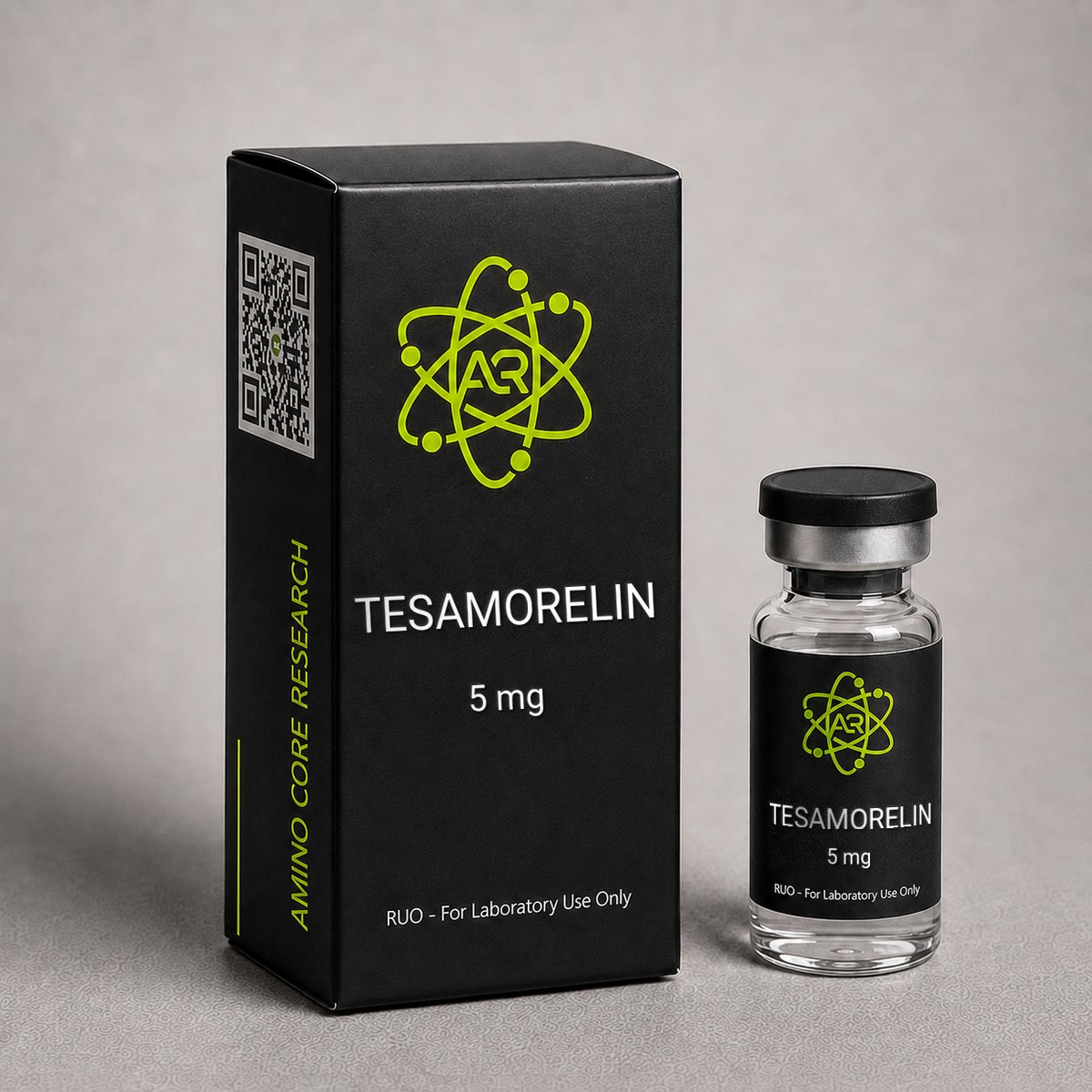
Tesamorelin Peptide
Tesamorelin (TH9507), a synthetic GHRH analog carrying a trans-3-hexenoic acid modification on the N-terminal tyrosine. A 44-amino-acid peptide studied for growth hormone axis signalling, supplied at ≥99% HPLC purity with a batch-specific COA.
$69.00 – $179.00
In stock — ships next business day
Quick Facts
| SKU | ACR-TESA |
|---|---|
| CAS Number | 804475-66-9 |
| Molecular Formula | C221H366N72O67S |
| Molecular Weight | 5135.88 g/mol |
| Sequence | Modified GHRH(1-44) |
| Purity | ≥99% |
| Physical Form | Lyophilized Powder |
| Storage | Store at -20°C |
What is Tesamorelin?
Tesamorelin is a synthetic analog of growth hormone releasing hormone (GHRH) consisting of the 44-amino acid native GHRH sequence with an added trans-3-hexenoic acid modification at the N-terminus. This modification improves metabolic stability while preserving full GHRH receptor binding and activation.
Tesamorelin activates the GHRH receptor (GHRHR) on anterior pituitary somatotroph cells, stimulating endogenous GH synthesis and secretion. It preserves the physiological pulsatile GH release pattern and feedback regulation through the GH-IGF-1 axis.
For laboratory research use only.
Mechanism of Action
Tesamorelin (TH9507) is a stabilized analog of human growth hormone-releasing hormone (hGHRH 1-44) bearing a trans-3-hexenoic acid modification on the N-terminal tyrosine. This acyl modification confers resistance to dipeptidyl peptidase-IV (DPP-IV) cleavage, which would otherwise inactivate native GHRH within minutes by removing the N-terminal Tyr-Ala dipeptide. The resulting half-life extension allows tesamorelin to retain full biological activity at the GHRH receptor in vivo.[1]
GHRH Receptor Activation
Tesamorelin binds the growth hormone-releasing hormone receptor (GHRHR), a class B G-protein coupled receptor expressed on somatotroph cells of the anterior pituitary. Receptor engagement activates Gs-coupled adenylyl cyclase, elevating intracellular cAMP and activating protein kinase A (PKA). PKA signaling drives CREB phosphorylation, transcriptional upregulation of the GH1 gene, and stimulation of pulsatile growth hormone (GH) release from preformed secretory vesicles.
Restoration of Endogenous GH Pulsatility
Unlike exogenous recombinant human growth hormone (rhGH), which produces sustained non-physiological GH elevation, tesamorelin operates upstream of the pituitary. This preserves the natural pulsatile pattern of GH secretion and maintains negative feedback through somatostatin and IGF-1. Studies in research models show tesamorelin administration restores both pulse amplitude and pulse frequency toward youthful patterns without abolishing diurnal variation.[2]
Downstream IGF-1 Axis
Pulsatile GH released in response to tesamorelin acts on hepatic GH receptors, activating JAK2/STAT5 signaling and inducing transcription of IGF1. Circulating IGF-1 rises into the upper-normal physiological range in research subjects. IGF-1 mediates many of the anabolic and lipolytic downstream effects historically attributed to GH itself, including lipolysis in visceral adipose tissue via hormone-sensitive lipase activation.
Visceral Adipose Tissue Effects
A defining feature of tesamorelin research is its preferential reduction of visceral adipose tissue (VAT) over subcutaneous adipose tissue. The mechanism involves higher density of GH/IGF-1 responsive lipolytic machinery and beta-adrenergic receptors in visceral adipocytes, combined with portal delivery of hepatic IGF-1. This contrasts with selective GHRH receptor agonists like sermorelin (GHRH 1-29), which lack DPP-IV resistance and produce shorter receptor occupancy.
Comparison to Ghrelin Mimetics
Tesamorelin acts solely at GHRHR and does not engage the growth hormone secretagogue receptor (GHSR-1a) targeted by ipamorelin, GHRP-2, or ibutamoren (MK-677). Consequently, tesamorelin does not stimulate ghrelin-pathway-mediated appetite, prolactin, or cortisol release at therapeutic concentrations — a selectivity profile that has made it a useful tool in dissecting GHRH-specific versus ghrelin-mediated effects on the somatotropic axis.
Research & Clinical Studies
Phase 3 Trial: Visceral Adipose Tissue Reduction
A pivotal Phase 3 multicenter, double-blind, placebo-controlled trial published by Falutz and colleagues in the New England Journal of Medicine evaluated tesamorelin in 412 research subjects with HIV-associated central adiposity. This study established the foundational efficacy and pharmacodynamic profile of the compound and remains one of the most cited references in GHRH analog research.[1]
Study Design
- Subjects: 412 HIV-positive adults with excess abdominal fat (waist circumference >95 cm men, >94 cm women; waist-to-hip ratio >0.94 men, >0.88 women)
- Duration: 26 weeks, with a 26-week extension phase
- Dosing: 2 mg subcutaneous tesamorelin daily vs. placebo (2:1 randomization)
- Primary endpoint: Percent change in visceral adipose tissue (VAT) measured by single-slice abdominal CT at L4-L5
Key Results
- VAT reduction: -15.2% in tesamorelin group vs. +5.0% in placebo (p<0.001)
- Trunk fat: -1.1 kg reduction with tesamorelin
- IGF-1: +81% increase from baseline, remaining within physiological range in >90% of subjects
- Triglycerides: -50 mg/dL reduction
- Adiponectin: +25% increase, consistent with metabolically healthier adipose remodeling
- No significant change in subcutaneous adipose tissue, demonstrating VAT selectivity
- Glucose homeostasis: no significant change in fasting glucose or HbA1c at 26 weeks
Mechanistic Insights
The trial confirmed that tesamorelin-induced GH and IGF-1 elevations remained within physiological boundaries, with no evidence of acromegalic features or supraphysiological IGF-1 excursions. Importantly, the preferential VAT loss without subcutaneous fat loss contrasts sharply with caloric restriction or general lipolytic agents, supporting the depot-selective mechanism driven by visceral adipocyte GH/IGF-1 responsiveness.
Context Versus Related Compounds
The magnitude of VAT reduction (-15.2%) exceeds what has been reported with sermorelin (GHRH 1-29) in comparable research populations, attributable to tesamorelin's DPP-IV resistance and sustained receptor occupancy. The data also distinguished tesamorelin from ghrelin mimetics such as MK-677, which produce broader fat redistribution and notable appetite stimulation. This study established VAT as a tractable, quantifiable endpoint for GHRH analog research and set the methodological standard for subsequent investigations.
[1] Falutz J, et al. Metabolic effects of a growth hormone-releasing factor in patients with HIV. N Engl J Med. 2007;357(23):2359-2370. PubMed ↗
[2] Falutz J, et al. Long-term safety and effects of tesamorelin, a growth hormone-releasing factor analogue, in HIV patients with abdominal fat accumulation. AIDS. 2008;22(14):1719-1728. PubMed ↗
Hepatic Steatosis and NAFLD Research
Beyond visceral adipose tissue, tesamorelin has been investigated for its effects on hepatic lipid content in research models of non-alcoholic fatty liver disease (NAFLD). A landmark randomized controlled trial by Stanley and colleagues published in The Lancet HIV provided the first prospective evidence that GHRH analog stimulation can reduce hepatic triglyceride content independently of visceral fat changes.[1]
Study Design
- Subjects: 61 HIV-positive adults with hepatic steatosis (intrahepatic triglyceride content ≥5% by proton MR spectroscopy)
- Duration: 12 months
- Dosing: 2 mg subcutaneous tesamorelin daily vs. placebo
- Endpoints: Change in hepatic fat fraction (1H-MRS), liver histology (paired biopsies in subset), NAFLD activity score (NAS)
Key Results
- Absolute hepatic fat reduction: -2.0% with tesamorelin vs. +0.9% with placebo (p=0.0006)
- Relative reduction in liver fat: -32% from baseline
- 37% of tesamorelin-treated subjects achieved resolution of steatosis (intrahepatic triglyceride <5%) vs. 4% placebo
- NAFLD activity score: significant reduction driven by improvements in steatosis and lobular inflammation subscores
- No progression of liver fibrosis observed; trend toward fibrosis stage improvement
- ALT and AST: significant decrease vs. placebo
Mechanistic Interpretation
The hepatic effects appear to involve multiple pathways: GH/IGF-1-mediated suppression of de novo lipogenesis via reduced SREBP-1c activity, enhanced hepatic fatty acid oxidation through PPAR-alpha upregulation, and improved insulin signaling at the hepatocyte level. These findings position tesamorelin as a unique research tool for studying the GH-liver axis in steatohepatitis models, distinct from agents acting through FGF21, GLP-1, or thyroid hormone receptor pathways.
Implications for Metabolic Research
This study expanded the research utility of tesamorelin beyond body composition into hepatic metabolism, suggesting that restoration of physiological GH pulsatility may have organ-specific lipolytic effects mediated by tissue-level IGF-1 production. Subsequent transcriptomic analyses of liver biopsies from this cohort identified downregulation of fibrogenic and inflammatory gene networks, providing molecular validation of the imaging findings.[2]
[1] Stanley TL, et al. Effects of tesamorelin on non-alcoholic fatty liver disease in HIV: a randomised, double-blind, multicentre trial. Lancet HIV. 2019;6(12):e821-e830. PubMed ↗
[2] Fourman LT, et al. Effects of tesamorelin on hepatic transcriptomic signatures in HIV-associated NAFLD. JCI Insight. 2020;5(17):e140134. PubMed ↗
Long-Term Safety and Glycemic Effects in HIV-Associated Lipodystrophy
A pivotal 52-week extension study published in the Journal of Acquired Immune Deficiency Syndromes evaluated the long-term safety, tolerability, and metabolic effects of tesamorelin 2 mg administered subcutaneously once daily in HIV-infected patients with excess abdominal adiposity. The trial enrolled 816 participants across two parallel Phase 3 studies, with the extension phase designed to characterize durability of visceral adipose tissue (VAT) reduction and changes in glucose homeostasis over chronic GHRH receptor stimulation.
Study Design:
- Subjects: 816 HIV-positive adults with central adiposity (waist circumference >95 cm men, >94 cm women; waist-to-hip ratio >0.94 men, >0.88 women)
- Duration: 26 weeks primary phase + 26 weeks extension (52 weeks total)
- Dosing: Tesamorelin 2 mg SC daily vs. placebo, with re-randomization at week 26
- Primary endpoints: Percent change in VAT (CT scan), IGF-1 levels, glucose parameters
Key Results:
- Sustained VAT reduction of -18.0% in continuous tesamorelin recipients vs. +2.2% in placebo (p<0.001)
- Mean IGF-1 increase of +106 ng/mL (within physiologic range for ~90% of subjects)
- Trunk fat reduced by -1.0 kg while limb fat and lean mass preserved
- Triglycerides decreased -50 mg/dL (p<0.001) and adiponectin increased significantly
- No clinically significant change in HbA1c (+0.1%) or fasting glucose at 52 weeks
- Discontinuation due to adverse events: 11% tesamorelin vs. 6% placebo, primarily injection-site reactions
Importantly, the study demonstrated that VAT reduction was rapidly reversed upon tesamorelin discontinuation, with patients switched to placebo at week 26 returning to baseline VAT by week 52. This finding established that continuous GHRH receptor stimulation is required to maintain the lipolytic effect — a pharmacodynamic property that distinguishes tesamorelin from interventions producing durable adipose remodeling.
Glucose tolerance was carefully monitored given GH's known counter-regulatory effects on insulin signaling. While transient elevations in 2-hour OGTT glucose were observed at week 26, these normalized by week 52, suggesting metabolic adaptation. This contrasts with exogenous recombinant human GH, which produces sustained insulin resistance in similar populations. The preservation of pulsatile GH secretion with tesamorelin is thought to underlie this more favorable glycemic profile.
The trial also documented preservation of bone mineral density and lean body mass, supporting the hypothesis that physiologic GHRH receptor activation produces a tissue-selective lipolytic effect rather than generalized anabolism. These findings supported the FDA approval of tesamorelin (Egrifta) for HIV-associated lipodystrophy in 2010 and remain the foundation for ongoing research into GHRH analog applications.
[1] Falutz J, Potvin D, Mamputu JC, et al. Effects of tesamorelin, a growth hormone-releasing factor, in HIV-infected patients with abdominal fat accumulation: a randomized placebo-controlled trial with a safety extension. J Acquir Immune Defic Syndr. 2010;53(3):311-322. PubMed ↗
Chemical & Physical Properties
Tesamorelin is a synthetic 44-amino acid peptide analog of human growth hormone-releasing hormone (hGHRH 1-44) with a stabilizing N-terminal trans-3-hexenoic acid modification. This acyl modification protects the peptide from enzymatic degradation by dipeptidyl peptidase-IV (DPP-IV), substantially extending its plasma half-life relative to native GHRH while preserving GHRH receptor (GHRH-R) binding affinity.
| Full Name | Tesamorelin (TH9507, Egrifta) |
|---|---|
| Synonyms | trans-3-hexenoyl-GHRH(1-44), TH-9507, EGRIFTA SV |
| Molecular Formula | C₂₂₁H₃₆₆N₇₂O₆₇S |
| Molecular Weight | 5,135.88 g/mol |
| CAS Number | 804475-66-9 |
| Sequence | trans-3-hexenoyl-Tyr-Ala-Asp-Ala-Ile-Phe-Thr-Asn-Ser-Tyr-Arg-Lys-Val-Leu-Gly-Gln-Leu-Ser-Ala-Arg-Lys-Leu-Leu-Gln-Asp-Ile-Met-Ser-Arg-Gln-Gln-Gly-Glu-Ser-Asn-Gln-Glu-Arg-Gly-Ala-Arg-Ala-Arg-Leu-NH₂ |
| Amino Acid Count | 44 residues |
| Origin / Developer | Theratechnologies Inc. (Canada) |
| Key Modifications | N-terminal trans-3-hexenoic acid acylation; C-terminal amidation |
| Receptor Target | Growth Hormone-Releasing Hormone Receptor (GHRH-R), Gs-coupled |
| Physical Form | Lyophilized white to off-white powder |
| Solubility | Soluble in sterile water and bacteriostatic water; reconstitute gently |
| Purity | ≥99% by HPLC |
| Storage | Lyophilized: -20°C; Reconstituted: 2-8°C |
The trans-3-hexenoic acid moiety at the N-terminus is the defining structural feature of tesamorelin. Native GHRH(1-44) has a plasma half-life of only 6.8 minutes due to rapid N-terminal cleavage by DPP-IV between residues 2 and 3 (Ala-Asp). The hexenoyl group sterically blocks this cleavage site, extending the half-life to approximately 26-38 minutes — sufficient to produce a robust GH pulse without continuous exposure that would lead to receptor desensitization.
The peptide contains one methionine residue (position 27), which is susceptible to oxidation under aerobic conditions. The C-terminal amidation enhances stability and is essential for full receptor activation. Tesamorelin's molecular weight of 5,135.88 g/mol places it among the larger therapeutic peptides, and its highly charged residue profile (5 Arg, 2 Lys, multiple Asp/Glu) contributes to good aqueous solubility at physiologic pH.
Handling & Reconstitution Guidelines
Tesamorelin is supplied as a lyophilized powder and requires careful reconstitution to preserve peptide integrity. The presence of methionine (Met27) and the labile trans-3-hexenoic acid modification make proper handling critical for maintaining biological activity in research applications.
Recommended Reconstitution Protocol:
- Equilibrate the lyophilized vial to room temperature for 15-20 minutes before opening to prevent condensation on the powder.
- Select diluent: Use sterile bacteriostatic water (0.9% benzyl alcohol) for multi-use research aliquots, or sterile water for injection for single-use preparations.
- Calculate concentration: For a 5 mg vial, adding 2 mL of diluent yields a 2.5 mg/mL solution. For 10 mg vials, 2 mL yields 5 mg/mL.
- Inject diluent slowly down the inner wall of the vial, allowing it to flow gently over the lyophilized cake. Do NOT inject directly onto the powder.
- Gently swirl the vial in a circular motion until the powder fully dissolves (typically 30-60 seconds). The solution should appear clear and colorless.
- Do not shake or vortex — mechanical agitation causes foaming, denaturation, and loss of biological activity.
- Inspect visually: If any particulates, cloudiness, or discoloration are observed, the preparation should be discarded.
- Aliquot if desired into low-binding polypropylene tubes for storage; avoid glass for long-term storage due to peptide adsorption.
Compound-Specific Handling Notes:
- Methionine oxidation: Tesamorelin contains Met27, which oxidizes upon exposure to air and light. Minimize headspace in storage vials and protect from direct light.
- Acyl group stability: The trans-3-hexenoic acid modification is acid-labile. Avoid acidic diluents (pH <5) which can hydrolyze the N-terminal acyl bond.
- Temperature shock: Do not repeatedly freeze-thaw reconstituted solutions. Each freeze-thaw cycle degrades approximately 5-10% of activity.
- Surface adsorption: At low concentrations (<0.1 mg/mL), tesamorelin can adsorb to plastic and glass surfaces. Working solutions should include a carrier protein (e.g., 0.1% BSA) when diluting below 100 μg/mL.
- Light sensitivity: Tyrosine residues (Tyr1 and Tyr10) are photosensitive. Store and handle in amber vials or under reduced lighting.
All handling should occur in a laminar flow hood or under aseptic technique appropriate to the research application. Personal protective equipment including gloves, lab coat, and safety glasses is required. This product is for laboratory research use only and is not intended for human or veterinary therapeutic use.
Frequently Asked Questions
What is Tesamorelin?
Tesamorelin is a modified 44-amino acid GHRH analog with a trans-3-hexenoic acid N-terminal modification for improved stability. It activates the GHRH receptor to stimulate physiological GH secretion. For research use only.
How does Tesamorelin compare to Sermorelin?
Tesamorelin and sermorelin are both GHRH analogs, but they differ structurally and pharmacokinetically. Sermorelin is GHRH(1-29), a truncated 29-amino acid fragment representing the minimum sequence for receptor activation, with a plasma half-life of only 11-12 minutes due to rapid DPP-IV cleavage. Tesamorelin is the full 44-amino acid GHRH(1-44) sequence stabilized with a trans-3-hexenoyl modification on the N-terminal tyrosine, which blocks DPP-IV degradation and extends biological activity. In research models, tesamorelin produces a more sustained GH/IGF-1 response and has demonstrated significant visceral adipose tissue reduction (-15.2%) and hepatic fat reduction (-32%), endpoints not consistently reached with sermorelin at comparable dosing.
What is the molecular weight and CAS number of Tesamorelin?
Tesamorelin has a molecular weight of 5135.88 g/mol and a molecular formula of C221H366N72O67S. Its CAS registry number is 804475-66-9. The compound is a 44-amino acid peptide identical in primary sequence to human GHRH(1-44) with a trans-3-hexenoic acid (hexenoyl) group attached to the N-terminal tyrosine residue. It is also known by the development code TH9507. These specifications are verified through PubChem and the original pharmacological characterization literature.
How should Tesamorelin be stored?
Lyophilized tesamorelin should be stored at -20°C for long-term stability and protected from light. Short-term storage at 2-8°C is acceptable for up to several weeks, and brief room-temperature exposure during shipping does not compromise the lyophilized powder. Once reconstituted in sterile or bacteriostatic water, the solution should be kept refrigerated at 2-8°C and used within 14 days for research applications. Avoid repeated freeze-thaw cycles of reconstituted material, as this can promote aggregation of the 44-amino acid peptide and reduce GHRH receptor binding activity. The methionine residue in the sequence is susceptible to oxidation, so minimize air exposure.
Does Tesamorelin affect cortisol or prolactin?
Tesamorelin is a selective GHRH receptor (GHRHR) agonist and does not bind the growth hormone secretagogue receptor (GHSR-1a). In clinical research studies, tesamorelin administration has not produced significant elevations in cortisol or prolactin levels, distinguishing it from ghrelin pathway agonists such as GHRP-2, GHRP-6, and hexarelin, which can transiently raise both hormones through GHSR-1a activation. This selectivity makes tesamorelin a useful research tool for isolating GHRH-specific effects on the somatotropic axis without confounding HPA axis or lactotroph stimulation. IGF-1 elevation with tesamorelin typically remains within the upper physiological range rather than reaching supraphysiological levels.
What sizes of Tesamorelin are available from AminoCore Research?
AminoCore Research supplies Tesamorelin as a lyophilized powder in research-grade quantities, typically 2 mg, 5 mg, and 10 mg vials at ≥99% HPLC purity. Each vial includes a certificate of analysis (COA) documenting purity, mass spectrometry confirmation, and identity verification. Bulk research quantities may be available upon request for institutional laboratories. All preparations are intended exclusively for in vitro and preclinical research applications and are not for human consumption.
How does Tesamorelin compare to CJC-1295 for GHRH receptor research?
Tesamorelin and CJC-1295 are both GHRH analogs but with distinct pharmacological profiles. Tesamorelin is a 44-amino acid GHRH(1-44) analog with trans-3-hexenoic acid N-terminal modification, producing a half-life of ~26-38 minutes and physiologic GH pulse patterns. CJC-1295 is a 30-amino acid GHRH(1-29) analog; the non-DAC version has a similar short half-life, while CJC-1295 DAC incorporates a maleimide linker that binds serum albumin, extending half-life to ~6-8 days. This creates sustained, non-pulsatile GHRH receptor stimulation with CJC-1295 DAC, whereas tesamorelin preserves natural pulsatility. In research models, tesamorelin produces more physiologic IGF-1 elevations, while CJC-1295 DAC generates a continuous elevated GH/IGF-1 bleed.
What is the half-life of Tesamorelin in research models?
Tesamorelin has a plasma half-life of approximately 26-38 minutes in adult humans following subcutaneous administration, substantially longer than native GHRH(1-44) which is cleared in ~6.8 minutes. This extension is achieved through the trans-3-hexenoic acid modification at the N-terminus, which sterically blocks cleavage by dipeptidyl peptidase-IV (DPP-IV). Peak plasma concentrations are reached within 0.15-0.25 hours after subcutaneous injection. Despite the relatively short half-life, a single dose produces a robust GH pulse lasting 2-3 hours, with IGF-1 elevations persisting for 24+ hours. This pharmacokinetic profile supports once-daily dosing in research protocols.
Why does Tesamorelin reduce visceral fat specifically?
Tesamorelin's selective effect on visceral adipose tissue (VAT) reflects regional differences in adipocyte biology rather than direct VAT targeting. Visceral adipocytes express higher densities of beta-adrenergic and growth hormone receptors than subcutaneous adipocytes, making them more lipolytically responsive to GH-mediated signaling. When tesamorelin stimulates pituitary GH release, the resulting GH pulse activates hormone-sensitive lipase (HSL) and adipose triglyceride lipase (ATGL) preferentially in VAT depots, where receptor density and lipolytic enzyme expression are highest. Additionally, VAT has greater portal venous drainage to the liver, where mobilized free fatty acids undergo oxidation. Clinical research has consistently demonstrated 15-20% VAT reductions with preservation of subcutaneous fat and lean mass.
For laboratory and research use only. This product is not for human or veterinary use. It is not a drug, supplement or food.
This product is not FDA approved for any indication, and is not intended to diagnose, treat, cure, or prevent any disease. All product information is derived from published preclinical research and does not constitute medical advice or claims.