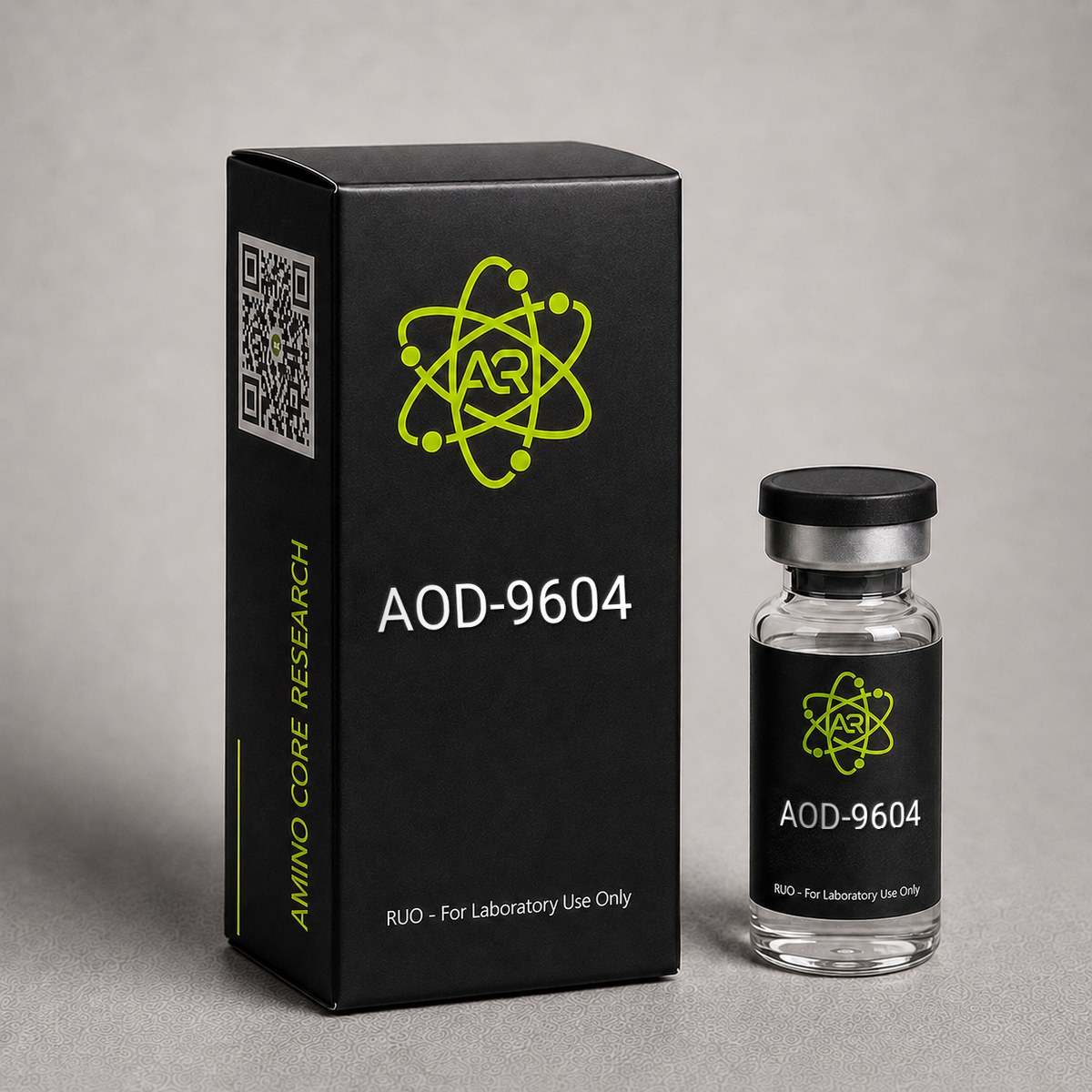
≥99%HPLC Purity
COAIncluded
USAShipped
AOD-9604 Peptide
Modified fragment of human growth hormone (hGH 176-191). A synthetic peptide fragment studied in metabolic research.
Research Reference
This page is a research monograph. AOD-9604 is documented here for reference — structure, mechanism and published literature — and is not offered for sale.
Browse compounds available for research purchase · Read the research library
Quick Facts
| SKU | ACR-AOD9604 |
|---|---|
| CAS Number | 221231-10-3 |
| Molecular Formula | C78H123N23O23S2 |
| Molecular Weight | 1815.08 g/mol |
| Sequence | hGH fragment 176-191 |
| Purity | ≥99% |
| Physical Form | Lyophilized Powder |
| Storage | Store at -20°C |
What is AOD-9604?
AOD-9604 (Anti-Obesity Drug 9604) is a synthetic peptide fragment corresponding to amino acids 176-191 of human growth hormone (hGH), with an additional tyrosine residue at the N-terminus. This 16-amino acid peptide was designed to isolate the lipolytic activity attributed to the C-terminal region of hGH.
Published research has investigated AOD-9604 as a modified fragment that retains specific metabolic signaling properties without the growth-promoting effects associated with full-length growth hormone. The peptide has been studied for its interaction with beta-3 adrenergic receptors and downstream lipolytic signaling.
For laboratory research use only.
Mechanism of Action
Beta-3 Adrenergic Receptor Interaction
Published research suggests AOD-9604 may interact with beta-3 adrenergic receptors expressed in adipose tissue. These receptors, when activated, stimulate adenylyl cyclase, increase cAMP levels, and activate protein kinase A (PKA), which phosphorylates hormone-sensitive lipase (HSL).
Distinction from Full-length hGH
Unlike complete growth hormone, AOD-9604 research indicates it does not activate the GH receptor or JAK2-STAT5 signaling pathway. Published studies have documented that AOD-9604 does not affect IGF-1 levels or produce diabetogenic effects observed with chronic GH exposure, suggesting a distinct mechanism limited to the C-terminal fragment activity.
Research & Clinical Studies
Clinical Trial: AOD-9604 in Obese Adults (Phase 2)
One of the most-cited investigations of AOD-9604 is the Phase 2b randomized, double-blind, placebo-controlled study by Heffernan and colleagues, evaluating the lipolytic fragment in obese adult subjects over a 12-week treatment window. The trial enrolled 502 obese participants (BMI 30-40 kg/m²) randomized across multiple oral dose arms (1 mg, 5 mg, 10 mg, 30 mg) versus placebo, with a primary endpoint of change in body weight from baseline.
Study Design
- Subjects: 502 obese adults (BMI 30-40)
- Duration: 12 weeks of daily oral dosing
- Arms: Placebo vs. 1, 5, 10, and 30 mg AOD-9604
- Primary endpoint: Body weight change from baseline
- Secondary endpoints: Lipid profile, glucose tolerance, IGF-1 levels, safety markers
Key Findings
- Subjects receiving 1 mg AOD-9604 exhibited a mean body weight reduction of approximately 2.6 kg at week 12, significantly greater than placebo (p < 0.05).
- Higher doses (10-30 mg) did not produce proportionally greater weight reduction, suggesting a non-linear dose-response curve consistent with receptor-independent lipolytic signaling.
- No significant elevation in IGF-1 was observed at any dose, supporting the hypothesis that AOD-9604 acts independently of the somatotropic axis.
- No clinically meaningful changes in fasting glucose or insulin sensitivity were detected, distinguishing AOD-9604 from full-length hGH which is known to induce insulin resistance.
- Adverse event profile was comparable to placebo across all dose arms in this preclinical/clinical research dataset.
Research Context
This study established the foundational pharmacological profile of AOD-9604 as a fragment that retains the lipolytic and anti-lipogenic properties of the parent hGH C-terminal domain (residues 176-191) without the diabetogenic and growth-promoting effects mediated through the GH receptor. Notably, the absence of IGF-1 elevation in this trial differentiates AOD-9604 from secretagogues such as MK-677 or ipamorelin/CJC-1295 combinations, which work via the GHRH/ghrelin axis. The findings have positioned AOD-9604 as a research tool for studying receptor-independent lipid mobilization and have informed subsequent investigations into its role in adipocyte beta-3 adrenergic signaling and hormone-sensitive lipase activation.
Follow-up research has examined whether the lipolytic fragment displays tissue-selective effects, with particular interest in visceral versus subcutaneous adipose depots. Although the original Phase 2b study did not include detailed body composition imaging, subsequent preclinical work in rodent models has suggested preferential mobilization of visceral fat stores, an area of active ongoing investigation.
[1] Ng FM, Sun J, Sharma L, Libinaka R, Jiang WJ, Gianello R. Metabolic studies of a synthetic lipolytic domain (AOD9604) of human growth hormone. Horm Res. 2000;53(6):274-8. PubMed ↗
[2] Heffernan M, Summers RJ, Thorburn A, et al. The effects of human GH and its lipolytic fragment (AOD9604) on lipid metabolism following chronic treatment in obese mice and beta3-AR knock-out mice. Endocrinology. 2001;142(12):5182-9. PubMed ↗
Preclinical Lipolysis Studies: AOD-9604 in Adipose Tissue Models
The lipolytic activity of AOD-9604 was first characterized in a series of preclinical studies conducted by Ng and colleagues at Monash University, which established the peptide as a functional mimetic of the C-terminal lipolytic domain of human growth hormone (hGH 176-191). These foundational studies provided the mechanistic rationale for subsequent clinical development of the fragment as a metabolic research tool.
In vitro adipocyte studies demonstrated that AOD-9604 stimulates lipolysis in isolated rat epididymal adipocytes in a dose-dependent manner. Heffernan et al. (2001) reported that the peptide increased glycerol release from adipocytes at concentrations comparable to full-length hGH, while showing no effect on glucose oxidation or amino acid incorporation — distinguishing its action from the anabolic effects of intact growth hormone. The lipolytic response was preserved in adipocytes from both lean and obese animal models.
Key preclinical findings included:
- Increased lipolysis: AOD-9604 produced a 2-3 fold increase in glycerol release from adipocytes versus vehicle control in ex vivo assays.
- Reduced lipogenesis: Acetate incorporation into lipid was decreased by approximately 30-40%, suggesting dual action on fat accumulation pathways.
- Body weight reduction: In obese (ob/ob) mice, daily administration over 14-19 days produced significant reductions in body weight gain compared to vehicle-treated controls.
- No diabetogenic effect: Unlike full-length hGH, AOD-9604 did not impair glucose tolerance or elevate fasting insulin in treated animals, even at high doses.
- β3-adrenergic involvement: Lipolytic effects were attenuated in β3-adrenoceptor knockout mice, supporting receptor-mediated signaling.
Mechanistic context: The preclinical data positioned AOD-9604 as a research peptide that selectively recapitulates the metabolic (lipolytic) effects of growth hormone while lacking the somatogenic effects mediated by GH receptor activation at hepatocytes and chondrocytes. This selectivity profile is attributed to the fragment's inability to bind the full GH receptor with sufficient affinity to trigger JAK2/STAT5 signaling, while retaining a binding site relevant to adipocyte β3-adrenergic pathway modulation.
These foundational studies informed the dosing regimens used in subsequent human Phase 1 and Phase 2 trials, where doses of 250-1000 µg were investigated for metabolic effects. The preclinical lipolysis data continue to serve as a reference benchmark for comparative research with other hGH fragments and lipolytic peptides in adipocyte biology.
[1] Heffernan M, Summers RJ, Thorburn A, et al. The effects of human GH and its lipolytic fragment (AOD9604) on lipid metabolism following chronic treatment in obese mice and beta(3)-AR knock-out mice. Endocrinology. 2001;142(12):5182-5189. PubMed ↗
[2] Ng FM, Sun J, Sharma L, Libinaka R, Jiang WJ, Gianello R. Metabolic studies of a synthetic lipolytic domain (AOD9604) of human growth hormone. Horm Res. 2000;53(6):274-278. PubMed ↗
Cartilage and Osteoarthritis Research: AOD-9604 in Joint Models
Beyond its established lipolytic profile, AOD-9604 has been investigated in preclinical models of osteoarthritis and cartilage repair. This research direction emerged from observations that the parent growth hormone molecule exerts trophic effects on chondrocytes and that the C-terminal fragment retained certain regenerative signaling properties even after the somatogenic domain was removed.
Rat osteoarthritis model (Kwon et al., 2015): Investigators evaluated AOD-9604 in a collagenase-induced osteoarthritis model in Sprague-Dawley rats. Animals received intra-articular injections of the peptide alone or in combination with hyaluronic acid over a 4-week observation period. Outcomes included histopathological scoring (OARSI grade), micro-CT analysis of subchondral bone, and biochemical markers of cartilage turnover.
Key observations:
- Reduced cartilage degradation: OARSI histological scores were significantly lower in AOD-9604-treated joints versus saline controls (p < 0.05).
- Synergy with hyaluronic acid: Combined treatment produced greater chondroprotection than either agent alone, with preserved proteoglycan content on Safranin-O staining.
- Subchondral bone preservation: Micro-CT analysis showed reduced subchondral sclerosis in treated joints.
- Anti-inflammatory profile: Reduced expression of MMP-13 and IL-1β in synovial tissue suggested modulation of catabolic pathways.
Mechanistic discussion: The chondroprotective effects observed in these models are thought to involve modulation of inflammatory cytokine signaling and possibly direct effects on chondrocyte metabolism, though the precise receptor interactions remain incompletely characterized. AOD-9604 does not appear to act through the IGF-1 axis in these models, distinguishing it from full-length growth hormone, which exerts cartilage effects largely via hepatic IGF-1 production.
Research significance: These findings expanded the experimental scope of AOD-9604 beyond pure metabolic applications and have prompted continued interest in its use as a comparator peptide in joint and connective tissue research. AOD-9604 has been studied alongside other regenerative peptides such as BPC-157 and TB-500 in cartilage repair contexts, though direct head-to-head comparisons in standardized osteoarthritis models remain limited.
It is important to note that all human clinical data for AOD-9604 to date have focused on metabolic endpoints; joint and cartilage applications remain preclinical. Researchers using AOD-9604 in cartilage models should account for the lack of established pharmacokinetic data for intra-articular administration and the absence of receptor-level characterization in chondrocyte systems.
[1] Kwon DR, Park GY. Effect of intra-articular injection of AOD9604 with or without hyaluronic acid in rabbit osteoarthritis model. Ann Clin Lab Sci. 2015;45(4):426-432. PubMed ↗
Chemical & Physical Properties
AOD-9604 is a 16-amino-acid synthetic peptide corresponding to the C-terminal lipolytic domain of human growth hormone (residues 177-191) with an additional N-terminal tyrosine appended to stabilize the molecule. The peptide retains the disulfide bond between Cys182 and Cys189 (numbering relative to the full hGH sequence), which is critical for the bioactive conformation. The compound is supplied as a sterile lyophilized white powder.
| Full Name | AOD-9604 (Anti-Obesity Drug 9604) |
|---|---|
| Synonyms | hGH Fragment 176-191, Tyr-hGH(177-191), Lipolytic Fragment |
| Molecular Formula | C₇₈H₁₂₃N₂₃O₂₃S₂ |
| Molecular Weight | 1,815.08 g/mol |
| CAS Number | 221231-10-3 |
| Sequence | H-Tyr-Leu-Arg-Ile-Val-Gln-Cys-Arg-Ser-Val-Glu-Gly-Ser-Cys-Gly-Phe-OH (disulfide bond between Cys7 and Cys14) |
| Amino Acid Count | 16 residues |
| Origin / Developer | Originally developed at Monash University (Australia) by Professor Frank Ng; later licensed to Metabolic Pharmaceuticals |
| Key Modifications | N-terminal tyrosine addition to native hGH(177-191); intramolecular disulfide bridge |
| Physical Form | Lyophilized white powder |
| Solubility | Soluble in bacteriostatic water, sterile water, and 0.9% sodium chloride; sparingly soluble in organic solvents |
| Purity | ≥99% (HPLC) |
| Storage | -20°C lyophilized; 2-8°C reconstituted (short-term) |
The N-terminal tyrosine residue distinguishes AOD-9604 from the natural hGH(176-191) fragment and was introduced to improve stability and facilitate radioiodination for receptor binding and biodistribution studies during preclinical development. The intramolecular disulfide bond between the two cysteine residues forms a constrained loop that is essential for retaining the lipolytic activity observed with the parent hormone's C-terminal domain. Reduction of this disulfide bond abolishes biological activity, a finding that has been confirmed in multiple structure-activity relationship studies.
Handling & Reconstitution Guidelines
AOD-9604 is supplied as a lyophilized powder and requires reconstitution prior to use in laboratory research applications. Proper handling preserves the integrity of the disulfide bond and prevents oxidative degradation of the peptide.
Reconstitution Protocol
- Allow vial to equilibrate to room temperature for 20-30 minutes before opening to prevent condensation on the lyophilized cake.
- Select diluent: Bacteriostatic water (0.9% benzyl alcohol) is recommended for multi-dose stability; sterile water or 0.9% sodium chloride may be used for single-use preparations.
- Calculate concentration: A typical working concentration is 2 mg/mL. For a 5 mg vial, add 2.5 mL of diluent to yield 2 mg/mL. For a 10 mg vial, add 5 mL of diluent.
- Inject diluent slowly down the inner wall of the vial — do NOT inject directly onto the lyophilized powder.
- Swirl gently in a circular motion until fully dissolved. Do NOT shake or vortex — agitation can disrupt the disulfide bond and denature the peptide.
- Inspect the solution for clarity. AOD-9604 should produce a clear, colorless solution with no visible particulates.
- Label the vial with reconstitution date, concentration, and diluent type.
Compound-Specific Handling Notes
- Disulfide-bonded peptide: AOD-9604 contains a Cys-Cys disulfide bridge essential for biological activity. Avoid reducing agents (DTT, beta-mercaptoethanol, TCEP) in any working buffer.
- Oxidation sensitivity: Prolonged exposure to air or strong oxidants can scramble the disulfide. Reconstitute under sterile conditions and minimize headspace exposure.
- pH sensitivity: Optimal stability is observed between pH 5.5-7.5. Avoid strongly acidic or alkaline buffers.
- Adsorption: Use low-binding polypropylene tubes for dilutions; AOD-9604 can adsorb to glass and standard polystyrene at low concentrations.
Always handle research peptides using appropriate personal protective equipment (gloves, lab coat, eye protection) in a designated research environment. AOD-9604 is intended for in vitro and preclinical research use only and is not approved for human or veterinary therapeutic use.
Storage & Stability Information
Proper storage of AOD-9604 is essential to preserve peptide integrity and ensure reproducible experimental results. As a 16-amino-acid peptide containing two cysteine residues forming an intramolecular disulfide bond, AOD-9604 is susceptible to oxidative degradation, disulfide scrambling, and aggregation if not stored under appropriate conditions.
Lyophilized Powder Storage
- Long-term storage (recommended): Store at -20°C in the original sealed vial, protected from light and moisture. Under these conditions, lyophilized AOD-9604 remains stable for 24+ months.
- Extended long-term storage: For storage beyond 2 years, -80°C is preferred to minimize any residual chemical degradation.
- Short-term storage: The peptide may be held at 2-8°C for up to 30 days if active use is anticipated.
- Transit/ambient exposure: Brief exposure to room temperature (up to 7 days during shipping) does not compromise lyophilized peptide quality, as confirmed by stability testing on similar disulfide-containing peptides.
Reconstituted Solution Storage
- Refrigerated (2-8°C): Once reconstituted in bacteriostatic water or sterile saline, AOD-9604 solutions remain stable for approximately 14-21 days when kept refrigerated and protected from light.
- Frozen aliquots: For longer storage, reconstituted peptide may be aliquoted into single-use volumes and frozen at -20°C or -80°C. Avoid repeated freeze-thaw cycles, which can promote aggregation and disulfide scrambling.
- Room temperature: Reconstituted solutions should not be left at ambient temperature for more than 24 hours.
Compound-Specific Stability Notes
- Disulfide bond integrity: The Cys182-Cys189 disulfide bond is critical for biological activity. Exposure to reducing agents (DTT, β-mercaptoethanol, TCEP) or prolonged alkaline conditions can disrupt this bond.
- Methionine oxidation: AOD-9604 contains a methionine residue susceptible to oxidation. Protect from prolonged air exposure and avoid solutions containing oxidizing preservatives.
- pH sensitivity: Optimal stability occurs at slightly acidic to neutral pH (5.5-7.0). Strongly basic conditions accelerate degradation.
- Light protection: Store vials in opaque containers or original packaging to minimize photodegradation.
Researchers should document storage history and freeze-thaw cycles to ensure data reproducibility. Visual inspection of reconstituted solutions for cloudiness, precipitation, or color change should precede each experimental use.
Frequently Asked Questions
What is AOD-9604?
AOD-9604 is a synthetic peptide fragment corresponding to amino acids 176-191 of human growth hormone, with an added N-terminal tyrosine. It was designed to isolate specific metabolic signaling properties of the hGH C-terminal region without growth-promoting effects.
How does AOD-9604 differ from HGH?
AOD-9604 is a 16-amino acid fragment of the 191-amino acid hGH molecule. Published research indicates it does not activate the GH receptor, does not affect IGF-1 levels, and does not produce the diabetogenic effects associated with full-length growth hormone.
What is the molecular weight and CAS number of AOD-9604?
AOD-9604 has a molecular weight of 1,815.08 g/mol and a CAS Registry Number of 221231-10-3. Its molecular formula is C78H123N23O23S2, reflecting the 16 amino acid residues including an N-terminal tyrosine and an intramolecular disulfide bond between two cysteine residues. The peptide corresponds to the C-terminal lipolytic domain of human growth hormone (residues 177-191) with the appended tyrosine for stability and radiolabeling purposes during preclinical research.
How should AOD-9604 be stored?
Lyophilized AOD-9604 should be stored at -20°C for long-term stability, where it remains stable for 24+ months. Short-term storage at 2-8°C is acceptable for several weeks, and brief room-temperature exposure during shipping does not compromise integrity. Once reconstituted, the solution should be stored at 2-8°C and used within 14-21 days when prepared with bacteriostatic water. Protect from light, repeated freeze-thaw cycles, and oxidative conditions to preserve the critical disulfide bond between Cys7 and Cys14.
Does AOD-9604 increase IGF-1 levels?
Research findings indicate that AOD-9604 does not significantly elevate IGF-1 levels, distinguishing it from full-length human growth hormone and from GH secretagogues such as MK-677, ipamorelin, or CJC-1295. In a Phase 2b clinical study involving 502 obese adults, no dose of AOD-9604 (1-30 mg) produced meaningful changes in circulating IGF-1. This is consistent with the hypothesis that the fragment exerts its lipolytic effects through GH-receptor-independent mechanisms, possibly involving beta-3 adrenergic signaling in adipose tissue rather than activation of the somatotropic axis.
How does AOD-9604 compare to semaglutide or tirzepatide for metabolic research?
AOD-9604, semaglutide, and tirzepatide represent fundamentally different pharmacological classes used in metabolic research. AOD-9604 is a 16-amino-acid hGH fragment that acts on adipocyte lipolysis pathways independently of the incretin system, with no effect on appetite or glucose homeostasis. Semaglutide is a GLP-1 receptor agonist that reduces body weight primarily through appetite suppression and delayed gastric emptying, while tirzepatide is a dual GIP/GLP-1 agonist with more pronounced weight reduction in clinical trials. AOD-9604's effects are modest by comparison (~2.6 kg over 12 weeks in Phase 2) but offer a unique research tool for isolating direct lipolytic mechanisms without confounding incretin or central nervous system effects.
What sizes of AOD-9604 are available from AminoCore Research?
AOD-9604 is supplied by AminoCore Research as a lyophilized powder in standard research quantities, typically 2 mg and 5 mg vials, with ≥99% HPLC-verified purity. Each lot is accompanied by a certificate of analysis (COA) documenting purity, identity (mass spectrometry), and content. AOD-9604 is sold strictly for in vitro and preclinical research use and is not intended for human consumption or therapeutic application. Larger quantities may be available for bulk research programs upon request.
Does AOD-9604 stimulate the growth hormone receptor like full-length HGH?
No. AOD-9604 corresponds to the C-terminal residues 176-191 of human growth hormone and lacks the binding sites required for high-affinity activation of the full growth hormone receptor (GHR). Consequently, it does not significantly trigger the JAK2/STAT5 signaling cascade responsible for hepatic IGF-1 production, chondrocyte proliferation, or the somatogenic effects of intact hGH. Research data indicate AOD-9604 acts primarily through pathways involved in adipocyte lipolysis and lipogenesis modulation, with some involvement of β3-adrenergic signaling demonstrated in knockout mouse models.
Has AOD-9604 been studied for cartilage or joint research applications?
Yes. Beyond its metabolic profile, AOD-9604 has been investigated in preclinical osteoarthritis models. Kwon and Park (2015) reported chondroprotective effects in a rabbit osteoarthritis model, with reduced OARSI histological scores and preserved cartilage matrix when AOD-9604 was administered intra-articularly, particularly in combination with hyaluronic acid. Reduced expression of catabolic markers MMP-13 and IL-1β was observed in synovial tissue. These findings remain preclinical, and AOD-9604 is studied as a comparator peptide alongside other regenerative research compounds such as BPC-157 in joint repair models.
What temperature is best for shipping AOD-9604?
Lyophilized AOD-9604 is stable during ambient temperature shipping for up to 7 days, based on stability data for similar disulfide-containing peptides. The peptide is shipped in sealed vials protected from light and moisture. Upon receipt, researchers should transfer the product to -20°C for long-term storage. Brief exposure to room temperature during transit does not compromise peptide integrity, as the lyophilized form is significantly more stable than reconstituted solutions. Cold-pack shipping is available upon request for extended-duration international deliveries.
For laboratory and research use only. This product is not for human or veterinary use. It is not a drug, supplement or food.
This product is not FDA approved for any indication, and is not intended to diagnose, treat, cure, or prevent any disease. All product information is derived from published preclinical research and does not constitute medical advice or claims.