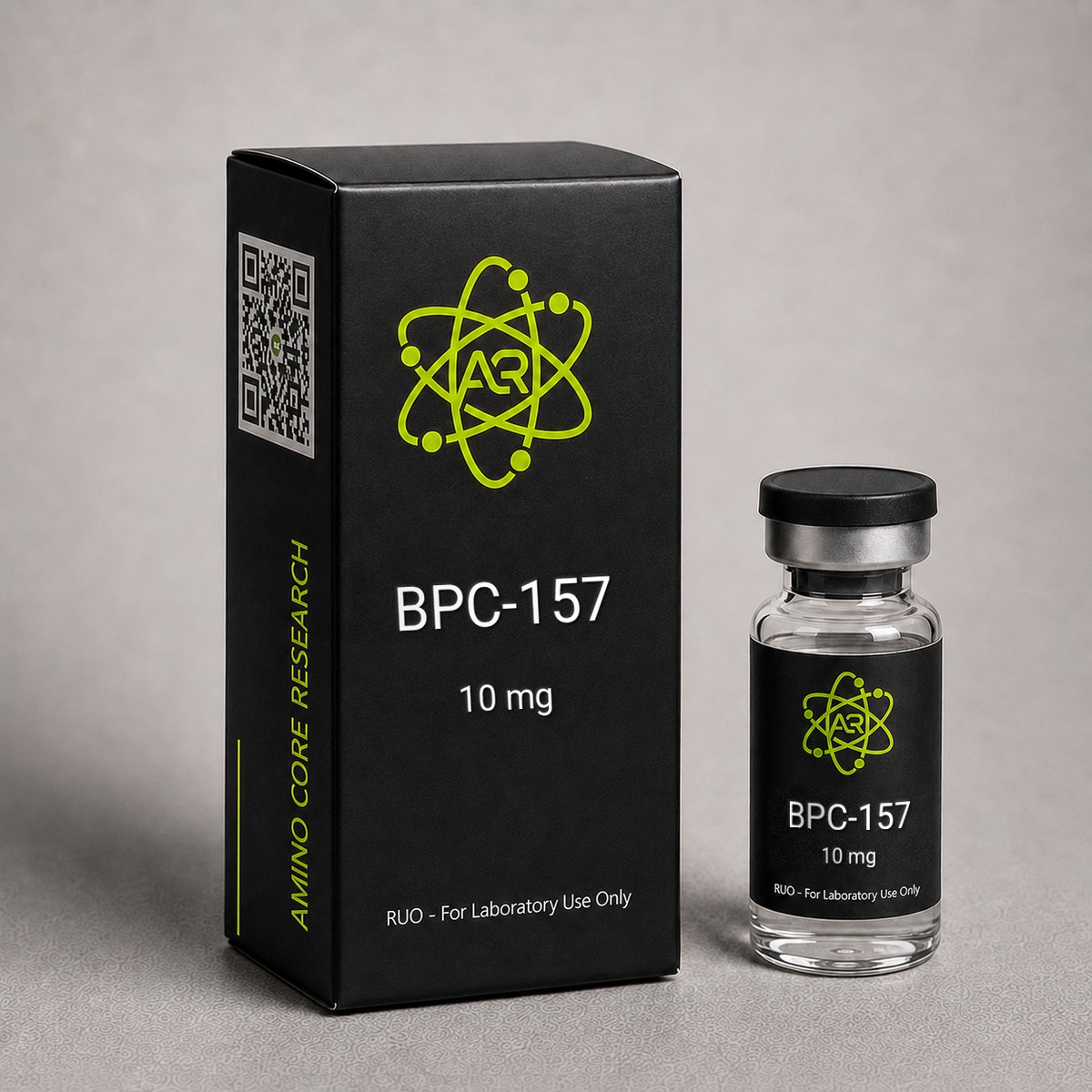
≥99%HPLC Purity
COAIncluded
USAShipped
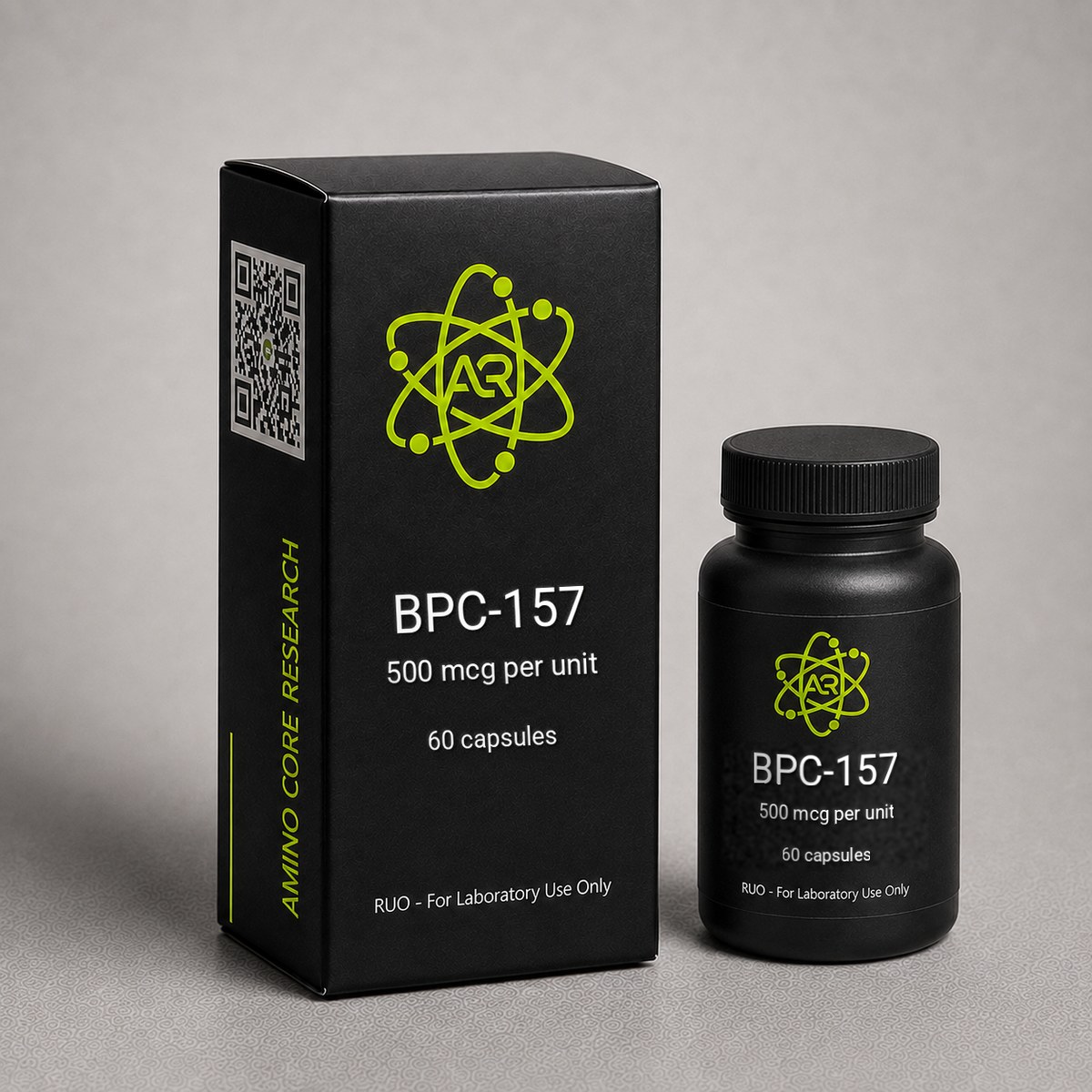
BPC-157 Capsules
Oral capsule presentation of BPC-157 at 500 mcg per capsule, 60 capsules per bottle. The peptide the literature describes as stable in gastric juice — the property that makes an oral format worth investigating.
$199.00
In stock — ships next business day
Quick Facts
| SKU | ACR-BPC-C60 |
|---|---|
| CAS Number | 137525-51-0 |
| Molecular Formula | C62H98N16O22 |
| Molecular Weight | 1419.53 g/mol |
| Sequence | Gly-Glu-Pro-Pro-Pro-Gly-Lys-Pro-Ala-Asp-Asp-Ala-Gly-Leu-Val |
| Purity | ≥99% |
| Physical Form | Capsule |
| Storage | Store sealed at room temperature, away from light and humidity |
What is BPC-157 (Oral Capsule Format)?
BPC-157 is a synthetic pentadecapeptide with the sequence Gly-Glu-Pro-Pro-Pro-Gly-Lys-Pro-Ala-Asp-Asp-Ala-Gly-Leu-Val, molecular formula C62H98N16O22, molecular weight 1419.53 g/mol, and CAS number 137525-51-0. The sequence was originally described as a partial fragment corresponding to a region of a protein isolated from human gastric juice and designated 'body protection compound' by Sikiric and colleagues at the University of Zagreb, who have published the majority of the primary preclinical literature on the molecule since the early 1990s. This product is the oral capsule presentation: 500 mcg of lyophilized BPC-157 per capsule, 60 capsules per bottle, intended solely for laboratory research.
The oral format is of specific research interest because of a property reported repeatedly in the Zagreb preclinical work: BPC-157 has been described as stable in human gastric juice, with retention of activity after prolonged exposure to low pH in rodent models. Most peptides of this size are rapidly hydrolyzed by pepsin and pancreatic proteases and are therefore studied only by injection. If the stability claim reproduces in independent laboratories, the pentadecapeptide would represent an unusual case in which an oral, gut-lumen route of administration is mechanistically plausible. It is important to state directly that this stability property has been reported primarily by a single research group in rodents, and it has not been characterized in a controlled human pharmacokinetic study — no plasma exposure data in humans following oral administration have been published in the peer-reviewed literature.
What differentiates BPC-157 from other peptides marketed for tissue-repair research is the breadth of preclinical models in which activity has been reported — tendon-to-bone healing, ligament transection, muscle crush, colon anastomosis, gastric ulcer, and inflammatory bowel models — versus the near-complete absence of published human trial data. As of the current literature, no phase 2 or phase 3 randomized controlled trial of BPC-157 in humans has been published in a PubMed-indexed journal. Statements in vendor and forum sources describing 'clinical efficacy' are not supported by the primary record. Any research use of the oral capsule format should be framed against that gap: the compound is a preclinical tool with an interesting stability profile, not a clinically validated therapeutic.
The oral capsule format is chosen by investigators studying gastrointestinal endpoints — where the site of interest is the lumen or mucosa and systemic exposure is not required for the hypothesis — or as a reference arm in comparative bioavailability work against parenteral routes. The 500 mcg per capsule strength was selected to correspond, on a per-kilogram basis, to the mid-range of oral doses used in the rodent literature when scaled by conventional allometric methods; scaling is presented only as descriptive context for study design and is not a human dose recommendation.
Mechanism of Action
BPC-157 does not have a single identified high-affinity receptor. The preclinical literature describes it as a pleiotropic agent whose effects have been attributed to modulation of several downstream systems. It is important to note at the outset that no crystallographic or radioligand binding study has established a primary molecular target, and the mechanisms below are inferred from tissue-level and pathway-level readouts in rodents rather than from direct receptor pharmacology.
Nitric oxide (NO) system modulation. The most consistently reported mechanistic finding is interaction with the NO pathway. In rat models of vascular occlusion, thrombosis, and mucosal injury, BPC-157 administration has been reported to counteract effects of both L-NAME (an NO synthase inhibitor) and L-arginine, suggesting a regulatory rather than agonist role on endogenous NO tone. This has been proposed as the basis for the reported endothelial and gastrointestinal mucosal effects, but the direct molecular interaction — whether with NOS isoforms, with soluble guanylate cyclase, or upstream — has not been resolved.
Growth factor and receptor expression. In a widely cited tendon-fibroblast in vitro study, BPC-157 exposure was associated with upregulation of the growth hormone receptor and enhanced fibroblast outgrowth and migration in a scratch assay. This is a cell-culture finding in isolated rat Achilles tendon fibroblasts and should not be read as evidence of tendon healing in humans. Other reports describe changes in VEGF, EGR-1, and FAK-paxillin signaling in wound and vascular models. These are individual laboratory findings, largely from the same research program, and independent replication is limited.
Central and enteric neurotransmitter systems. Effects on serotonergic and dopaminergic activity, and on the vagal 'brain-gut axis,' have been proposed in rodent behavioral and gastrointestinal models. These reports are mechanistically interesting but methodologically heterogeneous and do not translate into a defined receptor pharmacology.
Relevance to the oral route. For the capsule format specifically, the most directly applicable proposed mechanism is a local action on the gastrointestinal mucosa. If BPC-157 is stable in gastric juice as reported, then luminal exposure of the gastric and intestinal epithelium is plausible without any requirement for systemic absorption. Mucosal effects in rodent models of ethanol-induced gastric lesions, NSAID-induced enteropathy, and colitis have been reported at oral doses. Whether these effects require systemic exposure or occur through direct luminal contact remains an open question in the primary literature.
What the mechanism section cannot say. There is no established EC50 at a named receptor. There is no validated human pharmacokinetic profile after oral administration. Claims of a defined molecular target, or of quantitative potency comparisons against other tissue-repair peptides, are not supported by the peer-reviewed record and are not made here. Investigators designing studies with the oral capsule format should treat BPC-157 as a mechanistically plural compound whose local gastrointestinal effects are the best-characterized element of its profile.
Research & Clinical Studies
Preclinical Study: Oral BPC-157 in Rat NSAID-Induced Gastrointestinal Injury
Study context. One of the more directly relevant lines of evidence for the oral capsule format is the series of rat studies examining BPC-157 given per os in models of NSAID-induced upper and lower gastrointestinal injury. Sikiric and colleagues reported protective and reparative effects when BPC-157 was administered in drinking water following exposure to diclofenac, indomethacin, ibuprofen, and other NSAIDs.
Design. In the representative published protocols, male Wistar rats received an NSAID challenge sufficient to produce gastric mucosal lesions and, in some protocols, small-intestinal and hepatic changes. BPC-157 was administered orally in the drinking water at doses in the range of 10 ng/kg to 10 mcg/kg per day, alongside or following the NSAID challenge. Endpoints included macroscopic gastric lesion area, histological scoring of the mucosa, and serum liver enzymes.
Reported findings.
- Reduction in macroscopic gastric lesion area in BPC-157-treated animals relative to NSAID-only controls.
- Attenuation of histologically scored mucosal damage in the stomach and, in some reports, the small intestine.
- Attenuation of NSAID-associated elevations in serum transaminases in a subset of protocols.
How to read this evidence. These findings are from a single principal research group, conducted in rats, and published across multiple related papers. They establish that oral BPC-157 has been reported to produce mucosal effects in rodent NSAID models. They do not establish equivalent effects in humans, they do not establish a dose, and independent replication outside the Zagreb group is limited. The lesion-area reductions reported are meaningful within the rodent model but should not be extrapolated to any human clinical endpoint. No corresponding human randomized controlled trial has been published.
Relevance to the capsule format. If the hypothesis being tested is a local mucosal action, the oral capsule route is the closest available correlate to the rodent per-os protocols. If the hypothesis requires quantifiable systemic exposure, the capsule format is not the appropriate tool — no oral bioavailability figure for BPC-157 has been established in a controlled human pharmacokinetic study, and rodent oral pharmacokinetic data are also limited.
[1] Sikiric P, Seiwerth S, Rucman R, et al. Toxicity by NSAIDs. Counteraction by stable gastric pentadecapeptide BPC 157. Curr Pharm Des. 2013;19(1):76-83. PubMed ↗
Preclinical Study: Oral BPC-157 and Gastric Ulcer Models
A body of preclinical work from the Sikiric group at the University of Zagreb has examined pentadecapeptide BPC-157 administered by oral gavage in rodent models of gastrointestinal injury. These studies are the primary basis for the recurring claim in the literature that BPC-157 remains active after oral administration — a claim that is unusual for an unmodified 15-residue peptide and that warrants close reading of what was actually measured.
Study design (representative protocol). In the cysteamine-induced duodenal ulcer model reported by Sikiric and colleagues, rats received cysteamine (400 mg/kg subcutaneously) to induce reproducible duodenal ulceration. BPC-157 was administered either intraperitoneally or in drinking water (oral route), at nanogram-to-microgram per kilogram doses. Endpoints included macroscopic ulcer area, histological assessment of mucosal damage, and, in later work, markers of angiogenesis and nitric oxide system involvement.
- Reported outcome: Oral administration via drinking water was reported to reduce duodenal lesion area relative to cysteamine-only controls, with effects described across a wide dose range (10 ng/kg to 10 mcg/kg in various protocols).
- Mechanistic annotation: The authors attribute the effect in part to modulation of the nitric oxide system and to promotion of angiogenesis at the injury site.
- Route comparability: The papers describe oral and parenteral routes as producing comparable directional effects in these rodent models, which the authors interpret as consistent with resistance to gastric juice degradation.
What the record does not establish. These are rodent studies, largely from a single research group, using models of chemically- or NSAID-induced injury rather than the chronic gastrointestinal conditions to which the compound is often informally compared. Independent replication outside the originating group remains limited. Pharmacokinetic data in humans — plasma concentrations, oral bioavailability, half-life — has not been published in the peer-reviewed literature for this compound at the time of writing. The frequently repeated statement that BPC-157 is "stable in human gastric juice" traces to in vitro incubation experiments rather than to measured human oral bioavailability.
How to read this for research planning. The preclinical signal for oral BPC-157 in rodent gastrointestinal injury models is reported and directionally consistent across multiple papers from the originating laboratory. It has not been translated into controlled human trials, and no regulatory agency has reviewed the compound for any indication. Any research use of the oral capsule format is properly framed against this evidentiary state: a reproducible rodent literature, a plausible but unmeasured human pharmacokinetic profile, and no human efficacy data.
[1] Sikiric P, Seiwerth S, Rucman R, et al. Toxicity by NSAIDs. Counteraction by stable gastric pentadecapeptide BPC 157. Curr Pharm Des. 2013;19(1):76-83. PubMed ↗
[2] Sikiric P, Seiwerth S, Rucman R, et al. Stable gastric pentadecapeptide BPC 157: novel therapy in gastrointestinal tract. Curr Pharm Des. 2011;17(16):1612-32. PubMed ↗
Chemical & Physical Properties
The capsule format contains the same pentadecapeptide as the injectable lyophilized presentation. The properties below describe the peptide itself; capsule-format specifications (fill weight, excipients) are listed separately in the product record.
| Full Name | Body Protection Compound 157 (BPC-157); also referred to as PL-14736 in early literature |
|---|---|
| Synonyms | Pentadecapeptide BPC 157, PL 14736, Bepecin (research designations) |
| Molecular Formula | C62H98N16O22 |
| Molecular Weight | 1419.53 g/mol |
| CAS Number | 137525-51-0 |
| Sequence | Gly-Glu-Pro-Pro-Pro-Gly-Lys-Pro-Ala-Asp-Asp-Ala-Gly-Leu-Val |
| Amino Acid Count | 15 residues (pentadecapeptide) |
| Origin | Partial sequence derived from a gastric juice protein originally described by Sikiric and colleagues, University of Zagreb |
| Key Structural Features | Proline-rich N-terminal region (Pro-Pro-Pro motif); no disulfide bonds; no non-standard amino acids in the base sequence |
| Physical Form (capsule) | 500 mcg peptide per capsule in solid oral dosage form; 60 capsules per bottle |
| Solubility (peptide) | Water-soluble; reported stable in aqueous solution at neutral pH; described in the primary literature as resistant to degradation in gastric juice in vitro |
| Purity | ≥98% (peptide content; HPLC) |
| Storage (capsule) | Refer to Storage & Stability section |
| Research Use Only | Not for human or veterinary use; not evaluated by any regulatory agency for any indication |
Notes on identity. The molecular formula C62H98N16O22 and monoisotopic mass are consistent with the free-acid form of the sequence above. Some early publications describe the compound as a partial sequence of a larger gastric juice protein; the 15-residue fragment is the entity referenced in essentially all subsequent pharmacological literature and is the entity supplied in this product.
Format-specific consideration. Because the capsule format is a solid oral dosage form, the peptide is not reconstituted prior to use in a research setting; handling therefore differs from the lyophilized injectable presentation. See the Handling and Storage sections for capsule-specific guidance.
Storage & Stability Information
Storage guidance for the capsule format differs from the lyophilized injectable presentation because the peptide is already formulated in a solid oral dosage form and is not reconstituted in aqueous buffer prior to use.
Recommended storage.
- Long-term: Store sealed bottle at 2-8 °C (standard refrigeration). This is the recommended condition for extended shelf life.
- Short-term / working stock: Room temperature (15-25 °C), protected from light and humidity, for the duration of active study use. Return to refrigeration between sessions where practical.
- Transit: Ambient temperature exposure during shipping is acceptable for the capsule format; the peptide in solid dosage form is not subject to the aqueous-phase degradation pathways that limit reconstituted peptide stability.
- Do not freeze: Repeated freeze-thaw of the capsule format offers no stability advantage and may compromise capsule shell integrity or promote condensation on removal from cold storage.
Environmental considerations.
- Humidity: Solid oral dosage forms are sensitive to moisture uptake. Keep the bottle tightly closed with any desiccant packaged with the product retained until the bottle is empty.
- Light: BPC-157 does not contain the aromatic residues most vulnerable to photodegradation (no tryptophan; no tyrosine in the canonical sequence), but standard practice is to store the sealed opaque or amber bottle away from direct light.
- Oxidation: The sequence contains no methionine or cysteine, so oxidation-driven degradation pathways that affect many peptides are less relevant here. This is one reason the compound is often described in the literature as unusually stable for an unmodified peptide.
Shelf life. Under the recommended refrigerated storage, capsule-format BPC-157 is expected to remain within specification through the labeled expiration date on the bottle. Excursions from recommended conditions do not automatically invalidate the material but should be recorded in the research log.
Disposal. Unused or expired capsules should be disposed of according to the institutional protocol for research chemicals. This is a research-use-only material and is not to be administered to humans or animals outside of an approved research protocol.
Frequently Asked Questions
What is BPC-157 and what makes the oral capsule format worth studying?
BPC-157 is a synthetic pentadecapeptide (sequence Gly-Glu-Pro-Pro-Pro-Gly-Lys-Pro-Ala-Asp-Asp-Ala-Gly-Leu-Val; MW 1419.53 g/mol; CAS 137525-51-0) originally described from work on a protein isolated from human gastric juice. The oral capsule format is of research interest because the peptide has been reported in rodent studies from the University of Zagreb to retain activity after exposure to gastric juice — a property that is unusual for a peptide of this size and that makes an oral, luminal-exposure route mechanistically plausible for gastrointestinal endpoints. The stability claim has not been characterized in a controlled human pharmacokinetic study.
How does the BPC-157 oral capsule compare to the injectable BPC-157 lyophilized powder?
The two formats deliver the same pentadecapeptide but address different research questions. The injectable lyophilized format is used when the study design requires known systemic exposure — for example, in preclinical tendon, ligament, or muscle repair models where the injection is given locally or systemically. The oral capsule format is more appropriate when the research hypothesis concerns direct luminal or mucosal exposure of the gastrointestinal tract, since no validated human oral bioavailability figure has been published. Choice of format should be driven by the endpoint, not by an assumption of equivalence.
What is the molecular weight and CAS number of BPC-157?
BPC-157 has a molecular formula of C62H98N16O22, a molecular weight of 1419.53 g/mol, and CAS number 137525-51-0. It is a 15-amino-acid peptide with the sequence Gly-Glu-Pro-Pro-Pro-Gly-Lys-Pro-Ala-Asp-Asp-Ala-Gly-Leu-Val. AminoCore Research supplies BPC-157 capsules at 500 mcg per capsule, 60 capsules per bottle, at ≥98% HPLC purity, with a certificate of analysis available on request.
How should BPC-157 capsules be stored?
BPC-157 capsules should be stored in the original sealed bottle in a cool, dry location protected from light. Long-term storage at 2-8°C is recommended to maximize peptide stability across the pentadecapeptide's shelf life; short-term storage at controlled room temperature (below 25°C) is acceptable. The lyophilized peptide within the capsule shell is hygroscopic in bulk form, so bottles should be kept closed between uses and the desiccant retained. Storage conditions are provided as material-handling guidance for laboratory use and are not directions for human consumption.
Is oral BPC-157 supported by human clinical trial data?
Not in a form that would meet a regulatory standard. The oral pentadecapeptide referred to as PL-14736 was investigated in early-phase work for inflammatory bowel indications, and rodent studies from the originating laboratory in Zagreb consistently report activity after oral administration. However, published controlled human trials establishing oral bioavailability, pharmacokinetics, or efficacy for BPC-157 are limited, and no regulatory agency has reviewed the compound for any indication. Statements about oral activity in humans should be treated as extrapolation from preclinical data rather than as clinically established fact.
Why is BPC-157 described as stable in gastric juice?
The claim traces to in vitro incubation experiments reported by the Sikiric group, in which the pentadecapeptide retained integrity in human gastric juice over extended timeframes. Two structural features are consistent with this observation: the sequence contains no methionine or cysteine (removing common oxidation and disulfide-related degradation routes), and the proline-rich N-terminal region (Gly-Glu-Pro-Pro-Pro-) is resistant to cleavage by many gastric proteases. It is important to note that stability against degradation in gastric juice is a necessary but not sufficient condition for oral bioavailability; intestinal absorption is a separate question, and quantitative absorption data in humans has not been published.
How many capsules are in the BPC-157 oral bottle and what is the per-capsule dose?
The AminoCore Research BPC-157 oral capsule product contains 60 capsules per bottle at 500 mcg of BPC-157 per capsule, for a total peptide content of 30 mg per bottle. The peptide content is specified at ≥98% purity by HPLC. This information describes the composition of the research material only and is not a dosing recommendation; the product is supplied for research use, is not evaluated by any regulatory agency, and is not intended for human or veterinary use.
How does the oral capsule format differ from the injectable BPC-157 in a research setting?
The two presentations contain the same pentadecapeptide (sequence Gly-Glu-Pro-Pro-Pro-Gly-Lys-Pro-Ala-Asp-Asp-Ala-Gly-Leu-Val; MW 1419.53 g/mol; CAS 137525-51-0). The differences are format and evidence base. The injectable lyophilized presentation must be reconstituted in bacteriostatic or sterile water and is the form used in the majority of the preclinical parenteral literature, which provides more reproducible systemic exposure. The oral capsule format is used ready-to-administer and reflects the subset of the preclinical literature that examined oral or drinking-water administration in rodents. Oral pharmacokinetics in humans has not been characterized in the peer-reviewed literature, so route-to-route dose equivalence between the two formats cannot be stated quantitatively.
For laboratory and research use only. This product is not for human or veterinary use. It is not a drug, supplement or food.
This product is not FDA approved for any indication, and is not intended to diagnose, treat, cure, or prevent any disease. All product information is derived from published preclinical research and does not constitute medical advice or claims.