

Introduction: Why Peptide Stability Is a Research-Critical Variable
Peptide stability is not merely a storage concern — it is a fundamental experimental variable that directly determines data quality, reproducibility, and the validity of research conclusions. A degraded peptide does not simply become inactive; it becomes a different molecular entity, potentially producing off-target effects, confounding dose-response relationships, and generating results that cannot be replicated. The chemical and physical processes that compromise peptide integrity operate continuously from the moment of synthesis, and understanding these processes is essential for every researcher who works with peptides in any capacity.
The challenge is that peptides occupy an awkward middle ground between small molecules and proteins. They lack the conformational stability that tertiary and quaternary structure confer on larger proteins, yet they possess enough functional group diversity to undergo a wide array of degradation reactions. Their amino acid side chains are predominantly solvent-exposed, making them vulnerable to environmental insults that buried residues in folded proteins would resist.[1] This guide provides a comprehensive framework for understanding, predicting, and preventing peptide degradation across the entire research workflow — from receipt of lyophilized material through experimental use and long-term storage.
For researchers new to peptide science, our overview of what research peptides are and how they are used provides foundational context that complements the stability-focused discussion presented here.
The Chemical Degradation Landscape
Chemical degradation encompasses covalent modifications to the peptide's molecular structure. Unlike physical instability (discussed below), chemical degradation is typically irreversible under normal laboratory conditions. The primary chemical degradation pathways relevant to research peptides are oxidation, deamidation, hydrolysis, racemization, and disulfide scrambling. Each pathway is driven by specific amino acid residues and environmental conditions, which means that a peptide's degradation profile is substantially determined by its sequence.[1][2]
Oxidation
Oxidation is one of the most significant and commonly encountered degradation pathways for synthetic peptides. The amino acid residues most susceptible to oxidative modification, in approximate order of reactivity, are cysteine (Cys), methionine (Met), tryptophan (Trp), histidine (His), and tyrosine (Tyr).[3] The thiol group of cysteine is the most reactive functional group in the standard amino acid repertoire, readily forming disulfide bonds, sulfenic acid, and further oxidation products upon exposure to atmospheric oxygen or reactive oxygen species. Methionine undergoes oxidation to methionine sulfoxide through reaction with peroxides, dissolved oxygen, and metal-catalyzed oxidation systems, a modification that is nearly irreversible under physiological conditions and can profoundly alter peptide activity.[3]
Tryptophan oxidation produces N-formylkynurenine and kynurenine through both photochemical and chemical pathways, while histidine is particularly vulnerable to metal-catalyzed oxidation in the presence of copper or iron ions.[4] The practical implication is that any peptide containing these residues requires additional protective measures — inert gas overlay, metal chelators, light protection, and antioxidant strategies — to maintain integrity during storage and handling. For a detailed examination of oxidation mechanisms, susceptible residues, and prevention strategies, see our dedicated article on oxidation in synthetic peptides.
Deamidation
Deamidation is the loss of an amide group from asparagine (Asn) or glutamine (Gln) residues. For asparagine, the reaction proceeds through a cyclic succinimide (aspartimide) intermediate, which subsequently hydrolyzes to yield a mixture of aspartate (Asp) and isoaspartate (isoAsp) products. The isoAsp product introduces a methylene group into the peptide backbone, altering the local conformation and potentially affecting biological activity.[1][2]
The rate of asparagine deamidation is highly sequence-dependent. The identity of the residue immediately C-terminal to asparagine has the greatest influence: Asn-Gly sequences deamidate fastest because glycine's small side chain offers minimal steric hindrance to succinimide formation. Asn-Ser, Asn-Thr, and Asn-His sequences also deamidate relatively rapidly, while bulky C-terminal neighbors (Asn-Pro, Asn-Val, Asn-Ile) substantially retard the reaction.[2] Deamidation is base-catalyzed and accelerates significantly above pH 6, with rates roughly doubling for each pH unit increase above neutrality. Temperature also exerts a strong influence, with rates approximately doubling for every 10°C increase. Below pH 5, the dominant pathway shifts from deamidation to direct hydrolysis of the aspartyl peptide bond.[1]
Hydrolysis
Hydrolytic cleavage of the peptide backbone produces shorter peptide fragments with reduced or abolished biological activity. In acidic conditions, aspartyl residues (Asp) are particularly susceptible, especially in Asp-Pro sequences where acid-catalyzed formation of a cyclic imide intermediate can result in chain cleavage. The resulting fragments may be difficult to detect without chromatographic analysis, yet they can significantly reduce the effective concentration of intact peptide in a research preparation.[2]
Hydrolysis is the fundamental reason why peptides in aqueous solution have dramatically shorter shelf lives than their lyophilized counterparts. Water is both the solvent and a reactant in hydrolytic degradation, which is why removing water through lyophilization so effectively extends peptide stability. For a deeper examination of how moisture drives peptide degradation and strategies for humidity control, see our article on moisture and peptide degradation.
Racemization and Beta-Elimination
Racemization — the conversion of L-amino acids to their D-enantiomers — can occur at any residue but is most problematic at aspartate and serine positions. The reaction is base-catalyzed, proceeding through abstraction of the alpha-carbon hydrogen. While racemization is primarily a concern during peptide synthesis rather than storage, it can occur slowly in solution at elevated pH, particularly at temperatures above ambient. The closely related beta-elimination reaction affects serine, threonine, and cysteine residues, where the resulting dehydroalanine can subsequently react with nucleophilic side chains to form cross-linked products.[1]
Diketopiperazine and Pyroglutamate Formation
Two additional N-terminal degradation reactions merit attention. Diketopiperazine (DKP) formation occurs when the N-terminal nitrogen attacks the carbonyl between the second and third residues, cleaving the first two amino acids as a cyclic dipeptide. This reaction is particularly rapid when glycine or proline occupies positions one or two. Pyroglutamate formation is virtually inevitable when glutamine is the N-terminal residue, producing a cyclized, deaminated product that may have altered receptor binding characteristics.[2]
Physical Degradation Pathways
Physical degradation refers to changes in the peptide's higher-order structure, association state, or phase behavior without covalent modification of the primary sequence. While individual peptide molecules remain chemically intact, their functional properties may be profoundly altered.
Aggregation
Aggregation is the self-association of peptide molecules into multimeric species that may be soluble (oligomers) or insoluble (precipitates, fibrils). Unlike proteins, most research peptides lack stable tertiary structure in the monomeric state, which means their hydrophobic residues are constitutively exposed to solvent and available for intermolecular interactions. The propensity for aggregation increases with peptide concentration, hydrophobicity, and the presence of partially unfolded or chemically modified species.[5]
Aggregation is particularly insidious because it can occur without visible change in the solution, reducing the effective concentration of active monomeric peptide while potentially generating species with altered biological activity. Some peptides form amyloid-like fibrils under certain conditions — a phenomenon well-documented for glucagon-like peptide-1 (GLP-1) and other therapeutic peptides that has direct implications for both research accuracy and pharmaceutical development.[5]
Adsorption to Surfaces
Peptides in dilute solution can adsorb to container surfaces — glass, plastic, and metal — reducing the actual concentration available for experimental use. This effect is proportionally larger for dilute solutions and for hydrophobic peptides. Low-binding polypropylene tubes, siliconized glass vials, and the addition of small amounts of carrier protein (where compatible with the assay) can mitigate surface adsorption losses.
Factors That Determine Peptide Stability
The stability of any given peptide is determined by the interplay between intrinsic factors (sequence, length, modifications) and extrinsic factors (temperature, moisture, pH, light, oxygen). Understanding this interplay enables researchers to predict which peptides will require the most careful handling and to design storage protocols tailored to specific sequences. For a comprehensive treatment of all contributing factors, see our article on factors that affect peptide stability.
Amino Acid Sequence: The Primary Determinant
The amino acid composition and sequence are the primary determinants of peptide stability.[2] Residues that introduce specific vulnerabilities include: cysteine, methionine, and tryptophan (oxidation-prone); asparagine and glutamine (deamidation-prone); aspartate (hydrolysis and isomerization-prone, especially in Asp-Pro and Asp-Gly motifs); and N-terminal glutamine (pyroglutamate formation).[2] A peptide containing none of these problematic residues will be inherently more stable than one containing several, all else being equal. Researchers should examine the sequence of every peptide they work with and identify residues that may limit shelf life or require special handling.
Temperature
Temperature affects virtually every degradation pathway. As a general rule, the rates of chemical degradation reactions approximately double for every 10°C increase in temperature (the Arrhenius relationship). This is why proper cold-chain maintenance is critical: a peptide stored at room temperature (25°C) may degrade many times faster than the same peptide at -20°C. Even within the freezer range, the difference between -20°C and -80°C can be significant for long-term storage of sensitive sequences.[1]
Temperature also affects physical stability. Elevated temperatures increase molecular mobility, promoting aggregation and conformational changes, while freeze-thaw cycling introduces mechanical stress from ice crystal formation and transient concentration effects that can damage peptide structure. For a thorough discussion of thermal effects, see our article on temperature effects on peptides.
Moisture
Water is the single most important environmental factor in peptide stability. In solution, water acts as a reactant in hydrolysis and as a medium that facilitates all other degradation reactions by increasing molecular mobility. Even in the lyophilized state, residual moisture content and subsequent moisture uptake from the atmosphere can dramatically accelerate degradation by plasticizing the dried matrix and enabling chemical reactions that would otherwise be kinetically arrested.[6]
This is why lyophilization so dramatically extends peptide shelf life: by removing water, the rates of hydrolysis, deamidation, and other water-dependent reactions are reduced by orders of magnitude. Maintaining this dry state through proper sealing, desiccation, and handling protocols (particularly allowing vials to equilibrate to room temperature before opening to prevent condensation) is essential. Our article on moisture and peptide degradation provides detailed protocols for humidity control and desiccation strategies.
pH
The pH of the solvent environment profoundly influences degradation kinetics. Deamidation accelerates above pH 6 and is the dominant degradation pathway at neutral to basic pH. Below pH 5, hydrolysis of aspartyl peptide bonds becomes the primary concern. Oxidation rates can also be pH-dependent, with metal-catalyzed oxidation often accelerating at higher pH where metal ion solubility and redox activity change.[1]
The optimal pH range for most peptide solutions is pH 5-6, which represents a compromise that minimizes both deamidation and hydrolysis. Buffer selection also matters: phosphate buffers can catalyze the degradation of certain peptides (notably somatostatin analogs), while glutamate buffers may provide a stabilizing effect through hydrophobic and ionic interactions with the peptide.[6]
Light
Photodegradation is primarily a concern for peptides containing tryptophan, tyrosine, phenylalanine, or cystine (disulfide bonds). UV light directly excites aromatic side chains, generating reactive intermediates that can modify the peptide or produce radical chain reactions affecting neighboring residues. Even ambient laboratory lighting provides sufficient energy to promote slow photodegradation over time.[3] Amber glass vials, opaque secondary containers, and storage in dark freezers provide adequate protection for most applications.
Oxygen and Reactive Species
Atmospheric oxygen drives the oxidation of susceptible residues, while dissolved oxygen in reconstitution solvents provides an internal source of oxidative stress. Peroxides — which can be present as contaminants in excipients, surfactants (especially polysorbates), and some solvents — are particularly aggressive oxidants. Metal ions (iron, copper) catalyze the generation of hydroxyl radicals through Fenton chemistry, creating a potent and site-specific oxidation mechanism that targets metal-binding residues.[3]
Shelf Life: Lyophilized vs. Reconstituted Peptides
The difference in stability between lyophilized and reconstituted peptides is dramatic and represents the single most important practical consideration for peptide storage.
Lyophilized Peptide Shelf Life
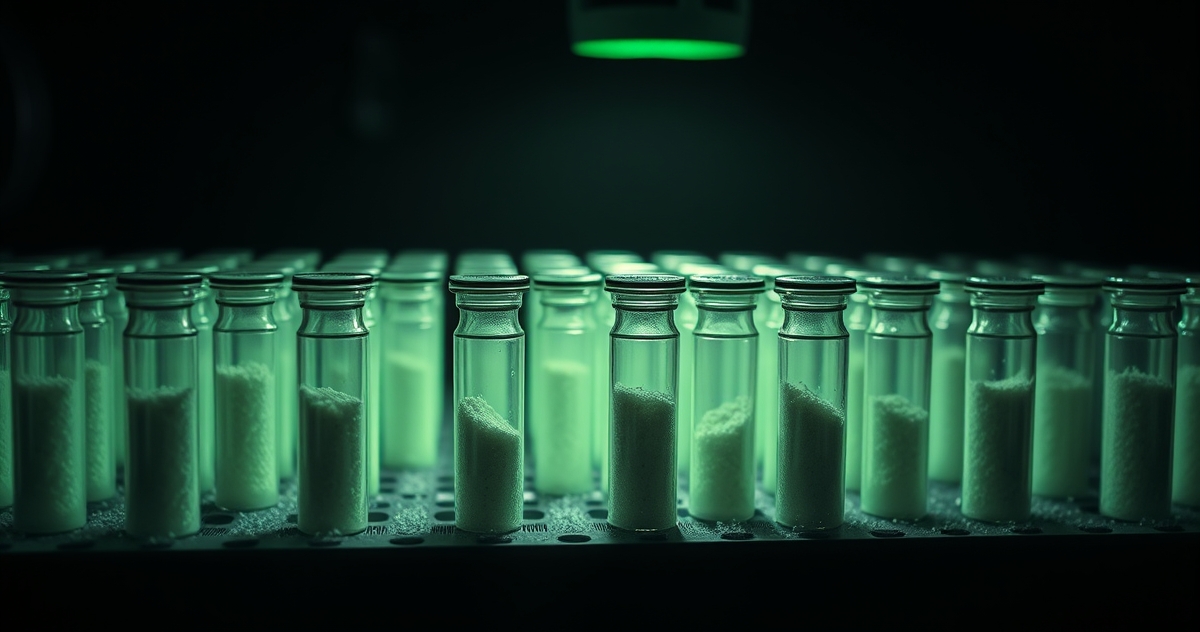
Lyophilized peptides — properly stored in sealed, light-protected containers at appropriate temperatures — have substantially longer shelf lives than their reconstituted counterparts. General guidelines based on accumulated stability data indicate that at room temperature (20-25°C), most lyophilized peptides remain stable for several weeks to a few months, depending on sequence. At 4°C (refrigerated), stability extends to approximately one to two years. At -20°C, many peptides remain stable for three to five years, and at -80°C, degradation is minimal even after a decade for peptides without highly labile residues.[7]
These timelines assume the peptide remains dry and is not subjected to temperature fluctuations or repeated exposure to atmospheric moisture. Peptides containing oxidation-prone residues (Cys, Met, Trp) or deamidation-prone sequences (Asn-Gly, Asn-Ser) will have shorter effective shelf lives and should be stored at -20°C or colder even when in lyophilized form.[7] For detailed data on lyophilized peptide longevity under various conditions, see our article on how long lyophilized peptides last. For background on the freeze-drying process itself, see our guide to lyophilized peptides.
Reconstituted Peptide Shelf Life
Once reconstituted in aqueous solvent, the stability clock accelerates dramatically. Water reactivates all hydrolytic, deamidation, and oxidative pathways that were kinetically arrested in the dried state. General stability windows for reconstituted peptides are: at room temperature, hours to days at most; at 4°C (refrigerated), one to four weeks depending on sequence and solvent; at -20°C (frozen aliquots), one to three months; and at -80°C, up to six months to one year.[8]
Peptides containing Asn, Gln, Cys, Met, and Trp are particularly unstable in solution and should be used as soon as possible after reconstitution. Buffer pH should be maintained at 5-6 for optimal stability, and bacteriostatic water is preferred over pure water for any solution that will be stored beyond immediate use. Our dedicated article on peptide shelf life after reconstitution provides detailed timelines, solvent selection guidance, and protocols for maximizing reconstituted peptide stability.
Storage Protocols: Evidence-Based Best Practices
Lyophilized Storage Protocol
The optimal storage protocol for lyophilized peptides incorporates temperature control, moisture exclusion, light protection, and atmospheric management. Store lyophilized vials at -20°C for routine use (up to one to two years) or at -80°C for archival storage (three to five years or longer). Keep vials in their original sealed containers until use. Include desiccant packets in secondary containers, particularly in humid environments. Use amber glass or opaque containers, or store within light-excluding freezer boxes. For peptides containing Cys, Met, or Trp, flush vials with nitrogen or argon gas before resealing if only partial contents are used.
A critical handling step that is frequently overlooked: always allow a frozen vial to equilibrate fully to room temperature before opening the cap. Opening a cold vial in ambient air causes moisture condensation directly onto the lyophilized powder, introducing water that can initiate degradation and cause the powder to clump or dissolve partially on the vial walls.[8]
Reconstitution and Post-Reconstitution Storage
Reconstitute only the amount of peptide needed for the current experimental phase. Use an appropriate solvent — bacteriostatic water for most peptides, sterile saline for in vivo work, or DMSO followed by aqueous dilution for hydrophobic sequences. Add solvent gently along the vial wall; do not vortex, as this creates air-liquid interfaces that promote both oxidation and aggregation. Allow the lyophilized cake to dissolve by gentle swirling rather than vigorous agitation.[8]
For detailed step-by-step reconstitution protocols including solvent selection, concentration calculation, and solubility troubleshooting, see our peptide reconstitution guide.
Aliquoting Strategy
Aliquoting is the single most effective strategy for preserving reconstituted peptide integrity over time. Immediately after reconstitution, divide the solution into pre-labeled, sterile, low-binding microcentrifuge tubes or cryovials, with each aliquot containing the volume needed for a single experiment or a small number of closely spaced experiments. Transfer aliquots to -20°C or -80°C. When needed, thaw an individual aliquot at 2-8°C (not at room temperature or by heating), use it within the same experimental session, and discard any unused remainder rather than refreezing.
This approach ensures that the bulk of the reconstituted stock is never exposed to more than one freeze-thaw cycle, while individual aliquots provide consistent, accurately dosed material for each experiment. Research consistently demonstrates that repeated freeze-thaw cycling is one of the most damaging processes for peptide solutions, causing ice crystal mechanical damage, transient concentration effects, and accelerated aggregation.[8]
Compound-Specific Stability Considerations
While the general principles outlined above apply broadly, individual peptides have unique stability profiles determined by their specific sequences. Two well-characterized examples from the research peptide literature illustrate how sequence-specific factors create distinct handling requirements.
BPC-157 demonstrates unusual stability compared with most peptides of its size, retaining structural integrity in human gastric juice for over 24 hours — conditions that destroy most peptides within minutes. This extraordinary acid stability reflects its evolutionary origin as a fragment of a gastric protein, combined with a triple-proline motif that confers conformational rigidity and the absence of oxidation-prone cysteine and methionine residues. For detailed BPC-157 handling protocols, see our BPC-157 stability and storage guide.
GHK-Cu presents a contrasting profile. As a copper-binding tripeptide, its stability is intimately linked to its metal coordination chemistry. The copper ion that is essential for biological activity can also catalyze oxidative degradation, and the peptide's stability in solution is highly pH-dependent. For GHK-Cu-specific protocols, see our GHK-Cu handling and storage guide.
Detecting and Assessing Degradation
The ability to detect peptide degradation is as important as the ability to prevent it. Many degradation products are invisible to simple visual inspection, yet they can profoundly compromise experimental results.
Visual Indicators
Some forms of degradation produce visible changes: solution turbidity or cloudiness (suggesting aggregation or precipitation), color change from clear/colorless to yellow or brown (suggesting oxidation, especially of tryptophan residues), visible particulates or flocculent material (advanced aggregation), and changes in the appearance of lyophilized cake (collapse, discoloration, or liquefaction suggesting moisture ingress or thermal damage). However, the absence of visible changes does not guarantee peptide integrity — many degradation products are chromatographically distinct from the parent peptide but visually identical in solution.[2]
Analytical Methods
Reversed-phase high-performance liquid chromatography (RP-HPLC) is the standard analytical method for assessing peptide purity and detecting degradation products. A fresh peptide should produce a single dominant peak; the appearance of additional peaks, shouldering of the main peak, or reduction in main peak area over time indicates degradation. Mass spectrometry (MALDI-TOF or ESI-MS) provides definitive molecular weight confirmation and can identify specific degradation products by their mass shifts (e.g., +16 Da for methionine oxidation, +1 Da for deamidation).[9]
For a comprehensive discussion of HPLC methodology in peptide quality assessment, see our article on HPLC testing for peptides. For understanding how to interpret the quality documentation that accompanies research peptides, see our guide to certificates of analysis. Our article on signs a peptide has degraded provides practical guidance for identifying degradation through visual, analytical, and functional indicators.
Functional Assessment
Ultimately, the most relevant measure of peptide integrity is whether it retains its expected biological activity. Unexplained decreases in assay response, shifts in dose-response curves, or inconsistent results between experiments using different vials or aliquots of the same peptide may indicate degradation even when chromatographic purity appears acceptable. Including positive controls from freshly reconstituted, verified-quality peptide in every experiment provides an internal reference for detecting gradual potency loss.
Quality Verification: Before and During Use
Responsible research practice requires independent verification of peptide quality, both upon receipt from the vendor and periodically during use, particularly for long-running studies.
Upon Receipt
Review the vendor-provided certificate of analysis (CoA) for HPLC purity (should be ≥95% for research-grade peptides, ≥98% preferred), mass spectrometry confirmation of expected molecular weight, and any sequence-specific quality indicators. However, as emphasized in our guide to peptide purity, vendor documentation should be treated as a starting point rather than a definitive quality guarantee. Independent verification through third-party testing is recommended for critical experiments, novel peptides, or any application where data integrity is paramount.
During Use
For peptides stored over extended periods, periodic re-analysis by HPLC is recommended, particularly before beginning a new experimental series. If the peptide has been stored appropriately and shows purity within 2-3% of the original CoA value, it is generally acceptable for continued use. A greater decline in purity suggests that storage conditions may be inadequate or that the peptide's sequence makes it inherently short-lived under the current storage protocol.
Practical Workflow: From Receipt to Experiment
The following workflow integrates the principles discussed throughout this guide into a practical sequence that researchers can follow for any peptide they receive.
Upon receipt, inspect the lyophilized cake for signs of damage or moisture ingress, review the CoA, and immediately transfer vials to appropriate cold storage (-20°C or -80°C). Document receipt date, lot number, and initial storage conditions. Before use, allow the vial to equilibrate to room temperature in a desiccated environment before opening. Reconstitute with the appropriate solvent, using gentle technique to avoid foaming and oxidation. Immediately divide the reconstituted solution into single-use aliquots. Label each aliquot with the peptide identity, concentration, date of reconstitution, and lot number. Transfer aliquots to freezer storage. For each experiment, thaw only the required number of aliquots at 2-8°C, use within the experimental session, and discard unused reconstituted material.
This workflow, combined with appropriate quality verification, provides the best assurance that the peptide reaching the experimental system is the intended molecule at the intended concentration — the foundation of reproducible peptide research.
Summary: Key Principles of Peptide Stability
The stability of research peptides is governed by a complex interplay of sequence-dependent vulnerabilities, environmental stressors, and handling practices. Chemical degradation pathways — oxidation, deamidation, hydrolysis, and others — are driven by specific amino acid residues and accelerated by temperature, moisture, pH extremes, light, and oxygen exposure. Physical instability through aggregation and surface adsorption further reduces effective peptide concentration. Lyophilization dramatically extends shelf life by removing water, but even dried peptides degrade if exposed to inappropriate conditions. Reconstituted peptides have fundamentally shorter stability windows and require immediate aliquoting and frozen storage.
The practical takeaway for researchers is that peptide stability is not a passive property — it is an outcome that must be actively managed through informed purchasing decisions, proper storage infrastructure, careful handling protocols, and ongoing quality verification. The articles in this series examine each aspect of peptide stability in the depth required to implement these principles effectively in any research setting.