≥99%HPLC Purity
COAIncluded
USAShipped
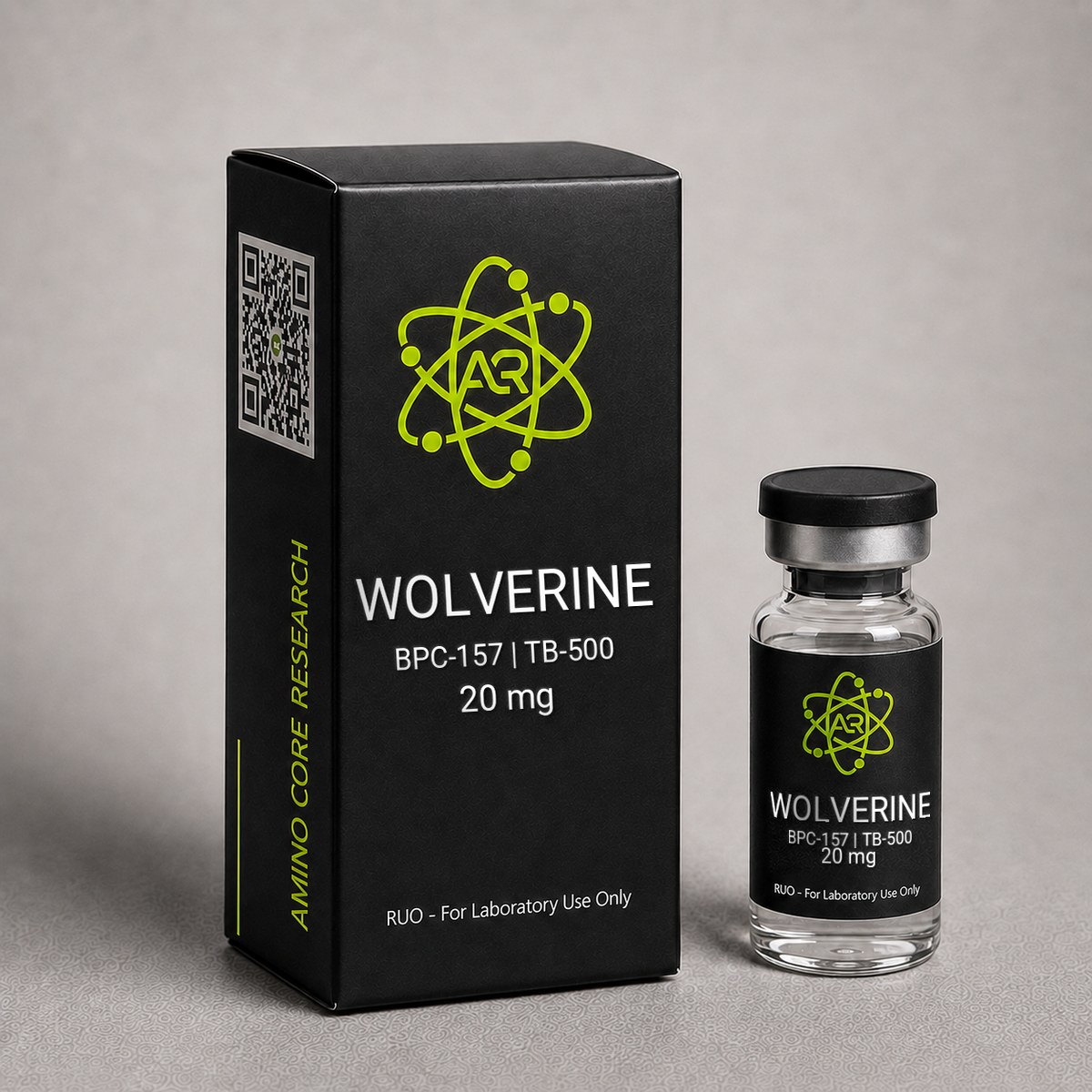
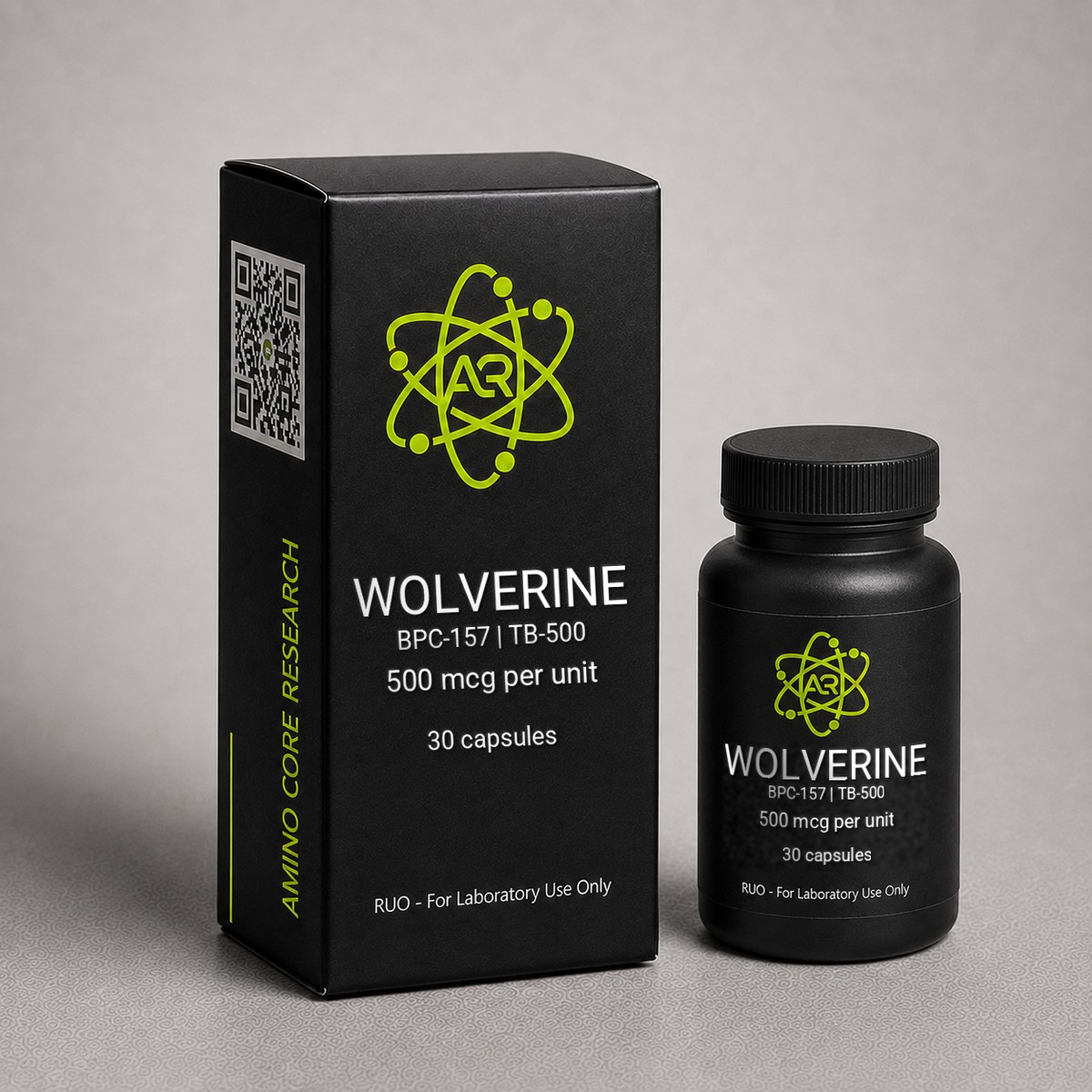
WOLVERINE Capsules - BPC-157 | TB-500
Oral capsule presentation of the WOLVERINE blend (BPC-157 and TB-500) at 500 mcg total peptide per capsule, 30 capsules per bottle.
$229.00
In stock — ships next business day
Quick Facts
| SKU | ACR-WOLV-C30 |
|---|---|
| Purity | ≥99% |
| Physical Form | Capsule |
| Storage | Store sealed at room temperature, away from light and humidity |
What is the WOLVERINE Capsule Blend?
WOLVERINE Capsules are an orally-presented research blend combining two peptides that have been studied for their roles in tissue repair and cytoprotection: BPC-157, a synthetic pentadecapeptide derived from a sequence found in human gastric juice, and TB-500, a synthetic fragment corresponding to the actin-binding region of the endogenous protein thymosin β4. Each capsule in this presentation contains a stated 500 mcg of total peptide, with 30 capsules per bottle. The product is intended solely for in vitro and non-human laboratory research applications.
The blend itself is a proprietary combination and has not, as of writing, been the subject of any published pharmacokinetic or pharmacodynamic study as a blend. All published literature that supports the individual components was generated using either BPC-157 or TB-500 (or its parent protein, thymosin β4) administered separately, and predominantly by parenteral routes in rodent models. There is no peer-reviewed evidence that the combination produces additive, synergistic, or otherwise distinct effects relative to either component alone, and any such claim would be a mechanistic proposal rather than a measured finding.
The oral capsule format additionally raises a distinct set of research questions that are not resolved in the literature. Both BPC-157 and TB-500 are peptides; unmodified peptides delivered to the gastrointestinal tract are typically subject to proteolytic degradation by gastric and pancreatic enzymes, and their oral bioavailability is generally low unless the sequence carries structural features that resist digestion or a formulation is used to protect the peptide. BPC-157 has been reported in the animal literature to retain some activity after intragastric administration — a property attributed by its investigators to its origin as a fragment of a gastric-juice protein — but robust human pharmacokinetic data quantifying oral absorption are not available in the public record. For TB-500, the published pharmacology is almost exclusively based on injectable administration; oral bioavailability of the intact peptide has not been characterized in a way that would allow a researcher to predict systemic exposure from a capsule dose.
Researchers evaluating this product should therefore treat the capsule format as a delivery variable in its own right, distinct from the underlying peptide pharmacology reported in the primary literature. The individual mechanisms attributed to BPC-157 and to thymosin β4 / TB-500 are discussed in the Mechanism section, and are presented as findings from studies of the isolated components rather than as validated properties of the blend or of the oral presentation.
Because WOLVERINE is a blend, this page does not list a single molecular formula, molecular weight, or CAS number. Instead, the identifying data for each component peptide is tabulated separately under Composition & Components. This reflects the principle that a blend is not a chemical entity and cannot be described by a single set of identifiers.
Mechanism of Action of the Component Peptides
The mechanisms described below are those reported for the individual peptides in the primary literature. There is no published mechanistic study of the WOLVERINE blend as a combined product, and the interactions, if any, between the two peptides in vivo have not been characterized. This section should be read as a summary of what the components have been reported to do in isolation.
BPC-157 (Body Protection Compound – 15 amino acids)
BPC-157 is a synthetic peptide with the sequence GEPPPGKPADDAGLV, identified by Sikiric and colleagues as a fragment of a larger protein present in gastric juice. In rodent studies, systemic and local administration has been reported to accelerate healing of injured tendon, ligament, muscle, and gastrointestinal mucosa. The most consistently reported mechanistic observation is upregulation of vascular endothelial growth factor receptor 2 (VEGFR2) signaling, promoting angiogenesis at sites of injury; this pathway has been proposed by Hsieh and colleagues based on in vitro and rodent evidence [1]. Additional mechanisms proposed in the literature include modulation of the nitric oxide (NO) system, interaction with the dopaminergic and serotonergic systems in stress models, and effects on early growth response 1 (EGR-1) and its co-repressor NAB2. It should be noted that these mechanisms are proposed based largely on rodent models and cell culture; no human pharmacodynamic study has confirmed a specific receptor or defined a target engagement biomarker for BPC-157.
TB-500 (Thymosin β4 fragment)
TB-500 refers, in the research-peptide literature, to a synthetic peptide corresponding to a region of thymosin β4 (Tβ4) that includes the actin-binding motif. Thymosin β4 itself is a 43-amino-acid, naturally occurring peptide first characterized by Goldstein and colleagues. Its principal biochemical function is sequestration of monomeric G-actin, which regulates actin polymerization dynamics involved in cell migration, angiogenesis, and wound repair. Preclinical studies of full-length Tβ4 — not always of the TB-500 fragment specifically — have reported promotion of endothelial cell migration, upregulation of laminin-5, and reduction of inflammatory cytokines in wound and cardiac injury models. Goldstein and colleagues have reviewed the wound-healing and cardioprotective literature for Tβ4 [2]. Whether the truncated TB-500 fragment reproduces the full spectrum of Tβ4 activity is not fully established; some published assays have been conducted with the parent protein and the results generalized to the fragment, and this distinction is often blurred in secondary sources.
Combined administration — what is and is not known
The rationale sometimes advanced for combining BPC-157 with TB-500 is that the two peptides act on distinct but complementary aspects of tissue repair — angiogenesis and growth-factor signaling for BPC-157, and actin-cytoskeleton dynamics and cell migration for the Tβ4-derived fragment. This is a mechanistic proposal. It has not, to our knowledge, been tested in a controlled preclinical study that compared the blend against each peptide alone with a shared endpoint. Additive or synergistic effects should therefore not be assumed. Similarly, the oral capsule route introduces uncertainty about how much of either peptide reaches systemic circulation intact; mechanism as described in the injectable literature does not automatically transfer to an oral presentation.
Research & Clinical Studies
Research Context: BPC-157 in Preclinical Tendon and Ligament Models
There is no published clinical or preclinical literature on the WOLVERINE capsule blend as a formulated combination. The evidence base consists of separate studies on the individual components, and readers should note that additive or synergistic effects between BPC-157 and TB-500 have not been formally tested in a controlled study of the mixture. What follows summarizes representative primary research on BPC-157 alone, with the model system stated in each sentence.
Achilles tendon transection in rat (Krivic et al., 2006)
In a rat model of complete Achilles tendon-to-bone detachment, animals received BPC-157 either intraperitoneally (10 mcg/kg or 10 ng/kg) or in drinking water. The authors reported improved biomechanical, functional, and microscopic healing parameters versus saline controls at 14 days. This was an in vivo rodent study using parenteral and oral-in-water administration; it does not establish an effect size for oral capsule delivery in any species, and it does not measure the same tissues that a human tendon injury would involve.[1]
Medial collateral ligament transection in rat (Cerovecki et al., 2010)
A rat MCL transection model examined BPC-157 given intraperitoneally (10 mcg/kg or 10 ng/kg) or per-orally in drinking water. The authors reported accelerated ligament healing on biomechanical and functional endpoints across 60 days of follow-up. Again, the species is rat, dosing is by body weight, and delivery is either injected or dissolved in water rather than administered as a lyophilized capsule.[2]
Muscle crush injury in rat (Staresinic et al., 2003)
In a gastrocnemius crush model, BPC-157 was reported to improve macroscopic, microscopic, and functional recovery of injured muscle at doses of 10 mcg/kg and 10 ng/kg by intraperitoneal or intragastric routes. As with the tendon and ligament studies, extrapolation to human musculoskeletal recovery is not supported by the design.[3]
What this literature does not establish
- No human randomized controlled trial of BPC-157 has been published for any indication.
- Oral bioavailability of intact BPC-157 in humans has not been characterized in a published pharmacokinetic study.
- No published study has evaluated a BPC-157/TB-500 combination in either animals or humans.
The rodent findings above are reported, not established, and are described here to document the primary literature underlying interest in BPC-157 — not as evidence for effects of the WOLVERINE capsule blend.
[1] Krivic A, Anic T, Seiwerth S, Huljev D, Sikiric P. Achilles detachment in rat and stable gastric pentadecapeptide BPC 157: Promoted tendon-to-bone healing and opposed corticosteroid aggravation. J Orthop Res. 2006;24(5):982-989. PubMed ↗
[2] Cerovecki T, Bojanic I, Brcic L, et al. Pentadecapeptide BPC 157 (PL 14736) improves ligament healing in the rat. J Orthop Res. 2010;28(9):1155-1161. PubMed ↗
[3] Staresinic M, Sebecic B, Patrlj L, et al. Gastric pentadecapeptide BPC 157 accelerates healing of transected rat Achilles tendon and in vitro stimulates tendocytes growth. J Orthop Res. 2003;21(6):976-983. PubMed ↗
Composition & Components
WOLVERINE Capsules are a two-component peptide blend presented in an oral capsule format. Because the product is a mixture rather than a single chemical entity, it does not carry a single molecular formula, molecular weight, or CAS number. The identifying data below refer to each individual peptide component as reported in PubChem and the primary literature. The stated dose refers to the combined peptide mass per capsule; the ratio of BPC-157 to TB-500 within that mass is set by the manufacturer's formulation and is not standardized across suppliers.
| Product Name | WOLVERINE Capsules (BPC-157 | TB-500) |
|---|---|
| Format | Oral capsule, 30 capsules per bottle |
| Total peptide per capsule | 500 mcg (combined mass of both peptides) |
| Number of components | 2 |
| Blend molecular formula | Not applicable — blend is not a single chemical entity |
| Blend CAS number | Not applicable — see individual component CAS below |
| Physical form | Encapsulated powder |
| Purity (per component) | ≥98% (each peptide, prior to blending) |
Component 1 — BPC-157
| Full name | Body Protection Compound-157 (also written as PL 14736) |
|---|---|
| Role in blend | Peptide reported in preclinical studies to promote angiogenesis and modulate growth-factor signaling at sites of tissue injury |
| Sequence | Gly-Glu-Pro-Pro-Pro-Gly-Lys-Pro-Ala-Asp-Asp-Ala-Gly-Leu-Val (GEPPPGKPADDAGLV) |
| Amino acid count | 15 |
| Molecular formula | C62H98N16O22 |
| Molecular weight | 1419.53 g/mol |
| CAS number | 137525-51-0 |
| Origin | Synthetic fragment of a protein identified in human gastric juice; investigated by Sikiric and colleagues |
Component 2 — TB-500
| Full name | TB-500 (synthetic peptide corresponding to a fragment of thymosin β4 containing the actin-binding motif) |
|---|---|
| Role in blend | Peptide fragment of thymosin β4 studied in preclinical models for effects on actin dynamics, cell migration, and wound repair |
| Sequence (as commonly supplied) | Ac-LKKTETQ (N-acetylated 7-residue fragment) |
| Amino acid count | 7 (fragment); parent Tβ4 is 43 residues |
| Molecular weight (fragment) | Approximately 889 g/mol as the N-acetylated heptapeptide |
| CAS number | 77591-33-4 (commonly reported for the TB-500 fragment) |
| Note on identity | The name "TB-500" is used inconsistently in commercial and research contexts. Some suppliers use it to refer to the full 43-residue thymosin β4 sequence, while others use it to refer to the short actin-binding fragment. Researchers should verify sequence identity by certificate of analysis before assuming that published Tβ4 data applies to the material in hand. |
Because the ratio of the two components is proprietary, the per-capsule mass of each individual peptide cannot be inferred from the 500 mcg total. Any dose-response research using this product should treat the capsule content as a fixed-ratio mixture rather than as a defined dose of either peptide.
Handling Guidelines for WOLVERINE Capsules
The WOLVERINE capsule presentation supplies pre-measured lyophilized peptide content encapsulated in a solid oral dosage form. Unlike lyophilized vials intended for reconstitution, capsules do not require weighing, dissolving, or aseptic technique for handling in the research setting. The guidance below concerns preservation of peptide integrity in the sealed and opened bottle.
Receipt and inspection
- On arrival, inspect the outer packaging and the bottle for physical damage, moisture ingress, or a broken tamper seal.
- Confirm the label matches the certificate of analysis (COA) for lot number, peptide identity, and dose per capsule.
- Photograph the sealed bottle and COA before opening if chain-of-custody documentation is required for the research protocol.
Opening and dispensing
- Open the bottle in a low-humidity environment. Peptides are hygroscopic and prolonged air exposure accelerates degradation.
- Do not remove the desiccant sachet; it should remain inside the bottle throughout the product's use.
- Dispense capsules with clean, dry forceps or a clean gloved hand — avoid touching capsules with damp fingers, which may transfer moisture to remaining product.
- Reseal the cap immediately and firmly after each opening.
Physical integrity of capsules
Capsules should appear intact, uniform in color, and free of splits, dents, or leakage of powder. Discoloration of the shell, sticking of capsules to each other, or visible moisture inside the bottle indicates that storage conditions were exceeded and the product should not be used for research purposes.
Peptide-specific considerations
Both BPC-157 and TB-500 (thymosin beta-4 fragment) are peptides subject to hydrolysis in the presence of moisture and to oxidation at methionine residues on prolonged air exposure. Encapsulation with a desiccant substantially slows these processes relative to open powder, but does not eliminate them. Repeated cycles of taking the bottle from cold storage to room temperature can produce condensation on the inside of the bottle; if refrigerated storage is used, allow the bottle to warm to room temperature before opening, or minimize opening time.
What this guidance is not
These handling notes address preservation of the research material only. They are not instructions for human administration and do not constitute a dosing protocol. AminoCore Research supplies WOLVERINE capsules for laboratory research use; the responsible investigator determines how the material is used within their protocol and jurisdiction.
Storage & Stability of WOLVERINE Capsules
Peptide stability in a capsule presentation is governed primarily by temperature, humidity, and light exposure. The recommendations below reflect general practice for lyophilized peptide research materials; formal shelf-life data for the specific WOLVERINE blend has not been published.
Recommended storage
- Long-term (months to years): −20 °C in a non-defrosting freezer, in the original sealed bottle with the desiccant sachet retained.
- Short-term (weeks): 2–8 °C in a dedicated refrigerator, protected from light.
- Transit / brief bench access: Room temperature (15–25 °C) for limited durations is generally acceptable for lyophilized peptides, but repeated or prolonged exposure should be avoided.
Humidity control
Lyophilized peptides are hygroscopic. Water uptake in a solid dosage form promotes hydrolysis of peptide bonds and can cause capsules to soften, stick, or discolor. Keeping the desiccant in the bottle and minimizing the time the bottle is open are the two most effective humidity controls in typical laboratory conditions.
Freeze–thaw and condensation
Every transition from −20 °C to ambient conditions creates a risk of condensation on the inside of the bottle if it is opened before equilibrating. To reduce this risk, remove the bottle from the freezer, allow it to reach room temperature while still sealed, and only then open it. Frequent freeze–thaw cycling of a single bottle should be avoided; where a protocol requires repeated access over weeks, storing the working bottle at 2–8 °C is generally preferable to repeatedly cycling from −20 °C.
Light and oxygen
TB-500 contains a methionine residue and BPC-157 does not, but both peptides are best protected from prolonged light exposure. The opaque bottle used for the capsule presentation provides adequate light protection when the cap is on; storage in a dark freezer or refrigerator provides additional margin. Headspace oxygen inside a repeatedly opened bottle can also contribute to slow oxidative degradation over long periods.
Signs the product should not be used for research
- Visible moisture inside the bottle, or capsules stuck together.
- Discoloration of the capsule shell or powder.
- Missing or exhausted desiccant with prior exposure to humid conditions.
- Tamper seal broken on arrival, or the COA lot number does not match the label.
These are integrity indicators, not safety indicators for any use scenario. As with all research-grade peptide materials, WOLVERINE capsules are intended for in vitro and preclinical laboratory research only.
Frequently Asked Questions
What is the WOLVERINE capsule blend and what does it contain?
WOLVERINE Capsules are a research-use oral peptide blend containing two peptides: BPC-157, a synthetic 15-amino-acid fragment (GEPPPGKPADDAGLV) originally identified from a protein in gastric juice, and TB-500, a synthetic peptide corresponding to an actin-binding fragment of thymosin β4. Each capsule contains 500 mcg of combined peptide mass, with 30 capsules per bottle. The ratio of BPC-157 to TB-500 within that 500 mcg is set by the manufacturer's formulation and is not standardized across suppliers. The product is intended for in vitro and non-human laboratory research only.
Is there published research on the WOLVERINE blend itself?
No peer-reviewed pharmacokinetic or pharmacodynamic studies of the WOLVERINE blend as a combined product have been published, and no controlled preclinical study has compared the blend against each component alone. All published evidence for the individual peptides was generated using BPC-157 or thymosin β4 / TB-500 administered separately, and predominantly by parenteral (injected) routes in rodent models. Any claim that the combination is additive or synergistic is a mechanistic proposal rather than a measured finding, and researchers should not extrapolate results from single-peptide studies directly to the blend.
Are BPC-157 and TB-500 orally bioavailable in capsule form?
Oral bioavailability of peptides delivered to the gastrointestinal tract is generally low because gastric and pancreatic enzymes rapidly degrade most peptide sequences. BPC-157 has been reported in the rodent literature to retain activity after intragastric administration — a property its investigators attribute to its origin as a gastric-juice-derived fragment — but published human pharmacokinetic data quantifying oral absorption are not available. For TB-500, essentially all of the reported pharmacology is based on injectable administration; oral bioavailability of the intact fragment has not been rigorously characterized in the public literature. The capsule route should therefore be treated as a research variable in its own right.
How should WOLVERINE capsules be stored?
As with other lyophilized or dry peptide preparations, WOLVERINE capsules should be stored at -20°C for long-term storage, or refrigerated at 2-8°C for short-term use, and kept protected from light, heat, and humidity. Transit at ambient temperature for short periods is generally considered acceptable for dry peptide formats, but repeated temperature cycling should be avoided. Because the capsule contains two peptides with different chemical stability profiles, exposure to moisture is a particular concern; the bottle should be kept tightly sealed and desiccated where possible. These guidelines apply to research storage only; the product is not intended for human use.
Has the WOLVERINE (BPC-157 + TB-500) combination been studied in humans?
No published human clinical trial has evaluated the WOLVERINE combination of BPC-157 and TB-500, either as a capsule or in any other formulation. The primary literature on each component individually consists largely of rodent studies (Achilles tendon transection, MCL transection, muscle crush, and related models for BPC-157; wound and cardiac injury models for thymosin beta-4 and its Ac-SDKP fragment). Additive or synergistic effects between the two peptides in a blend have not been formally tested. Any expectation of combined effect is mechanistic inference, not measured data.
Why does WOLVERINE not have a single molecular formula or CAS number?
WOLVERINE is a blend of two distinct peptides — BPC-157 (a synthetic pentadecapeptide, CAS 137525-51-0, molecular formula C62H98N16O22) and TB-500 (the synthetic acetylated N-terminal fragment of thymosin beta-4, CAS 77591-33-4 for the full Tβ4 sequence). Because the product contains two separate molecular species rather than a single compound, no single molecular formula, molecular weight, or CAS number applies to the mixture. Each component is documented separately on the Composition & Components section of this page.
What research applications is the WOLVERINE capsule blend supplied for?
AminoCore Research supplies WOLVERINE capsules as a research-grade material for in vitro and preclinical laboratory studies conducted by qualified investigators. Typical research contexts in which the individual component peptides have been examined include rodent tendon, ligament, and muscle injury models for BPC-157, and cutaneous wound-healing and cardiac injury models for thymosin beta-4 and its fragments. WOLVERINE capsules are not a therapeutic product, are not approved by any regulatory authority for human or veterinary use, and no clinical claims are made or implied by their sale.
How does the capsule form of WOLVERINE differ from an injectable BPC-157/TB-500 blend?
The capsule and injectable presentations differ in route of exposure and, consequently, in the pharmacokinetic questions they raise. Injectable formulations of BPC-157 and TB-500 deliver peptide subcutaneously or intramuscularly and bypass the gastrointestinal tract. Capsule delivery exposes the peptides to gastric acid, digestive proteases, and intestinal barriers before any systemic absorption. Although some preclinical BPC-157 studies used per-oral administration in drinking water and reported effects, oral bioavailability of intact BPC-157 in humans has not been characterized in a published pharmacokinetic study, and no comparable oral data exist for intact TB-500. These pharmacokinetic questions are the subject of ongoing research.
For laboratory and research use only. This product is not for human or veterinary use. It is not a drug, supplement or food.
This product is not FDA approved for any indication, and is not intended to diagnose, treat, cure, or prevent any disease. All product information is derived from published preclinical research and does not constitute medical advice or claims.