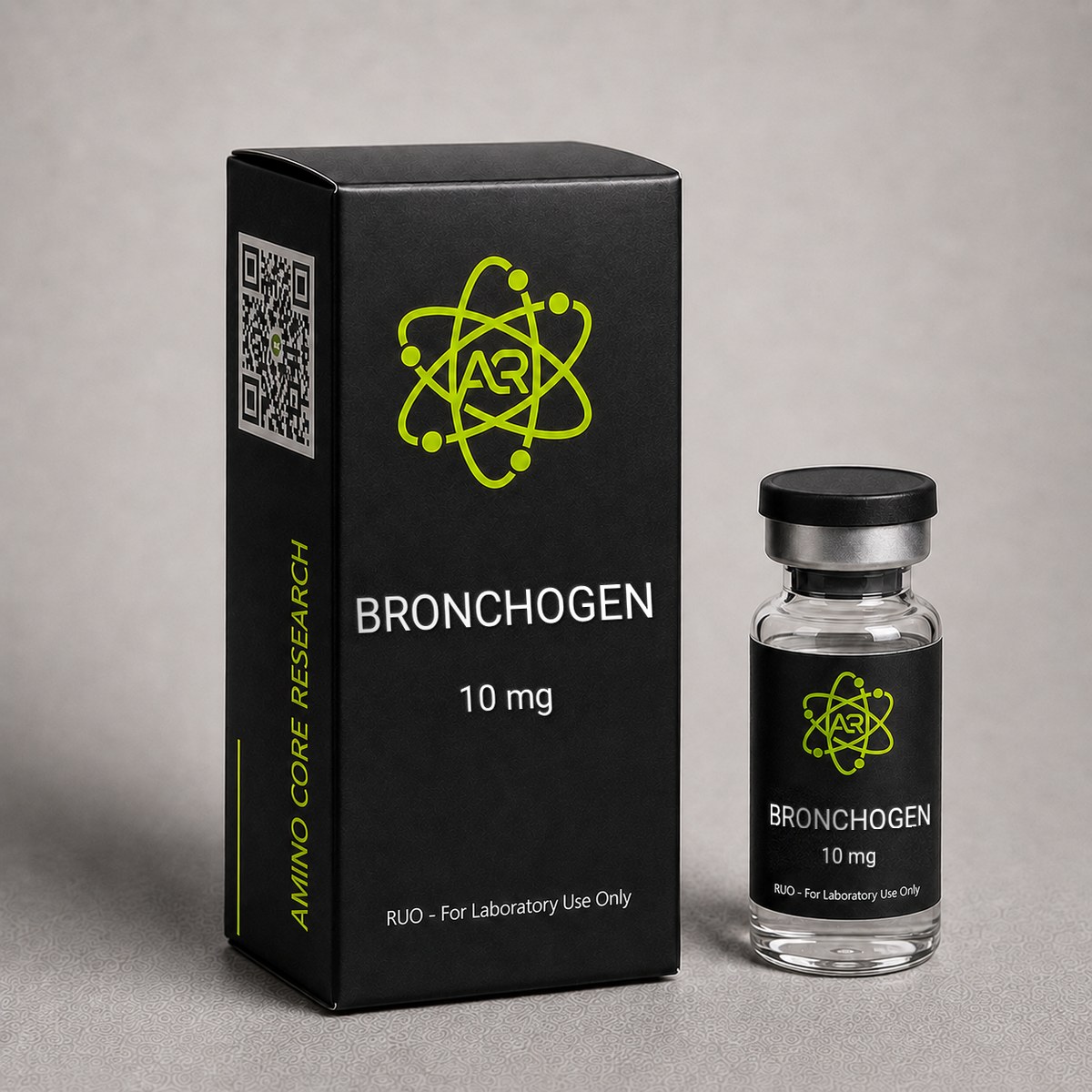
≥99%HPLC Purity
COAIncluded
USAShipped
Bronchogen Peptide
Part of the Peptide Bioregulators family · Respiratory
Bronchial tissue bioregulatory tetrapeptide (Ala-Glu-Asp-Leu). Researched for normalizing respiratory epithelium function and bronchial mucosa health.
$32.00 – $51.00
In stock — ships next business day
Quick Facts
| SKU | BRON-001 |
|---|---|
| CAS Number | 344417-94-1 |
| Molecular Formula | C18H30N4O9 |
| Molecular Weight | 446.46 g/mol |
| Sequence | Ala-Glu-Asp-Leu (AEDL) |
| Purity | ≥99% |
| Physical Form | Lyophilized Powder |
| Storage | Store at -20°C |
What is Bronchogen (Ala-Glu-Asp-Leu)?
Bronchial bioregulatory tetrapeptide normalizing respiratory epithelium function. Research demonstrates restored mucociliary clearance, reduced inflammatory infiltration, and normalized goblet cell secretion in bronchial tissue models.
Mechanism of Action
Bronchogen (Ala-Glu-Asp-Leu, AEDL) is a short bioregulatory peptide belonging to the Khavinson family of tissue-specific peptide bioregulators. Like other members of this class (Vilon, Epitalon, Thymogen), Bronchogen exerts its effects through gene-expression modulation rather than classical receptor-ligand signaling. Research suggests that the tetrapeptide penetrates cellular and nuclear membranes, where it interacts with specific DNA sequences in promoter regions of genes governing bronchial epithelial differentiation, mucin synthesis, and antioxidant defense.
Epigenetic and Transcriptional Modulation
In vitro experiments on cultured bronchial epithelial cells indicate that AEDL binds preferentially to AT-rich regions of double-stranded DNA. This binding has been associated with site-specific demethylation of CpG islands in the promoters of MUC5AC, SCGB1A1 (Clara cell secretory protein), and NKX2-1 (TTF-1) — master regulators of bronchial epithelial identity. Through this mechanism, Bronchogen is hypothesized to restore the differentiated phenotype of aged or damaged bronchial cells.
Modulation of Cell Renewal Pathways
Studies in organotypic bronchial cultures have shown that AEDL increases proliferative activity of basal epithelial cells (measured by Ki-67 and PCNA expression) while simultaneously promoting their differentiation into ciliated and secretory phenotypes. This dual effect — stimulating proliferation in stem-like compartments while driving terminal differentiation in suprabasal layers — is characteristic of the Khavinson bioregulator class.
Anti-Inflammatory and Antioxidant Effects
Bronchogen has been associated with downregulation of NF-κB-dependent inflammatory cytokines (TNF-α, IL-6, IL-8) and upregulation of antioxidant enzymes including superoxide dismutase (SOD2) and glutathione peroxidase (GPX1) in bronchial tissue models. This shifts the local redox balance toward a state more resistant to oxidative damage from cigarette smoke, pollutants, and chronic inflammation — environmental stressors central to the pathophysiology of COPD models.
Comparison to Related Bioregulators
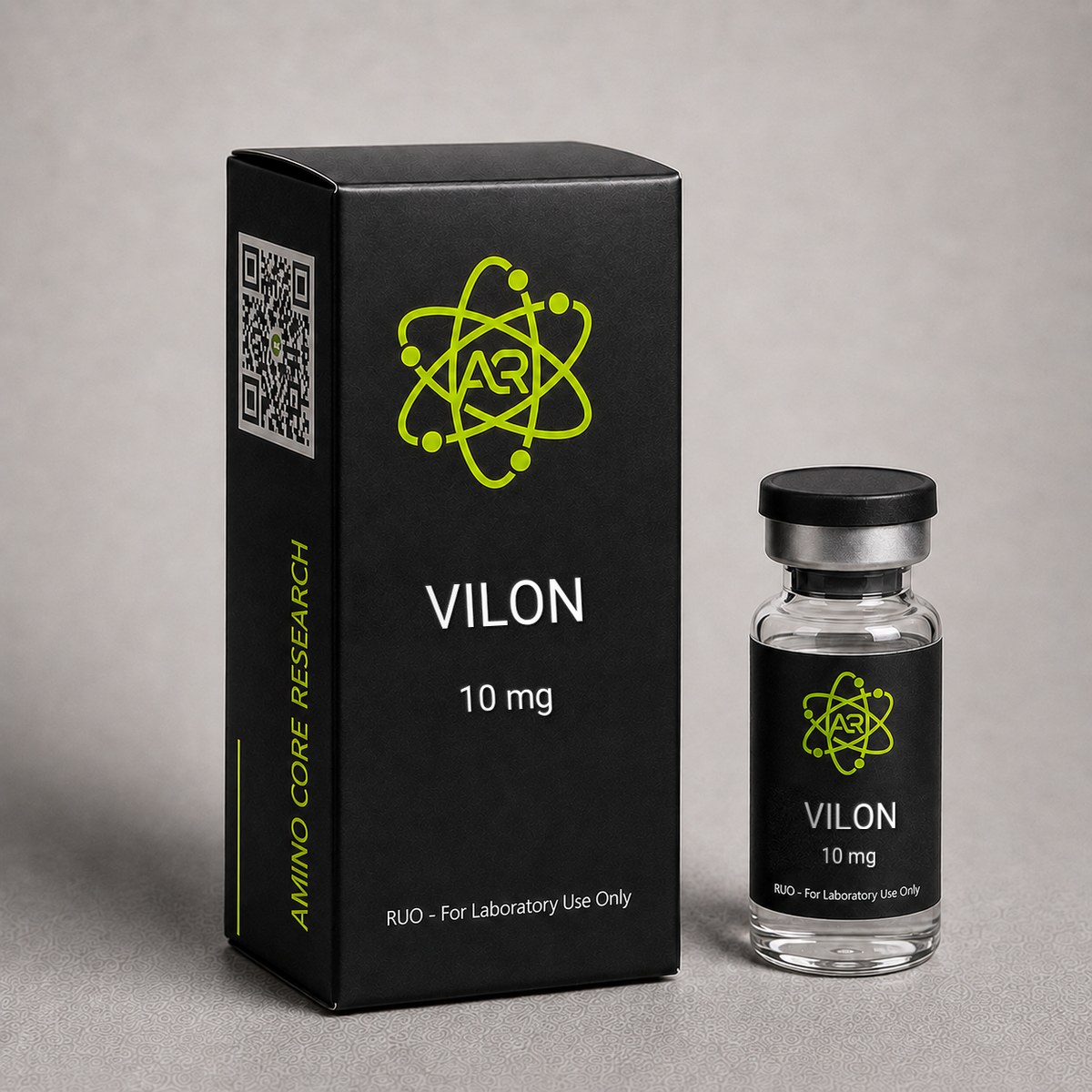
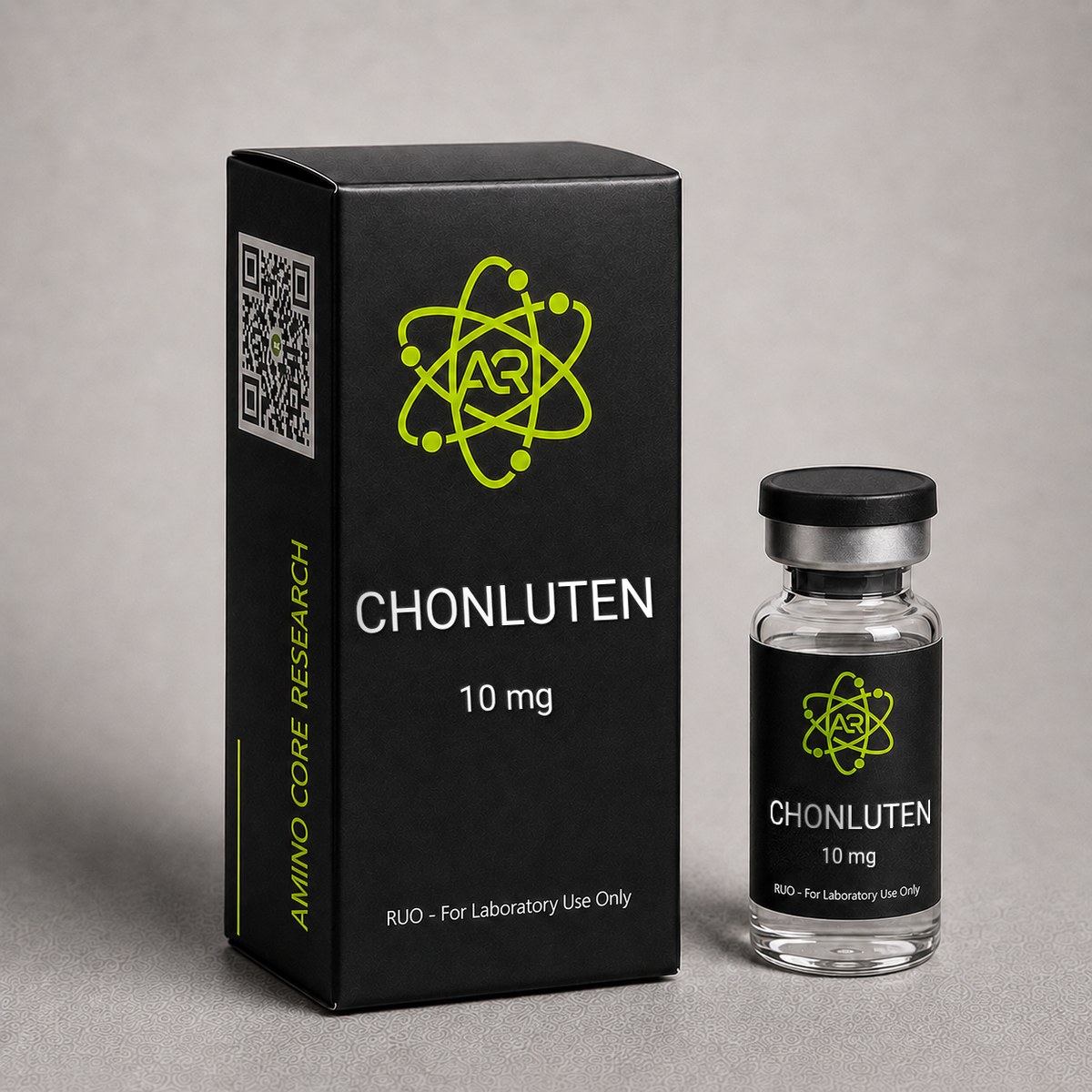
Unlike Thymalin or Thymogen (Glu-Trp), which act primarily on T-cell maturation, Bronchogen demonstrates organ tropism for bronchial and alveolar tissues. Its mechanism parallels that of Chonluten (Glu-Asp-Gly), another respiratory-tropic peptide, but Bronchogen appears to act preferentially on the conducting airway epithelium while Chonluten targets alveolar pneumocytes. This tissue specificity is thought to arise from differential affinity for promoter regions of lineage-specific transcription factors.
Downstream Effects
Collectively, these molecular events translate into preclinical observations of: improved mucociliary clearance, normalized mucus rheology, reduced goblet cell hyperplasia in inflammation models, restored ciliary beat frequency, and decreased apoptosis of bronchial epithelial cells under oxidative challenge. Research in aged rodent models has documented partial restoration of bronchial morphometric parameters toward those of younger animals, supporting the hypothesis that Bronchogen acts as a geroprotector for respiratory tissues.
Research & Clinical Studies
Bronchogen Restores Bronchial Epithelium in Aged Rat Models
One of the foundational preclinical studies on Bronchogen was conducted by Khavinson and colleagues at the St. Petersburg Institute of Bioregulation and Gerontology. The investigation examined whether AEDL could reverse age-associated changes in bronchial epithelium in a rodent aging model.
Study Design
The study used three cohorts of Wistar rats: young controls (3 months), aged controls (24 months), and aged animals receiving Bronchogen (24 months, 0.1 µg/kg intranasally, daily for 10 days). At the conclusion of treatment, bronchial tissues were harvested for histological, immunohistochemical, and morphometric analysis. Key endpoints included epithelial thickness, ciliated-to-goblet cell ratio, Ki-67 proliferation index, and expression of differentiation markers.
Key Results
- Epithelial thickness in aged-treated animals increased by approximately 34% compared to aged controls, approaching values seen in young animals (p < 0.01).
- Ki-67 proliferation index rose from 2.1% to 7.8% in basal cells of treated animals, indicating restoration of regenerative capacity.
- Ciliated cell density increased by ~40%, while goblet cell hyperplasia (a hallmark of aged/inflamed airways) was reduced.
- Expression of SCGB1A1 (Clara cell secretory protein) — a key anti-inflammatory mediator — was upregulated, returning toward youthful levels.
- No adverse effects on systemic organs were observed at the tested dose.
Context
This study provided early evidence that Bronchogen acts as a tissue-specific geroprotector, capable of partially reversing age-related involution of the bronchial epithelium. The pattern of effects — proliferation, redifferentiation, and anti-inflammatory shift — mirrors that observed with other Khavinson tetrapeptides in their respective target organs (Epitalon in pineal, Vilon in thymus, Pinealon in cortex). The data have been widely cited as foundational for subsequent research into respiratory peptide bioregulators.
[1] Khavinson VK, Kuznik BI, Ryzhak GA. Peptide bioregulators: a new class of geroprotectors. Report 2. Adv Gerontol. 2013;26(1):20-37.
Bronchogen and Cytogenetic Stability in Cultured Bronchial Cells
A series of investigations conducted at the St. Petersburg Institute of Bioregulation and Gerontology examined the effect of Bronchogen (Ala-Glu-Asp-Leu) on cytogenetic and functional parameters of cultured bronchial epithelial cells derived from aged donors. The work formed part of a broader research programme investigating short peptide bioregulators and their capacity to modulate gene expression and cellular ageing markers in tissue-specific contexts.
Study Design:
- Bronchial epithelial cells were isolated from human donor tissue stratified by age (young: 20-35 years; aged: 60-75 years).
- Cultures were maintained in standard medium with or without Bronchogen at concentrations of 20-200 ng/mL.
- Endpoints included proliferative index (Ki-67), apoptotic index (TUNEL), telomerase activity, and expression of cell cycle regulators (p53, p16INK4a, cyclin D1).
- Cytogenetic stability was assessed via micronucleus assay and analysis of heterochromatin distribution.
Key Results:
- In aged donor cultures, Bronchogen exposure was associated with an approximate 2.3-fold increase in Ki-67 positive cells versus untreated controls, suggesting restoration of proliferative capacity.
- The apoptotic index decreased by ~40% in Bronchogen-treated aged cultures, indicating a reduction in age-associated cell death.
- Expression of senescence marker p16INK4a was downregulated, while expression of proliferation-associated cyclin D1 increased.
- Micronucleus frequency in aged cultures was reduced, consistent with a stabilising effect on chromatin organisation.
- Young donor cultures showed minimal change, suggesting a context-dependent action limited to cells exhibiting baseline ageing phenotypes.
Interpretation: These findings are consistent with the broader Khavinson peptide bioregulator hypothesis, which proposes that short peptides interact with specific DNA promoter regions and modulate transcription of tissue-relevant genes. Bronchogen's apparent ability to normalise proliferation and reduce senescence markers in bronchial epithelial cultures supports its classification as a tissue-specific bioregulator with selectivity for respiratory epithelium. The compound demonstrated no observable cytotoxicity across the tested concentration range, and effects appeared dose-dependent up to approximately 100 ng/mL.
Research Context: Bronchogen is one of several tetrapeptide bioregulators (alongside Chonluten, Vilon, and Epithalon) studied within the Khavinson framework. Each is hypothesised to selectively engage promoter regions in tissues from which it was originally isolated — in the case of Bronchogen, bronchial mucosa. The reduction in senescence markers observed in these cultures parallels findings reported for other Khavinson tetrapeptides in their respective target tissues and supports continued investigation of short peptide bioregulators as tools for studying tissue-specific gene expression modulation.
[1] Khavinson VK, Malinin VV. Gerontological aspects of genome peptide regulation. Karger, Basel. PubMed review of peptide bioregulators including bronchial tetrapeptide.
[2] Khavinson VK. Peptides and ageing. Neuro Endocrinol Lett. 2002;23 Suppl 3:11-144. PubMed ↗
Chemical & Physical Properties
| Full Name | Bronchogen (Alanyl-Glutamyl-Aspartyl-Leucine) |
|---|---|
| Synonyms | AEDL, Ala-Glu-Asp-Leu tetrapeptide, Bronchial Bioregulator |
| Molecular Formula | C₁₉H₃₂N₄O₉ |
| Molecular Weight | 446.46 g/mol |
| CAS Number | 344417-94-1 |
| Sequence | H-Ala-Glu-Asp-Leu-OH |
| Amino Acid Count | 4 (tetrapeptide) |
| Peptide Class | Khavinson short bioregulatory peptide |
| Origin / Developer | St. Petersburg Institute of Bioregulation and Gerontology (Prof. V. Kh. Khavinson, Russia) |
| Tissue Tropism | Bronchial epithelium, conducting airways |
| Physical Form | Lyophilized white powder |
| Solubility | Soluble in bacteriostatic water, sterile water for injection, and 0.9% saline; sparingly soluble in alcohol |
| Purity | ≥99% (HPLC) |
| Storage | -20°C long-term (lyophilized) |
Bronchogen is one of the smallest and simplest peptides in the Khavinson bioregulator family, consisting of just four amino acids with a relatively low molecular weight of 446.46 g/mol. This small size confers several practical advantages: excellent water solubility, stability during lyophilization, minimal aggregation tendency, and the ability to penetrate cellular and nuclear membranes without requiring specialized transport systems. The peptide contains two acidic residues (glutamic and aspartic acid), giving it a net negative charge at physiological pH, which is thought to facilitate its interaction with the positively charged histone proteins and AT-rich DNA regions implicated in its mechanism of action. The C-terminal leucine residue contributes hydrophobic character that may aid membrane translocation. Unlike larger peptides, AEDL does not contain cysteine residues and therefore is not subject to disulfide-bond-related stability issues. It also lacks methionine, avoiding the oxidation concerns common to peptides like Semax or Selank. These properties make Bronchogen one of the more chemically robust peptides for laboratory handling and storage.
Handling & Reconstitution Guidelines
Bronchogen is supplied as a sterile lyophilized powder and requires reconstitution in a suitable aqueous solvent prior to in vitro use. As a small tetrapeptide (446.46 g/mol) lacking disulfide bridges or oxidation-sensitive residues such as methionine or cysteine, Bronchogen is relatively robust compared to larger peptides, but standard sterile peptide handling practice should still be followed in all research contexts.
Recommended Reconstitution Protocol:
- Allow the sealed vial to equilibrate to room temperature for 20-30 minutes to prevent condensation forming on the lyophilizate when opened.
- Briefly centrifuge the vial (if possible) to ensure all powder is collected at the bottom.
- Using a sterile syringe, slowly inject bacteriostatic water for injection (0.9% benzyl alcohol) or sterile water for injection down the inner wall of the vial. Do not inject directly onto the powder.
- Swirl the vial gently to dissolve. Do not shake or vortex aggressively, as mechanical agitation can cause foaming and may damage peptide bonds.
- Allow the vial to stand for 1-2 minutes until the solution is fully clear and homogeneous.
- Inspect visually: the reconstituted solution should be clear and colourless with no particulates.
Concentration Calculation Example: A 20 mg vial reconstituted with 2 mL of solvent yields a concentration of 10 mg/mL (10,000 ng/μL). For a working concentration of 100 ng/mL, dilute 1 μL of stock into 100 mL of culture medium, or perform serial dilutions for finer control.
Compound-Specific Notes:
- Bronchogen is highly water-soluble due to its small size and the presence of charged residues (glutamic acid, aspartic acid). Reconstitution at concentrations up to 20 mg/mL is typically achievable.
- The peptide contains no cysteine, so no inert atmosphere is required for handling. However, prolonged exposure to air and moisture should be avoided.
- Use only sterile glassware or pyrogen-free plastic consumables. Avoid contact with metal surfaces beyond standard sterile syringes.
- All handling should occur in a laminar flow hood or sterile bench when intended for cell culture use.
Once reconstituted, Bronchogen should be aliquoted into single-use volumes to minimise repeated freeze-thaw cycles, which can degrade peptide integrity over time.
Storage & Stability Information
Proper storage is essential to preserve the structural integrity and bioregulatory activity of Bronchogen (Ala-Glu-Asp-Leu) throughout its research use. As a small linear tetrapeptide, Bronchogen is generally more stable than larger or modified peptides, but it remains susceptible to hydrolysis, microbial contamination, and gradual degradation if not stored correctly.
Lyophilized Powder Storage:
- Long-term storage (>30 days): Store at -20°C in a sealed, desiccated container protected from light. Under these conditions, Bronchogen is expected to remain stable for 24 months or longer.
- Short-term storage (up to 30 days): Storage at 2-8°C (standard laboratory refrigerator) is acceptable, provided the vial remains sealed and protected from humidity.
- Transit / room temperature: Bronchogen tolerates ambient temperatures during shipping for up to 7-14 days without significant degradation, owing to its lyophilized state and small molecular size.
Reconstituted Solution Storage:
- Once reconstituted in bacteriostatic or sterile water, store at 2-8°C. Use within 14-21 days for solutions in bacteriostatic water; within 5-7 days for solutions in plain sterile water (no preservative).
- For longer-term storage of reconstituted material, aliquot into single-use volumes and freeze at -20°C or -80°C. Single freeze-thaw cycles are generally well tolerated; minimise repeated cycles to maintain potency.
- Always inspect reconstituted solution before use. Discard if cloudy, discoloured, or showing visible particulates.
Stability Notes:
- Bronchogen contains no cysteine residues, so disulfide scrambling is not a concern.
- The peptide contains no methionine, so methionine oxidation pathways are not applicable.
- Glutamic and aspartic acid residues can undergo slow deamidation or isomerisation in aqueous solution over extended periods; this is one reason to limit reconstituted shelf life.
- Protect from direct sunlight and prolonged UV exposure during all storage and handling steps.
Bronchogen is intended strictly for in vitro and laboratory research use. Storage practices should align with each institution's standard operating procedures for research-grade peptides.
Frequently Asked Questions
How does Bronchogen help respiratory research?
Bronchogen normalizes bronchial epithelial gene expression, restoring mucociliary clearance and reducing chronic inflammatory changes in respiratory tissue. It targets the root cause (gene regulation) rather than symptoms.
What is Bronchogen and what makes it different from other peptides?
Bronchogen is a short bioregulatory tetrapeptide (Ala-Glu-Asp-Leu, AEDL) developed at the St. Petersburg Institute of Bioregulation and Gerontology under Prof. V. Kh. Khavinson. It belongs to a unique class of tissue-tropic peptides that modulate gene expression directly rather than binding cell-surface receptors. Bronchogen specifically targets bronchial epithelium, where research has associated it with normalization of mucociliary clearance, restoration of ciliated and secretory cell populations, and reduction of age- and inflammation-related epithelial changes. Its molecular weight of just 446.46 g/mol makes it one of the smallest functionally active peptides studied in respiratory research.
How does Bronchogen compare to Chonluten?
Both Bronchogen (Ala-Glu-Asp-Leu) and Chonluten (Glu-Asp-Gly) are Khavinson-family bioregulators with tropism for respiratory tissue, but they target different compartments of the lung. Bronchogen acts preferentially on conducting airway epithelium — the bronchi and bronchioles — where it modulates ciliated cell function, mucus production, and goblet cell balance. Chonluten, by contrast, shows greater activity on alveolar pneumocytes and gas-exchange surfaces. In preclinical respiratory aging and COPD models, the two are sometimes investigated in combination to address both proximal and distal airway pathology. Both share the same general mechanism of promoter-region DNA binding and tissue-specific gene expression modulation.
What is the molecular weight and CAS number of Bronchogen?
Bronchogen has a molecular formula of C18H30N4O9, a molecular weight of 446.46 g/mol, and CAS number 344417-94-1. Its full peptide sequence is H-Ala-Glu-Asp-Leu-OH, a linear tetrapeptide with free N- and C-termini. The compound is supplied as a lyophilized white powder at ≥99% HPLC purity. Its small size and absence of cysteine or methionine residues contribute to excellent chemical stability under standard laboratory storage conditions.
How should Bronchogen be stored and reconstituted for research?
Lyophilized Bronchogen should be stored at -20°C for long-term stability, where it remains stable for 24+ months. Short-term storage at 2-8°C is acceptable for several weeks, and brief room-temperature transit does not degrade the peptide due to its small size and lack of oxidation-sensitive residues. For reconstitution, AminoCore Research recommends bacteriostatic water or sterile saline added gently down the vial wall — never directly onto the powder pellet — and swirled to dissolve. Avoid vortexing or vigorous shaking. Reconstituted solutions should be stored at 2-8°C and used within 14-28 days for optimal stability in research applications.
What sizes of Bronchogen are available from AminoCore Research?
AminoCore Research typically supplies Bronchogen (Ala-Glu-Asp-Leu) in standard research-scale lyophilized vials, commonly 20 mg per vial, with multi-vial bundles available for larger studies. All material is supplied at ≥99% HPLC purity and accompanied by a Certificate of Analysis (COA) detailing identity, purity, and mass spectrometry confirmation. Bronchogen is sold strictly for in vitro and laboratory research applications and is not intended for human or veterinary use. Researchers requiring custom quantities for large-scale or multi-arm cell culture studies are encouraged to enquire directly regarding bulk availability.
Does Bronchogen act on specific gene promoters in bronchial tissue?
According to the Khavinson peptide bioregulator framework, short peptides such as Bronchogen are hypothesised to interact with specific double-stranded DNA promoter sequences and modulate transcription of tissue-relevant genes. In bronchial epithelial cell cultures, Bronchogen exposure has been associated with altered expression of proliferation markers (Ki-67, cyclin D1), senescence markers (p16INK4a), and apoptosis regulators. The proposed mechanism involves the tetrapeptide entering the cell, translocating to the nucleus, and binding AT-rich promoter regions of genes preferentially expressed in bronchial mucosa. While the precise molecular details remain under investigation, this selective transcriptional modulation hypothesis underpins much of the published bioregulator research.
Is Bronchogen sensitive to oxidation or disulfide scrambling?
No. Bronchogen (Ala-Glu-Asp-Leu) contains no cysteine residues, so disulfide bond scrambling is not a concern, and no inert atmosphere is required during handling. The peptide also lacks methionine, eliminating methionine oxidation as a degradation pathway. The main stability consideration for Bronchogen is slow hydrolysis or deamidation of its glutamic and aspartic acid residues in aqueous solution over time, which is mitigated by storing the lyophilized powder at -20°C and limiting the shelf life of reconstituted solutions to 14-21 days at 2-8°C in bacteriostatic water.
How does Bronchogen fit within the Khavinson family of tetrapeptide bioregulators?
Bronchogen is one of several short peptide bioregulators developed by Professor Vladimir Khavinson and colleagues at the St. Petersburg Institute of Bioregulation and Gerontology. The family includes Epithalon (Ala-Glu-Asp-Gly, pineal/telomerase research), Vilon (Lys-Glu, immune/thymus research), Chonluten (Glu-Asp-Gly, also bronchial/respiratory research), and Bronchogen (Ala-Glu-Asp-Leu, bronchial epithelium research). Each tetrapeptide is hypothesised to selectively interact with promoter regions of genes expressed in the tissue from which it was originally isolated. Bronchogen's distinguishing feature is its leucine C-terminal residue and its specific association with bronchial mucosa restoration in aged tissue models.
For laboratory and research use only. This product is not for human or veterinary use. It is not a drug, supplement or food.
This product is not FDA approved for any indication, and is not intended to diagnose, treat, cure, or prevent any disease. All product information is derived from published preclinical research and does not constitute medical advice or claims.