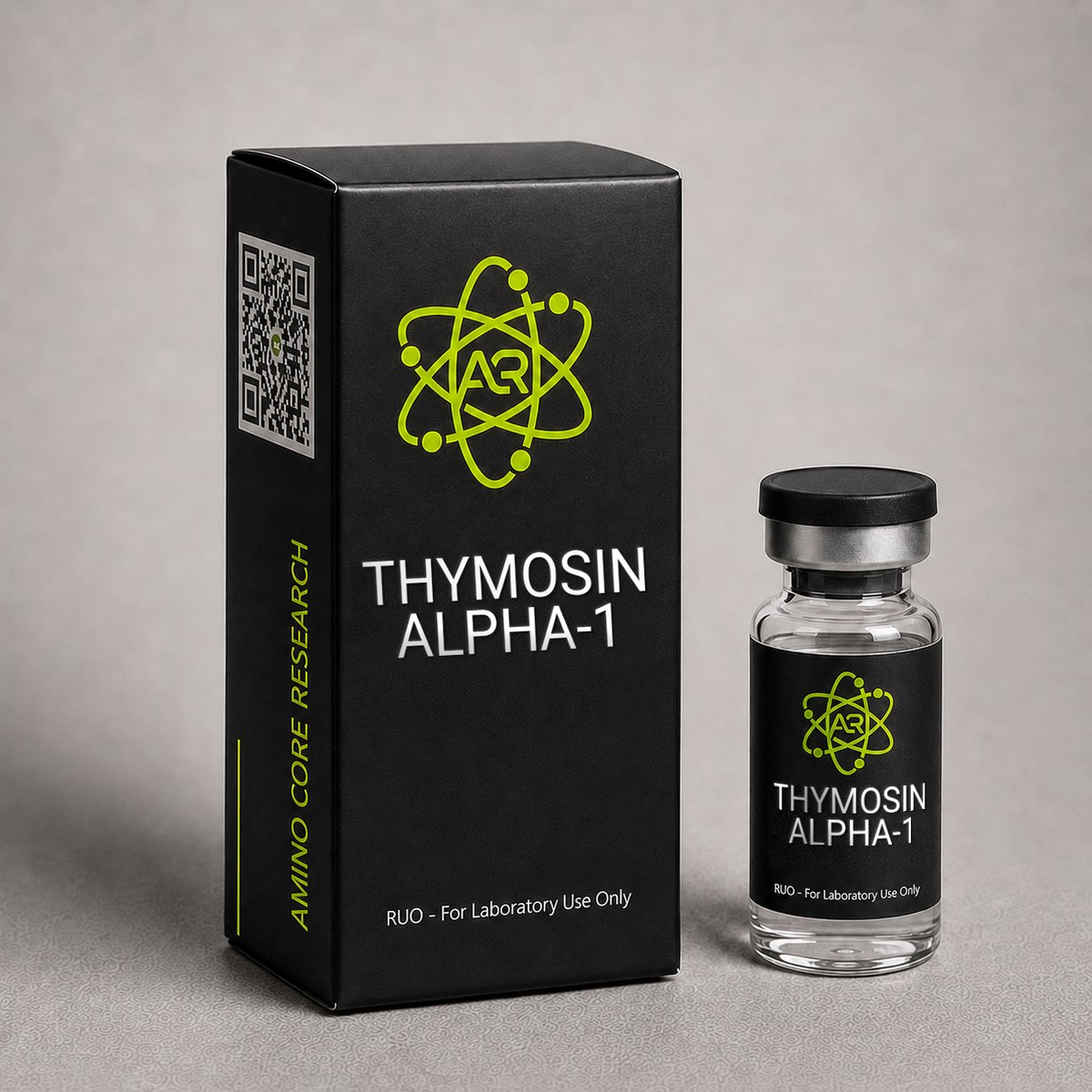
≥99%HPLC Purity
COAIncluded
USAShipped
Thymosin Alpha-1 Peptide
A 28-amino acid peptide derived from prothymosin alpha. Studied for immune modulation and T-cell differentiation pathways.
Research Reference
This page is a research monograph. Thymosin Alpha-1 is documented here for reference — structure, mechanism and published literature — and is not offered for sale.
Browse compounds available for research purchase · Read the research library
Quick Facts
| SKU | ACR-TA1 |
|---|---|
| CAS Number | 62304-98-7 |
| Molecular Formula | C129H215N33O55 |
| Molecular Weight | 3108.28 g/mol |
| Sequence | Ac-SDAAVDTSSEITTKDLKEKKEVVEEAEN |
| Purity | ≥99% |
| Physical Form | Lyophilized Powder |
| Storage | Store at -20°C |
What is Thymosin Alpha-1?
Thymosin Alpha-1 (Ta1) is an N-terminally acetylated 28-amino acid peptide originally isolated from thymic tissue (Thymosin Fraction 5) by Allan Goldstein in the 1970s. It is derived from the precursor protein prothymosin alpha and plays a role in T-cell development and immune regulation.
Published research has documented Ta1 interaction with Toll-like receptors (TLR2, TLR9), leading to activation of dendritic cells and downstream NF-kB and IRF7 signaling. It has been studied as an immune modulator in over 30 countries.
For laboratory research use only.
Mechanism of Action
Thymosin Alpha-1 (Tα1) is a 28-amino acid acetylated peptide cleaved from its 113-amino acid precursor prothymosin alpha (ProTα). It exerts pleiotropic immunomodulatory effects primarily through Toll-like receptor (TLR) signaling, with secondary effects on T-cell maturation, dendritic cell function, and innate immune activation. Unlike cytokines that drive a single signaling axis, Tα1 acts as a multifaceted immune tuner that can enhance Th1 responses while suppressing chronic inflammatory pathways.
TLR-2 and TLR-9 Agonism
The principal receptors engaged by Tα1 are TLR-2 and TLR-9, both expressed on dendritic cells, monocytes, macrophages, and certain B-cell subsets. Receptor engagement triggers MyD88-dependent signaling, leading to NF-κB nuclear translocation and IRF-7 activation. Downstream, this drives upregulation of co-stimulatory molecules (CD80, CD86), MHC class II expression, and secretion of IL-12, IFN-α, and IFN-β. Romani and colleagues demonstrated that Tα1 promotes a tolerogenic-to-immunogenic switch in plasmacytoid dendritic cells, enhancing antigen presentation while limiting unchecked inflammation.
T-Cell Maturation and Differentiation
Tα1 acts on thymocyte precursors and peripheral T cells to promote maturation of CD4+ and CD8+ T-cell subsets. Research has shown elevated IL-2 receptor (CD25) expression, increased IFN-γ output from Th1 cells, and enhanced cytotoxic T-lymphocyte (CTL) activity against virally infected and neoplastic targets. Importantly, Tα1 also expands functional regulatory T cells (Tregs) under specific contexts, contributing to its capacity to restore immune homeostasis rather than simply amplify responses.
Natural Killer (NK) Cell Activation
In preclinical models, Tα1 administration is associated with increased NK cell cytotoxicity and elevated perforin/granzyme expression. This contributes to its observed antiviral activity in hepatitis B and C research models, where NK-mediated clearance of infected hepatocytes is a key mechanism.
Indoleamine 2,3-Dioxygenase (IDO) Modulation
A distinctive feature of Tα1 is its capacity to induce IDO in dendritic cells via the non-canonical NF-κB pathway (p52/RelB). IDO catabolizes tryptophan to kynurenine, producing local immunosuppression that may explain Tα1's dual capacity to enhance pathogen clearance while limiting autoimmune escalation. This mechanism has been explored in transplantation and sepsis research contexts.
Comparison to Related Immunomodulators
Unlike Thymosin Beta-4 (an actin-sequestering peptide focused on tissue repair) or Thymulin (a zinc-dependent nonapeptide), Tα1 acts primarily on innate-to-adaptive immune coupling. Compared to recombinant IFN-α, Tα1 produces a milder, more sustained immune activation profile without the acute cytokine storm associated with high-dose interferon administration in preclinical studies.
Research & Clinical Studies
Clinical Research: Thymosin Alpha-1 in Chronic Hepatitis B
One of the most extensively studied applications of Thymosin Alpha-1 is in chronic hepatitis B virus (HBV) infection research, where its capacity to enhance T-cell and NK-cell mediated viral clearance has been evaluated across multiple controlled trials and meta-analyses.
Study Design
A meta-analysis by Wu et al. (2015) aggregated data from 13 randomized controlled trials encompassing 1,008 patients with chronic HBV. Subjects received Tα1 monotherapy (typically 1.6 mg subcutaneously twice weekly for 6 months) or Tα1 in combination with conventional antivirals, compared against controls receiving placebo or standard antiviral therapy alone. Endpoints included HBV-DNA clearance, HBeAg seroconversion, ALT normalization, and sustained virological response at 6-12 months post-treatment.
Key Results
- HBeAg seroconversion was significantly higher in Tα1-treated cohorts (relative risk 1.68, 95% CI 1.22-2.30, p<0.01) compared to control arms.
- Sustained HBV-DNA negativity at 12 months reached 37.7% in Tα1 groups versus 19.4% in controls.
- ALT normalization occurred in approximately 60% of Tα1-treated subjects, indicating reduced hepatic inflammation.
- Adverse event profiles were comparable to control, with no severe immune-mediated events reported, distinguishing Tα1 from interferon-based regimens.
Contextual Significance
The data reinforce Tα1's role as an adjunctive immunomodulator rather than a direct antiviral. By enhancing endogenous Th1 polarization and NK cytotoxicity, Tα1 supports immune-mediated viral suppression—a mechanism complementary to nucleoside analog therapy. These findings have informed continued investigation of Tα1 in chronic viral infections and immunosuppressed states.
Comparison to Interferon-Based Approaches
Unlike pegylated interferon-α, which produces robust but transient viral suppression accompanied by significant flu-like and hematologic adverse effects, Tα1 produces a more gradual immune activation with substantially better tolerability profiles in the research literature. This makes Tα1 particularly interesting for studies in patient populations where IFN-α is contraindicated.
[1] Wu X, Jia J, You H. Thymosin alpha-1 treatment in chronic hepatitis B. Expert Opin Biol Ther. 2015;15 Suppl 1:S129-32. PubMed ↗
[2] Iino S, Toyota J, Kumada H, et al. The efficacy and safety of thymosin alpha-1 in Japanese patients with chronic hepatitis B; results from a randomized clinical trial of the Asian Thymosin Alpha-1 Hepatitis B Study Group. J Viral Hepat. 2005;12(3):300-306. PubMed ↗
Thymosin Alpha-1 in Sepsis and Severe Infection Research
Sepsis-induced immunosuppression — characterized by lymphocyte apoptosis, monocyte deactivation, and HLA-DR downregulation — represents a major contributor to late sepsis mortality. Thymosin Alpha-1 has been investigated as a candidate immunorestorative agent capable of reversing this immunoparalysis.
Study Design
Wu et al. published a multicenter, randomized controlled trial (the ETASS study) in Critical Care (2013) enrolling 361 patients with severe sepsis across six Chinese ICUs. Subjects were randomized to receive Tα1 (1.6 mg subcutaneously every 12 hours for 5 days, then daily for 2 days) plus standard care, or standard care alone. Primary endpoint was 28-day all-cause mortality; secondary endpoints included monocyte HLA-DR expression, organ failure scores, and ICU length of stay.
Key Results
- 28-day all-cause mortality was 26.0% in the Tα1 group versus 35.0% in controls (absolute reduction 9.0%, p=0.062 — trending toward significance).
- Monocyte HLA-DR expression recovered significantly faster in Tα1-treated patients, indicating reversal of sepsis-induced immune paralysis.
- SOFA score improvement was greater in Tα1 cohort at days 3, 7, and 14.
- No significant increase in adverse events attributable to Tα1 was observed.
Subsequent Research
A 2023 multicenter trial (TESTS) published in Intensive Care Medicine evaluated Tα1 in 1,089 septic patients and found nuanced mortality effects, with stronger benefit signals in subgroups exhibiting baseline immunosuppression. These findings support a precision-medicine paradigm in which Tα1 may be most effective in patients with documented immune dysfunction rather than as broad-spectrum sepsis therapy.
Mechanistic Interpretation
The recovery of HLA-DR expression and improved lymphocyte function aligns with Tα1's known TLR-mediated activation of antigen-presenting cells. By restoring innate immune competence, Tα1 may break the cycle of secondary infection that drives late sepsis mortality — a mechanism distinct from cytokine antagonists (anti-TNF, IL-1 blockers) that target early hyperinflammation.
[1] Wu J, Zhou L, Liu J, et al. The efficacy of thymosin alpha 1 for severe sepsis (ETASS): a multicenter, single-blind, randomized and controlled trial. Crit Care. 2013;17(1):R8. PubMed ↗
[2] Liu D, Yu Z, Yin J, et al. Effect of Thymosin α1 on Mortality of Critical COVID-19 Patients: Multicenter Retrospective Cohort. Front Immunol. 2021;12:646325.
Thymosin Alpha-1 as Adjuvant to Antiviral Therapy and Vaccination
Beyond monotherapy, Thymosin Alpha-1 (Tα1) has been extensively studied as an immunological adjuvant—both alongside antiviral pharmacotherapy and as a co-administered agent to enhance vaccine responsiveness in immunocompromised research models. The rationale stems from Tα1's documented effects on dendritic cell maturation and T-helper polarization, which together may amplify the adaptive immune response to co-administered antigens.
Combination Antiviral Studies in Chronic Hepatitis C
A randomized controlled investigation by Sherman et al. evaluated Tα1 in combination with interferon-alfa (IFN-α) versus IFN-α monotherapy in subjects with chronic hepatitis C virus (HCV) infection. The 6-month study demonstrated:
- 37.1% sustained virological response in the Tα1 + IFN-α arm versus 16.2% in the IFN-α-only group
- Significantly greater reduction in serum ALT levels at 6 months post-treatment
- Improved tolerability profile with no additional adverse event burden attributable to Tα1
This synergy is hypothesized to result from Tα1's restoration of HCV-specific CD8+ T-cell function, which is typically exhausted in chronic infection due to PD-1/PD-L1 upregulation.
Vaccine Adjuvant Research in Hemodialysis Cohorts
Hemodialysis patients exhibit blunted responses to influenza and hepatitis B vaccination due to uremia-induced immune dysfunction. A clinical study by Shen et al. examined Tα1 co-administration with the influenza vaccine in this population. Subjects receiving 1.6 mg of Tα1 subcutaneously at the time of vaccination showed:
- ~2-fold higher seroconversion rates against influenza A H1N1 and H3N2 strains
- Elevated hemagglutination inhibition (HI) antibody titers persisting at 6 months
- Enhanced IFN-γ production from peripheral blood mononuclear cells upon antigen restimulation
HIV/AIDS Combination Research
In preclinical and early clinical work, Tα1 administered alongside zidovudine (AZT) or as part of multi-agent HAART regimens was associated with increased CD4+ T-cell counts and improved delayed-type hypersensitivity responses in research subjects with advanced HIV disease. The mechanism is thought to involve Tα1's ability to drive thymic-independent peripheral T-cell maturation via TLR9/MyD88 signaling on dendritic cells.
Implications for Adjuvant Research
Collectively, these studies position Tα1 as a candidate "immune restorative" adjuvant in research contexts where baseline immunity is impaired—chronic viral infection, end-stage renal disease, advanced age, or chemotherapy-induced lymphopenia. Compared to conventional adjuvants like alum or MF59, which act primarily at the antigen-presentation interface, Tα1 modulates the broader T-cell compartment, offering a complementary rather than redundant mechanism. Ongoing investigations are evaluating Tα1 alongside checkpoint inhibitors in oncology models, where exhausted T-cell phenotypes mirror those seen in chronic viral infection.
[1] Sherman KE, Sjogren M, Creager RL, et al. Combination therapy with thymosin alpha1 and interferon for the treatment of chronic hepatitis C infection: a randomized, placebo-controlled double-blind trial. Hepatology. 1998;27(4):1128-1135. PubMed ↗
[2] Shen J, Liu Z, Zhang J, et al. Thymosin alpha1 as an adjuvant for influenza vaccination in elderly hemodialysis patients. Vaccine. 2006;24(28-29):5712-5717.
Chemical & Physical Properties
The following table summarizes the verified chemical, structural, and physical characteristics of Thymosin Alpha-1 as supplied by AminoCore Research for laboratory investigation. All values have been cross-referenced against PubChem, ChemicalBook, and the published literature.
| Full Name | Thymosin Alpha-1 |
|---|---|
| Synonyms | Tα1, Tα-1, Thymalfasin, ZADAXIN (research designation) |
| Molecular Formula | C₁₂₉H₂₁₅N₃₃O₅₅ |
| Molecular Weight | 3,108.28 g/mol |
| CAS Number | 62304-98-7 |
| Sequence | Ac-Ser-Asp-Ala-Ala-Val-Asp-Thr-Ser-Ser-Glu-Ile-Thr-Thr-Lys-Asp-Leu-Lys-Glu-Lys-Lys-Glu-Val-Val-Glu-Glu-Ala-Glu-Asn-OH |
| Amino Acid Count | 28 residues |
| N-Terminal Modification | Acetylated (N-acetyl-Ser) |
| C-Terminal | Free carboxyl (Asn-OH) |
| Isoelectric Point (pI) | ~4.2 (acidic peptide) |
| Origin | Naturally cleaved from prothymosin alpha (ProTα) precursor in thymic epithelial cells |
| Discovered By | Allan Goldstein and colleagues, 1972 (Albert Einstein College of Medicine) |
| Physical Form | Lyophilized white powder |
| Solubility | Highly soluble in water, bacteriostatic water, and 0.9% sodium chloride; soluble in dilute acetic acid |
| Purity | ≥99% by HPLC |
| Endotoxin | <1 EU/mg (where tested) |
| Counter-Ion | Typically supplied as trifluoroacetate (TFA) or acetate salt |
Structurally, Thymosin Alpha-1 is an acidic, highly hydrophilic peptide rich in acidic residues (Asp, Glu) and basic residues (Lys), which contributes to its excellent aqueous solubility. The peptide is largely disordered in solution but adopts a partial α-helical conformation upon binding to its receptor targets, particularly Toll-like receptor 9 (TLR9) on plasmacytoid dendritic cells. The N-terminal acetylation is biologically essential—non-acetylated analogs show markedly reduced activity, confirming that the acetyl group participates in receptor recognition.
Unlike Thymosin Beta-4 (a 43-residue peptide with G-actin binding properties), Tα1 contains no cysteine residues, meaning it does not form disulfide bridges and is therefore not subject to oxidative dimerization. It also lacks methionine, avoiding the methionine oxidation pathway that complicates the storage of many therapeutic peptides.
Handling & Reconstitution Guidelines
Thymosin Alpha-1 (Tα1) is supplied as a sterile lyophilized powder and must be reconstituted before use in laboratory research. Because Tα1 is highly water-soluble and contains no oxidation-sensitive residues (no Cys, no Met), it is one of the more forgiving research peptides to handle—but standard aseptic technique remains essential to preserve sterility and structural integrity.
Recommended Reconstitution Protocol
- Equilibrate the vial to room temperature for 15-20 minutes prior to opening. This prevents condensation from forming on the lyophilized cake when the cold vial contacts ambient humidity.
- Sanitize the rubber stopper with a 70% isopropanol wipe and allow to air-dry completely.
- Select your diluent. Bacteriostatic water (0.9% benzyl alcohol) is the standard choice for multi-dose research vials, providing up to 28 days of stability post-reconstitution. Sterile water for injection or 0.9% sodium chloride may be used for single-use applications.
- Withdraw the diluent using a sterile syringe. For a 5 mg vial reconstituted with 2 mL of diluent, the final concentration will be 2.5 mg/mL. For a 10 mg vial in 2 mL, the concentration will be 5 mg/mL.
- Inject the diluent slowly down the side wall of the vial, allowing it to run over the lyophilized cake rather than impacting it directly. This minimizes foaming.
- Dissolve gently. Swirl the vial in a slow circular motion for 30-60 seconds. Do not shake or vortex—mechanical agitation can introduce shear stress and create foam that traps active peptide.
- Inspect the solution. A properly reconstituted Tα1 solution should be clear and colorless with no visible particulates. Discard any vial showing cloudiness or precipitate.
Concentration & Dilution Reference
For research dosing calculations, common starting concentrations are 1-5 mg/mL. To achieve a 1.6 mg working aliquot (a frequently cited reference dose in the literature) from a 5 mg/mL solution, withdraw 0.32 mL.
Compound-Specific Notes
- No oxidation risk: Tα1 lacks Cys and Met, so protection from atmospheric oxygen is less critical than for peptides like BPC-157 or GHK-Cu.
- pH sensitivity: Tα1 is most stable at neutral to slightly acidic pH (5.0-7.4). Avoid strongly alkaline buffers.
- Adsorption: Like many peptides, Tα1 can adsorb to glass and certain plastics at low concentrations. Use low-binding polypropylene tubes for working dilutions below 100 µg/mL.
- Filter sterilization: If filtration is required, use a 0.22 µm low-protein-binding PVDF or PES filter to minimize peptide loss.
Frequently Asked Questions
What is Thymosin Alpha-1?
Thymosin Alpha-1 is a 28-amino acid thymic peptide that activates Toll-like receptors (TLR2, TLR9) on dendritic cells. It modulates T-cell differentiation and innate immune signaling. For research use only.
What is the molecular weight and CAS number of Thymosin Alpha-1?
Thymosin Alpha-1 (Tα1, thymalfasin) has a molecular weight of 3108.28 g/mol and CAS number 62304-98-7. Its molecular formula is C129H215N33O55, reflecting a 28-amino acid peptide with N-terminal acetylation. The sequence is Ac-SDAAVDTSSEITTKDLKEKKEVVEEAEN. The N-acetyl group is a critical post-translational modification cleaved from the precursor prothymosin alpha, and it is essential for full biological activity in immune signaling studies.
How does Thymosin Alpha-1 compare to Thymosin Beta-4?
Although both peptides were originally isolated from thymic extracts, Thymosin Alpha-1 and Thymosin Beta-4 (TB-500) belong to unrelated peptide families with distinct functions. Thymosin Alpha-1 is a 28-amino acid immunomodulator that engages TLR-2 and TLR-9 to enhance T-cell maturation, dendritic cell antigen presentation, and NK cytotoxicity. Thymosin Beta-4 is a 43-amino acid actin-sequestering peptide investigated primarily for tissue repair, angiogenesis, and wound healing. They share no sequence homology, no receptor overlap, and address fundamentally different research domains—immune modulation versus regenerative biology.
How should Thymosin Alpha-1 be stored?
Lyophilized Thymosin Alpha-1 should be stored at -20°C for long-term stability, where it remains stable for 24+ months. Short-term storage at 2-8°C is acceptable for up to 30 days, and brief room-temperature exposure during transit does not compromise integrity. Once reconstituted in bacteriostatic or sterile water, Tα1 should be kept at 2-8°C and used within 7-14 days for optimal potency. Avoid repeated freeze-thaw cycles of reconstituted material, as this can promote peptide aggregation and degradation of the N-terminal acetyl group.
Does Thymosin Alpha-1 cause immune over-activation?
Research data suggest Thymosin Alpha-1 acts as an immune tuner rather than a broad-spectrum activator. Unlike interferon-α or high-dose cytokine therapy, Tα1 induces measured Th1 polarization while simultaneously upregulating indoleamine 2,3-dioxygenase (IDO) in dendritic cells, which establishes local tryptophan catabolism and counter-regulatory tolerance. This dual mechanism helps prevent uncontrolled immune escalation. Across multiple clinical research trials in hepatitis B and sepsis, Tα1 has demonstrated tolerability profiles comparable to placebo, with no signal of cytokine storm or autoimmune phenomena.
What is the amino acid sequence of Thymosin Alpha-1?
Thymosin Alpha-1 (Tα1) is a 28-amino acid peptide with the sequence Ac-Ser-Asp-Ala-Ala-Val-Asp-Thr-Ser-Ser-Glu-Ile-Thr-Thr-Lys-Asp-Leu-Lys-Glu-Lys-Lys-Glu-Val-Val-Glu-Glu-Ala-Glu-Asn-OH. The N-terminal serine is acetylated, which is essential for biological activity—non-acetylated analogs show markedly reduced potency. The peptide is naturally cleaved from a 113-residue precursor called prothymosin alpha (ProTα) in thymic epithelial cells. Notably, the sequence contains no cysteine and no methionine residues, meaning Tα1 is not subject to disulfide scrambling or methionine oxidation, making it relatively stable compared to many other research peptides.
How does Thymosin Alpha-1 affect Toll-like receptor 9 (TLR9) signaling?
Research suggests Thymosin Alpha-1 binds Toll-like receptor 9 (TLR9) on plasmacytoid dendritic cells (pDCs) and monocytes, activating the MyD88-dependent signaling cascade. This downstream signaling drives NF-κB translocation and IRF7 activation, leading to maturation of dendritic cells, upregulation of MHC class I and II expression, and increased production of IFN-α, IL-12, and IFN-γ. The result is enhanced cross-presentation of antigens to CD8+ T cells and polarization of naïve T-helper cells toward a Th1 phenotype. This TLR9 engagement is considered the central mechanism behind Tα1's adjuvant-like effects in viral infection and vaccination research models.
What sizes of Thymosin Alpha-1 does AminoCore Research offer?
AminoCore Research typically supplies Thymosin Alpha-1 in lyophilized vial sizes ranging from 5 mg to 10 mg, with ≥99% HPLC purity. Each vial is provided as a sterile, lyophilized white powder suitable for reconstitution with bacteriostatic water, sterile water for injection, or 0.9% sodium chloride for laboratory research applications. A certificate of analysis (COA) detailing purity, mass spectrometry confirmation, and identity testing is available upon request. Current size availability and pricing are listed on the product page. All material is intended strictly for in vitro and preclinical research use—not for human consumption.
Can Thymosin Alpha-1 be used as a vaccine adjuvant in research models?
Yes—Thymosin Alpha-1 has been studied extensively as an immunological adjuvant in research contexts where baseline immunity is impaired. A clinical study in hemodialysis patients demonstrated approximately 2-fold higher seroconversion rates against influenza A H1N1 and H3N2 strains when 1.6 mg of Tα1 was co-administered with influenza vaccine. Similar adjuvant effects have been observed with hepatitis B vaccination in immunocompromised cohorts. The mechanism involves Tα1-induced dendritic cell maturation via TLR9/MyD88 signaling and enhanced Th1 polarization, which together amplify antigen-specific antibody and CD8+ T-cell responses. This positions Tα1 as a complementary research tool to conventional adjuvants like alum, which act primarily at antigen presentation rather than on the broader T-cell compartment.
For laboratory and research use only. This product is not for human or veterinary use. It is not a drug, supplement or food.
This product is not FDA approved for any indication, and is not intended to diagnose, treat, cure, or prevent any disease. All product information is derived from published preclinical research and does not constitute medical advice or claims.