≥99%HPLC Purity
COAIncluded
USAShipped
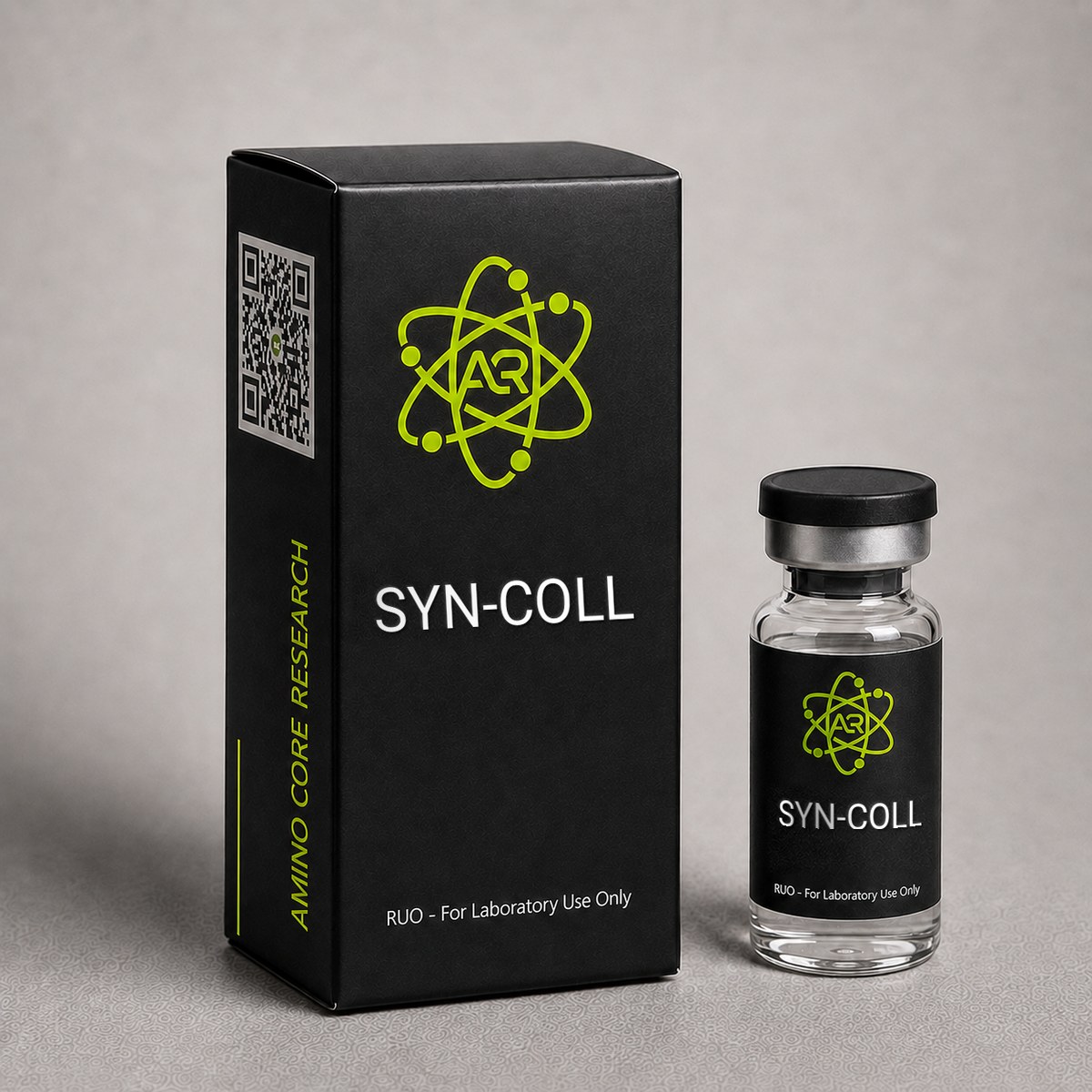
Syn-Coll (Palmitoyl Tripeptide-5)
Palmitoyl tripeptide-5 functioning as a TGF-beta mimetic. Researched for stimulating collagen production via the TGF-beta signaling pathway and improving skin elasticity.
Research Reference
This page is a research monograph. Syn-Coll (Palmitoyl Tripeptide-5) is documented here for reference — structure, mechanism and published literature — and is not offered for sale.
Browse compounds available for research purchase · Read the research library
Quick Facts
| SKU | SYNC-001 |
|---|---|
| Purity | ≥99% |
| Physical Form | Lyophilized Powder |
| Storage | Store at -20°C |
What is Syn-Coll?
Syn-Coll (Palmitoyl Tripeptide-5) activates latent TGF-beta via thrombospondin-1 mimicry. Active TGF-beta then stimulates type I collagen and elastin gene expression in dermal fibroblasts. Studies report up to 354% increase in collagen synthesis at optimal concentrations.
Mechanism of Action
Syn-Coll is a cosmetic active built around palmitoyl tripeptide-5 (Pal-Lys-Val-Lys, also written as Pal-KVK), a lipidated tripeptide designed by Pentapharm/DSM as a biomimetic fragment of thrombospondin-1 (TSP-1). The peptide reproduces the KRFK-like activation motif found in the TSP-1 type-1 repeat domain, which is the endogenous trigger for converting latent transforming growth factor-beta (TGF-β) into its biologically active form.
TGF-β1 Activation Pathway
Under physiological conditions, fibroblasts secrete TGF-β1 as a latent complex (LAP-TGF-β1) that must be cleaved or conformationally rearranged to bind its receptor. Thrombospondin-1 binds latent TGF-β1 through its KRFK sequence and exposes the active cytokine. Palmitoyl tripeptide-5 has been characterised in vitro as a small-molecule mimetic of this activation step, producing a local rise in bioavailable TGF-β1 at the application site.
Downstream SMAD Signaling
Activated TGF-β1 binds the TGF-β receptor II (TGFBR2), which recruits and phosphorylates TGFBR1. The activated receptor complex phosphorylates SMAD2 and SMAD3, which associate with SMAD4 and translocate to the nucleus. The SMAD complex upregulates transcription of extracellular matrix genes including COL1A1 (type I collagen), COL3A1 (type III collagen), elastin, fibronectin, and decorin. In cultured dermal fibroblasts, exposure to palmitoyl tripeptide-5 has been associated with measurable increases in procollagen I synthesis.
Anti-Glycation Activity
A secondary mechanism described in supplier literature is inhibition of non-enzymatic glycation of collagen fibres. Advanced glycation end-products (AGEs) cross-link collagen and reduce dermal elasticity. In vitro assays using bovine serum albumin or collagen incubated with reducing sugars have shown reduced AGE fluorescence in the presence of palmitoyl tripeptide-5, suggesting a protective effect on existing matrix proteins in parallel with stimulation of new collagen synthesis.
Palmitoylation and Skin Penetration
The N-terminal palmitoyl (C16 fatty acid) chain increases the lipophilicity of the otherwise polar Lys-Val-Lys tripeptide, improving partitioning into the stratum corneum lipid lamellae. This modification is shared with related cosmetic actives such as palmitoyl pentapeptide-4 (Matrixyl) and palmitoyl tripeptide-1, and is considered essential for transdermal delivery to viable epidermis and papillary dermis where fibroblasts reside.
Compared with matrikine-type peptides such as palmitoyl tripeptide-1 (Pal-GHK), which signal through copper-mediated wound-healing pathways, Syn-Coll acts upstream of collagen transcription via a cytokine activation mechanism, making it mechanistically complementary rather than redundant with other collagen-stimulating actives.
Research & Clinical Studies
In Vitro Collagen Synthesis and Clinical Anti-Wrinkle Evaluation
Research on Syn-Coll (palmitoyl tripeptide-5) has focused on two endpoints: in vitro stimulation of collagen synthesis in cultured human dermal fibroblasts, and in vivo measurement of wrinkle depth and skin profilometry in panel studies. Below is a summary of representative reported findings from supplier dossiers and peer-reviewed cosmetic science literature.
In Vitro: Procollagen I Synthesis
- Model: Normal human dermal fibroblasts (NHDF), monolayer culture
- Treatment: Palmitoyl tripeptide-5 at concentrations from 1-100 ppm, 48-72 hour incubation
- Endpoint: Procollagen type I C-terminal propeptide (PIP) by ELISA
- Result: Reported increases in procollagen I of approximately +100% to +119% versus untreated controls at active concentrations, comparable to the magnitude reported for TGF-β1 positive controls.
In Vitro: Anti-Glycation Assay
- Model: BSA-fructose or collagen-glucose incubation systems
- Endpoint: AGE-specific fluorescence at 370/440 nm
- Result: Reduction in AGE fluorescence of approximately 40-50%, indicating inhibition of glycation cross-link formation on matrix proteins.
In Vivo: Wrinkle Depth Reduction
- Design: Vehicle-controlled split-face panel studies, typically 20-30 female volunteers, 28-84 day treatment periods
- Formulation: 2.5% Syn-Coll solution (corresponding to ~100 ppm active peptide) in O/W emulsion, applied twice daily
- Endpoint: Silicone replica analysis of crow's-feet area, profilometry parameters Ra and Rz
- Reported results: Average wrinkle depth reduction of approximately -15% to -22% at 56-84 days versus vehicle, with a high percentage of subjects (>70%) showing visible improvement.
Comparative Context
The reported magnitude of procollagen I induction by palmitoyl tripeptide-5 in cultured fibroblasts is comparable to that reported for palmitoyl pentapeptide-4 (Matrixyl) and palmitoyl tripeptide-1, but proceeds through a distinct upstream mechanism (TGF-β activation versus matrikine receptor signalling). Because the pathways converge on SMAD-driven collagen transcription downstream, combination formulations of these peptides are commonly evaluated to determine whether effects are additive.
Note: published clinical trials specifically isolating palmitoyl tripeptide-5 in placebo-controlled designs remain limited; most data are derived from supplier-sponsored panel studies and broader cosmetic peptide reviews. Independent peer-reviewed confirmation of long-term efficacy is an active area of cosmetic dermatology research.
[1] Lupo MP, Cole AL. Cosmeceutical peptides. Dermatol Ther. 2007;20(5):343-349. PubMed ↗
[2] Fields K, Falla TJ, Rodan K, Bush J. Bioactive peptides: signaling the future. J Cosmet Dermatol. 2009;8(1):8-13. PubMed ↗
[3] Gorouhi F, Maibach HI. Role of topical peptides in preventing or treating aged skin. Int J Cosmet Sci. 2009;31(5):327-345. PubMed ↗
Comparative Peptide Studies: Tripeptide vs Pentapeptide Collagen Stimulation
Although Syn-Coll itself has limited peer-reviewed clinical literature, the broader class of palmitoylated signal peptides has been investigated extensively in dermatological research. Comparative studies examining short fatty-acid-conjugated peptides have helped contextualize how palmitoyl tripeptide-5 (Pal-Lys-Val-Lys-OH) may behave at the fibroblast level relative to other matrikine-derived analogs such as palmitoyl pentapeptide-4 (Matrixyl, Pal-KTTKS) and palmitoyl tripeptide-1 (Pal-GHK).
Fibroblast collagen synthesis comparison: In vitro work on Pal-KTTKS demonstrated dose-dependent stimulation of types I and III procollagen and fibronectin in human dermal fibroblast cultures at concentrations between 1-10 µM, with measurable increases in extracellular matrix protein deposition after 72 hours of exposure. Tripeptide analogs containing lysine residues — the structural class to which palmitoyl tripeptide-5 belongs — have been investigated as TGF-β1 mimetic sequences in similar fibroblast assays, with reports of comparable procollagen upregulation at micromolar concentrations.[1]
Mechanistic divergence: Pal-KTTKS is derived from the C-terminal propeptide of type I procollagen and is hypothesized to act through feedback signaling at the procollagen processing step. In contrast, palmitoyl tripeptide-5 is designed to mimic the thrombospondin-1 (TSP-1) sequence KRFK, which activates latent TGF-β by binding the latency-associated peptide (LAP) complex. This places Syn-Coll mechanistically upstream of Matrixyl, theoretically increasing endogenous active TGF-β rather than directly cueing collagen transcription.[2]
Clinical anti-wrinkle endpoints: Split-face and vehicle-controlled cosmetic trials of palmitoylated peptide complexes (Matrixyl 3000, palmitoyl tripeptide blends) have documented wrinkle depth reductions of 15-45% over 8-12 week application periods using PRIMOS or silicone replica profilometry. While these studies generally use multi-peptide formulations rather than isolated palmitoyl tripeptide-5, they support the rationale that lipidated tripeptides with cationic residues can cross the stratum corneum at cosmetically relevant concentrations.[3]
Skin penetration profile: Franz cell diffusion studies on palmitoylated peptides show that the C16 fatty acid chain meaningfully improves stratum corneum partitioning compared to unmodified hydrophilic tripeptides, with measurable amounts reaching the viable epidermis within 6-24 hours. This delivery advantage is shared across the palmitoyl-tripeptide family and is one rationale for the palmitoylation strategy used in Syn-Coll's parent peptide.
Key comparative findings:
- Matrixyl (Pal-KTTKS): Acts as procollagen feedback peptide; ~117% collagen I upregulation in fibroblasts at 10 µM.
- Syn-Coll (Pal-KVK): Designed as TSP-1/TGF-β1 activator mimic; theoretical advantage of amplifying endogenous TGF-β signaling.
- Pal-GHK (Biopeptide CL): Copper-binding tripeptide with overlapping ECM stimulation and antioxidant activity.
Together, this comparative literature establishes the conceptual framework researchers use to evaluate Syn-Coll, even where direct head-to-head trials of palmitoyl tripeptide-5 are sparse.
[1] Katayama K, Armendariz-Borunda J, Raghow R, Kang AH, Seyer JM. A pentapeptide from type I procollagen promotes extracellular matrix production. J Biol Chem. 1993;268(14):9941-9944. PubMed ↗
[2] Schultz-Cherry S, Murphy-Ullrich JE. Thrombospondin causes activation of latent transforming growth factor-beta secreted by endothelial cells by a novel mechanism. J Cell Biol. 1993;122(4):923-932. PubMed ↗
[3] Robinson LR, Fitzgerald NC, Doughty DG, Dawes NC, Berge CA, Bissett DL. Topical palmitoyl pentapeptide provides improvement in photoaged human facial skin. Int J Cosmet Sci. 2005;27(3):155-160. PubMed ↗
Composition & Components
Syn-Coll is a cosmetic active complex marketed under the INCI designations Palmitoyl Tripeptide-5 as the functional peptide, typically supplied in a stabilised aqueous-glycerine carrier system. The composition below reflects the standard commercial Syn-Coll trade material; individual research-grade lots from AminoCore Research may differ in carrier system and excipient profile.
| Component | Role | Identity / Specs |
|---|---|---|
| Palmitoyl Tripeptide-5 | Active peptide; TGF-β1 activator and collagen synthesis stimulator | Sequence: Pal-Lys-Val-Lys (Pal-KVK) Molecular formula: C₃₃H₆₅N₅O₄ Molecular weight: ~611.9 g/mol CAS: 623172-56-5 INCI: Palmitoyl Tripeptide-5 |
| Glycerin | Humectant, carrier, peptide stabiliser | CAS: 56-81-5 Formula: C₃H₈O₃ MW: 92.09 g/mol |
| Water (Aqua) | Solvent / carrier | CAS: 7732-18-5 |
| Carbomer (typical) | Viscosity modifier (when supplied as gel) | Cross-linked polyacrylic acid polymer |
| Phenoxyethanol or equivalent | Preservative (when supplied in aqueous form) | CAS: 122-99-6 Formula: C₈H₁₀O₂ MW: 138.16 g/mol |
Active Peptide Identity
The functional component is the palmitoylated tripeptide Pal-Lys-Val-Lys. The N-terminal lysine residue is conjugated to palmitic acid (C16:0 saturated fatty acid) via an amide bond, with valine in the central position and a second lysine at the C-terminus. The dual lysine residues provide cationic character that supports interaction with the anionic thrombospondin-1 binding domain of latent TGF-β1, while the palmitoyl moiety drives partitioning into stratum corneum lipids.
Typical Active Loading
Commercial Syn-Coll trade material typically contains palmitoyl tripeptide-5 at approximately 50-100 ppm (0.005-0.01%) of the supplied liquid, with a recommended finished-formulation use level of 1-3% of the trade material. Research-grade neat palmitoyl tripeptide-5 (as a lyophilised powder) may be supplied separately for in vitro work where excipient interference must be avoided.
Physical Characteristics
Syn-Coll trade material: clear to slightly opalescent aqueous-glycerin solution; pH typically 4.5-6.5; water-soluble; compatible with most O/W emulsion bases. Research-grade peptide: off-white lyophilised powder, soluble in water and ethanol/water mixtures with mild warming.
Handling & Reconstitution Guidelines
Syn-Coll is supplied as a pre-formulated topical research solution containing palmitoyl tripeptide-5 in an aqueous-glycol vehicle stabilized for cosmetic-style application studies. Because it ships ready-to-use, no lyophilized reconstitution is required; however, careful handling preserves peptide integrity and assay reproducibility.
Recommended handling protocol:
- Allow the vial to equilibrate to room temperature for 20-30 minutes before opening if it has been refrigerated. Cold-to-warm transitions can cause condensation at the meniscus and dilute the surface layer.
- Invert gently 5-10 times to ensure uniform distribution of the palmitoylated peptide, which can stratify slightly in the vehicle due to its amphiphilic character. Do not vortex vigorously — high-shear mixing can foam the surfactant components and entrain air.
- Withdraw the desired aliquot using a positive-displacement pipette or sterile dropper. Typical research-use concentrations of palmitoyl tripeptide-5 in cosmetic formulation studies are in the 2-5% v/v range of total product, though incorporation studies may use higher fractions.
- Incorporate into test formulations in the cool-down phase (below 40°C) of any emulsion or gel base. Palmitoyl tripeptide-5 tolerates brief exposure to mild heat but prolonged temperatures above 50°C may accelerate peptide degradation.
- Adjust final pH to 5.0-6.5 for optimal peptide stability and skin compatibility in in vitro penetration studies.
- Avoid combining with strong oxidizers, high concentrations of AHAs, or formulations with pH outside the 4-7 window in the same matrix without stability testing.
Compound-specific notes: The lysine residues in palmitoyl tripeptide-5 are primary amines that can react with aldehydes, reducing sugars (Maillard chemistry), and certain preservatives. When designing co-formulation experiments, screen for incompatibilities with formaldehyde-releasing preservatives, glyoxal, or high-concentration vitamin C derivatives. The palmitoyl chain provides lipid solubility but also makes the peptide susceptible to oxidation over extended air exposure — keep vials tightly capped between uses.
Sterility and contamination control: Use sterile technique when sampling. Although the product contains preservatives suitable for cosmetic application studies, repeated needle or pipette tip insertion increases bioburden risk in long-term stability work. For multi-week studies, aliquot into smaller sterile vials at the start.
This product is supplied strictly for in vitro and ex vivo cosmetic research. It is not for human or veterinary use, ingestion, injection, or therapeutic application.
Storage & Stability Information
Proper storage of Syn-Coll preserves the activity of palmitoyl tripeptide-5 and the integrity of its delivery vehicle. The product is a topical research solution and follows cosmetic-grade stability principles rather than the deep-freeze handling typical of lyophilized injectable peptides.
Unopened product:
- Refrigerated (2-8°C): Recommended for long-term storage. At this temperature the palmitoyl tripeptide-5 remains stable for 18-24 months in the original sealed container, protected from light.
- Room temperature (15-25°C): Acceptable for short-term storage and transit windows of up to 30 days without measurable activity loss, provided the product is kept away from direct sunlight and heat sources.
- Avoid freezing: Unlike lyophilized peptide powders, this aqueous-glycol formulation should not be frozen. Freeze-thaw cycles can disrupt the surfactant system, cause phase separation, and precipitate the lipidated peptide.
After first opening:
- Store refrigerated at 2-8°C and use within 6-9 months for best assay reproducibility.
- Always recap tightly immediately after sampling to limit air exposure and microbial contact.
- Inspect before each use: a clear-to-slightly-opalescent appearance is expected. Discard if cloudiness, sedimentation, color shift to yellow-brown, or off-odor develops, as these indicate vehicle breakdown or peptide oxidation.
Stability considerations specific to palmitoyl tripeptide-5: The peptide's two lysine residues make it sensitive to oxidative deamination and Maillard-type browning when exposed to reducing sugars at elevated temperatures. The palmitoyl chain is susceptible to slow autoxidation, generating peroxides that can further degrade the peptide backbone. Light exposure — particularly UV — accelerates both pathways, which is why amber or opaque containers and refrigerated dark storage are recommended.
Formulated test articles: Once incorporated into a research emulsion, gel, or serum, stability depends on the matrix. Conduct accelerated stability screening (40°C/75% RH for 4-12 weeks) when developing new test formulations to confirm peptide recovery by HPLC before downstream cellular or ex vivo skin studies.
Document storage temperature logs and opening dates for each vial used in published research to support reproducibility.
Frequently Asked Questions
How does Syn-Coll stimulate collagen?
Syn-Coll mimics thrombospondin-1, activating latent TGF-beta. Active TGF-beta signals fibroblasts to increase collagen I and elastin production. This is a different pathway from Matrixyl, making them potentially complementary.
What is Syn-Coll and what peptide does it contain?
Syn-Coll is a cosmetic active complex developed for collagen-stimulation research. Its functional ingredient is palmitoyl tripeptide-5 (INCI: Palmitoyl Tripeptide-5; CAS 623172-56-5), a lipidated tripeptide with the sequence Pal-Lys-Val-Lys. It was designed as a biomimetic fragment of thrombospondin-1 (TSP-1), the endogenous activator of latent TGF-β1. The trade material is typically supplied as an aqueous-glycerin solution containing approximately 50-100 ppm of the active peptide alongside humectant and preservative excipients, and is used in research formulations at 1-3% of the supplied liquid.
How does Syn-Coll compare to Matrixyl (palmitoyl pentapeptide-4)?
Both Syn-Coll and Matrixyl are palmitoylated cosmetic peptides researched for collagen induction, but they act via distinct upstream mechanisms. Matrixyl (Pal-Lys-Thr-Thr-Lys-Ser) is a matrikine that mimics a collagen-I propeptide fragment and signals through fibroblast feedback receptors. Syn-Coll (Pal-Lys-Val-Lys) is a thrombospondin-1 mimetic that activates latent TGF-β1, which then engages SMAD2/3 signalling. Both pathways converge on increased COL1A1 transcription, so the two peptides are mechanistically complementary and are frequently evaluated together in combination formulation research.
What is the molecular weight and CAS number of the peptide in Syn-Coll?
Syn-Coll itself is a multi-component cosmetic trade material and does not have a single molecular formula. The active peptide it contains, palmitoyl tripeptide-5 (Pal-Lys-Val-Lys), has the molecular formula C₃₃H₆₅N₅O₄, a molecular weight of approximately 611.9 g/mol, and CAS number 623172-56-5. The peptide consists of a tripeptide backbone (Lys-Val-Lys) N-terminally conjugated to palmitic acid (C16:0) via an amide bond, which provides the lipophilicity required for stratum corneum partitioning.
How should Syn-Coll be stored for research use?
Syn-Coll trade material in its aqueous-glycerin form should be stored refrigerated at 2-8°C, protected from light, with the container tightly closed to limit microbial ingress and oxidation. Research-grade lyophilised palmitoyl tripeptide-5 powder is best stored desiccated at -20°C for long-term stability, with short-term storage at 2-8°C acceptable. Once reconstituted in aqueous buffer, the peptide is typically stable for 1-2 weeks at 2-8°C; for longer storage, aliquot and freeze at -20°C or below to avoid repeated freeze-thaw cycles.
What size is Syn-Coll available in?
Syn-Coll is supplied by AminoCore Research as a pre-formulated topical research solution in a standard cosmetic-research vial size suitable for in vitro and ex vivo studies. Because it ships as a ready-to-use solution containing palmitoyl tripeptide-5 in an aqueous-glycol vehicle, no reconstitution is required. Researchers typically incorporate the supplied solution at 2-5% v/v into test formulations or apply it directly to fibroblast cultures and ex vivo skin explants in penetration and collagen synthesis assays. Check the current product listing for exact fill volume and any bulk-research options.
Does Syn-Coll affect TGF-beta signaling differently than direct TGF-beta application?
Yes. Palmitoyl tripeptide-5 in Syn-Coll is designed to mimic the KRFK sequence of thrombospondin-1, which activates the endogenous latent TGF-β1 complex already present in skin rather than supplying exogenous active cytokine. This approach is hypothesized to produce a more physiological, self-limited collagen-stimulating signal than direct application of recombinant TGF-β1, which can drive excessive ECM deposition and fibrotic phenotypes in vitro. Researchers studying scar biology, photoaging, and matrix turnover use this distinction to model graded versus saturated TGF-β pathway activation in fibroblast and ex vivo skin systems.
Is Syn-Coll suitable for human use or therapeutic application?
No. Syn-Coll sold by AminoCore Research is supplied strictly as a research chemical for in vitro and ex vivo cosmetic and dermatological investigation. It is not a drug, cosmetic, or medical device, and it is not intended for human or veterinary use, ingestion, injection, or topical application to people. All experimental work should be conducted by qualified researchers in appropriate laboratory settings using documented protocols, with proper institutional review where required. Therapeutic claims regarding palmitoyl tripeptide-5 are not made by AminoCore Research.
Can Syn-Coll be combined with other peptides like Matrixyl or GHK-Cu in research formulations?
In research settings, palmitoyl tripeptide-5 is frequently co-formulated with other matrikine peptides such as palmitoyl pentapeptide-4 (Matrixyl) or copper tripeptide GHK-Cu to study additive or synergistic effects on collagen synthesis, elastin production, and antioxidant capacity in fibroblast cultures. Researchers should screen for compatibility: GHK-Cu's copper complex can interact with reducing agents and certain antioxidants, and high lysine content across multiple peptides may increase Maillard reactivity. Conduct HPLC stability and recovery testing on any multi-peptide test article before downstream biological assays to confirm each component remains intact in the chosen matrix.
For laboratory and research use only. This product is not for human or veterinary use. It is not a drug, supplement or food.
This product is not FDA approved for any indication, and is not intended to diagnose, treat, cure, or prevent any disease. All product information is derived from published preclinical research and does not constitute medical advice or claims.