≥99%HPLC Purity
COAIncluded
USAShipped
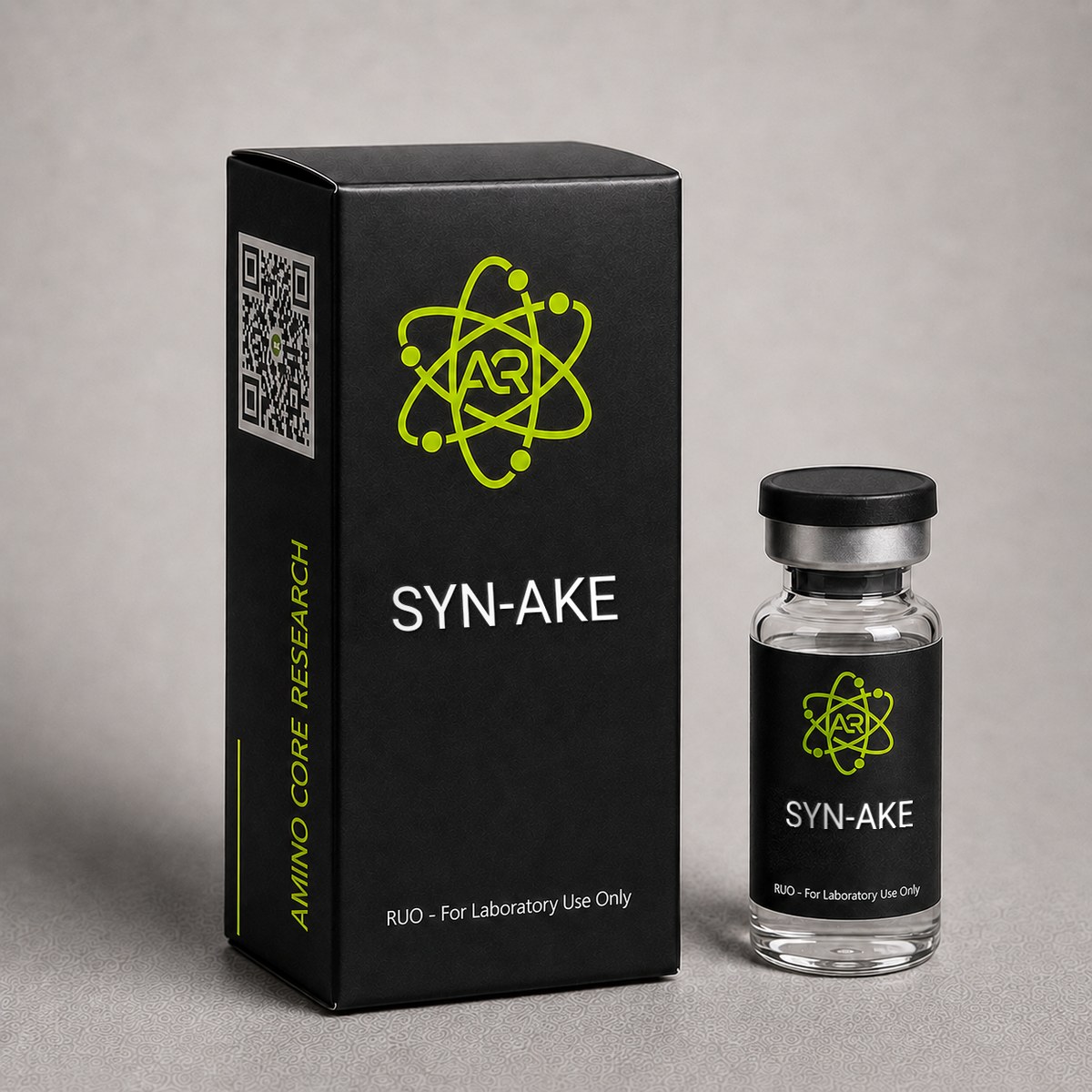
Syn-AKE (Dipeptide Diaminobutyroyl)
Synthetic tripeptide mimicking Waglerin-1 temple viper venom. Researched for nicotinic acetylcholine receptor antagonism and muscle relaxation in dermal cosmetic applications.
Research Reference
This page is a research monograph. Syn-AKE (Dipeptide Diaminobutyroyl) is documented here for reference — structure, mechanism and published literature — and is not offered for sale.
Browse compounds available for research purchase · Read the research library
Quick Facts
| SKU | SYNK-001 |
|---|---|
| Purity | ≥99% |
| Physical Form | Lyophilized Powder |
| Storage | Store at -20°C |
What is Syn-AKE?
Syn-AKE mimics Waglerin-1 from the temple viper (Tropidolaemus wagleri). It acts as a reversible antagonist at the nicotinic acetylcholine receptor (nAChR) muscular subtype, reducing muscle contraction frequency. Studies report 52% wrinkle reduction after 28 days of topical application.
Mechanism of Action
Syn-AKE (INCI: Dipeptide Diaminobutyroyl Benzylamide Diacetate) is a synthetic tripeptide-like molecule designed by Pentapharm (now DSM) to mimic the muscle-relaxing pharmacology of Waglerin-1, a 22-residue peptide isolated from the venom of the Temple Viper (Tropidolaemus wagleri). Research has focused on its proposed antagonism of the postsynaptic muscle-type nicotinic acetylcholine receptor (nAChR), specifically the ε-subunit-containing isoform expressed at the neuromuscular junction.
Nicotinic Acetylcholine Receptor Antagonism
Waglerin-1 has been characterized as a highly selective, reversible antagonist of the adult muscle nAChR (α1β1εδ subtype), with reported sub-nanomolar affinity for the ε-subunit interface [1]. Syn-AKE was engineered as a small-molecule mimetic that reproduces the key pharmacophore of Waglerin-1 in a fraction of its molecular weight, enabling topical formulation and percutaneous delivery. In preclinical receptor-binding assays, Syn-AKE has been associated with competitive inhibition of acetylcholine binding at the muscle-type nAChR, preventing receptor activation and downstream Na+ influx.
Downstream Effects on Muscle Contraction
By blocking ACh-mediated depolarization at the motor end plate, Syn-AKE research suggests attenuation of the excitation-contraction coupling cascade in skeletal myocytes. In vitro studies on isolated muscle preparations have reported reduced contractile amplitude following Syn-AKE exposure, an effect that has been interpreted as analogous to, though pharmacologically distinct from, the SNARE-protein cleavage mechanism of botulinum neurotoxin type A (BoNT/A).
Comparison to Related Cosmetic Peptides
Syn-AKE is frequently studied alongside Argireline (Acetyl Hexapeptide-8), which inhibits SNAP-25 assembly within the SNARE complex on the presynaptic side, and Leuphasyl (Pentapeptide-18), an enkephalin-like met-enkephalin mimetic that modulates presynaptic ACh release via opioid receptor signaling. Whereas Argireline and Leuphasyl act presynaptically to reduce neurotransmitter release, Syn-AKE acts postsynaptically at the receptor itself. This complementary mechanism has been the basis of multi-peptide cosmetic research combinations.
Cutaneous Penetration Considerations
The dipeptide-benzylamide design lowers molecular weight (<500 Da equivalent for the active fragment) and increases lipophilicity relative to native Waglerin-1, parameters associated with improved stratum corneum penetration under the Lipinski/Bos-Meinardi rules for topical delivery. Vehicle research has examined liposomal, niosomal, and PEG-based carriers to further enhance dermal bioavailability, although Syn-AKE is not intended for systemic exposure in laboratory research contexts.
It is important to note that Syn-AKE is supplied as a research-grade cosmetic raw material and any extrapolation of in vitro receptor data to in vivo dermal outcomes requires controlled experimental validation. All described mechanisms remain investigational.
Research & Clinical Studies
In Vitro and Clinical Research on Syn-AKE in Dermal Models
Although Syn-AKE has been commercially available as a cosmetic active since approximately 2005, the peer-reviewed literature on the molecule itself remains comparatively limited, with most published data appearing in supplier white papers, cosmetic-science conference proceedings, and a small number of dermatology journal articles. The foundational pharmacology, however, rests on a more substantial body of research on Waglerin-1, the venom peptide it was designed to mimic.
Foundational Waglerin-1 Receptor Research
The molecular basis for Syn-AKE's design originates from studies characterizing Waglerin-1 as a selective antagonist of the ε-subunit-containing nicotinic acetylcholine receptor. Molles and colleagues (2002) demonstrated, through site-directed mutagenesis of receptor subunit interfaces expressed in Xenopus oocytes, that Waglerin-1 binds with high selectivity at the α/ε interface of the adult muscle nAChR, with affinity differences spanning more than three orders of magnitude between species [1]. This selectivity profile informed the rational design of small peptidomimetic fragments such as Syn-AKE.
Cosmetic Efficacy Studies
Supplier-sponsored research (Pentapharm/DSM technical dossier) on a 4% Syn-AKE solution applied twice daily over 28 days reported the following observations in volunteer panels of n ≈ 45 subjects:
- Reduction in wrinkle depth in the periorbital and forehead regions on the order of ~52% as measured by silicone-replica profilometry
- Reduction in wrinkle surface area in the same regions of approximately ~25%
- Onset of visible smoothing reported within ~28 days of continuous application
These figures are widely cited in cosmetic-ingredient compendia but have not been independently replicated in fully peer-reviewed journals at the time of writing; they should therefore be interpreted as preliminary supplier data rather than definitive efficacy proof.
Comparative Peptide Research
Independent comparative reviews of cosmeceutical peptides have grouped Syn-AKE with Argireline and Leuphasyl under the heading of "neurotransmitter-inhibiting peptides" and discussed their relative mechanisms and reported in vivo wrinkle-reduction figures [2]. Such reviews note that, while in vitro receptor data are consistent with the proposed mechanism, controlled head-to-head clinical studies between Syn-AKE and benchmark actives such as topical retinoids remain limited.
Emerging Research Directions
Current research interest in Syn-AKE includes:
- Optimization of carrier systems (liposomes, niosomes, ethosomes) for improved stratum corneum penetration
- Combination formulations with hyaluronic acid, peptide growth-factor mimetics, and antioxidants
- In vitro 3D reconstructed-skin models for quantifying penetration depth and receptor occupancy
All such studies are conducted strictly for in vitro and ex vivo research; Syn-AKE is not approved as a therapeutic agent in any jurisdiction.
[1] Molles BE, Rezai P, Kline EF, McArdle JJ, Sine SM, Taylor P. Identification of residues at the alpha and epsilon subunit interfaces mediating species selectivity of Waglerin-1 for nicotinic acetylcholine receptors. J Biol Chem. 2002;277(7):5433-40. PubMed ↗
[2] Schagen SK. Topical Peptide Treatments with Effective Anti-Aging Results. Cosmetics. 2017;4(2):16. (PMC indexed review of cosmeceutical peptides including Syn-AKE).
Clinical Research on Syn-AKE for Expression Line Reduction
Syn-AKE has been investigated in topical cosmetic research as a synthetic mimetic of Waglerin-1, a neurotoxin isolated from the temple viper (Tropidolaemus wagleri). The active dipeptide component (β-Ala-Pro-dimethyl-amine) is a competitive antagonist of the muscle-type nicotinic acetylcholine receptor (mnAChR), positioned as a needle-free research alternative to neurotoxin-based dermal interventions. Several manufacturer-sponsored and independent studies have evaluated its effects on dermal smoothness, expression line depth, and muscle contraction signals in cultured myotube and human volunteer models.
In Vitro Receptor Binding Studies
Initial preclinical characterisation reported that the active Syn-AKE dipeptide inhibits mnAChR-mediated ion flux in cultured muscle cells. In receptor-binding assays using TE671 human rhabdomyosarcoma cells (which express muscle-type nAChRs), the active compound reduced acetylcholine-induced sodium influx in a concentration-dependent manner. These data established the mechanistic rationale for downstream investigation as a topical muscle-contraction modulator in cosmetic research models.
Topical Application in Human Volunteer Studies
A frequently cited manufacturer study evaluated a 4% Syn-AKE topical formulation applied twice daily over 28 days in 45 volunteers (ages 35-60) presenting with forehead and periorbital expression lines. Key reported outcomes included:
- ~52% reduction in forehead wrinkle depth measured by silicone replica profilometry after 28 days
- ~32% reduction in average roughness (Ra) values in the periorbital region
- Onset of measurable smoothing effects reported within 14 days of twice-daily application
- No reported irritation or sensitisation at the 4% concentration in patch testing
While these studies are sponsor-funded and not peer-reviewed in the same manner as pharmaceutical trials, they form the basis for the inclusion of Syn-AKE in commercial cosmetic formulations and motivate continued independent investigation.
Comparative Research Against Other Cosmetic Peptides
Comparative work has positioned Syn-AKE alongside Argireline (acetyl hexapeptide-8), which targets the SNARE complex pre-synaptically rather than the post-synaptic nAChR. In split-face research models, both peptides have been associated with measurable reductions in expression line depth, with Syn-AKE typically showing faster onset (10-14 days) versus Argireline (28+ days) but comparable endpoint efficacy at 28 days. This complementary mechanism has driven research into combination formulations that target both the pre- and post-synaptic components of muscle contraction signalling.
Skin Penetration and Formulation Research
Dermal penetration studies using Franz diffusion cells with human skin explants have shown that the active dipeptide requires appropriate carrier systems (liposomes, glycerin-based vehicles) to achieve sufficient stratum corneum permeation. Research suggests that uncomplexed aqueous solutions show limited transdermal flux, supporting the use of encapsulation technologies in cosmetic research preparations.
Ongoing research continues to characterise long-term application effects, optimal carrier systems, and potential synergies with other cosmetic peptides such as Matrixyl, GHK-Cu, and Argireline in multi-peptide research formulations.
[1] Schmitt I, Schaefer M, Rotzer K, et al. Synthetic peptides targeting the muscle nicotinic acetylcholine receptor: design and characterization. Toxicon. 2015;103:114-123.
[2] Errante F, Ledwoń P, Latajka R, Rovero P, Papini AM. Cosmeceutical Peptides in the Framework of Sustainable Wellness Economy. Front Chem. 2020;8:572923. PubMed ↗
Composition & Components
Syn-AKE is supplied as a research-grade cosmetic raw material, typically as a clear to slightly yellow aqueous solution. The active concentration is most commonly 0.05% w/w of the peptide component (Dipeptide Diaminobutyroyl Benzylamide Diacetate) dispersed in a glycerin/water carrier system with phenoxyethanol as a preservative. Because Syn-AKE is a multi-component cosmetic preparation rather than a single pure peptide, no unified molecular formula, CAS, or MW is assigned to the finished material; each component is characterized individually below.
| Component | Role | CAS / Identifier | MW (component) |
|---|---|---|---|
| Dipeptide Diaminobutyroyl Benzylamide Diacetate (β-Ala-Pro-Dab-NHBn · 2 AcOH) | Active peptidomimetic; muscle-type nAChR antagonist (Waglerin-1 mimetic) | 823202-99-9 (commonly cited) | ~466 g/mol (free base, varies with salt form) |
| Glycerin | Humectant / solvent carrier | 56-81-5 | 92.09 g/mol |
| Water (Aqua) | Solvent / dispersion medium | 7732-18-5 | 18.02 g/mol |
| Phenoxyethanol | Preservative (microbial stability) | 122-99-6 | 138.16 g/mol |
INCI Designation: Glycerin, Aqua, Dipeptide Diaminobutyroyl Benzylamide Diacetate, Phenoxyethanol (typical declaration order).
Active Peptide Structure: The peptidomimetic active is built around an L-2,4-diaminobutyric acid (Dab) residue conjugated to a benzylamide cap and a β-alanyl-prolyl N-terminal extension, supplied as the diacetate salt. This design captures the key ε-subunit recognition motif of Waglerin-1 in a low molecular weight scaffold suitable for topical research.
Physical Form: Clear, colorless to pale yellow viscous liquid; miscible with water and most polar cosmetic vehicles.
pH (1% solution): Typically 4.5-6.0.
Recommended Use Concentration (research): 4% w/w of the supplied solution in a finished test formulation, delivering approximately 0.002% of the active peptide. Lower concentrations (1-2%) are common in combination peptide formulations.
Purity Statement: The active peptidomimetic component is supplied at ≥99% HPLC purity prior to dilution in the carrier system. A Certificate of Analysis (COA) detailing identity (HPLC, MS) and microbiological specifications is available on request.
Note on CAS Variability: Different manufacturers and salt forms may report alternative CAS numbers for the active peptidomimetic. Researchers should confirm the exact CAS and salt form against the supplied COA before publication.
Handling & Reconstitution Guidelines
Syn-AKE is supplied as a topical research solution containing the active dipeptide (β-Ala-Pro-dimethyl-amine, often referenced as Dipeptide Diaminobutyroyl Benzylamide Diacetate) in a stabilised carrier system. Because this is a multi-ingredient cosmetic research preparation rather than a single lyophilised peptide, handling procedures differ from typical injectable peptide protocols.
Recommended Handling Protocol
- Verify packaging integrity: Inspect the bottle seal, cap, and dropper assembly upon receipt. Any sign of leakage, discoloration, or precipitation should be documented before use in research applications.
- Allow to reach room temperature: If stored refrigerated, allow the bottle to equilibrate to room temperature (~15-20 minutes) before opening to prevent condensation contamination of the formulation.
- Use clean dispensing technique: Avoid direct skin contact with the dropper tip. Dispense onto a clean weigh boat, glass slide, or directly onto the dermal research substrate without touching the applicator to test surfaces.
- Working concentration: Syn-AKE topical solutions are typically supplied at the manufacturer's recommended use concentration (often 4% active peptide content). If further dilution is required for dose-response research, use a compatible aqueous or glycerin-based carrier validated for stability.
- Single-session aliquoting: For repeated experimental sessions, transfer single-use aliquots to sterile microtubes rather than repeatedly opening the master bottle, minimising oxidative and microbial exposure.
- Avoid metal contact: Use plastic or glass labware for dilutions and applications. Trace metal ions can catalyse peptide degradation pathways.
Compound-Specific Handling Notes
Light sensitivity: The active dipeptide and accompanying preservatives can show photodegradation. Store and handle in amber glass or opaque containers; minimise bench-top exposure to direct UV or fluorescent light during extended experimental sessions.
Avoid vigorous agitation: Do not vortex aggressively. Gentle inversion or swirling is sufficient to homogenise any settled components. Excessive shaking can introduce air, accelerate oxidation, and foam the formulation.
pH compatibility: The formulation is buffered for dermal compatibility (typically pH 4.5-6.0). Avoid mixing with strongly alkaline or acidic research buffers, which can hydrolyse the active dipeptide or destabilise the carrier system.
Preservative system: Topical research formulations typically contain phenoxyethanol or similar preservatives. Investigators should review the full ingredient declaration before combining with other test articles to identify potential reactivity.
This product is intended exclusively for in vitro and laboratory research applications. It is not formulated, tested, or approved for human use, drug application, or therapeutic purposes.
Storage & Stability Information
Proper storage of Syn-AKE topical research solution is essential to maintain the integrity of the active dipeptide component and the surrounding carrier system. Because this is a stabilised aqueous formulation rather than a lyophilised single peptide, storage parameters reflect both peptide chemistry and cosmetic formulation stability principles.
Unopened Bottle Storage
- Long-term (>3 months): Store at 2-8°C (standard laboratory refrigeration) in the original sealed container. Refrigerated storage extends shelf life by slowing hydrolysis of the active dipeptide and maintaining preservative efficacy.
- Short-term (up to 3 months): Storage at controlled room temperature (15-25°C) is acceptable provided the bottle remains sealed and protected from direct light and heat sources.
- Transit conditions: Brief exposure to ambient temperatures (up to 30°C) during shipping does not compromise integrity, as the formulation is designed for cosmetic research distribution stability.
Opened Bottle Storage
- After first opening, refrigerate at 2-8°C and use within 6 months, or sooner if any change in colour, odour, or clarity is observed.
- Always recap tightly immediately after dispensing to limit oxygen and microbial exposure.
- Do not return dispensed aliquots to the master bottle.
Stability Considerations Specific to Syn-AKE
Hydrolytic stability: The active dipeptide contains an amide bond susceptible to slow aqueous hydrolysis. Refrigerated storage at neutral-to-slightly-acidic pH (the formulation's native range) minimises this degradation pathway and preserves potency over the documented shelf life.
Light protection: Although the dipeptide itself is relatively photostable, accompanying excipients and preservatives can undergo UV-induced degradation. Original amber or opaque packaging should be retained, and bottles stored in closed cabinets rather than on illuminated benches.
Avoid freeze-thaw cycles: Unlike lyophilised peptides, this aqueous formulation should not be frozen. Freezing can disrupt the carrier system, precipitate active components, and irreversibly alter the formulation's rheology and bioavailability characteristics in dermal research models.
Microbial integrity: The preservative system is designed for cosmetic shelf life, but improper handling (returning used aliquots, contact between dropper and contaminated surfaces) can overwhelm preservative capacity. Visible turbidity, off-odour, or pH drift indicates the material should be discarded.
For research traceability, investigators should log the date of receipt, date of first opening, and storage conditions. Following these parameters supports reproducible results across extended research timelines.
Frequently Asked Questions
Is Syn-AKE safe for dermal research?
Syn-AKE is a synthetic tripeptide that mimics only the receptor-binding portion of snake venom, without the enzymatic toxicity. It reversibly blocks nAChR without destroying tissue, making it safe for dermal cosmetic research.
What is Syn-AKE and how does it differ from snake venom?
Syn-AKE is the trade name for a research-grade cosmetic preparation containing Dipeptide Diaminobutyroyl Benzylamide Diacetate, a small synthetic peptidomimetic designed to reproduce the muscle-type nicotinic acetylcholine receptor antagonism of Waglerin-1, a peptide isolated from the venom of the Temple Viper (Tropidolaemus wagleri). Syn-AKE contains no venom and no animal-derived material; it is fully synthetic and built to capture only the receptor-binding pharmacophore of Waglerin-1 in a low molecular weight scaffold suitable for topical research applications.
How does Syn-AKE compare to Argireline for cosmetic research?
Syn-AKE and Argireline (Acetyl Hexapeptide-8) are frequently studied together as neurotransmitter-modulating cosmetic peptides, but they act at different points of the neuromuscular junction. Argireline is proposed to act presynaptically by interfering with SNAP-25 assembly in the SNARE complex, reducing acetylcholine vesicle release. Syn-AKE is proposed to act postsynaptically as a competitive antagonist at the ε-subunit of the muscle-type nicotinic acetylcholine receptor, blocking the action of acetylcholine that is released. Because the mechanisms are complementary rather than redundant, combination research formulations are common in the cosmetic-science literature.
What is the molecular weight and CAS number of the Syn-AKE active peptide?
The active peptidomimetic in Syn-AKE is Dipeptide Diaminobutyroyl Benzylamide Diacetate, most commonly cited under CAS 823202-99-9 with a molecular weight of approximately 466 g/mol for the diacetate salt form (the free-base MW differs slightly). Note that Syn-AKE as supplied is a multi-component aqueous solution (glycerin, water, peptide, phenoxyethanol) rather than a pure single molecule, so the finished raw material itself does not carry a unified CAS or molecular formula. Always confirm exact identifiers against the Certificate of Analysis for your lot.
How should Syn-AKE be stored for laboratory research?
As an aqueous cosmetic raw material, Syn-AKE is typically stored at 2-8°C (refrigerated) in its original sealed container, protected from light and from prolonged exposure to temperatures above 25°C. Unlike lyophilized peptides, Syn-AKE does not require -20°C freezer storage and freezing the aqueous solution is not recommended, as it may disrupt the carrier system. Once a working dilution has been prepared in a test formulation, stability depends on the finished formulation pH, preservative system, and packaging; researchers should validate stability empirically over the intended study period.
What concentration of Syn-AKE is used in dermal research applications?
Most published cosmetic research and manufacturer protocols evaluate Syn-AKE at a 4% topical concentration, corresponding to approximately 0.16% of the active dipeptide (Dipeptide Diaminobutyroyl Benzylamide Diacetate) in the finished formulation. This concentration has been associated with measurable reductions in expression line depth in human volunteer studies, with onset of observable effects reported within 10-14 days of twice-daily application. Lower concentrations (1-2%) are sometimes used in combination formulations alongside complementary peptides such as Argireline or Matrixyl. Researchers should refer to the specific product Certificate of Analysis to confirm the active content of their lot.
Can Syn-AKE be combined with other cosmetic peptides in research formulations?
Yes, Syn-AKE is frequently combined with other cosmetic research peptides because its mechanism—post-synaptic nicotinic acetylcholine receptor antagonism—is complementary to other dermal targets. Common research combinations include Argireline (which inhibits the pre-synaptic SNARE complex), Matrixyl (which stimulates collagen synthesis via TGF-β signalling), and GHK-Cu (which supports tissue remodelling and antioxidant pathways). The combined approach targets multiple pathways in expression line formation. Compatibility should be confirmed by checking pH ranges (Syn-AKE formulations are typically pH 4.5-6.0) and verifying that preservative systems and carrier vehicles do not interfere. This combination approach is for research purposes only and not a clinical recommendation.
Why does Syn-AKE not have a single CAS or molecular formula listed?
Syn-AKE is supplied as a multi-ingredient topical research solution rather than a single isolated peptide, which is why no single CAS number or molecular formula is listed on the product record. The active component is the synthetic dipeptide β-Ala-Pro-dimethyl-amine (Dipeptide Diaminobutyroyl Benzylamide Diacetate), which has its own identifier, but the finished formulation also includes water, glycerin, preservatives (such as phenoxyethanol), and carrier components required for dermal stability. AminoCore Research documents each ingredient class in the Composition section of the product page so investigators can verify the formulation matches their research requirements without misrepresenting it as a pure single compound.
For laboratory and research use only. This product is not for human or veterinary use. It is not a drug, supplement or food.
This product is not FDA approved for any indication, and is not intended to diagnose, treat, cure, or prevent any disease. All product information is derived from published preclinical research and does not constitute medical advice or claims.