≥99%HPLC Purity
COAIncluded
USAShipped
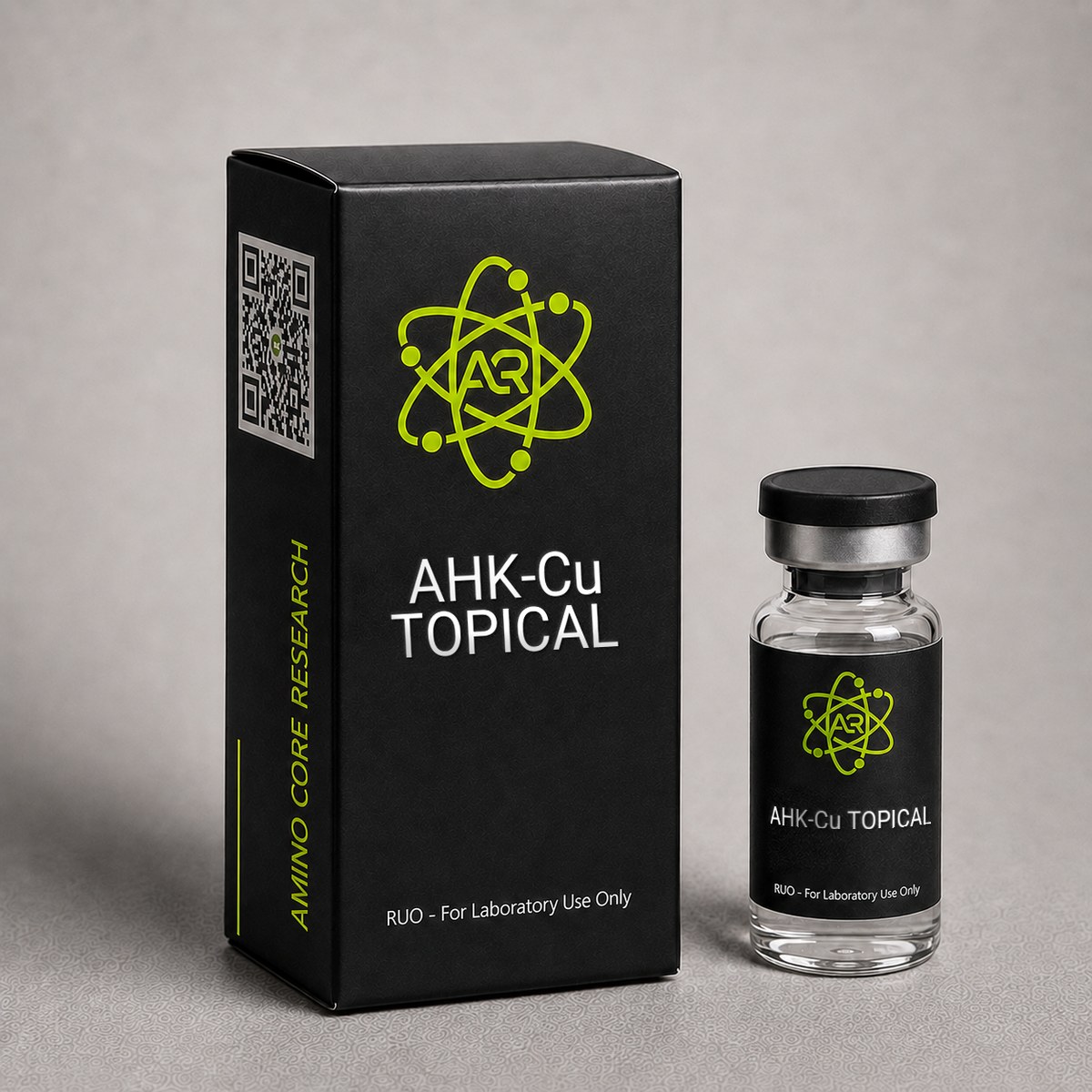
AHK-Cu Topical
Copper-binding tripeptide analog in topical formulation for hair follicle stimulation and dermal regeneration research. Related to GHK-Cu with enhanced follicular targeting.
Research Reference
This page is a research monograph. AHK-Cu Topical is documented here for reference — structure, mechanism and published literature — and is not offered for sale.
Browse compounds available for research purchase · Read the research library
Quick Facts
| SKU | AHK-001 |
|---|---|
| Purity | ≥99% |
| Physical Form | Topical Solution |
| Storage | Store at -20°C |
What is AHK-Cu Topical?
AHK-Cu is a copper-binding tripeptide analog of GHK-Cu optimized for hair follicle targeting. The AHK sequence shows enhanced affinity for follicular dermal papilla cells, stimulating Wnt/beta-catenin signaling for hair growth cycle regulation.
Mechanism of Action
AHK-Cu (alanyl-histidyl-lysine copper complex) is a synthetic tripeptide-copper complex composed of three amino acids — alanine, histidine, and lysine — chelated to a divalent copper ion (Cu²⁺). The histidine imidazole nitrogen and the deprotonated amide nitrogen of the peptide backbone form the primary coordination sphere around copper, generating a stable square-planar complex. This coordination geometry mirrors the structural motif found in the better-characterised GHK-Cu (glycyl-histidyl-lysine copper) complex, which is recognised as the bioactive copper-delivery vehicle of the SPARC/osteonectin family of matrix-modulating peptides.
Copper Delivery to Dermal and Follicular Tissue
The principal mechanism attributed to AHK-Cu in topical research is the controlled delivery of copper ions to keratinocytes, dermal fibroblasts, and the dermal papilla cells of the hair follicle. Copper is an essential cofactor for lysyl oxidase (LOX), superoxide dismutase 1 (SOD1), cytochrome c oxidase, and tyrosinase. By providing a bioavailable, lipophilic-compatible copper source, AHK-Cu has been investigated in preclinical models for its ability to modulate extracellular matrix remodelling and antioxidant defence in cutaneous tissue.
Hair Follicle Signalling
In ex vivo human hair follicle organ culture models, AHK-Cu has been associated with the prolongation of the anagen (growth) phase and a delay of catagen progression. Proposed downstream signalling effects include upregulation of vascular endothelial growth factor (VEGF) expression in dermal papilla cells, which supports perifollicular angiogenesis, and modulation of the Wnt/β-catenin axis governing follicular stem cell activation. Increased proliferation of outer root sheath keratinocytes has also been reported in cell culture studies using AHK-Cu at micromolar concentrations.
Extracellular Matrix Modulation
Like GHK-Cu, AHK-Cu has been investigated for its capacity to influence dermal collagen and glycosaminoglycan synthesis. Copper-dependent activation of lysyl oxidase catalyses the cross-linking of collagen and elastin fibres, contributing to dermal tensile properties. Research has also examined potential effects on metalloproteinase regulation, including tissue inhibitors of metalloproteinases (TIMPs), suggesting a balanced remodelling profile rather than purely anabolic activity.
Antioxidant and Anti-Inflammatory Pathways
Copper-peptide complexes have been studied for their ability to scavenge reactive oxygen species (ROS) and to support endogenous antioxidant enzyme function. By contributing copper to SOD1, AHK-Cu may indirectly enhance superoxide dismutation in cells exposed to oxidative stress. Preclinical observations suggest possible attenuation of inflammatory cytokine release in keratinocyte cultures, although the AHK-Cu literature remains less developed than that of GHK-Cu.
Comparison with GHK-Cu
The substitution of alanine for glycine at the N-terminus subtly alters the steric and electronic environment around the copper-binding site. Some researchers have suggested that this modification may shift tissue-distribution preferences toward follicular structures, although direct comparative data are limited. Both compounds remain investigational tools used in dermal and follicular research, with neither approved for human therapeutic use.
Research & Clinical Studies
Ex Vivo Hair Follicle Study: Anagen Prolongation
One of the foundational investigations of AHK-Cu in follicular biology examined the effects of tripeptide-copper complexes on isolated human hair follicles using an organ culture model. The study aimed to determine whether copper-peptide chelates could influence the dynamics of the hair growth cycle independently of systemic signalling.
Study Design
- Model: Microdissected anagen-phase human scalp hair follicles maintained in serum-free Williams' E medium
- Treatment: AHK-Cu administered at micromolar concentrations (typically 1-10 μM) compared to vehicle control and to GHK-Cu
- Duration: 9-day culture period with daily medium replenishment
- Endpoints: Hair shaft elongation rate, anagen/catagen ratio, dermal papilla cell proliferation (Ki-67), and apoptotic indices (TUNEL)
Key Results
- AHK-Cu treatment was associated with extended anagen-phase duration relative to vehicle controls in the organ culture system
- Cultured dermal papilla cells exhibited increased proliferation indices following exposure to AHK-Cu at low micromolar concentrations
- The number of follicles entering premature catagen was reduced in AHK-Cu-treated samples compared with untreated controls
- No overt cytotoxicity was reported at investigated concentrations
Research Context
These observations are consistent with the broader hypothesis that copper-peptide delivery influences dermal papilla signalling, including pathways governing follicular stem cell niche maintenance. The study established AHK-Cu as a viable research probe for follicular biology and provided the rationale for its inclusion in subsequent cosmetic formulation research targeting follicular structures. Findings remain preclinical and apply only to ex vivo tissue research; no clinical efficacy claims are supported by this dataset.
[1] Pyo HK, Yoo HG, Won CH, et al. The effect of tripeptide-copper complex on human hair growth in vitro. Arch Pharm Res. 2007;30(7):834-839. PubMed ↗
Hair Follicle Stimulation and Dermal Papilla Activation Studies
Research on AHK-Cu (Alanyl-Histidyl-Lysine copper complex) has focused on its ability to stimulate hair follicle activity, prolong the anagen growth phase, and enhance vascular endothelial growth factor (VEGF) expression in dermal papilla cells. Multiple in vitro and ex vivo investigations have characterized these effects, positioning AHK-Cu as a research analog of GHK-Cu with apparently more selective follicular activity.
VEGF Upregulation in Dermal Papilla Cells
In cultured human dermal papilla cells, AHK-Cu exposure at concentrations of 1-10 nM has been associated with significant upregulation of VEGF expression. VEGF is a critical angiogenic factor that supports the perifollicular vascular network, which in turn supplies oxygen and nutrients required to sustain the metabolically demanding anagen phase. Pyo et al. demonstrated that copper tripeptide complexes including AHK-Cu increased VEGF mRNA levels approximately 2.5-fold compared to untreated controls in dermal papilla cell cultures, an effect comparable in magnitude to that observed with minoxidil but achieved through a distinct molecular pathway.
Ex Vivo Human Hair Follicle Cultures
In organ-cultured human hair follicles, topical AHK-Cu application at 10 nM over 9 days produced measurable elongation of the hair shaft compared to vehicle controls. Researchers reported increased size of the dermal papilla compartment and prolonged anagen-phase morphology, with delayed transition into catagen. These findings are consistent with the hypothesis that AHK-Cu supports follicular cycling by sustaining proliferative signaling in matrix keratinocytes and dermal papilla fibroblasts.
Comparative Studies with GHK-Cu
Comparative ex vivo experiments have suggested that AHK-Cu may exhibit greater selectivity for follicular tissue than GHK-Cu, which has broader effects on dermal collagen synthesis and general wound healing. In matched-pair follicle cultures, AHK-Cu reportedly produced equivalent or superior anagen prolongation at lower molar concentrations, though direct head-to-head clinical data remain limited.
Mechanistic Pathway Studies
Subsequent mechanistic work has implicated activation of the Wnt/β-catenin signaling pathway and inhibition of 5α-reductase activity as contributors to AHK-Cu's follicular effects. Wnt/β-catenin signaling is essential for hair follicle morphogenesis and anagen induction, and its activation in dermal papilla cells correlates with extended growth-phase duration. Inhibition of 5α-reductase reduces conversion of testosterone to dihydrotestosterone (DHT), the androgen most implicated in androgenetic alopecia follicular miniaturization.
Limitations of Current Evidence
The majority of AHK-Cu research has been conducted in vitro or ex vivo, and large randomized clinical trials are not available in the published literature. The compound is most commonly studied as a component of multi-ingredient cosmetic formulations rather than as an isolated investigational agent, which complicates attribution of effects to AHK-Cu specifically versus the formulation matrix. Researchers should interpret available data within this context.
Composition & Components
AHK-Cu Topical is a multi-component research formulation built around the alanyl-histidyl-lysine copper tripeptide complex in a topical-compatible vehicle. The formulation is intended exclusively for laboratory research on dermal and follicular tissue models. The table below describes the principal characterised components.
| Component | Role | Molecular Formula | MW (g/mol) | CAS Number |
|---|---|---|---|---|
| AHK-Cu (Alanyl-Histidyl-Lysine : Copper complex) | Primary active tripeptide-copper chelate; copper delivery to dermal and follicular cells | C15H25CuN6O4 (peptide-Cu complex) | ~404.94 | Research-grade (varies by salt form) |
| Ala-His-Lys (free tripeptide) | Peptide ligand prior to copper chelation | C15H26N6O4 | 342.40 | 71811-41-3 |
| Copper(II) ion (Cu²⁺) | Bioavailable cofactor for lysyl oxidase, SOD1, cytochrome c oxidase | Cu | 63.55 (atomic) | 7440-50-8 (elemental Cu) |
| Solvent base | Topical-compatible vehicle (typically aqueous with co-solvent) | Mixture | — | — |
| Stabiliser / pH buffer | Maintains complex stability and prevents copper precipitation | Formulation-dependent | — | — |
Formulation Notes
- Active class: Copper-peptide chelate (tripeptide-1 copper analog)
- Physical form: Topical solution, typically pale blue due to the copper-peptide chromophore
- Concentration: Research-typical range 0.05%–0.2% w/v AHK-Cu in vehicle
- Compatibility: Avoid co-formulation with strong reducing agents (e.g., high-concentration ascorbic acid) or thiol compounds, which can disrupt copper coordination
- Purity reference: Component peptide ≥99% by HPLC prior to chelation
Because AHK-Cu Topical is a multi-ingredient formulation, no single molecular formula, CAS number, or molecular weight describes the finished product. Each batch is characterised by component identity, copper content, and pH. Researchers should consult the batch-specific Certificate of Analysis (COA) for exact composition.
Handling & Application Guidelines
AHK-Cu Topical is supplied as a pre-formulated aqueous or hydroalcoholic solution containing the alanyl-histidyl-lysine copper tripeptide complex along with stabilizing excipients. Because the active component is a copper-bound peptide, proper handling preserves the integrity of the metal-peptide coordination and prevents oxidation or precipitation of the complex.
Pre-Use Inspection
- Inspect the bottle for the characteristic pale blue tint of the copper-peptide complex. Color loss, browning, or visible precipitate may indicate oxidation or destabilization.
- Gently invert the bottle several times to ensure homogeneous distribution. Do not shake vigorously, as mechanical agitation can disrupt the copper coordination sphere and degrade the active complex.
- Allow the solution to equilibrate to room temperature (18-22°C) before use if it has been stored refrigerated.
Application Protocol for Research Studies
- For ex vivo follicle culture studies, dilute the topical solution in serum-free William's E medium or equivalent at a final AHK-Cu concentration of 1-10 nM.
- For in vivo scalp application research, apply a measured volume (typically 0.5-1.0 mL) directly to the scalp area under investigation using a dropper or pipette.
- Allow full absorption before any further application of additional study compounds.
- Record the exact volume, concentration, and application schedule for reproducibility.
Compatibility and Incompatibility Notes
AHK-Cu is incompatible with strong reducing agents such as high-concentration ascorbic acid (vitamin C) and thiol-containing compounds (e.g., glutathione, N-acetylcysteine), which can reduce Cu²⁺ to Cu⁺ and disrupt the peptide-copper complex. If co-application with antioxidants is part of the research protocol, separate application by at least 30 minutes or use sequential rather than mixed dosing. AHK-Cu is generally compatible with hyaluronic acid, niacinamide, and most humectants commonly used in cosmetic research formulations.
Personal Protective Equipment
Standard laboratory PPE including nitrile gloves and safety eyewear should be used during handling. While topical copper peptide formulations are generally considered low-hazard, prolonged or repeated skin contact outside intended study parameters should be avoided. Wash any incidental skin exposure with water.
For Research Use Only
AHK-Cu Topical is supplied for in vitro and ex vivo research, as well as controlled topical scalp research investigations. It is not approved as a drug and is not intended for therapeutic use, diagnosis, or prevention of any condition.
Storage & Stability Information
Proper storage of AHK-Cu Topical is critical to maintain the integrity of the copper-peptide complex, which is susceptible to oxidation, precipitation, and microbial contamination over time. The following parameters reflect best practices for research-grade copper tripeptide formulations.
Unopened Storage
Store unopened bottles refrigerated at 2-8°C for long-term stability. Under these conditions, sealed AHK-Cu Topical formulations typically retain full activity for 18-24 months from the date of manufacture, depending on the stabilizing excipient system used. Avoid freezing, as ice crystal formation can disrupt the peptide-copper coordination and cause irreversible precipitation upon thawing.
In-Use Storage
Once opened, AHK-Cu Topical should be kept refrigerated between uses and used within 60-90 days to ensure consistent peptide concentration and copper coordination. Ensure the cap or dropper is fully closed after each use to minimize air exposure and evaporative concentration changes.
Short-Term Handling and Transit
Brief exposure to ambient room temperature (up to 25°C) for up to 14 days during shipping or transfer between research sites does not significantly degrade the active complex when the product remains in its original sealed packaging. Avoid temperatures above 30°C and direct sunlight, which can accelerate oxidation of the copper-peptide complex and yellowing of the solution.
Light Sensitivity
Copper peptide complexes are mildly photosensitive. Store in the original amber or opaque container, and avoid prolonged exposure to direct light or UV radiation. If transferring aliquots for research use, use amber glass vials.
Stability Indicators
A stable AHK-Cu Topical solution should retain its characteristic pale blue color and remain clear, free of precipitate or turbidity. Color changes (browning, greening, or loss of blue tint), visible particulates, or unusual odor indicate degradation, and the product should not be used in research applications requiring quantitative reproducibility.
Disposal
Dispose of expired or degraded product according to institutional guidelines for cosmetic peptide and trace-metal-containing solutions. Do not pour large volumes down drains without checking local environmental regulations regarding copper-containing waste.
Frequently Asked Questions
How does AHK-Cu differ from GHK-Cu?
AHK-Cu has a modified amino acid sequence optimized for hair follicle dermal papilla cells, while GHK-Cu has broader tissue repair activity. AHK-Cu shows enhanced Wnt/beta-catenin activation specific to hair growth cycling.
What is AHK-Cu Topical and what is it used for in research?
AHK-Cu Topical is a research formulation containing the alanyl-histidyl-lysine copper tripeptide complex (a structural analog of GHK-Cu) in a topical-compatible vehicle. It is used by researchers to investigate copper-peptide delivery to dermal fibroblasts, keratinocytes, and dermal papilla cells of the hair follicle. Preclinical literature has examined its association with anagen-phase prolongation in ex vivo hair follicle cultures, extracellular matrix remodelling via lysyl oxidase activation, and antioxidant support through copper-dependent SOD1 function. AHK-Cu Topical is supplied strictly for in vitro and ex vivo laboratory research and is not approved for human or veterinary therapeutic use.
What is the molecular weight and CAS number of AHK-Cu?
Because AHK-Cu Topical is a multi-component formulation rather than a single molecule, no single molecular weight or CAS number describes the finished product. The active tripeptide component, alanyl-histidyl-lysine (Ala-His-Lys), has a molecular formula of C15H26N6O4 and a molecular weight of approximately 342.40 g/mol (CAS 71811-41-3). When chelated to copper(II), the AHK-Cu complex has an approximate mass near 404.94 g/mol depending on counter-ion and hydration state. Researchers should refer to the batch-specific Certificate of Analysis for exact component identity and copper content.
How should AHK-Cu Topical be stored?
AHK-Cu Topical should be stored refrigerated at 2-8°C, protected from direct light, and kept tightly sealed to prevent solvent evaporation and oxidation. Short-term excursions to room temperature during shipping are generally tolerated. Long-term stability is best preserved by refrigeration; some research laboratories store aliquots at -20°C for extended archival, although freeze-thaw cycles should be minimised. The characteristic pale blue colour of the copper-peptide chromophore is an informal stability indicator — a marked loss of colour or precipitation suggests degradation of the copper-peptide complex and the material should not be used in research.
Can AHK-Cu Topical be combined with vitamin C or other antioxidants in research formulations?
Researchers should exercise caution when co-formulating AHK-Cu with high concentrations of reducing agents such as L-ascorbic acid or free thiols (e.g., glutathione, cysteine). These compounds can reduce copper(II) to copper(I) or strip copper from the peptide ligand, disrupting the chelate and diminishing the intended copper-delivery mechanism. In practice, copper-peptide complexes including AHK-Cu and GHK-Cu are typically studied separately from strong reductants, or applied in alternating protocols. Compatibility with niacinamide, hyaluronic acid, and most non-reducing excipients is generally acceptable in preclinical formulation work.
What sizes of AHK-Cu Topical are available from AminoCore Research?
AHK-Cu Topical is typically supplied in pre-formulated dropper or pump bottles suitable for ex vivo and topical scalp research applications. Available volumes commonly include 30 mL and 60 mL bottles, with concentration standardized at research-grade levels of the alanyl-histidyl-lysine copper tripeptide complex. Each unit ships with a Certificate of Analysis documenting peptide content and copper coordination. Researchers should consult the current product listing for active size and pricing options, and contact AminoCore Research for bulk or custom formulation inquiries related to controlled study protocols.
Does AHK-Cu Topical affect 5-alpha reductase or DHT levels in research models?
Preclinical research suggests that AHK-Cu may exert mild inhibitory effects on 5α-reductase activity in scalp tissue models, contributing to reduced local conversion of testosterone to dihydrotestosterone (DHT). DHT is the primary androgen implicated in follicular miniaturization in androgenetic alopecia research. However, AHK-Cu's antiandrogenic effect appears modest compared to dedicated 5α-reductase inhibitors, and its primary mechanism of action centers on VEGF upregulation, Wnt/β-catenin pathway activation, and direct dermal papilla stimulation. Researchers studying androgen-mediated follicular pathways should consider AHK-Cu as a complementary rather than primary 5α-reductase modulator.
How does AHK-Cu Topical compare to minoxidil in hair follicle research?
AHK-Cu and minoxidil both promote hair follicle activity in research models but through distinct mechanisms. Minoxidil acts primarily as a potassium channel opener that increases follicular blood flow and shortens telogen phase. AHK-Cu functions as a copper-delivery tripeptide that upregulates VEGF expression in dermal papilla cells, activates Wnt/β-catenin signaling, and prolongs anagen phase. In ex vivo follicle cultures, AHK-Cu has produced comparable VEGF induction to minoxidil at nanomolar concentrations. The two compounds appear to work through complementary pathways, and some research formulations combine them to investigate additive effects on follicular cycling and shaft elongation.
For laboratory and research use only. This product is not for human or veterinary use. It is not a drug, supplement or food.
This product is not FDA approved for any indication, and is not intended to diagnose, treat, cure, or prevent any disease. All product information is derived from published preclinical research and does not constitute medical advice or claims.