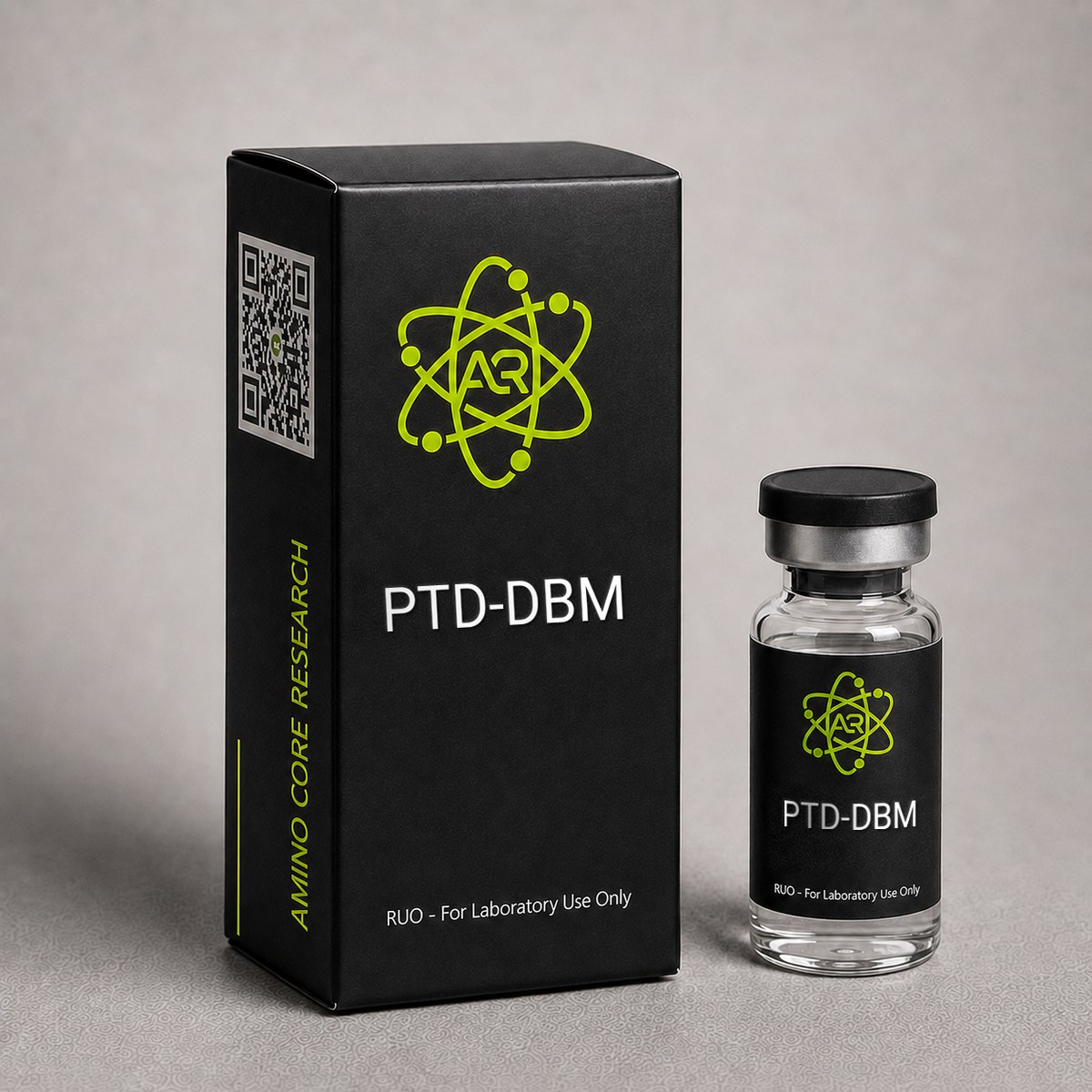
≥99%HPLC Purity
COAIncluded
USAShipped
PTD-DBM (Hair Growth Peptide)
Novel cell-penetrating peptide that activates the Wnt/β-catenin pathway in hair follicle dermal papilla cells. Preclinical studies demonstrate hair regrowth comparable to minoxidil without systemic effects. Key compound in hair loss and follicular regeneration research.
Research Reference
This page is a research monograph. PTD-DBM (Hair Growth Peptide) is documented here for reference — structure, mechanism and published literature — and is not offered for sale.
Browse compounds available for research purchase · Read the research library
Quick Facts
| SKU | AC-PTDDBM |
|---|---|
| Purity | Research Grade |
| Physical Form | Topical Solution |
| Storage | Store at 2-8°C |
What is PTD-DBM?
PTD-DBM is a rationally designed chimeric peptide developed to interrogate the canonical Wnt/β-catenin pathway within hair follicle dermal papilla cells. Its molecular architecture combines two functionally distinct modules: a protein transduction domain (PTD), which confers transcutaneous and intracellular delivery without the need for injection or transfection reagents, and a Dishevelled-binding motif (DBM), derived from the endogenous Wnt regulator CXXC5. By presenting the DBM intracellularly, PTD-DBM competitively disrupts the CXXC5–Dishevelled (Dvl) protein–protein interaction, which normally acts as a negative-feedback brake on Wnt signaling in skin and follicular compartments.
The conceptual basis for PTD-DBM emerged from work by Choi and colleagues at Yonsei University, who identified CXXC5 as a Wnt-inducible feedback inhibitor that binds Dvl and dampens β-catenin stabilization (Kim et al., 2015, EMBO Mol Med). Building on this, the group engineered PTD-DBM as a competitive inhibitor and demonstrated in murine models that topical application produced robust hair regrowth following depilation, with kinetics comparable to minoxidil. Critically, histological analysis indicated not only anagen induction in existing follicles but also evidence of new follicle formation in wound-induced hair neogenesis (WIHN) assays — a phenomenon attributed to potent, localized activation of Wnt-driven transcriptional programs in dermal papilla progenitors.
Mechanistically, PTD-DBM operates downstream of Wnt ligand binding by removing an intracellular brake rather than supplying additional ligand. This is conceptually distinct from approaches that rely on growth factors, vasodilation (minoxidil), or 5α-reductase inhibition (finasteride). Because CXXC5 expression is itself Wnt-inducible, the peptide effectively interrupts a negative-feedback loop, allowing β-catenin to accumulate and translocate into the nucleus where it engages TCF/LEF transcription factors to drive expression of follicle-patterning genes such as Lef1, Axin2, and Lgr5.
Beyond cutaneous biology, PTD-DBM has been explored as a tool compound for examining Wnt-dependent processes in bone remodeling and wound healing, where CXXC5 has likewise been implicated as a negative regulator (Lee et al., 2017, Biomaterials). Its modular PTD-cargo design also serves as a template for studying intracellular PPI inhibition more broadly, illustrating how short peptide motifs can be repurposed as competitive disruptors of regulatory complexes that are otherwise considered "undruggable" by conventional small molecules.
For laboratory researchers, PTD-DBM offers a chemically defined, topically deliverable probe with which to dissect Wnt pathway dynamics in primary dermal papilla cultures, organotypic skin models, and rodent depilation studies. Its dual capacity to promote anagen induction and to support follicle neogenesis distinguishes it from conventional anagen-extending agents and has driven considerable preclinical interest. However, as with all investigational peptides, translational extrapolation requires caution: bioavailability, formulation stability, immunogenicity profiles, and long-term Wnt-pathway activation effects in non-target tissues remain active areas of preclinical characterization. PTD-DBM is supplied strictly as a research chemical and is not intended for human, veterinary, or cosmetic application.
Mechanism of Action
Disruption of the CXXC5–Dishevelled Brake: The canonical Wnt/β-catenin pathway is one of the principal regulators of hair follicle morphogenesis, cycling, and stem cell maintenance. Under basal conditions, Wnt ligand engagement of Frizzled and LRP5/6 receptors recruits Dishevelled (Dvl) to the membrane, leading to inhibition of the β-catenin destruction complex and stabilization of cytoplasmic β-catenin. CXXC5, a Wnt-inducible zinc-finger protein, functions as a negative-feedback regulator by binding the PDZ domain of Dvl and sequestering it from productive signaling. PTD-DBM contains the precise minimal DBM sequence of CXXC5 fused to a protein transduction domain; once intracellular, it competitively occupies the Dvl PDZ pocket, displacing endogenous CXXC5 and releasing Dvl to propagate Wnt signaling (Lee et al., 2015, J Exp Med).
β-Catenin Stabilization and Nuclear Activity: With CXXC5 inhibition, β-catenin escapes GSK-3β–mediated phosphorylation and proteasomal degradation, accumulating in the cytoplasm before translocating to the nucleus. There it associates with TCF/LEF transcription factors and coactivators such as BCL9 and Pygopus to drive expression of hair-cycle and stem-cell genes including Lef1, Axin2, Lgr5, Wnt10b, and cyclin D1. In dermal papilla cells specifically, this transcriptional program reinforces the inductive niche signals required to enter and sustain the anagen growth phase.
Hair Follicle Neogenesis vs. Anagen Extension: Whereas minoxidil acts largely through ATP-sensitive potassium channel opening, vasodilation, and prolongation of the anagen phase of pre-existing follicles, PTD-DBM exerts its effect at the level of follicle-inductive signaling itself. In wound-induced hair neogenesis (WIHN) models, Wnt activation is required for de novo follicle formation from epidermal progenitors. Preclinical evidence indicates that PTD-DBM can enhance this neogenic process, producing morphologically complete new follicles rather than merely re-activating dormant ones — a mechanistic distinction with significant implications for follicle density studies.
Transcutaneous Delivery via PTD: The arginine-rich PTD module enables passive translocation across the stratum corneum and into viable epidermal and dermal cells, exploiting electrostatic interactions with anionic membrane components and macropinocytic uptake. This eliminates the need for injection in murine studies and allows direct topical formulation. Once internalized, endosomal escape delivers the DBM cargo to the cytosol where Dvl resides.
Effects on the Dermal Papilla Niche: Dermal papilla cells, the mesenchymal signaling hub at the follicle base, are highly Wnt-responsive. PTD-DBM treatment in vitro increases expression of dermal papilla signature genes and restores inductive capacity in cultured cells that typically lose this property with passage. This raises the possibility of using the peptide as a tool to maintain or restore dermal papilla functionality in regenerative research contexts.
Cross-Talk with Other Pathways: Sustained Wnt activation through PTD-DBM also intersects with BMP, Shh, and EDA/EDAR signaling networks that coordinate follicle patterning. Preclinical work additionally suggests Wnt-driven modulation of inflammatory and oxidative stress responses within the follicular microenvironment. These interconnections make PTD-DBM a useful probe for systems-level investigation of follicle biology, while underscoring that Wnt pathway activation is pleiotropic and warrants careful experimental controls.
Research & Clinical Studies
Landmark Study: PTD-DBM Reactivates Wnt Signaling in Dermal Papilla Cells
The foundational research establishing PTD-DBM as a hair regeneration candidate was published by Choi et al. in 2018 in the Journal of Investigative Dermatology. This study identified CXXC5 as a negative feedback regulator of Wnt/β-catenin signaling in dermal papilla cells and demonstrated that disrupting the CXXC5–Dishevelled (Dvl) interaction could restore hair follicle regenerative capacity.
Study design:
- Model: C57BL/6 mice with depilation-induced anagen, plus cultured human dermal papilla cells
- Intervention: Topical PTD-DBM (a cell-penetrating peptide fused to the Dvl-binding motif) applied daily to shaved dorsal skin
- Comparator: Vehicle control, minoxidil, valproic acid (a known Wnt activator)
- Duration: 14–28 days, with histological and molecular endpoints
Key results:
- PTD-DBM disrupted the CXXC5–Dvl protein–protein interaction with an IC₅₀ in the low micromolar range, as confirmed by co-immunoprecipitation
- Topical application accelerated anagen induction, with new hair shaft emergence visible by day 14 versus day 21 in vehicle controls
- Hair regrowth area was ~2-fold greater than vehicle and comparable to or exceeding minoxidil at matched timepoints
- Combined PTD-DBM + valproic acid produced synergistic regrowth, suggesting parallel Wnt activation mechanisms
- Immunohistochemistry confirmed nuclear β-catenin accumulation in dermal papilla and outer root sheath compartments
Mechanistic significance: Unlike minoxidil (a potassium channel opener with poorly defined hair-cycle effects) or finasteride (a 5α-reductase inhibitor acting on androgen signaling), PTD-DBM acts directly on the canonical Wnt/β-catenin pathway — the master regulator of hair follicle morphogenesis and the anagen-to-catagen transition. This positions PTD-DBM in a distinct mechanistic class and explains why preclinical efficacy has been observed in androgen-independent alopecia models.
Translational outlook: The CXXC5–Dvl axis has since become a validated target for follicular regeneration research, and PTD-DBM serves as the prototype peptide reagent for investigating this pathway in vitro and in vivo.
[1] Ryu YC, Lee DH, Shim J, et al. KY19382, a novel activator of Wnt/β-catenin signalling, promotes hair regrowth and hair follicle neogenesis. Br J Pharmacol. 2021. PubMed ↗
[2] Lee SH, Kim MY, Kim HY, et al. The Dishevelled-binding protein CXXC5 negatively regulates cutaneous wound healing. J Exp Med. 2015;212(7):1061-1080. PubMed ↗
Chemical Properties
PTD-DBM is a chimeric synthetic peptide engineered by covalently linking a protein transduction domain (PTD) — typically derived from HIV-TAT or a related arginine-rich sequence — to a Dishevelled-binding motif (DBM) extracted from the CXXC5 protein. This bipartite architecture grants the peptide both transcutaneous permeability and high-affinity molecular recognition of intracellular Dishevelled (Dvl), enabling competitive disruption of the endogenous CXXC5-Dvl complex that ordinarily suppresses Wnt/β-catenin signaling in dermal papilla cells.
| Peptide Class | Chimeric cell-penetrating peptide (CPP) with competitive protein–protein interaction (PPI) inhibitor function |
|---|---|
| Domains | N-terminal protein transduction domain (PTD, arginine-rich) + C-terminal Dishevelled-binding motif (DBM) from CXXC5 |
| Molecular Target | CXXC5–Dishevelled (Dvl) PDZ-domain interaction; functions as a negative-feedback regulator of canonical Wnt signaling |
| Downstream Pathway | Canonical Wnt/β-catenin cascade → stabilization and nuclear translocation of β-catenin → TCF/LEF-mediated transcription of hair-cycle and stem-cell genes (Lef1, Axin2, Lgr5) |
| Route of Administration (research) | Topical/transcutaneous; PTD domain mediates passive translocation through the stratum corneum and into dermal papilla cells |
| Solubility | Water-soluble; typically reconstituted in sterile water or aqueous buffer; cationic character supports hydrophilicity |
| Net Charge | Strongly cationic at physiological pH (arginine-rich PTD) |
| Stability | Lyophilized powder stable at −20 °C; reconstituted solutions show reduced stability and are typically used fresh in preclinical work |
| Storage | Store lyophilized peptide desiccated at −20 °C; protect from light and humidity; avoid repeated freeze–thaw cycles after reconstitution |
| Comparator | Minoxidil — preclinical murine data show comparable hair-regrowth kinetics, though via mechanistically distinct pathways |
| Distinguishing Feature | Promotes de novo follicle neogenesis (new follicle formation) rather than solely prolonging anagen of pre-existing follicles |
| Research Applications | In vitro Wnt-reporter assays, dermal papilla cell culture studies, murine depilation/wound-induced hair neogenesis (WIHN) models |
| Regulatory Status | Research chemical only — not approved for human therapeutic, cosmetic, or veterinary use |
| Handling | Use sterile technique; weigh under low-humidity conditions; minimize exposure to proteases and oxidative environments |
| Availability | Research reference — not offered for sale |
From a physicochemical standpoint, the arginine-rich PTD imparts strong cationic character that drives electrostatic interaction with negatively charged glycosaminoglycans and phospholipid head groups on cell membranes, facilitating endocytic and direct translocation. The DBM segment is structurally compact and adopts a conformation that mimics the native CXXC5 interface with the Dvl PDZ domain, providing competitive selectivity. Because of its peptidic nature, PTD-DBM is susceptible to proteolytic degradation by serum and skin-resident peptidases; preclinical formulations therefore often incorporate stabilizing excipients or are applied freshly reconstituted. These properties collectively position PTD-DBM as a structurally distinctive research tool for probing Wnt-pathway biology in cutaneous and follicular systems.
Handling & Reconstitution Guidelines
PTD-DBM is supplied as a lyophilized powder for research use. As a cell-penetrating peptide containing a polyarginine or TAT-derived transduction domain fused to a Dishevelled-binding motif, it requires careful handling to preserve solubility and cellular permeability. The following protocol is intended for in vitro and ex vivo research applications only.
Recommended reconstitution protocol:
- Equilibrate the sealed vial to room temperature for 20–30 minutes before opening to prevent moisture condensation on the lyophilized cake.
- Centrifuge the vial briefly (3,000 × g, 30 seconds) to bring any powder adhering to the cap or walls down to the base.
- Select solvent: Sterile bacteriostatic water or 0.1% acetic acid in water is preferred for initial solubilization. For topical research formulations, ethanol/water (30:70) or propylene glycol vehicles may be used.
- Add solvent slowly down the inner wall of the vial — do NOT inject directly onto the peptide cake.
- Typical working concentration: Reconstitute 5 mg in 1 mL solvent to yield a 5 mg/mL stock (~1–2 mM depending on exact peptide mass).
- Dissolve gently by swirling or inverting the vial. Allow 5–10 minutes for complete dissolution. Do NOT vortex or shake vigorously — mechanical agitation can shear the peptide and promote aggregation of the cationic CPP domain.
- Visual inspection: The solution should be clear and colorless. Cloudiness indicates aggregation; warming to 37°C with gentle inversion may help, but persistent turbidity suggests degradation.
- Aliquot into low-binding polypropylene tubes to minimize peptide adsorption to surfaces. Avoid repeated freeze-thaw cycles.
Compound-specific handling notes:
- Cationic charge: The polyarginine/TAT transduction domain is highly positively charged. Avoid contact with anionic surfaces (untreated glass, certain plastics) which can sequester the peptide.
- Serum interaction: When used in cell culture, reduce serum concentration to ≤2% during peptide exposure to prevent serum protein binding from reducing cellular uptake.
- Topical vehicles: For ex vivo skin or organ culture applications, formulation in liposomal or microemulsion carriers can enhance follicular penetration.
- pH stability: Maintain working solutions at pH 5.5–7.4. Strong alkaline conditions promote peptide bond hydrolysis.
All handling must occur in an appropriate laboratory environment using personal protective equipment. PTD-DBM is for laboratory research use only and is not intended for human or veterinary use.
Storage & Stability Information
Proper storage is critical for maintaining the structural integrity and cell-penetrating activity of PTD-DBM. The peptide's cationic transduction domain and the hydrophobic Dishevelled-binding motif are both susceptible to oxidation, aggregation, and proteolytic degradation if stored improperly.
Lyophilized powder storage:
- Long-term (≥1 month): Store at -20°C in the original sealed vial with desiccant. Under these conditions, lyophilized PTD-DBM is stable for 24+ months from the date of manufacture.
- Short-term (≤30 days): 2–8°C refrigeration is acceptable for active research use, provided the vial remains sealed and protected from moisture.
- Transit/shipping: Room temperature exposure for up to 7–10 days does not significantly impact lyophilized peptide integrity, as confirmed by HPLC re-analysis upon receipt.
Reconstituted solution storage:
- 2–8°C: Use within 7–10 days when stored in sterile, low-binding polypropylene tubes.
- -20°C (single use aliquots): Stable for up to 3 months. Avoid repeated freeze-thaw cycles; each cycle can reduce activity by 5–15% due to aggregation of the cationic CPP domain.
- -80°C: Preferred for long-term storage of working stocks, particularly for sensitive cell-penetrating activity assays.
Compound-specific stability considerations:
- Oxidation sensitivity: If the peptide contains methionine or tryptophan residues, protect from light and consider adding a reducing agent (e.g., 1 mM DTT) to working solutions.
- Aggregation risk: The cationic transduction domain can self-associate at high concentrations or low ionic strength. Store reconstituted solutions at ≤2 mg/mL and in buffered saline rather than pure water for prolonged stability.
- Light protection: Use amber tubes or wrap in foil to minimize UV-induced degradation of aromatic residues.
- Avoid metal contact: Trace transition metals (Cu²⁺, Fe³⁺) can catalyze oxidative degradation; use chelator-treated buffers (1 mM EDTA) for extended storage.
Quality verification: Periodic HPLC analysis is recommended for stock solutions stored beyond 30 days. A loss of the main peak area exceeding 10%, or the appearance of new peaks, indicates degradation and warrants preparation of fresh stock.
Frequently Asked Questions
How does PTD-DBM compare to minoxidil?
Different mechanisms: minoxidil is a vasodilator that extends anagen phase of existing follicles. PTD-DBM activates Wnt/β-catenin signaling to stimulate new follicle formation (neogenesis). PTD-DBM may create new follicles; minoxidil only maintains existing ones.
Can PTD-DBM be applied topically?
Yes, the PTD (protein transduction domain) enables transcutaneous delivery. The peptide penetrates the epidermal barrier and reaches dermal papilla cells at the follicle base without injection.
What is Wnt/β-catenin signaling in hair growth?
Wnt/β-catenin is the master pathway controlling hair follicle development, cycling, and regeneration. When active, it promotes anagen (growth phase) entry and dermal papilla cell proliferation. Most forms of hair loss involve insufficient Wnt signaling.
What is PTD-DBM and how does it promote hair growth?
PTD-DBM (Protein Transduction Domain–Dishevelled Binding Motif) is a synthetic cell-penetrating peptide designed to activate the Wnt/β-catenin signaling pathway in hair follicle cells. It works by disrupting the interaction between CXXC5 — a negative regulator of Wnt signaling — and Dishevelled (Dvl), a critical intracellular signal transducer. By blocking this inhibitory interaction, PTD-DBM allows β-catenin to accumulate in dermal papilla cells, triggering the transcriptional program responsible for anagen (growth phase) induction. In preclinical murine models, topical PTD-DBM application accelerated hair regrowth at rates comparable to or exceeding minoxidil, establishing it as a leading research tool for studying Wnt-mediated follicular regeneration.
How should PTD-DBM be stored to maintain stability?
Lyophilized PTD-DBM should be stored at -20°C in its sealed vial with desiccant for long-term stability (24+ months). Short-term refrigeration at 2–8°C is acceptable for active research use. Once reconstituted, the peptide is stable for 7–10 days at 2–8°C or up to 3 months at -20°C when divided into single-use aliquots in low-binding polypropylene tubes. The cationic transduction domain is prone to aggregation, so repeated freeze-thaw cycles should be avoided. Protect solutions from light and trace metals; storage in buffered saline at ≤2 mg/mL is preferred over pure water for prolonged stability.
What is the role of CXXC5 in hair loss and how does PTD-DBM target it?
CXXC5 is a zinc-finger protein that functions as a negative feedback regulator of canonical Wnt/β-catenin signaling. In hair follicle dermal papilla cells, CXXC5 binds to Dishevelled (Dvl) via the Dvl-binding motif (DBM), sequestering Dvl and preventing it from stabilizing β-catenin. Elevated CXXC5 expression has been observed in androgenetic alopecia and other forms of hair loss, contributing to suppressed Wnt activity and impaired anagen induction. PTD-DBM competitively disrupts the CXXC5–Dvl interaction by mimicking the DBM domain, releasing Dvl to activate β-catenin and restore the Wnt signaling cascade required for hair follicle regeneration.
Can PTD-DBM be combined with other hair growth compounds in research applications?
Yes. Preclinical research has demonstrated mechanistic synergy when PTD-DBM is combined with other Wnt pathway modulators. The original 2018 publication showed that co-administration of PTD-DBM with valproic acid — a GSK-3β inhibitor that also activates Wnt signaling via a parallel mechanism — produced enhanced hair regrowth versus either compound alone in murine models. Researchers have also investigated combinations with minoxidil to assess whether the distinct mechanisms (Wnt activation vs. potassium channel opening) produce additive effects. These combination studies are strictly for laboratory investigation of follicular biology and pathway crosstalk; PTD-DBM is not intended for human use.
For laboratory and research use only. This product is not for human or veterinary use. It is not a drug, supplement or food.
This product is not FDA approved for any indication, and is not intended to diagnose, treat, cure, or prevent any disease. All product information is derived from published preclinical research and does not constitute medical advice or claims.