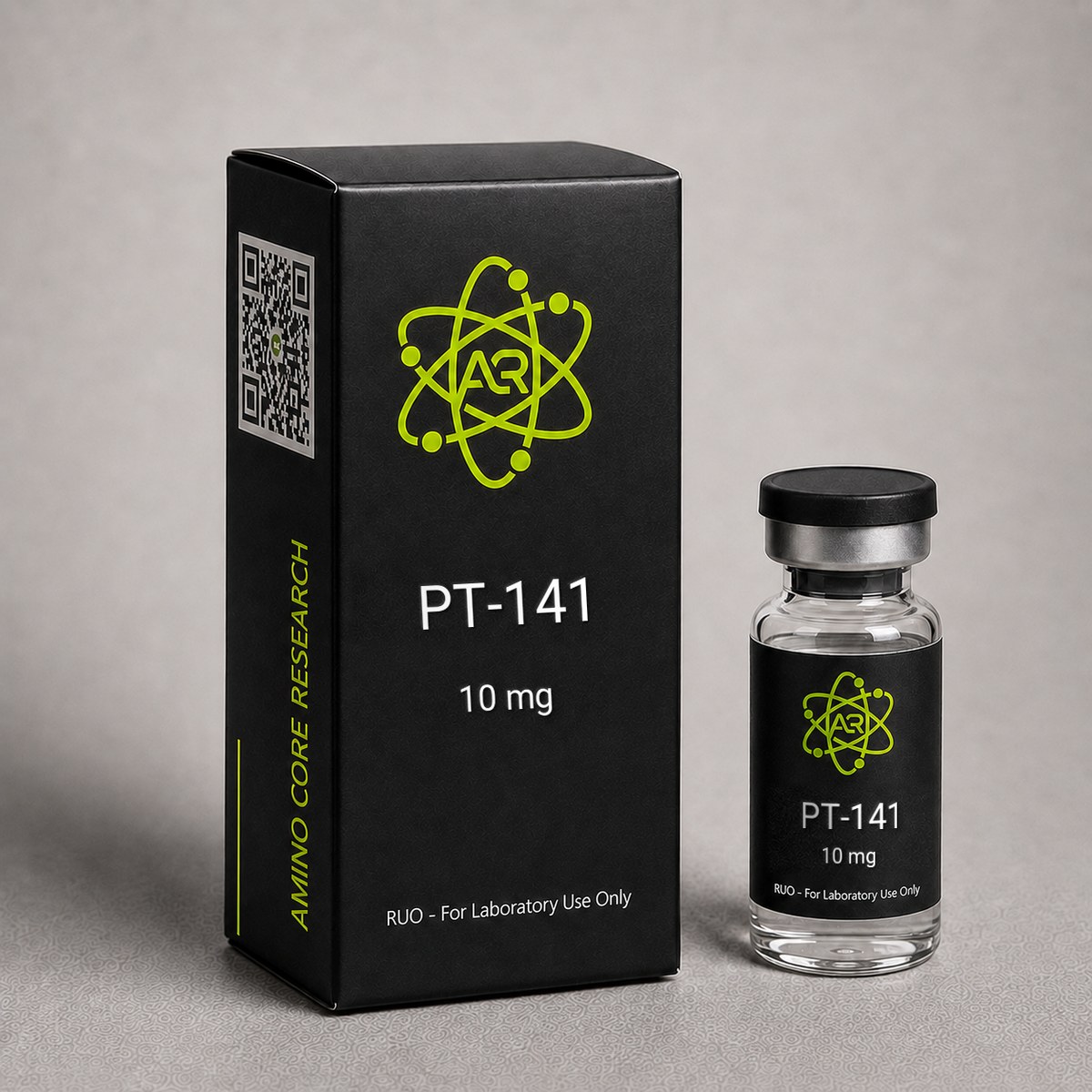
≥99%HPLC Purity
COAIncluded
USAShipped
PT-141 Peptide
Cyclic heptapeptide melanocortin receptor agonist (MC3R/MC4R) derived from alpha-MSH. Demonstrates CNS-mediated activity distinct from peripheral vasodilators. FDA-approved analog (Vyleesi/bremelanotide) validated the melanocortin pathway in hypoactive sexual desire disorder (HSDD). Key research tool for melanocortin signaling, appetite regulation, inflammation, and ischemia-reperfusion studies.
$55.00
In stock — ships next business day
Best price — free shipping & bac water included
| Simple Peptide | AminoCore ✓ all‑in | |
|---|---|---|
| 10mg price | $45.00 | $55.00 |
| Shipping | +$13.00 | FREE |
| Bac Water | +$30.00 | FREE |
| Total paid | $88.00 | $55.00 save up to $33.00 |
Quick Facts
| SKU | ACR-PT141 |
|---|---|
| CAS Number | 189691-06-3 |
| Molecular Formula | C50H68N14O10 |
| Molecular Weight | 1,025.18 g/mol |
| Sequence | Ac-Nle-cyclo[Asp-His-D-Phe-Arg-Trp-Lys]-OH |
| Purity | ≥99% |
| Physical Form | Lyophilized Powder |
| Storage | Store at -20°C |
What is PT-141 (Bremelanotide)?
PT-141 (Bremelanotide) is a synthetic cyclic heptapeptide with the sequence Ac-Nle-Asp(His-D-Phe-Arg-Trp-Lys)-OH and molecular weight 1,025.18 g/mol (CAS 189691-06-3). It is derived from the alpha-melanocyte-stimulating hormone (α-MSH) analog Melanotan II, but with the C-terminal amide replaced by a free acid, eliminating melanogenesis while preserving melanocortin receptor activity.
PT-141 acts primarily on MC3R and MC4R melanocortin receptors in the central nervous system, making it the first compound to demonstrate that sexual arousal can be pharmacologically modulated through a central (non-vascular) mechanism. An analog was FDA-approved in 2019 as Vyleesi for hypoactive sexual desire disorder (HSDD).
What is PT-141 (Bremelanotide)?
PT-141, also known as bremelanotide, is a synthetic cyclic heptapeptide with the molecular formula C₅₀H₆₈N₁₄O₁₀, a molecular weight of 1,025.18 g/mol, and CAS number 189691-06-3. Its full modified sequence is Ac-Nle-cyclo[Asp-His-D-Phe-Arg-Trp-Lys]-OH. Originally developed by Palatin Technologies, PT-141 was derived from the superpotent linear alpha-melanocyte-stimulating hormone (α-MSH) analog Melanotan II (MT-II) through targeted structural refinement. The key modification — removal of the C-terminal amide and metabolic liability of the linear tails — produced a compound that retained melanocortin receptor agonism while offering an improved pharmacological profile.
PT-141 has been the subject of extensive research spanning more than two decades. The compound acts primarily on melanocortin-3 (MC3R) and melanocortin-4 (MC4R) receptors, both of which are expressed in the central nervous system (CNS), particularly in hypothalamic nuclei involved in sexual behavior, energy homeostasis, and autonomic regulation. Unlike phosphodiesterase type 5 (PDE5) inhibitors such as sildenafil, which act peripherally on vascular smooth muscle, PT-141 research has demonstrated a centrally mediated mechanism of action, making it a unique tool in sexual function and neuroendocrine research. The FDA approved bremelanotide (Vyleesi®) in June 2019 for premenopausal women with acquired, generalized hypoactive sexual desire disorder (HSDD), marking the first melanocortin receptor agonist approved for this indication.
What distinguishes PT-141 from its parent compound Melanotan II is its refined receptor selectivity profile and absence of significant melanogenic (skin-darkening) activity at research-relevant doses. While MT-II activates MC1R (pigmentation), MC3R, MC4R, and MC5R broadly, PT-141 shows preferential activity at MC3R and MC4R, the receptor subtypes most implicated in CNS-driven behavioral and metabolic effects. This selectivity, combined with its cyclic lactam bridge conferring conformational stability, makes PT-141 a valuable research tool for dissecting melanocortin receptor function in models of sexual arousal, appetite, inflammation, and ischemia-reperfusion injury.
Mechanism of Action
MC4R Activation: PT-141 crosses the blood-brain barrier and activates MC4R in the hypothalamic paraventricular nucleus (PVN) and medial preoptic area (MPOA). MC4R signaling triggers downstream oxytocin and dopamine release in circuits governing sexual arousal — a fundamentally different mechanism from PDE5 inhibitors (sildenafil) which act peripherally on vascular smooth muscle.
MC3R Activity: PT-141 also activates MC3R, which modulates energy homeostasis and feeding behavior. This dual MC3R/MC4R activity connects the melanocortin system to both reproductive and metabolic signaling.
D-Phe7 Substitution: The D-phenylalanine at position 7 is critical for receptor selectivity. This non-natural amino acid confers high MC4R affinity while reducing MC1R melanogenesis activity (the tanning effect seen with Melanotan II).
Mechanism of Action
PT-141 (bremelanotide) exerts its biological effects through agonism of melanocortin receptors, a family of five G-protein-coupled receptors (MC1R–MC5R) that signal primarily through Gαs-mediated activation of adenylyl cyclase, leading to increased intracellular cyclic adenosine monophosphate (cAMP). The compound's pharmacological activity is concentrated at two receptor subtypes:
MC4R Agonism — Sexual Behavior and Autonomic Regulation
The melanocortin-4 receptor is the primary mediator of PT-141's effects on sexual arousal and desire. MC4R is densely expressed in the paraventricular nucleus (PVN) and medial preoptic area (MPOA) of the hypothalamus — brain regions critically involved in the integration of sexual motivation and autonomic output. Activation of MC4R by PT-141 stimulates cAMP/PKA signaling cascades that converge on oxytocin-producing neurons in the PVN, facilitating downstream release of oxytocin, which has been associated with both erectile responses in male models and genital arousal in female models. PT-141 demonstrates EC₅₀ values in the low nanomolar range at MC4R (approximately 2.9 nM in cell-based functional assays), consistent with potent agonism. Importantly, MC4R-mediated effects are CNS-dependent, distinguishing PT-141's mechanism from peripheral vasodilators. In preclinical models, intracerebroventricular administration of MC4R agonists elicits penile erection, and this effect is blocked by MC4R antagonists such as SHU9119, confirming receptor specificity.
MC3R Agonism — Energy Homeostasis and Metabolic Integration
PT-141 also binds and activates MC3R (EC₅₀ ~14 nM), which is expressed in the arcuate nucleus, ventromedial hypothalamus, and limbic structures. MC3R functions as a presynaptic autoreceptor on pro-opiomelanocortin (POMC) and agouti-related peptide (AgRP) neurons, modulating the tone of the melanocortin system itself. Research suggests MC3R activation contributes to the integration of metabolic signals with motivational behavior, including feeding and reward. In MC3R-knockout animal models, metabolic efficiency is altered with increased adiposity despite normal food intake, highlighting the receptor's role in nutrient partitioning. PT-141's dual MC3R/MC4R activity thus positions it at the intersection of reproductive and metabolic signaling pathways.
Downstream Signaling and Neuropeptide Release
Beyond cAMP/PKA, MC4R activation by PT-141 has been associated with engagement of ERK1/2 MAPK signaling and calcium mobilization pathways in specific neuronal populations. The functional consequence includes enhanced release of not only oxytocin but also dopamine in mesolimbic circuits — a mechanism that may underlie the subjective desire and motivational components of arousal observed in clinical investigations. This multi-pathway engagement distinguishes melanocortin agonists from single-target compounds and makes PT-141 a versatile research probe for studying the interplay between neuropeptide systems, autonomic function, and behavior.
Research & Clinical Studies
Clinical Research: Sexual Function
Multiple Phase 2/3 clinical trials established PT-141/bremelanotide efficacy:
- RECONNECT trials: Statistically significant improvement in desire and reduction in distress in premenopausal women with HSDD (p<0.001)
- Male studies: 67% of men with erectile dysfunction achieved erections sufficient for intercourse (vs 20% placebo)
- Onset: Effects begin within 30-60 minutes of administration
- Key advantage: Works through central arousal pathways, effective regardless of vascular status
[1] Kingsberg SA et al. Bremelanotide for the Treatment of Hypoactive Sexual Desire Disorder: Two Randomized Phase 3 Trials. Obstet Gynecol. 2019;134(5):899-908. PubMed ↗
Research: Appetite and Energy Homeostasis
PT-141 melanocortin activation also modulates appetite circuits. MC4R in the PVN is a key integration point for leptin/ghrelin signaling. Research shows PT-141 reduces food intake in animal models through anorexigenic signaling, connecting sexual function and metabolic regulation through the same melanocortin pathway.
Research: Melanocortin System and Appetite
PT-141 activates MC4R in the paraventricular nucleus, the same receptor implicated in appetite regulation. Loss-of-function MC4R mutations are the most common monogenic cause of obesity in humans. Research shows PT-141 administration reduces food intake in animal models through anorexigenic POMC/CART neuron activation. This connects the melanocortin system to both reproductive and metabolic physiology.
Interestingly, the MC4R agonist setmelanotide (Imcivree) was FDA-approved for genetic obesity caused by POMC, PCSK1, or LEPR deficiency — validating the melanocortin pathway as a viable metabolic target and supporting further research with MC4R agonists like PT-141.
[1] Farooqi IS et al. Clinical spectrum of obesity and mutations in the melanocortin 4 receptor gene. N Engl J Med. 2003;348(12):1085-1095. PubMed ↗
Research: Hemorrhagic Shock and Ischemia
Beyond sexual function, melanocortin agonists including PT-141 have shown cytoprotective effects in ischemia-reperfusion models. MC4R activation triggers anti-inflammatory cascades (reduced TNF-α, IL-6, IL-1β) and anti-apoptotic signaling via PI3K/Akt pathway activation. Preclinical studies demonstrated improved organ survival and reduced mortality in hemorrhagic shock models treated with melanocortin agonists.
Melanocortin Receptor Subtypes and Selectivity
The melanocortin receptor family (MC1R-MC5R) mediates diverse physiological functions. PT-141 binding affinities: MC4R > MC3R >> MC1R > MC5R. This selectivity profile is crucial — MC4R mediates sexual arousal and appetite regulation, MC3R modulates energy homeostasis, while minimal MC1R activity avoids the skin darkening seen with Melanotan II. The cyclic structure and D-Phe7 substitution are responsible for this selectivity.
Comparison with other melanocortin agonists: setmelanotide (MC4R-selective, approved for genetic obesity), MTII (non-selective, causes tanning), alpha-MSH (endogenous, short half-life). PT-141 offers the best balance of MC4R potency with manageable selectivity for research applications.
Clinical Research: Bremelanotide in Female Hypoactive Sexual Desire Disorder (RECONNECT Trials)
The RECONNECT program comprised two pivotal Phase 3, randomized, double-blind, placebo-controlled trials (Study 301 and Study 302) evaluating subcutaneous bremelanotide (1.75 mg) in premenopausal women diagnosed with hypoactive sexual desire disorder (HSDD). These trials enrolled a combined total of approximately 1,247 women over 24 weeks of treatment, with participants self-administering the compound at least 45 minutes before anticipated sexual activity.
Key findings from the RECONNECT program included:
- Desire: Bremelanotide-treated participants demonstrated a statistically significant increase in the Female Sexual Function Index (FSFI) desire domain score compared to placebo (mean change from baseline: +0.5 vs. +0.2, p < 0.001 in the pooled analysis).
- Distress: The Female Sexual Distress Scale–Desire/Arousal/Orgasm (FSDS-DAO) Item 13 score (distress related to low sexual desire) decreased significantly in the bremelanotide group compared to placebo (mean change: −1.0 vs. −0.6, p < 0.001).
- Satisfying sexual events (SSEs): A modest but statistically significant increase in SSEs was observed, though the primary endpoints were desire and distress, not frequency of events.
- Tolerability: The most commonly reported adverse events were nausea (reported in approximately 40% of the bremelanotide group vs. 1% placebo), flushing, headache, and transient injection site reactions. Nausea was typically mild to moderate and decreased with continued use.
- Blood pressure: Transient increases in systolic and diastolic blood pressure (mean ~3 mmHg) were observed within 2–3 hours of administration, returning to baseline within 12 hours.
The RECONNECT data formed the basis of the FDA's June 2019 approval of bremelanotide (Vyleesi®) for premenopausal HSDD. The approval was notable as it validated a melanocortin-mediated, centrally acting mechanism for sexual desire modulation, distinct from any previously approved pharmacological approach.
[1] Kingsberg SA, Clayton AH, Portman D, et al. Bremelanotide for the treatment of hypoactive sexual desire disorder: two randomized phase 3 trials. Obstet Gynecol. 2019;134(5):899-908. PubMed ↗
Research: Melanocortin Agonism in Male Erectile Dysfunction Models
The earliest clinical evidence for the erectogenic properties of melanocortin receptor agonists emerged from controlled studies of both Melanotan II and PT-141 in male subjects with erectile dysfunction (ED). In a landmark double-blind, placebo-controlled crossover study, Wessells and colleagues (1998) administered the melanocortin agonist subcutaneously to men with psychogenic ED and monitored penile tumescence using RigiScan. Subjects receiving active compound demonstrated clinically meaningful erectile responses — defined as rigidity at the penile tip exceeding 80% for at least 10 minutes — significantly more often than those receiving placebo.
Subsequent Phase 2 research specifically evaluated PT-141 administered intranasally in men with ED (Diamond et al., 2004). Key results included:
- A dose-dependent increase in erectile response at 7 mg and 20 mg intranasal doses compared to placebo.
- RigiScan data showed significant improvement in both tip and base rigidity, with responses occurring within 30 minutes of administration.
- Erectile responses were observed even in a subset of patients who had not responded to sildenafil, supporting the hypothesis of a CNS-mediated mechanism independent of PDE5 pathway modulation.
- Common adverse events included nausea and flushing; no clinically significant changes in blood pressure were reported at the doses studied.
These findings provided important preclinical and early clinical evidence that the melanocortin system represents a pharmacologically tractable target for sexual function research operating through a fundamentally different mechanism than established peripheral vasodilators.
[1] Wessells H, Fuciarelli K, Hansen J, et al. Synthetic melanotropic peptide initiates erections in men with psychogenic erectile dysfunction: double-blind, placebo controlled crossover study. J Urol. 1998;160(2):389-393. PubMed ↗
[2] Diamond LE, Earle DC, Rosen RC, et al. Double-blind, placebo-controlled evaluation of the safety, pharmacokinetic properties and pharmacodynamic effects of intranasal PT-141, a melanocortin receptor agonist, in healthy males and patients with mild-to-moderate erectile dysfunction. Int J Impot Res. 2004;16(1):51-59. PubMed ↗
Research: Melanocortin System and Appetite Regulation
The melanocortin system is a central integrator of energy homeostasis, and PT-141's activity at MC3R and MC4R positions it as a relevant probe for appetite and feeding behavior research. MC4R agonists in general have been associated with reduced food intake in preclinical models, and loss-of-function mutations in MC4R represent the most common monogenic cause of severe obesity in humans, affecting an estimated 2–5% of severely obese individuals.
In animal models, administration of melanocortin agonists targeting MC4R consistently produces anorectic effects. Fan et al. (1997) demonstrated that intracerebroventricular injection of the MC4R agonist MTII (the parent compound of PT-141) suppressed food intake in both fasted and ad libitum-fed rodents, an effect completely blocked by co-administration of the MC3R/MC4R antagonist SHU9119. Subsequent research by Kask et al. (1998) confirmed that these effects were mediated through hypothalamic circuits in the arcuate nucleus and PVN.
Key observations from melanocortin appetite research relevant to PT-141 include:
- MC4R knockout mice develop hyperphagia and obesity, demonstrating the receptor's tonic role in appetite suppression.
- MC3R knockout mice show increased adiposity without increased food intake, suggesting a role in energy partitioning and metabolic efficiency rather than satiety per se.
- Peripheral administration of PT-141 at doses used in sexual function research has been associated with mild nausea in clinical trials, which may partially reflect central melanocortin-mediated modulation of visceral afferent signaling and brainstem emetic circuits.
These findings underscore the broad physiological role of the melanocortin pathway and highlight PT-141 as a research tool for studying the intersection of metabolic and reproductive neuroendocrine circuits.
[1] Fan W, Boston BA, Kesterson RA, Hruby VJ, Cone RD. Role of melanocortinergic neurons in feeding and the agouti obesity syndrome. Nature. 1997;385(6612):165-168. PubMed ↗
[2] Farooqi IS, Keogh JM, Yeo GS, et al. Clinical spectrum of obesity and mutations in the melanocortin 4 receptor gene. N Engl J Med. 2003;348(12):1085-1095. PubMed ↗
Research: Hemorrhagic Shock and Ischemia-Reperfusion Injury
An emerging area of melanocortin research involves the protective effects of MC receptor agonism in models of hemorrhagic shock, ischemia-reperfusion injury, and systemic inflammation. This line of investigation originated from the observation that alpha-MSH and its analogs possess anti-inflammatory and cytoprotective properties mediated in part through MC3R and MC4R signaling in immune and vascular tissues.
Catania and colleagues have extensively documented that melanocortin peptides modulate NF-κB signaling, inhibit the production of pro-inflammatory cytokines including TNF-α, IL-1β, and IL-6, and attenuate neutrophil infiltration in organ injury models. Specifically, PT-141 and related melanocortin agonists have been investigated in rodent models of hemorrhagic shock with the following observations:
- Administration of melanocortin agonists reduced organ damage scores in liver and intestine following controlled hemorrhage and resuscitation.
- Plasma TNF-α and IL-6 levels were significantly attenuated in treated groups compared to vehicle controls.
- Protective effects were associated with preserved microvascular perfusion and reduced leukocyte-endothelial adhesion in intravital microscopy studies.
- The effects were blocked by MC3R/MC4R antagonists, confirming melanocortin receptor dependence.
These findings suggest that the melanocortin system may function as an endogenous anti-inflammatory circuit, and that exogenous agonists like PT-141 could serve as research tools for studying organ-protective mechanisms in shock and ischemia-reperfusion settings. Research in this area remains preclinical.
[1] Catania A, Gatti S, Colombo G, Lipton JM. Targeting melanocortin receptors as a novel strategy to control inflammation. Pharmacol Rev. 2004;56(1):1-29. PubMed ↗
[2] Giuliani D, Mioni C, Altavilla D, et al. Both early and delayed treatment with melanocortin 4 receptor-stimulating melanocortins produces neuroprotection in cerebral ischemia. Endocrinology. 2006;147(3):1126-1135. PubMed ↗
Melanocortin Receptor Subtypes: Selectivity and Comparative Pharmacology
Understanding PT-141's receptor selectivity profile is essential for interpreting its pharmacological effects and distinguishing it from related melanocortin peptides. The five melanocortin receptors (MC1R–MC5R) have distinct tissue distributions and physiological roles:
- MC1R — Skin melanocytes; mediates pigmentation (melanogenesis). Activation by α-MSH or Melanotan II leads to eumelanin synthesis.
- MC2R — Adrenal cortex; the ACTH receptor. Exclusively activated by ACTH; no significant PT-141 activity.
- MC3R — Hypothalamus, limbic system, peripheral immune cells; involved in energy homeostasis, feeding, and inflammation. PT-141 EC₅₀ ~14 nM.
- MC4R — Hypothalamus (PVN, MPOA), brainstem, spinal cord; mediates sexual function, appetite suppression, autonomic regulation, and cardiovascular reflexes. PT-141 EC₅₀ ~2.9 nM.
- MC5R — Exocrine glands, immune cells; involved in sebaceous gland function and immunomodulation.
Comparative binding and functional data illustrate the pharmacological distinction between PT-141 and its parent compound Melanotan II:
| Parameter | PT-141 (Bremelanotide) | Melanotan II |
|---|---|---|
| MC1R Activity | Low (minimal melanogenic effect at therapeutic doses) | High (significant skin darkening) |
| MC3R EC₅₀ | ~14 nM | ~7 nM |
| MC4R EC₅₀ | ~2.9 nM | ~3.3 nM |
| MC5R Activity | Low | Moderate |
| Route Studied | Subcutaneous (approved), intranasal (Phase 2) | Subcutaneous (research only) |
| Regulatory Status | FDA-approved (Vyleesi®, 2019) | Not approved; research use only |
The structural modification that converts Melanotan II to PT-141 — specifically, removal of the N-terminal acetyl group's metabolic pathway and C-terminal amide, producing a free-acid C-terminus — reduces MC1R-mediated melanogenic activity while preserving potent MC3R/MC4R agonism. This selectivity refinement has been instrumental in developing PT-141 as a more targeted melanocortin research tool with a cleaner pharmacological profile for CNS-mediated endpoint studies.
[1] Hruby VJ, Cai M, Grieco P, et al. Exploration of the stereochemical and conformational requirements and receptor selectivity for melanocortin receptor ligands. Ann N Y Acad Sci. 2003;994:12-20.
[2] Hadley ME, Dorr RT. Melanocortin peptide therapeutics: historical milestones, clinical studies and commercialization. Peptides. 2006;27(4):921-930. PubMed ↗
Chemical & Physical Properties
| Sequence | Ac-Nle-cyclo[Asp-His-D-Phe-Arg-Trp-Lys]-OH |
|---|---|
| Molecular Formula | C₅₀H₆₈N₁₄O₁₀ |
| Molecular Weight | 1,025.18 g/mol |
| CAS Number | 189691-06-3 |
| Structure | Cyclic heptapeptide (lactam bridge Asp-Lys) |
| Amino Acids | 7 (including D-Phe and Nle non-natural residues) |
| Solubility | Soluble in water, DMSO, bacteriostatic water |
| Purity | ≥99% by HPLC |
Chemical & Physical Properties
| Full Name | Bremelanotide (PT-141) |
|---|---|
| Synonyms | PT-141, Bremelanotide, PT141, Vyleesi® |
| Molecular Formula | C₅₀H₆₈N₁₄O₁₀ |
| Molecular Weight | 1,025.18 g/mol |
| CAS Number | 189691-06-3 |
| Sequence | Ac-Nle-cyclo[Asp-His-D-Phe-Arg-Trp-Lys]-OH |
| Amino Acid Count | 7 (cyclic heptapeptide with lactam bridge between Asp and Lys side chains) |
| Origin / Developer | Palatin Technologies, Inc. (derived from Melanotan II, University of Arizona) |
| Key Modifications | Norleucine (Nle) at position 1 (replacing Met); D-Phe at position 4; cyclic lactam bridge (Asp–Lys); N-terminal acetylation; C-terminal free acid |
| Physical Form | Lyophilized powder (white to off-white) |
| Solubility | Freely soluble in sterile water and bacteriostatic water at concentrations up to 10 mg/mL; soluble in DMSO; limited solubility in organic solvents |
| Purity | ≥99% by HPLC |
| Receptor Targets | MC3R (EC₅₀ ~14 nM), MC4R (EC₅₀ ~2.9 nM) |
| Appearance of Solution | Clear, colorless upon reconstitution |
Handling & Reconstitution
- Allow PT-141 vial and BAC water to reach room temperature.
- Add BAC water slowly along vial wall. PT-141 dissolves readily as a small cyclic peptide.
- Solution should be clear and colorless within 2-3 minutes.
- For 10 mg vial: 1 mL BAC water = 10 mg/mL concentration.
PT-141 is a cyclic peptide with enhanced stability compared to linear peptides. The lactam bridge protects against proteolytic degradation.
Handling & Reconstitution Guidelines
PT-141 (bremelanotide) is supplied as a lyophilized powder and requires reconstitution before use in research applications. Follow the protocol below to ensure compound integrity and accurate dosing:
- Prepare materials: Gather the PT-141 vial, sterile bacteriostatic water (0.9% benzyl alcohol) or plain sterile water, an appropriately sized syringe, and alcohol swabs.
- Sanitize: Wipe the vial stopper and water vial stopper with an alcohol swab and allow to air-dry for 30 seconds.
- Calculate the desired concentration: For a standard 10 mg vial, adding 2 mL of bacteriostatic water yields a concentration of 5 mg/mL; adding 1 mL yields 10 mg/mL.
- Add solvent slowly: Draw the calculated volume into the syringe and inject gently against the inner wall of the vial, directing the stream onto the glass rather than directly onto the lyophilized cake.
- Dissolve by gentle swirling: Allow the solvent to gradually wet the peptide. Gently swirl or roll the vial between the palms until the solution is clear. Do not vortex, shake vigorously, or sonicate, as mechanical stress can denature the peptide and disrupt the cyclic lactam structure.
- Inspect the solution: The reconstituted product should be a clear, colorless liquid. Any persistent turbidity, particulate matter, or discoloration indicates possible degradation — do not use.
- Aliquot if necessary: For long-term storage, divide into single-use aliquots in sterile microcentrifuge tubes to minimize freeze-thaw cycles.
Handling Notes: PT-141 contains norleucine (Nle) in place of methionine at position 1, which confers improved oxidative stability compared to native α-MSH peptides. Nevertheless, exposure to strong oxidizing agents, prolonged UV light, or extreme pH should be avoided. The cyclic lactam bridge between Asp and Lys residues is stable under normal reconstitution conditions but may be susceptible to hydrolysis at extremes of pH (below 3 or above 9).
Storage & Stability
Lyophilized: -20°C for 24+ months, 2-8°C for 6+ months. Reconstituted: 2-8°C, use within 21 days. The cyclic structure provides inherent stability — PT-141 is more resistant to degradation than linear peptides of similar size.
Storage & Stability Information
Proper storage is essential to maintain the integrity and biological activity of PT-141 (bremelanotide). The cyclic lactam structure provides enhanced stability compared to linear peptides, but appropriate temperature and environmental controls are still necessary.
Lyophilized (unreconstituted) storage:
- Long-term (months to years): Store at -20°C in a desiccated environment. Under these conditions, the lyophilized peptide is stable for at least 24 months.
- Short-term (weeks): May be stored at 2–8°C (refrigerator) for up to 4 weeks without significant degradation.
- Transit: The lyophilized form tolerates ambient temperature (up to 25°C) for short periods during shipping (typically 5–7 days) without loss of potency.
Reconstituted storage:
- Store reconstituted PT-141 at 2–8°C and use within 28 days when reconstituted in bacteriostatic water.
- If reconstituted in plain sterile water (without preservative), use within 7 days stored at 2–8°C, or aliquot and freeze at -20°C for up to 3 months.
- Avoid repeated freeze-thaw cycles; each cycle can reduce peptide integrity by an estimated 5–10%.
Stability notes: The Nle substitution at position 1 eliminates the methionine oxidation liability present in native melanocortin peptides, providing superior shelf stability. The lactam bridge between Asp and Lys is hydrolytically stable at neutral pH but may be cleaved under strongly acidic or basic conditions. Protect from prolonged exposure to direct light.
Frequently Asked Questions
What is the difference between PT-141 and Melanotan II?
PT-141 is derived from MT-II but has the C-terminal amide replaced with a free acid. This eliminates the MC1R-mediated melanogenesis (tanning) seen with MT-II while preserving the MC3R/MC4R activity responsible for sexual arousal effects. PT-141 does not cause skin darkening.
Does PT-141 work differently from Viagra/sildenafil?
Yes, fundamentally different mechanisms. Viagra inhibits PDE5 in penile vascular smooth muscle (peripheral, vascular). PT-141 activates MC4R in the brain, triggering central arousal pathways (dopamine, oxytocin). PT-141 works through desire/arousal, Viagra through blood flow.
What is the molecular weight and CAS of PT-141?
PT-141 has MW 1,025.18 g/mol, molecular formula C₅₀H₆₈N₁₄O₁₀, CAS 189691-06-3. It is a cyclic heptapeptide with a lactam bridge between Asp and Lys residues.
Was PT-141 FDA approved?
An analog of PT-141 (bremelanotide, brand name Vyleesi) was FDA-approved in June 2019 for hypoactive sexual desire disorder (HSDD) in premenopausal women. This was the first FDA-approved drug targeting the melanocortin pathway for sexual function.
How should PT-141 be stored?
Lyophilized: -20°C for 24+ months. Reconstituted: 2-8°C, use within 21 days. The cyclic peptide structure provides enhanced stability compared to linear peptides.
What are melanocortin receptors?
The melanocortin system consists of 5 receptors (MC1R-MC5R). MC1R: skin pigmentation. MC2R: adrenal cortisol (ACTH receptor). MC3R/MC4R: appetite, energy homeostasis, sexual function. MC5R: exocrine gland function. PT-141 primarily activates MC3R and MC4R.
Is PT-141 the same as Melanotan II?
No. PT-141 is derived from MT-II but has the C-terminal amide replaced with free acid. This eliminates the MC1R-mediated skin tanning while preserving MC3R/MC4R activity. PT-141 does not cause skin darkening; MT-II does.
What side effects are reported in PT-141 research?
Published clinical data reports: nausea (most common, 40% of subjects, usually transient), flushing (25%), headache (10-15%), and transient blood pressure increase (3-5 mmHg systolic). These effects correlate with central melanocortin activation and are typically self-limiting within 2-3 hours.
For laboratory and research use only. This product is not for human or veterinary use. It is not a drug, supplement or food.
This product is not FDA approved for any indication, and is not intended to diagnose, treat, cure, or prevent any disease. All product information is derived from published preclinical research and does not constitute medical advice or claims.