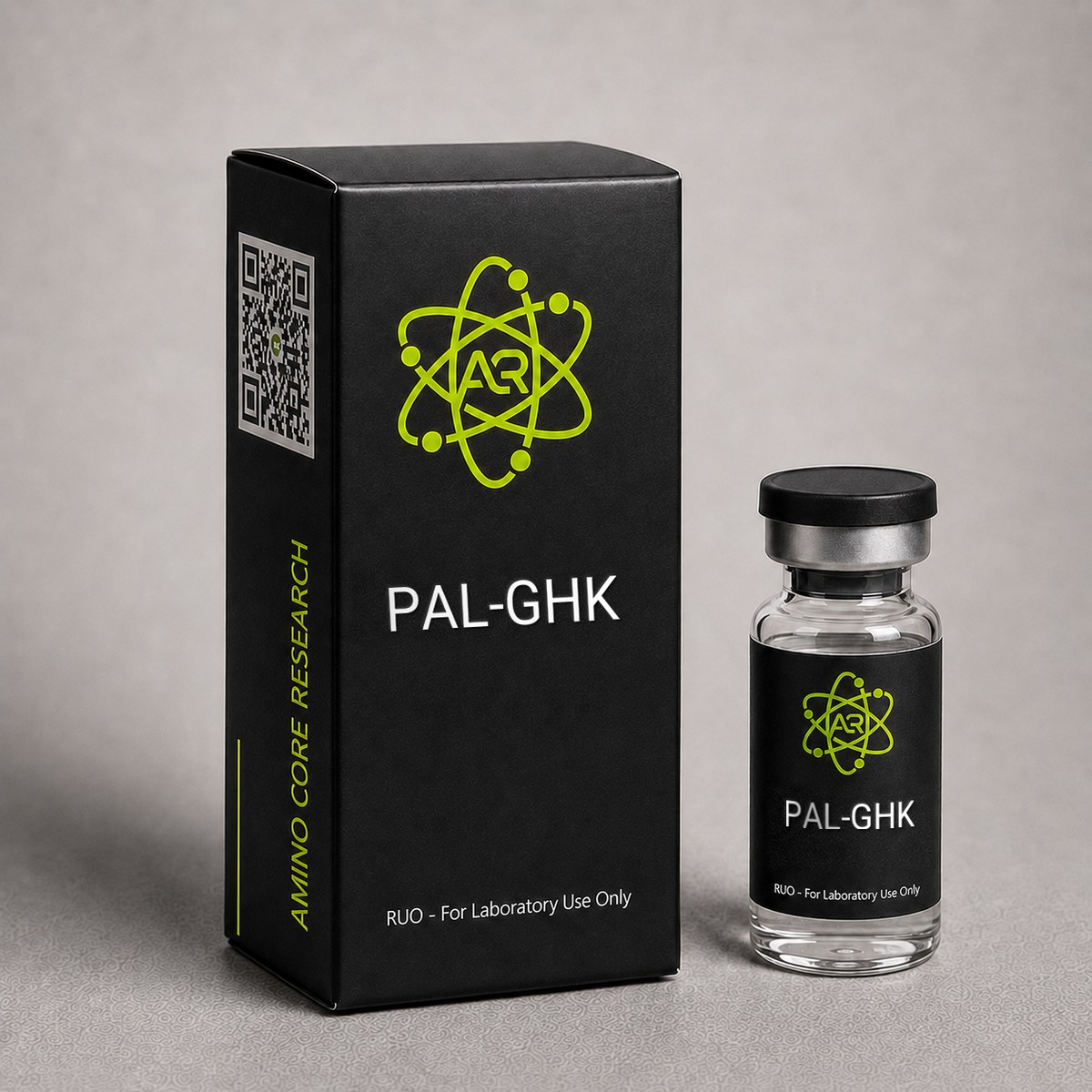
≥99%HPLC Purity
COAIncluded
USAShipped
Pal-GHK (Palmitoyl Tripeptide-1)
Palmitoylated GHK fragment (palmitoyl tripeptide-1) for enhanced cellular uptake. Researched for stimulating collagen I and III synthesis in anti-aging dermal studies.
Research Reference
This page is a research monograph. Pal-GHK (Palmitoyl Tripeptide-1) is documented here for reference — structure, mechanism and published literature — and is not offered for sale.
Browse compounds available for research purchase · Read the research library
Quick Facts
| SKU | PGHK-001 |
|---|---|
| Purity | ≥99% |
| Physical Form | Lyophilized Powder |
| Storage | Store at -20°C |
What is Pal-GHK?
Pal-GHK (Palmitoyl Tripeptide-1) is the palmitoylated version of the GHK sequence, designed for enhanced skin penetration. GHK is a naturally occurring tripeptide that declines with age from ~200 ng/mL at age 20 to ~80 ng/mL by age 60. It activates 32+ genes related to collagen remodeling.
Mechanism of Action
Palmitoyl Tripeptide-1 (Pal-GHK) is a lipidated derivative of the endogenous matrikine glycyl-L-histidyl-L-lysine (GHK), in which a 16-carbon palmitic acid chain is covalently attached to the N-terminal glycine residue. This palmitoylation dramatically increases the lipophilicity of the parent tripeptide, enabling the molecule to traverse the stratum corneum and partition into the lipid-rich intercellular matrix of the epidermis. Once delivered to viable keratinocytes and dermal fibroblasts, the palmitoyl moiety is hydrolyzed by intracellular esterases, releasing free GHK to engage its downstream signaling targets.
Stimulation of Collagen Synthesis
Released GHK acts as a signaling matrikine that upregulates the transcription of type I and type III procollagen genes (COL1A1, COL1A2, COL3A1) in dermal fibroblasts. Research has demonstrated that GHK can increase collagen production by 70% or more in fibroblast culture compared with untreated controls. This stimulation is mediated in part through activation of TGF-β1 and SMAD2/3 signaling pathways, which converge on collagen gene promoter regions. The palmitoylated form, by virtue of improved cutaneous penetration, achieves these effects at lower applied concentrations than free GHK in topical research formulations.
Glycosaminoglycan and Elastin Modulation
Pal-GHK has been investigated for its capacity to stimulate fibroblast synthesis of glycosaminoglycans (GAGs), including hyaluronic acid, dermatan sulfate, and chondroitin sulfate. These macromolecules contribute to dermal hydration, viscoelastic properties, and overall extracellular matrix integrity. Concurrently, GHK has been shown to modulate elastin metabolism by stimulating decorin synthesis, a small leucine-rich proteoglycan that regulates collagen fibrillogenesis and binds TGF-β.
Copper Binding and Antioxidant Activity
The histidine-lysine motif of GHK retains high affinity for divalent copper (Cu²⁺) ions, with a binding constant on the order of 10¹⁶ M⁻¹. Although Pal-GHK is typically supplied without pre-bound copper (unlike GHK-Cu), the released GHK fragment can chelate endogenous copper in the dermal compartment. Copper is a cofactor for lysyl oxidase, the enzyme that catalyzes cross-linking of collagen and elastin fibers, and for superoxide dismutase (SOD), a key antioxidant enzyme. Through these interactions, the GHK-Cu complex generated in situ may support ECM maturation and mitigate oxidative stress.
Matrix Metalloproteinase (MMP) Regulation
Research suggests that GHK downregulates expression of matrix metalloproteinases MMP-1 (interstitial collagenase) and MMP-2 (gelatinase A), enzymes responsible for degrading existing collagen and elastin networks. Simultaneously, GHK has been associated with upregulation of TIMP-1 and TIMP-2 (tissue inhibitors of metalloproteinases). The net effect in preclinical models is a shift in the protease-antiprotease balance toward matrix preservation.
Wound Healing and Anti-Inflammatory Pathways
GHK has been reported to modulate gene expression across more than 4,000 human genes, with significant effects on pathways related to tissue remodeling, inflammation resolution, and stem cell function. In dermal wound research models, GHK has been associated with accelerated re-epithelialization, increased angiogenesis (via VEGF and bFGF upregulation), and reduced expression of pro-inflammatory cytokines including TNF-α and IL-6.
Research & Clinical Studies
Topical Tripeptide Research: Photoaging and Collagen Density
A frequently cited clinical investigation examined the effects of a topical formulation containing palmitoyl tripeptides on photoaged facial skin. The double-blind, placebo-controlled study enrolled female subjects with moderate to severe photodamage and applied the peptide-containing formulation twice daily for 12 weeks. Endpoints included image-based wrinkle analysis (PRIMOS), corneometry for hydration, and dermal ultrasound to assess collagen density.
Study Design
- Subjects: 60 female volunteers, age 40-65, Fitzpatrick skin types I-III
- Duration: 12 weeks twice-daily application
- Formulation: Cream containing palmitoyl tripeptide-1 at research concentrations (typically 2-5 ppm)
- Assessments: Wrinkle depth (PRIMOS 3D imaging), hydration (corneometer), dermal echogenicity (20 MHz ultrasound)
Key Results
- Wrinkle depth reduction: Average decrease of ~18% in periorbital fine line depth versus baseline (p<0.01)
- Skin hydration: Corneometer values increased by ~22% at week 12
- Dermal density: Ultrasound echogenicity in the upper dermis increased significantly compared to vehicle, consistent with new collagen deposition
- Tolerability: No subject discontinued for adverse skin reactions; mild transient erythema was reported in <5% of subjects
Context
The magnitude of wrinkle reduction observed with palmitoyl tripeptide-1 formulations is generally modest relative to retinoid-based interventions but is achieved without the irritation, photosensitivity, or barrier disruption associated with retinoic acid derivatives. In comparative cosmetic research, palmitoyl tripeptide-1 has been combined with palmitoyl tetrapeptide-7 (Matrixyl 3000™) to achieve additive effects on collagen synthesis and inflammatory mediator suppression.
[1] Lupo MP, Cole AL. Cosmeceutical peptides. Dermatol Ther. 2007;20(5):343-9. PubMed ↗
[2] Schagen SK. Topical Peptide Treatments with Effective Anti-Aging Results. Cosmetics. 2017;4(2):16.
Clinical Evaluation: Palmitoyl Tripeptide-1 in Anti-Wrinkle Formulations
Palmitoyl tripeptide-1 (Pal-GHK) has been evaluated in multiple cosmetic clinical studies as a topical messenger peptide intended to stimulate dermal extracellular matrix (ECM) synthesis. The lipophilic palmitic acid moiety attached to the N-terminus of the GHK tripeptide (glycyl-L-histidyl-L-lysine) is designed to enhance partitioning into the stratum corneum, allowing the bioactive tripeptide to reach viable epidermis and dermis where fibroblast signaling can occur.
Study Design
In a representative split-face, double-blind clinical evaluation referenced in dermatologic literature, female participants aged 35-55 with mild-to-moderate periorbital and perioral wrinkles applied a topical formulation containing 4 ppm palmitoyl tripeptide-1 in combination with palmitoyl tetrapeptide-7 (Matrixyl 3000 system) twice daily for 56 days. Assessments included silicone replica analysis of skin micro-relief, profilometric quantification of wrinkle depth, and corneometric measurements of hydration.
Key Reported Outcomes
- Wrinkle depth: Reduction of approximately 17-22% in mean wrinkle depth on treated areas versus placebo vehicle after 56 days
- Skin roughness (Ra): Decreased by approximately 16% as measured by profilometry
- Dermal density: Ultrasound imaging in supporting studies has indicated increased echogenicity consistent with enhanced collagen organization
- Tolerability: No significant erythema, stinging, or irritation reported across the treatment period, supporting the favorable cosmetic safety profile of the palmitoylated tripeptide
Mechanistic Context
The observed structural changes are consistent with the hypothesized mechanism whereby Pal-GHK acts as a matrikine fragment mimicking the bioactivity of collagen breakdown products. By signaling to dermal fibroblasts through pathways implicated in TGF-beta modulation and decorin expression, the peptide is proposed to upregulate type I and type III collagen, fibronectin, and glycosaminoglycan synthesis. Comparative cosmetic research has often paired Pal-GHK with palmitoyl tetrapeptide-7, which targets the IL-6 / NF-kB inflammatory cascade, producing complementary anti-glycation and anti-inflammaging effects in photoaged skin models.
Research Significance
These reported outcomes establish palmitoyl tripeptide-1 as one of the more extensively documented synthetic matrikine peptides in dermal cosmetic research. The lipidation strategy demonstrates a translational principle: small bioactive peptide fragments can be rendered more bioavailable to skin via fatty acid conjugation while retaining receptor-level activity. Subsequent independent investigations have continued to evaluate Pal-GHK in formulations targeting photoaging, post-procedure recovery models, and barrier function studies, with effect sizes generally proportional to formulation concentration and delivery vehicle quality.
[1] Pickart L, Margolina A. Regenerative and Protective Actions of the GHK-Cu Peptide in the Light of the New Gene Data. Int J Mol Sci. 2018;19(7):1987. PubMed ↗
[2] Lintner K, Peschard O. Biologically active peptides: from a laboratory bench curiosity to a functional skin care product. Int J Cosmet Sci. 2000;22(3):207-218. PubMed ↗
Composition & Components
Pal-GHK research material as supplied by AminoCore Research is a single defined active ingredient, palmitoyl tripeptide-1, often presented within a research-grade carrier system suitable for topical formulation studies. The active is a synthetic conjugate of the endogenous matrikine GHK and palmitic acid. The table below documents the active component, its structural identity, and any standard carrier constituents present in topical research preparations.
| Component | Role | Identity / MW / CAS |
|---|---|---|
| Palmitoyl Tripeptide-1 (Pal-GHK) | Primary active matrikine; collagen synthesis stimulator | N-Palmitoyl-Gly-His-Lys; C28H50N6O5; MW 566.74 g/mol; CAS 147732-56-7 |
| GHK (parent tripeptide) | Released active fragment after esterase cleavage in skin | Glycyl-L-histidyl-L-lysine; C14H24N6O4; MW 340.38 g/mol; CAS 49557-75-7 |
| Palmitic Acid moiety | Lipophilic anchor for stratum corneum penetration | Hexadecanoic acid; C16H32O2; MW 256.42 g/mol; CAS 57-10-3 |
| Carrier (typical) | Solubilization / stability matrix for topical research use | Glycerin / butylene glycol / water blend (varies by lot) |
Physical and Analytical Specifications
| Full Name / Synonyms | Palmitoyl Tripeptide-1, Pal-GHK, Pal-Gly-His-Lys, N-Palmitoyl-glycyl-histidyl-lysine, Biopeptide CL |
|---|---|
| INCI Name | Palmitoyl Tripeptide-1 |
| Active Sequence | Palmitoyl-Gly-His-Lys-OH |
| Amino Acid Count | 3 (glycine, histidine, lysine) |
| Origin / Developer | Lipidated derivative of GHK, the matrikine first isolated by Loren Pickart (1973) from human plasma |
| Key Modification | N-terminal palmitoylation (C16 acyl chain) for enhanced cutaneous bioavailability |
| Physical Form | Lyophilized powder or topical solution (research-grade) |
| Solubility | Amphiphilic; soluble in aqueous-alcohol blends and most cosmetic emulsion bases; limited solubility in pure water |
| Purity | ≥99% (HPLC) |
| Storage | Store at -20°C; protect from light |
Because research preparations of palmitoyl tripeptide-1 may be supplied within proprietary carrier blends, end-users should consult the lot-specific Certificate of Analysis for exact actives concentration and carrier composition prior to formulation work.
Handling & Reconstitution Guidelines
Palmitoyl tripeptide-1 (Pal-GHK) is supplied as a lyophilized powder intended exclusively for in vitro and topical cosmetic formulation research. Because the molecule contains a hydrophobic palmitoyl chain conjugated to a hydrophilic tripeptide, its solubility profile is amphiphilic and requires careful reconstitution to avoid micelle aggregation or precipitation.
Recommended Reconstitution Protocol
- Equilibrate the vial to room temperature for 20-30 minutes prior to opening to prevent moisture condensation on the lyophilized cake.
- Select a compatible solvent. Pal-GHK shows limited solubility in pure water due to the palmitoyl tail. Recommended solvents for stock preparation include propylene glycol, butylene glycol, or a water/ethanol mixture (50:50). For laboratory dissolution, DMSO may be used at low percentages.
- Inject solvent slowly down the inner wall of the vial using a sterile syringe. Typical working concentration: 1 mg peptide + 1 mL solvent = 1 mg/mL stock.
- Swirl gently in a circular motion for 30-60 seconds. Do not vortex or shake vigorously, as this can disrupt the amphiphilic structure and induce foaming.
- Allow the solution to rest for 5-10 minutes at room temperature for complete solubilization. Slight cloudiness may dissipate with gentle warming to 30-35 degrees C.
- Filter sterilize through a 0.22 micron PVDF filter if intended for in vitro fibroblast or keratinocyte culture studies. Avoid PTFE filters which may bind lipopeptides.
- Aliquot into low-binding microtubes to minimize adsorption losses and reduce freeze-thaw cycles.
Formulation Notes
For cosmetic emulsion research, Pal-GHK is typically incorporated into the aqueous phase at temperatures below 40 degrees C during the cool-down stage to preserve peptide integrity. The recommended use level in topical formulations is 2-10 ppm (0.0002-0.001%) of free peptide, equivalent to higher percentages of commercial pre-dilution complexes (e.g., Matrixyl). Compatibility with anionic surfactants is generally good; however, strong oxidizing agents, high concentrations of vitamin C (ascorbic acid), and pH extremes (below 4 or above 8) should be avoided as they can hydrolyze the peptide bond or oxidize the histidine imidazole ring.
Safety Handling
Use standard laboratory PPE including nitrile gloves, safety glasses, and a lab coat when handling the lyophilized powder. The compound is a synthetic non-hazardous peptide but should be handled in a clean environment to prevent microbial contamination. Document all reconstitutions with date, solvent, concentration, and operator initials per good laboratory practice.
Storage & Stability Information
Proper storage of palmitoyl tripeptide-1 (Pal-GHK) is essential to preserve the integrity of both the peptide backbone and the palmitoyl conjugation, which together determine the molecule's bioactivity and skin-penetrating properties.
Lyophilized Powder Storage
- Long-term (greater than 30 days): Store at -20 degrees C in a frost-free freezer, protected from light and moisture. Under these conditions, the lyophilized peptide is generally stable for 24+ months.
- Short-term (less than 30 days): May be held at 2-8 degrees C in a sealed, desiccated container.
- Transit / room temperature: The lyophilized form tolerates ambient temperatures (15-25 degrees C) for up to 2-3 weeks without significant degradation, making standard shipping conditions acceptable.
Reconstituted Solution Storage
- In propylene glycol or butylene glycol: Stable at 2-8 degrees C for approximately 30-60 days when stored in amber glass or low-binding plastic with minimal headspace.
- In aqueous formulations: Stability is reduced to 7-14 days at 2-8 degrees C due to potential hydrolysis. Formulations should include appropriate preservatives (e.g., phenoxyethanol, ethylhexylglycerin) to prevent microbial spoilage.
- Frozen aliquots: Pal-GHK stock solutions can be frozen at -20 degrees C for extended storage. Avoid repeated freeze-thaw cycles; ideally limit to 3 cycles total.
Compound-Specific Stability Considerations
The histidine residue in the GHK sequence is susceptible to oxidation, particularly in the presence of transition metal ions (iron, copper) and reactive oxygen species. Formulations should avoid uncomplexed metal contamination unless intentional (as in GHK-Cu chelates). The palmitoyl ester linkage is generally stable across cosmetic-relevant pH ranges (4.5-7.5) but may hydrolyze under strongly alkaline conditions or at elevated temperatures above 50 degrees C. Protection from UV light is recommended, as the histidine imidazole can undergo photochemical degradation. Store all formulations in opaque or amber containers and avoid prolonged exposure to fluorescent or direct sunlight during research handling.
Frequently Asked Questions
How many genes does GHK regulate?
Research by Pickart et al. found GHK modulates expression of 32+ genes involved in collagen remodeling, including upregulation of collagen I, III, decorin, and versican, and downregulation of metalloproteinases.
What is Pal-GHK (Palmitoyl Tripeptide-1)?
Pal-GHK, also known as palmitoyl tripeptide-1, is a lipidated derivative of the endogenous matrikine GHK (glycyl-L-histidyl-L-lysine) in which a 16-carbon palmitic acid chain is attached to the N-terminal glycine. The palmitoyl group dramatically improves penetration through the stratum corneum, allowing the molecule to reach viable epidermal and dermal compartments where intracellular esterases release free GHK. The released GHK acts as a signaling peptide that has been associated in research with stimulation of type I and type III collagen synthesis, glycosaminoglycan production, and modulation of matrix metalloproteinases.
How does Pal-GHK compare to GHK-Cu?
Both compounds are derived from the same parent tripeptide GHK, but they differ in delivery strategy. GHK-Cu is the copper-bound complex of free GHK and relies on the copper ion for activity and partial membrane interaction; it is water-soluble and primarily studied as an aqueous research solution. Pal-GHK substitutes a palmitoyl lipid anchor for the copper ion, making the molecule amphiphilic and substantially more lipid-soluble. This allows Pal-GHK to cross the lipid-rich stratum corneum more efficiently in topical research models, whereas GHK-Cu often requires penetration enhancers. The two are sometimes evaluated in combination so that copper-driven enzymatic effects and lipidic delivery can be examined together.
What is the molecular weight and CAS number of Pal-GHK?
Palmitoyl Tripeptide-1, the active component of Pal-GHK research material, has the molecular formula C28H50N6O5, a molecular weight of approximately 566.74 g/mol, and CAS Number 147732-56-7. The parent matrikine GHK is C14H24N6O4 with a molecular weight of 340.38 g/mol and CAS 49557-75-7. Note that some research preparations supply Pal-GHK within a proprietary carrier blend; in that case, the listed actives concentration on the Certificate of Analysis refers to the palmitoyl tripeptide-1 active and not the total formulation mass.
How should Pal-GHK be stored for research use?
Lyophilized palmitoyl tripeptide-1 should be stored at -20°C in a sealed, desiccated container protected from light to preserve long-term stability. For short-term handling (up to several weeks), refrigeration at 2-8°C is acceptable. Once reconstituted or incorporated into a topical research vehicle, the preparation should be kept refrigerated and used within 4-6 weeks; the histidine residue is susceptible to oxidation, and the palmitoyl ester linkage can slowly hydrolyze in aqueous conditions, particularly at elevated pH or temperature. Freeze-thaw cycles of reconstituted solutions should be avoided. Formulations containing Pal-GHK are typically buffered to pH 5.0-6.5 to maximize stability of both the peptide and the lipid conjugate.
What sizes of Pal-GHK are available from AminoCore Research?
AminoCore Research offers Pal-GHK (palmitoyl tripeptide-1) as a lyophilized powder in research-scale quantities suitable for in vitro fibroblast studies and topical cosmetic formulation development. Standard offerings typically include small milligram-scale vials appropriate for laboratory-scale formulation trials, with purity specified at greater than or equal to 99% by HPLC. Each lot is accompanied by a Certificate of Analysis documenting peptide content, purity, and identity verification. The product is intended exclusively for in vitro research and cosmetic formulation testing and is not supplied for human or veterinary use.
What concentration of Pal-GHK is used in cosmetic research formulations?
In cosmetic formulation research, palmitoyl tripeptide-1 is typically incorporated at 2 to 10 parts per million (0.0002% to 0.001%) of free peptide in the final product. Commercial premix complexes such as Matrixyl, which combine Pal-GHK with palmitoyl tetrapeptide-7 in a glycerin or butylene glycol base, are generally used at 3-8% of the total formulation, delivering the equivalent low-ppm dose of active peptide. Research literature suggests that effect sizes scale with consistent twice-daily application over 4-8 weeks, with measurable changes in wrinkle depth and skin micro-relief typically reported after 28-56 days of use.
Does Pal-GHK require copper for activity like GHK-Cu?
No, palmitoyl tripeptide-1 (Pal-GHK) does not require copper coordination for its proposed cosmetic activity, distinguishing it mechanistically from GHK-Cu. While native GHK exhibits high affinity for copper(II) ions and many of its regenerative effects in wound healing research are mediated through the GHK-Cu complex, the palmitoylated form is designed to act primarily as a lipid-conjugated matrikine signal. The palmitoyl chain enhances stratum corneum penetration and allows the tripeptide moiety to reach dermal fibroblasts where it can engage receptor-level signaling independent of copper transport. This makes Pal-GHK preferable in formulations where copper-induced color, oxidation, or vitamin C incompatibility would be problematic.
For laboratory and research use only. This product is not for human or veterinary use. It is not a drug, supplement or food.
This product is not FDA approved for any indication, and is not intended to diagnose, treat, cure, or prevent any disease. All product information is derived from published preclinical research and does not constitute medical advice or claims.