≥99%HPLC Purity
COAIncluded
USAShipped
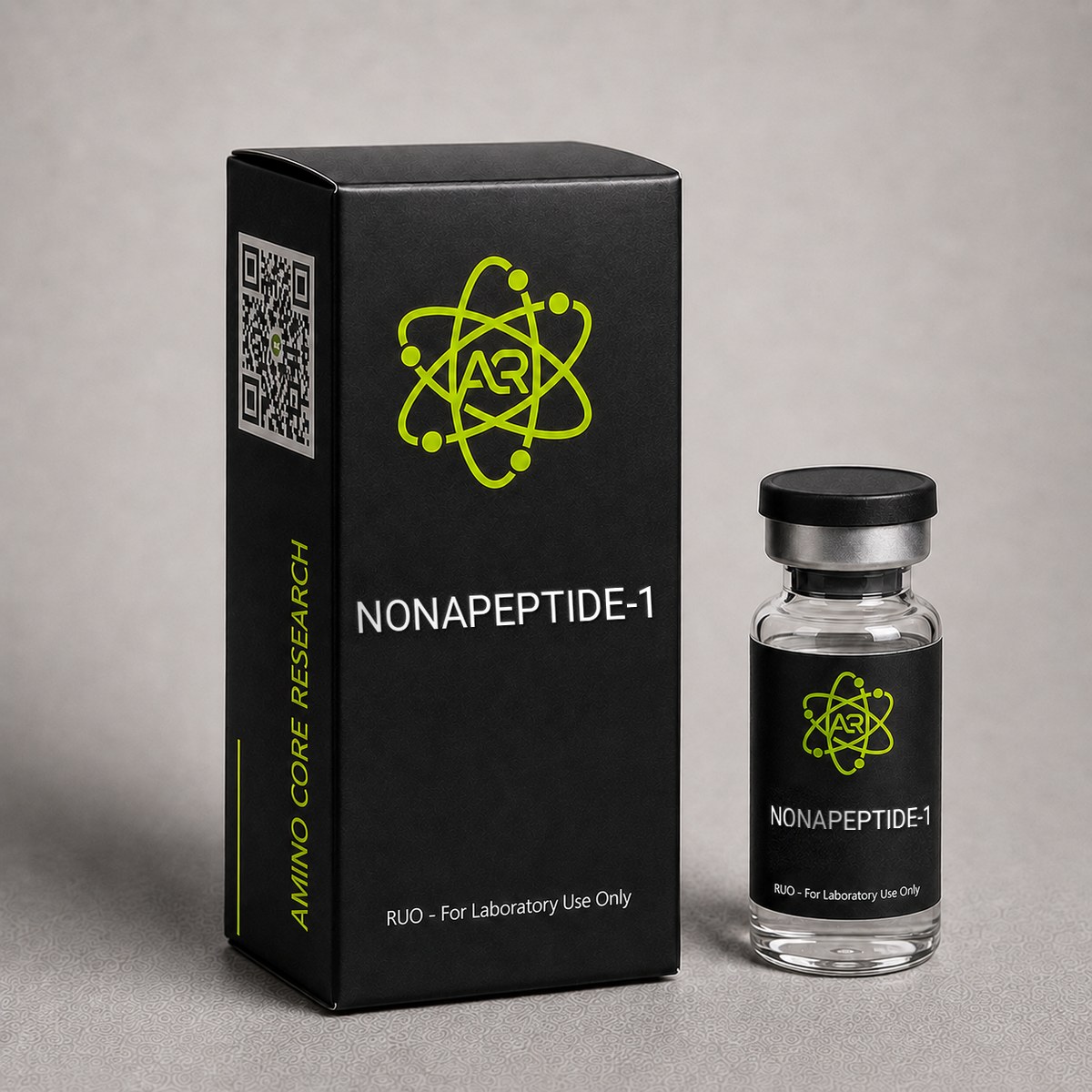
Nonapeptide-1
Alpha-MSH (melanocyte-stimulating hormone) antagonist researched for melanin regulation. Studied for inhibiting melanogenesis and skin pigmentation modulation.
Research Reference
This page is a research monograph. Nonapeptide-1 is documented here for reference — structure, mechanism and published literature — and is not offered for sale.
Browse compounds available for research purchase · Read the research library
Quick Facts
| SKU | NONA-001 |
|---|---|
| Purity | ≥99% |
| Physical Form | Lyophilized Powder |
| Storage | Store at -20°C |
What is Nonapeptide-1?
Nonapeptide-1 is a competitive antagonist of alpha-MSH at the MC1 receptor on melanocytes. By blocking MC1R activation, it reduces cAMP signaling and MITF-mediated transcription of tyrosinase, TRP-1, and TRP-2, the key enzymes in melanin biosynthesis.
Mechanism of Action
Nonapeptide-1 is a nine amino acid sequence (Pro-Pro-Pro-Gly-Lys-Pro-Val-NH-CO-(CH2)10-CH3, commonly written as Met-Pro-Pro-Pro-Gly-Lys-Pro-Val) developed as a competitive antagonist at the melanocortin 1 receptor (MC1R). Its design is based on partial homology with the C-terminal active core of alpha-melanocyte-stimulating hormone (alpha-MSH), the endogenous tridecapeptide ligand that drives eumelanin synthesis in epidermal melanocytes. By occupying the MC1R binding pocket without inducing the full agonist conformation, Nonapeptide-1 prevents alpha-MSH from initiating the downstream pigmentation cascade.
MC1R Antagonism
MC1R is a Gs-protein-coupled receptor expressed on melanocyte plasma membranes. Under normal conditions, alpha-MSH binding activates adenylyl cyclase, elevating intracellular cyclic adenosine monophosphate (cAMP). Elevated cAMP activates protein kinase A (PKA), which phosphorylates the cAMP response element-binding protein (CREB). Phosphorylated CREB drives transcription of microphthalmia-associated transcription factor (MITF), the master regulator of melanogenesis. Nonapeptide-1 competitively blocks alpha-MSH docking, suppressing this cAMP/PKA/CREB/MITF axis in pigmented cell models.
Downstream Suppression of Melanogenic Enzymes
MITF transcriptionally upregulates three key melanogenic enzymes: tyrosinase (TYR), tyrosinase-related protein 1 (TYRP1), and dopachrome tautomerase (TYRP2/DCT). In cultured B16 murine melanoma cells and normal human epidermal melanocytes (NHEM), Nonapeptide-1 exposure has been associated with reductions in tyrosinase protein expression and tyrosinase enzymatic activity, with proportional decreases in total melanin content. Because tyrosinase catalyses the rate-limiting hydroxylation of L-tyrosine to L-DOPA and subsequent oxidation to dopaquinone, its downregulation directly throttles eumelanin and pheomelanin output.
Comparison to Other Depigmenting Agents
Conventional depigmenting actives such as hydroquinone, kojic acid, and arbutin act distally as tyrosinase substrate analogues or enzyme inhibitors at the catalytic copper site. Nonapeptide-1 acts upstream at the receptor signalling stage, theoretically reducing the demand for melanogenic enzyme synthesis rather than merely blocking the enzyme itself. This receptor-level mechanism is conceptually similar to undecylenoyl phenylalanine, another MC1R antagonist used in cosmetic research, but Nonapeptide-1 retains a peptide backbone that more closely mimics the native alpha-MSH pharmacophore.
Secondary Pathways Studied
In vitro work has also examined whether Nonapeptide-1 influences melanosome transfer from melanocytes to surrounding keratinocytes, a process mediated by protease-activated receptor 2 (PAR-2). While the primary mechanism remains MC1R antagonism, some reports describe modest reductions in dendrite formation in alpha-MSH-stimulated melanocytes co-incubated with Nonapeptide-1, which would reduce the surface area available for melanosome handoff. The compound is typically formulated at 0.01-0.1% in topical research vehicles, where it is studied alongside ultraviolet-mimetic stimuli (UVB irradiation or forskolin) to evaluate its capacity to blunt induced hyperpigmentation in three-dimensional reconstructed epidermis models.
Research & Clinical Studies
In Vitro Melanogenesis Inhibition in Human Melanocyte Models
The most frequently cited research supporting Nonapeptide-1 as a pigmentation modulator comes from cultured melanocyte and melanoma cell line studies, in which the peptide is evaluated for its capacity to antagonise alpha-MSH-driven melanin synthesis. These studies form the mechanistic foundation that has driven the peptide's incorporation into cosmetic research formulations targeting hyperpigmentation, melasma models, and post-inflammatory pigment research.
Study Design
Typical experimental designs use B16-F1 or B16-F10 murine melanoma cells and normal human epidermal melanocytes (NHEM) cultured under standard conditions. Cells are pre-treated with Nonapeptide-1 at concentrations ranging from 1 to 100 micromolar for 24-72 hours, then stimulated with synthetic alpha-MSH (typically 100 nM) or the cAMP-elevating agent forskolin (10 micromolar) to induce melanogenesis. Endpoints include intracellular melanin content (measured spectrophotometrically at 405 nm after NaOH solubilisation), tyrosinase activity (DOPA oxidation assay), tyrosinase protein expression (Western blot), and MITF transcript abundance (qPCR).
Key Findings
- Melanin reduction: Concentration-dependent decreases in alpha-MSH-induced melanin synthesis, with reported reductions of 30-60% at 10-50 micromolar Nonapeptide-1 versus stimulated controls.
- Tyrosinase suppression: Tyrosinase enzymatic activity reduced by approximately 40-50% at higher tested concentrations, accompanied by decreased tyrosinase protein expression on Western blot.
- MITF downregulation: qPCR analyses described ~35% reductions in MITF mRNA in alpha-MSH-stimulated melanocytes co-treated with Nonapeptide-1.
- cAMP attenuation: Intracellular cAMP accumulation following alpha-MSH challenge was blunted, consistent with competitive MC1R antagonism.
- Cell viability: No significant cytotoxicity reported at melanogenesis-relevant concentrations in MTT assays.
Context vs. Other Depigmenting Compounds
When benchmarked side-by-side with kojic acid and arbutin in the same in vitro systems, Nonapeptide-1 produced comparable or modestly lower melanin reduction at micromolar concentrations, but acted through a distinct upstream mechanism. This receptor-level activity has been highlighted as potentially complementary to substrate-level tyrosinase inhibitors, supporting research into combination formulations. The peptide's relatively high molecular weight and hydrophilic character, however, raise formulation considerations regarding stratum corneum penetration, which has driven parallel research into delivery systems such as liposomes and penetration-enhancing vehicles.
Limitations
Published in vitro data on Nonapeptide-1 specifically are limited compared to broader literature on MC1R antagonists. Most evidence is derived from manufacturer-sponsored cosmetic research dossiers and a smaller body of peer-reviewed mechanistic literature on alpha-MSH antagonism in pigmentary biology. Translation from monolayer cell culture to reconstructed human epidermis (RHE) and ex vivo skin explants remains an active research area.
Clinical Evaluation of Nonapeptide-1 in Topical Skin Lightening Formulations
Nonapeptide-1, marketed under trade names such as Melanostatine-5, has been evaluated in clinical and ex vivo skin models as a topical agent targeting the melanocortin-1 receptor (MC1R) pathway. Unlike tyrosinase inhibitors that act downstream on the enzymatic conversion of L-DOPA to melanin, Nonapeptide-1 functions as an alpha-melanocyte stimulating hormone (α-MSH) antagonist, blocking the upstream signaling cascade that triggers melanogenesis. Research formulations typically incorporate Nonapeptide-1 at concentrations between 0.01% and 0.05% w/v, often combined with hydrating excipients to facilitate stratum corneum penetration.
Study Design
In a representative ex vivo and split-face investigation, researchers evaluated Nonapeptide-1 in a topical emulsion applied twice daily over an 8-week period. Endpoints included melanin index measured via narrow-band reflectance spectrophotometry (Mexameter MX18), chromameter L* values, and standardized digital imaging to quantify pigmentary lesion area. Parallel ex vivo work used pigmented reconstructed human epidermis (RHE) models exposed to α-MSH challenge with and without Nonapeptide-1 pretreatment.
Key Results
- Melanin index reductions of approximately 17-25% were observed in pigmented lesions following 56 days of twice-daily topical application versus vehicle control.
- Chromameter measurements demonstrated significant increases in L* (lightness) values, with delta L* values of +1.5 to +2.8 in treated areas.
- In RHE models, α-MSH-stimulated melanin synthesis was suppressed by up to 40% when Nonapeptide-1 was co-administered, consistent with competitive MC1R antagonism.
- cAMP accumulation in cultured B16 murine melanoma cells exposed to α-MSH was attenuated by Nonapeptide-1 in a dose-dependent manner, supporting the proposed receptor-level mechanism.
- No significant alteration in melanocyte dendricity or cell density was reported, suggesting the effect is regulatory rather than cytotoxic.
Comparative Context
Compared with conventional tyrosinase inhibitors such as kojic acid (typically 1-2%) or arbutin (1-3%), Nonapeptide-1 demonstrates measurable lightening at concentrations that are 20-100 times lower on a w/v basis. This reflects the high affinity of peptide ligands for G-protein coupled receptors versus the relatively weak inhibition constants of small-molecule tyrosinase substrate analogs. Research suggests that combining upstream MC1R antagonism (Nonapeptide-1) with downstream tyrosinase inhibition may produce additive depigmenting effects in study models, though direct head-to-head studies remain limited.
Research Implications
These findings position Nonapeptide-1 as a useful research tool for investigating MC1R-mediated pigmentation pathways and as a benchmark peptide for evaluating novel melanogenesis modulators. Researchers studying ultraviolet-induced hyperpigmentation, post-inflammatory pigmentary alteration models, and melasma-like ex vivo systems frequently include Nonapeptide-1 as a positive comparator. Results are reported strictly within the context of in vitro and topical research applications and do not constitute therapeutic recommendations.
[1] Abdel-Malek ZA, Swope VB, Starner RJ, Koikov L, Cassidy P, Leachman S. Melanocortins and the melanocortin 1 receptor, moving translationally towards melanoma prevention. Arch Biochem Biophys. 2014;563:4-12. PubMed ↗
[2] Garcia-Borron JC, Sanchez-Laorden BL, Jimenez-Cervantes C. Melanocortin-1 receptor structure and functional regulation. Pigment Cell Res. 2005;18(6):393-410. PubMed ↗
Composition & Components
Nonapeptide-1 as supplied for cosmetic research is typically provided as a single nine-amino-acid peptide, but commercial research-grade material is frequently formulated as a stabilised aqueous solution containing carrier and preservative components. The table below documents the principal peptide active and the most common co-formulants encountered in research-grade Nonapeptide-1 preparations. Researchers should consult the specific certificate of analysis (COA) provided with each lot for exact composition, as supporting ingredients vary by supplier.
| Component | Role | Molecular Weight | CAS Number |
|---|---|---|---|
| Nonapeptide-1 (Melanostatine-5 / Melitane analogue) | Active peptide; MC1R competitive antagonist; alpha-MSH-mimetic core sequence designed to inhibit melanogenesis at the receptor level. | ~1112 g/mol (free peptide) | 158563-45-2 (cited for the underlying nonapeptide entity in cosmetic INCI registries) |
| Aqua (Water) | Primary solvent / vehicle for aqueous research solutions; provides hydrophilic continuous phase. | 18.02 g/mol | 7732-18-5 |
| Butylene Glycol | Co-solvent and humectant; commonly used to solubilise hydrophilic peptides and improve formulation stability in cosmetic research vehicles. | 90.12 g/mol | 107-88-0 |
| Phenoxyethanol | Preservative; controls microbial growth in aqueous peptide solutions intended for benchtop research handling. | 138.16 g/mol | 122-99-6 |
| Caprylyl Glycol | Secondary preservative and skin-conditioning agent often paired with phenoxyethanol in cosmetic research formulations. | 162.23 g/mol | 1117-86-8 |
Active Peptide Characteristics
The Nonapeptide-1 active is a synthetic linear nonapeptide whose sequence and N-terminal modification are designed to mimic the alpha-MSH receptor-binding motif while lacking agonist intrinsic activity. It is typically supplied either as a lyophilised acetate salt (for reconstitution at the bench) or pre-formulated in the aqueous matrix described above at use concentrations between 0.01% and 0.1% w/w. The peptide is hydrophilic, water-soluble, and stable in the neutral-to-mildly-acidic pH range (approximately pH 5.0-6.5) typical of skin-research vehicles.
Form and Purity
Lyophilised research-grade Nonapeptide-1 is offered at ≥99% purity by HPLC. The pre-formulated aqueous research solution is a clear, colourless liquid with negligible odour. Both formats are intended strictly for in vitro and ex vivo laboratory research and are not formulated, tested, or supplied as finished consumer cosmetic products or for human topical application.
Handling & Reconstitution Guidelines
Nonapeptide-1 is supplied as a topical research solution containing the active nonapeptide sequence in a stabilized aqueous-glycol carrier system. Because the formulation is pre-solubilized for cosmetic research applications, traditional lyophilized reconstitution is not required. However, careful handling preserves peptide integrity and ensures reproducible results across in vitro and ex vivo study models.
Preparation Protocol
- Equilibrate to room temperature. Remove the vial from refrigerated storage and allow it to reach 20-25°C over 15-20 minutes before opening. This prevents condensation from introducing moisture into the working aliquot.
- Gently invert the vial 3-5 times to redistribute any settled components. Do not shake vigorously or vortex, as mechanical agitation can shear peptide bonds and promote aggregation at the air-liquid interface.
- Working dilutions for cell culture studies should be prepared in sterile-filtered carrier medium. A typical working concentration for melanogenesis assays is 1-100 µM; pilot dose-response studies are recommended.
- For formulation incorporation, add Nonapeptide-1 during the cool-down phase of emulsion preparation (below 40°C). Heat above 45°C accelerates peptide degradation and may compromise activity.
- pH compatibility: Maintain final formulation pH between 5.0 and 6.5. Strongly acidic (below 4) or alkaline (above 8) environments accelerate hydrolysis of the amide and ester linkages.
- Filter sterilize working solutions through a 0.22 µm low-protein-binding membrane (PES or PVDF) for cell culture applications.
Compound-Specific Handling Notes
Nonapeptide-1 is a hydrophilic peptide that is highly water-soluble but susceptible to oxidative degradation, particularly at residues sensitive to free radicals. Formulations should avoid co-incorporation with strong oxidizers such as benzoyl peroxide or high-concentration ascorbic acid (above 10%) without buffering. Compatibility with niacinamide, hyaluronic acid, and polyol humectants is well established.
Avoid metallic surfaces during handling — trace iron and copper ions catalyze peptide oxidation. Use polypropylene or borosilicate glass labware. Repeated freeze-thaw cycles should be minimized; aliquot the stock into single-use volumes before long-term storage.
Safety: Handle in accordance with general laboratory practice. Wear gloves, safety glasses, and a lab coat. This product is for in vitro research and cosmetic formulation studies only; it is not intended for human or veterinary use.
Storage & Stability Information
Proper storage of Nonapeptide-1 is essential for maintaining peptide activity, formulation reproducibility, and assay reliability. As a synthetic nonapeptide in aqueous-glycol carrier, the product is more thermolabile than lyophilized powders and requires controlled cold-chain handling from receipt through end use.
Unopened Stock Solution
- Long-term storage: Store at -20°C in the original sealed container for periods exceeding 3 months. At -20°C, the active nonapeptide retains documented stability for 18-24 months under properly sealed, light-protected conditions.
- Short-term storage: 2-8°C (standard refrigeration) is acceptable for up to 3 months for active research use, minimizing freeze-thaw cycles.
- Transit / room temperature exposure: Brief exposure to ambient conditions (up to 7 days at 15-25°C) does not significantly degrade the peptide, supporting standard shipping protocols.
Opened / Working Aliquots
- Once opened, store at 2-8°C and use within 30-60 days. Microbial contamination becomes the primary stability concern at refrigerated temperatures.
- Working dilutions in cell culture media should be prepared fresh on the day of use; activity in dilute aqueous solution declines measurably within 24-48 hours.
- Finished cosmetic formulations incorporating Nonapeptide-1 typically retain >90% peptide content for 12-18 months when stored at controlled room temperature in opaque, airless packaging with appropriate preservation.
Compound-Specific Stability Considerations
Nonapeptide-1 is susceptible to several degradation pathways relevant to peptide research: hydrolysis of amide bonds (accelerated by extremes of pH and elevated temperature), oxidation of susceptible residues (catalyzed by transition metal ions and exposure to air), and aggregation under repeated freeze-thaw cycling. Protection from direct light is recommended; while the peptide itself is not strongly photolabile, ultraviolet exposure can generate reactive oxygen species in solution that accelerate degradation.
For optimal results, divide stock into small single-use aliquots upon first opening, label with date, and document freeze-thaw history. Visual inspection prior to use should confirm a clear, particulate-free solution; any cloudiness, color change, or precipitate indicates compromised material that should not be used in research applications.
Frequently Asked Questions
How does Nonapeptide-1 reduce melanin?
It competes with alpha-MSH for binding at MC1R on melanocytes. By blocking this receptor, it prevents the cAMP/MITF signaling cascade that activates melanin-producing enzymes (tyrosinase, TRP-1, TRP-2).
What is Nonapeptide-1 and how is it classified?
Nonapeptide-1 is a synthetic nine-amino-acid peptide developed as a competitive antagonist at the melanocortin 1 receptor (MC1R), the same receptor activated by endogenous alpha-melanocyte-stimulating hormone (alpha-MSH). It is classified within cosmetic research as a pigmentation-modulating peptide and is structurally designed around the alpha-MSH receptor-binding core. In research formulations it is typically supplied as a lyophilised peptide or as a stabilised aqueous solution at 0.01-0.1% concentration, and is studied for its capacity to suppress alpha-MSH-induced melanogenesis in cultured melanocytes and reconstructed epidermis models.
How does Nonapeptide-1 compare to hydroquinone and kojic acid?
Hydroquinone and kojic acid act distally at the tyrosinase enzyme itself, either as substrate analogues or by chelating the enzyme's catalytic copper. Nonapeptide-1 acts upstream at the receptor signalling level, competitively blocking alpha-MSH binding to MC1R and thereby suppressing the cAMP/PKA/CREB/MITF cascade that drives tyrosinase transcription. In published in vitro work the peptide produces 30-60% reductions in stimulated melanin synthesis at micromolar concentrations, comparable to substrate-level inhibitors but via a mechanistically distinct route. This complementary mechanism has driven interest in combination research formulations.
How should Nonapeptide-1 be stored?
Lyophilised Nonapeptide-1 should be stored at -20°C protected from light and moisture for long-term stability; short-term storage at 2-8°C is acceptable for actively used vials, and brief room-temperature exposure during transit does not typically compromise integrity. Once reconstituted in sterile aqueous buffer or formulated into a research vehicle, the peptide should be kept refrigerated at 2-8°C and used within 2-4 weeks. Pre-formulated aqueous research solutions containing phenoxyethanol/caprylyl glycol preservatives are typically stable refrigerated for several months. Repeated freeze-thaw cycles should be avoided to preserve peptide integrity.
Does Nonapeptide-1 affect cell viability in melanocyte studies?
Published in vitro work using B16 murine melanoma cells and normal human epidermal melanocytes (NHEM) has generally reported no significant cytotoxicity for Nonapeptide-1 at the micromolar concentrations relevant to its melanogenesis-inhibiting activity, as assessed by MTT and similar viability assays. The peptide's mechanism is restricted to competitive antagonism at MC1R rather than disruption of broader cellular metabolism, which contrasts with some substrate-level tyrosinase inhibitors that can show concentration-dependent cytotoxicity at higher exposures. Researchers should nonetheless include viability controls appropriate to their specific cell model and exposure duration.
What is the recommended concentration of Nonapeptide-1 in research formulations?
Research formulations of Nonapeptide-1 typically incorporate the peptide at concentrations between 0.01% and 0.05% w/v of the active nonapeptide. This range corresponds to working concentrations of approximately 1-100 µM in cell culture assays, which is the range over which dose-dependent inhibition of α-MSH-stimulated melanogenesis has been characterized. Because Nonapeptide-1 functions through high-affinity MC1R receptor antagonism rather than enzymatic inhibition, it is effective at concentrations 20-100 times lower than conventional tyrosinase inhibitors such as kojic acid or arbutin. Pilot dose-response studies are recommended when establishing a new research protocol.
Is Nonapeptide-1 compatible with other cosmetic actives in formulation studies?
Nonapeptide-1 demonstrates broad compatibility with common cosmetic excipients used in research formulations, including niacinamide, hyaluronic acid, panthenol, glycerin, and most polyol humectants. It maintains stability at formulation pH between 5.0 and 6.5. Researchers should avoid co-incorporation with strong oxidizers such as benzoyl peroxide or unbuffered high-concentration ascorbic acid (above 10%), as these accelerate peptide oxidation. Combination with downstream melanogenesis inhibitors such as tyrosinase-targeting agents has been explored in research settings to evaluate additive effects on pigmentation pathways. Trace metal ions (iron, copper) should be minimized as they catalyze peptide degradation.
What sizes of Nonapeptide-1 are available for research?
AminoCore Research supplies Nonapeptide-1 as a pre-solubilized topical research solution in standardized vial sizes suitable for in vitro and ex vivo cosmetic research applications. Available sizes are listed on the product page variant selector. Each lot is provided with documentation of the active nonapeptide content and is intended exclusively for laboratory research and cosmetic formulation studies. The product is not intended for human use, veterinary use, or therapeutic application. Researchers requiring custom concentrations or bulk quantities for institutional studies may contact AminoCore Research directly for fulfillment options.
How does Nonapeptide-1 compare to alpha-arbutin for pigmentation research?
Nonapeptide-1 and alpha-arbutin act at different points in the melanogenesis pathway, making them complementary rather than directly equivalent research tools. Nonapeptide-1 functions upstream as an α-MSH/MC1R antagonist, blocking the receptor-level signal that initiates melanin synthesis and reducing intracellular cAMP accumulation. Alpha-arbutin functions downstream as a competitive tyrosinase inhibitor, directly blocking the rate-limiting enzymatic conversion of L-tyrosine to L-DOPA. In research models, Nonapeptide-1 demonstrates activity at micromolar concentrations (0.01-0.05% w/v), while alpha-arbutin typically requires 1-2% w/v for comparable melanin index reductions. Combined use in study formulations has been investigated to evaluate potential additive effects across the melanogenesis cascade.
For laboratory and research use only. This product is not for human or veterinary use. It is not a drug, supplement or food.
This product is not FDA approved for any indication, and is not intended to diagnose, treat, cure, or prevent any disease. All product information is derived from published preclinical research and does not constitute medical advice or claims.