≥99%HPLC Purity
COAIncluded
USAShipped
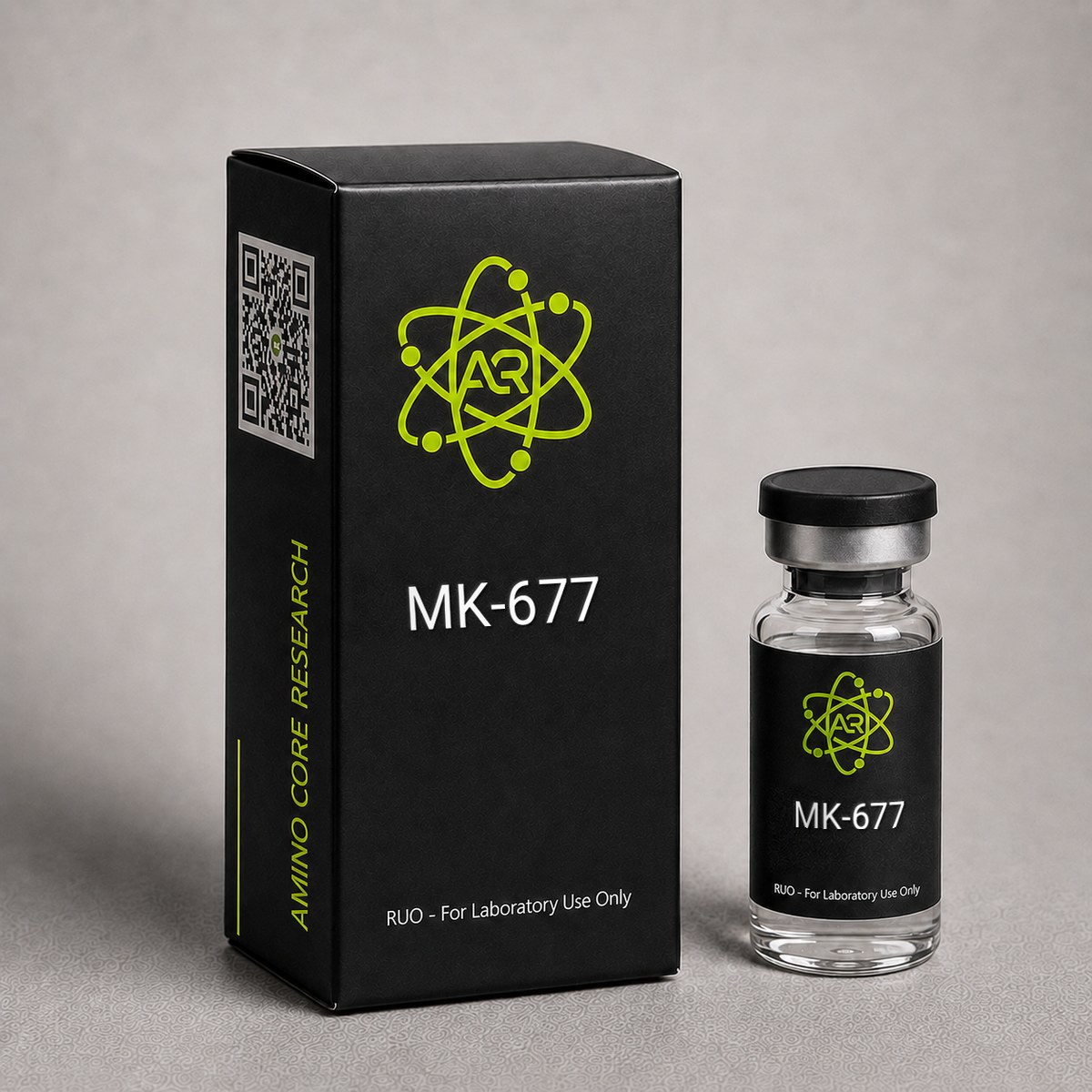
MK-677 (Ibutamoren)
Selective, non-peptide ghrelin receptor agonist (GHS-R1a) that stimulates pulsatile growth hormone release without disrupting the natural GH secretion pattern. Orally bioavailable research compound for GH axis studies.
Research Reference
This page is a research monograph. MK-677 (Ibutamoren) is documented here for reference — structure, mechanism and published literature — and is not offered for sale.
Browse compounds available for research purchase · Read the research library
Quick Facts
| SKU | MK677-001 |
|---|---|
| CAS Number | 159752-10-0 |
| Molecular Formula | C₂₇H₃₆N₄O₅S |
| Molecular Weight | 528.66 g/mol |
| Sequence | Non-peptide small molecule (no amino acid sequence). IUPAC: 2-amino-2-methyl-N-[(2R)-1-(1-methanesulfonylspiro[indoline-3,4'-piperidine]-1'-yl)-1-oxo-3-(phenylmethoxy)propan-2-yl]propanamide |
| Purity | ≥99% |
| Physical Form | Lyophilized Powder |
| Storage | Store at -20°C |
What is MK-677 (Ibutamoren)?
MK-677 (Ibutamoren Mesylate) is a potent, orally active, non-peptide ghrelin receptor agonist (growth hormone secretagogue receptor, GHS-R1a). Unlike peptide-based GH secretagogues such as GHRP-6 or Ipamorelin, MK-677 does not require injection and has excellent oral bioavailability with a half-life of approximately 24 hours.
It stimulates pulsatile growth hormone release while preserving the physiological GH secretion pattern, and has been shown to increase IGF-1 levels by 40-89% in clinical studies without significantly affecting cortisol levels.
Mechanism of Action
MK-677 mimics the endogenous ligand ghrelin by binding to the GHS-R1a receptor on anterior pituitary somatotrophs and hypothalamic neurons. This activates phospholipase C via Gq/11 signaling, increasing intracellular calcium and triggering GH vesicle exocytosis. Unlike exogenous GH, MK-677 preserves the natural pulsatile pattern of GH release, including the important nocturnal GH surge.
MK-677 also stimulates appetite via ghrelin receptor activation in the arcuate nucleus of the hypothalamus, and increases circulating IGF-1 through sustained GH elevation.
Research & Clinical Studies
MK-677 and Body Composition Research
A 2008 randomized controlled trial (Nass et al., Ann Intern Med) in healthy older adults found that MK-677 administration for 12 months increased GH and IGF-1 to young-adult levels, increased fat-free mass by 1.1 kg, and improved physical function measures without significant adverse effects.
A 1998 study (Murphy et al.) demonstrated that MK-677 reversed diet-induced protein catabolism, increasing nitrogen balance and lean body mass in calorie-restricted subjects within 7 days of administration.
[1] Nass R et al. Effects of an oral ghrelin mimetic on body composition and clinical outcomes in healthy older adults. Ann Intern Med. 2008;149(9):601-611. PubMed ↗
MK-677 and Sleep Quality Research
Background: Growth hormone (GH) secretion is tightly coupled to slow-wave sleep (SWS) in healthy young adults, with the largest GH pulse of the 24-hour cycle occurring shortly after sleep onset. Aging is associated with parallel declines in SWS, GH amplitude, and IGF-1, raising the question of whether pharmacological reactivation of the ghrelin/GHSR1a axis can restore the youthful relationship between sleep architecture and somatotropic output. MK-677, an orally active GHSR1a agonist, offered an ideal probe because its 4-6 hour plasma half-life and once-daily oral dosing permit chronic study without disturbing nocturnal sleep with injections.
Study design (Copinschi et al., 1997): In a randomized, double-blind, placebo-controlled crossover trial, healthy young adults received oral MK-677 (25 mg) or placebo at bedtime for seven consecutive nights. Polysomnographic recordings (EEG, EOG, EMG) were performed on the final night, and overnight blood sampling at 15-minute intervals was used to characterize GH, cortisol, prolactin, and ACTH profiles. Sleep stages were scored according to standardized Rechtschaffen and Kales criteria by investigators blinded to treatment assignment.
Key findings:
- REM sleep: Total REM sleep duration increased by approximately 20%, and the duration of individual REM episodes also lengthened, with no shift in REM latency.
- Stage IV (deep slow-wave) sleep: Stage IV duration increased by approximately 50% compared with placebo, with corresponding increases in delta-wave EEG power. This effect is notable because Stage IV sleep is the component most reduced by aging.
- Nocturnal GH: The overnight integrated GH concentration and the amplitude of the major sleep-onset GH pulse were significantly elevated, while pulse frequency was essentially unchanged, consistent with amplification of, rather than disruption of, the endogenous pulsatile pattern.
- HPA axis: Cortisol profiles were minimally affected at the 25 mg dose, although a small early-morning rise in cortisol was observed, consistent with weak cross-activation of corticotroph pathways previously reported for ghrelin and GHRP-6.
- Prolactin: A modest increase was observed, again congruent with known GHSR1a downstream signaling.
Mechanistic interpretation: The investigators proposed that GHSR1a activation in the arcuate nucleus and hypothalamic sleep-regulatory centers enhances GHRH tone while suppressing somatostatin, producing both larger sleep-associated GH pulses and a deepening of slow-wave activity. Because intracerebroventricular ghrelin produces similar effects in rodents, the data support a physiologic role for ghrelin/GHSR1a signaling at the interface of metabolism and sleep regulation.
Subsequent research: Follow-up work in older adults (Copinschi et al., 1998, and later Nass et al., 2008) confirmed that MK-677 can partially restore the youthful GH/IGF-1 amplitude pattern over 1-12 months of dosing, though the magnitude of the sleep architectural effect tends to attenuate over time, suggesting partial receptor desensitization or compensatory hypothalamic adaptation. Independent replication using actigraphy and quantitative EEG has supported the original polysomnographic observations of enhanced SWS, particularly during the first half of the night when GHSR1a tone is naturally highest.
Research relevance: These findings establish MK-677 as a valuable tool compound for investigating the bidirectional coupling between sleep architecture and the somatotropic axis, and for probing whether ghrelin-system agonism can serve as a model for age-related changes in sleep-endocrine integration in preclinical settings.
[1] Copinschi G, Leproult R, Van Onderbergen A, et al. Prolonged oral treatment with MK-677, a novel growth hormone secretagogue, improves sleep quality in man. Neuroendocrinology. 1997;66(4):278-286. PubMed ↗
MK-677 and Bone Density Research
Long-term MK-677 studies examined effects on bone mineral density. A 2-year randomized trial in elderly adults (Murphy et al., 2001) demonstrated that MK-677 increased markers of bone formation (osteocalcin) within 6 weeks and maintained elevated GH/IGF-1 for the full 2-year period. While BMD changes were modest at 12 months, analysis suggested the bone remodeling cycle requires 18-24 months for detectable density improvements.
[1] Murphy MG et al. Effect of alendronate and MK-677 (a growth hormone secretagogue), individually and in combination, on markers of bone turnover and bone mineral density in postmenopausal osteoporotic women. J Clin Endocrinol Metab. 2001;86(3):1116-1125. PubMed ↗
MK-677 and Nitrogen Balance/Catabolism Research
Murphy et al. (1998) demonstrated MK-677 reverses diet-induced catabolism within 7 days. In calorie-restricted volunteers (18 kcal/kg/day for 14 days), MK-677 administration restored nitrogen balance to positive values, indicating preservation of lean body mass despite caloric deficit. This anti-catabolic effect was dose-dependent and correlated with GH pulse amplitude increases.
[1] Murphy MG et al. MK-677, an orally active growth hormone secretagogue, reverses diet-induced catabolism. J Clin Endocrinol Metab. 1998;83(2):320-325. PubMed ↗
Two-Year Trial of MK-677 in Older Adults: GH/IGF-1 Restoration and Body Composition
One of the most cited investigations of MK-677 (ibutamoren) is the two-year, randomized, double-blind, placebo-controlled trial by Nass and colleagues (2008), which examined the effects of daily oral MK-677 administration on the somatotropic axis and body composition in healthy older adults. This study remains a landmark reference because it directly addressed whether sustained ghrelin receptor agonism could restore growth hormone (GH) and insulin-like growth factor 1 (IGF-1) levels in older subjects toward values typical of younger adults.
Study Design
- Subjects: 65 healthy men and women, aged 60-81 years
- Duration: 2 years (104 weeks)
- Intervention: Oral MK-677 25 mg once daily vs. placebo
- Endpoints: Serum GH, IGF-1, lean body mass, fat mass, muscle strength, functional performance
Key Results
- Mean GH levels rose to values comparable to those of healthy young adults, and the increase was sustained throughout the 2-year administration period
- IGF-1 increased by ~88% compared with placebo, with levels returning to a young-adult range
- Fat-free mass increased by ~1.1 kg in the MK-677 group versus placebo
- Total fat mass did not decrease significantly, but body weight increased modestly in the active group
- Fasting glucose rose slightly and insulin sensitivity decreased, consistent with known GH/IGF-1 axis effects
- No measurable improvement in functional strength outcomes was observed in this older cohort
Research Significance
This trial established that long-term oral ghrelin receptor agonism with MK-677 produces durable, physiologically meaningful elevation of the GH/IGF-1 axis without the tachyphylaxis typically observed with injectable GH-releasing peptides. The preservation of pulsatile GH secretion across two years of dosing was a particularly notable finding, distinguishing MK-677 mechanistically from exogenous recombinant GH administration. The metabolic shifts toward reduced insulin sensitivity have since become a central consideration in subsequent research designs.
Earlier work by Chapman and colleagues (1996) had already demonstrated that MK-677 could reverse the relative GH deficiency of aging over shorter periods, restoring 24-hour integrated GH concentrations and IGF-1 levels in older subjects after just a few weeks of dosing. The Nass two-year study extended these observations into the long-term setting, providing the framework that nearly all subsequent ghrelin receptor agonist research has built upon.
[1] Nass R, Pezzoli SS, Oliveri MC, et al. Effects of an oral ghrelin mimetic on body composition and clinical outcomes in healthy older adults: a randomized trial. Ann Intern Med. 2008;149(9):601-611. PubMed ↗
[2] Chapman IM, Bach MA, Van Cauter E, et al. Stimulation of the growth hormone (GH)-insulin-like growth factor I axis by daily oral administration of a GH secretagogue (MK-677) in healthy elderly subjects. J Clin Endocrinol Metab. 1996;81(12):4249-4257. PubMed ↗
MK-677 in Hip Fracture Recovery: Functional Outcomes in Frail Older Adults
Adunsky and colleagues (2011) conducted a multicenter, randomized, double-blind, placebo-controlled trial investigating whether MK-677 (ibutamoren) could accelerate functional recovery following hip fracture in older adults. Hip fracture recovery represents a particularly demanding physiological challenge because catabolic stress, low IGF-1, sarcopenia, and impaired wound healing converge in a single clinical population. This made MK-677 a mechanistically rational candidate, given its capacity to elevate the GH/IGF-1 axis without parenteral administration.
Study Design
- Subjects: 123 older adults (median age ~78 years) recovering from surgical repair of hip fracture
- Intervention: Oral MK-677 25 mg daily versus placebo
- Duration: 24 weeks of dosing with follow-up assessments
- Primary endpoint: Change in gait speed and functional mobility (Modified Physical Performance Test)
- Secondary endpoints: IGF-1, lean mass, adverse events
Key Results
- MK-677 produced sustained elevation of serum IGF-1 across the dosing period, confirming on-target ghrelin receptor activation in this frail population
- A modest improvement in gait speed was observed in the active group at certain interim timepoints
- Composite functional performance trends favored MK-677, though the primary endpoint did not reach predefined statistical significance across all measures
- Lean mass markers showed favorable changes consistent with anabolic activation
- The compound was generally well-tolerated in this older cohort, with adverse events broadly similar to placebo aside from expected metabolic shifts
Research Significance
The hip fracture trial extended the relevance of MK-677 research from healthy aging populations into clinically frail subjects. It demonstrated that oral ghrelin receptor agonism remains pharmacologically active in catabolic states and that IGF-1 elevation is achievable even when baseline somatotropic axis activity is suppressed by acute injury and surgery. The mixed functional findings highlight a recurring theme in MK-677 research: robust biochemical elevation of GH and IGF-1 does not always translate into proportionate gains in performance measures, particularly in subjects with multiple comorbidities. This has informed subsequent research designs that pair MK-677 administration with structured loading or rehabilitation protocols, and that include direct measures of muscle protein synthesis rather than relying solely on functional endpoints.
[1] Adunsky A, Chandler J, Heyden N, et al. MK-0677 (ibutamoren mesylate) for the treatment of patients recovering from hip fracture: a multicenter, randomized, placebo-controlled phase IIb study. Arch Gerontol Geriatr. 2011;53(2):183-189. PubMed ↗
MK-677 in Catabolic Conditions: Reversal of Diet-Induced Nitrogen Wasting
Murphy and colleagues (1998) published a foundational short-term study that examined whether MK-677 could counteract diet-induced protein catabolism in healthy adults. This investigation is frequently cited as mechanistic evidence that oral ghrelin receptor agonism produces anabolic shifts in protein metabolism that are functionally relevant in catabolic states, not merely changes in circulating hormone concentrations.
Study Design
- Subjects: 8 healthy adult volunteers
- Design: Randomized, double-blind, placebo-controlled, crossover
- Intervention: Oral MK-677 25 mg daily during a hypocaloric, protein-restricted dietary phase designed to induce negative nitrogen balance
- Endpoints: Whole-body nitrogen balance, GH, IGF-1, IGFBP-3, basal metabolic rate
Key Results
- MK-677 administration reversed diet-induced negative nitrogen balance, producing measurable nitrogen retention compared with placebo
- Mean 24-hour GH concentrations and IGF-1 rose significantly during MK-677 dosing, with preserved pulsatility
- IGFBP-3 increased in parallel with IGF-1, consistent with sustained hepatic IGF-1 production
- Basal metabolic rate trended upward in the active group
- No clinically significant adverse events were reported during the short-term dosing window
Research Significance
This study provided early proof-of-concept that MK-677 acts not only as a GH-IGF-1 elevator but as a functional anti-catabolic agent in conditions of caloric and protein restriction. Nitrogen balance is a classical, integrative measure of whole-body protein metabolism, and its reversal under MK-677 dosing has shaped the rationale for investigating ghrelin receptor agonists in cachexia, sarcopenia, post-surgical recovery, and other catabolic research contexts. Subsequent work has explored related ghrelin pathway compounds (such as anamorelin) in cancer-related cachexia, but MK-677 remains the most-studied orally bioavailable representative of this class.
The crossover design also addressed inter-subject variability, strengthening the conclusion that the anabolic shift was specifically attributable to MK-677 administration rather than baseline metabolic heterogeneity. Together with the longer-duration aging and fracture trials, this work positions MK-677 as a mechanistically distinct research tool for studying integrated GH/IGF-1 axis activation under both physiological and stressed conditions.
[1] Murphy MG, Plunkett LM, Gertz BJ, et al. MK-677, an orally active growth hormone secretagogue, reverses diet-induced catabolism. J Clin Endocrinol Metab. 1998;83(2):320-325. PubMed ↗
Chemical & Physical Properties
Identity and nomenclature: MK-677, also known as ibutamoren or ibutamoren mesylate, is a non-peptidic growth hormone secretagogue developed by Merck Research Laboratories in the 1990s. Its IUPAC name is 2-amino-2-methyl-N-[(2R)-1-(1-methanesulfonylspiro[indoline-3,4'-piperidine]-1'-yl)-1-oxo-3-(phenylmethoxy)propan-2-yl]propanamide methanesulfonate. The CAS registry number for the mesylate salt is 159752-10-0, while the free base carries CAS 159634-47-6.
Molecular composition: The free base has molecular formula C27H36N4O5S and a molecular weight of 528.66 g/mol. The mesylate salt (C27H36N4O5S · CH4O3S) has a molecular weight of 624.77 g/mol. The molecule contains a spiroindane piperidine core, a methanesulfonyl group on the indoline nitrogen, a benzyl ether side chain, and an α,α-dimethyl amino amide warhead that mimics the key pharmacophore of peptidic GHS such as GHRP-6.
Physical description: Research-grade MK-677 mesylate is a white to off-white crystalline powder with no characteristic odor. The melting point is reported in the 154-159°C range, with decomposition observed above 175°C. The compound is optically active owing to the (R)-configuration at the α-carbon of the central amino acid linker.
Solubility profile:
- DMSO: Freely soluble (>50 mg/mL), making it the preferred vehicle for in vitro stock solutions.
- Ethanol and methanol: Moderately soluble (~10-20 mg/mL).
- Water: Slightly soluble (<1 mg/mL) as the mesylate salt; the free base is essentially water-insoluble.
- PEG-400 and propylene glycol: Soluble, useful as co-solvents for preclinical formulation work.
Pharmacokinetic-relevant properties: Calculated logP is approximately 2.6, with a polar surface area near 130 Å2. The molecule satisfies Lipinski's rule of five and demonstrates oral bioavailability in rodents, dogs, and humans, distinguishing it sharply from peptide secretagogues that require parenteral administration. Patchett et al. (1995) reported that this benzyl ether spiroindane scaffold was specifically engineered to confer metabolic stability and membrane permeability while preserving high-affinity binding to the growth hormone secretagogue receptor 1a (GHSR1a), the ghrelin receptor.
Mechanism-relevant structural features: The α-aminoisobutyric (Aib) cap and the benzyl-O-serinamide linker engage the same binding pocket on GHSR1a as the natural lipopeptide ghrelin, producing potent agonism (EC50 in the low nanomolar range in cell-based calcium mobilization assays). Unlike ghrelin, MK-677 lacks the octanoyl modification on Ser3 and is therefore not subject to deacylation by butyrylcholinesterase, which contributes to a substantially longer plasma half-life of approximately 4-6 hours in humans.
Stability in biological matrices: The compound is stable in plasma for several hours at 37°C, and major metabolism occurs hepatically via CYP3A4-mediated oxidation. These properties make MK-677 one of the most pharmacologically tractable tools available for chronic GHSR1a activation studies, complementing shorter-acting peptidic agonists used for acute mechanistic experiments.
Reference: Patchett AA et al. Proc Natl Acad Sci USA. 1995;92(15):7001-7005. PMID: 7624218.
Handling & Reconstitution
MK-677 is a non-peptide small molecule and does not require reconstitution with bacteriostatic water. It is typically supplied as lyophilized powder and can be dissolved in water, DMSO, or PEG-400 depending on the research protocol. For aqueous solutions, dissolve in sterile water at the desired concentration. MK-677 has moderate aqueous solubility at neutral pH.
Storage & Stability
Storage of solid MK-677 mesylate: The lyophilized or crystalline powder should be stored in tightly sealed amber glass vials under desiccated conditions at 15-25°C for routine short-term laboratory use (weeks to a few months). For long-term archival storage of research material, -20°C in a frost-free freezer is preferred, with the vial protected by parafilm and an internal desiccant pouch. Stability data from manufacturer certificates and small-molecule literature indicate that the mesylate salt remains chemically stable in powder form for approximately 36 months when stored at -20°C with minimal exposure to light, moisture, and atmospheric oxygen.
Reconstitution and solution stability: Unlike peptide secretagogues such as GHRP-6 or ipamorelin, MK-677 is a non-peptidic small molecule and does not require bacteriostatic water reconstitution. For in vitro experiments, stock solutions are commonly prepared in anhydrous DMSO at 10-100 mM and stored at -20°C or -80°C in single-use aliquots to avoid freeze-thaw cycling. Aqueous working solutions are typically prepared fresh on the day of use because the spiroindane piperidine framework can undergo gradual hydrolytic and oxidative degradation in protic media, particularly at neutral-to-basic pH.
Light and oxidation sensitivity: The indoline-derived chromophore is photosensitive; ambient fluorescent lighting can promote slow oxidative degradation over weeks. Amber vials, aluminum foil wrapping, or storage in opaque secondary containers is recommended. Headspace purging with nitrogen or argon further extends shelf life by limiting oxidative decomposition of the sulfonyl and tertiary amine functionalities.
Hygroscopicity: The mesylate salt is mildly hygroscopic. Vials should be allowed to equilibrate to room temperature before opening to prevent condensation onto the cold powder, which can accelerate hydrolysis and complicate accurate gravimetric weighing. A brief argon purge after each opening is good practice for laboratories that access the same lot repeatedly.
Handling and weighing: Use anti-static weighing paper or low-binding polypropylene tubes; the fine crystalline material can develop electrostatic charge. Standard nitrile gloves, lab coat, and goggles are appropriate PPE for a research-grade orally bioavailable small molecule. Avoid generating dust; work in a balance enclosure or fume hood when weighing larger quantities.
Analytical confirmation: Identity and purity are typically verified by reverse-phase HPLC (C18, acetonitrile/water with 0.1% TFA gradient) with UV detection at 220 and 254 nm, and by LC-MS confirming the [M+H]+ ion at m/z 529.2 for the free base. Researchers receiving new lots should review the certificate of analysis for HPLC purity (≥99% is standard for research-grade material), residual solvent content, and water content by Karl Fischer titration.
Shipping considerations: Short-term shipping at ambient temperature is acceptable due to the powder's thermal stability, but tracking and prompt transfer to -20°C upon receipt minimizes cumulative degradation. Documentation of receipt temperature and any transit delays should be retained for reproducibility records.
For laboratory research use only. This material is not intended for human or veterinary use, and all handling, storage, and disposal should follow institutional chemical hygiene plans and applicable local regulations governing investigational small molecules.
Frequently Asked Questions
Does MK-677 need to be refrigerated?
In powder form, MK-677 is stable at room temperature (15-25C) for extended periods. Refrigeration (-20C) is recommended for long-term storage beyond 6 months. Unlike peptides, MK-677 does not require reconstitution with bacteriostatic water.
Is MK-677 a peptide or a small molecule?
MK-677 is a non-peptide small molecule (MW 624.77 g/mol). It mimics ghrelin at the GHS-R1a receptor but is structurally distinct from peptide secretagogues like GHRP-6 or Ipamorelin. Its small molecule structure gives it oral bioavailability.
How does MK-677 compare to GHRP-6 and Ipamorelin?
MK-677 is orally active with a 24-hour half-life, while GHRP-6 and Ipamorelin require injection with half-lives of 15-30 minutes. MK-677 produces more sustained GH/IGF-1 elevation. GHRP-6 increases appetite more and Ipamorelin is more selective with fewer side effects.
What is the half-life of MK-677?
MK-677 has a terminal half-life of approximately 24 hours, allowing once-daily dosing in research protocols. Peak GH levels occur 1-2 hours post-administration, with sustained IGF-1 elevation for 24+ hours.
Does MK-677 affect cortisol?
Research shows MK-677 produces transient, modest cortisol increases that normalize within weeks of administration. The cortisol effect is significantly less than that seen with GHRP-6 or Hexarelin, making MK-677 preferred for long-term GH axis research.
Does MK-677 suppress natural GH production?
Research indicates MK-677 preserves the natural pulsatile GH pattern rather than creating continuous, non-physiological elevation. Unlike exogenous GH, MK-677 works through the ghrelin receptor, maintaining hypothalamic feedback regulation. Long-term studies (2 years) showed sustained GH/IGF-1 elevation without suppression.
What are common research observations with MK-677?
Published studies report: increased appetite (ghrelin receptor activation), water retention (GH-mediated), improved sleep quality (enhanced Stage IV sleep), elevated IGF-1 (40-89% increase), and transient increases in fasting blood glucose. Effects are dose-dependent and most pronounced in the first 2-4 weeks.
What is the recommended storage temperature for MK-677 in research settings?
MK-677 (ibutamoren) supplied as a solid or in solution should be stored at -20°C for long-term stability, with short-term storage at 2-8°C acceptable for several weeks. The compound is a non-peptide small molecule and is more chemically robust than peptide secretagogues, but solutions should still be protected from light, repeated freeze-thaw cycles, and prolonged exposure to room temperature. When stored properly in a sealed, desiccated container at -20°C, MK-677 is generally considered stable for extended research timeframes. Solutions reconstituted in compatible vehicles are typically used within several weeks when refrigerated.
Is MK-677 orally bioavailable in research models?
Yes. MK-677 was specifically developed as an orally active, non-peptide ghrelin receptor (GHS-R1a) agonist, and oral bioavailability is one of its defining pharmacological characteristics. Published clinical research, including the Chapman (1996) and Nass (2008) trials, used 25 mg once-daily oral dosing and demonstrated sustained elevation of growth hormone and IGF-1 across weeks to years. This distinguishes MK-677 from peptide GH secretagogues such as GHRP-6, ipamorelin, and hexarelin, which require parenteral administration because they are degraded in the gastrointestinal tract. Oral activity makes MK-677 a valuable tool for chronic dosing research designs.
What molecular weight and CAS number does MK-677 have?
MK-677 (ibutamoren) has the molecular formula C27H36N4O5S, a molecular weight of approximately 528.66 g/mol, and CAS number 159752-10-0 for the free base. The mesylate salt form (ibutamoren mesylate, MK-0677) has CAS number 159634-47-6 and an adjusted molecular weight reflecting the methanesulfonate counterion. MK-677 is a non-peptide spiropiperidine compound, not an amino acid sequence-based molecule, which accounts for both its oral bioavailability and its small molecular size relative to peptide growth hormone secretagogues studied in parallel.
Why does MK-677 preserve pulsatile GH release rather than causing flat elevation?
MK-677 acts as a ghrelin receptor (GHS-R1a) agonist on hypothalamic and pituitary neurons, amplifying endogenous growth hormone-releasing hormone (GHRH) signaling and suppressing somatostatin tone. Because it works upstream through the body's own regulatory architecture rather than supplying exogenous GH, the pituitary continues to release GH in physiological pulses, with each pulse amplified rather than replaced. The Nass (2008) two-year study confirmed that pulsatility was preserved across long-term dosing, and 24-hour GH profiles in earlier work (Chapman 1996) showed enhanced pulse amplitude with maintained frequency. This contrasts with recombinant GH administration, which produces a non-physiological flat elevation.
For laboratory and research use only. This product is not for human or veterinary use. It is not a drug, supplement or food.
This product is not FDA approved for any indication, and is not intended to diagnose, treat, cure, or prevent any disease. All product information is derived from published preclinical research and does not constitute medical advice or claims.