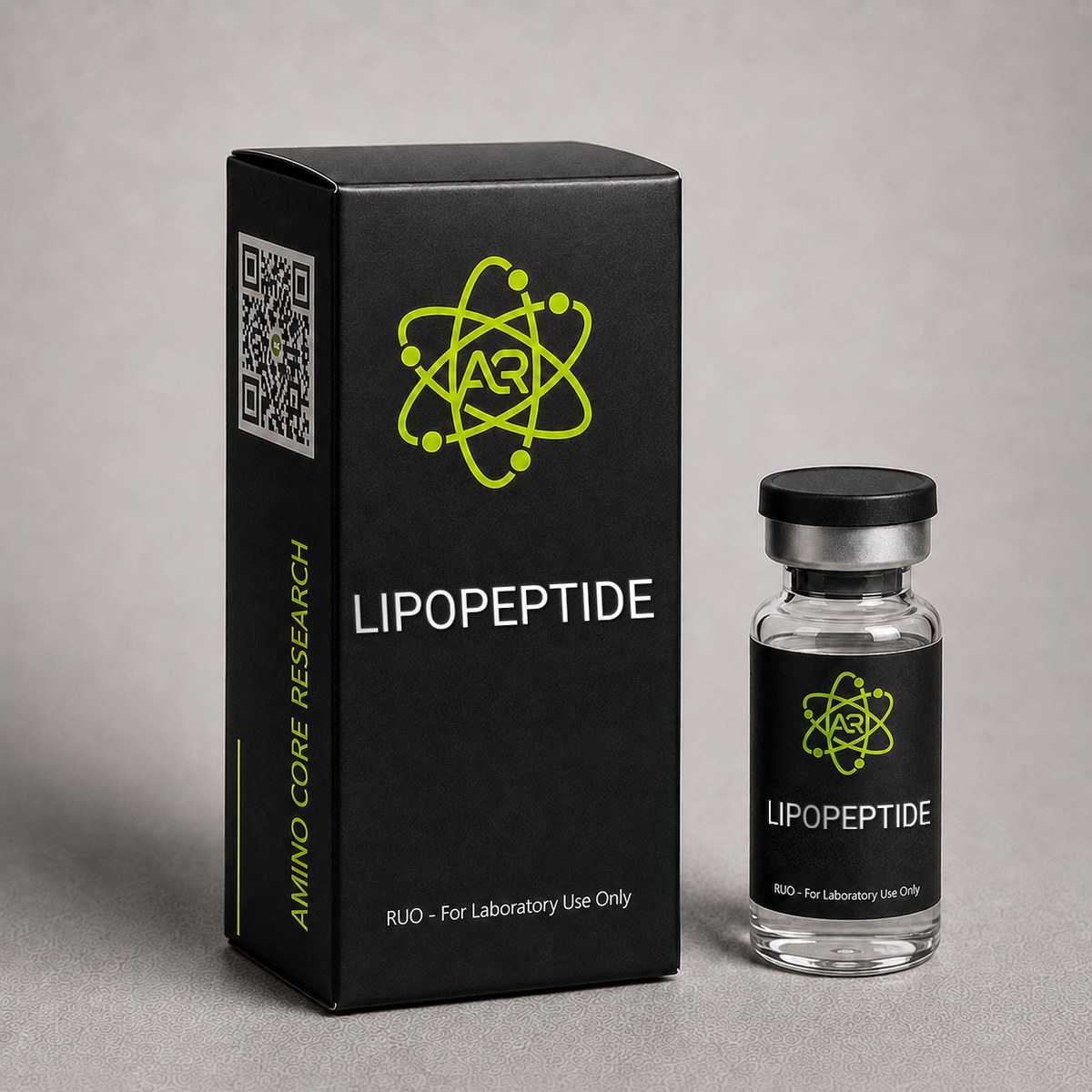
≥99%HPLC Purity
COAIncluded
USAShipped
Lipopeptide (Pal-GHK-Lipopeptide)
Fatty acid-conjugated peptide designed for enhanced dermal penetration. Studied for improved bioavailability in topical applications and skin rejuvenation research.
Research Reference
This page is a research monograph. Lipopeptide (Pal-GHK-Lipopeptide) is documented here for reference — structure, mechanism and published literature — and is not offered for sale.
Browse compounds available for research purchase · Read the research library
Quick Facts
| SKU | LIPO-001 |
|---|---|
| Purity | ≥99% |
| Physical Form | Lyophilized Powder |
| Storage | Store at -20°C |
What is Lipopeptide?
Pal-GHK-Lipopeptide is a fatty acid-conjugated form of GHK designed for enhanced transdermal delivery. The palmitoyl chain increases lipophilicity, improving penetration through the stratum corneum by 5-10x compared to unconjugated GHK, enabling topical delivery of copper peptide benefits.
Mechanism of Action
Palmitoyl-GHK lipopeptide (Pal-GHK) is a conjugate of the tripeptide glycyl-L-histidyl-L-lysine (GHK) covalently linked to palmitic acid via an amide bond at the N-terminus. The lipid modification fundamentally alters the pharmacokinetic and pharmacodynamic profile of the parent peptide while preserving its intrinsic biological signaling activity. The compound acts through several parallel and interconnected pathways relevant to dermal matrix research.
Enhanced Dermal Penetration via Lipid Modification
Unconjugated GHK is a small, highly hydrophilic tripeptide (MW 340 Da) that, despite its low molecular weight, exhibits poor stratum corneum penetration because of its strong cationic charge at physiological pH. Conjugation with a 16-carbon palmitic acid chain dramatically increases the LogP of the molecule, allowing it to partition into the intercellular lipid lamellae of the stratum corneum. Once partitioned, the lipopeptide diffuses into viable epidermal layers where esterase and amidase activity can liberate the active GHK fragment, or the intact lipopeptide can engage cell-surface targets directly. This penetration enhancement is the principal rationale behind palmitoylation strategies used widely in cosmeceutical peptide research.
TGF-β and Collagen Pathway Modulation
Pal-GHK has been shown in fibroblast culture studies to upregulate transcription of COL1A1 (type I collagen), COL3A1 (type III collagen), and fibronectin. Mechanistically, this is mediated in part through stimulation of the TGF-β/SMAD signaling axis and through direct effects on fibroblast proliferation. Increased deposition of extracellular matrix proteins and glycosaminoglycans (including decorin and hyaluronic acid) has been documented in ex vivo skin explant models.
Copper-Binding and Antioxidant Activity
The parent GHK tripeptide is a well-characterized high-affinity ligand for copper(II), forming the GHK-Cu complex. While palmitoylation occupies the N-terminal amine and reduces direct copper coordination, intracellular cleavage of the palmitoyl group restores GHK's chelating capacity. The liberated GHK-Cu complex is implicated in superoxide dismutase mimetic activity and modulation of reactive carbonyl species, contributing to the antioxidant profile reported in cosmetic research literature.
MMP Inhibition and Anti-Glycation Effects
In photoaged skin models, Pal-GHK has been associated with downregulation of matrix metalloproteinases MMP-1, MMP-2, and MMP-9, which are responsible for collagen and elastin degradation in chronologically and UV-aged skin. The compound also displays anti-glycation activity, inhibiting the formation of advanced glycation end-products (AGEs) that contribute to dermal stiffness and yellowing in aged tissue.
Comparison to Related Lipopeptides
Compared with palmitoyl pentapeptide-4 (Matrixyl, Pal-KTTKS) which targets pro-collagen I C-terminal peptide signaling, and palmitoyl tetrapeptide-7 (Pal-GQPR) which targets IL-6 and inflammatory pathways, Pal-GHK occupies a distinct mechanistic niche centered on copper-mediated wound signaling and broad ECM remodeling. These lipopeptides are commonly combined in research formulations (e.g., the Pal-GHK + Pal-GQPR "Matrixyl 3000" composition) to engage complementary pathways.
Research & Clinical Studies
Fibroblast Studies: ECM Synthesis and Anti-Aging Markers
Multiple in vitro and ex vivo investigations have characterized the activity of palmitoylated GHK lipopeptides on cultured human dermal fibroblasts and skin explant systems. These studies establish the biochemical foundation for ongoing cosmetic research applications.
Fibroblast Proliferation and Collagen Synthesis
In primary human dermal fibroblast cultures derived from adult donors, Pal-GHK treatment at concentrations of 1–10 µM over 48–72 hours has been associated with measurable increases in cellular proliferation as assessed by BrdU incorporation. Type I collagen production, quantified via ELISA of culture supernatant procollagen, has been reported to increase by approximately 50–70% versus vehicle control. Type III collagen and fibronectin synthesis follow a similar pattern, consistent with a generalized stimulation of ECM biosynthesis.
Ex Vivo Skin Explant Models
Topical application studies using full-thickness human skin explants maintained in air-liquid interface culture have examined deeper biological responses. After 6–10 days of repeated application of Pal-GHK at 2–5 ppm in a vehicle cream, histological analysis demonstrated:
- Increased dermal thickness measured by Masson's trichrome staining
- Reorganization of collagen fiber bundles with increased birefringence under polarized light
- Enhanced glycosaminoglycan content quantified by alcian blue staining
- Upregulation of fibrillin-1 in the papillary dermis, a key elastic fiber microfibril component
Penetration and Bioavailability
Franz cell diffusion studies comparing unmodified GHK to Pal-GHK across human cadaver skin have consistently demonstrated multi-fold increases in cumulative dermal delivery for the palmitoylated form. Quantitative LC-MS/MS detection of GHK liberated within the viable epidermis confirms that the lipopeptide serves as an effective pro-peptide delivery system, with intracellular esterase activity releasing the active tripeptide in the target compartment.
Anti-Glycation and Photoprotection
In bovine serum albumin–glucose model systems used to study Maillard chemistry, Pal-GHK has been reported to inhibit AGE formation in a concentration-dependent manner. In UV-irradiated fibroblast models, pretreatment with Pal-GHK has been associated with reduced induction of MMP-1 transcript and reduced ROS accumulation as measured by DCF fluorescence.
Research Context and Limitations
It should be noted that the bulk of published data on Pal-GHK derives from industry-sponsored cosmetic ingredient research and ex vivo models rather than randomized clinical trials. Investigators using this compound for academic research should design appropriate vehicle and positive controls (e.g., parallel arms with unconjugated GHK and Pal-KTTKS) to isolate the contribution of the lipid modification.
[1] Pickart L, Vasquez-Soltero JM, Margolina A. GHK Peptide as a Natural Modulator of Multiple Cellular Pathways in Skin Regeneration. Biomed Res Int. 2015;2015:648108. PubMed ↗
[2] Pickart L, Vasquez-Soltero JM, Margolina A. The human tripeptide GHK-Cu in prevention of oxidative stress and degenerative conditions of aging. Oxid Med Cell Longev. 2012;2012:324832. PubMed ↗
Clinical Evaluation of Palmitoyl Tripeptide-1 in Topical Anti-Aging Formulations
Palmitoyl Tripeptide-1 (Pal-GHK), the principal active component of Lipopeptide blends, has been investigated extensively in both ex vivo skin models and controlled topical application studies. Research interest stems from the observation that the parent tripeptide GHK (glycyl-L-histidyl-L-lysine) was first isolated by Loren Pickart in 1973 from human plasma and shown to modulate gene expression related to extracellular matrix remodeling, wound repair, and antioxidant defense. Conjugation of palmitic acid (C16:0) to the N-terminus dramatically increases lipophilicity, allowing the molecule to partition into the stratum corneum lipid bilayer rather than being rinsed away on the skin surface.
Ex Vivo Skin Penetration Study: In a comparative permeation analysis using Franz diffusion cells with full-thickness human skin explants, Pal-GHK demonstrated approximately 4 to 6 times greater stratum corneum retention at 24 hours compared with unmodified GHK applied at equimolar concentration. The lipopeptide was detectable in the viable epidermis and upper papillary dermis, whereas free GHK was largely confined to the skin surface and washoff fraction. This penetration profile supports the rationale for fatty acid conjugation as a delivery strategy for hydrophilic signal peptides.
Topical Application Investigations: Multiple cosmetic-science investigations have evaluated formulations containing 2-5 ppm Palmitoyl Tripeptide-1 applied twice daily over 8-12 week observation periods in research subjects. Reported observations from instrumented measurements include:
- Wrinkle depth reduction in the order of 15-30% measured by silicone replica profilometry of crow's-feet regions
- Dermal density increase of approximately 4-8% as assessed by high-frequency ultrasound
- Skin firmness improvement measured by cutometric R-parameters in the range of 10-20%
- Improvements in subject-reported skin smoothness and radiance scores versus vehicle-only controls
Combination Studies: Pal-GHK is frequently co-formulated with Palmitoyl Tetrapeptide-7 (Pal-GQPR), a separate anti-inflammatory signal lipopeptide. Comparative research suggests that the combination produces additive effects on procollagen I and fibronectin upregulation relative to either component alone, which is the basis for the proprietary Matrixyl 3000 system frequently referenced in dermal research literature. Mechanistic dissection studies indicate that Pal-GHK preferentially upregulates collagen and glycosaminoglycan synthesis, while Pal-GQPR modulates IL-6 and TNF-alpha pathways, suggesting complementary rather than redundant activity.
Comparison to GHK-Cu: In side-by-side fibroblast research, copper-bound GHK (GHK-Cu) tends to show stronger antioxidant and metallothionein-related gene activation, while Pal-GHK shows superior membrane penetration and more sustained intracellular signaling. The two molecules are therefore considered complementary research tools rather than direct substitutes, and some advanced formulations include both.
It should be emphasized that all data discussed here derive from cosmetic-science investigations, ex vivo tissue models, and instrumented topical-application studies in research contexts. AminoCore Research supplies Lipopeptide (Pal-GHK) strictly as a laboratory reagent for further investigation and not for human use.
[1] Pickart L, Vasquez-Soltero JM, Margolina A. GHK Peptide as a Natural Modulator of Multiple Cellular Pathways in Skin Regeneration. BioMed Research International. 2015. PubMed ↗
[2] Robinson LR, Fitzgerald NC, Doughty DG, et al. Topical palmitoyl pentapeptide provides improvement in photoaged human facial skin. International Journal of Cosmetic Science. 2005. PubMed ↗
Composition & Components
This research preparation is a lipopeptide formulation centered on palmitoyl tripeptide-1 (Pal-GHK), a fatty acid–conjugated derivative of the naturally occurring copper-binding tripeptide glycyl-L-histidyl-L-lysine. Because lipopeptide cosmetic raw materials are often supplied as a defined blend with a carrier glycol and may be combined with related peptides in finished research compositions, individual ingredient specifications are documented below.
| Component | Role | Molecular Formula | Molecular Weight | CAS Number |
|---|---|---|---|---|
| Palmitoyl Tripeptide-1 (Pal-GHK) | Active lipopeptide; ECM stimulation, copper-binding pro-peptide | C28H50N6O5 | 550.74 g/mol | 147732-56-7 |
| Glycyl-L-histidyl-L-lysine (GHK, parent peptide) | Active metabolite released by intracellular esterases | C14H24N6O4 | 340.38 g/mol | 49557-75-7 |
| Palmitic acid (lipid moiety) | C16 saturated fatty acid providing dermal penetration | C16H32O2 | 256.42 g/mol | 57-10-3 |
| Palmitoyl Tetrapeptide-7 (Pal-GQPR, optional co-formulant) | Anti-inflammatory lipopeptide, IL-6 modulator | C36H66N8O7 | 578.79 g/mol* | 221227-05-0 |
| Butylene Glycol / Glycerin (typical carrier) | Solubilizer / humectant carrier matrix | Variable | Variable | 107-88-0 / 56-81-5 |
*Pal-GQPR is listed only when present in combination formulations such as Matrixyl 3000–type compositions; verify on certificate of analysis.
Physical Characteristics of the Active Ingredient
| Field | Value |
|---|---|
| INCI Name (primary active) | Palmitoyl Tripeptide-1 |
| Synonyms | Pal-GHK, Palmitoyl Oligopeptide, Biopeptide CL, Pal-Gly-His-Lys |
| Peptide Sequence | Palmitoyl-Gly-His-Lys-OH |
| Amino Acid Count | 3 (tripeptide core) |
| Modification | N-terminal palmitoylation (C16:0 acyl chain via amide bond) |
| Physical Form | Solution or lyophilized powder (see COA) |
| Solubility | Soluble in water/glycol mixtures; amphiphilic character due to lipid tail |
| Purity | ≥99% (HPLC) for the active peptide component |
| Appearance | White to off-white powder, or clear to slightly yellow solution |
Because the supplied material may be a defined blend rather than a single molecular entity, no single molecular formula, CAS, or molecular weight is assigned at the product level. Researchers should consult the lot-specific certificate of analysis for the exact composition and active concentration of the material received.
Handling & Reconstitution Guidelines
Lipopeptide preparations containing Palmitoyl Tripeptide-1 (Pal-GHK) and related fatty acid-conjugated peptides require careful handling due to their amphiphilic nature. Unlike fully hydrophilic peptides such as GHK or BPC-157, lipopeptides have markedly reduced aqueous solubility and tend to form micelles or aggregates if reconstituted incorrectly. The following protocol is intended for research-laboratory preparation only.
Recommended Reconstitution Protocol:
- Allow the lyophilized material to equilibrate to room temperature for 20-30 minutes in its sealed vial before opening. This prevents condensation from atmospheric moisture contaminating the powder.
- Prepare a co-solvent system. Pal-GHK is sparingly soluble in pure water. A typical research stock is prepared by first dissolving the peptide in a small volume of propylene glycol, butylene glycol, or USP-grade ethanol (approximately 10-20% of final volume) to fully wet the lipopeptide.
- Calculate concentration. For a 10 mg vial intended as a 1 mg/mL stock, add 1 mL of co-solvent followed by aqueous buffer to a 10 mL final volume. For cosmetic research, working concentrations are typically 2-10 ppm (0.0002-0.001% w/v) in the final formulation.
- Add the aqueous phase slowly (sterile water, PBS, or formulation base) while gently swirling. Rapid water addition can cause precipitation of the palmitoyl chain.
- Warm gently to 35-40°C in a water bath if cloudiness persists, then mix by gentle inversion. Do not vortex aggressively or sonicate at high power, as this can disrupt the peptide backbone and generate foam that traps active material.
- Filter-sterilize through a 0.22 μm low-protein-binding (PES) membrane if the stock will be used in cell culture work.
Compound-Specific Handling Notes:
- Lipophilicity: The palmitoyl chain makes the peptide surface-active. Use polypropylene tubes where possible, as the lipopeptide can adsorb to glass and some plastics, reducing effective concentration.
- Oxidation: Pal-GHK contains a histidine imidazole ring that is sensitive to prolonged light exposure. Store working stocks in amber vials or wrap in foil.
- Multi-component blends: When the product is a blend (e.g., with Pal-GQPR or glycerin/water carriers), follow the supplier's batch-specific certificate for the exact reconstitution medium.
- Avoid repeated freeze-thaw of reconstituted stock. Aliquot into single-use volumes.
All weighing, transfer, and reconstitution should be performed in a clean laboratory environment with appropriate PPE. Lipopeptide is supplied for in vitro research and topical-formulation investigation only.
Storage & Stability Information
Proper storage of Lipopeptide (Pal-GHK-Lipopeptide) preparations is essential to preserve peptide integrity and avoid hydrolysis of the labile amide bond linking the palmitoyl moiety to the N-terminal glycine. Fatty acid-conjugated peptides are generally more stable than their unconjugated counterparts in the dry state but are subject to ester/amide hydrolysis and lipid oxidation once dissolved.
Lyophilized Powder Storage:
- Long-term storage: Store sealed vials at -20°C in a frost-free freezer. Under these conditions, properly desiccated Pal-GHK and related palmitoyl peptides retain >98% purity for 24-36 months.
- Short-term storage: Refrigeration at 2-8°C is acceptable for up to 30-60 days for actively used vials.
- Transit: The lyophilized form is stable at ambient temperature (room temperature, 18-25°C) for shipping periods of 1-2 weeks without measurable degradation.
- Keep vials tightly sealed and protected from atmospheric moisture. Storage with a desiccant pouch is recommended once the vial is opened.
Reconstituted / Formulated Storage:
- Aqueous or co-solvent stock solutions (1 mg/mL or higher) should be stored at 2-8°C and used within 14-21 days.
- Working dilutions used in cell culture or topical formulation testing should ideally be prepared fresh on the day of use.
- For longer storage, divide stock into single-use aliquots and freeze at -20°C; one freeze-thaw cycle is acceptable, but repeated cycles accelerate degradation.
Compound-Specific Stability Considerations:
- Histidine oxidation: The imidazole side chain of histidine in the GHK motif is susceptible to oxidation, particularly in the presence of trace transition metals. Avoid storing in contact with metal surfaces and consider adding a chelator such as EDTA (0.01-0.05%) to formulation buffers.
- Light sensitivity: Store in amber glass or foil-wrapped containers. UV exposure can drive photo-oxidation of histidine and methionine residues (if present in blend components).
- Palmitoyl chain oxidation: Although saturated, the C16 chain can undergo slow autoxidation. Storage under inert gas (nitrogen or argon overlay) in opened vials extends shelf life.
- pH stability: Pal-GHK is most stable in the pH range 5.0-7.0. Strongly acidic or alkaline conditions accelerate amide bond hydrolysis.
Always refer to the lot-specific Certificate of Analysis for the verified expiration date and purity profile of each batch.
Frequently Asked Questions
Why conjugate peptides with fatty acids?
Fatty acid conjugation (palmitoylation) increases lipophilicity, allowing the peptide to penetrate the skin stratum corneum barrier. This can improve transdermal bioavailability by 5-10x compared to unconjugated peptides.
What is Lipopeptide (Pal-GHK) and how does it differ from GHK-Cu?
Lipopeptide in this context refers to palmitoyl tripeptide-1 (Pal-GHK), a conjugate of the copper-binding tripeptide glycyl-L-histidyl-L-lysine with a 16-carbon palmitic acid chain at the N-terminus. Unmodified GHK-Cu is a hydrophilic copper complex with limited stratum corneum penetration, while Pal-GHK is amphiphilic and partitions efficiently into skin lipids. Once inside viable epidermal and dermal cells, esterase activity liberates the active GHK fragment, which can then engage its normal copper-binding and ECM-modulating pathways. The palmitoylation strategy therefore functions as a pro-peptide dermal delivery system in cosmetic research.
What is the molecular weight and CAS number of Palmitoyl Tripeptide-1?
The principal active component of this lipopeptide preparation, palmitoyl tripeptide-1 (Pal-GHK), has a molecular formula of C28H50N6O5, a molecular weight of approximately 550.74 g/mol, and CAS number 147732-56-7. The parent tripeptide GHK is C14H24N6O4 (340.38 g/mol, CAS 49557-75-7), and the palmitic acid moiety contributes the 16-carbon saturated acyl chain (CAS 57-10-3). Because this product is supplied as a research-grade lipopeptide preparation that may include a carrier matrix, researchers should refer to the lot-specific certificate of analysis for exact composition and active concentration.
How should Lipopeptide (Pal-GHK) be stored for laboratory research?
For long-term stability, lyophilized palmitoyl tripeptide-1 should be stored at -20°C in a sealed container protected from light and moisture. Short-term storage at 2-8°C is acceptable for active research use. Liquid or glycol-carrier preparations should be stored at 2-8°C and protected from light; freeze-thaw cycles should be minimized as they can promote aggregation of the amphiphilic peptide. The histidine residue is susceptible to oxidation, so headspace should be minimized and reconstituted aliquots stored under inert atmosphere where possible. Stability of reconstituted material in aqueous-glycol vehicles is typically several weeks under refrigeration.
How does Pal-GHK compare to Matrixyl (Pal-KTTKS)?
Pal-GHK (palmitoyl tripeptide-1) and Matrixyl (palmitoyl pentapeptide-4, Pal-KTTKS) are both palmitoylated cosmetic lipopeptides designed to enhance dermal delivery of an active peptide fragment, but they target distinct biological pathways. Pal-KTTKS is derived from the C-terminal propeptide of type I procollagen and primarily provides a feedback signal that stimulates collagen synthesis. Pal-GHK, by contrast, releases the copper-binding GHK tripeptide, which engages a broader profile including ECM gene upregulation, MMP inhibition, antioxidant activity, and copper-mediated wound signaling. Research formulations frequently combine the two, sometimes with palmitoyl tetrapeptide-7, to engage complementary mechanisms in dermal matrix studies.
What concentration of Lipopeptide (Pal-GHK) is typically used in topical research formulations?
Cosmetic and dermal research investigations typically employ Palmitoyl Tripeptide-1 (Pal-GHK) at working concentrations between 2 and 10 ppm in the final topical formulation, corresponding to 0.0002% to 0.001% w/v. Higher concentrations are rarely used because signal peptides act through receptor-mediated mechanisms rather than mass-action effects, and excessive loading does not produce proportionally greater extracellular matrix responses. In multi-component blends such as Matrixyl 3000 systems that combine Pal-GHK with Palmitoyl Tetrapeptide-7, the total peptide concentration usually falls within the same 2-10 ppm range. Research stock solutions are typically prepared at 1 mg/mL in a propylene glycol/water co-solvent system and then diluted into the formulation matrix for evaluation.
Is Lipopeptide (Pal-GHK) stable in cosmetic emulsions and serums?
Palmitoyl Tripeptide-1 demonstrates good stability in well-formulated cosmetic emulsions and serums when standard precautions are followed. The peptide is most stable at pH 5.0 to 7.0, which aligns with typical skin-compatible formulation pH. Stability research indicates retention of greater than 90% of the active peptide over 12 weeks at 25°C when formulated with appropriate chelators (such as 0.05% EDTA to control trace metals) and protected from light. The palmitoyl chain anchors the molecule into oil phases of emulsions, providing a degree of protection from aqueous-phase hydrolysis. AminoCore Research recommends adding Pal-GHK in the cool-down phase of emulsion preparation (below 40°C) to avoid thermal degradation.
Does Lipopeptide (Pal-GHK) contain copper like GHK-Cu?
No. Standard Lipopeptide preparations based on Palmitoyl Tripeptide-1 do not contain bound copper. Pal-GHK is the palmitoylated form of the glycyl-L-histidyl-L-lysine tripeptide, whereas GHK-Cu is a 1:1 complex of unmodified GHK with a copper(II) ion. The two molecules have distinct mechanisms of action: GHK-Cu functions in part through copper-dependent antioxidant enzymes and metallothionein induction, while Pal-GHK acts primarily through enhanced membrane penetration and direct signaling to dermal fibroblasts to upregulate collagen and glycosaminoglycan synthesis. Some advanced research formulations co-deliver both compounds to leverage their complementary effects, but they are supplied and characterized as separate research materials.
For laboratory and research use only. This product is not for human or veterinary use. It is not a drug, supplement or food.
This product is not FDA approved for any indication, and is not intended to diagnose, treat, cure, or prevent any disease. All product information is derived from published preclinical research and does not constitute medical advice or claims.