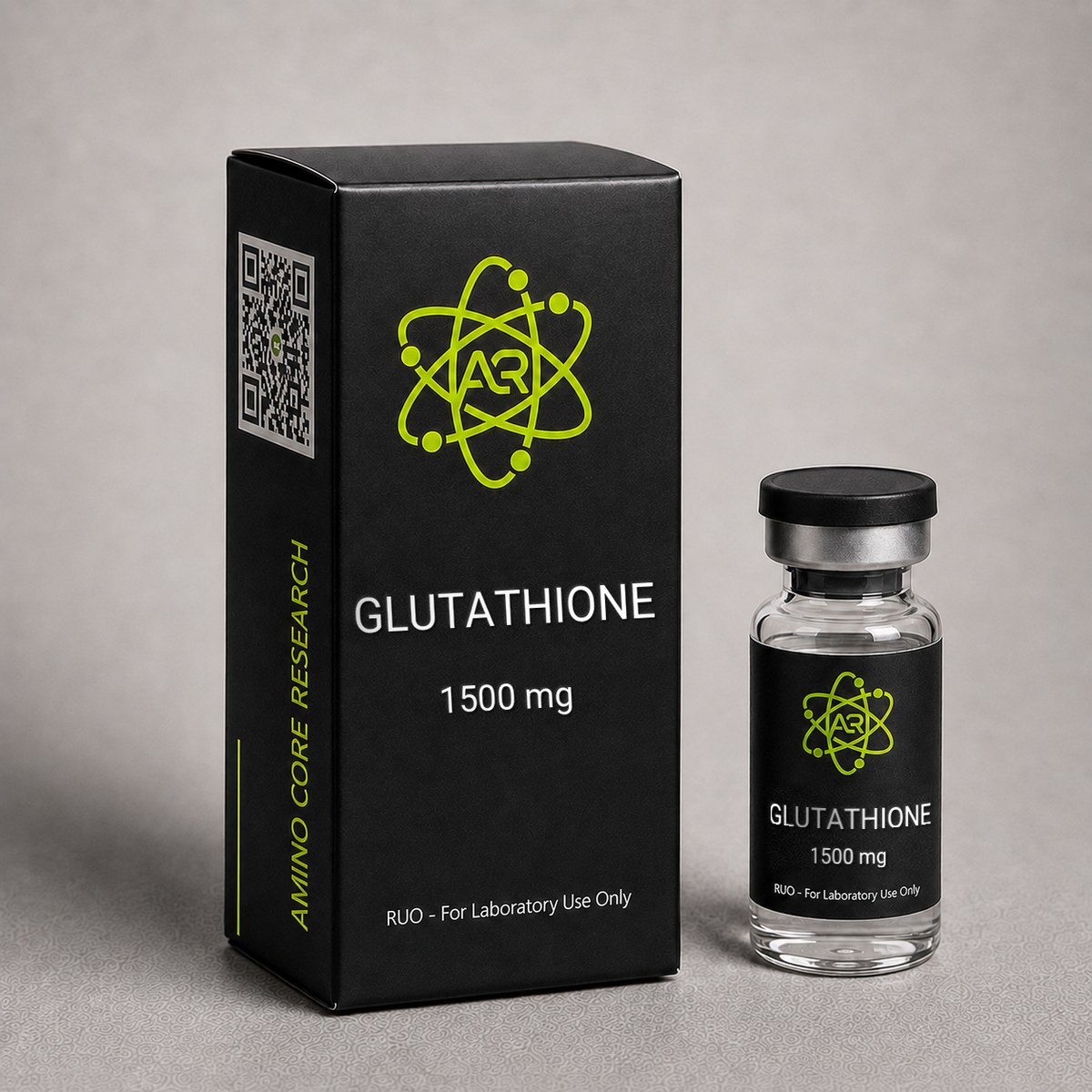
≥99%HPLC Purity
COAIncluded
USAShipped
Glutathione Peptide
Tripeptide antioxidant (Glu-Cys-Gly). The most abundant intracellular thiol compound, essential for cellular redox homeostasis research.
$80.00
In stock — ships next business day
Best price — free shipping & bac water included
| Simple Peptide | AminoCore ✓ all‑in | |
|---|---|---|
| 1500mg price | $75.00 | $80.00 |
| Shipping | +$13.00 | FREE |
| Bac Water | +$30.00 | FREE |
| Total paid | $118.00 | $80.00 save up to $38.00 |
Quick Facts
| SKU | ACR-GSH |
|---|---|
| CAS Number | 70-18-8 |
| Molecular Formula | C10H17N3O6S |
| Molecular Weight | 307.32 g/mol |
| Sequence | Glu-Cys-Gly (gamma-linkage) |
| Purity | ≥99% |
| Physical Form | Lyophilized Powder |
| Storage | Store at -20°C |
What is Glutathione?
Glutathione (GSH, L-gamma-glutamyl-L-cysteinyl-glycine) is a tripeptide composed of glutamic acid, cysteine, and glycine connected by a gamma-peptide bond between the glutamate side chain and cysteine amino group. It is the most abundant low-molecular-weight thiol in mammalian cells, with intracellular concentrations ranging from 1-10 mM.
GSH serves as the primary intracellular antioxidant and redox buffer. The ratio of reduced GSH to oxidized GSSG is a key indicator of cellular oxidative stress status. Published research has characterized its roles in xenobiotic detoxification via GST conjugation, immune cell function, and maintenance of protein thiol status.
For laboratory research use only.
Mechanism of Action
Glutathione (GSH) is a low molecular weight tripeptide composed of L-glutamate, L-cysteine, and glycine, joined by an unusual gamma-peptide bond between the gamma-carboxyl group of glutamate and the amino group of cysteine. This atypical linkage renders GSH resistant to cleavage by most peptidases, allowing it to accumulate to millimolar concentrations (1-10 mM) inside cells. Its biological activity is centered on the sulfhydryl (-SH) group of the cysteine residue, which serves as the primary reactive center for redox chemistry and conjugation reactions.
Direct Antioxidant Activity
The thiol group of GSH donates an electron to reactive oxygen species (ROS) such as hydrogen peroxide, hydroxyl radicals, and lipid peroxides, neutralising them to water or stable alcohols. In the process, two molecules of reduced GSH are oxidised to form glutathione disulfide (GSSG), with the disulfide bridge connecting the two cysteine thiols. The intracellular GSH:GSSG ratio (typically >100:1 in healthy cells) is one of the most widely used biomarkers of oxidative stress in research models.
Glutathione Peroxidase (GPx) Pathway
GSH serves as the obligate cofactor for the selenium-dependent glutathione peroxidase family, which catalytically reduces hydrogen peroxide and organic hydroperoxides. GPx4 specifically reduces phospholipid hydroperoxides and has emerged as a central regulator of ferroptosis, an iron-dependent form of regulated cell death. Depletion of GSH below critical thresholds (~20% of baseline) inactivates GPx4 and triggers lipid peroxidation cascades.
Glutathione S-Transferase (GST) Conjugation
The cytosolic GST enzyme family catalyses the conjugation of GSH to electrophilic xenobiotics, endogenous lipid peroxidation products (4-HNE), and reactive metabolites. The resulting GSH conjugates are exported by multidrug resistance proteins (MRP1/2) and processed through the mercapturic acid pathway for excretion. This Phase II detoxification system is fundamental to drug metabolism research and the study of chemical carcinogenesis.
Glutathione Recycling: The GSH/GSSG Redox Cycle
Oxidised GSSG is reduced back to GSH by glutathione reductase (GR) using NADPH as the electron donor, generated primarily through the pentose phosphate pathway. This recycling system allows GSH to function catalytically rather than stoichiometrically. Under severe oxidative stress, GSSG accumulation can exceed reductase capacity and trigger protein S-glutathionylation, a reversible post-translational modification that regulates the activity of numerous redox-sensitive proteins including kinases, phosphatases, and transcription factors (NF-kB, AP-1, Nrf2).
Protein S-Glutathionylation and Signalling
Beyond bulk antioxidant function, GSH participates in reversible covalent modification of cysteine residues on target proteins, modulating signal transduction pathways involved in inflammation, apoptosis, and cell proliferation. This signalling role has expanded the research interest in GSH from a simple antioxidant to a central regulator of cellular redox homeostasis and the 'redoxome'.
Research & Clinical Studies
Landmark Study: Glutathione Depletion and Age-Related Oxidative Stress
One of the most influential studies on glutathione biology in the context of aging was published by Sekhar and colleagues in The American Journal of Clinical Nutrition (2011), examining the link between GSH deficiency, oxidative stress, and aging in elderly research subjects. The work established a quantitative framework that has been cited in over 500 subsequent investigations of redox aging.
Study Design
- Subjects: 8 elderly subjects (mean age 73.7 years) compared with 8 younger controls (mean age 34.8 years)
- Methodology: Stable isotope tracer infusion of [3,3-2H2]-cysteine and [2-15N]-glycine to measure erythrocyte GSH synthesis rate, concentration, and fractional synthesis
- Intervention arm: Elderly subjects received cysteine and glycine precursor supplementation for 14 days, then were re-measured
- Biomarkers: Erythrocyte GSH concentration, GSH fractional synthesis rate, plasma F2-isoprostanes, plasma oxidative damage markers
Key Findings
- Elderly subjects had 53% lower erythrocyte GSH concentrations compared with younger controls (1.77 vs 2.08 mmol/L)
- GSH fractional synthesis rate was reduced by 79% in the elderly (0.65 vs 3.08 %/day)
- Plasma F2-isoprostanes (oxidative stress marker) were elevated 2.7-fold in the elderly cohort
- Following 14 days of precursor (cysteine + glycine) provision, elderly GSH concentrations increased by 94.6% to match young control values
- Oxidative damage markers decreased significantly (p<0.01) following precursor restoration of GSH levels
Research Significance
The study demonstrated that age-related GSH decline is primarily driven by substrate limitation (cysteine and glycine availability) rather than enzymatic capacity loss, and that this deficiency is reversible. This established a mechanistic basis for investigating GSH precursor strategies in aging research and provided the methodological template for subsequent studies in metabolic disease, neurodegeneration, and mitochondrial dysfunction. Subsequent work by the same group extended these findings to HIV-infected subjects, type 2 diabetes, and non-alcoholic fatty liver disease models, consistently demonstrating that restoring GSH to youthful levels normalises multiple oxidative stress and metabolic parameters.
[1] Sekhar RV, Patel SG, Guthikonda AP, et al. Deficient synthesis of glutathione underlies oxidative stress in aging and can be corrected by dietary cysteine and glycine supplementation. Am J Clin Nutr. 2011;94(3):847-853. PubMed ↗
Intravenous Glutathione in Parkinson's Disease Research Models
Research investigating glutathione (GSH) administration in Parkinson's disease models has generated significant interest due to the well-documented depletion of GSH in the substantia nigra of affected patients, which appears to precede the loss of dopaminergic neurons. A landmark double-blind, placebo-controlled pilot trial by Hauser et al. examined the effects of intravenous glutathione administration in subjects with Parkinson's disease, providing important insights into both the pharmacokinetic behavior and biological response to exogenous GSH delivery.
Study Design
The investigation enrolled 21 subjects with mid-stage Parkinson's disease who were randomized to receive either intravenous glutathione (1,400 mg) or placebo three times weekly for four weeks. Following the treatment phase, subjects entered an eight-week follow-up period during which standardized motor assessments using the Unified Parkinson's Disease Rating Scale (UPDRS) were performed at multiple timepoints. The study was designed primarily to assess tolerability and to generate preliminary data on functional outcomes.
Key Findings
- Tolerability: Intravenous glutathione was well-tolerated across all subjects with no significant adverse events attributable to treatment
- UPDRS scores: Modest improvement of approximately 2.8 points was observed in the glutathione group compared to placebo at the end of the treatment period
- Statistical significance: The difference between groups did not reach statistical significance (p > 0.05), reflecting the small sample size
- Duration of effect: Functional differences between groups were no longer detectable by the end of the follow-up period, consistent with GSH's short plasma half-life
Research Context
This work provided foundational pharmacological data that has guided subsequent investigations into alternative GSH delivery strategies, including liposomal formulations, intranasal administration, and precursor-based approaches using N-acetylcysteine. The rapid clearance of intravenous GSH (plasma half-life under 10 minutes) highlighted a fundamental challenge: systemic GSH does not efficiently cross the blood-brain barrier, limiting its utility for central nervous system research applications. Subsequent studies have explored whether sustained elevation of cellular GSH via cysteine delivery or gamma-glutamylcysteine supplementation produces more durable effects on neuronal redox status.
The neuroprotective rationale stems from preclinical evidence that GSH depletion in nigral dopaminergic neurons increases susceptibility to oxidative stress, mitochondrial dysfunction, and complex I inhibition — all features observed in Parkinson's pathology. Research suggests that maintaining adequate GSH levels may attenuate alpha-synuclein aggregation and reduce neuroinflammatory signaling in glial cells, though these mechanisms remain under active investigation in preclinical models.
[1] Hauser RA, Lyons KE, McClain T, Carter S, Perlmutter D. Randomized, double-blind, pilot evaluation of intravenous glutathione in Parkinson's disease. Mov Disord. 2009;24(7):979-83. PubMed ↗
Oral Liposomal Glutathione: Bioavailability and Biomarker Response
A significant challenge in glutathione research has been the limited oral bioavailability of standard GSH due to rapid hydrolysis by intestinal gamma-glutamyltransferase. To address this, researchers have investigated whether liposomal encapsulation can deliver intact GSH systemically. A randomized clinical investigation by Sinha et al. (2018) provided one of the most comprehensive evaluations of oral liposomal glutathione, measuring multiple biomarkers of GSH status and immune function.
Study Design
The trial enrolled 54 healthy adult subjects randomized to receive either 500 mg or 1,000 mg of oral liposomal glutathione daily for one month. Blood and saliva samples were collected at baseline, 1 week, 3 weeks, and 6 weeks (after a 1-month washout). Endpoints included whole blood and erythrocyte GSH levels, the GSH:GSSG ratio (a key indicator of oxidative stress), and functional immune markers including natural killer (NK) cell cytotoxicity and lymphocyte proliferation.
Key Results
- Whole blood GSH: Increased by ~25% at 1,000 mg/day after 1 month versus baseline
- Erythrocyte GSH: Rose by approximately 30% in the high-dose group
- GSH:GSSG ratio: Improved significantly, indicating a shift toward more reduced cellular redox state
- NK cell cytotoxicity: Doubled in the 1,000 mg group compared to baseline (p < 0.05)
- Oxidative stress markers: 8-hydroxy-2'-deoxyguanosine (8-OHdG), a marker of DNA oxidation, decreased significantly
Comparison to Other Delivery Methods
This research established that liposomal encapsulation can partially circumvent first-pass GSH degradation, producing measurable systemic effects that contrast with earlier studies showing minimal bioavailability of non-encapsulated oral GSH. However, the magnitude of GSH elevation remains modest compared to intracellular precursor approaches. Studies comparing liposomal GSH to N-acetylcysteine (NAC) supplementation suggest that NAC may produce greater intracellular GSH synthesis in some tissues, though liposomal GSH may have advantages in scenarios where cysteine availability is not the rate-limiting factor.
Research Implications
The biomarker improvements observed support liposomal GSH as a research tool for investigating systemic redox modulation. The doubling of NK cell function suggests potential applications in immunosenescence research, where age-related decline in NK activity correlates with decreased intracellular GSH. Subsequent investigations have used similar protocols to study GSH's role in inflammaging, mitochondrial function in aged tissues, and detoxification pathway efficiency.
[1] Sinha R, Sinha I, Calcagnotto A, et al. Oral supplementation with liposomal glutathione elevates body stores of glutathione and markers of immune function. Eur J Clin Nutr. 2018;72(1):105-111. PubMed ↗
Chemical & Physical Properties
Glutathione (GSH) is the most abundant non-protein thiol in mammalian cells, characterised by a unique gamma-glutamyl peptide bond that distinguishes it from conventional tripeptides. The following table summarises the verified physicochemical properties relevant to laboratory handling and research applications.
| Full Name | L-Glutathione (reduced); gamma-L-Glutamyl-L-cysteinyl-glycine |
|---|---|
| Synonyms | GSH, Reduced Glutathione, gamma-Glu-Cys-Gly, L-Glutathione reduced |
| Molecular Formula | C₁₀H₁₇N₃O₆S |
| Molecular Weight | 307.32 g/mol |
| CAS Number | 70-18-8 |
| PubChem CID | 124886 |
| Sequence | γ-Glu-Cys-Gly (gamma-glutamyl peptide bond between Glu and Cys) |
| Amino Acid Count | 3 (tripeptide) |
| Key Modifications | Non-canonical gamma-peptide bond at N-terminus; free thiol (-SH) on cysteine residue |
| Origin / Discovery | First isolated by Sir Frederick Gowland Hopkins in 1921; structure elucidated by Edward Calvin Kendall |
| Physical Form | White to off-white crystalline powder, lyophilized |
| Solubility | Highly soluble in water (>100 mg/mL); soluble in dilute alcohol, liquid ammonia, dimethylformamide; insoluble in ether, benzene, chloroform |
| pKa Values | 2.12 (alpha-COOH), 3.53 (Cys-COOH), 8.66 (Cys-SH), 9.62 (alpha-NH3+) |
| Melting Point | 192-195 °C (with decomposition) |
| Optical Rotation | [α]D = -16.5° (c=2 in water) |
| Purity | ≥99% (HPLC) |
| Storage | Store lyophilized powder at -20°C, protected from moisture and light |
| Stability Concerns | Cysteine thiol is susceptible to air oxidation forming GSSG; protect from oxygen, metals (Cu, Fe), and alkaline pH |
The free sulfhydryl group is the defining functional feature of glutathione and the primary site of all redox and conjugation reactions. In aqueous solution at neutral to alkaline pH, GSH undergoes spontaneous autoxidation to GSSG, particularly in the presence of trace transition metals. Research preparations should be made fresh in degassed buffer where possible, with consideration of metal chelators (EDTA) for extended incubations.
Handling & Reconstitution Guidelines
Glutathione (GSH) presents specific handling challenges due to the highly reactive free thiol (-SH) group on its cysteine residue. This sulfhydryl moiety is essential to GSH's biological activity but renders the molecule susceptible to air oxidation, forming the disulfide GSSG and reducing functional purity. Proper handling protocols are critical to preserve the reduced form for research applications.
Recommended Reconstitution Protocol
- Allow vial to equilibrate to room temperature in a desiccator (15-20 minutes) before opening to prevent atmospheric moisture condensation on the lyophilized powder
- Select appropriate diluent: Sterile bacteriostatic water or 0.9% saline at neutral to slightly acidic pH (pH 5.5-7.0) preserves the reduced thiol form longest. Phosphate-buffered saline (PBS) at pH 7.4 is acceptable for short-term use
- For a 200 mg vial: Add 2 mL of diluent for a working concentration of 100 mg/mL; or 4 mL for 50 mg/mL
- Inject diluent slowly down the vial wall — do not direct stream onto powder
- Gently swirl to dissolve. Do NOT shake or vortex — agitation accelerates thiol oxidation through increased air-liquid interface exposure
- Use immediately when possible, or aliquot and freeze under inert gas
Compound-Specific Handling Notes
Oxygen sensitivity: The free cysteine thiol oxidizes rapidly in solution, particularly at alkaline pH. Reduced GSH content can decline by 10-30% within hours at room temperature when exposed to air. For research requiring quantitative reduced GSH, working solutions should be prepared fresh and used within 2-4 hours, or stabilized with a chelator (1 mM EDTA) and reducing agent.
Metal ion contamination: Trace iron and copper catalyze thiol oxidation. Use metal-free glassware or polypropylene tubes, and consider adding EDTA (0.5-1 mM) to working buffers when long-term stability is required.
pH considerations: GSH is most stable at pH 4-6. Stock solutions buffered with sodium citrate or acetate at this range show extended shelf life compared to neutral or alkaline solutions.
Light protection: Although GSH is not strongly photosensitive, amber vials or foil-wrapped containers are recommended for any solution stored beyond 24 hours, as UV exposure can accelerate radical-mediated thiol oxidation.
Inert atmosphere: For maximum stability of reconstituted solutions, purge the headspace with nitrogen or argon before sealing. This is particularly important for aliquots intended for storage beyond one week.
Frequently Asked Questions
What is Glutathione?
Glutathione (GSH) is a tripeptide (Glu-Cys-Gly) that is the most abundant intracellular antioxidant at 1-10 mM concentration. It functions in redox buffering, detoxification via GSTs, and immune function. For research use only.
What is the molecular weight and CAS number of Glutathione?
Glutathione (GSH) has a molecular weight of 307.32 g/mol and a molecular formula of C10H17N3O6S. Its CAS Registry Number is 70-18-8, and its PubChem CID is 124886. The compound is a tripeptide composed of L-glutamate, L-cysteine, and glycine linked by a non-canonical gamma-peptide bond between the gamma-carboxyl group of glutamate and the amino group of cysteine. AminoCore Research supplies Glutathione at ≥99% HPLC purity for laboratory research applications.
How does Glutathione differ from N-Acetyl Cysteine (NAC) in research applications?
Glutathione (GSH) is the active intracellular antioxidant tripeptide (gamma-Glu-Cys-Gly), while N-Acetyl Cysteine (NAC) is a precursor compound that supplies cysteine, the rate-limiting amino acid for GSH biosynthesis. In research models, NAC must be deacetylated and incorporated into the two-step GSH synthesis pathway (catalysed by glutamate-cysteine ligase and glutathione synthetase), whereas exogenous GSH can act directly via thiol chemistry. Studies comparing the two consistently show NAC efficiently raises intracellular GSH pools, while direct GSH administration is studied primarily for extracellular antioxidant effects and conjugation reactions, since intact GSH is poorly transported across most cell membranes.
How should Glutathione be stored and reconstituted?
Lyophilized Glutathione should be stored at -20°C, protected from moisture and light. The cysteine thiol group (-SH) is susceptible to air oxidation, forming the disulfide GSSG, so containers should be tightly sealed and ideally flushed with inert gas (argon or nitrogen) after opening. For reconstitution, dissolve in degassed sterile water or pH 7.0 phosphate buffer at concentrations up to 100 mg/mL. Reconstituted solutions are stable for approximately 24 hours at 4°C; for longer storage, aliquot and freeze at -80°C. Adding 1 mM EDTA prevents metal-catalysed autoxidation during extended experiments. Avoid alkaline pH (>8) which accelerates thiol oxidation.
What is the role of Glutathione in ferroptosis research?
Glutathione is a central regulator of ferroptosis, an iron-dependent form of regulated cell death driven by lipid peroxidation. GSH serves as the obligate cofactor for glutathione peroxidase 4 (GPx4), the only enzyme capable of reducing phospholipid hydroperoxides within cellular membranes. Depletion of GSH below approximately 20% of baseline inactivates GPx4 and triggers accumulation of lipid peroxides, leading to ferroptotic cell death. This pathway is intensively studied in cancer research (where ferroptosis induction is a therapeutic strategy), neurodegeneration, and ischemia-reperfusion injury models. Research compounds such as RSL3, erastin, and FIN56 are commonly used alongside GSH measurements to dissect this pathway.
What sizes of Glutathione are available from AminoCore Research?
AminoCore Research supplies Glutathione (GSH) in research-grade lyophilized powder format with ≥99% HPLC purity. Standard vial sizes are available to accommodate different research scales, from small-volume in vitro studies through larger preclinical protocols. Each vial is sealed under inert atmosphere when possible to preserve the reduced thiol form. A certificate of analysis (COA) documenting purity, mass spectrometry confirmation, and water content is provided. All material is sold strictly for in vitro research and laboratory investigation, not for human or veterinary use.
Does Glutathione cross the blood-brain barrier in research models?
Research suggests that intact glutathione (GSH) has limited capacity to cross the blood-brain barrier (BBB) due to its tripeptide structure, polarity, and lack of dedicated transporters in luminal endothelial membranes. Studies have demonstrated that systemic GSH administration produces only modest changes in central nervous system GSH levels. Most CNS glutathione is synthesized in situ from cysteine, glycine, and glutamate precursors transported across the BBB. This is why much neuroprotection research uses cysteine-delivering precursors such as N-acetylcysteine (NAC) or gamma-glutamylcysteine, which bypass the BBB limitations and support de novo intracellular GSH synthesis in neurons and glia.
What is the relationship between Glutathione and the GSH:GSSG ratio in oxidative stress research?
The GSH:GSSG ratio (reduced to oxidized glutathione) is widely regarded as a primary biomarker of cellular redox status in oxidative stress research. Under physiological conditions, healthy cells maintain a GSH:GSSG ratio greater than 100:1 in the cytosol, reflecting a strongly reducing intracellular environment. During oxidative stress, GSH is consumed by glutathione peroxidases to neutralize peroxides, generating GSSG and lowering the ratio. Research studies frequently quantify this ratio to assess oxidative burden in models of aging, neurodegeneration, ischemia-reperfusion injury, and toxicant exposure. A declining GSH:GSSG ratio has been associated with mitochondrial dysfunction, apoptotic signaling, and altered redox-sensitive transcription factor activity (Nrf2, NF-κB).
How does Glutathione interact with the Nrf2 antioxidant response pathway?
Glutathione is intimately linked to the Nrf2 (nuclear factor erythroid 2-related factor 2) transcriptional pathway, which serves as the master regulator of cellular antioxidant defense. Under basal conditions, Nrf2 is bound to Keap1 in the cytoplasm and targeted for proteasomal degradation. Oxidative stress and electrophilic modification of Keap1 cysteine residues release Nrf2, allowing nuclear translocation and binding to antioxidant response elements (AREs). Nrf2 activation upregulates the rate-limiting GSH synthesis enzymes glutamate-cysteine ligase (GCLC, GCLM) and glutathione synthetase, increasing cellular GSH capacity. Research suggests this feed-forward loop is central to adaptive responses in aging, chemical detoxification, and neurodegeneration models.
For laboratory and research use only. This product is not for human or veterinary use. It is not a drug, supplement or food.
This product is not FDA approved for any indication, and is not intended to diagnose, treat, cure, or prevent any disease. All product information is derived from published preclinical research and does not constitute medical advice or claims.