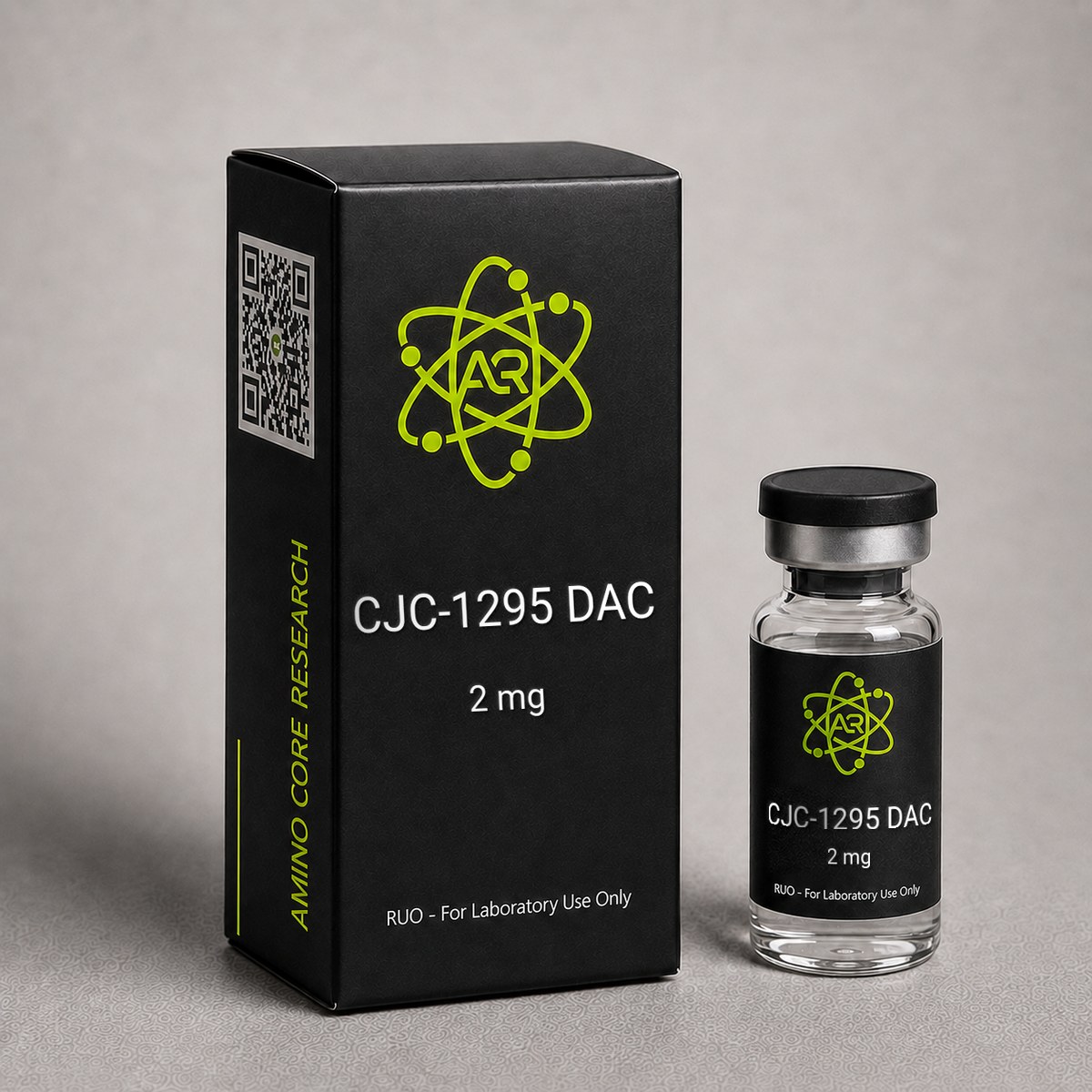
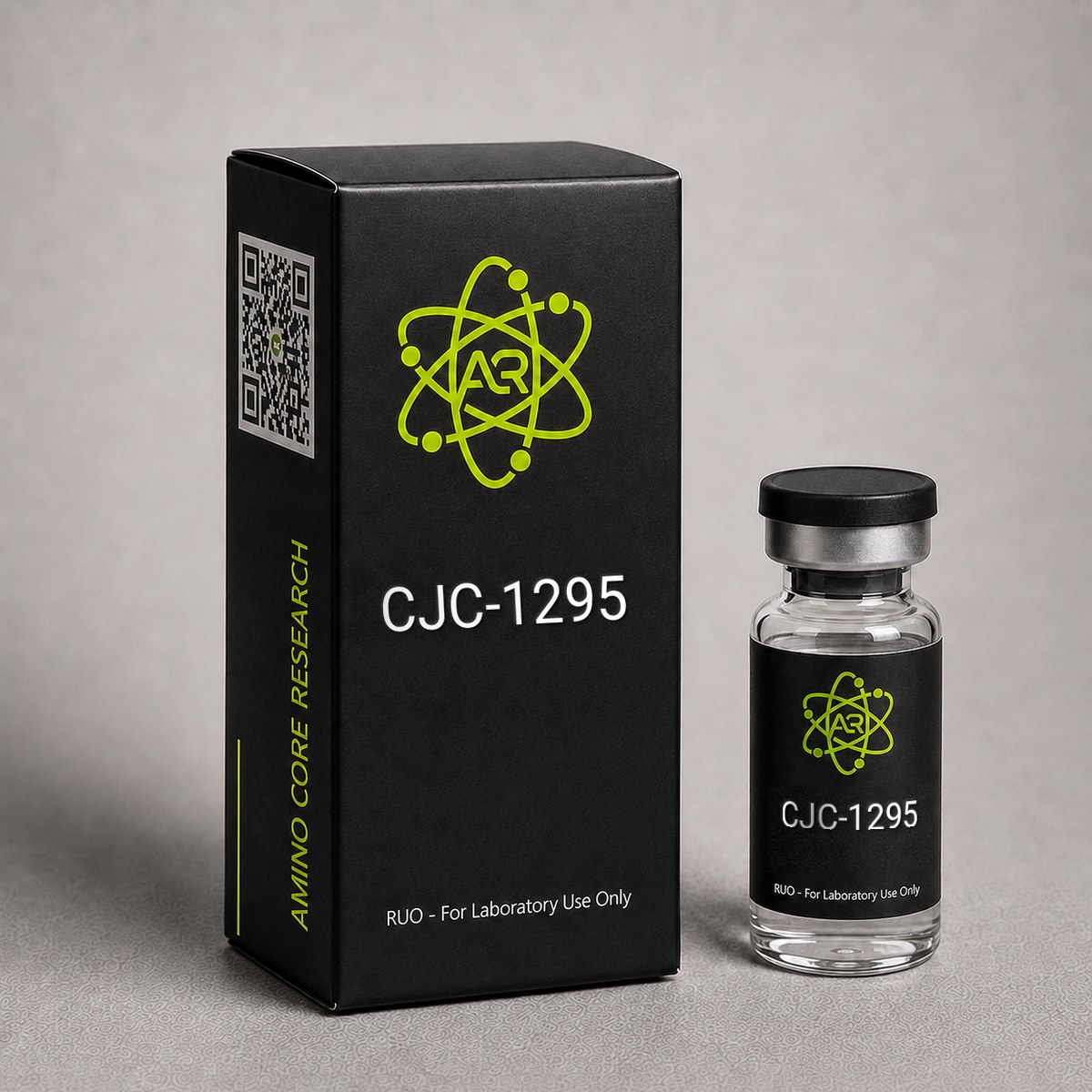
≥99%HPLC Purity
COAIncluded
USAShipped
CJC-1295 (no DAC) Peptide
Modified Growth Hormone Releasing Hormone analog without Drug Affinity Complex. 30-amino acid GHRH analog with enhanced receptor affinity.
Research Reference
This page is a research monograph. CJC-1295 (no DAC) is documented here for reference — structure, mechanism and published literature — and is not offered for sale.
Browse compounds available for research purchase · Read the research library
Quick Facts
| SKU | ACR-CJC1295 |
|---|---|
| CAS Number | 863288-34-0 |
| Molecular Formula | C152H252N44O42 |
| Molecular Weight | 3367.97 g/mol |
| Sequence | 30-amino acid GHRH analog |
| Purity | ≥99% |
| Physical Form | Lyophilized Powder |
| Storage | Store at -20°C |
What is CJC-1295 (no DAC)?
CJC-1295 without DAC, also known as Modified GRF (1-29) or Mod GRF 1-29, is a synthetic 30-amino acid analog of growth hormone releasing hormone (GHRH). It contains four amino acid substitutions at positions 2, 8, 15, and 27 compared to native GHRH(1-29), specifically designed to improve metabolic stability and resist enzymatic degradation by DPP-IV.
Unlike the DAC (Drug Affinity Complex) variant, this version lacks the maleimidopropionic acid-lysine conjugation that enables albumin binding. This results in a shorter pharmacokinetic profile with more pulsatile receptor activation, which more closely mimics natural GHRH secretion patterns.
For laboratory research use only.
Mechanism of Action
GHRH Receptor Activation
CJC-1295 binds to the growth hormone releasing hormone receptor (GHRHR), a class B G-protein coupled receptor expressed on anterior pituitary somatotroph cells. Receptor activation stimulates Gs-protein coupling, adenylyl cyclase activation, and cAMP production, leading to PKA-mediated GH gene transcription and GH secretion.
Pulsatile vs Sustained Release
The no-DAC variant produces pulsatile GHRH receptor activation due to its shorter half-life (approximately 30 minutes vs 8+ days for the DAC version). This pulsatile pattern is significant because natural GH secretion is pulsatile, and sustained GHRH receptor activation can lead to receptor desensitization.
Synergy with GHS-R1a Agonists
Research has documented synergistic effects when CJC-1295 no DAC is combined with GHS-R1a agonists like Ipamorelin. The GHRH receptor and ghrelin receptor signal through complementary pathways that converge on somatotroph cells, amplifying GH release beyond additive effects.
Mechanism of Action
CJC-1295 without DAC (also called Modified GRF 1-29 or Mod GRF) is a 29-amino acid analog of GHRH(1-29) with four amino acid substitutions (Ala2→D-Ala, Asn8→Gln, Ala15→Ala(modified), Met27→Leu) that confer resistance to DPP-4 and other proteases. The mechanism:
- GHRH-R binding: CJC-1295 binds the GHRH receptor on anterior pituitary somatotrophs with similar affinity to native GHRH
- cAMP/PKA activation: GHRH-R is a Gs-coupled GPCR. Binding activates adenylyl cyclase → cAMP → PKA → CREB phosphorylation → GH gene transcription and vesicle exocytosis
- Pulsatile release: Unlike DAC version, Mod GRF produces a discrete GH pulse lasting 30-60 minutes, mimicking physiological GHRH signaling
- Somatostatin interaction: The short half-life allows normal somatostatin suppression between pulses, preserving the natural GHRH-somatostatin oscillation that regulates GH pulsatility
Research & Clinical Studies
CJC-1295 No DAC vs DAC: Comparative Research
CJC-1295 without DAC (Modified GRF 1-29) has a half-life of approximately 30 minutes compared to 6-8 days for the DAC version. This shorter duration produces discrete, physiological GH pulses rather than sustained elevation. Research comparing the two found: no-DAC produces sharper but shorter GH peaks (more physiological), no-DAC has lower IGF-1 elevation but more natural pulsatility, no-DAC requires more frequent dosing but avoids the continuous GH "bleed" effect of DAC.
Many researchers prefer the no-DAC version precisely because it better mimics natural GHRH signaling — a brief pulse followed by return to baseline, allowing the somatostatin-GHRH interplay to continue normally.
Combination with Ipamorelin
The CJC-1295/Ipamorelin combination is the most widely researched GH secretagogue stack. CJC-1295 (GHRH analog) amplifies the GH pulse amplitude, while Ipamorelin (ghrelin receptor agonist) increases pulse frequency. Together, they produce synergistic GH elevation greater than either alone — typically 3-5x baseline vs 2-3x individually. The combination also avoids cortisol and prolactin increases seen with less selective GHRP compounds.
Research: GH Pulse Characteristics
Pharmacokinetic studies of CJC-1295 no DAC demonstrate GH pulse characteristics that closely resemble endogenous GHRH signaling:
- Peak GH: 2-3x baseline within 15-30 minutes of administration
- Duration: GH returns to baseline within 60-90 minutes
- IGF-1: Modest, transient IGF-1 elevation (unlike DAC version which sustains IGF-1 for days)
- Cortisol: No significant cortisol increase (unlike GHRP-6 or Hexarelin)
- Prolactin: No prolactin increase (unlike GHRP-6)
This clean GH pulse profile — GH up, cortisol and prolactin unaffected — is why Mod GRF is considered the most selective GHRH analog for research. When combined with Ipamorelin (equally selective ghrelin agonist), the pair produces the purest GH signal available from peptide secretagogues.
Pulsatile GH Release: Comparison with Native GHRH
One of the central research questions surrounding CJC-1295 (no DAC), also called Modified GRF 1-29 or tetrasubstituted GRF(1-29), is whether the four amino acid substitutions (D-Ala2, Gln8, Ala15, Leu27) meaningfully alter the GH secretory response compared with native human GHRH(1-29)NH2 (sermorelin). Preclinical pharmacokinetic studies conducted during the development of the CJC-1295 platform demonstrated that these substitutions extend the plasma half-life of the unconjugated peptide from roughly 7 minutes (native GHRH) to approximately 30 minutes, while preserving full agonist activity at the GHRH receptor (GHRHR).
Study design: In the foundational pharmacology work by Jetté and colleagues (2005), the tetrasubstituted GRF(1-29) backbone was characterized in rodent models with serial plasma sampling. Subjects received single subcutaneous doses of either native GHRH(1-29)NH2 or the modified analog, and plasma GH was measured at multiple time points across a 4-hour window. Parallel in vitro protease stability assays compared resistance to dipeptidyl peptidase-IV (DPP-IV) cleavage at the N-terminal Tyr1-Ala2 bond.
Key findings:
- D-Ala2 substitution conferred essentially complete resistance to DPP-IV degradation, eliminating the rate-limiting inactivation step of native GHRH.
- Plasma half-life of the modified analog was approximately 30 minutes vs ~7 minutes for native GHRH(1-29).
- Peak GH amplitude following Modified GRF 1-29 administration was comparable to or slightly greater than equimolar native GHRH, indicating preserved efficacy at GHRHR.
- Unlike CJC-1295 with DAC (which produces a sustained, non-pulsatile GH elevation), the no-DAC form produced a discrete GH pulse that returned toward baseline within ~3 hours.
Research significance: The preservation of pulsatile GH release is considered physiologically important in models examining hepatic IGF-1 signaling, somatostatin feedback dynamics, and sexually dimorphic GH-responsive gene expression. Continuous (non-pulsatile) GH exposure has been associated in animal models with altered hepatic transcriptional patterns and receptor desensitization, whereas pulsatile delivery more closely mimics endogenous secretion. This distinction is why many investigators select Modified GRF 1-29 over the DAC-conjugated variant when studying physiological GH-IGF-1 axis biology.
Comparative context: When co-administered with a ghrelin/GHS-R1a agonist such as ipamorelin, the tetrasubstituted GRF(1-29) produces synergistic GH release substantially greater than either compound alone, while preserving the pulsatile profile. This synergy reflects the dual-pathway architecture of pituitary somatotroph activation: GHRH-cAMP and ghrelin-PLC/IP3 converge on GH exocytosis.
[1] Jetté L, Léger R, Thibaudeau K, et al. Human growth hormone-releasing factor (hGRF)1-29-albumin bioconjugates activate the GRF receptor on the anterior pituitary in rats: identification of CJC-1295 as a long-lasting GRF analog. Endocrinology. 2005;146(7):3052-3058. PubMed ↗
[2] Teichman SL, Neale A, Lawrence B, et al. Prolonged stimulation of growth hormone (GH) and insulin-like growth factor I secretion by CJC-1295, a long-acting analog of GH-releasing hormone, in healthy adults. J Clin Endocrinol Metab. 2006;91(3):799-805. PubMed ↗
Chemical Properties
| Full Name | CJC-1295 without DAC (Modified GRF 1-29, Mod GRF) |
|---|---|
| Sequence | Tyr-D-Ala-Asp-Ala-Ile-Phe-Thr-Gln-Ser-Tyr-Arg-Lys-Val-Leu-Ala-Gln-Leu-Ser-Ala-Arg-Lys-Leu-Leu-Gln-Asp-Ile-Leu-Ser-Arg-NH₂ |
| Amino Acids | 29 (GHRH 1-29 analog) |
| Key Modifications | Ala2→D-Ala, Asn8→Gln, Ala15→Ala, Met27→Leu |
| Half-life | ~30 minutes (vs ~7 minutes for native GHRH) |
| Receptor | GHRH-R (Gs-coupled GPCR on somatotrophs) |
| Purity | ≥99% HPLC |
Chemical & Physical Properties
The following table summarizes the verified physicochemical properties of CJC-1295 (no DAC), also known as Modified GRF 1-29 or tetrasubstituted GRF(1-29). Values are cross-referenced against PubChem, ChemicalBook, and primary literature on the CJC-1295 development program.
| Full Name | Tetrasubstituted Growth Hormone-Releasing Factor (1-29) |
|---|---|
| Synonyms | CJC-1295 without DAC, Modified GRF 1-29, Mod GRF (1-29), CJC-1295 no DAC |
| Molecular Formula | C152H252N44O42 |
| Molecular Weight | 3,367.97 g/mol |
| CAS Number | 863288-34-0 |
| Sequence | H-Tyr-D-Ala-Asp-Ala-Ile-Phe-Thr-Gln-Ser-Tyr-Arg-Lys-Val-Leu-Ala-Gln-Leu-Ser-Ala-Arg-Lys-Leu-Leu-Gln-Asp-Ile-Leu-Ser-Arg-NH2 |
| Amino Acid Count | 29 residues (C-terminal amidated) |
| Key Modifications | D-Ala2 (DPP-IV resistance), Gln8 (deamidation resistance), Ala15 (enhanced bioactivity), Leu27 (oxidation resistance); C-terminal amide |
| Origin / Developer | ConjuChem Inc. (Canada), early 2000s; derived from native human GHRH(1-29)NH2 |
| Receptor Target | Growth Hormone-Releasing Hormone Receptor (GHRHR), a class B GPCR |
| Physical Form | Lyophilized white to off-white powder |
| Solubility | Soluble in sterile water, bacteriostatic water (0.9% benzyl alcohol), and 0.1 M acetic acid; sparingly soluble in DMSO |
| Purity | ≥99% by HPLC |
| Plasma Half-Life | ~30 minutes (no-DAC form); contrast with ~8 days for DAC-conjugated CJC-1295 |
| Storage | Lyophilized: -20°C long-term; reconstituted: 2-8°C, use within 14-21 days |
The four amino acid substitutions relative to native human GHRH(1-29)NH2 are the defining structural feature of this analog. The D-Ala2 substitution blocks dipeptidyl peptidase-IV cleavage, which is the principal degradation pathway for endogenous GHRH. Gln8 replaces an asparagine residue prone to deamidation, Ala15 increases intrinsic potency at GHRHR, and Leu27 replaces a methionine vulnerable to oxidation. Together these substitutions extend functional plasma half-life approximately 4-fold over native GHRH while preserving full GHRHR agonist activity and pulsatile GH-releasing pharmacology.
Handling & Reconstitution Guidelines
CJC-1295 (no DAC) is supplied as a sterile lyophilized powder and requires reconstitution with bacteriostatic or sterile water prior to use in laboratory research protocols. Proper handling preserves both peptide integrity and the structural features (Asp3, Asn residues, and the C-terminal amide) that are susceptible to deamidation and hydrolysis under suboptimal conditions.
Recommended reconstitution protocol:
- Allow the sealed vial to equilibrate to room temperature for 15-20 minutes after removal from -20°C storage. Reconstituting cold vials risks moisture condensation on the lyophilized cake.
- Sanitize the rubber stopper with a 70% isopropyl alcohol wipe and allow to air-dry.
- Draw the desired volume of bacteriostatic water (0.9% benzyl alcohol) using a sterile syringe. For a standard 5 mg vial, adding 2 mL of bacteriostatic water yields a concentration of 2.5 mg/mL (or 250 mcg per 0.1 mL).
- Inject the diluent against the inner wall of the vial, not directly onto the powder. This minimizes mechanical shearing of peptide bonds.
- Allow the vial to stand undisturbed for 60-90 seconds, then gently swirl with a slow rotational motion until the powder fully dissolves. The solution should appear clear and colorless.
- Do not shake, vortex, or invert vigorously. Mechanical agitation can denature the alpha-helical secondary structure required for GHRHR binding and may induce aggregation.
Concentration calculation example: For a 5 mg vial reconstituted with 1 mL diluent, the concentration is 5 mg/mL (5000 mcg/mL). A 100 mcg dose corresponds to 0.02 mL (20 IU on a U-100 insulin syringe).
Compound-specific handling notes: The tetrasubstituted GRF(1-29) sequence contains no cysteine residues and therefore lacks disulfide bonds, eliminating reduction concerns. However, the molecule contains one methionine residue (Met27 position in native GHRH is replaced by Leu27 in this analog, but methionine remains at other positions in some numbering schemes — verify against your supplied COA), and protection from prolonged light exposure is advisable. The C-terminal amide and the multiple aspartate/asparagine residues make the molecule moderately susceptible to deamidation at elevated pH or temperature. Always work in a clean, dust-free environment and avoid repeated needle insertions through the stopper, which can introduce contamination and degrade vacuum integrity. For laboratory research use only — not for human consumption.
Storage & Stability
Lyophilized: -20°C for 24 months, 2-8°C for 6 months. Reconstituted: 2-8°C, use within 14 days. Mod GRF is a 29-amino acid peptide — more degradation-prone than shorter peptides. The D-Ala2 and Leu27 substitutions provide 4x longer half-life than native GHRH but it remains sensitive to heat and oxidation.
Frequently Asked Questions
What is CJC-1295 no DAC?
CJC-1295 without DAC (Modified GRF 1-29) is a synthetic 30-amino acid GHRH analog with four stabilizing amino acid substitutions. It activates the GHRH receptor on pituitary somatotroph cells. The no-DAC version has a shorter duration than the DAC variant.
What is the difference between CJC-1295 with DAC and without DAC?
CJC-1295 with DAC has a Drug Affinity Complex that binds albumin, extending its half-life to 8+ days for sustained GHRH receptor activation. The no-DAC version has a ~30 minute half-life, producing pulsatile stimulation that more closely mimics natural GHRH secretion patterns.
Why combine CJC-1295 no DAC with Ipamorelin?
They target complementary receptors: CJC-1295 activates GHRH receptors while Ipamorelin activates GHS-R1a (ghrelin) receptors. Both receptors are expressed on pituitary somatotroph cells and signal through different but convergent pathways, producing synergistic GH release.
CJC-1295 no DAC vs with DAC?
No DAC: ~30 min half-life, produces natural GH pulses, requires frequent dosing. With DAC: ~6-8 day half-life, sustained GH elevation, once-weekly. No DAC is preferred for protocols mimicking physiological GHRH signaling; DAC for sustained IGF-1 elevation.
Why combine CJC-1295 with Ipamorelin?
They target different receptors (GHRH-R vs GHS-R1a) and produce synergistic GH release. CJC-1295 amplifies pulse amplitude, Ipamorelin increases frequency. The combination is selective — no cortisol/prolactin increase unlike GHRP-6 or Hexarelin.
What does "Modified GRF 1-29" mean?
GRF = Growth hormone Releasing Factor (synonym for GHRH). 1-29 = first 29 amino acids (the bioactive fragment). "Modified" = four amino acid substitutions for protease resistance. CJC-1295 no DAC, Mod GRF 1-29, and tesamorelin analog all refer to this compound.
How often should CJC-1295 no DAC be administered in research?
Due to its ~30-minute half-life, Mod GRF is typically dosed 2-3x daily in research protocols (mimicking natural GHRH pulse timing). Common timing: upon waking, post-exercise, and before sleep — aligning with physiological GH release windows.
What is the molecular weight and CAS number of CJC-1295 no DAC?
CJC-1295 (no DAC), also known as Modified GRF 1-29 or tetrasubstituted GRF(1-29), has a molecular weight of 3,367.97 g/mol and a molecular formula of C152H252N44O42. The CAS registry number is 863288-34-0. It is a 29-amino-acid peptide with a C-terminal amide and four key substitutions relative to native human GHRH(1-29): D-Ala2, Gln8, Ala15, and Leu27. These modifications confer resistance to dipeptidyl peptidase-IV cleavage, deamidation, and oxidation, extending plasma half-life to approximately 30 minutes versus ~7 minutes for native GHRH while preserving full agonist activity at the GHRH receptor.
How should CJC-1295 no DAC be stored?
Lyophilized CJC-1295 (no DAC) should be stored at -20°C for long-term stability, where it remains stable for 24+ months. Short-term storage at 2-8°C is acceptable for several weeks, and brief room-temperature transit (under 7 days) does not meaningfully degrade the peptide. Once reconstituted with bacteriostatic water, the solution should be refrigerated at 2-8°C and used within 14-21 days. Protect from prolonged light exposure and avoid repeated freeze-thaw cycles of reconstituted material, as these promote deamidation of aspartate and asparagine residues and may compromise GHRHR binding.
What sizes of CJC-1295 no DAC are available from AminoCore Research?
AminoCore Research offers CJC-1295 (no DAC) in standard research quantities, typically 2 mg and 5 mg lyophilized vials, with all products meeting ≥99% HPLC purity. Each vial is supplied with a Certificate of Analysis (COA) documenting mass spectrometry confirmation, HPLC purity profile, and lot-specific data. Material is intended exclusively for in vitro and preclinical laboratory research and is not for human or veterinary use. Bulk research quantities may be available on request for institutional investigators studying GHRH receptor pharmacology, somatotroph signaling, or GH pulse dynamics.
Does CJC-1295 no DAC affect cortisol or prolactin?
Preclinical and early clinical research on CJC-1295 (no DAC) and the closely related sermorelin/native GHRH(1-29) backbone indicates that selective GHRH receptor agonists do not meaningfully elevate cortisol (ACTH-axis) or prolactin in animal models, in contrast to some older growth hormone secretagogues such as GHRP-6, which can produce modest cortisol and prolactin spikes via off-target activity. Because Modified GRF 1-29 acts specifically at the GHRHR class B GPCR on pituitary somatotrophs, its pharmacology is largely restricted to the GH-IGF-1 axis. This selectivity is one reason it is frequently paired in research protocols with ipamorelin, a similarly selective ghrelin receptor agonist that also lacks cortisol/prolactin liability.
For laboratory and research use only. This product is not for human or veterinary use. It is not a drug, supplement or food.
This product is not FDA approved for any indication, and is not intended to diagnose, treat, cure, or prevent any disease. All product information is derived from published preclinical research and does not constitute medical advice or claims.