≥99%HPLC Purity
COAIncluded
USAShipped
AC-ATM
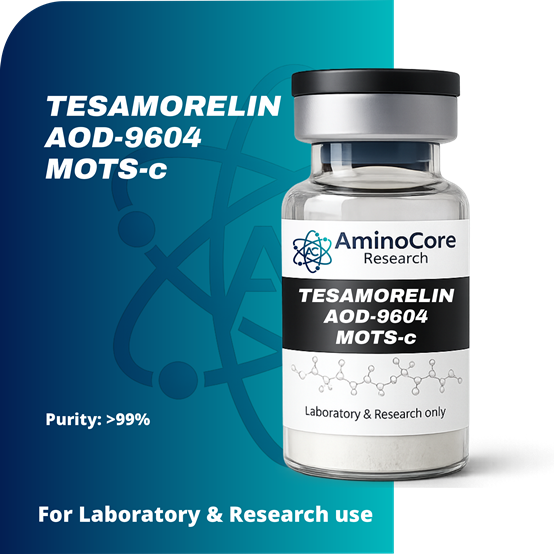
AOD-9604 + Tesamorelin + MOTS-c Blend Peptide
Triple-peptide research blend combining AOD-9604, Tesamorelin, and MOTS-c for multi-pathway metabolic research protocols.
Coming Soon
This compound is currently in our development pipeline. Enter your email to be notified when it becomes available for research purchase.
Quick Facts
| SKU | ACR-BL-ATM |
|---|---|
| Sequence | Multi-peptide blend |
| Purity | ≥97% |
| Physical Form | Lyophilized Powder |
| Storage | Store at -20°C |
About the AOD-9604 + Tesamorelin + MOTS-c Research Blend
This triple-peptide blend combines three compounds studied in metabolic pathway research: AOD-9604 (hGH fragment 176-191, beta-3 adrenergic receptor interaction), Tesamorelin (modified GHRH analog, GHRH receptor activation), and MOTS-c (mitochondrial-derived peptide, AMPK activation).
Each component targets a distinct metabolic signaling node: AOD-9604 acts on adipose tissue adrenergic signaling, Tesamorelin activates pituitary GH release pathways, and MOTS-c modulates cellular energy sensing via AMPK. The combination is studied for potential multi-pathway metabolic investigation.
For laboratory research use only.
Mechanism of Action: Three Convergent Metabolic Pathways
The AOD-9604 + Tesamorelin + MOTS-c research blend combines three peptides that act on distinct yet complementary metabolic pathways. Each component has been independently characterised in the literature, and the blend is studied in preclinical models to evaluate combined effects on lipolysis, growth hormone signalling, and mitochondrial energy regulation.
AOD-9604 — Lipolytic Fragment of hGH (residues 177-191)
AOD-9604 is a synthetic analogue of the C-terminal fragment of human growth hormone, modified with an N-terminal tyrosine. Unlike full-length hGH, AOD-9604 does not bind the GH receptor with appreciable affinity and does not stimulate IGF-1 release. Mechanistic studies suggest its lipolytic effect operates through stimulation of beta-3 adrenergic receptor (β3-AR) expression in adipocytes, enhancing cyclic AMP-mediated hormone-sensitive lipase activation and reducing lipogenesis via decreased acetyl-CoA carboxylase activity. The peptide has been characterised in obese rodent models showing reduced body fat without effects on serum glucose or IGF-1.
Tesamorelin — GHRH Analogue (GHRH 1-44 with hexenoyl modification)
Tesamorelin is a stabilised analogue of growth hormone-releasing hormone, modified with a trans-3-hexenoyl group on the N-terminal tyrosine to resist dipeptidyl peptidase-4 (DPP-4) cleavage. It binds the GHRH receptor (GHRHR) on anterior pituitary somatotrophs, activating Gαs and adenylyl cyclase, increasing intracellular cAMP, and stimulating pulsatile endogenous GH release. The resulting GH pulse elevates hepatic IGF-1 production. Tesamorelin is the only GHRH analogue with regulatory approval for reduction of visceral adipose tissue in HIV-associated lipodystrophy, and is studied for its selective effect on visceral fat depots.
MOTS-c — Mitochondrial-Derived Peptide (16 amino acids)
MOTS-c is encoded within the mitochondrial 12S rRNA region (MT-RNR1) and acts as a mitokine regulating cellular energy homeostasis. The peptide translocates to the nucleus under metabolic stress, where it regulates AMP-activated protein kinase (AMPK) signalling and modulates expression of genes involved in glucose and lipid metabolism. MOTS-c enhances insulin sensitivity in skeletal muscle by inhibiting the folate cycle and increasing AICAR levels, which subsequently activates AMPK. Preclinical studies have demonstrated improvements in glucose tolerance and reductions in diet-induced obesity in murine models.
Convergence in the Blend
The three components act at distinct nodes: AOD-9604 at peripheral adipocyte lipolysis (β3-AR/cAMP), Tesamorelin at the hypothalamic-pituitary axis (GHRHR/GH/IGF-1), and MOTS-c at the cellular bioenergetic level (AMPK/mitochondrial regulation). This non-overlapping mechanistic profile is the research rationale for combining them — each pathway can be modulated without direct receptor competition. Investigators studying multi-pathway metabolic protocols use this blend to evaluate additive or synergistic effects on adipose tissue mass, mitochondrial biogenesis markers, and GH-axis output in preclinical models.
Research & Clinical Studies
Component Study: Tesamorelin Reduces Visceral Adipose Tissue in Clinical Trials
Tesamorelin has been the most extensively studied of the three blend components in controlled clinical trials, providing a robust evidence base for its mechanism-driven effects on visceral adipose tissue (VAT). The landmark trials supporting its mechanism are summarised below.
Phase 3 Trial: Falutz et al. (NEJM 2007)
This multicentre, randomised, double-blind, placebo-controlled trial enrolled 412 HIV-infected adults with excess abdominal fat. Subjects received tesamorelin 2 mg subcutaneously daily or placebo for 26 weeks.
- Visceral adipose tissue decreased by 15.2% in the tesamorelin group versus a 5.0% increase in placebo (p<0.001)
- IGF-1 levels rose by a mean of 106 µg/L in treated subjects, confirming GH-axis activation
- Trunk fat decreased by 1.0 kg versus no change in placebo
- Subcutaneous adipose tissue was not significantly affected — supporting the visceral-selective profile
- Fasting glucose and HbA1c were unchanged at 26 weeks
Extension Trial: Falutz et al. (JCEM 2010)
A 52-week extension of the pivotal trial assessed sustained VAT reduction. Subjects continuing tesamorelin maintained an 18% reduction in VAT from baseline, while those switched to placebo showed regression toward baseline within 26 weeks, demonstrating that the effect requires continued GHRH-receptor activation rather than producing a durable structural change.
AOD-9604 Preclinical Lipolysis Data
Heffernan et al. (Endocrinology, 2001) demonstrated that AOD-9604 administered to obese (ob/ob) mice produced reductions in body fat comparable to full-length hGH but without the hyperglycaemic side effects. Using β3-AR knockout mice, the authors confirmed that the lipolytic effect was substantially attenuated in the absence of β3-AR, providing receptor-level mechanistic confirmation.
MOTS-c Metabolic Model Data
Lee et al. (Cell Metabolism, 2015) reported that exogenous MOTS-c administration (0.5 mg/kg/day IP) to high-fat-diet mice for 7 weeks reduced weight gain by approximately 40% versus controls and normalised glucose tolerance. Skeletal muscle showed activation of AMPK and downstream metabolic gene expression. These data established MOTS-c as a functional mitokine relevant to metabolic dysregulation models.
Combined-Use Research Context
No peer-reviewed clinical trial has directly evaluated the AOD-9604 + Tesamorelin + MOTS-c combination. Research interest in the blend derives from the orthogonal nature of the three mechanisms, allowing investigators to design preclinical protocols that probe whether peripheral lipolytic stimulation (AOD-9604), central GH-axis activation (Tesamorelin), and mitochondrial AMPK signalling (MOTS-c) produce additive effects on adipose mass, energy expenditure, and metabolic markers in animal models. Such studies remain investigational and are intended strictly for laboratory research use.
[1] Falutz J, et al. Metabolic effects of a growth hormone-releasing factor in patients with HIV. N Engl J Med. 2007;357(23):2359-70. PubMed ↗
[2] Falutz J, et al. Long-term safety and effects of tesamorelin, a growth hormone-releasing factor analogue, in HIV patients with abdominal fat accumulation. JCEM. 2010;95(9):4291-304. PubMed ↗
[3] Heffernan M, et al. The effects of human GH and its lipolytic fragment (AOD9604) on lipid metabolism. Endocrinology. 2001;142(12):5182-9. PubMed ↗
Component Study: AOD-9604 and Lipolytic Activity in Adipose Tissue
AOD-9604 is a synthetic peptide fragment corresponding to the C-terminus (amino acids 177–191) of human growth hormone, originally developed by Metabolic Pharmaceuticals as an investigational anti-obesity agent. The lipolytic domain of hGH was identified in foundational work by Ng and Bornstein, who demonstrated that the carboxyl-terminal region of growth hormone retained fat-mobilising activity independent of the somatogenic and diabetogenic effects of the parent hormone.[1]
Preclinical Lipolysis Data:
- In ob/ob obese mouse models, repeated administration of AOD-9604 was associated with significant reductions in body weight gain and adipose tissue mass compared to vehicle controls.
- Studies in isolated rodent adipocytes demonstrated a dose-dependent increase in lipolytic activity, measured by glycerol release into the culture medium.
- In vitro work indicated AOD-9604 stimulated β3-adrenergic receptor expression and upregulated hormone-sensitive lipase activity, contributing to enhanced triglyceride hydrolysis.
- Unlike full-length growth hormone, AOD-9604 did not produce hyperglycemia or insulin resistance in preclinical models, a feature attributed to the absence of the somatogenic domain.[2]
Clinical Investigation Summary:
In a 12-week randomised, placebo-controlled Phase 2b clinical trial conducted in obese subjects (BMI ≥30 kg/m²), AOD-9604 administered at doses of 1 mg daily was investigated for weight reduction endpoints. While the compound demonstrated an excellent safety profile and was well tolerated, the magnitude of weight loss in human subjects was modest compared to preclinical predictions, and clinical development for obesity was ultimately discontinued. Notably, AOD-9604 did not affect IGF-1 levels, glucose tolerance, or insulin sensitivity — distinguishing it from full-length GH analogues such as tesamorelin's downstream effects.
Relevance to the Blend:
Within the AOD-9604 + Tesamorelin + MOTS-c research blend, AOD-9604 contributes a GH-fragment-mediated lipolytic signal that operates downstream of (and complementary to) tesamorelin's GHRH-driven endogenous GH release. This layered approach allows researchers to model whether peripheral lipolytic stimulation (AOD-9604) plus central GH-axis activation (tesamorelin) plus mitochondrial substrate-switching (MOTS-c) produce additive or synergistic effects on adipose tissue metabolism in vitro and in animal models. The blend is particularly suited for studies examining adipocyte differentiation, lipid droplet dynamics, and the crosstalk between GH-axis signalling and mitochondrial energy homeostasis.
Research Note: AOD-9604 is not approved for human therapeutic use in any jurisdiction. It is supplied strictly for in vitro and preclinical research applications.
[1] Ng FM, Bornstein J. Hyperglycemic action of synthetic C-terminal fragments of human growth hormone. Am J Physiol. 1978;234(5):E521-6. PubMed ↗
[2] Heffernan M, Summers RJ, Thorburn A, et al. The effects of human GH and its lipolytic fragment (AOD9604) on lipid metabolism following chronic treatment in obese mice and beta(3)-AR knock-out mice. Endocrinology. 2001;142(12):5182-9. PubMed ↗
Component Study: MOTS-c, Mitochondrial Signalling, and Metabolic Homeostasis
MOTS-c (Mitochondrial Open Reading Frame of the 12S rRNA-c) is a 16-amino-acid mitochondrial-derived peptide (MDP) encoded within the small mitochondrial ribosomal RNA gene. It was first characterised by Lee and colleagues at the University of Southern California in 2015, who demonstrated that MOTS-c regulates insulin sensitivity and metabolic homeostasis through AMPK-dependent mechanisms.[1]
Landmark Discovery Study (Lee et al., 2015):
- MOTS-c was identified as an endogenously encoded peptide that translocates to the nucleus in response to metabolic stress, where it regulates adaptive nuclear gene expression.
- In high-fat-diet-fed mice, daily intraperitoneal MOTS-c administration prevented diet-induced obesity and reversed age-dependent insulin resistance.
- Treated animals showed improved glucose tolerance, reduced fat mass, and enhanced metabolic flexibility, measured via indirect calorimetry.
- The peptide was shown to activate AMP-activated protein kinase (AMPK), the master cellular energy sensor, leading to enhanced glucose uptake and fatty acid oxidation in skeletal muscle.
Folate-Methionine-AICAR Axis:
Mechanistically, MOTS-c interferes with the folate cycle, leading to accumulation of 5-aminoimidazole-4-carboxamide ribonucleotide (AICAR), an endogenous AMPK activator. This creates a metabolic state functionally analogous to caloric restriction or exercise — promoting fatty acid oxidation, mitochondrial biogenesis, and improved insulin sensitivity without requiring reduced food intake.
Exercise-Mimetic Properties:
Subsequent research by Reynolds et al. (2021) demonstrated that MOTS-c functions as an exercise-induced mitochondrial-derived peptide. Circulating MOTS-c levels rose acutely in human subjects after a single bout of aerobic exercise, and skeletal muscle expression of MOTS-c increased after exercise training.[2] In aged mice, MOTS-c treatment improved physical performance metrics including running endurance, grip strength, and gait, suggesting application in studies of sarcopenia and age-related metabolic decline.
Relevance to the Blend:
Within the AOD-9604 + Tesamorelin + MOTS-c research blend, MOTS-c provides a mitochondrial-level metabolic signal distinct from the GH-axis pathways activated by tesamorelin and AOD-9604. By engaging AMPK and promoting substrate oxidation, MOTS-c complements the lipolytic and GH-releasing arms of the blend, allowing researchers to study how convergent mitochondrial, pituitary, and adipocyte signalling integrate to regulate whole-organism energy balance in preclinical models. This makes the blend a useful tool for investigating the intersection of growth hormone axis biology and mitochondrial-derived peptide signalling.
[1] Lee C, Zeng J, Drew BG, et al. The mitochondrial-derived peptide MOTS-c promotes metabolic homeostasis and reduces obesity and insulin resistance. Cell Metab. 2015;21(3):443-54. PubMed ↗
[2] Reynolds JC, Lai RW, Woodhead JST, et al. MOTS-c is an exercise-induced mitochondrial-encoded regulator of age-dependent physical decline and muscle homeostasis. Nat Commun. 2021;12(1):470. PubMed ↗
Composition & Components
This research blend contains three distinct peptide components. Because the product is a multi-ingredient formulation, a single molecular formula, CAS number, or sequence cannot be assigned. Each component is individually characterised below, with verified molecular properties drawn from PubChem and the published literature.
| Component | Role / Pathway | Amino Acids | Molecular Formula | Molecular Weight | CAS Number |
|---|---|---|---|---|---|
| AOD-9604 | Lipolytic hGH fragment (177-191) — β3-AR mediated lipolysis | 16 aa (modified Tyr-hGH 177-191) | C₇₈H₁₂₃N₂₃O₂₃S₂ (C78H123N23O23S2) | 1817.12 g/mol | 221231-10-3 |
| Tesamorelin | GHRH analogue — stimulates endogenous GH release via GHRHR | 44 aa (N-terminal hexenoyl-Tyr modification) | C₂₂₁H₃₆₆N₇₂O₆₇S (C221H366N72O67S) | 5135.85 g/mol | 901758-09-6 |
| MOTS-c | Mitochondrial-derived peptide — AMPK activator, mitokine signalling | 16 aa (encoded in MT-RNR1) | C₁₀₀H₁₅₈N₂₆O₂₂S₂ (C100H158N26O22S2) | 2174.65 g/mol | 1627580-64-6 |
| Blend Property | Value |
|---|---|
| Product Form | Lyophilized Powder (co-lyophilised tri-peptide blend) |
| Appearance | White to off-white amorphous powder |
| Solubility | Soluble in sterile bacteriostatic water; bacteriostatic 0.9% NaCl acceptable |
| Purity (each component) | ≥98% by HPLC |
| Intended Use | In-vitro and preclinical research only — not for human use |
| Storage | -20°C, protected from light and moisture |
Component sequences (for laboratory reference):
- AOD-9604: Tyr-Leu-Arg-Ile-Val-Gln-Cys-Arg-Ser-Val-Glu-Gly-Ser-Cys-Gly-Phe (disulfide bond Cys7-Cys14)
- Tesamorelin: (trans-3-hexenoyl)-Tyr-Ala-Asp-Ala-Ile-Phe-Thr-Asn-Ser-Tyr-Arg-Lys-Val-Leu-Gly-Gln-Leu-Ser-Ala-Arg-Lys-Leu-Leu-Gln-Asp-Ile-Met-Ser-Arg-Gln-Gln-Gly-Glu-Ser-Asn-Gln-Glu-Arg-Gly-Ala-Arg-Ala-Arg-Leu-NH₂
- MOTS-c: Met-Arg-Trp-Gln-Glu-Met-Gly-Tyr-Ile-Phe-Tyr-Pro-Arg-Lys-Leu-Arg
Researchers should consult the Certificate of Analysis (COA) supplied with each lot for component-specific HPLC purity and mass-spectrometry verification data.
Handling & Reconstitution Guidelines
The AOD-9604 + Tesamorelin + MOTS-c research blend is supplied as a sterile, lyophilised powder containing all three component peptides pre-combined at the stated ratio. Proper reconstitution and handling are critical to preserve the structural integrity and bioactivity of each peptide constituent.
Step-by-Step Reconstitution Protocol:
- Equilibrate to room temperature. Remove the lyophilised vial from -20°C storage and allow it to reach ambient temperature (approximately 20 minutes). This prevents condensation when the vial is opened.
- Select reconstitution solvent. Bacteriostatic water for injection (0.9% benzyl alcohol) is the standard solvent for multi-use vials. Sterile water for injection or 0.9% sodium chloride may be used for single-day experiments.
- Disinfect vial septum. Wipe the rubber stopper of both the diluent and peptide vials with a fresh 70% isopropanol swab. Allow to air dry.
- Inject diluent slowly. Using a sterile syringe, draw the desired volume of bacteriostatic water and inject it slowly down the inner wall of the vial — do not direct the stream onto the peptide cake.
- Dissolve gently. Swirl the vial in a slow circular motion until the powder is fully dissolved. Do not shake or vortex — mechanical agitation can shear the peptide bonds and denature the components.
- Inspect the solution. The reconstituted solution should appear clear and colourless. Discard if cloudy, particulate, or discoloured.
- Calculate concentration. For a 10 mg blend vial reconstituted with 2 mL bacteriostatic water, the total peptide concentration is 5 mg/mL (combined across all three components per the stated ratio).
Blend-Specific Handling Notes:
- Tesamorelin sensitivity: Tesamorelin contains a labile trans-3-hexenoyl modification at the N-terminus that is sensitive to extremes of pH and prolonged heat exposure. Reconstitute at neutral pH only.
- MOTS-c hydrophobicity: MOTS-c contains hydrophobic residues that may require gentle warming (room temperature, not heated) to fully solubilise. Patience is key — do not force dissolution by agitation.
- AOD-9604 disulfide bond: The intramolecular disulfide between Cys182 and Cys189 is essential for activity. Avoid reducing agents in the reconstitution medium.
- Aliquoting: For long-term experimental use, divide the reconstituted solution into single-use aliquots in sterile, low-binding polypropylene tubes and store at -20°C to avoid repeated freeze-thaw cycles.
- Sterile technique: Use laminar flow conditions and sterile barrier protection throughout. Contaminated peptide solutions degrade rapidly.
Research Use Only: This blend is supplied for in vitro and preclinical laboratory research only. It is not for human or veterinary diagnostic or therapeutic use.
Frequently Asked Questions
What is the AOD + Tesamorelin + MOTS-c blend?
This triple blend combines AOD-9604 (beta-3 adrenergic signaling), Tesamorelin (GHRH receptor), and MOTS-c (AMPK activation) — three peptides targeting distinct metabolic pathways. For research use only.
How does the AOD-9604 + Tesamorelin + MOTS-c blend compare to using each peptide separately?
The blend co-lyophilises three peptides that act on independent metabolic pathways: AOD-9604 stimulates peripheral lipolysis via β3-adrenergic receptor signalling, Tesamorelin activates the GHRH receptor to stimulate endogenous growth hormone pulses, and MOTS-c modulates AMPK and mitochondrial energy regulation. Combining them in a single vial allows investigators to study multi-pathway protocols without separate reconstitution steps. However, the blend has not been evaluated as a fixed combination in peer-reviewed clinical trials, so the additive or synergistic effects observed in preclinical models cannot be inferred to clinical contexts. Researchers comparing the blend to individual peptides typically design parallel-arm preclinical studies to isolate component contributions.
What are the molecular weights of the components in the AOD-9604 + Tesamorelin + MOTS-c blend?
Because this is a multi-component blend, a single molecular weight does not apply. The individual component weights are: AOD-9604 — 1817.12 g/mol (CAS 221231-10-3, formula C78H123N23O23S2); Tesamorelin — 5135.85 g/mol (CAS 901758-09-6, formula C221H366N72O67S); MOTS-c — 2174.65 g/mol (CAS 1627580-64-6, formula C100H158N26O22S2). All three peptides are supplied at ≥98% HPLC purity. The Certificate of Analysis (COA) supplied with each lot specifies the verified mass spectrometry data and component ratios for that production batch.
How should the AOD-9604 + Tesamorelin + MOTS-c blend be reconstituted and stored?
The blend is supplied as a lyophilized powder and should be reconstituted with sterile bacteriostatic water (0.9% benzyl alcohol) by slowly injecting the diluent down the inner wall of the vial — never directly onto the powder. Swirl gently to dissolve; do not shake or vortex, as the disulfide bond in AOD-9604 and the methionine residues in MOTS-c and Tesamorelin are sensitive to mechanical and oxidative stress. Lyophilized blend should be stored at -20°C protected from light and moisture, where stability extends 24+ months. Once reconstituted, store at 2-8°C and use within 14-21 days. Avoid freeze-thaw cycles of the reconstituted solution.
Is the AOD-9604 + Tesamorelin + MOTS-c blend approved for clinical or human use?
No. This research blend is supplied strictly for in-vitro and preclinical laboratory research by qualified investigators. While Tesamorelin has individual regulatory approval for a specific clinical indication (HIV-associated lipodystrophy), and AOD-9604 and MOTS-c have been studied in published preclinical literature, the fixed three-component combination has not been evaluated in controlled human trials and has no approved clinical use. AminoCore Research products are not intended for diagnosis, treatment, cure, or prevention of any disease, and are not intended for human or veterinary administration. Purchasers confirm research-use-only status at the point of order.
What research applications is the AOD-9604 + Tesamorelin + MOTS-c blend used for?
The AOD-9604 + Tesamorelin + MOTS-c blend is used in preclinical research investigating multi-pathway metabolic regulation. Typical research applications include in vitro adipocyte lipolysis assays, animal models of diet-induced obesity, studies of visceral adipose tissue dynamics, mitochondrial bioenergetics and AMPK signalling investigations, and growth hormone axis research. The blend allows researchers to simultaneously interrogate three convergent pathways: GH-fragment-mediated lipolysis (AOD-9604), GHRH-driven endogenous GH release (tesamorelin), and mitochondrial-derived peptide signalling via AMPK (MOTS-c). It is suited for studies modelling the integration of pituitary, adipocyte, and mitochondrial metabolic regulation.
Does the AOD-9604 + Tesamorelin + MOTS-c blend require refrigeration during shipping?
Lyophilised peptide blends, including the AOD-9604 + Tesamorelin + MOTS-c blend, are stable at ambient temperature during typical shipping periods of 3–7 days. The freeze-dried form is highly stable and does not require cold-chain transit. However, upon receipt, the blend should be transferred to -20°C storage for long-term preservation. Short-term storage at 2–8°C is acceptable for up to several weeks. Once reconstituted in bacteriostatic water, the solution should be refrigerated at 2–8°C and used within 14–28 days, or aliquoted and frozen at -20°C to avoid repeated freeze-thaw cycles that can degrade the peptide components.
How is the AOD-9604 + Tesamorelin + MOTS-c blend different from a GLP-1 agonist like semaglutide?
The AOD-9604 + Tesamorelin + MOTS-c blend and GLP-1 agonists such as semaglutide engage entirely distinct mechanisms. GLP-1 agonists act primarily through the GLP-1 receptor to delay gastric emptying, enhance glucose-dependent insulin secretion, and reduce appetite via central nervous system pathways. The AOD-9604 + Tesamorelin + MOTS-c blend instead engages three peripheral and metabolic targets: GH-fragment lipolysis at adipocytes (AOD-9604), endogenous growth hormone release via the GHRH receptor (tesamorelin), and AMPK-mediated mitochondrial substrate oxidation (MOTS-c). The blend does not affect appetite or gastric motility and is studied for adipose tissue and mitochondrial endpoints rather than glycemic control.
What is the role of AMPK signalling in the AOD-9604 + Tesamorelin + MOTS-c blend?
AMP-activated protein kinase (AMPK) is the master cellular energy sensor and a central target of the MOTS-c component of the blend. When MOTS-c activates AMPK — partly through accumulation of the endogenous activator AICAR via folate-cycle modulation — downstream effects include enhanced glucose uptake in skeletal muscle, increased fatty acid oxidation, mitochondrial biogenesis, and suppression of anabolic lipogenic pathways. This creates a metabolic state resembling caloric restriction or exercise. Within the blend, AMPK activation by MOTS-c is hypothesised to complement the GH-axis-mediated lipolysis driven by AOD-9604 and tesamorelin, allowing researchers to investigate whether these mechanisms are additive or synergistic in preclinical models.
For laboratory and research use only. Not intended for human or animal consumption. All product information is derived from published preclinical research and does not constitute medical advice or claims.