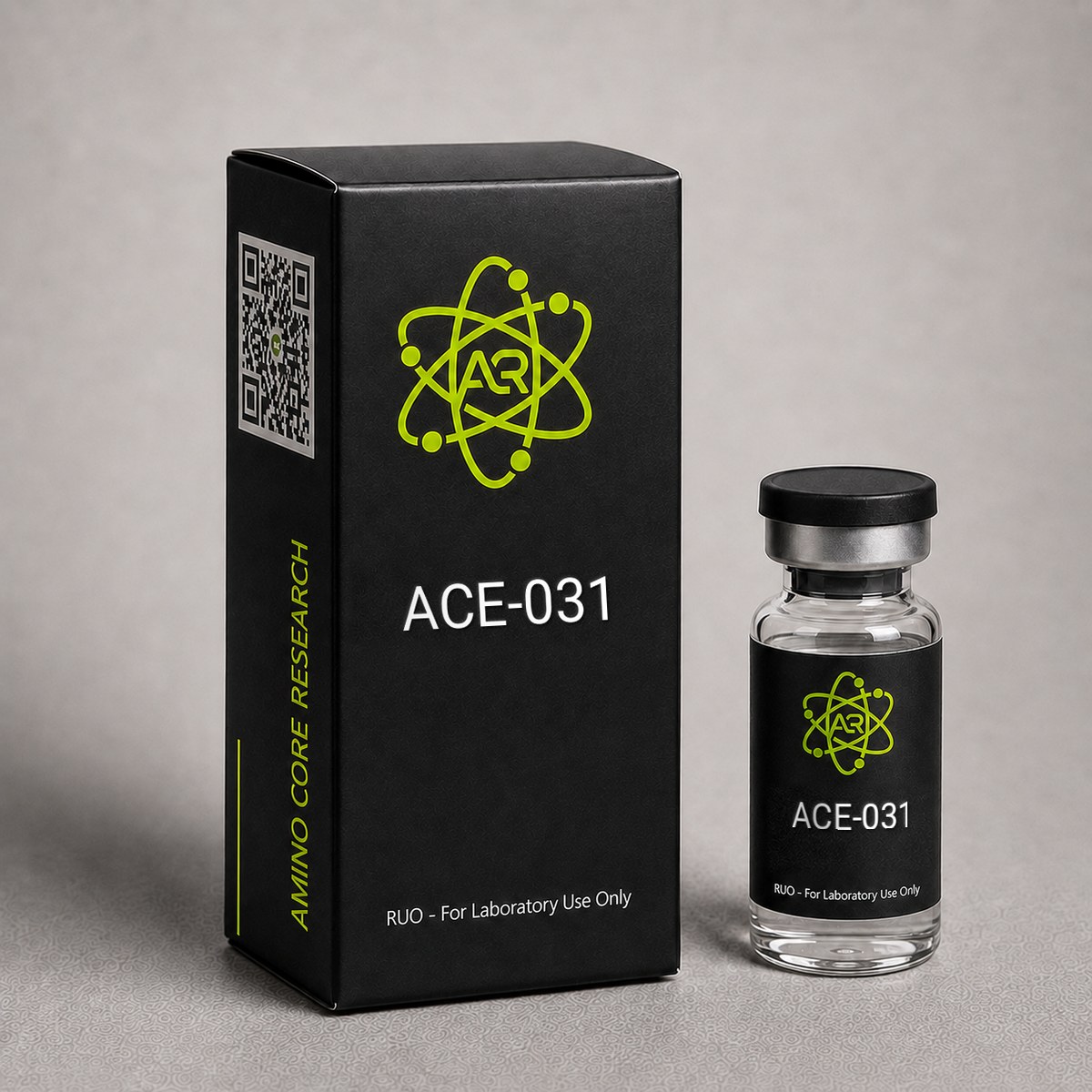
≥99%HPLC Purity
COAIncluded
USAShipped
ACE-031 Peptide
Soluble form of activin receptor type IIB (ActRIIB-Fc). Studied for myostatin/activin pathway inhibition research.
Research Reference
This page is a research monograph. ACE-031 is documented here for reference — structure, mechanism and published literature — and is not offered for sale.
Browse compounds available for research purchase · Read the research library
Quick Facts
| SKU | ACR-ACE031 |
|---|---|
| CAS Number | 1262787-44-1 |
| Molecular Formula | Fc-fusion protein (recombinant) |
| Molecular Weight | ~78-80 kDa (dimer ~150 kDa) |
| Sequence | Extracellular domain of human ActRIIB (residues 19-134) fused to human IgG1 Fc domain |
| Purity | ≥95% |
| Physical Form | Lyophilized Powder |
| Storage | Store at -20°C |
What is ACE-031?
ACE-031 is a soluble form of activin receptor type IIB (ActRIIB-IgG1 Fc fusion protein). It acts as a myostatin trap, binding and neutralizing myostatin and other TGF-beta superfamily ligands (GDF-8, GDF-11, activins) that normally inhibit muscle growth. Studied for muscle wasting and hypertrophy research.
Mechanism of Action
ACE-031 is a recombinant fusion protein consisting of the extracellular ligand-binding domain of the human activin receptor type IIB (ActRIIB) fused to the Fc portion of human immunoglobulin G1 (IgG1). It functions as a soluble decoy receptor, sequestering negative regulators of muscle mass before they can engage cell-surface ActRIIB and initiate the downstream Smad2/3 signaling cascade that suppresses myogenesis.
Myostatin (GDF-8) Sequestration
Myostatin is the most extensively characterized negative regulator of skeletal muscle growth. Under normal conditions, mature myostatin binds ActRIIB on the muscle cell surface, recruits ALK4/ALK5 type I receptors, and phosphorylates Smad2 and Smad3. Phosphorylated Smad2/3 complexes with Smad4 and translocates to the nucleus where it suppresses MyoD-dependent transcription of myogenic genes. ACE-031 binds circulating myostatin with high affinity, preventing receptor engagement and effectively releasing the brake on muscle protein synthesis. Preclinical research has demonstrated rapid increases in lean mass and muscle fiber cross-sectional area following ACE-031 administration.
GDF-11 and Activin A Binding
Unlike monoclonal antibodies that selectively neutralize myostatin alone, ACE-031 also binds GDF-11 (growth differentiation factor 11) and activin A, both of which signal through ActRIIB and contribute to muscle atrophy and metabolic dysregulation. This broader ligand specificity is hypothesized to produce more robust anabolic effects than myostatin-selective inhibitors. However, binding to activin A is also thought to underlie certain off-target observations in clinical studies, including epistaxis and telangiectasias, attributed to activin's role in vascular biology.
Downstream Anabolic Signaling
By blocking Smad2/3 phosphorylation, ACE-031 indirectly potentiates the Akt/mTOR pathway, which drives ribosomal biogenesis and protein synthesis. Reduced Smad activity also relieves repression of follistatin and other anabolic mediators. The net result in preclinical models is hypertrophy of both type I and type II muscle fibers, increased grip strength, and improvements in bone mineral density — the latter attributed to activin pathway involvement in osteoclast regulation.
Comparison to Related Compounds
ACE-031 differs from follistatin-based inhibitors (which act at the ligand level for a broader TGF-β family panel) and from anti-myostatin antibodies such as domagrozumab (PF-06252616) or landogrozumab (LY2495655), which neutralize only myostatin. Bimagrumab (BYM338) is a monoclonal antibody targeting ActRIIB itself rather than its ligands. ACE-031's decoy receptor design occupies a distinct mechanistic niche: ligand-level neutralization with multi-ligand reach, but without receptor agonism or chronic receptor blockade.
Research & Clinical Studies
Phase 1 Trial: Single Ascending Dose in Healthy Postmenopausal Women
The foundational clinical investigation of ACE-031 was a randomized, double-blind, placebo-controlled Phase 1 single ascending dose study conducted by Acceleron Pharma and reported by Attie and colleagues in 2013. The trial established the pharmacokinetic, pharmacodynamic, and safety profile that informed subsequent development.
Study Design
- Subjects: 48 healthy postmenopausal women
- Design: Randomized, double-blind, placebo-controlled, single subcutaneous dose
- Dose cohorts: 0.02, 0.1, 0.3, 1, 3 mg/kg
- Follow-up: 4 months for pharmacodynamic and safety assessment
- Endpoints: Lean body mass (DXA), thigh muscle volume (MRI), bone biomarkers, safety
Key Results
- Lean body mass increased by approximately 3.3% at 29 days post-dose in the highest dose cohort (3 mg/kg) versus placebo
- Thigh muscle volume increased by approximately 5.1% on MRI in the 3 mg/kg cohort
- Bone formation marker BSAP increased ~22%, and bone resorption marker CTX decreased ~24%, suggesting concurrent anabolic effect on bone
- Serum leptin and adiponectin shifted in directions consistent with reduced adiposity
- Pharmacokinetics: half-life approximately 10-15 days, supporting infrequent dosing
Safety Observations
Adverse events of interest included headache, injection-site discomfort, and notably epistaxis and gingival bleeding in higher-dose cohorts, along with cutaneous telangiectasias. These findings were attributed to the compound's binding of activin A and possibly BMP9/10, ligands implicated in vascular endothelial regulation. These off-target effects, while typically mild, contributed to the eventual discontinuation of clinical development of ACE-031 in Duchenne muscular dystrophy. The data nonetheless established proof-of-concept that systemic ActRIIB ligand sequestration produces measurable muscle and bone anabolic effects in humans.
Research Context
This trial provided the first human evidence that pharmacological inhibition of the myostatin/activin axis at the ligand level translates the dramatic muscle hypertrophy phenotypes observed in myostatin-null mice and cattle into measurable, dose-dependent changes in human body composition over a clinically relevant timeframe.
[1] Attie KM, Borgstein NG, Yang Y, Condon CH, Wilson DM, Pearsall AE, Kumar R, Willins DA, Seehra JS, Sherman ML. A single ascending-dose study of muscle regulator ACE-031 in healthy volunteers. Muscle Nerve. 2013;47(3):416-423. PubMed ↗
Duchenne Muscular Dystrophy Trial and Pediatric Safety Data
Following the Phase 1 results in healthy adults, ACE-031 advanced into a Phase 2 trial in boys with Duchenne muscular dystrophy (DMD), the muscle-wasting disease for which loss of dystrophin makes pharmacological augmentation of muscle mass particularly attractive. The study (NCT01099761) was sponsored by Acceleron Pharma in collaboration with Shire and conducted across multiple international sites.
Study Design
- Subjects: Ambulatory boys with genetically confirmed DMD, ages 4-11
- Design: Randomized, double-blind, placebo-controlled
- Dose cohorts: 1 mg/kg and 3 mg/kg subcutaneously every 2-4 weeks
- Primary endpoints: Six-minute walk distance (6MWD), safety
- Secondary endpoints: Lean body mass by DXA, muscle volume by MRI, timed function tests
Outcome and Discontinuation
The trial was terminated early in 2013 after safety signals consistent with those seen in the Phase 1 healthy-volunteer study became more pronounced. Specifically, several pediatric participants developed epistaxis and telangiectasias, and the sponsors elected to halt dosing out of caution despite preliminary signals of muscle benefit. Acceleron and Shire subsequently discontinued the ACE-031 program.
Preliminary Efficacy Signals
- Trends toward increased lean body mass versus placebo were reported in interim analyses
- Trends toward improved 6-minute walk distance were observed but did not reach statistical significance prior to early termination
- Muscle MRI showed modest increases in cross-sectional area
Research Implications
The DMD experience with ACE-031 informed subsequent design of more selective myostatin pathway inhibitors. The hypothesis emerging from the program was that activin A sequestration — rather than myostatin neutralization itself — was responsible for the vascular adverse events. This prompted development of next-generation molecules including ACE-083 (locally acting follistatin-based agent), ACE-2494, and ramatercept, as well as ligand-selective anti-myostatin antibodies. ACE-031 thus serves as a landmark research tool: it validated the ActRIIB ligand axis as pharmacologically tractable while highlighting the importance of ligand selectivity for safe long-term inhibition. It remains a widely studied reference compound in preclinical models of muscular dystrophy, sarcopenia, cancer cachexia, and disuse atrophy.
[1] Campbell C, McMillan HJ, Mah JK, et al. Myostatin inhibitor ACE-031 treatment of ambulatory boys with Duchenne muscular dystrophy: results of a randomized, placebo-controlled clinical trial. Muscle Nerve. 2017;55(4):458-464. PubMed ↗
[2] Cadena SM, Tomkinson KN, Monnell TE, et al. Administration of a soluble activin type IIB receptor promotes skeletal muscle growth independent of fiber type. J Appl Physiol. 2010;109(3):635-642. PubMed ↗
Multiple Ascending Dose Study: Lean Mass Gains in Healthy Volunteers
A multiple ascending dose (MAD) Phase 1 study published by Attie and colleagues in Muscle & Nerve (2013) provided some of the most striking evidence that systemic activin receptor IIB blockade with ACE-031 produces measurable changes in body composition over a short dosing window. The trial enrolled healthy postmenopausal women who received subcutaneous ACE-031 at escalating dose levels (0.3, 1, 3, and 3 mg/kg with extended dosing) or placebo across multiple administrations spaced approximately 2-4 weeks apart, with comprehensive imaging and biomarker assessment at each visit.
Study Design
- Population: 48 healthy postmenopausal women (mean age ~55-60 years)
- Design: Randomized, double-blind, placebo-controlled, multiple ascending dose
- Dosing: Subcutaneous ACE-031 at 0.3-3 mg/kg, multiple doses over ~57 days
- Endpoints: Total body lean mass (DXA), thigh muscle volume (MRI), bone biomarkers, pharmacokinetics, and safety
Key Results
- Total lean body mass increased by approximately +3.3% at the highest dose cohort versus a small decrease in placebo recipients (p < 0.05).
- Thigh muscle volume (MRI): increased by approximately +5.1% after multiple doses at 3 mg/kg, indicating regional skeletal muscle hypertrophy consistent with myostatin/activin pathway blockade.
- Total body fat mass decreased in a dose-dependent manner, suggesting reciprocal changes in adipose tissue alongside lean mass accretion.
- Serum bone formation markers (BSAP, P1NP) increased and resorption markers (CTX) decreased, hinting at an anabolic effect on bone independent of muscle.
- Serum follicle-stimulating hormone (FSH) decreased, consistent with sequestration of activin A by the ActRIIB-Fc decoy.
Off-Target Observations
Although muscle and bone endpoints were favorable, the study also documented dose-dependent off-target effects that ultimately limited clinical development. Investigators reported small-vessel epistaxis and telangiectasias in a subset of subjects at higher doses, attributed to blockade of BMP9/10 signaling through ActRIIB. These findings are scientifically important because they demonstrate that ActRIIB ligand promiscuity extends beyond myostatin and activin to include bone morphogenetic proteins involved in vascular integrity, and they have informed subsequent design of more selective ligand traps (e.g., bimagrumab, an anti-ActRII antibody, and ACE-2494, a modified ActRIIB-Fc with altered ligand selectivity).
Research Significance
For preclinical investigators, the Attie et al. dataset remains the canonical reference for translating in vivo rodent myostatin-blockade results to a human pharmacology benchmark. The ~3-5% lean mass change after only a few subcutaneous administrations is unusually large for any biologic intervention and underscores the magnitude of constitutive myostatin/activin tone in adult skeletal muscle. The study also established the typical serum half-life of ACE-031 (~10-15 days) that informs experimental dosing intervals in animal models.
[1] Attie KM, Borgstein NG, Yang Y, Condon CH, Wilson DM, Pearsall AE, Kumar R, Willins DA, Seehra JS, Sherman ML. A single ascending-dose study of muscle regulator ACE-031 in healthy volunteers. Muscle Nerve. 2013;47(3):416-423. PubMed ↗
Chemical & Physical Properties
ACE-031 is a recombinant Fc-fusion protein, not a synthetic peptide, and its physicochemical characteristics reflect its biologic nature. The table below summarizes the key properties relevant for preclinical handling, reconstitution, and analytical characterization.
| Full Name / Synonyms | ACE-031; ActRIIB-Fc; soluble activin receptor type IIB-Fc fusion; ramatercept |
|---|---|
| Class | Recombinant human Fc-fusion protein (ligand trap / receptor decoy) |
| Molecular Format | Extracellular domain of human activin receptor type IIB (ActRIIB) fused to the Fc region of human IgG1 |
| Molecular Weight (monomer) | ~78-80 kDa (glycosylated) |
| Molecular Weight (dimer) | ~150-160 kDa (disulfide-linked Fc homodimer, biologically active form) |
| CAS Number | 1262787-44-1 |
| Origin / Developer | Acceleron Pharma (Cambridge, MA), in collaboration with Shire |
| Expression System | Mammalian cell culture (CHO cells) — required for proper glycosylation and Fc function |
| Key Structural Features | N-linked glycosylation on ActRIIB ECD and Fc; interchain disulfide bonds in hinge region forming covalent dimer; intrachain disulfides stabilizing ActRIIB three-finger toxin fold |
| Ligand Binding | High-affinity binding to myostatin (GDF8), activin A/B, GDF11, BMP9, BMP10 |
| Physical Form | Lyophilized powder (white to off-white cake) |
| Solubility | Soluble in sterile water, bacteriostatic water, or PBS to ~1-5 mg/mL; gentle reconstitution required |
| Purity | ≥95% (SDS-PAGE / SEC-HPLC); endotoxin < 1 EU/mg for research-grade material |
| Isoelectric Point (pI) | ~6.5-7.5 (estimated, depends on glycoform) |
Because ACE-031 is a glycosylated dimeric protein, its apparent molecular weight on non-reducing SDS-PAGE is ~150 kDa, while reducing conditions yield a single ~78-80 kDa band. Mass spectrometry-based intact mass determination typically shows glycoform heterogeneity over a ~5 kDa window. Investigators using ACE-031 for in vitro receptor pull-down or surface plasmon resonance experiments should confirm dimer integrity by analytical size-exclusion chromatography prior to use, as monomerization or aggregation can dramatically alter ligand-trapping potency.
Handling & Reconstitution Guidelines
ACE-031 is a recombinant Fc-fusion biologic and requires more careful handling than synthetic peptides. The Fc dimer is sensitive to mechanical shear, freeze-thaw cycling, and oxidative stress. The following protocol reflects general best practice for ActRIIB-Fc and similar Fc-fusion ligand traps in preclinical research settings.
Recommended Reconstitution Protocol
- Equilibrate vial to room temperature. Remove the lyophilized ACE-031 vial from -20°C storage and allow it to warm to room temperature (20-25°C) for 20-30 minutes before opening. This prevents condensation inside the vial and reduces moisture-driven aggregation.
- Centrifuge briefly. Spin the vial at low speed (~1,000 × g for 30 seconds) to collect lyophilized material at the bottom of the vial.
- Select the reconstitution solvent. Sterile water for injection, bacteriostatic water (0.9% benzyl alcohol), or sterile PBS (pH 7.2-7.4) are all acceptable. PBS is preferred for in vivo rodent work because it maintains the physiologic buffering and ionic environment.
- Add diluent gently down the inner wall of the vial. For a 1 mg vial, adding 1 mL of solvent yields a 1 mg/mL stock. Do not inject solvent directly onto the lyophilized cake.
- Swirl, do not vortex. Allow the vial to sit undisturbed for 2-3 minutes, then gently swirl in a circular motion until fully dissolved. Vortexing or vigorous shaking generates shear forces that can denature the Fc dimer and create insoluble aggregates.
- Inspect for clarity. Fully reconstituted ACE-031 should be a clear, colorless solution. Any visible particulates indicate aggregation; such material should not be used for quantitative experiments.
- Aliquot for single-use storage. Divide reconstituted stock into single-use aliquots in low-protein-binding polypropylene tubes to avoid repeated freeze-thaw cycles.
Compound-Specific Handling Notes
- Avoid repeated freeze-thaw cycles. Fc-fusion proteins lose biological activity after >2-3 freeze-thaw cycles due to Fc unfolding and aggregation.
- Use low-protein-binding tubes. Standard polystyrene plasticware adsorbs Fc-fusion proteins at low concentrations (<100 µg/mL), which can dramatically reduce effective dose. Siliconized or low-binding polypropylene is recommended for dilute working stocks.
- Carrier protein for ultra-dilute stocks. For working stocks below ~10 µg/mL, supplement with 0.1% BSA (research-grade, endotoxin-tested) to prevent adsorption to surfaces.
- Sterile filtration is optional but acceptable. If filtration is required, use a low-protein-binding 0.22 µm PES or PVDF membrane and pre-rinse with buffer to minimize loss.
- Endotoxin awareness. For in vivo administration, confirm endotoxin levels (<1 EU/mg) prior to dosing rodents to avoid confounding inflammatory effects.
Frequently Asked Questions
How does ACE-031 promote muscle growth?
ACE-031 acts as a decoy receptor that binds myostatin (GDF-8) and related ligands before they reach their cellular receptors. By neutralizing these growth inhibitors, it removes the brake on muscle protein synthesis.
What is ACE-031 and how does it work?
ACE-031 is a recombinant fusion protein combining the extracellular ligand-binding domain of human activin receptor type IIB (ActRIIB) with the Fc region of human IgG1. It functions as a soluble decoy receptor, binding and sequestering circulating myostatin (GDF-8), GDF-11, and activin A before these ligands can engage cell-surface ActRIIB. By neutralizing these negative regulators, ACE-031 prevents Smad2/3-mediated suppression of myogenesis and indirectly potentiates Akt/mTOR-driven protein synthesis. Research in preclinical models and a Phase 1 human trial demonstrated dose-dependent increases in lean body mass and muscle volume, alongside markers of increased bone formation.
How does ACE-031 compare to follistatin and anti-myostatin antibodies?
ACE-031 occupies a distinct mechanistic niche in myostatin pathway research. Anti-myostatin monoclonal antibodies such as domagrozumab and landogrozumab selectively neutralize myostatin alone. Bimagrumab targets the ActRIIB receptor itself. Follistatin and follistatin-based agents like ACE-083 bind a broader array of TGF-β family ligands. ACE-031, as a soluble ActRIIB-Fc decoy, neutralizes myostatin, GDF-11, and activin A — broader than myostatin-selective antibodies but narrower than follistatin. This multi-ligand reach is associated with robust anabolic effects in preclinical studies but also with activin-related off-target observations such as epistaxis and telangiectasias in clinical research.
What is the molecular weight and CAS number of ACE-031?
ACE-031 is a recombinant Fc-fusion protein rather than a small molecule, so it is described by its protein composition rather than a discrete molecular formula. Each monomer has a molecular weight of approximately 78-80 kDa, and the functional dimer (linked by disulfide bonds in the Fc region) is approximately 150 kDa. The CAS number registered for ACE-031 (also known as ramatercept) is 1262787-44-1. The construct consists of the extracellular domain of human ActRIIB (residues 19-134) fused to a human IgG1 Fc domain. Exact mass varies slightly with glycosylation pattern from the mammalian expression system used.
How should ACE-031 be stored and reconstituted for research use?
Lyophilized ACE-031 should be stored at -20°C for long-term stability and at 2-8°C for short-term use. As a glycosylated Fc-fusion protein, it is sensitive to denaturation, oxidation, and aggregation. Reconstitution should be performed with sterile bacteriostatic water or sterile saline by adding the diluent slowly down the inside wall of the vial — never directly onto the lyophilized cake — and allowing it to dissolve without shaking. Vortexing or vigorous agitation can shear the protein and induce aggregation. Once reconstituted, the solution should be stored at 2-8°C and used within 7-14 days, or aliquoted and frozen at -20°C to minimize freeze-thaw cycles.
What sizes of ACE-031 are available from AminoCore Research?
AminoCore Research typically offers ACE-031 (ActRIIB-Fc) in research-scale quantities suitable for in vitro and small-animal preclinical work. Because ACE-031 is a recombinant Fc-fusion biologic rather than a synthetic peptide, vial sizes are generally smaller than for short peptides — typical research quantities range from 1 mg to 5 mg per vial. Each lot is supplied as a lyophilized powder with ≥95% purity as assessed by SDS-PAGE and size-exclusion HPLC, with certificate of analysis available on request. All material is sold strictly for in vitro and preclinical research use, not for human consumption.
Does ACE-031 affect bone in addition to muscle?
Yes — preclinical and Phase 1 data indicate that ACE-031 (ActRIIB-Fc) produces measurable changes in bone biomarkers in addition to its primary effect on skeletal muscle. In the multiple ascending dose study by Attie et al. (2013), serum bone formation markers (bone-specific alkaline phosphatase, P1NP) increased and the resorption marker CTX decreased after subcutaneous dosing in healthy volunteers. Mechanistically, this is attributed to ActRIIB acting as a receptor for activin A and BMP ligands that regulate osteoblast and osteoclast activity. Rodent studies of myostatin/activin blockade similarly show increased bone mineral density at the femur and lumbar spine, supporting a bone-anabolic component to the ActRIIB pathway.
Why was clinical development of ACE-031 discontinued?
Clinical development of ACE-031 in Duchenne muscular dystrophy (DMD) was halted in 2013 after dose-dependent non-muscle adverse events emerged in trials, most notably small-vessel epistaxis (nosebleeds) and telangiectasias. These effects are attributed to ACE-031's binding of BMP9 and BMP10 — ligands of ActRIIB that regulate vascular endothelial integrity. The findings highlighted that broad ActRIIB ligand-trap strategies blockade not only myostatin and activin but also BMPs critical for vascular homeostasis. This pharmacology lesson directly informed development of more selective successor molecules, including modified ActRIIB-Fc constructs and anti-ActRII antibodies (e.g., bimagrumab) designed to spare BMP9/10 signaling while retaining myostatin inhibition.
For laboratory and research use only. This product is not for human or veterinary use. It is not a drug, supplement or food.
This product is not FDA approved for any indication, and is not intended to diagnose, treat, cure, or prevent any disease. All product information is derived from published preclinical research and does not constitute medical advice or claims.