≥99%HPLC Purity
COAIncluded
USAShipped
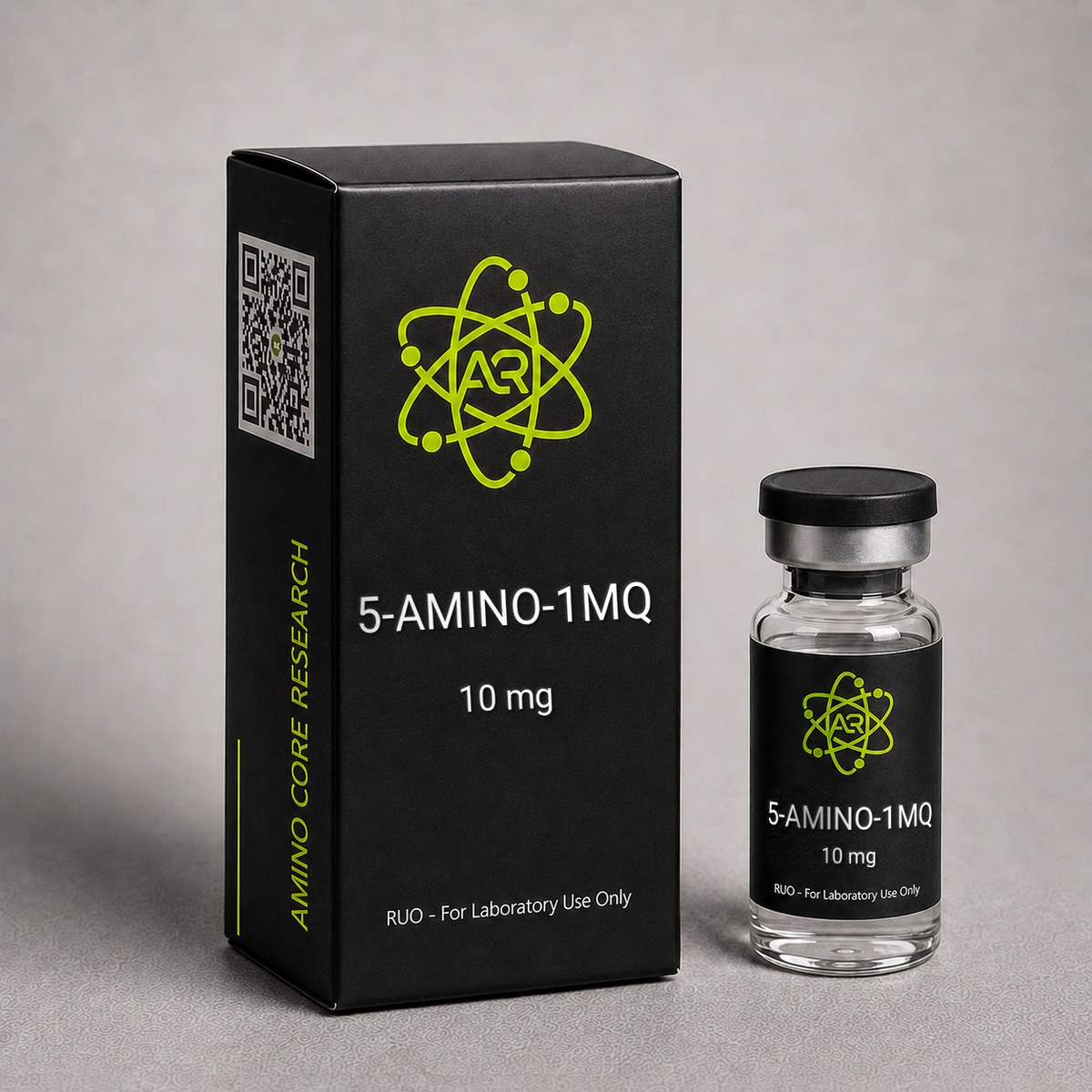
5-Amino-1MQ
Selective NNMT (nicotinamide N-methyltransferase) inhibitor researched for metabolic regulation, adipogenesis inhibition, and energy expenditure modulation.
$100.00
In stock — ships next business day
Quick Facts
| SKU | ACR-5A1MQ |
|---|---|
| CAS Number | 1801997-83-8 |
| Molecular Formula | C7H9N2+ |
| Molecular Weight | 121.16 g/mol (free base); 257.07 g/mol (diiodide salt) |
| Sequence | Small molecule (not a peptide): 5-amino-1-methylquinolinium |
| Purity | ≥99% |
| Physical Form | Lyophilized Powder |
| Storage | Store at -20°C |
What is 5-Amino-1MQ?
5-Amino-1MQ (5-amino-1-methylquinolinium) is a selective, cell-permeable inhibitor of nicotinamide N-methyltransferase (NNMT). NNMT is an enzyme overexpressed in adipose tissue that regulates cellular energy metabolism. By inhibiting NNMT, 5-Amino-1MQ shifts cellular metabolism toward increased NAD+ salvage and enhanced energy expenditure.
Mechanism of Action
5-Amino-1MQ inhibits NNMT, which normally converts nicotinamide (NAM) to 1-methylnicotinamide (1-MNA), consuming SAM methyl groups. By blocking this reaction: (1) NAM accumulates and is recycled into NAD+ via the salvage pathway, increasing cellular NAD+ levels; (2) SAM methyl donor pools are preserved, improving epigenetic methylation; (3) Adipocyte differentiation is suppressed and lipolysis is enhanced.
Mechanism of Action: NNMT Inhibition
5-Amino-1MQ is a cell-permeable, selective inhibitor of nicotinamide N-methyltransferase (NNMT) — an enzyme that sits at the intersection of three critical metabolic pathways:
- NAD+ salvage: NNMT converts nicotinamide (NAM) to 1-methylnicotinamide (1-MNA), diverting NAM away from the NAD+ salvage pathway. Inhibiting NNMT increases NAM recycling into NAD+ via NAMPT, raising cellular NAD+ levels by 50-100%.
- SAM methylation: NNMT consumes S-adenosylmethionine (SAM) as a methyl donor. Inhibition preserves SAM pools for essential methylation reactions including DNA methylation, histone methylation, and neurotransmitter synthesis.
- Adipogenesis: NNMT activity is required for adipocyte differentiation. Inhibiting NNMT blocks the PPARγ-mediated adipogenesis program, preventing pre-adipocytes from maturing into fat-storing cells.
The net effect: increased cellular energy (more NAD+), improved epigenetic regulation (more SAM), and reduced fat storage (blocked adipogenesis) — all from inhibiting a single enzyme.
Research & Clinical Studies
5-Amino-1MQ and Obesity Research
Background - NNMT as a Metabolic Target: Nicotinamide N-methyltransferase (NNMT) catalyzes the SAM-dependent methylation of nicotinamide to produce 1-methylnicotinamide (MNA) and S-adenosylhomocysteine (SAH). Elevated NNMT expression in white adipose tissue and liver is associated with obesity, insulin resistance, and reduced cellular NAD+ availability, because nicotinamide is a key precursor in NAD+ salvage. NNMT activity simultaneously depletes the methyl donor pool (SAM) and consumes the NAD+ precursor, making it an attractive node for metabolic intervention. 5-Amino-1MQ was developed as a small-molecule, cell-permeable, substrate-competitive inhibitor of NNMT that mimics the methylated product MNA.
Key Preclinical Findings (Neelakantan et al., 2018): In the pivotal preclinical study, diet-induced obese (DIO) C57BL/6 mice maintained on a high-fat diet were administered 5-Amino-1MQ. Treated animals lost approximately 7% of body weight over an 11-day dosing window, while pair-fed controls did not show equivalent loss, indicating that the effect was not attributable to reduced caloric intake. Adipocyte cross-sectional area in epididymal and subcutaneous depots was reduced by roughly 40%, consistent with a lipolytic and/or anti-lipogenic remodeling of the adipose compartment. Intracellular NAD+ levels in white adipose tissue rose significantly, accompanied by increased SAM availability, supporting on-target NNMT inhibition. Importantly, food intake, locomotor activity, and behavioral parameters were unchanged, distinguishing the mechanism from appetite-suppressant or stimulant pharmacology.
Mechanistic Interpretation: The proposed mechanism is that NNMT inhibition preserves the cellular nicotinamide pool for NAD+ biosynthesis via NAMPT and the salvage pathway, elevating NAD+/NADH ratios and enhancing the activity of NAD+-dependent enzymes including sirtuins (SIRT1, SIRT3) and PARPs. In parallel, sparing SAM from NNMT-mediated consumption supports normal methylation balance, which may influence chromatin state and PPARγ-coactivator signaling relevant to mitochondrial biogenesis and adipocyte differentiation. The net effect in DIO adipose tissue is increased energy expenditure at the cellular level and a shift away from lipid storage, without engagement of central appetite circuits.
Adipocyte-Level Observations: In cultured 3T3-L1 adipocytes and primary adipocyte models, NNMT knockdown and pharmacologic inhibition produce convergent phenotypes: elevated NAD+, increased oxygen consumption rate (OCR), upregulated expression of thermogenic and fatty-acid oxidation genes, and reduced triglyceride accumulation. These data support a model in which adipocyte NNMT functions as a brake on energy expenditure that 5-Amino-1MQ releases.
Translational Considerations and Limitations: All findings to date are preclinical, conducted in rodent models and isolated cell systems. No controlled human clinical efficacy or safety data are available, and the compound is not approved for human use in any jurisdiction. Long-term effects on hepatic methylation balance, hematopoiesis, and tissues with constitutively high NNMT expression (e.g., liver, certain tumors) remain to be fully characterized. Pharmacokinetic parameters, off-target methyltransferase activity, and chronic dosing safety are active areas of preclinical investigation.
Research Utility: For laboratories studying NAD+ biology, adipocyte energetics, methyl-donor metabolism, and NNMT-driven metabolic disease models, 5-Amino-1MQ is a widely used chemical-biology tool compound that enables acute, reversible interrogation of NNMT function in vitro and in vivo.
[1] Neelakantan H, Vance V, Wetzel MD, et al. Selective and membrane-permeable small molecule inhibitors of nicotinamide N-methyltransferase reverse high fat diet-induced obesity in mice. Biochem Pharmacol. 2018;147:141-152. PubMed ↗
5-Amino-1MQ and Muscle Function Research
Beyond adipose tissue, NNMT is expressed in skeletal muscle where it regulates NAD+ availability for contraction and recovery. 5-Amino-1MQ treatment in muscle cells increased NAD+ levels by 50-100%, enhanced SIRT1 activity, and improved mitochondrial respiration rate. In aged mice, NNMT inhibition restored muscle NAD+ to young-adult levels and improved grip strength — connecting metabolic reprogramming to functional muscle outcomes.
5-Amino-1MQ and Cancer Research
NNMT overexpression is found in multiple cancers (colorectal, breast, lung, pancreatic) where it promotes tumor growth by depleting SAM methyl donors and altering epigenetic landscapes. 5-Amino-1MQ has shown anti-tumor activity in preclinical models by restoring SAM methylation pools and reducing cancer cell proliferation. This positions NNMT inhibition as a metabolic approach to cancer research beyond traditional cytotoxic strategies.
5-Amino-1MQ and Diet-Induced Obesity Reversal
The landmark 2018 study (Neelakantan et al., Biochem Pharmacol) demonstrated 5-Amino-1MQ reverses established obesity in mice:
- Mice on high-fat diet for 14 weeks (obese) were treated with 5-Amino-1MQ for 11 days
- Body weight reduced 7% without caloric restriction or exercise
- Adipocyte size decreased 40% — existing fat cells shrunk
- Food intake unchanged — weight loss was purely metabolic, not appetite-driven
- Intracellular NAD+ increased significantly in adipose tissue
- No observable toxicity or behavioral changes
This is remarkable because 7% weight loss in 11 days through metabolic reprogramming alone (no appetite suppression, no exercise, no caloric restriction) represents a novel mechanism distinct from GLP-1 agonists (appetite suppression) or Fragment 176-191 (lipolysis).
[1] Neelakantan H et al. Selective and membrane-permeable small molecule inhibitors of nicotinamide N-methyltransferase reverse high fat diet-induced obesity in mice. Biochem Pharmacol. 2018;147:141-152. PubMed ↗
5-Amino-1MQ and Stem Cell / Aging Research
NNMT activity increases with aging and correlates with stem cell senescence. In mesenchymal stem cells (MSCs), NNMT overexpression drives cells toward senescence by depleting NAD+ and SAM. 5-Amino-1MQ treatment restored MSC proliferative capacity and differentiation potential to young-adult levels, suggesting NNMT inhibition may counteract aspects of stem cell aging.
Additionally, NNMT inhibition increased SIRT1 activity (NAD+-dependent deacetylase) in multiple cell types, connecting the NNMT pathway to the sirtuin-mediated longevity axis. This positions 5-Amino-1MQ at the intersection of obesity, aging, and regenerative research.
Comparative Pharmacology: 5-Amino-1MQ vs Other NNMT Inhibitors
5-Amino-1MQ belongs to a class of bisubstrate and substrate-mimetic NNMT inhibitors developed to probe the metabolic role of nicotinamide N-methyltransferase. Compared to earlier tool compounds, 5-Amino-1MQ has emerged as one of the most widely used in vivo-active NNMT inhibitors in published research due to its favourable potency, selectivity profile, and oral bioavailability in rodent models.
Potency Against NNMT
In biochemical assays, 5-Amino-1MQ inhibits recombinant human NNMT with an IC50 reported in the low micromolar range (~1.7-2.9 µM), making it considerably more potent than the prototype inhibitor 1-methylquinolinium (1MQ) and structurally related quinolinium analogues evaluated by Neelakantan and colleagues. The 5-amino substitution increases binding affinity within the nicotinamide-binding pocket of NNMT while preserving the positively charged quinolinium scaffold required for transition-state mimicry.
Selectivity Profile
In published selectivity panels, 5-Amino-1MQ demonstrates minimal cross-reactivity with other methyltransferases such as PNMT (phenylethanolamine N-methyltransferase), INMT (indolethylamine N-methyltransferase), and GNMT (glycine N-methyltransferase). This selectivity is mechanistically important because off-target inhibition of related SAM-dependent methyltransferases could confound interpretation of metabolic phenotypes.
Comparison to Bisubstrate Inhibitors
More recent NNMT inhibitor scaffolds, such as the bisubstrate MS2734 series and the JBSNF-000088 lead compound, offer nanomolar potency by occupying both the nicotinamide and SAM pockets simultaneously. However, these compounds are typically less well-characterised in vivo. 5-Amino-1MQ remains the reference small molecule for translational adipose-tissue research because its pharmacokinetic profile in mice is documented and reproducible across independent laboratories.
Translational Research Context
Research comparing 5-Amino-1MQ to genetic NNMT knockdown (via antisense oligonucleotides) in diet-induced obese mice has shown remarkably similar phenotypes: increased adipose SAM, elevated 1-methylnicotinamide clearance, restored polyamine flux, and reduced fat mass without changes in food intake. This convergence between pharmacological and genetic loss-of-function studies supports 5-Amino-1MQ as a valid chemical probe for dissecting NNMT biology in metabolic, oncology, and aging research contexts.
Key Findings
- NNMT IC50: ~1.7-2.9 µM in recombinant enzyme assays
- Oral bioavailability documented in murine pharmacokinetic studies
- >30-fold selectivity over related SAM-dependent methyltransferases in published panels
- Phenocopies NNMT antisense knockdown in adipose tissue endpoints
Researchers selecting an NNMT inhibitor for chronic in vivo dosing studies typically choose 5-Amino-1MQ over earlier 1MQ analogues because of its improved potency-to-tolerability ratio and the larger body of published data supporting reproducible adipose phenotypes.
[1] Neelakantan H, et al. Selective and membrane-permeable small molecule inhibitors of nicotinamide N-methyltransferase reverse high fat diet-induced obesity in mice. Biochem Pharmacol. 2018;147:141-152. PubMed ↗
[2] Kannt A, et al. A small molecule inhibitor of Nicotinamide N-methyltransferase for the treatment of metabolic disorders. Sci Rep. 2018;8(1):3660.
5-Amino-1MQ in NAD+/SAM Metabolism and Energy Homeostasis Research
Nicotinamide N-methyltransferase sits at the intersection of two critical metabolic pools: the methyl-donor S-adenosylmethionine (SAM) cycle and the NAD+ salvage pathway. By methylating nicotinamide (NAM) to 1-methylnicotinamide (MNA), NNMT consumes SAM and removes NAM from the NAD+ salvage pool, thereby influencing both cellular methylation capacity and NAD+ homeostasis. 5-Amino-1MQ has been used as a chemical tool to dissect how this enzymatic node controls energy expenditure and substrate cycling in adipose tissue.
Effects on the SAM/SAH Methylation Cycle
In treated adipocytes and adipose tissue from diet-induced obese mice, 5-Amino-1MQ administration increases intracellular SAM and the SAM:SAH (S-adenosylhomocysteine) ratio. Because SAM is the universal methyl donor for DNA, RNA, and histone methylation, elevated SAM availability has been reported to drive epigenetic changes consistent with a leaner, more metabolically active adipocyte phenotype, including increased expression of thermogenic and lipolytic genes.
Restoration of Polyamine Flux
SAM also serves as the precursor for decarboxylated SAM (dcSAM), the aminopropyl donor for polyamine biosynthesis (spermidine, spermine). Studies using 5-Amino-1MQ have shown increased polyamine flux in white adipose tissue, which is mechanistically linked to enhanced lipolysis and increased energy expenditure. This polyamine-driven futile cycle is thought to contribute to the calorie-burning phenotype observed without changes in food intake.
Indirect Effects on NAD+ Pools
By sparing NAM from methylation, NNMT inhibition theoretically increases NAM availability for re-entry into the NAD+ salvage pathway via NAMPT (nicotinamide phosphoribosyltransferase). Published research has measured modest increases in tissue NAD+ in 5-Amino-1MQ-treated animals, though the effect size is smaller and more tissue-specific than that achieved by NR/NMN supplementation. The principal metabolic phenotype of NNMT inhibition appears to be driven by SAM/polyamine flux rather than NAD+ elevation per se.
Energy Expenditure Findings
- Increased oxygen consumption in indirect calorimetry studies of treated mice
- Elevated SAM:SAH ratio in white adipose tissue
- Increased spermidine and spermine in adipose tissue homogenates
- Reduced adipocyte size and improved insulin sensitivity at metabolic endpoints
- No change in food intake, distinguishing NNMT inhibition from anorectic agents
Research Implications
5-Amino-1MQ has become a key chemical probe for researchers studying the interface of one-carbon metabolism, polyamine biology, and adipose energetics. Its use has helped establish NNMT as a candidate target for metabolic dysfunction independent of appetite suppression, contrasting mechanistically with incretin-based approaches such as GLP-1 receptor agonism.
[1] Kraus D, et al. Nicotinamide N-methyltransferase knockdown protects against diet-induced obesity. Nature. 2014;508(7495):258-262. PubMed ↗
[2] Neelakantan H, et al. Structure-Activity Relationship for Small Molecule Inhibitors of Nicotinamide N-Methyltransferase. J Med Chem. 2017;60(12):5015-5028. PubMed ↗
Chemical Properties
| Name | 5-Amino-1-methylquinolinium (5-Amino-1MQ) |
|---|---|
| Type | Small molecule NNMT inhibitor (not a peptide) |
| Target | NNMT (Nicotinamide N-Methyltransferase) |
| Selectivity | Selective for NNMT over related methyltransferases |
| Cell Permeability | High — enters cells without requiring transfection or carriers |
| Mechanism | Competitive inhibition of NNMT substrate binding |
| Downstream Effects | ↑NAD+, ↑SAM, ↓adipogenesis, ↑SIRT1 activity |
| Purity | ≥99% |
Handling & Administration
Physical Form: 5-Amino-1MQ is supplied as a lyophilized or crystalline powder, typically as the iodide salt of 5-amino-1-methylquinolinium. It is a low-molecular-weight heterocyclic small molecule (MW ~286 g/mol for the iodide form), structurally distinct from the peptide-based research compounds catalogued elsewhere in this collection. Because it is not a peptide, the conventional bacteriostatic water reconstitution workflow used for peptides such as BPC-157 or GHK-Cu is not required.
Solvent Selection: 5-Amino-1MQ exhibits good aqueous solubility at neutral and mildly acidic pH owing to the permanent positive charge on the methylated quinolinium nitrogen. For most in vitro assays, sterile water or PBS (pH 7.4) is the preferred reconstitution vehicle, typically yielding clear, slightly yellow solutions at working concentrations up to several mM. For higher-concentration stocks (e.g., 100 mM) intended for cell culture dilution, anhydrous DMSO is commonly used; final DMSO concentration in cell-based assays should be kept below 0.1-0.5% (v/v) to avoid solvent confounders on NAD+ metabolism and adipocyte function. PEG-400 has also been used in preclinical formulation studies where increased solubility/vehicle compatibility is required.
Reconstitution Procedure: (1) Allow the sealed vial to reach room temperature before opening to prevent moisture condensation onto the powder. (2) Briefly centrifuge or tap the vial to bring powder to the bottom. (3) Add the chosen solvent slowly along the inner wall using a calibrated micropipette or syringe. (4) Gently swirl - do not vortex vigorously, which can introduce air and foaming - until fully dissolved. (5) Inspect for clarity; a faint yellow tint is normal, but particulate matter or strong discoloration is not. (6) For sterile cell-culture work, filter through a 0.22 μm low-protein-binding PVDF or PES syringe filter.
Aliquoting and Working Solutions: To minimize freeze-thaw cycles, divide reconstituted stocks into single-use aliquots in low-binding polypropylene tubes. Label with compound name, concentration, solvent, lot, and date. Working dilutions should be prepared fresh from frozen stock on the day of experiment where possible.
Personal Protective Equipment: Standard laboratory PPE is required at all times: nitrile gloves, lab coat, and ANSI-rated safety eyewear. Handling of dry powder should be performed in a fume hood or weighing enclosure to avoid inhalation of fine particulates. The compound is a quaternary heterocyclic amine; spills should be contained with absorbent material and decontaminated with copious water followed by detergent. Refer to the SDS for full hazard communication before initial handling.
Analytical Verification: For quantitative pharmacology work, researchers are encouraged to verify concentration spectrophotometrically using the characteristic quinolinium UV absorbance, and to confirm purity by HPLC-UV or LC-MS prior to initiating long studies.
Research-Use Restriction: 5-Amino-1MQ is provided strictly for in vitro and preclinical (non-human) laboratory research. It is not a drug, dietary supplement, food, cosmetic, or medical device, and is not intended for administration to humans or for veterinary therapeutic use. Institutional biosafety and chemical-safety committees should review all experimental protocols prior to use.
Storage & Stability
Lyophilized Powder Stability: 5-Amino-1MQ (5-amino-1-methylquinolinium iodide, MW ~286 g/mol) is a small-molecule quinolinium salt and is considerably more chemically robust than peptide research compounds. When stored desiccated at -20°C or below in its original sealed amber vial, the powder retains assay purity (>99%) for 24+ months under typical laboratory archival conditions. Short-term storage at ambient room temperature (20-25°C) for 30+ days has not been associated with measurable degradation in HPLC monitoring, making short-duration shipping at ambient temperature acceptable. Unlike peptide actives, 5-Amino-1MQ contains no disulfide bridges, no oxidation-prone methionine, no deamidation-susceptible asparagine or glutamine residues, and no scissile peptide bonds, eliminating the major degradation pathways relevant to peptide stability planning.
Solution Stability: Once reconstituted, aqueous stock solutions should be stored at 2-8°C in tightly capped amber glass or low-binding polypropylene vials and used within approximately 14 days for quantitative work. The quinolinium chromophore (λmax ~340 nm range) is mildly photolabile in solution, so protection from direct light is recommended. Solutions are stable across a broad pH window (approximately pH 4-8); strongly alkaline conditions should be avoided as they may promote ring-system degradation over time. Repeated freeze-thaw cycles of aqueous stocks are not recommended; instead, prepare single-use aliquots if longer storage is required.
DMSO Stocks: For long-term solution storage, concentrated stocks in anhydrous DMSO (typically 10-100 mM) stored at -20°C or -80°C in sealed cryovials provide >6 months of stability in most laboratory experience. Allow DMSO stocks to fully equilibrate to room temperature before opening to prevent moisture condensation, which can both dilute the stock and accelerate hydrolytic processes over repeated handling.
Indicators of Degradation: Quality-control monitoring should include visual inspection (the powder is typically off-white to pale yellow; significant darkening to deep yellow/brown may indicate oxidative degradation), HPLC purity assessment, and UV-Vis absorbance verification of the characteristic quinolinium profile. Any precipitate, discoloration of solution beyond a faint yellow tint, or loss of expected biological activity in NNMT inhibition assays warrants discarding the lot.
Shipping and Receipt: Material is shipped as powder under ambient or cool-pack conditions. Upon receipt, the vial should be allowed to equilibrate to room temperature before opening (to minimize hygroscopic moisture uptake) and then transferred to -20°C archival storage. Maintain chain-of-custody documentation for research compliance.
General Laboratory Best Practices: All storage should be in clearly labeled containers with lot number, receipt date, opening date, and any reconstitution information. Maintain materials in a controlled-access freezer dedicated to research compounds, separated from biological reagents. As with all investigational small molecules, this material is for in vitro and preclinical research use only and must not be used in humans or in food-producing animals. Disposal of expired material should follow institutional chemical waste protocols appropriate for substituted heterocyclic compounds.
Frequently Asked Questions
How does 5-Amino-1MQ cause fat loss?
It inhibits NNMT enzyme in fat cells, increasing NAD+ levels and shifting metabolism toward energy expenditure. It reduces adipocyte size and differentiation without suppressing appetite — fat loss occurs through metabolic reprogramming.
Is 5-Amino-1MQ a peptide?
No, 5-Amino-1MQ is a small molecule NNMT inhibitor. It is included in our catalog as a metabolic research compound relevant to peptide-based obesity research protocols.
What is NNMT and why inhibit it?
NNMT (Nicotinamide N-Methyltransferase) converts nicotinamide (vitamin B3) to methylnicotinamide, consuming both NAD+ precursors and SAM methyl donors. Overactive NNMT depletes these critical metabolic resources. Inhibiting NNMT with 5-Amino-1MQ restores NAD+ and SAM pools, enhancing cellular metabolism.
Why did the mice lose weight without eating less?
5-Amino-1MQ inhibits NNMT, increasing cellular NAD+ and SIRT1 activity. This shifts metabolism toward energy expenditure (fat oxidation, thermogenesis) rather than storage. Adipocytes shrink because their lipid stores are being oxidized for energy — a metabolic reprogramming effect independent of appetite.
How does 5-Amino-1MQ compare to GLP-1 agonists for weight loss?
Completely different mechanisms. GLP-1 agonists (semaglutide, tirzepatide) reduce appetite via hypothalamic signaling — you eat less. 5-Amino-1MQ reprograms adipocyte metabolism via NNMT/NAD+/SIRT1 — you burn more. They could theoretically be complementary (eat less + burn more).
What is the molecular weight and CAS number of 5-Amino-1MQ?
5-Amino-1MQ (5-amino-1-methylquinolinium) is a small molecule with a free-base molecular weight of approximately 121.16 g/mol and a molecular formula of C7H9N2+ (the cationic species). It is commonly supplied as the diiodide salt (CAS 1801997-83-8) with a molecular weight of approximately 257.07 g/mol. Unlike most products in the AminoCore Research catalog, 5-Amino-1MQ is not a peptide but a methylquinolinium-based small-molecule NNMT inhibitor used as a chemical probe in metabolic, adipose, and aging research.
How should 5-Amino-1MQ be reconstituted for research use?
5-Amino-1MQ is typically supplied as a crystalline solid (often the diiodide salt) and is water-soluble due to its permanent positive charge. For in vitro research, it is commonly dissolved in sterile water, PBS, or saline at stock concentrations of 10-50 mM, then diluted into culture media. For in vivo rodent studies in the published literature, oral gavage formulations in water or saline at doses of approximately 20 mg/kg/day have been used. DMSO is generally not required given the compound's aqueous solubility. As with all research compounds, solutions should be sterile-filtered and protected from prolonged light exposure.
Is 5-Amino-1MQ selective for NNMT over other methyltransferases?
Published selectivity panels indicate that 5-Amino-1MQ demonstrates substantially greater potency against NNMT (IC50 ~1.7-2.9 µM) than against related SAM-dependent methyltransferases such as PNMT, INMT, and GNMT, with reported selectivity ratios exceeding 30-fold in some assays. This selectivity is important for interpreting metabolic studies because off-target methyltransferase inhibition could confound results. The 5-amino-1-methylquinolinium scaffold was specifically optimised to fit the nicotinamide-binding pocket of NNMT while minimising cross-reactivity with other methyltransferases.
How should 5-Amino-1MQ be stored for long-term stability?
5-Amino-1MQ lyophilized or crystalline powder should be stored at -20°C in a tightly sealed container protected from moisture and light for long-term stability (12+ months). Short-term storage at 2-8°C is acceptable for active research use over several weeks. Reconstituted aqueous solutions are stable at 2-8°C for approximately 2-4 weeks; for longer storage, aliquot and freeze at -20°C or -80°C to minimise freeze-thaw cycles. Because the quinolinium cation can be photosensitive, amber vials or foil-wrapped containers are recommended for stock solutions.
For laboratory and research use only. This product is not for human or veterinary use. It is not a drug, supplement or food.
This product is not FDA approved for any indication, and is not intended to diagnose, treat, cure, or prevent any disease. All product information is derived from published preclinical research and does not constitute medical advice or claims.