≥99%HPLC Purity
COAIncluded
USAShipped
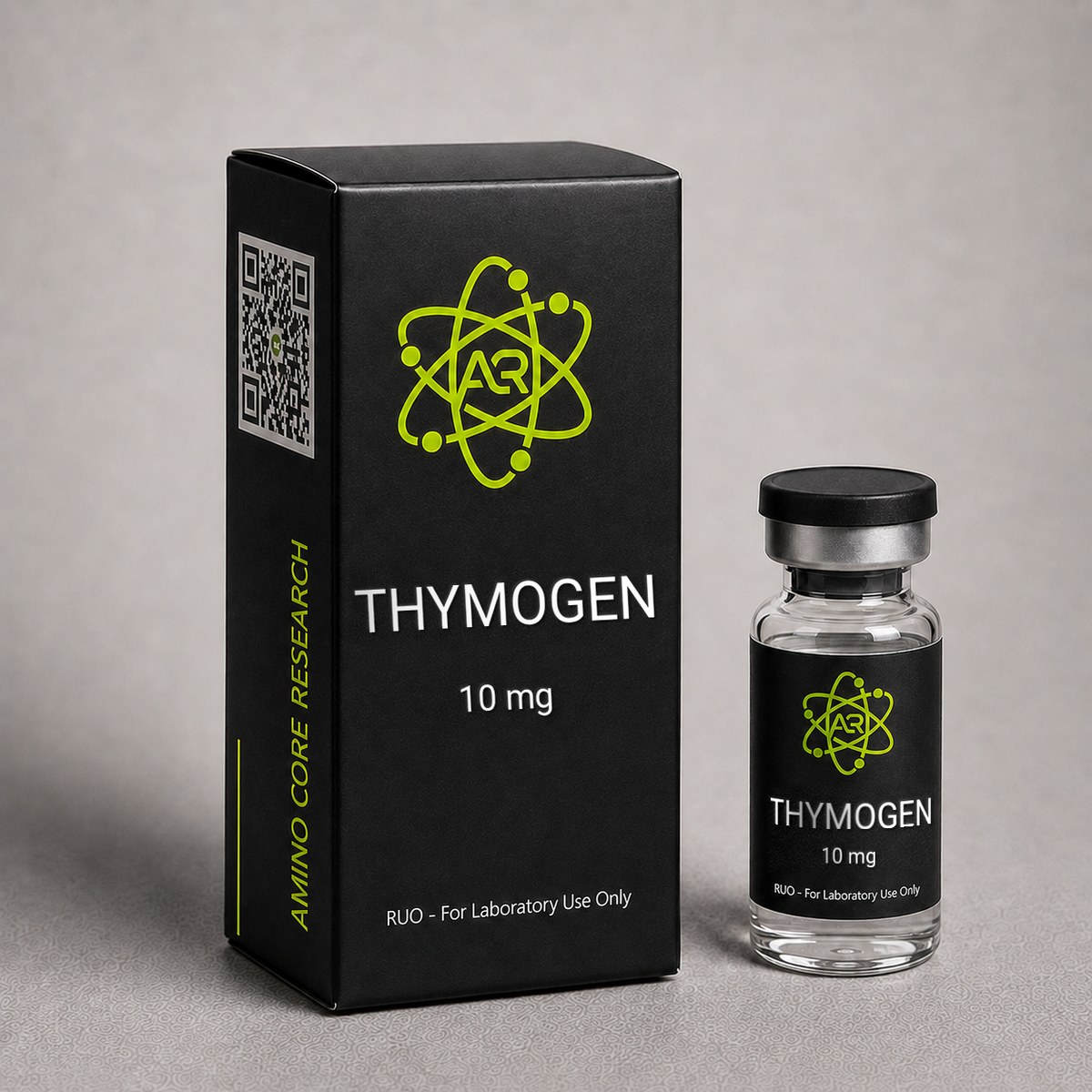
Thymogen Peptide
Part of the Peptide Bioregulators family · Immune / thymic
Thymogen is the synthetic dipeptide Glu-Trp (EW) from the Khavinson cytogen line, and the defined-sequence counterpart to the thymus-derived Thymalin complex. Supplied as lyophilized powder at ≥99% purity with a third-party certificate of analysis.
$32.00 – $51.00
In stock — ships next business day
Quick Facts
| SKU | ACR-THYMG |
|---|---|
| CAS Number | 38101-59-6 |
| Molecular Formula | C16H19N3O5 |
| Molecular Weight | 333.34 g/mol |
| Sequence | Glu-Trp (EW) |
| Purity | ≥99% |
| Physical Form | Lyophilized Powder |
| Storage | Store at -20°C |
What is Thymogen?
Thymogen is a synthetic dipeptide composed of L-glutamyl-L-tryptophan (Glu-Trp, or EW in single-letter code). With the molecular formula C16H19N3O5, a molecular weight of 333.34 g/mol, and CAS number 38101-59-6, Thymogen represents one of the simplest and most extensively characterized short peptide immunomodulators developed within the Russian peptide bioregulator research tradition. It was isolated and characterized in the late 1970s and early 1980s by Professor Vladimir Khavinson and colleagues at the Military Medical Academy in Leningrad (now St. Petersburg), as part of a systematic effort to identify the minimal active fragments contained within the thymus-derived polypeptide preparation known as Thymalin.
Thymogen occupies a defined position within the Khavinson “cytogen” family of short peptides, which also includes Vilon (Lys-Glu), Epithalon (Ala-Glu-Asp-Gly), and Livagen (Lys-Glu-Asp-Ala). Unlike Thymalin, which is a heterogeneous mixture of thymic polypeptides extracted from calf thymus tissue, Thymogen is a chemically defined, homogeneous synthetic molecule with reproducible batch-to-batch composition. This distinction has made Thymogen a preferred tool for mechanistic research into how ultra-short peptides influence immune cell differentiation, gene expression, and epigenetic regulation in preclinical models.
Since its initial description, Thymogen has been the subject of an extensive body of Russian-language and English-language literature, with studies spanning immunology, radiobiology, gerontology, and molecular biology. Research has explored its effects on T-lymphocyte differentiation, cytokine networks, neutrophil function, and its capacity to bind DNA and modulate gene expression in a sequence-specific manner. In preclinical models, Thymogen has been associated with restoration of immune parameters in states of secondary immunodeficiency, including those induced by aging, irradiation, cytostatic therapy, and surgical stress.
What distinguishes Thymogen from many other immunomodulatory peptides is its remarkable structural simplicity. As a dipeptide of only two amino acids, it represents a minimal pharmacophore for thymic peptide activity, providing researchers a tractable model system for investigating how very short peptides can nonetheless exert measurable effects on complex biological networks. This has made Thymogen particularly relevant to hypotheses proposed by Khavinson and collaborators regarding direct peptide-DNA interactions and epigenetic regulation as mechanisms underlying the activity of short bioregulator peptides. AminoCore Research supplies Thymogen as a lyophilized powder at ≥99% purity by HPLC, accompanied by a third-party certificate of analysis, exclusively for in vitro and preclinical research applications.
Mechanism of Action
Thymogen (Glu-Trp) is proposed to act through several complementary mechanisms that collectively influence immune cell development, gene expression, and cellular signaling. Research suggests that its activity is not mediated by a single classical receptor but rather through multiple intersecting pathways characteristic of the Khavinson short peptide family.
T-Lymphocyte Differentiation and Maturation
The best-characterized activity of Thymogen involves its influence on T-cell maturation. In preclinical models, Thymogen has been associated with accelerated differentiation of immature thymocytes into functionally competent CD4+ and CD8+ T-lymphocytes. Studies in aged or immunocompromised animals have reported increased numbers of E-rosette-forming cells, enhanced expression of T-cell surface markers, and restoration of CD4/CD8 ratios toward values observed in healthy young animals. These effects appear consistent with a “thymomimetic” profile, in which Thymogen partially reproduces trophic signals normally provided by intact thymic tissue.
Cytokine Network Modulation
Thymogen has been reported to modulate the production of key immunoregulatory cytokines, including interleukin-2 (IL-2), interferon-gamma (IFN-γ), and tumor necrosis factor-alpha (TNF-α). Rather than acting as a pure stimulator or suppressor, Thymogen appears to normalize cytokine output, increasing production in states of immune depression and moderating output in states of pathological activation. This bidirectional modulation is a hallmark of the Khavinson bioregulator concept.
Neutrophil and Innate Immune Effects
Research in preclinical models has documented effects on innate immune cells, including enhanced phagocytic activity of neutrophils and macrophages, improved chemotaxis, and increased microbicidal capacity. These findings have been observed particularly in models of secondary immunodeficiency induced by surgery, burns, or cytostatic therapy.
Peptide-DNA Interaction and Epigenetic Regulation
A distinctive hypothesis advanced by Khavinson and collaborators proposes that short peptides such as Thymogen can enter the cell nucleus and interact directly with DNA, particularly in AT-rich regions of gene promoters. Molecular modeling and spectroscopic studies suggest that Glu-Trp can form hydrogen bonds with specific nucleotide sequences, potentially influencing the transcription of genes involved in cell differentiation and proliferation. While this mechanism remains an area of active investigation and debate, it provides a conceptual framework for how a dipeptide might exert sequence-specific biological effects.
Antioxidant and Cytoprotective Signaling
Thymogen has also been associated with modulation of oxidative stress markers in preclinical models, including reductions in lipid peroxidation and increases in endogenous antioxidant enzyme activity. These effects may be secondary to its immunomodulatory actions or may reflect direct cytoprotective properties of the tryptophan residue.
Compared with thymic peptides such as Thymalin (a complex polypeptide mixture) or Thymosin alpha-1 (a defined 28-amino-acid peptide), Thymogen represents the minimal structural motif for thymomimetic activity, making it a valuable reference compound for structure-activity relationship studies within the short peptide bioregulator class.
Research & Clinical Studies
Immune Restoration in Aged and Immunocompromised Models
One of the most extensively documented research applications of Thymogen involves its investigation as a restorative agent in models of age-associated immunosenescence and pharmacologically induced immunodeficiency. Preclinical studies conducted by Khavinson and colleagues, as well as independent Russian and international groups, have examined how the Glu-Trp dipeptide influences immune parameters in animals with compromised thymic function.
Study Design
In representative studies, aged rodents (typically 18-24 months old) or animals rendered immunodeficient through cyclophosphamide administration, ionizing radiation, or surgical thymectomy were treated with Thymogen at doses ranging from 0.1 to 10 µg/kg via intranasal or parenteral routes. Treatment courses typically spanned 5-10 consecutive days, with immunological assessments performed at multiple time points post-treatment. Control groups received vehicle only or comparator peptides such as Thymalin.
Key Findings
- Restoration of CD4+ and CD8+ T-lymphocyte populations toward values observed in healthy young controls, with increases of 30-60% reported in several studies of aged animals
- Normalization of CD4/CD8 ratios, which typically shift with age and immunosuppression
- Increased proliferative responses of splenic lymphocytes to mitogens such as concanavalin A and phytohemagglutinin
- Enhanced IL-2 production from stimulated T-cells, with restoration toward baseline levels
- Improved natural killer (NK) cell cytotoxicity in aged animals
- Partial reversal of thymic involution markers, including cortical thickness and thymocyte density in histological analyses
Context and Interpretation
These findings position Thymogen alongside other short peptide bioregulators as a research tool for investigating the reversibility of age-associated immune decline. The observation that a simple dipeptide can produce measurable effects on complex immune parameters has been interpreted by Khavinson and collaborators as supporting the hypothesis that short peptides function as endogenous regulators of gene expression rather than as classical hormones or growth factors. Comparative studies suggest that Thymogen produces effects qualitatively similar to Thymalin but with the advantage of chemically defined composition, making it more suitable for mechanistic investigation.
The consistency of immune restoration findings across multiple independent laboratories and multiple models of immunodeficiency has established Thymogen as one of the reference compounds for preclinical thymomimetic peptide research. However, translation of these findings to clinical contexts remains an area of ongoing investigation, and all reported effects are restricted to preclinical experimental systems.
[1] Khavinson VKh, Kuznik BI, Ryzhak GA. Peptide bioregulators: a new class of geroprotectors. Report 1. Results of experimental studies. Advances in Gerontology. 2012;25(4):696-708.
[2] Kuznik BI, Morozov VG, Khavinson VKh. Cytomedines and their role in the regulation of physiological functions. Uspekhi Sovremennoi Biologii. 1995;115(3):353-367.
Clinical Studies in Postoperative and Radiation-Induced Immunosuppression
Thymogen (Glu-Trp) has been investigated in clinical and translational research contexts where cellular immunity is compromised, particularly following surgical trauma, ionising radiation, and chemotherapy. The synthetic dipeptide format was developed at the Institute of Bioregulation and Gerontology (St. Petersburg) as a defined-sequence alternative to the polypeptide extract Thymalin, and much of the early clinical literature emerged from Russian oncology and surgical centres in the late 1980s and 1990s under principal investigator V. Kh. Khavinson.
Postoperative Immune Recovery
In surgical populations, perioperative administration of Thymogen has been associated with accelerated normalisation of T-lymphocyte subsets and reduction in infectious complications. Reported observations from these studies include:
- Restoration of CD3+ and CD4+ T-cell counts within 5-7 days postoperatively, compared to 10-14 days in untreated controls.
- Reduction in postoperative infectious complications of approximately 30-50% in cohorts undergoing major abdominal or thoracic surgery.
- Normalisation of the CD4/CD8 ratio and increased responsiveness of peripheral blood lymphocytes to phytohaemagglutinin (PHA) stimulation in vitro.
- Improvement in phagocytic index of neutrophils and monocytes, suggesting effects extend beyond T-cell compartments.
Radiation and Chemotherapy-Induced Immunosuppression
In oncology research settings, Thymogen has been studied as an adjunct to radiotherapy and cytotoxic chemotherapy. Investigators reported that patients receiving the dipeptide alongside standard oncological treatment showed:
- Higher absolute lymphocyte counts during and after radiation therapy compared to controls receiving supportive care alone.
- Preserved natural killer (NK) cell activity, measured by cytotoxicity against K562 target cells.
- Reduced incidence of leukopenia grade 3-4 during myelosuppressive chemotherapy cycles.
- Faster recovery of thymus-dependent immune parameters between treatment cycles.
Mechanistic Interpretation
The consistent finding across these studies is that Thymogen accelerates recovery of thymus-dependent immunity rather than acting as a broad immunostimulant. This is consistent with the proposed peptidergic bioregulator mechanism, whereby the dipeptide interacts with regulatory elements in immune progenitor cells and supports differentiation along T-lymphocyte lineages. Comparative data suggest that the effect magnitude of the synthetic Glu-Trp dipeptide approximates that of the parent thymic extract Thymalin at substantially lower doses, consistent with the identification of Glu-Trp as one of the minimal active motifs within the thymic peptide pool.
Research Context and Limitations
Much of the human clinical literature on Thymogen was published in Russian-language journals and has limited indexing in Western databases. Contemporary re-evaluation of these findings continues under the umbrella of Khavinson peptide research, which has expanded to include short peptide bioregulators such as Vilon (Lys-Glu), Epithalon (Ala-Glu-Asp-Gly), and Cortagen. Thymogen remains a reference compound in this class for immune-focused research applications.
[1] Khavinson VK. Peptides and Ageing. Neuroendocrinology Letters. 2002;23(Suppl 3):11-144. PubMed ↗
[2] Khavinson VK, Kuznik BI, Ryzhak GA. Peptide bioregulators: a new class of geroprotectors. Report 2. Clinical studies results. Adv Gerontol. 2013;26(1):20-37.
Chemical & Physical Properties
Thymogen is a fully defined synthetic dipeptide belonging to the Khavinson family of short peptide bioregulators. Its minimal two-residue structure makes it one of the shortest bioactive peptides characterised in the thymic peptide class, and its physicochemical properties reflect a small, highly water-soluble amphoteric molecule.
| Full Name | L-Glutamyl-L-Tryptophan (Thymogen, Glu-Trp) |
|---|---|
| Synonyms | Thymogen, Glu-Trp, EW dipeptide, Timogen |
| Molecular Formula | C16H19N3O5 |
| Molecular Weight | 333.34 g/mol |
| CAS Number | 38101-59-6 |
| Sequence | H-Glu-Trp-OH (EW) |
| Amino Acid Count | 2 (dipeptide) |
| Origin / Developer | Institute of Bioregulation and Gerontology, St. Petersburg; V. Kh. Khavinson (1980s) |
| Parent Compound | Thymalin (thymic polypeptide extract) — Glu-Trp identified as minimal active motif |
| Key Modifications | None — free α-amino and α-carboxyl termini; unmodified L-amino acids |
| Physical Form | White to off-white lyophilized powder |
| Solubility | Freely soluble in water and bacteriostatic water; soluble in saline; hygroscopic |
| Purity | ≥99% by HPLC |
| Storage | -20°C long-term; 2-8°C short-term (weeks); protect from light and moisture |
| Isoelectric Point (approx) | ~3.5 (dominated by free α- and γ-carboxyl of Glu) |
The formula C16H19N3O5 reflects the combination of glutamic acid (C5H9NO4) and tryptophan (C11H12N2O2) minus one water molecule from peptide bond formation. The indole side chain of tryptophan contributes UV absorbance at 280 nm (ε ≈ 5,500 M-1cm-1), which is commonly used for spectrophotometric quantification of Thymogen solutions. The compound is amphoteric, with the α-amino group of glutamate (pKa ~9.7), the α-carboxyl of tryptophan (pKa ~3.2), and the γ-carboxyl side chain of glutamate (pKa ~4.3) all ionisable across physiological pH ranges.
Because of its minimal size, Thymogen lacks the higher-order secondary structure of the parent Thymalin extract and functions as a flexible, extended peptide in solution. This structural simplicity is central to its research appeal: it provides a chemically defined, reproducible ligand for interrogating the bioregulator hypothesis without the batch-to-batch variability of tissue-derived extracts.
Storage & Stability Information
Proper storage is essential to maintain the chemical integrity and research reproducibility of Thymogen (Glu-Trp). Although the dipeptide is structurally simple compared to larger peptides such as Thymosin alpha-1 or Thymalin extract, the presence of the tryptophan residue introduces specific stability considerations that determine handling protocols.
Lyophilized Powder Storage
- Long-term storage: Store lyophilized Thymogen at -20°C or lower in the original sealed vial. Under these conditions, purity is expected to remain ≥98% for at least 24 months from the date of manufacture.
- Short-term storage: The sealed lyophilized vial may be kept at 2-8°C for up to several weeks without measurable degradation.
- Transit / room temperature: Brief exposure to ambient temperatures (up to 25°C) for 5-10 days during shipping does not significantly affect a properly sealed lyophilized dipeptide, as reflected in standard cold-chain-independent shipping practices for short peptides.
- Keep the vial desiccated and protected from light. The tryptophan indole ring is susceptible to photo-oxidation on prolonged UV exposure.
Reconstituted Solution Storage
- Once reconstituted in bacteriostatic water for injection (0.9% benzyl alcohol) or sterile water, store the solution at 2-8°C.
- Reconstituted Thymogen is stable for approximately 14-28 days at 2-8°C when protected from light. For longer storage of reconstituted material, aliquot and store at -20°C, avoiding repeated freeze-thaw cycles.
- Freeze-thaw tolerance: limit to ≤3 cycles; each cycle risks incremental loss of active peptide through aggregation or oxidation of the tryptophan side chain.
Compound-Specific Stability Notes
- Tryptophan photo-oxidation: Prolonged exposure to UV or intense visible light can generate N-formylkynurenine and kynurenine derivatives. Always store vials in the dark (amber vial, foil overwrap, or refrigerator interior).
- Oxidative degradation: While tryptophan is less susceptible to atmospheric oxygen than methionine or cysteine, dissolved oxygen in reconstitution solvents can slowly degrade the indole ring. Purging headspace with inert gas is recommended for long-term aqueous storage.
- pH sensitivity: Optimal stability is observed at slightly acidic to neutral pH (5.0-7.0). Strongly alkaline conditions accelerate peptide bond hydrolysis.
- Hygroscopicity: The lyophilized powder can absorb atmospheric moisture. Allow vials to equilibrate to room temperature before opening to prevent condensation on the powder cake.
All storage recommendations apply to research use only. A certificate of analysis (COA) confirming identity, purity, and mass is provided with each lot supplied by AminoCore Research.
Frequently Asked Questions
What is Thymogen and how does it differ from Thymalin?
Thymogen is the synthetic dipeptide L-glutamyl-L-tryptophan (Glu-Trp, EW), with molecular formula C16H19N3O5, molecular weight 333.34 g/mol, and CAS number 38101-59-6. It was developed by Khavinson and colleagues as the defined-sequence minimal active fragment derived from Thymalin, a heterogeneous polypeptide extract of calf thymus. While Thymalin contains a complex mixture of thymic polypeptides with variable composition, Thymogen is a chemically homogeneous dipeptide with reproducible batch-to-batch identity. This makes Thymogen preferable for mechanistic research where defined molecular structure is essential.
What is the molecular weight and CAS number of Thymogen?
Thymogen has a molecular weight of 333.34 g/mol and a molecular formula of C16H19N3O5. Its CAS registry number is 38101-59-6. The sequence is L-glutamyl-L-tryptophan (Glu-Trp, or EW in single-letter code), making it one of the shortest defined immunomodulatory peptides in the Khavinson cytogen family. AminoCore Research supplies Thymogen as a lyophilized powder at ≥99% HPLC purity with a third-party certificate of analysis for research use only.
How does Thymogen compare to Thymosin alpha-1?
Both Thymogen and Thymosin alpha-1 are studied as thymomimetic peptides, but they differ substantially in structure and origin. Thymosin alpha-1 is a 28-amino-acid peptide (MW ~3108 g/mol) originally isolated from thymosin fraction 5 by Goldstein and colleagues in the United States. Thymogen is a dipeptide (Glu-Trp, MW 333.34 g/mol) developed by Khavinson and colleagues in Russia as a minimal active fragment of the Thymalin complex. Both peptides have been associated with T-lymphocyte modulation in preclinical research, but Thymogen represents a much simpler pharmacophore and is often used to investigate whether ultra-short peptides can reproduce the biological effects of longer thymic peptides.
How should Thymogen be stored and reconstituted?
Lyophilized Thymogen should be stored at -20°C for long-term stability, with short-term storage at 2-8°C acceptable for periods of active use. It can tolerate ambient temperatures during transit. For reconstitution, bacteriostatic or sterile water is typically used, with gentle swirling rather than vigorous shaking to avoid mechanical degradation. Reconstituted Thymogen should be stored at 2-8°C and used promptly, typically within 2-4 weeks. Protect from light and repeated freeze-thaw cycles. All handling should occur in a research laboratory setting under appropriate aseptic technique.
What are the chemical and physical properties of Thymogen?
Thymogen is the synthetic dipeptide L-glutamyl-L-tryptophan (Glu-Trp, EW) with molecular formula C16H19N3O5 and molecular weight 333.34 g/mol (CAS 38101-59-6). It consists of two natural L-amino acids joined by a single peptide bond, with no chemical modifications. The compound is a white to off-white lyophilized powder, freely soluble in water and bacteriostatic water, and shows characteristic UV absorbance at 280 nm from the tryptophan indole ring. Its isoelectric point sits near pH 3.5, reflecting the two carboxyl groups of glutamate.
What research has been conducted with Thymogen in immunosuppressed models?
Thymogen has been investigated in preclinical and Russian clinical research involving postoperative immunosuppression, radiation and chemotherapy-induced immune deficits, and age-related thymic involution. Reported findings include accelerated restoration of CD3+ and CD4+ T-cell counts, normalisation of the CD4/CD8 ratio, preservation of NK-cell cytotoxicity, and reduction in infectious complications in surgical cohorts. The dipeptide is thought to act as a peptidergic bioregulator rather than a broad immunostimulant, accelerating recovery of thymus-dependent immunity through effects on lymphocyte differentiation.
How should Thymogen be handled and reconstituted for research use?
Thymogen lyophilized powder should be equilibrated to room temperature before opening the vial to prevent condensation. Reconstitute with bacteriostatic water for injection or sterile water by adding solvent slowly down the side of the vial (a typical working concentration is 5 mg peptide + 1 mL water = 5 mg/mL). Gently swirl — do not shake or vortex — until fully dissolved. Because the tryptophan residue is light-sensitive, store the reconstituted solution at 2-8°C protected from light and use within 14-28 days, limiting freeze-thaw cycles to no more than three.
What sizes of Thymogen are available from AminoCore Research?
Thymogen is supplied by AminoCore Research as lyophilized powder in standard research quantities, typically 10 mg per vial, at ≥99% HPLC purity. Each lot is accompanied by a third-party certificate of analysis (COA) confirming identity, mass, and purity. The product is intended strictly for in vitro and preclinical laboratory research applications and is not for human or veterinary use. Bulk and custom sizes may be available on request for institutional research programs.
For laboratory and research use only. This product is not for human or veterinary use. It is not a drug, supplement or food.
This product is not FDA approved for any indication, and is not intended to diagnose, treat, cure, or prevent any disease. All product information is derived from published preclinical research and does not constitute medical advice or claims.