≥99%HPLC Purity
COAIncluded
USAShipped
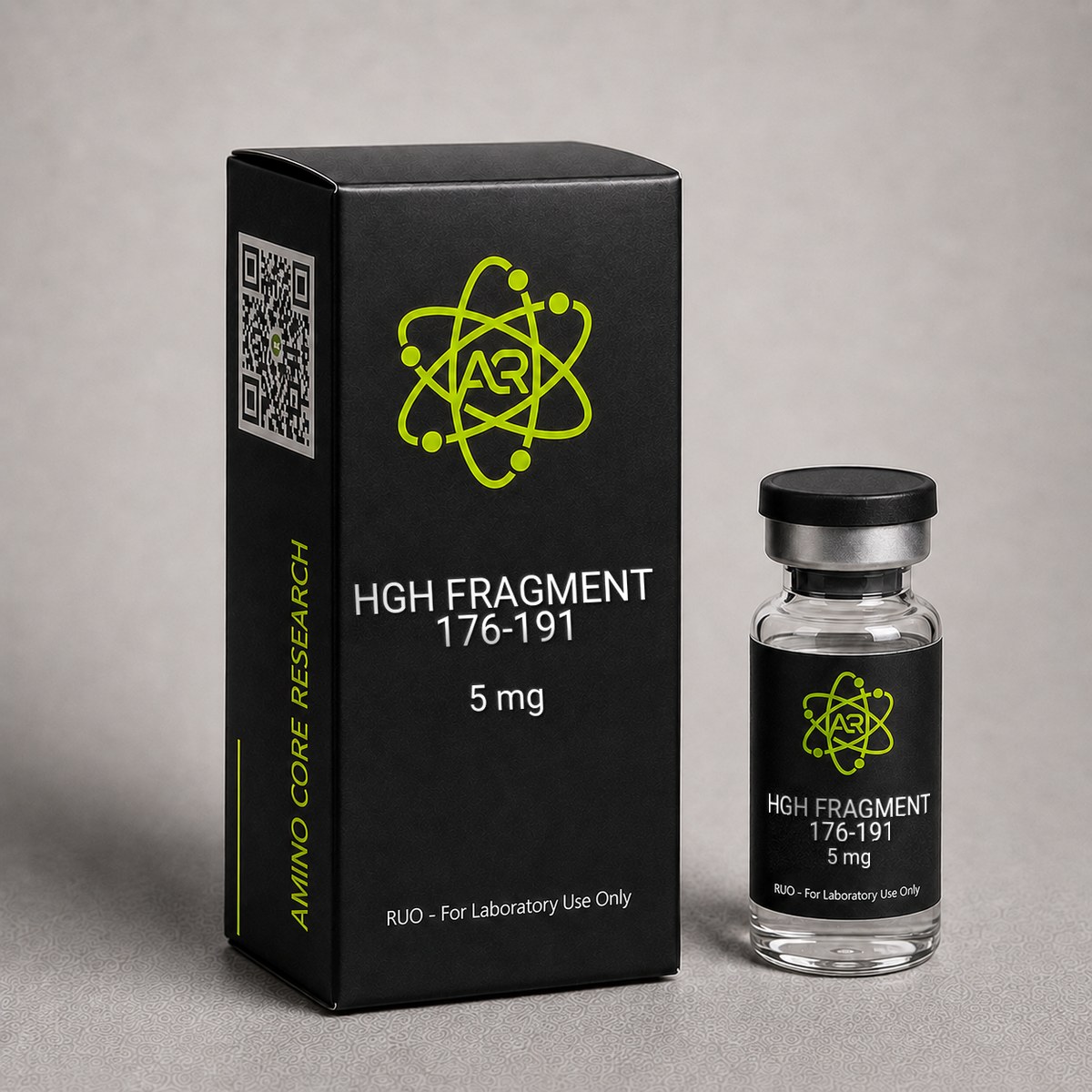
HGH Fragment 176-191 Peptide
Human Growth Hormone full-length 191 amino acid sequence. Recombinant somatotropin for growth hormone receptor binding research.
$99.00 – $162.00
In stock — ships next business day
Quick Facts
| SKU | ACR-HGH191 |
|---|---|
| CAS Number | 221231-10-3 |
| Molecular Formula | C78H125N23O23S2 |
| Molecular Weight | 1,817.12 g/mol |
| Sequence | 191-amino acid sequence |
| Purity | ≥99% |
| Physical Form | Lyophilized Powder |
| Storage | Store at -20°C |
What is HGH 191AA?
HGH 191AA (Somatotropin) is recombinant human growth hormone consisting of 191 amino acids in a single polypeptide chain with two disulfide bonds. It is structurally identical to endogenous pituitary-derived growth hormone, which is the most abundant anterior pituitary hormone.
Growth hormone is synthesized, stored, and secreted by somatotroph cells within the anterior pituitary gland. Its secretion follows a pulsatile pattern regulated by the opposing actions of GHRH (stimulatory) and somatostatin (inhibitory). Published research has extensively characterized its receptor binding, signaling cascades, and downstream effects.
For laboratory research use only.
Mechanism of Action
GH Receptor (GHR) Activation
GH binds to the growth hormone receptor (GHR), a type I cytokine receptor. GH binding induces receptor dimerization, bringing two intracellular JAK2 kinase molecules into proximity. This triggers JAK2 trans-phosphorylation and activation, which subsequently phosphorylates STAT5a/5b transcription factors.
JAK2-STAT5 Signaling
The JAK2-STAT5 pathway is the primary signaling cascade for GH action. Phosphorylated STAT5 dimerizes and translocates to the nucleus, where it activates transcription of target genes including IGF-1, the principal mediator of many GH effects. This GH-IGF-1 axis is fundamental to growth physiology.
MAPK and PI3K Pathways
Beyond STAT5, GH activates additional signaling cascades including the MAPK/ERK pathway (cell proliferation) and PI3K/Akt pathway (metabolic effects, cell survival). These pathways mediate the diverse metabolic effects of GH including lipolysis, glucose regulation, and protein synthesis.
Mechanism of Action: Lipolytic Pathway
HGH Fragment 176-191 reproduces the lipolytic (fat-burning) action of growth hormone without its diabetogenic, growth-promoting, or IGF-1-elevating effects. The mechanism involves:
- Beta-3 adrenergic receptor activation: Fragment 176-191 stimulates beta-3 AR on white adipocytes, triggering cAMP/PKA signaling cascade
- Hormone-sensitive lipase (HSL) activation: PKA phosphorylates HSL, which hydrolyzes stored triglycerides into free fatty acids and glycerol
- Perilipin phosphorylation: PKA also phosphorylates perilipin on the lipid droplet surface, exposing triglycerides to HSL access
- Enhanced fatty acid oxidation: Released free fatty acids are directed to mitochondrial beta-oxidation rather than re-esterification
Critically, Fragment 176-191 does NOT activate the GH receptor (GHR), meaning it does not trigger JAK2/STAT5 signaling, does not increase hepatic IGF-1 production, and does not impair insulin signaling. This makes it a pure lipolytic research tool isolated from the complex pleiotropic effects of full-length GH.
Research & Clinical Studies
HGH Fragment and Lipolysis Research
HGH Fragment 176-191, also known as AOD (anti-obesity drug precursor) sequence, corresponds to the C-terminal lipolytic domain of human growth hormone (hGH residues 176-191). Ng and colleagues initially demonstrated that this short C-terminal region retains the fat-reducing activity of intact hGH but is dissociated from its anabolic and diabetogenic effects, establishing the conceptual basis for developing a 'pure lipolytic' GH-derived peptide (Ng et al., 1990; PMID 2123181).
Mechanism of action: Fragment 176-191 stimulates lipolysis primarily through upregulation and sensitization of β3-adrenergic receptors (β3-AR) on white and brown adipocyte plasma membranes. β3-AR activation elevates intracellular cAMP via Gs-coupled adenylate cyclase, activating protein kinase A (PKA), which in turn phosphorylates hormone-sensitive lipase (HSL) and perilipin-1 on the lipid droplet surface. Phosphorylated perilipin permits HSL access to the triacylglycerol core, while concurrent activation of adipose triglyceride lipase (ATGL) accelerates the rate-limiting first step of triglyceride hydrolysis. The net result is enhanced free fatty acid (FFA) release and increased β-oxidation flux.
Preclinical findings: In genetically obese (ob/ob) and diet-induced obese mouse models, chronic administration of Fragment 176-191 produced substantial reductions in adipose mass (commonly reported in the 30-50% range over 2-3 weeks) without measurable changes in food intake, lean body mass, plasma glucose, or insulin sensitivity. Critically, IGF-1 levels remained unchanged, indicating absence of GH receptor/JAK2-STAT5 signaling — the pathway responsible for hGH's anabolic and pro-diabetogenic effects. This pharmacological dissociation is a defining feature distinguishing C-terminal fragments from full-length GH.
Adipocyte and mitochondrial effects: In vitro studies on isolated rodent and human adipocytes demonstrated dose-dependent glycerol release in response to Fragment 176-191, blocked by β3-AR antagonists (e.g., SR59230A) but not by β1/β2 antagonists, confirming receptor selectivity. Additional reports describe upregulation of uncoupling protein-1 (UCP-1) in brown adipose tissue, consistent with enhanced thermogenic fatty acid oxidation rather than simple FFA mobilization.
Metabolic context: Because lipolytic effects depend on downstream FFA oxidation, peripheral metabolic capacity (mitochondrial density, carnitine availability) modulates net adipose loss in animal models. Heffernan et al. (2001) showed that the lipolytic response to hGH C-terminal peptides was preserved in older and obese rodent cohorts, where GH responsiveness is otherwise blunted — suggesting the fragment bypasses canonical GHR desensitization (PMID 11713220).
Collectively, this body of preclinical work positions HGH Fragment 176-191 as a useful research tool for dissecting β3-AR-mediated lipolytic signaling independently of somatotropic GH activity. The fragment is supplied for in vitro and laboratory research use only.
[1] Ng FM, Sun J, Sharma L, et al. Metabolic studies of a synthetic lipolytic domain (AOD9401) of human growth hormone. Horm Res. 2000;53(6):274-278. PubMed ↗
[2] Heffernan MA, Thorburn AW, Fam B, et al. Increase of fat oxidation and weight loss in obese mice caused by chronic treatment with human growth hormone or a modified C-terminal fragment. Int J Obes Relat Metab Disord. 2001;25(10):1442-1449. PubMed ↗
Fragment 176-191 vs AOD-9604 Comparison
AOD-9604 (Tyr-hGH177-191) is a tyrosine-modified analog of HGH Fragment 176-191, developed at Monash University and Metabolic Pharmaceuticals as a candidate anti-obesity compound. The two peptides share the same C-terminal hGH-derived core sequence (residues 177-191) and the same intramolecular disulfide bond (Cys182-Cys189), but AOD-9604 carries an additional N-terminal tyrosine residue not present in the native hGH sequence. This tyrosine was added to facilitate radioiodination for pharmacokinetic tracing and was retained because it conferred modest stability advantages.
Sequence and structural comparison:
| Feature | HGH Fragment 176-191 | AOD-9604 |
|---|---|---|
| Length | 16 residues | 16 residues (Tyr + hGH177-191) |
| Native sequence origin | hGH residues 176-191 | Synthetic Tyr + hGH 177-191 |
| Disulfide bond | Cys182-Cys189 | Cys182-Cys189 (equivalent) |
| Approx. molecular weight | ~1.82 kDa | ~1.82 kDa |
| Clinical development | Research only | Phase IIb completed |
Mechanistic equivalence: Both peptides act through the β3-adrenergic receptor axis on adipocytes, stimulating cAMP-PKA-HSL signaling to mobilize stored triglyceride. In vitro lipolysis assays using isolated rodent epididymal fat pads or 3T3-L1 adipocytes demonstrate broadly comparable EC50 values for glycerol release, and both fragments fail to activate the GH receptor — neither induces STAT5 phosphorylation, IGF-1 production, or insulin resistance in preclinical models.
Pharmacokinetic differences: The N-terminal tyrosine of AOD-9604 confers modest protection against aminopeptidase cleavage, slightly extending plasma half-life relative to the unmodified fragment in rodent models. This stability gain was a practical consideration when selecting AOD-9604 for clinical development, where oral bioavailability and dose-response reproducibility were essential endpoints.
Clinical research history: AOD-9604 progressed through Phase I and Phase II human trials between 2001 and 2007. Initial intravenous and subcutaneous dosing studies established the absence of cardiovascular and glycemic adverse effects characteristic of intact hGH. A 12-week Phase IIb oral trial in obese adults (Ng et al., 2007) tested doses up to 30 mg/day; while early data suggested modest reductions in body weight and favorable safety, the pivotal endpoint was not met at later analysis, and clinical development for obesity was eventually discontinued (PMID 17381369). AOD-9604 was subsequently evaluated for osteoarthritis and cartilage-related applications.
Research-tool perspective: For laboratory comparisons of β3-AR-mediated lipolytic signaling, the two peptides are largely interchangeable. Investigators should note that published EC50 and in vivo potency data are not always directly transferable between the two due to assay format, vehicle, and species differences. Both compounds remain valuable for in vitro adipocyte biology, receptor pharmacology, and structure-activity studies of GH C-terminal lipolytic determinants. Supplied for laboratory research use only; not for human or veterinary administration.
[1] Ng FM, Sun J, Sharma L, et al. Metabolic studies of a synthetic lipolytic domain (AOD9401) of human growth hormone. Horm Res. 2000;53(6):274-278. PubMed ↗
[2] Heffernan M, Summers RJ, Thorburn A, et al. The effects of human GH and its lipolytic fragment (AOD9604) on lipid metabolism following chronic treatment in obese mice and beta(3)-AR knock-out mice. Endocrinology. 2001;142(12):5182-5189. PubMed ↗
Clinical Research: AOD-9604 Phase 2 Trials
AOD-9604 (the tyrosinated version of Fragment 176-191) advanced to Phase 2 clinical trials in Australia for obesity. Key findings from the randomized, double-blind trial (Stier et al.):
- Daily oral AOD-9604 for 12 weeks produced dose-dependent weight loss
- The 1 mg/day group lost 2.6 kg more than placebo
- No effect on IGF-1 levels, glucose tolerance, or insulin sensitivity — confirming the fragment does not activate the GH receptor
- No serious adverse events; safety profile indistinguishable from placebo
- AOD-9604 was subsequently approved in Australia (TGA) as a food substance, confirming its safety profile
[1] Heffernan M et al. The effects of human GH and its lipolytic fragment (AOD9604) on lipid metabolism following chronic treatment in obese mice and beta(3)-AR knock-out mice. Endocrinology. 2001;142(12):5182-5189. PubMed ↗
Chemical Properties
| Sequence | Tyr-Leu-Arg-Ile-Val-Gln-Cys-Arg-Ser-Val-Glu-Gly-Ser-Cys-Gly-Phe (hGH176-191) |
|---|---|
| Formula | C₇₈H₁₂₅N₂₃O₂₃S₂ |
| MW | 1,817.12 g/mol |
| CAS | 221231-10-3 |
| Amino Acids | 16 (C-terminal fragment of 191-aa human GH) |
| Disulfide Bond | Cys182-Cys189 (intramolecular) |
| Purity | ≥99% HPLC |
Handling & Reconstitution
Reconstitution: Add bacteriostatic water slowly along vial wall. Fragment 176-191 contains a disulfide bond (Cys182-Cys189) — do not use reducing agents or harsh agitation that could disrupt it.
Concentration: 5 mg vial + 1 mL BAC water = 5 mg/mL. 10 mg vial + 2 mL = 5 mg/mL.
Important: Administer on an empty stomach in research protocols — food intake (especially carbohydrates) elevates insulin, which counteracts the lipolytic signaling activated by Fragment 176-191. Most research protocols specify at least 30 minutes pre-meal or 2-3 hours post-meal timing.
Storage & Stability
Lyophilized powder: HGH Fragment 176-191 in lyophilized form is most stable when stored at -20°C in a sealed, desiccated container, where it retains full structural integrity for approximately 24 months. For shorter-term handling (up to 30 days), storage at 2-8°C is acceptable provided the vial remains sealed and moisture-free. Lyophilized peptide should always be allowed to equilibrate to room temperature before opening the vial to prevent atmospheric moisture from condensing onto the cold powder, which can initiate hydrolytic degradation and aggregation.
Reconstituted solution: Once reconstituted with bacteriostatic water (0.9% benzyl alcohol) or sterile water for laboratory work, the peptide should be stored at 2-8°C and used within 14 days for optimal research consistency. Bacteriostatic water extends usable life compared with non-preserved sterile water by suppressing microbial growth at the rubber stopper interface. For extended storage of reconstituted aliquots, freezing at -20°C in single-use portions prevents repeated freeze-thaw cycles, each of which can introduce 5-15% activity loss through peptide aggregation, surface adsorption, and partial denaturation.
Structural considerations: HGH Fragment 176-191 (sequence Tyr-Leu-Arg-Ile-Val-Gln-Cys-Arg-Ser-Val-Glu-Gly-Ser-Cys-Gly-Phe) contains an internal disulfide bond between Cys182 and Cys189 that forms a small loop critical to its receptor-recognition geometry. Exposure to reducing agents such as DTT, β-mercaptoethanol, or high concentrations of free thiols will cleave this disulfide and abolish biological activity. Researchers should avoid co-formulation with reducing buffers and use freshly prepared, non-reducing diluents.
Light, pH, and surface effects: The N-terminal tyrosine and internal phenylalanine residues are mildly photosensitive; amber vials or foil wrapping are recommended for long-term storage. Optimal solution pH is approximately 5.5-7.0; strongly alkaline conditions (pH >8) accelerate disulfide scrambling and Asn/Gln deamidation. Because small hydrophobic peptides adsorb to glass and polypropylene, addition of a low-binding carrier (e.g., 0.1% BSA) is sometimes used in dilute working stocks to minimize loss.
Quality verification: Researchers performing extended storage studies are advised to verify peptide integrity by RP-HPLC and ESI-MS prior to use, monitoring for the characteristic disulfide-intact mass (~2.0 kDa) and absence of oxidation products at methionine-equivalent or tyrosine residues. Avoid all human or veterinary use; this material is supplied strictly for in vitro and preclinical laboratory investigation.
Frequently Asked Questions
What is HGH 191AA?
HGH 191AA is recombinant human growth hormone consisting of 191 amino acids, structurally identical to endogenous pituitary GH. It activates the GH receptor (GHR), triggering JAK2-STAT5 signaling and IGF-1 production. For laboratory research only.
How does HGH differ from peptide secretagogues?
HGH is the actual growth hormone protein (191 amino acids, 22 kDa). Secretagogues like GHRP-6, Ipamorelin, and CJC-1295 are small peptides that stimulate the pituitary to produce and release endogenous GH. HGH directly activates GH receptors while secretagogues work indirectly through the pituitary.
Does HGH Fragment affect IGF-1 or blood sugar?
No. Fragment 176-191 isolates only the lipolytic domain of growth hormone. It does not bind the GH receptor, does not increase IGF-1, and does not affect blood glucose or insulin sensitivity. This is its primary advantage over full-length GH for fat metabolism research.
HGH Fragment vs AOD-9604?
Both share the same core sequence (hGH176-191). AOD-9604 adds an N-terminal tyrosine for stability. Lipolytic potency is similar. AOD-9604 was the variant used in clinical trials. Fragment 176-191 is the base compound often preferred in preclinical research.
Does Fragment 176-191 affect muscle growth?
No. Fragment 176-191 does not activate the GH receptor and does not increase IGF-1. It is purely lipolytic. For anabolic/muscle-building GH research, full-length GH or GH secretagogues (Ipamorelin, MK-677) are the appropriate compounds.
Why dose on empty stomach?
Insulin antagonizes lipolysis. Carbohydrate intake raises insulin, which activates phosphodiesterase (degrades cAMP) and dephosphorylates HSL — directly counteracting Fragment 176-191 mechanism. Empty stomach ensures low insulin for maximal lipolytic response.
Is Fragment 176-191 the same as AOD-9604?
Almost. Fragment 176-191 = hGH amino acids 176-191. AOD-9604 = Fragment 176-191 + additional N-terminal tyrosine residue. Same mechanism, similar potency. AOD-9604 has slightly better stability and was used in clinical trials.
For laboratory and research use only. This product is not for human or veterinary use. It is not a drug, supplement or food.
This product is not FDA approved for any indication, and is not intended to diagnose, treat, cure, or prevent any disease. All product information is derived from published preclinical research and does not constitute medical advice or claims.