≥99%HPLC Purity
COAIncluded
USAShipped
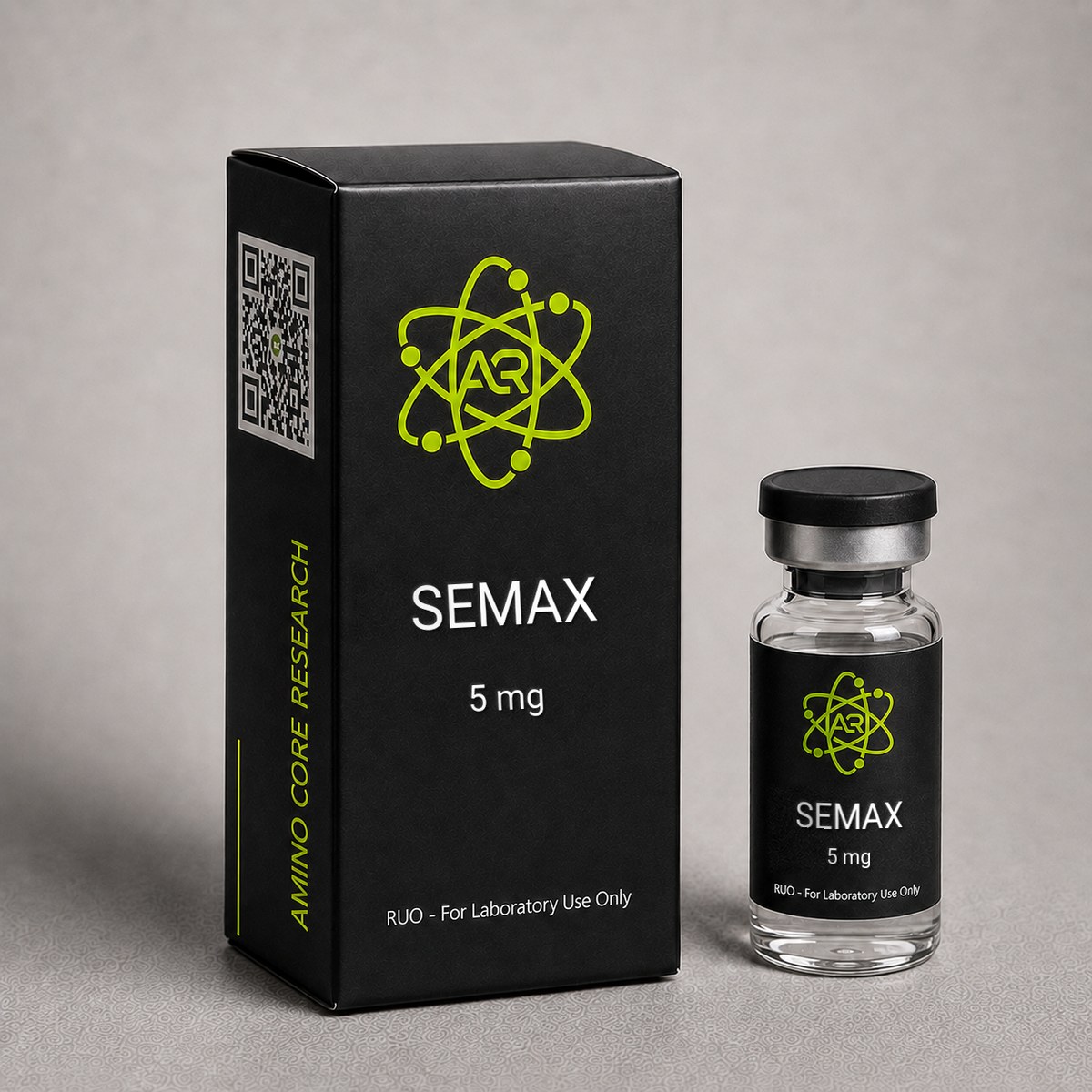
Semax Peptide
Synthetic heptapeptide derived from the ACTH(4-10) fragment. Investigated for its interaction with neurotrophic factor expression pathways.
$45.00
In stock — ships next business day
Quick Facts
| SKU | ACR-SEMAX |
|---|---|
| CAS Number | 80714-61-0 |
| Molecular Formula | C37H51N9O10S |
| Molecular Weight | 813.93 g/mol |
| Sequence | Met-Glu-His-Phe-Pro-Gly-Pro |
| Purity | ≥99% |
| Physical Form | Lyophilized Powder |
| Storage | Store at -20°C |
What is Semax?
Semax is a synthetic heptapeptide (Met-Glu-His-Phe-Pro-Gly-Pro, MEHFPGP) with MW 813.93 g/mol and CAS 80714-61-0. It consists of the ACTH(4-7) fragment (Met-Glu-His-Phe) with a C-terminal Pro-Gly-Pro stability tail. Developed at the Institute of Molecular Genetics, Russian Academy of Sciences, Semax is approved in Russia and Ukraine as a nootropic and neuroprotective medication.
Unlike ACTH, Semax has no steroidogenic or hormonal activity — it exclusively activates the neurotrophic and neuroprotective pathways associated with the ACTH(4-7) fragment. Research demonstrates robust BDNF and NGF upregulation, making it one of the most potent peptide-based neurotrophic enhancers studied.
Mechanism of Action
BDNF/NGF Upregulation: Semax increases BDNF (Brain-Derived Neurotrophic Factor) and NGF (Nerve Growth Factor) expression in the hippocampus and cortex. BDNF promotes neuroplasticity, synaptogenesis, and long-term potentiation (LTP) — the cellular basis of memory formation.
TrkB Receptor Activation: Through BDNF upregulation, Semax indirectly activates TrkB receptors, triggering PI3K/Akt and MAPK/ERK survival and growth pathways in neurons.
Dopamine/Serotonin Modulation: Semax influences catecholamine metabolism, increasing dopamine and serotonin turnover in the prefrontal cortex and striatum, supporting attention, motivation, and mood.
Neuroprotection: Semax reduces oxidative stress in neural tissue by upregulating endogenous antioxidant enzymes and inhibiting lipid peroxidation in ischemic models.
Research & Clinical Studies
Neuroprotective Research in Stroke Models
Semax demonstrated significant neuroprotection in cerebral ischemia research:
- Reduced infarct volume by up to 30% in middle cerebral artery occlusion (MCAO) models
- Improved neurological deficit scores
- Modulated expression of 1,000+ genes in ischemic brain tissue (whole-transcriptome analysis)
- Approved in Russia for acute ischemic stroke treatment at 1% intranasal concentration
[1] Dmitrieva VG et al. Semax and Pro-Gly-Pro activate the transcription of neurotrophins and their receptor genes after cerebral ischemia. Cell Mol Neurobiol. 2010;30(5):737-748. PubMed ↗
Cognitive Enhancement Research
Semax cognitive research demonstrates improvements across multiple domains: enhanced attention and working memory in healthy volunteers, improved learning acquisition speed in animal models, protection against scopolamine-induced amnesia (cholinergic model), and enhanced long-term potentiation (LTP) in hippocampal slice preparations. The cognitive effects correlate with BDNF upregulation in hippocampal CA1 and dentate gyrus regions.
Gene Expression: Transcriptomic Analysis
Whole-genome expression profiling of ischemic rat brain tissue treated with Semax revealed modulation of 1,000+ genes. Major clusters: neurotrophic factors (BDNF, NGF, NT-3, NT-4), anti-inflammatory mediators, vascular endothelial growth factors, and anti-apoptotic genes. This transcriptomic breadth explains why Semax shows efficacy across multiple neurological research models despite being a small heptapeptide.
[1] Dmitrieva VG et al. Semax and Pro-Gly-Pro activate the transcription of neurotrophins and their receptor genes after cerebral ischemia. Cell Mol Neurobiol. 2010;30(5):737-748. PubMed ↗
Semax and Optic Nerve Research
One of the most distinctive translational research applications of Semax has been in the optic nerve and broader visual-system neuroprotection literature, an area dominated by Russian clinical investigators beginning in the late 1990s. Optic neuropathies — including ischemic, traumatic, glaucomatous, and toxic forms — involve progressive loss of retinal ganglion cells (RGCs) and their axons, with secondary degeneration of the optic nerve and downstream lateral geniculate pathways. The rationale for studying Semax in this context arises from its well-characterized capacity to upregulate brain-derived neurotrophic factor (BDNF) and nerve growth factor (NGF) expression, both of which are established survival factors for RGCs.
Mechanistic rationale: RGCs depend on retrograde neurotrophic support transported from central targets via the optic nerve. When this support is interrupted by ischemia, compression, or axonal injury, RGCs undergo apoptosis within days to weeks. Semax has been shown in rodent CNS models to rapidly elevate BDNF mRNA and protein within the hippocampus and basal forebrain, and to enhance TrkB receptor signaling. In ocular preclinical work, intranasal delivery is hypothesized to permit direct nose-to-brain transport along olfactory and trigeminal pathways, bypassing the blood-retinal and blood-brain barriers and reaching the optic pathway with relatively high local exposure. Additional proposed mechanisms include attenuation of glutamate excitotoxicity, modulation of microglial activation, upregulation of antioxidant defenses, and enhancement of cerebral and retinal microcirculation — the latter relevant to ischemic optic neuropathies.
Preclinical findings: In rodent models of optic nerve crush and retinal ischemia-reperfusion, Semax administration has been associated with increased RGC survival, preservation of nerve-fiber-layer thickness on histology, and improved electroretinographic (ERG) and visual-evoked-potential (VEP) responses compared with vehicle controls. Effects have been attributed both to direct trophic support of RGCs via BDNF/NGF upregulation and to indirect vascular and anti-inflammatory actions.
Clinical research (Russian investigators): A series of open-label and controlled studies conducted primarily at Russian ophthalmology centers reported improvements in visual acuity, visual-field sensitivity, and electrophysiological parameters in patients with optic nerve atrophy of various etiologies (post-traumatic, ischemic, and inflammatory) following courses of intranasal Semax, typically as adjunctive therapy. Polunin and colleagues described improved visual function and electrophysiological recovery in patients with partial optic nerve atrophy treated with intranasal Semax preparations. It should be emphasized that much of this literature is published in Russian-language journals, sample sizes are modest, and methodological standards differ from contemporary Western regulatory trials; consequently, these findings are best interpreted as hypothesis-generating preclinical/early-clinical evidence rather than definitive efficacy data.
Position within neuro-ophthalmology research: Semax remains one of the few small peptides with a published body of work addressing visual-pathway neuroprotection, alongside investigational candidates such as PEDF-derived peptides, citicoline, and brimonidine. Its short half-life, low molecular weight, and intranasal compatibility make it an attractive scaffold for further mechanistic study, including questions about whether BDNF-mediated RGC protection translates across species and injury models. Current research interest focuses on combination paradigms (e.g., Semax with antioxidants or vascular modulators) and on biomarker-guided patient stratification in optic neuropathy models.
[1] Dolotov OV, Karpenko EA, Inozemtseva LS, et al. Semax, an analog of adrenocorticotropin (4-10), binds specifically and increases levels of brain-derived neurotrophic factor protein in rat basal forebrain. J Neurochem. 2006;97 Suppl 1:82-86. PubMed ↗
Semax Variants: N-Acetyl Semax and Semax Amidate
Two modified Semax variants exist for research: N-Acetyl Semax (NASA) has an acetyl group on the N-terminal methionine, providing enhanced resistance to aminopeptidase degradation and potentially increased potency. Semax Amidate has the C-terminal carboxyl group amidated, further improving metabolic stability. Both variants maintain the same ACTH(4-7)-PGP core mechanism but with pharmacokinetic improvements. Research comparing the three forms suggests NASA may have slightly longer duration of action.
Chemical Properties
| Sequence | Met-Glu-His-Phe-Pro-Gly-Pro (MEHFPGP / ACTH4-7-PGP) |
|---|---|
| Formula | C₃₇H₅₁N₉O₁₀S |
| MW | 813.93 g/mol |
| CAS | 80714-61-0 |
| Contains | 1× Met (oxidation-sensitive), 1× His (pH-sensitive) |
| Purity | ≥99% HPLC |
Handling & Reconstitution
Reconstitution vehicles: Semax dissolves readily in aqueous buffers due to its hydrophilic character (calculated logP ≈ -2.1). Suitable vehicles for in vitro research include bacteriostatic water (0.9% benzyl alcohol), preservative-free 0.9% sodium chloride, phosphate-buffered saline (pH 7.2-7.4), or sterile water for injection. For cell-culture experiments, dissolve in serum-free medium or HBSS immediately before addition to avoid extracellular degradation. Semax is freely soluble at concentrations exceeding 10 mg/mL, so dilution rather than solubility is the practical concern.
Standard preparation (5 mg vial):
- Add 1.0 mL diluent → 5 mg/mL (0.5% solution) — common stock for in vitro studies.
- Add 0.5 mL diluent → 10 mg/mL (1.0% solution) — corresponds to the concentration used in much of the Russian intranasal literature.
- Add 5.0 mL diluent → 1 mg/mL (0.1% solution) — corresponds to the lower-concentration formulation also extensively studied.
Reconstitution technique:
- Allow lyophilized vial and diluent to equilibrate to room temperature in a desiccator (prevents condensation on the cold peptide cake).
- Inject diluent down the inner wall of the vial rather than directly onto the powder — this minimizes foaming and shear stress.
- Swirl gently for 30-60 seconds; do not vortex vigorously, as cavitation introduces O₂ and accelerates Met-1 oxidation.
- Allow to stand 2-5 minutes to ensure complete dissolution; the solution should be clear and colorless.
- Where feasible, perform reconstitution under inert atmosphere (argon-purged glove bag or septum vial with N₂ overlay).
Methionine handling considerations: The N-terminal Met residue is the dominant chemical-stability liability. Practical mitigations during reconstitution:
- Use freshly opened, oxygen-low diluent. Bacteriostatic water that has been repeatedly accessed accumulates dissolved O₂.
- Consider degassing diluent by brief sonication under vacuum or by bubbling argon for 5 minutes prior to use.
- Avoid metal needles in contact with concentrated stock when possible; trace Fe/Cu from stainless steel can catalyze oxidation. Polypropylene tips are preferred for serial dilutions.
- For long working sessions, keep the reconstituted vial on ice and shielded from light.
Intranasal formulation context (preclinical / Russian literature): Much of the published Semax pharmacology is based on 0.1% and 1% intranasal solutions delivered to rodents at 50-250 μg/kg. These concentrations are referenced here only to contextualize literature dosing for in vitro and animal study design; they are not human-use instructions. For murine intranasal administration in research, 5-10 μL per nostril of 0.1% solution is a commonly cited paradigm.
Aliquoting and working stocks: Prepare single-use aliquots (10-100 μL) in low-protein-binding polypropylene tubes, snap-freeze on dry ice, and store at -20°C or -80°C. Avoid more than 2-3 freeze-thaw cycles. Working dilutions in cell culture media should be prepared fresh on the day of use.
Sterility: For cell-culture or in vivo animal studies, filter reconstituted stock through a 0.22 μm low-protein-binding PVDF or PES filter. Pre-wet the filter with vehicle and discard the first 50 μL to minimize peptide adsorption losses.
Storage & Stability
Lyophilized powder: Store at -20°C in sealed, desiccated containers for up to 24 months from date of manufacture. For long-term archival storage (>24 months), -80°C is preferred, though repeated thermal cycling between -80°C and ambient should be avoided. Lyophilized Semax (Met-Glu-His-Phe-Pro-Gly-Pro, MW 813.9 Da) is reasonably stable in the solid state due to restricted molecular mobility, but the N-terminal methionine residue remains the principal site of chemical degradation.
Reconstituted solution: Once dissolved in aqueous vehicle, store at 2-8°C and use within 10-14 days for routine research applications. For quantitative pharmacological studies requiring strict potency, aliquot and use within 7 days, as gradual oxidation of Met-1 to methionine sulfoxide can alter receptor binding kinetics and pharmacodynamics. Avoid repeated freeze-thaw of reconstituted solution; single-use aliquots stored at -20°C are preferred when extended storage is required.
Methionine oxidation — the central stability concern: The N-terminal methionine sulfur is highly susceptible to oxidation by dissolved O₂, peroxides, trace transition metals (Fe³⁺, Cu²⁺), and UV light. Oxidation produces methionine sulfoxide (Met(O)) and, under harsher conditions, methionine sulfone. Met(O)-Semax exhibits significantly reduced affinity for melanocortin receptors and altered BDNF-modulating activity, so even partial oxidation can confound experimental results.
Recommended protective measures:
- Light protection: Store in amber glass vials or wrap clear vials in foil. Avoid prolonged bench-top exposure under fluorescent lighting.
- Oxygen exclusion: Purge headspace with argon or high-purity nitrogen before sealing. Argon is preferred (denser than air, displaces O₂ more effectively).
- Desiccation: Include molecular sieve or silica desiccant in the storage container. Moisture accelerates both oxidation and peptide-bond hydrolysis.
- Antioxidant additives (research-only): Some investigators include 0.01% L-methionine or 1 mM ascorbate as a sacrificial antioxidant in reconstitution buffers; document and report any additives.
- Temperature control: Allow vials to equilibrate to room temperature in a desiccator before opening to prevent moisture condensation on cold surfaces.
Solution-phase stability data: Aqueous Semax at neutral pH (7.0-7.4) and 4°C retains >90% intact peptide by HPLC for approximately 10-14 days under inert atmosphere; at 25°C, measurable Met oxidation can occur within 48-72 hours. Acidic pH (3-5) slows oxidation but may promote slow Asp/Glu-mediated cleavage over weeks. Phosphate-buffered saline is acceptable; avoid Tris buffers containing trace metal contaminants unless EDTA (0.1 mM) is added.
Stability indicators: Visible cues of degradation include solution discoloration (yellowing), particulate formation, or odor. Analytical confirmation should rely on RP-HPLC (monitoring for the characteristic Met(O) shoulder peak eluting ~1 min earlier than parent), mass spectrometry (+16 Da adduct indicating sulfoxide), or amino acid analysis. Periodic QC of reference lots is recommended for laboratories maintaining long-term Semax stocks.
Shipping considerations: Lyophilized Semax tolerates ambient shipping for 5-7 days without significant degradation, but cold-chain shipping with gel packs is recommended for international transit or summer-month deliveries.
Frequently Asked Questions
Does Semax affect ACTH or cortisol?
No. Despite being derived from ACTH(4-7), Semax has no steroidogenic activity and does not increase cortisol or ACTH levels. The fragment retains only the neurotrophic activity of ACTH, not the endocrine signaling.
What is the difference between Semax and N-Acetyl Semax?
N-Acetyl Semax (NASA) has an acetyl group on the N-terminal methionine, providing enhanced stability and potentially increased potency. Standard Semax may have slightly faster onset; NASA has longer duration.
What is BDNF and why does it matter?
BDNF (Brain-Derived Neurotrophic Factor) promotes neuroplasticity, synaptogenesis, and long-term potentiation (LTP). Low BDNF is associated with depression, cognitive decline, and neurodegeneration. Semax robustly upregulates BDNF expression.
Is Semax approved anywhere as medication?
Yes, Semax is approved in Russia and Ukraine as a prescription nootropic and neuroprotective medication. It is available as a nasal spray in two concentrations: 0.1% (nootropic, cognitive enhancement) and 1% (neuroprotective, acute stroke treatment).
What conditions is Semax approved for in Russia?
Semax is approved for: cognitive decline and memory disorders (0.1% nasal spray), acute ischemic stroke (1% nasal spray, within first 12 hours), optic nerve atrophy (0.1% drops), and ADHD in children (0.1% nasal spray). It has been in clinical use since the 1990s.
Is Semax addictive?
No evidence of dependence or tolerance. Semax works through neurotrophic (BDNF) and neuroprotective mechanisms rather than direct neurotransmitter agonism. It does not activate reward circuits or produce euphoria. Russian pharmacovigilance data over 25+ years of clinical use reports no addiction cases.
For laboratory and research use only. This product is not for human or veterinary use. It is not a drug, supplement or food.
This product is not FDA approved for any indication, and is not intended to diagnose, treat, cure, or prevent any disease. All product information is derived from published preclinical research and does not constitute medical advice or claims.