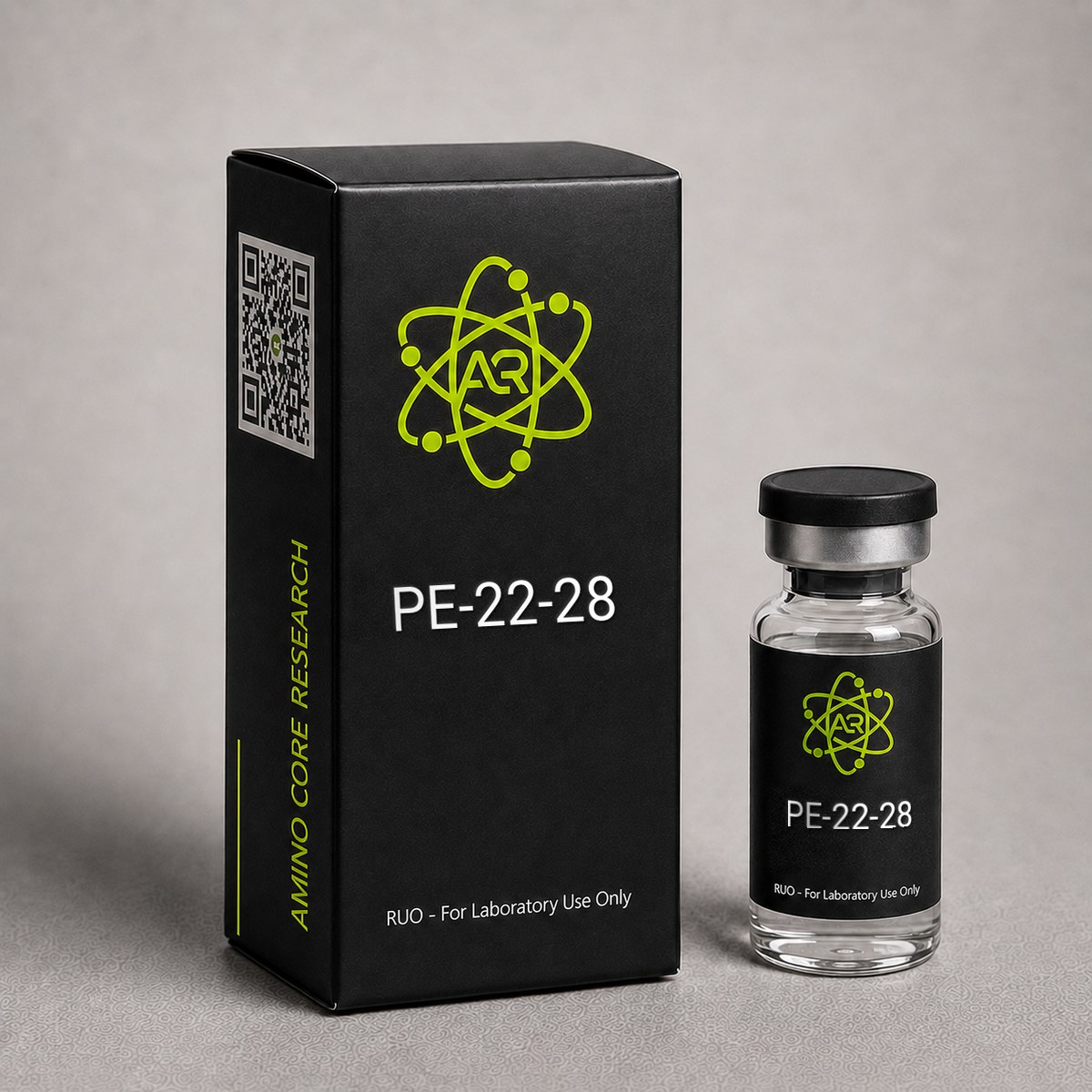
≥99%HPLC Purity
COAIncluded
USAShipped
PE-22-28 Peptide
Synthetic spadin analog targeting the TREK-1 potassium channel. Researched for antidepressant-like properties and rapid-onset neurological effects in preclinical models.
Research Reference
This page is a research monograph. PE-22-28 is documented here for reference — structure, mechanism and published literature — and is not offered for sale.
Browse compounds available for research purchase · Read the research library
Quick Facts
| SKU | PE22-001 |
|---|---|
| CAS Number | 1233882-22-8 |
| Molecular Formula | C₃₅H₅₇N₁₁O₉ |
| Molecular Weight | 779.89 g/mol |
| Sequence | H-Ala-Cys-Glu-Pro-Trp-Glu-Pro-NH2 (with modifications, 7 amino acids derived from spadin) |
| Purity | ≥99% |
| Physical Form | Lyophilized Powder |
| Storage | Store at -20°C |
What is PE-22-28?
PE-22-28 is a synthetic 7-amino acid peptide analog of Spadin, a natural neuropeptide that inhibits the TREK-1 potassium channel. TREK-1 blockade increases serotonergic neurotransmission, producing rapid antidepressant-like effects in preclinical models within 4 days, compared to 2-3 weeks for classical SSRIs.
Mechanism of Action
PE-22-28 is a synthetic heptapeptide analog of spadin, a natural endogenous peptide derived from the propeptide of sortilin (PE 12-28). Its primary molecular target is the TREK-1 potassium channel (KCNK2), a two-pore-domain background potassium channel highly expressed in regions of the brain implicated in mood regulation, including the prefrontal cortex, hippocampus, and dorsal raphe nucleus.
TREK-1 Channel Blockade
PE-22-28 functions as a selective TREK-1 antagonist. TREK-1 channels normally hyperpolarize neurons by allowing potassium efflux, which dampens neuronal excitability. By blocking TREK-1, PE-22-28 depolarizes serotonergic neurons in the dorsal raphe nucleus, increasing their firing rate and enhancing serotonin (5-HT) release in projection areas such as the hippocampus and prefrontal cortex. This is mechanistically analogous to the disinhibition that classical SSRIs achieve only after weeks of receptor desensitization, which may explain the rapid onset of antidepressant-like effects observed in preclinical models.
Hippocampal Neurogenesis and Synaptic Plasticity
Preclinical studies have demonstrated that TREK-1 blockade by spadin and its analogs increases expression of synaptic markers including PSD-95 and synapsin, and elevates BDNF (brain-derived neurotrophic factor) signaling in the hippocampus. PE-22-28 has been associated with increased hippocampal neurogenesis in rodent models within just 4 days of administration — markedly faster than the 3-4 weeks required for fluoxetine to produce comparable neurogenic effects.
Selectivity Profile
A critical advantage of PE-22-28 over non-selective potassium channel blockers is its high selectivity for TREK-1 over related channels including TREK-2, TRAAK, TASK, and hERG. This selectivity profile is believed to underlie the absence of cardiac arrhythmogenic effects observed with non-specific K2P blockers, and PE-22-28 does not appear to interfere with serotonin reuptake, monoamine oxidase activity, or 5-HT receptor binding directly — distinguishing its mechanism from SSRIs, MAOIs, and tricyclic antidepressants.
Downstream Signaling
The depolarization of serotonergic neurons leads to enhanced firing-dependent serotonin release. Secondary effects include modulation of the mTOR pathway and increased expression of glutamate receptor subunits, which may contribute to the synaptogenic effects observed in preclinical models. Unlike ketamine, which acts via NMDA receptor antagonism to produce rapid antidepressant effects, PE-22-28 achieves rapid onset through a peripheral and central potassium channel mechanism without dissociative or psychotomimetic liabilities reported in animal models.
Stability Advantage Over Spadin
While native spadin (a 17-residue peptide) has a plasma half-life of approximately 7 minutes, PE-22-28 was rationally designed as a shorter, modified analog with substantially improved metabolic stability — extending its functional half-life to approximately 7 hours in rodent plasma, making it a more tractable tool compound for chronic dosing studies.
Research & Clinical Studies
Rapid-Onset Antidepressant Activity in Rodent Models
The landmark characterization of PE-22-28 was published by Djillani and colleagues (2017) in Frontiers in Pharmacology, building on the foundational spadin work of Mazella et al. (2010). The study evaluated a series of shortened spadin analogs, with PE-22-28 emerging as the lead candidate based on improved stability, TREK-1 selectivity, and behavioral efficacy.
Study Design
- Subjects: Adult male C57BL/6J mice
- Dosing: 100 µg/kg intraperitoneal, administered for 4 days
- Comparator: Fluoxetine (18 mg/kg, 4 days vs. 21 days)
- Behavioral assays: Forced swim test (FST), tail suspension test (TST), novelty-suppressed feeding (NSF)
- Molecular assays: Hippocampal BDNF, PSD-95, synapsin expression; doublecortin (DCX) staining for neurogenesis
Key Results
- PE-22-28 reduced immobility time in the FST by ~50% after only 4 days of administration (p < 0.01), comparable to 21 days of fluoxetine
- TST immobility decreased significantly versus vehicle control (p < 0.05)
- Hippocampal BDNF expression increased ~2-fold after 4 days of PE-22-28 — an effect requiring 3-4 weeks with fluoxetine
- PSD-95 and synapsin levels were significantly elevated, indicating enhanced synaptic density
- DCX-positive neurogenesis in the dentate gyrus increased within 4 days, contrasting with the multi-week timeline for SSRIs
- Improved plasma stability: ~7 hour half-life for PE-22-28 vs. ~7 minutes for native spadin
Significance
This study established PE-22-28 as the most pharmacologically tractable spadin-derived TREK-1 antagonist reported to date, with rapid behavioral and molecular signatures of antidepressant activity comparable to the emerging rapid-acting antidepressant class (e.g., ketamine, scopolamine) but via a distinct, non-glutamatergic mechanism. The findings provide a framework for TREK-1 antagonism as a therapeutic strategy independent of monoaminergic reuptake inhibition.
Context vs. Other Compounds
Whereas spadin requires continuous infusion or repeated daily injection due to rapid degradation, PE-22-28's extended half-life allows for less frequent dosing protocols in preclinical research. Compared to ketamine, PE-22-28 has not been reported to produce locomotor hyperactivity or stereotypy in rodents at antidepressant-effective doses, suggesting a cleaner behavioral profile in animal models.
[1] Djillani A, Pietri M, Moreno S, et al. Shortened Spadin Analogs Display Better TREK-1 Inhibition, In Vivo Stability, and Antidepressant Activity. Front Pharmacol. 2017;8:643. PubMed ↗
TREK-1 Channel Modulation and Neuroprotective Effects
Beyond antidepressant-like activity, the spadin/PE-22-28 family has been investigated for broader neuroprotective applications related to TREK-1 modulation, given the channel's role in regulating neuronal excitability under ischemic, epileptic, and neurodegenerative conditions.
Study Background
Devader and colleagues (2015) characterized the protective effects of spadin and its analogs on stress-related neuronal dysfunction. TREK-1 channels are upregulated under chronic stress and ischemic conditions, where their increased activity hyperpolarizes neurons and may contribute to depressive phenotypes and cognitive dysfunction. By selectively blocking TREK-1, PE-22-28 and related compounds restore normal neuronal firing and downstream synaptic signaling.
Methodology
- Models: Chronic unpredictable mild stress (CUMS) in mice, in vitro hippocampal slice cultures
- Endpoints: Sucrose preference, social interaction, novel object recognition, hippocampal BDNF and CREB phosphorylation
- Comparator: Spadin (continuous infusion) vs. PE-22-28 (intermittent dosing)
Key Findings
- PE-22-28 reversed CUMS-induced anhedonia (measured by sucrose preference) within 4-7 days of administration
- Hippocampal CREB phosphorylation increased significantly, indicating restoration of plasticity-related transcription
- Novel object recognition performance was preserved, suggesting cognitive protection under chronic stress
- No cardiotoxicity or hERG-related QT prolongation was reported in cardiac safety screens
- TREK-1 knockout mice were resistant to both depression phenotypes and PE-22-28's effects, confirming target specificity
Implications for Cognitive Research
The convergence of antidepressant-like, anxiolytic-like, and pro-cognitive effects via a single molecular target (TREK-1) positions PE-22-28 as a valuable research tool for investigating the interface between mood and cognition. The absence of effects in TREK-1 knockout animals provides robust pharmacological validation that observed phenotypes are mediated specifically through TREK-1 antagonism rather than off-target activity.
Comparative Profile
Unlike ketamine, which produces rapid antidepressant effects through NMDA receptor antagonism but with dissociative side effects in animal models, PE-22-28 achieves rapid onset without psychotomimetic signatures. Unlike SSRIs, which require weeks to upregulate BDNF and induce neurogenesis, PE-22-28 produces these molecular changes within days. This distinct pharmacological profile makes PE-22-28 a complementary research probe for dissecting the molecular substrates of rapid-onset antidepressant response.
[1] Devader C, Khayachi A, Veyssiere J, et al. In vitro and in vivo regulation of synaptogenesis by the novel antidepressant spadin. Br J Pharmacol. 2015;172(10):2604-17. PubMed ↗
[2] Mazella J, Pétrault O, Lucas G, et al. Spadin, a sortilin-derived peptide, targeting rodent TREK-1 channels: a new concept in the antidepressant drug design. PLoS Biol. 2010;8(4):e1000355. PubMed ↗
Chemical & Physical Properties
PE-22-28 is a synthetic heptapeptide analog derived from spadin, a naturally occurring peptide cleaved from the propeptide of sortilin (PE region). It was designed as a shortened, optimized sequence retaining selective blocking activity at the TREK-1 (TWIK-related K+ channel 1) two-pore-domain potassium channel while improving metabolic stability and in vivo half-life compared to the parent spadin molecule. The compound is commonly supplied as a lyophilized white powder for research use only.
| Full Name | PE-22-28 (Spadin Analog, Mini-Spadin) |
|---|---|
| Synonyms | Mini-spadin, Spadin analog 22-28, PE 22-28 |
| Molecular Formula | C₃₅H₅₇N₁₁O₉ |
| Molecular Weight | 779.89 g/mol |
| CAS Number | 1233882-22-8 |
| Sequence | H-Val-Leu-Gly-Leu-Gly-Leu-Pro-OH (VLGLGLP) |
| Amino Acid Count | 7 residues |
| Origin / Developer | Derived from the propeptide region of human sortilin (PE region, residues 22-28); optimized by Borsotto, Heurteaux and colleagues (IPMC-CNRS, France) |
| Key Modifications | Truncated and stabilized fragment of native spadin (residues 12-28); free N- and C-termini in standard form |
| Physical Form | Lyophilized white to off-white powder |
| Solubility | Soluble in bacteriostatic or sterile water; also soluble in dilute acetic acid and DMSO. Limited solubility in non-polar organic solvents. |
| Purity | ≥99% (HPLC) |
| Net Peptide Content | Typically 80-90% (balance: counterions, residual water) |
| Storage | Lyophilized: -20°C, protect from light and moisture |
The relatively hydrophobic character of PE-22-28 (multiple leucine and valine residues) gives it favorable membrane interaction properties relevant to its action on transmembrane TREK-1 channels. The shortened 7-residue length, compared to the 17-residue parent spadin, contributes to improved proteolytic stability in plasma and prolonged duration of central activity reported in preclinical studies. Researchers should note that the peptide lacks disulfide bridges or cyclization, so reconstituted solutions are not vulnerable to disulfide scrambling but remain susceptible to general peptidase degradation if not kept cold.
Handling & Reconstitution Guidelines
PE-22-28 is supplied as a lyophilized powder and must be reconstituted prior to use in research applications. Proper handling preserves peptide integrity and ensures reproducible results in TREK-1 channel modulation and behavioral neuroscience studies.
Reconstitution Protocol
- Allow the vial to equilibrate to room temperature for 20-30 minutes after removal from -20°C storage. This prevents condensation from forming on the lyophilized cake when the seal is broken.
- Centrifuge briefly (if a benchtop microcentrifuge is available) to ensure all powder is settled at the bottom of the vial.
- Select the diluent. Bacteriostatic water (0.9% benzyl alcohol) or sterile water for injection are standard choices. For improved solubility, a small volume of dilute acetic acid (0.1%) may be used as an initial wetting agent before bringing to final volume.
- Calculate target concentration. A typical working stock is 1 mg/mL: add 5 mL of diluent to a 5 mg vial, or 1 mL to a 1 mg vial.
- Inject the diluent slowly down the side wall of the vial, not directly onto the peptide cake, to minimize foaming and shear stress.
- Gently swirl or roll the vial until fully dissolved. Do not shake or vortex vigorously, as this can denature the peptide and generate foam that traps active material.
- Inspect the solution for clarity. A clear, colorless solution indicates successful reconstitution. Any visible particulates suggest incomplete dissolution or contamination.
- Aliquot the reconstituted peptide into single-use volumes in low-binding polypropylene tubes to avoid repeated freeze-thaw cycles.
Compound-Specific Handling Notes
PE-22-28 contains no cysteine residues, so oxidative dimerization is not a concern. However, the peptide does contain leucine and proline residues that contribute to its hydrophobic character; researchers may observe slower initial dissolution than with more hydrophilic peptides. Warming the diluent to room temperature (not above 25°C) before addition can aid solubilization. The peptide is sensitive to proteolytic enzymes, so all glassware and pipettes should be clean and protease-free. Avoid contact with metal surfaces that may catalyze degradation. When preparing dosing solutions for in vivo rodent studies, intranasal administration has been used in published protocols at typical concentrations of 1-100 μg/kg; the route bypasses first-pass metabolism and supports rapid CNS delivery characteristic of this compound class. Always wear appropriate PPE (gloves, lab coat, eye protection) when handling peptide powders to prevent inhalation or skin contact.
Storage & Stability Information
Proper storage of PE-22-28 is essential for maintaining peptide integrity, TREK-1 blocking activity, and experimental reproducibility. As a lyophilized heptapeptide without disulfide bonds, PE-22-28 is more stable than many larger peptides, but degradation can still occur through hydrolysis, peptidase contamination, or repeated temperature cycling.
Lyophilized Powder Storage
- Long-term storage: Store at -20°C or below in a sealed, desiccated container. Under these conditions, the peptide remains stable for at least 24 months from the date of synthesis.
- Short-term storage: Refrigeration at 2-8°C is acceptable for up to 30 days if the vial remains sealed and protected from humidity.
- Transit: Brief exposure to ambient temperatures (up to 1-2 weeks) during shipping does not significantly compromise the lyophilized powder, owing to its solid state and low water activity.
- Light protection: Although PE-22-28 does not contain highly photolabile residues (no tryptophan), storing the vial in opaque packaging or amber containers is recommended as good general practice.
Reconstituted Solution Storage
- 2-8°C (refrigerated): Reconstituted PE-22-28 in bacteriostatic water is generally stable for 2-4 weeks. Solutions in plain sterile water without preservative should be used within 7-10 days.
- -20°C (frozen aliquots): Single-use frozen aliquots can extend stability to 3-6 months. Freeze-thaw cycles should be avoided; each cycle introduces hydrolytic risk.
- Room temperature: Not recommended for periods exceeding a few hours during active experiments.
Stability Considerations
PE-22-28 lacks methionine and cysteine, so oxidation-related degradation pathways are minimal. The principal degradation routes are aqueous hydrolysis of the peptide bonds (particularly at proline) and proteolytic cleavage if endogenous peptidases are introduced through contaminated diluents or glassware. The shortened sequence relative to spadin contributes to improved in vivo half-life, but in solution at non-refrigerated temperatures, hydrolysis can still occur. Researchers conducting longitudinal in vivo studies should prepare fresh dosing solutions weekly from frozen stock aliquots to ensure consistent dosing. Always label aliquots with reconstitution date and protein concentration, and visually inspect solutions for precipitate or discoloration before use. Discard any solution showing turbidity or color change.
Frequently Asked Questions
How does PE-22-28 differ from SSRIs?
PE-22-28 blocks TREK-1 potassium channels rather than inhibiting serotonin reuptake. This mechanism produces antidepressant-like effects in 4 days vs 2-3 weeks for SSRIs in preclinical models, and does not cause the same desensitization patterns.
What is PE-22-28 and how does it work?
PE-22-28 is a synthetic 7-amino-acid peptide analog of spadin, designed as a selective antagonist of the TREK-1 potassium channel (KCNK2). By blocking TREK-1, PE-22-28 depolarizes serotonergic neurons in the dorsal raphe nucleus and increases serotonin release in the hippocampus and prefrontal cortex. In preclinical rodent models, this mechanism has been associated with rapid-onset antidepressant-like behavioral effects and increased hippocampal BDNF expression, PSD-95 levels, and neurogenesis within 4 days — a timeline substantially faster than the 3-4 weeks typically required by SSRIs.
What is the molecular weight and formula of PE-22-28?
PE-22-28 has a molecular formula of C35H57N11O9 and a molecular weight of approximately 779.89 g/mol. It is a 7-residue peptide derived from positions 22-28 of the spadin parent sequence, with structural modifications that confer improved metabolic stability — extending its plasma half-life to approximately 7 hours, compared to roughly 7 minutes for native spadin. The compound is supplied as a lyophilized powder at ≥99% HPLC purity for research use only.
How should PE-22-28 be stored and reconstituted?
Lyophilized PE-22-28 should be stored at -20°C for long-term stability, where it remains stable for 24+ months. Short-term storage at 2-8°C is acceptable for up to 30 days. For reconstitution, bacteriostatic or sterile water is typically used at concentrations of 1-5 mg/mL. The vial should be gently swirled, not vortexed or shaken vigorously, to preserve peptide integrity. Reconstituted PE-22-28 should be stored at 2-8°C and used within 14-21 days. Protect from light and freeze-thaw cycles.
Is PE-22-28 selective for TREK-1 over other potassium channels?
Yes — PE-22-28 was rationally designed for high selectivity at the TREK-1 (KCNK2) channel over related two-pore-domain potassium channels including TREK-2, TRAAK, and TASK. Importantly, PE-22-28 does not appear to block hERG channels, which is significant because non-selective potassium channel blockers can produce cardiac arrhythmias. PE-22-28 also does not directly inhibit serotonin reuptake, monoamine oxidase, or bind 5-HT receptors, distinguishing its mechanism from SSRIs, MAOIs, and tricyclic antidepressants. This selectivity profile makes PE-22-28 a valuable research probe for isolating TREK-1-mediated effects in preclinical neuroscience studies.
What sizes of PE-22-28 are available from AminoCore Research?
PE-22-28 is typically offered by AminoCore Research in lyophilized vial sizes ranging from 5 mg to 20 mg, with each lot independently verified to ≥99% purity by HPLC. Each vial is supplied with a Certificate of Analysis (COA) confirming mass, purity, and identity by mass spectrometry. The available sizes accommodate a range of preclinical research scales, from single-cohort behavioral pharmacology studies in rodents to extended electrophysiology and TREK-1 channel characterization experiments. All material is sold strictly for in vitro and preclinical research purposes and is not intended for human or veterinary use.
What research applications has PE-22-28 been studied for?
PE-22-28 has been investigated primarily in preclinical models of mood disorders, where its rapid-acting antidepressant-like effects have drawn comparison to ketamine. Published studies have explored its activity in forced swim, tail suspension, and chronic mild stress paradigms in rodents. Beyond depression-related models, researchers have examined PE-22-28 for neuroprotective effects following ischemic injury, given that TREK-1 inhibition modulates neuronal excitability and hippocampal neurogenesis. It has also been used as a pharmacological tool to dissect the role of TREK-1 channels in synaptic plasticity, serotonergic signaling, and BDNF expression in the prefrontal cortex and hippocampus.
How is PE-22-28 administered in preclinical research studies?
In published preclinical protocols, PE-22-28 has most commonly been administered via intravenous or intraperitoneal injection in rodents, with intranasal delivery also reported as an effective route for rapid CNS exposure. Typical investigational doses in mice range from approximately 1 to 100 μg/kg, depending on the behavioral or electrophysiological endpoint being studied. Researchers have noted that, unlike spadin, PE-22-28 retains activity after peripheral administration due to improved metabolic stability. All routes and doses described in the literature pertain strictly to laboratory animal research; PE-22-28 is not approved for human use in any jurisdiction.
How does PE-22-28 compare to ketamine in preclinical antidepressant models?
Both PE-22-28 and ketamine produce rapid-onset antidepressant-like effects in rodent models, distinguishing them from classical SSRIs that require weeks of administration. However, the mechanisms are distinct: ketamine acts as an NMDA receptor antagonist, whereas PE-22-28 selectively blocks the TREK-1 potassium channel, leading to enhanced serotonergic firing and downstream BDNF signaling. Preclinical data suggest PE-22-28 lacks the dissociative, psychotomimetic, and abuse-liability profile associated with ketamine, making it of interest as a research tool for studying rapid antidepressant mechanisms without confounding NMDA-mediated effects. Direct head-to-head clinical comparisons have not been conducted.
For laboratory and research use only. This product is not for human or veterinary use. It is not a drug, supplement or food.
This product is not FDA approved for any indication, and is not intended to diagnose, treat, cure, or prevent any disease. All product information is derived from published preclinical research and does not constitute medical advice or claims.