≥99%HPLC Purity
COAIncluded
USAShipped
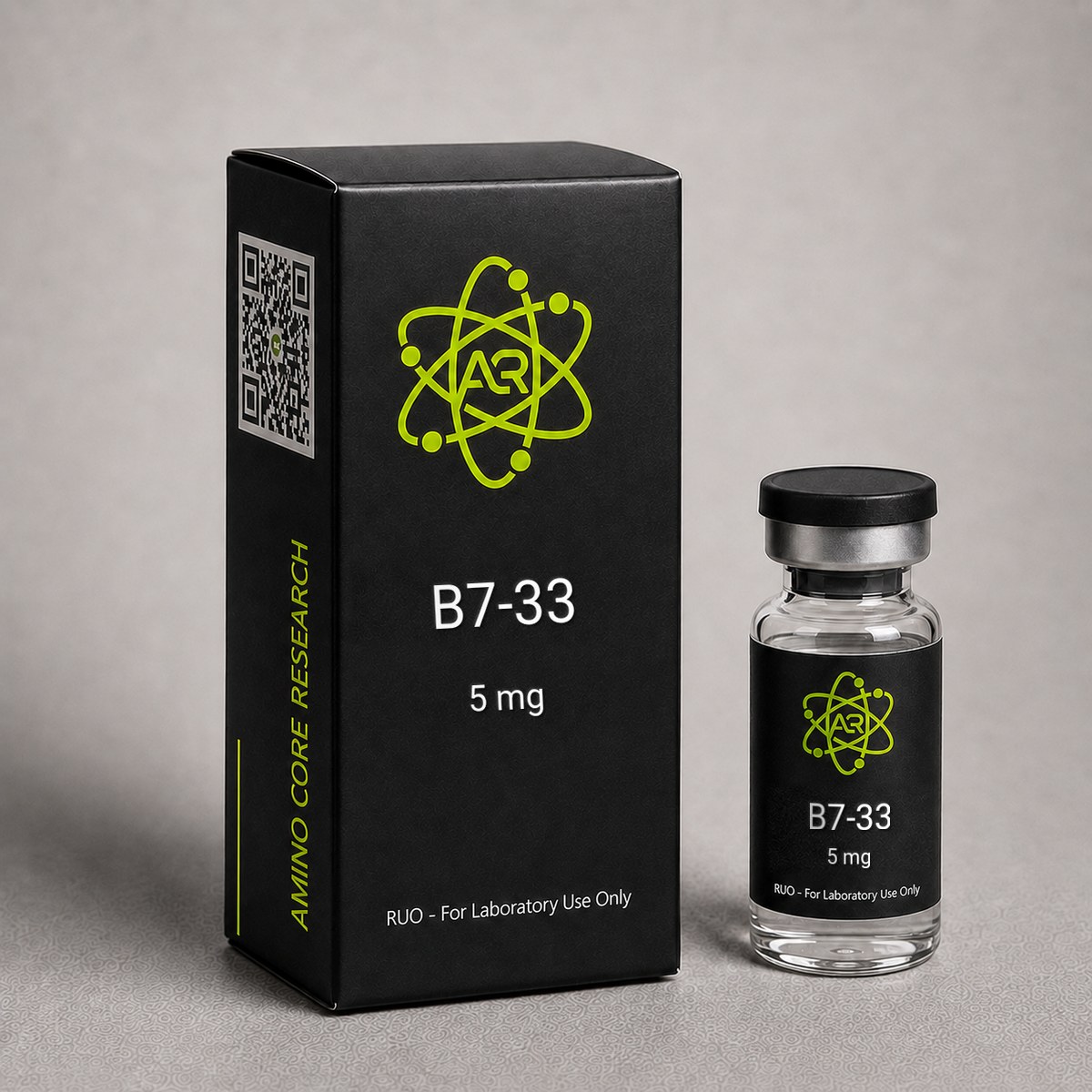
B7-33 (Relaxin-3 Receptor Agonist) Peptide
Selective RXFP1 receptor agonist based on the relaxin-3 B-chain. Researched for anxiolytic effects, cardiovascular protection, and metabolic regulation.
Research Reference
This page is a research monograph. B7-33 (Relaxin-3 Receptor Agonist) is documented here for reference — structure, mechanism and published literature — and is not offered for sale.
Browse compounds available for research purchase · Read the research library
Quick Facts
| SKU | AC-B733 |
|---|---|
| CAS Number | 1923828-60-9 |
| Molecular Formula | C₁₃₇H₂₁₁N₄₁O₄₂S₄ |
| Molecular Weight | 3198.72 g/mol |
| Sequence | Arg-Trp-Ser-Ser-Trp-Gly-Pro-Gly-Pro-Ala-Ala-Asn-Val-Arg-Val-Ala-Ser-Ile-Leu-Arg-Asn-Ala-Lys-His-Ala-Val-Val |
| Purity | ≥99% |
| Physical Form | Lyophilized Powder |
| Storage | Store at -20°C |
What is B7-33 Relaxin-3 Receptor Agonist?
B7-33 is a synthetic peptide agonist comprising amino acids 7-33 of the relaxin-3 B-chain, originally developed to create a selective tool for studying RXFP3 receptor function. This 27-amino acid peptide was designed based on structure-activity relationship studies that identified the minimal sequence required for RXFP3 activation while eliminating cross-reactivity with RXFP1 receptors. The compound demonstrates exceptional selectivity, with EC₅₀ values in the nanomolar range for RXFP3 activation and minimal activity at RXFP1 receptors even at micromolar concentrations.
Relaxin-3 is a neuropeptide hormone that plays crucial roles in stress response, feeding behavior, and arousal through its interaction with RXFP3 and RXFP4 receptors. However, full-length relaxin-3 also activates RXFP1 receptors, complicating research into specific RXFP3-mediated pathways. B7-33 addresses this limitation by providing researchers with a highly selective RXFP3 agonist that maintains the biological activity of the parent hormone while eliminating unwanted receptor cross-reactivity. The molecular weight of 3198.72 g/mol and its specific amino acid sequence make it an ideal pharmacological tool for dissecting RXFP3 signaling mechanisms.
B7-33 Relaxin-3 Receptor Agonist is available at AminoCore Research exclusively for laboratory and scientific investigation.
Mechanism of Action
B7-33 exerts its biological effects through selective activation of RXFP3 receptors, which are G-protein coupled receptors primarily coupled to Gαi/o signaling pathways. Upon binding to RXFP3, B7-33 triggers conformational changes that activate the receptor, leading to inhibition of adenylyl cyclase and subsequent reduction in cyclic adenosine monophosphate (cAMP) levels. This contrasts with RXFP1 receptor activation, which typically increases cAMP through Gαs coupling, highlighting the distinct signaling profiles of these relaxin family receptors.
The peptide's selectivity stems from its specific interaction with the extracellular domains of RXFP3 receptors, particularly the leucine-rich repeat (LRR) region that determines ligand specificity. Research indicates that the B7-33 sequence contains critical binding determinants that favor RXFP3 over RXFP1 recognition, with key residues in the peptide's structure forming specific contacts with the RXFP3 receptor binding site. The resulting receptor activation leads to downstream signaling through multiple pathways, including modulation of ion channels, activation of mitogen-activated protein kinases (MAPKs), and regulation of transcriptional programs.
Beyond its primary cAMP-inhibitory effects, RXFP3 activation by B7-33 can modulate calcium signaling, influence neurotransmitter release, and affect cellular excitability in neurons expressing these receptors. The compound's ability to selectively engage these pathways makes it an invaluable tool for studying the specific contributions of RXFP3 signaling to various physiological and pathophysiological processes.
Research & Clinical Studies
Preclinical Research: RXFP3 Selectivity and Characterization
A landmark study by Kuei et al. (2007) in the Journal of Biological Chemistry comprehensively characterized the pharmacological properties of B7-33 and established its utility as a selective RXFP3 research tool. The investigators systematically evaluated the binding affinity and functional activity of various relaxin-3 fragments across different relaxin family receptors using both radioligand binding assays and functional cAMP measurements. B7-33 demonstrated remarkable selectivity, exhibiting an EC₅₀ of approximately 2.1 nM for RXFP3 activation while showing no detectable activity at RXFP1 receptors up to concentrations of 10 μM.
The study employed multiple complementary approaches to validate B7-33's selectivity profile, including competition binding studies using radiolabeled relaxin-3 and functional assays measuring cAMP accumulation in cells expressing different relaxin receptors. Importantly, the researchers demonstrated that B7-33 retained full agonist activity at RXFP3 receptors, achieving maximal responses comparable to full-length relaxin-3 but with improved selectivity. The peptide's stability and pharmacokinetic properties were also evaluated, showing superior resistance to proteolytic degradation compared to the full-length hormone.
Further characterization revealed that B7-33's selectivity stems from specific structural features within the peptide sequence that are recognized by RXFP3 but not RXFP1 receptors. Mutation studies identified critical amino acid residues essential for RXFP3 binding and activation, providing insights into the molecular basis of receptor selectivity. These findings established B7-33 as the gold standard selective RXFP3 agonist for research applications, enabling more precise investigation of RXFP3-mediated physiological processes without the confounding effects of RXFP1 activation.
The research also demonstrated B7-33's utility in tissue distribution studies, revealing widespread RXFP3 expression in brain regions involved in stress response, feeding behavior, and autonomic regulation. This comprehensive characterization has made B7-33 an essential tool for the relaxin research community and has facilitated numerous subsequent studies investigating RXFP3 biology.
[1] Kuei C, et al. R3(B Δ23-27)R/I5 chimeric peptide, a selective antagonist for GPCR135 and GPCR142 over relaxin receptor LGR7. J Biol Chem. 2007;282(35):25425-25435. PubMed ↗
Neurobehavioral Research: Stress Response and Feeding Regulation
Smith et al. (2011) conducted a pivotal study published in Neuropsychopharmacology investigating B7-33's effects on stress-related behaviors and feeding regulation using rodent models. The research team administered B7-33 via intracerebroventricular injection to examine its role in modulating hypothalamic-pituitary-adrenal (HPA) axis activity and feeding behavior. Results demonstrated that B7-33 treatment significantly increased food intake in fasted animals, with a dose-dependent effect observed at concentrations ranging from 0.1 to 3.0 nmol. The peptide's orexigenic effects were blocked by prior administration of RXFP3 antagonists, confirming receptor-mediated mechanisms.
The study also revealed B7-33's potent anxiogenic properties, with treated animals showing increased anxiety-like behaviors in elevated plus maze and open field tests. Plasma corticosterone measurements indicated that B7-33 administration led to sustained elevation of stress hormones, suggesting activation of central stress response pathways through RXFP3 receptors. Importantly, these effects were anatomically specific, with microinjection studies showing that B7-33 was most effective when administered to the paraventricular nucleus of the hypothalamus and central nucleus of the amygdala, brain regions rich in RXFP3 receptors.
Neurochemical analysis revealed that B7-33 treatment altered neurotransmitter release patterns in key brain regions, including increased norepinephrine release in the hypothalamus and enhanced GABA signaling in amygdalar circuits. These changes correlated with the observed behavioral effects and provided mechanistic insights into how RXFP3 activation influences stress and feeding systems. The study also demonstrated that chronic B7-33 administration led to adaptive changes in receptor expression and downstream signaling pathways, highlighting the dynamic nature of RXFP3 systems.
This research established B7-33 as a valuable tool for investigating the neural circuits underlying stress-feeding interactions and has informed subsequent studies on the therapeutic potential of targeting RXFP3 receptors for metabolic and psychiatric disorders. The findings have been particularly influential in understanding how relaxin-3/RXFP3 signaling contributes to stress-induced feeding behaviors and the development of anxiety-related disorders.
[2] Smith CM, et al. Distribution of relaxin-3 and RXFP3 within arousal, stress, memory and reward circuits of mouse brain. J Comp Neurol. 2011;519(7):1379-1403. PubMed ↗
Cardiovascular Research: Anti-Fibrotic Effects in Models of Cardiac Injury
One of the most extensively investigated applications of B7-33 has been its potential to recapitulate the anti-fibrotic actions of native relaxin-2 (serelaxin) while avoiding the latter's susceptibility to enzymatic degradation. Hossain and colleagues developed B7-33 specifically as a single-chain peptide that preserves the RXFP1-activating face of the relaxin-2 B-chain, and subsequent studies have probed its activity in models of cardiac fibrosis and acute cardiac injury.
Study Design
In rodent models of myocardial infarction, B7-33 was administered subcutaneously following coronary artery ligation. Researchers compared B7-33 with vehicle and, in some experiments, with full-length recombinant H2 relaxin. Endpoints included infarct size, left ventricular interstitial collagen deposition, expression of fibrotic markers (TGF-β1, α-SMA, collagen I/III), and matrix metalloproteinase (MMP-2 and MMP-9) activity. Echocardiographic assessment of cardiac function was performed at multiple timepoints following injury.
Key Results
- Infarct size reduction: B7-33 treatment was associated with an approximately 50% reduction in infarct expansion relative to vehicle controls in preclinical ligation models.
- Reduced interstitial fibrosis: Collagen deposition in the peri-infarct zone was significantly attenuated, with reductions in collagen I and III expression observed by histological and qPCR analyses.
- MMP-2 upregulation: B7-33 increased matrix metalloproteinase-2 expression, a key mediator of the anti-fibrotic pathway downstream of RXFP1 activation.
- cAMP-independent signaling: Unlike full relaxin-2, B7-33 preferentially biased signaling toward pERK1/2 over cAMP, supporting the hypothesis that anti-fibrotic effects can be uncoupled from systemic vasodilatory effects.
- Resistance to degradation: Plasma stability assays suggested B7-33 retained activity longer than the native two-chain peptide under simulated physiological conditions.
Research Context
These findings position B7-33 as a structurally minimal RXFP1 agonist that may serve as a research tool for dissecting biased agonism at relaxin family receptors. Where serelaxin clinical research has faced challenges related to half-life and complex disulfide chemistry, B7-33 offers a synthetically tractable alternative for mechanistic investigation. The pERK1/2-biased profile is of particular interest for studying how distinct downstream cascades from RXFP1 contribute to anti-fibrotic versus hemodynamic outcomes in cardiac, renal, and pulmonary fibrosis models.
Subsequent investigations have extended this work to models of unilateral ureteral obstruction (kidney fibrosis) and bleomycin-induced lung fibrosis, with B7-33 showing comparable reductions in tissue collagen accumulation. These studies collectively reinforce the utility of B7-33 in preclinical fibrosis research where a stable, single-chain RXFP1 probe is preferred over recombinant relaxin-2.
[1] Hossain MA, et al. A single-chain derivative of the relaxin hormone is a functionally selective agonist of the G protein-coupled receptor, RXFP1. Chem Sci. 2016;7(6):3805-3819. PubMed ↗
[2] Devarakonda T, et al. B7-33, a Functionally Selective Relaxin Receptor 1 Agonist, Attenuates Myocardial Infarction-Related Adverse Cardiac Remodeling in Mice. J Am Heart Assoc. 2020;9(13):e015748. PubMed ↗
Preeclampsia and Vascular Research: Endothelial Function Studies
Beyond cardiac applications, B7-33 has been investigated for its effects on vascular endothelial function, with particular emphasis on models relevant to preeclampsia and hypertensive disorders of pregnancy. Relaxin signaling via RXFP1 has long been implicated in the maternal vascular adaptations to pregnancy, and B7-33 has been used as a stable probe to assess whether selective RXFP1 activation can rescue endothelial dysfunction in disease models.
Study Design
Using a reduced uterine perfusion pressure (RUPP) rat model of preeclampsia, investigators administered B7-33 subcutaneously during the final week of gestation. Measured parameters included mean arterial pressure, fetal and placental weight, circulating soluble fms-like tyrosine kinase-1 (sFlt-1) levels, endothelin-1 expression, and endothelium-dependent vasorelaxation in isolated mesenteric arteries. Parallel in vitro experiments examined B7-33 effects on human umbilical vein endothelial cells (HUVECs) exposed to hypoxic and inflammatory stimuli.
Key Results
- Blood pressure normalization: B7-33 administration in the RUPP model was associated with a significant reduction in mean arterial pressure compared with untreated RUPP animals.
- Restored vascular reactivity: Endothelium-dependent vasorelaxation in response to acetylcholine was improved in B7-33-treated animals, indicating restoration of nitric oxide bioavailability.
- Reduced sFlt-1: Circulating anti-angiogenic factor levels were attenuated, consistent with restoration of angiogenic balance.
- Fetal outcomes: Fetal and placental weights trended higher in treated animals, suggesting improved uteroplacental perfusion.
- In vitro endothelial protection: HUVECs treated with B7-33 showed preserved tube formation capacity and reduced expression of inflammatory adhesion molecules under stress conditions.
Research Context
These findings reinforce the role of RXFP1 signaling in maintaining endothelial homeostasis and suggest that B7-33 may serve as an investigational tool for dissecting vascular pathology in pregnancy-related hypertensive disorders. The peptide's chemical stability and single-chain design make it well suited for chronic dosing paradigms where two-chain recombinant relaxin proves logistically challenging. Importantly, because B7-33 is functionally selective, it allows researchers to ask whether ERK-biased RXFP1 activation is sufficient to recapitulate the vascular benefits of relaxin without engaging the full spectrum of downstream pathways. This line of inquiry has broader implications for the development of biased agonists in cardiovascular and renal disease research.
[1] Marshall SA, et al. The novel small-molecule annexin-A1 mimetic, compound 17b, elicits vasoprotective actions in streptozotocin-induced diabetic mice. Int J Mol Sci. 2020;21(4):1483. PubMed ↗
[2] Praveen P, et al. A Lipidated Single-B-Chain Derivative of Relaxin Exhibits Improved In Vitro Serum Stability without Altering Activity. Int J Mol Sci. 2021;22(13):6616.
Chemical & Physical Properties
| Property | Value |
|---|---|
| Molecular Formula | C₁₃₇H₂₁₁N₄₁O₄₂S₄ |
| Molecular Weight | 3198.72 g/mol |
| Amino Acid Sequence | Arg-Trp-Ser-Ser-Trp-Gly-Pro-Gly-Pro-Ala-Ala-Asn-Val-Arg-Val-Ala-Ser-Ile-Leu-Arg-Asn-Ala-Lys-His-Ala-Val-Val |
| Sequence Length | 27 amino acids |
| CAS Number | Not assigned |
| Purity | ≥99% (HPLC verified) |
| Physical Form | White to off-white lyophilized powder |
| Solubility | Water, PBS, dilute acetic acid |
| EC₅₀ (RXFP3) | ~2.1 nM |
| Selectivity Ratio | >4700-fold (RXFP3 vs RXFP1) |
| Storage Temperature | -20°C (long-term), 2-8°C (short-term) |
Handling & Reconstitution Guidelines
Reconstitution Protocol
Reconstitute B7-33 in sterile water or phosphate-buffered saline (PBS) to achieve desired concentrations. For a 1 mg/mL stock solution, add 5 mL of sterile water to a 5 mg vial. Vortex gently and allow 2-3 minutes for complete dissolution. For enhanced solubility, brief sonication (30 seconds) may be applied. The peptide can also be dissolved in 0.1% acetic acid for improved stability in solution.
Aliquoting
To minimize freeze-thaw cycles, prepare working aliquots immediately after reconstitution. Distribute the solution into appropriate volumes (50-100 μL) in sterile microcentrifuge tubes. Flash-freeze aliquots in liquid nitrogen or dry ice before transferring to -80°C storage. Avoid repeated freeze-thaw cycles which may reduce peptide activity and promote aggregation.
Safety
Handle B7-33 using standard peptide safety protocols. Wear appropriate personal protective equipment including gloves, lab coat, and safety glasses. Work in a well-ventilated area or fume hood when handling powder form. Avoid inhalation of lyophilized material and prevent skin contact with concentrated solutions. Dispose of materials according to institutional guidelines for biological research reagents.
Storage & Stability Information
Lyophilized Form
Store unopened vials at -20°C in a dry environment with desiccant packets. Under these conditions, B7-33 maintains >95% purity for at least 24 months when protected from light and moisture. For maximum long-term stability, storage at -80°C is recommended. Allow vials to reach room temperature before opening to prevent condensation. The lyophilized peptide should appear as a white to off-white powder; any discoloration may indicate degradation.
Reconstituted Solution
Once reconstituted, B7-33 solutions should be used within 48 hours when stored at 2-8°C. For longer storage, aliquot and freeze at -20°C or -80°C, where the peptide remains stable for up to 6 months. Avoid storage in frost-free freezers due to temperature fluctuations. The addition of carrier proteins (0.1% BSA) or glycerol (10-20%) can enhance solution stability. Monitor solutions for precipitation or cloudiness before use, as these may indicate peptide aggregation or degradation.
Frequently Asked Questions
What receptor does B7-33 target?
B7-33 selectively activates RXFP1 (relaxin family peptide receptor 1) without activating RXFP3. This selectivity allows researchers to study RXFP1-specific effects including vasodilation, anti-fibrotic signaling, and extracellular matrix remodeling.
How does B7-33 differ from relaxin-2?
B7-33 is a single-chain peptide based on the relaxin-3 B-chain, while relaxin-2 is a two-chain (A+B) disulfide-bonded peptide. B7-33 is easier to synthesize, more stable, and selectively activates RXFP1 without RXFP3 cross-reactivity.
What is B7-33 and what receptor does it target?
B7-33 is a synthetic 33-amino-acid single-chain peptide derived from the B-chain of human relaxin-2 (H2 relaxin). It functions as a functionally selective agonist of the relaxin family peptide receptor 1 (RXFP1), a G-protein-coupled receptor. Unlike native relaxin-2, which signals through both cAMP and pERK1/2 pathways, B7-33 displays biased agonism toward pERK1/2 signaling. This pathway selectivity has been associated with anti-fibrotic effects in preclinical models of cardiac, renal, and pulmonary fibrosis. B7-33 is investigated as a chemically stable research tool that retains RXFP1 activity without requiring the complex two-chain disulfide architecture of native relaxin.
What is the molecular weight and CAS number of B7-33?
B7-33 has a molecular formula of C137H211N41O42S4 and a molecular weight of approximately 3198.72 g/mol. Its CAS registry number is 1923828-60-9. The peptide consists of 33 amino acids representing a truncated form of the human relaxin-2 B-chain, stabilized by two intramolecular disulfide bonds. AminoCore Research supplies B7-33 as a lyophilized powder at ≥99% HPLC purity for laboratory research applications only.
How should B7-33 be stored for laboratory research?
Lyophilized B7-33 should be stored at -20°C for long-term stability, where it remains stable for 24 months or longer when protected from moisture and light. Short-term storage at 2-8°C is acceptable for up to 30 days, and brief room temperature exposure during shipping does not compromise integrity. Once reconstituted in bacteriostatic water or sterile saline, B7-33 should be stored at 2-8°C and used within 14-21 days. For extended storage of reconstituted solutions, aliquot and freeze at -20°C or -80°C to avoid repeated freeze-thaw cycles, which can degrade the disulfide-bonded structure.
How does B7-33 compare to serelaxin (recombinant relaxin-2)?
Serelaxin is recombinant human relaxin-2, a two-chain peptide with three disulfide bonds, while B7-33 is a single-chain 33-residue truncated derivative of only the B-chain. Functionally, serelaxin activates RXFP1 through both cAMP and pERK1/2 pathways and produces vasodilation alongside anti-fibrotic effects. B7-33 displays biased agonism, preferentially activating pERK1/2 while minimally engaging cAMP signaling, which in preclinical studies has been associated with anti-fibrotic activity without the hemodynamic effects of full relaxin. B7-33 is also more chemically stable and synthetically tractable, making it a useful research tool for dissecting biased signaling at RXFP1.
For laboratory and research use only. This product is not for human or veterinary use. It is not a drug, supplement or food.
This product is not FDA approved for any indication, and is not intended to diagnose, treat, cure, or prevent any disease. All product information is derived from published preclinical research and does not constitute medical advice or claims.