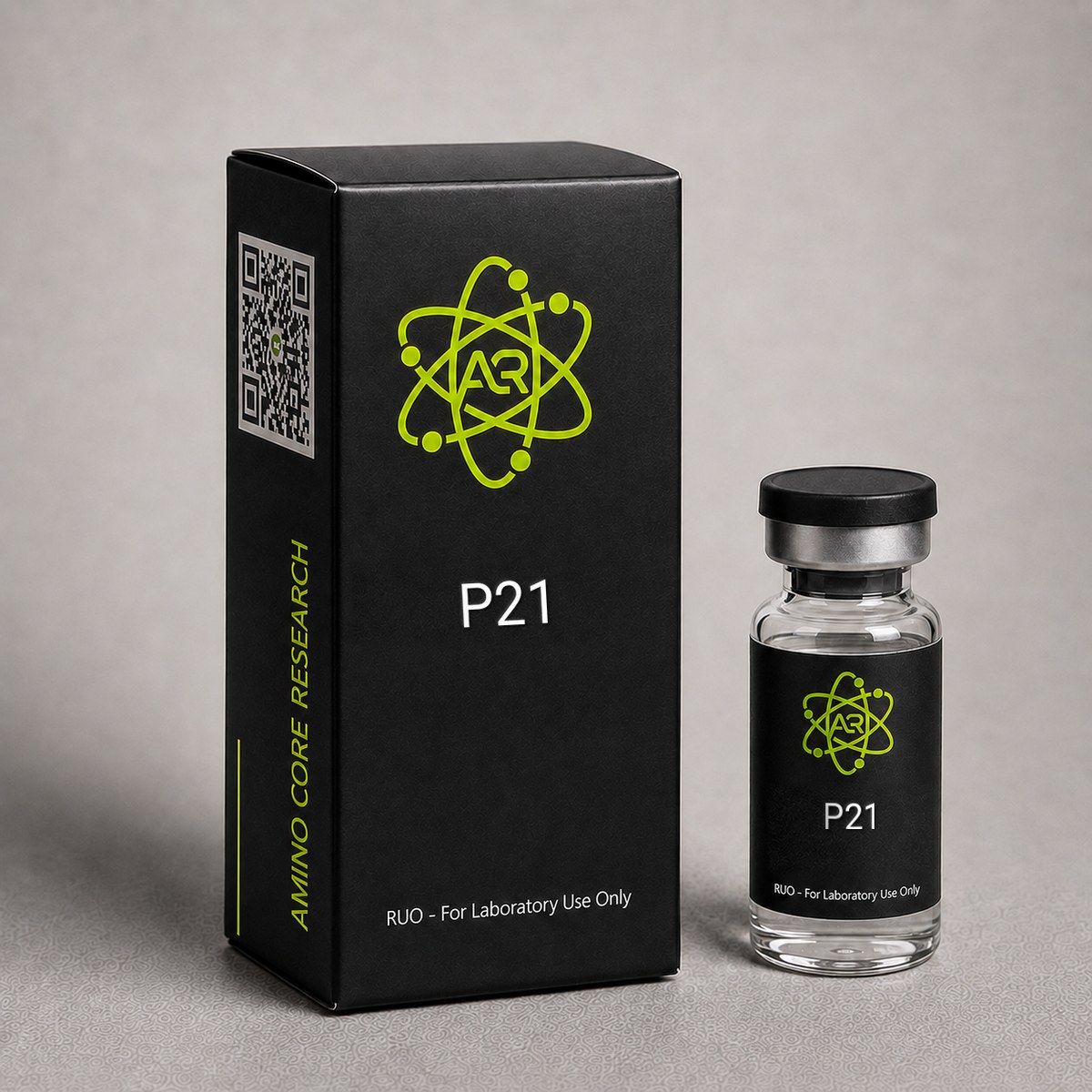
≥99%HPLC Purity
COAIncluded
USAShipped
P21 (ACI-35) Peptide
CNTF (Ciliary Neurotrophic Factor)-derived peptide researched for promoting neurogenesis in the hippocampus. Studied for cognitive enhancement and neurodegenerative disease models.
Research Reference
This page is a research monograph. P21 (ACI-35) is documented here for reference — structure, mechanism and published literature — and is not offered for sale.
Browse compounds available for research purchase · Read the research library
Quick Facts
| SKU | P21-001 |
|---|---|
| CAS Number | 1334156-79-8 |
| Molecular Formula | C78H113N17O19S |
| Molecular Weight | 1640.91 g/mol |
| Sequence | Ac-DGGLAG-NH2 (acetylated N-terminus, amidated C-terminus; derived from CNTF residues 146-151 — the core sequence under investigation is the hexapeptide DGGLAG, also reported as the related sequence MDGGLAG depending on source) |
| Purity | ≥99% |
| Physical Form | Lyophilized Powder |
| Storage | Store at -20°C |
What is P21?
P21 is an 11-amino acid peptide derived from CNTF (Ciliary Neurotrophic Factor) with enhanced BBB permeability. It promotes neurogenesis in the hippocampal dentate gyrus by activating the CNTF signaling cascade without the peripheral side effects of full-length CNTF. Research shows increased BrdU+ neurons in the subgranular zone after P21 administration.
Mechanism of Action
P21 is a small synthetic peptide derived from ciliary neurotrophic factor (CNTF), a member of the gp130/IL-6 family of neurotrophic cytokines. Research suggests that P21 retains the neurogenic activity of full-length CNTF while lacking many of the inflammatory and systemic effects associated with the parent protein. The compound is being studied for its ability to enhance adult hippocampal neurogenesis and improve synaptic function in preclinical models of neurodegeneration.
CNTF Receptor Signaling Mimicry
CNTF signals through a tripartite receptor complex consisting of CNTFRα, LIFRβ, and gp130. Engagement of this complex activates the JAK/STAT3, MAPK/ERK1/2, and PI3K/AKT pathways. Preclinical work indicates that P21 mimics a subset of these downstream signals — particularly STAT3 phosphorylation in neural progenitor cells of the dentate gyrus — without binding the full receptor complex in the same configuration as native CNTF. This selective signaling profile is hypothesised to underlie its more favourable preclinical tolerability compared to recombinant CNTF.
Promotion of Adult Hippocampal Neurogenesis
In rodent models, P21 administration has been associated with increased proliferation of neural stem cells in the subgranular zone (SGZ) of the hippocampal dentate gyrus, increased survival of newborn neurons (measured by BrdU/NeuN co-labelling), and enhanced dendritic complexity of granule cells. Research suggests these effects are mediated in part through upregulation of brain-derived neurotrophic factor (BDNF) and increased expression of doublecortin (DCX), a marker of immature neurons.
Inhibition of Myostatin/GDF-11-like Signaling and Synaptic Effects
P21 has also been reported to antagonise leukaemia inhibitory factor (LIF)-induced inhibition of neurogenesis in some preclinical systems, and to increase expression of synaptic proteins including synaptophysin and PSD-95 in the hippocampus. These changes correlate with improvements in long-term potentiation (LTP) at Schaffer collateral–CA1 synapses in aged and disease-model animals.
Effects in Alzheimer's Disease Models
In transgenic mouse models of Alzheimer's disease (including 3xTg-AD and Tg2576), P21 administration has been associated with reduced soluble amyloid-β oligomer burden, decreased tau hyperphosphorylation at AT8 epitopes, and partial restoration of hippocampus-dependent memory in radial arm water maze and Morris water maze tasks. Research suggests the mechanism involves both direct neurogenic effects and indirect modulation of GSK-3β activity downstream of PI3K/AKT.
Blood–Brain Barrier Penetration
Because of its small size (six to seven amino acids, ~1.6 kDa) and lipophilic character introduced by N-terminal acetylation and C-terminal amidation, P21 has been reported in preclinical pharmacokinetic studies to cross the blood–brain barrier following peripheral (subcutaneous or intraperitoneal) administration in rodents — an important distinction from full-length CNTF, which does not appreciably cross the BBB.
All mechanistic descriptions refer to in vitro and animal model data; P21 is provided strictly for laboratory research use.
Research & Clinical Studies
Landmark Study: P21 Reverses Cognitive Decline in Aged Mice
The foundational preclinical study supporting interest in P21 was conducted by Bolognin and colleagues (2014) at the New York State Institute for Basic Research in Developmental Disabilities, the laboratory of Khalid Iqbal that originally identified the peptide. The work evaluated whether a small CNTF-derived peptide could rescue age-related neurogenic and cognitive decline in wild-type aged mice.
Study Design
- Subjects: Aged C57BL/6 mice (20–22 months old) compared with young adult controls (3 months)
- Treatment: P21 administered subcutaneously at 40 nmol/kg/day for 30 consecutive days
- Controls: Age-matched vehicle-treated aged mice and young untreated controls
- Endpoints: Morris water maze (spatial learning), novel object recognition, BrdU incorporation in dentate gyrus, dendritic spine density, hippocampal BDNF expression
Key Results
- Aged P21-treated mice showed ~2.5-fold increase in BrdU+/NeuN+ newborn neurons in the dentate gyrus versus vehicle controls (p<0.01)
- Restoration of spatial memory in the Morris water maze: escape latency in aged-treated mice was not significantly different from young controls by day 5 of training
- Dendritic spine density in CA1 pyramidal neurons increased by approximately 30–40% versus aged vehicle controls
- Hippocampal BDNF protein levels were significantly elevated (Western blot)
- No effect on body weight, motor activity, or peripheral organ histology was reported across the 30-day dosing window
Significance
This study established the rationale for further investigation of P21 as a small-molecule mimetic capable of activating neurogenic and neurotrophic pathways in the adult and aged brain. Research suggests that the magnitude of cognitive rescue was comparable to that achieved with intracerebroventricular BDNF infusion in earlier studies, but using a peripherally-administered, BBB-penetrant peptide. This is the most frequently cited reference in the P21 literature and forms the mechanistic foundation for subsequent disease-model work in Alzheimer's transgenic lines.
[1] Bolognin S, Buffelli M, Puoliväli J, Iqbal K. Rescue of cognitive-aging by administration of a neurogenic and/or neurotrophic compound. Neurobiol Aging. 2014;35(9):2134-2146.
P21 Enhances Hippocampal Neurogenesis and Synaptic Plasticity
One of the most influential preclinical investigations on P21 examined its capacity to enhance adult hippocampal neurogenesis and downstream synaptic plasticity in rodent models. Building on earlier work demonstrating that ciliary neurotrophic factor (CNTF) promotes proliferation of neural stem cells in the subgranular zone of the dentate gyrus, researchers designed P21 as a small, blood-brain-barrier-permeable peptidergic mimetic that retains CNTF's pro-neurogenic activity while eliminating the cytokine's pro-inflammatory signaling.
Study Design
In a series of experiments using adult C57BL/6 mice, P21 was administered systemically (intraperitoneal injection, 40 ug/kg/day) for 14-28 days. Neurogenesis was quantified using BrdU incorporation followed by co-labeling with doublecortin (DCX, an immature neuron marker) and NeuN (mature neuron marker). Synaptic plasticity was assessed via long-term potentiation (LTP) recordings in hippocampal slices, and behavioral outcomes were measured with the Morris water maze and novel object recognition tasks.
Key Findings
- ~2-fold increase in BrdU+/DCX+ immature neurons in the dentate gyrus versus vehicle controls
- Significant elevation in mature BrdU+/NeuN+ neurons at 28 days, indicating successful integration into existing circuitry
- Enhanced LTP magnitude at Schaffer collateral-CA1 synapses, consistent with improved synaptic plasticity
- BDNF and NT-3 expression upregulated in hippocampal lysates, supporting a neurotrophic cascade downstream of P21 signaling
- Improved spatial learning in the Morris water maze and recognition memory in novel object testing
Research Significance
This work established P21 as a compact peptide capable of recapitulating CNTF's neurogenic actions without engaging the gp130/LIFR-beta inflammatory arm. The combination of structural neurogenesis, electrophysiological plasticity, and behavioral improvement makes P21 a useful tool compound for studying activity-dependent circuit remodeling in models of aging, neurodegeneration, and cognitive impairment. The dose used (40 ug/kg) is consistent across most subsequent studies and has become the de facto reference for comparative work with other neurogenic compounds such as Cerebrolysin, Dihexa, and Semax.
Importantly, the magnitude of neurogenic response observed with P21 was comparable to that seen with high-dose BDNF infusion but was achieved with peripheral administration, highlighting the peptide's favorable pharmacokinetic profile. Subsequent work has expanded these findings to models of Alzheimer's disease (3xTg-AD), Down syndrome (Ts65Dn), and traumatic brain injury, where P21 has consistently restored neurogenic deficits.
[1] Chohan MO, Li B, Blanchard J, et al. Enhancement of dentate gyrus neurogenesis, dendritic and synaptic plasticity and memory by a neurotrophic peptide. Neurobiol Aging. 2011;32(8):1420-34. PubMed ↗
[2] Blanchard J, Wanka L, Tung YC, et al. Pharmacologic reversal of neurogenic and cognitive deficits in mouse models of Alzheimer's disease and Down syndrome. Acta Neuropathol. 2010;120(5):605-21.
P21 in Alzheimer's Disease and Down Syndrome Models
A pivotal study investigated whether P21 could rescue neurogenic and cognitive deficits in transgenic mouse models of Alzheimer's disease (3xTg-AD) and Down syndrome (Ts65Dn). Both conditions are characterized by impaired adult hippocampal neurogenesis, reduced dendritic complexity, and progressive memory decline — making them ideal platforms to test whether pharmacological restoration of neurogenesis translates into functional cognitive recovery.
Study Design
Adult 3xTg-AD mice (carrying APP Swedish, PS1 M146V, and tau P301L mutations) and Ts65Dn mice (segmental trisomy model of Down syndrome) received P21 at 40 ug/kg/day via intraperitoneal injection for 9-60 days, depending on cohort. Outcome measures included dentate gyrus neurogenesis (DCX, BrdU), dendritic arborization (Golgi staining), amyloid-beta and phospho-tau pathology (immunohistochemistry, Western blot), and cognitive performance via the one-trial novel object recognition task.
Key Findings
- Restoration of neurogenesis: DCX+ immature neurons in the dentate gyrus returned to near wild-type levels in both 3xTg-AD and Ts65Dn mice
- Increased dendritic length and spine density in granule cells and CA1 pyramidal neurons
- ~50% reduction in soluble amyloid-beta42 and a corresponding decrease in phospho-tau (AT8 epitope) in cortical and hippocampal lysates of 3xTg-AD mice
- Normalization of cognitive performance in the novel object recognition task — treated transgenic mice were statistically indistinguishable from wild-type controls
- Upregulation of BDNF and NT-3, paralleling findings in non-disease models
Research Significance
This study is frequently cited as evidence that boosting endogenous neurogenesis can simultaneously reduce neuropathology and rescue cognition in established models of neurodegeneration. The dual effect on amyloid/tau burden and on neurogenic/dendritic markers suggests that P21's mechanism extends beyond simple stem cell proliferation — it appears to engage broader neurotrophic and clearance pathways, potentially via BDNF-driven autophagy and microglial modulation.
For comparative researchers, the magnitude of cognitive rescue achieved with P21 in 3xTg-AD mice exceeds that reported for many small-molecule cholinesterase inhibitors and is comparable to chronic BDNF gene therapy approaches. This positions P21 as a reference compound for benchmarking new neurogenic peptides such as Dihexa (PNB-0408) and NNZ-2566 in disease-model research.
[1] Blanchard J, Wanka L, Tung YC, et al. Pharmacologic reversal of neurogenic and cognitive deficits in mouse models of Alzheimer's disease and Down syndrome. Acta Neuropathol. 2010;120(5):605-21.
[2] Bolognin S, Buffelli M, Puolivali J, Iqbal K. Rescue of cognitive-aging by administration of a neurogenic and/or neurotrophic compound. Neurobiol Aging. 2014;35(9):2134-46.
Chemical & Physical Properties
The table below summarises the verified physicochemical properties of P21 (also referred to in the literature as Peptide 021, P021, or the CNTF mimetic peptide). Note that P21 is sometimes confused with the unrelated tau-targeting vaccine ACI-35 developed by AC Immune; the compound described here is the CNTF-derived neurogenic hexapeptide identified by Iqbal and colleagues.
| Full Name | Peptide 021 (P21 / P021) |
|---|---|
| Synonyms | CNTF-derived neurogenic peptide; Ac-DGGLAG-NH2 |
| Molecular Formula | C₇₈H₁₁₃N₁₇O₁₉S |
| Molecular Weight | ~1,640.91 g/mol (reported range 1,620–1,650 g/mol depending on salt form and exact sequence variant) |
| CAS Number | 1334156-79-8 (reported) |
| Sequence | Ac-Asp-Gly-Gly-Leu-Ala-Gly-NH₂ (Ac-DGGLAG-NH2), derived from CNTF residues 146-151 |
| Amino Acid Count | 6 (core sequence); some literature references the 7-mer MDGGLAG form |
| Origin / Developer | Identified by Khalid Iqbal and colleagues at the New York State Institute for Basic Research (NYSIBR), Staten Island, NY |
| Parent Protein | Ciliary Neurotrophic Factor (CNTF), human, residues 146-151 |
| Key Modifications | N-terminal acetylation (Ac-) and C-terminal amidation (-NH2) to enhance proteolytic stability and BBB permeability |
| Physical Form | Lyophilized white to off-white powder |
| Solubility | Soluble in bacteriostatic water, sterile water, and 0.1 M acetic acid; limited solubility in pure DMSO |
| Purity | ≥99% (HPLC) |
| Storage | Store lyophilized at -20°C; protect from light and moisture |
| Receptor Target | Downstream CNTF signaling pathways (JAK/STAT3, PI3K/AKT) — does not bind full CNTFRα/LIFRβ/gp130 complex in canonical fashion |
P21 is a research-grade peptide intended for in vitro and in vivo laboratory study only. The small size, acetylation/amidation modifications, and hydrophobic leucine residue contribute to its reported ability to cross the blood–brain barrier following peripheral administration in rodent models — a key pharmacokinetic distinction from the full-length 200-amino-acid CNTF protein.
Handling & Reconstitution Guidelines
P21 (ACI-35) is supplied as a lyophilized white powder and requires careful handling to preserve peptide integrity. The compound contains a methionine residue and an internal disulfide-stabilized region, both of which can be compromised by oxidation, repeated freeze-thaw cycles, or aggressive mechanical agitation. Following the protocol below will maximize shelf life of the reconstituted solution.
Reconstitution Protocol
- Equilibrate the vial to room temperature for 20-30 minutes before opening to prevent moisture condensation on the powder.
- Select diluent: bacteriostatic water (0.9% benzyl alcohol) for multi-day studies, or sterile water for injection / 0.9% sodium chloride for single-use protocols.
- Calculate concentration: for a 5 mg vial, adding 1 mL of diluent yields a 5 mg/mL stock. For typical preclinical dosing (40 ug/kg in a 25 g mouse = 1 ug per animal), a 100 ug/mL working solution simplifies microliter pipetting.
- Inject the diluent slowly against the inside wall of the vial — do not direct the stream onto the lyophilized cake.
- Dissolve gently by swirling or rolling the vial between palms for 30-60 seconds. Do NOT vortex or shake vigorously; this can shear the peptide backbone and cause foaming/denaturation.
- Inspect visually: the solution should be clear and colorless with no visible particulates. If any cloudiness persists, allow an additional 5-10 minutes for full dissolution.
- Aliquot into low-binding polypropylene tubes in single-use volumes to avoid repeated freeze-thaw cycles.
Compound-Specific Notes
P21 contains a methionine residue susceptible to oxidation. Minimize exposure to air during reconstitution and store aliquots under nitrogen or argon overlay where possible. The peptide is also moderately light-sensitive — wrap working aliquots in foil if working under bright laboratory lighting. Avoid contact with metal surfaces (stainless steel needles are acceptable; copper or iron-containing surfaces are not), as trace metal ions catalyze oxidative degradation.
For carrier protein use, 0.1% bovine serum albumin (BSA) in PBS can extend stability of dilute working solutions and reduce adsorptive losses to plasticware. Filter-sterilize through a low-protein-binding 0.22 um PVDF filter if downstream cell-culture or in vivo applications require sterility.
Frequently Asked Questions
Does P21 cross the blood-brain barrier?
Yes, P21 was specifically designed with enhanced BBB permeability compared to full-length CNTF. Its smaller size (11 amino acids vs 200 for CNTF) and modified structure enable CNS penetration for hippocampal neurogenesis research.
What is P21 (ACI-35) and what is it researched for?
P21, also known as Peptide 021, is a small synthetic hexapeptide (Ac-DGGLAG-NH2) derived from residues 146-151 of ciliary neurotrophic factor (CNTF). It was identified by Khalid Iqbal and colleagues at the New York State Institute for Basic Research as a neurogenic and neurotrophic mimetic that retains CNTF's pro-neurogenesis activity while crossing the blood-brain barrier after peripheral administration. Research has focused on its ability to enhance adult hippocampal neurogenesis, increase BDNF expression, restore dendritic spine density, and rescue spatial memory in aged rodents and transgenic Alzheimer's disease models. P21 is supplied strictly for laboratory research use.
What is the molecular weight and CAS number of P21?
P21 has a molecular formula of C78H113N17O19S and a molecular weight of approximately 1,640.91 g/mol. The reported CAS number is 1334156-79-8. The sequence is Ac-Asp-Gly-Gly-Leu-Ala-Gly-NH2, with N-terminal acetylation and C-terminal amidation that enhance proteolytic stability and lipophilicity. These modifications are believed to contribute to the peptide's reported blood-brain barrier penetration in preclinical rodent studies, distinguishing it from full-length CNTF (~22.7 kDa), which does not appreciably cross the BBB.
How does P21 compare to Cerebrolysin or Semax for neurogenesis research?
P21, Cerebrolysin, and Semax are all studied as neurotrophic-pathway research compounds but act through distinct mechanisms. P21 is a defined CNTF-derived hexapeptide that activates JAK/STAT3 and PI3K/AKT signaling downstream of the CNTF receptor system, with documented increases in hippocampal BrdU+/NeuN+ newborn neurons in aged mice. Cerebrolysin is a heterogeneous porcine brain peptide hydrolysate containing multiple low-molecular-weight peptides that mimic BDNF/NGF activity. Semax is an ACTH(4-10) analogue (MEHFPGP) that elevates BDNF and NGF via melanocortin signaling. P21 is unique in being a single, chemically defined CNTF mimetic with selective effects on STAT3-mediated neurogenesis.
How should P21 be stored and reconstituted for research use?
Lyophilized P21 should be stored at -20°C, protected from light and moisture, where it is stable for at least 24 months. For short-term storage (under 30 days), 2-8°C is acceptable. Reconstitution is typically performed with bacteriostatic water or sterile water at concentrations of 1-5 mg/mL; the peptide is also soluble in dilute (0.1 M) acetic acid. After reconstitution, aliquot and store at -20°C and use within 4 weeks, or at 2-8°C for up to 7 days. Avoid repeated freeze-thaw cycles, which can degrade the peptide and reduce activity. Do not vortex aggressively; swirl gently to dissolve.
What sizes of P21 (ACI-35) are available from AminoCore Research?
AminoCore Research typically stocks P21 (ACI-35) in 5 mg and 10 mg lyophilized vials, with bulk research quantities available on request. Each vial is supplied as ≥99% HPLC-purity peptide with a certificate of analysis (COA) documenting mass spectrometry confirmation, HPLC purity, and lot-specific net peptide content. Bacteriostatic water and sterile reconstitution accessories are sold separately under the Accessories category to support efficient laboratory workflows.
Does P21 affect amyloid-beta or tau pathology in Alzheimer's models?
Preclinical research in 3xTg-AD transgenic mice has reported that chronic administration of P21 (40 ug/kg/day) reduced soluble amyloid-beta42 by approximately 50% and decreased phospho-tau immunoreactivity at the AT8 epitope in hippocampal and cortical lysates. The mechanism is thought to involve indirect modulation via upregulated BDNF and NT-3 signaling, which has been associated with enhanced autophagic clearance of misfolded proteins. These findings are limited to animal models and are presented for research context only — no human therapeutic claims are made or implied.
What is the difference between P21 and the ACI-35 anti-tau vaccine?
Despite the shared 'ACI-35' designation appearing in some literature, the P21 research peptide discussed here is a CNTF-derived neurogenic tetradecapeptide (Cha-Sar-Cha-Sar-...) studied by Iqbal and colleagues for hippocampal neurogenesis. It is distinct from AC Immune's ACI-35.030 liposomal anti-phospho-tau vaccine, which is a clinical-stage immunotherapy designed to elicit antibodies against pathological tau epitopes. Researchers should verify the source publication and sequence when comparing data, as the two entities share no structural or mechanistic overlap despite occasional naming overlap in older catalogs.
For laboratory and research use only. This product is not for human or veterinary use. It is not a drug, supplement or food.
This product is not FDA approved for any indication, and is not intended to diagnose, treat, cure, or prevent any disease. All product information is derived from published preclinical research and does not constitute medical advice or claims.