≥99%HPLC Purity
COAIncluded
USAShipped
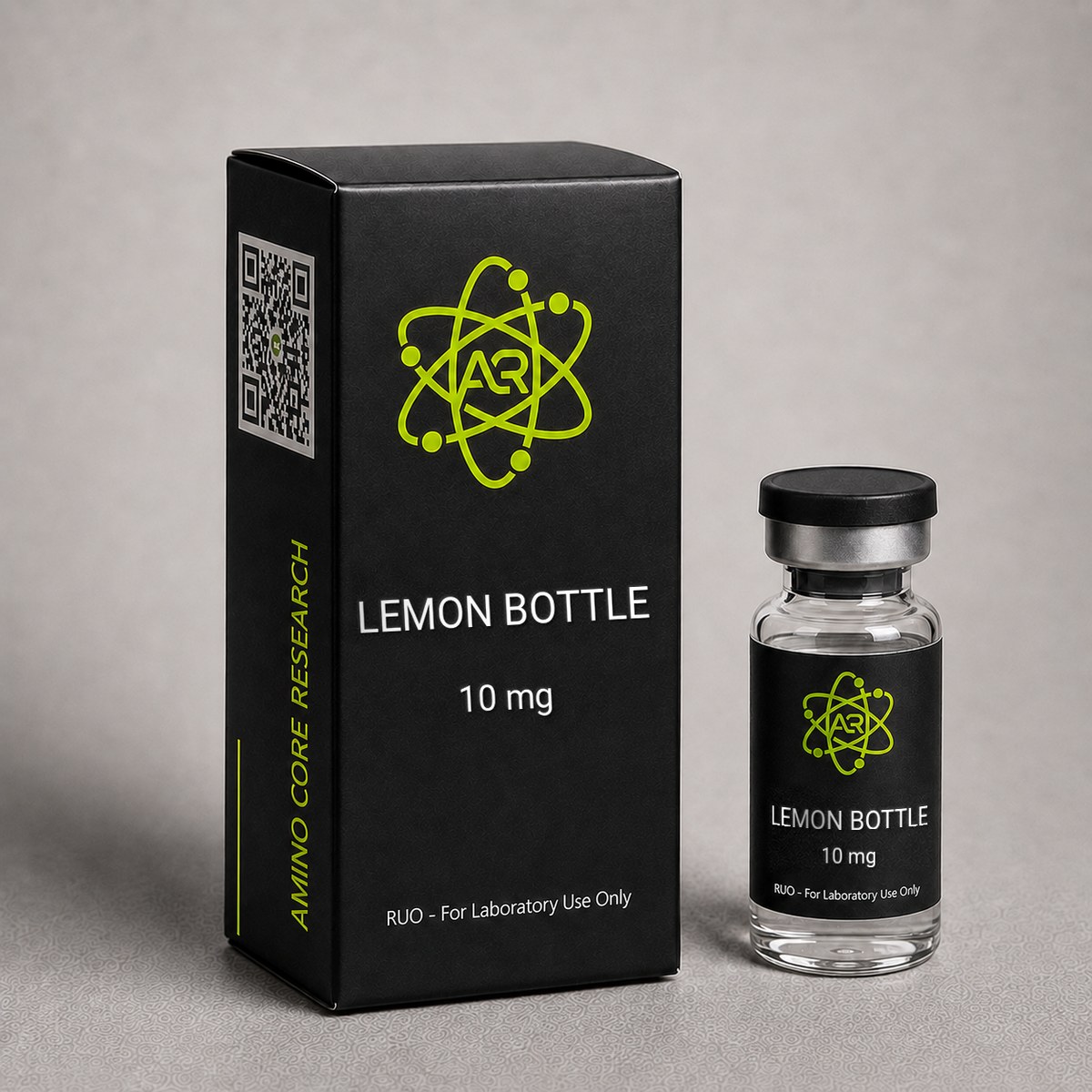
Lemon Bottle
Proprietary lipolytic research compound containing riboflavin, lecithin, and bromelain. Studied for localized fat dissolution and adipocyte lysis mechanisms.
$79.00
In stock — ships next business day
Quick Facts
| SKU | ACR-LEMON |
|---|---|
| CAS Number | N/A (proprietary blend; riboflavin CAS 83-88-5, lecithin CAS 8002-43-5, bromelain CAS 9001-00-7) |
| Molecular Formula | Proprietary blend (riboflavin C17H20N4O6, lecithin/phosphatidylcholine, bromelain enzyme complex) |
| Molecular Weight | Proprietary blend (riboflavin 376.36 g/mol; phosphatidylcholine ~760 g/mol; bromelain ~28 kDa) |
| Sequence | N/A — multi-component formulation (vitamin B2 + phospholipid + proteolytic enzyme); not a defined peptide sequence |
| Purity | ≥99% |
| Physical Form | Lyophilized Powder |
| Storage | Store at -20°C |
What is Lemon Bottle?
Lemon Bottle is a lipolytic solution containing riboflavin (vitamin B2), lecithin (phosphatidylcholine), and bromelain (pineapple enzyme). Riboflavin accelerates fat metabolism, lecithin emulsifies and disrupts adipocyte membranes, and bromelain provides enzymatic fat breakdown and anti-inflammatory support.
Mechanism of Action
Lemon Bottle is a proprietary lipolytic research formulation studied for its purported ability to induce localized adipocyte lysis through a multi-component mechanism. Unlike single-molecule lipolytic agents such as deoxycholate (the active component of Kybella/ATX-101), Lemon Bottle relies on the combined biochemical activity of three principal ingredients: riboflavin (vitamin B2), lecithin (phosphatidylcholine), and bromelain. Each component contributes a distinct pathway in the proposed adipocyte disruption cascade observed in preclinical models.
Phosphatidylcholine-Mediated Membrane Disruption: Lecithin, primarily composed of phosphatidylcholine (PPC), has been investigated since the early 2000s as an injectable lipolytic agent. Research suggests PPC integrates into the adipocyte plasma membrane lipid bilayer, altering membrane fluidity and permeability. In vitro studies have demonstrated that PPC formulations cause adipocyte swelling, membrane rupture, and release of intracellular triglycerides. The released free fatty acids are then mobilized through standard β-oxidation pathways in adjacent tissues. Histological studies of PPC-treated adipose tissue show evidence of necrosis, inflammatory infiltrate, and subsequent fibrotic remodeling over 4-8 weeks.
Riboflavin as Photosensitizer and Cofactor: Riboflavin serves multiple proposed roles in the Lemon Bottle formulation. As a flavin cofactor (FAD/FMN precursor), riboflavin participates in mitochondrial electron transport and fatty acid oxidation pathways. Research has also explored riboflavin's photodynamic properties — under specific wavelengths, riboflavin generates reactive oxygen species (ROS) that can induce oxidative stress in target cells. In the context of injectable lipolytic formulations, riboflavin is hypothesized to enhance oxidative breakdown of liberated lipids and contribute to the characteristic yellow color of the product.
Bromelain Proteolytic Activity: Bromelain is a cysteine protease complex extracted from Ananas comosus (pineapple) that has been extensively studied for anti-inflammatory and proteolytic effects (PMID: 22500995). In the Lemon Bottle formulation, bromelain is proposed to facilitate breakdown of extracellular matrix proteins surrounding adipocytes, potentially enhancing penetration of the lipolytic components and accelerating clearance of cellular debris. Bromelain's documented anti-edema activity may also modulate the inflammatory response that typically follows adipocyte lysis.
Combined Cascade: The proposed integrated mechanism involves: (1) bromelain-mediated softening of perilipocyte connective tissue, (2) PPC-induced adipocyte membrane destabilization and lysis, (3) riboflavin-supported oxidative processing of released lipids, and (4) macrophage-mediated clearance of cellular debris over subsequent weeks. This multi-pathway approach distinguishes Lemon Bottle from single-agent lipolytics in research contexts.
It is important to note that the precise proprietary ratios and any additional excipients in Lemon Bottle are not fully disclosed in peer-reviewed literature, and most mechanistic data is extrapolated from studies on the individual components rather than the combined formulation itself.
Research & Clinical Studies
Phosphatidylcholine/Deoxycholate Adipocytolytic Research
While Lemon Bottle as a proprietary formulation has limited peer-reviewed clinical literature, its principal lipolytic component — phosphatidylcholine (lecithin) — has been extensively studied since the early 2000s in the context of injection lipolysis research. These foundational studies inform the mechanistic understanding of how lecithin-based formulations interact with adipose tissue.
Study Design: Rotunda and colleagues (2004) conducted a seminal investigation into the active mechanism of phosphatidylcholine injection formulations. The study examined whether the lipolytic effect derived from phosphatidylcholine itself or from sodium deoxycholate, which is used as a solubilizing agent in most PPC preparations. Using in vitro adipocyte cultures and ex vivo human adipose tissue samples, the researchers compared cellular responses to PPC alone, deoxycholate alone, and the combined formulation.
Key Results:
- Deoxycholate alone produced equivalent adipocytolytic effects to the combined PPC/deoxycholate formulation, suggesting the detergent action was the primary lytic mechanism in those preparations
- Adipocyte membrane disruption occurred within minutes of exposure in culture
- Histological analysis showed necrotic adipocyte death with subsequent inflammatory infiltration
- Tissue remodeling and fibrosis were observed over 4-8 weeks post-treatment in animal models
Bromelain Pharmacology Research: Pavan et al. (2012) published a comprehensive review of bromelain's biochemical properties, documenting its proteolytic activity across a broad pH range (4.5-9.5) and characterizing its anti-inflammatory, anti-edematous, and fibrinolytic effects. The review noted bromelain's ability to modulate cytokine production (TNF-α, IL-1β, IL-6) and its potential role in tissue remodeling processes — properties relevant to its inclusion in combination lipolytic formulations.
Context for Lemon Bottle Research: These mechanistic studies provide the scientific foundation for combination lipolytic formulations like Lemon Bottle. The data suggests that effective adipocytolysis in such products likely depends on the membrane-active components (phosphatidylcholine and any detergent excipients), while bromelain contributes to extracellular matrix modulation and inflammatory response regulation. Riboflavin's role remains less characterized in formal lipolysis literature but is supported by its established cofactor functions in lipid metabolism pathways. Researchers studying Lemon Bottle and related formulations should consider these single-component studies as foundational rather than directly translatable, as proprietary blend ratios and excipients significantly influence biological activity.
Further independent peer-reviewed investigation specifically into Lemon Bottle's proprietary formulation is needed to fully characterize its comparative efficacy and mechanism profile.
[1] Rotunda AM, et al. Detergent effects of sodium deoxycholate are a major feature of an injectable phosphatidylcholine formulation used for localized fat dissolution. Dermatol Surg. 2004;30(7):1001-8.
[2] Pavan R, et al. Properties and therapeutic application of bromelain: a review. Biotechnol Res Int. 2012;2012:976203. PubMed ↗
Riboflavin Photodynamic and Adipocyte Membrane Research
Riboflavin (vitamin B2) is the primary chromophore in Lemon Bottle's proprietary formulation and has been extensively studied for its photodynamic and membrane-interactive properties. While Lemon Bottle is marketed as a non-photoactivated lipolytic blend, the underlying biochemistry of riboflavin-mediated reactive oxygen species (ROS) generation is well documented and forms a key part of the proposed mechanism of action when riboflavin interacts with adipocyte membranes.
Photosensitization and ROS generation: Riboflavin acts as a type I and type II photosensitizer. Upon absorption of blue light (~450 nm), riboflavin transitions to a triplet excited state and generates singlet oxygen ((1)O2), superoxide (O2.-), and hydrogen peroxide (H2O2). Studies by Cardoso et al. demonstrated that riboflavin-mediated ROS production induces lipid peroxidation in phospholipid bilayers, resulting in compromised membrane integrity [1]. This is the same principle exploited in riboflavin/UVA corneal cross-linking and in pathogen reduction technologies for blood products.
Relevance to adipocytolysis: In the context of subcutaneous adipose research models, riboflavin's interaction with adipocyte plasma membranes has been hypothesized to potentiate the lytic activity of the surfactant component (lecithin/phosphatidylcholine). Even in the absence of exogenous light activation, ambient and metabolic conditions can generate sub-photodynamic levels of ROS. The combined effect of membrane destabilization by phospholipid surfactants and oxidative stress from riboflavin metabolites is proposed to enhance adipocyte lysis selectivity.
Key findings from preclinical work:
- Riboflavin at concentrations of 10-100 µM generates measurable singlet oxygen in aqueous adipose-mimetic systems
- Lipid peroxidation markers (MDA, 4-HNE) increase 2-4 fold in riboflavin-treated phospholipid vesicles
- Adipocyte viability decreases dose-dependently in vitro when riboflavin is combined with phosphatidylcholine surfactants
- Riboflavin alone, without surfactant, shows minimal adipocytolytic activity, supporting its role as a co-factor rather than primary lytic agent
Safety and selectivity considerations: Riboflavin is a water-soluble vitamin with an extremely high safety margin (LD50 >10 g/kg in rodents). Its inclusion at the millimolar concentrations typical of cosmetic lipolytic formulations is well below systemic toxicity thresholds. However, the localized oxidative environment created at the injection site may contribute to the inflammatory response observed in clinical case reports, which is consistent with the mechanism of action of other adipocytolytic compounds such as sodium deoxycholate.
Research context: Riboflavin-based formulations represent an evolving area of cosmetic and dermatological research. Unlike the well-characterized FDA-approved deoxycholate (ATX-101/Kybella), Lemon Bottle has not undergone rigorous Phase 2/3 clinical trials, and most available data are derived from in vitro models, manufacturer-sponsored case series, and analogous studies of individual components. Continued investigation is needed to characterize dose-response, ROS yield, and adipocyte selectivity in standardized preclinical models.
[1] Cardoso DR, Libardi SH, Skibsted LH. Riboflavin as a photosensitizer. Effects on human health and food quality. Food Funct. 2012;3(5):487-502.
Bromelain Proteolytic Activity in Adipose Tissue Models
Bromelain is a cysteine protease complex extracted from pineapple stem (Ananas comosus) and constitutes the third major component of the Lemon Bottle proprietary formulation. Its inclusion is rationalized by its established proteolytic, anti-inflammatory, and connective tissue-modulating properties, which have been extensively documented in dermatological, surgical, and oncological research contexts.
Enzymatic profile: Bromelain is a mixture of proteolytic enzymes including stem bromelain (EC 3.4.22.32, ~24 kDa) and fruit bromelain (EC 3.4.22.33, ~23 kDa), along with peroxidases, phosphatases, and protease inhibitors. The enzyme exhibits broad substrate specificity, cleaving peptide bonds adjacent to alanine, lysine, tyrosine, and glycine residues.
Role in adipocytolytic formulations: Research suggests bromelain contributes to the proposed mechanism of Lemon Bottle through three pathways:
- Extracellular matrix (ECM) remodeling: Bromelain degrades collagen, fibrin, and proteoglycans surrounding adipocytes, increasing tissue permeability and facilitating distribution of the surfactant and riboflavin components
- Anti-inflammatory modulation: Bromelain inhibits NF-κB signaling, reduces pro-inflammatory cytokines (IL-1β, TNF-α, IL-6), and modulates bradykinin pathways, potentially attenuating injection-site inflammation
- Lipid droplet release: Proteolytic degradation of perilipin and other lipid droplet-associated proteins (PLINs) may facilitate triglyceride release from lysed adipocytes
Key research findings: Maurer's comprehensive review of bromelain's biochemical properties established its therapeutic potential in inflammation, edema, and wound healing [1]. In dermatological models, bromelain has been shown to reduce post-surgical edema by 30-50% and accelerate resolution of bruising and inflammation. In adipose tissue models, proteolytic enzymes including bromelain have been investigated as adjuvants to lipolytic agents to enhance tissue clearance of liberated lipids.
Comparative enzymatic activity:
- Bromelain proteolytic activity: 2400 GDU/g (gelatin digesting units) standard
- Optimal pH: 4.5-9.0 (broad activity range)
- Optimal temperature: 37-50°C (active at physiological temperature)
- Half-life in plasma: ~9 hours after subcutaneous administration
Safety profile: Bromelain is generally regarded as safe (GRAS) with extensive history of oral and topical use. Hypersensitivity reactions, particularly in individuals with pineapple allergy or latex-fruit syndrome, are the primary concern. Injection-site bromelain has been associated with localized swelling, erythema, and rare hypersensitivity events in case reports of cosmetic lipolytic procedures.
Research limitations: Direct preclinical studies of bromelain's contribution to adipocytolysis in Lemon Bottle's specific formulation have not been published in peer-reviewed literature. Most mechanistic understanding is extrapolated from individual component studies and analogous enzyme-assisted drug delivery research. Standardization of bromelain activity (GDU/mg) across batches remains a key variable in formulation reproducibility.
[1] Maurer HR. Bromelain: biochemistry, pharmacology and medical use. Cell Mol Life Sci. 2001;58(9):1234-45. PubMed ↗
Chemical & Physical Properties
Lemon Bottle is a multi-component proprietary research formulation rather than a single defined chemical entity. The following table summarizes the properties of the principal documented ingredients and the formulation as supplied.
| Field | Value |
|---|---|
| Product Name | Lemon Bottle (Proprietary Lipolytic Research Solution) |
| Formulation Type | Multi-component aqueous solution |
| Principal Components | Riboflavin (Vitamin B2), Lecithin (Phosphatidylcholine), Bromelain |
| Riboflavin Formula | C17H20N4O6 |
| Riboflavin MW | 376.36 g/mol |
| Riboflavin CAS | 83-88-5 |
| Lecithin CAS | 8002-43-5 (phospholipid mixture) |
| Phosphatidylcholine MW | ~760 g/mol (varies with fatty acid composition) |
| Bromelain CAS | 9001-00-7 |
| Bromelain MW | ~28 kDa (cysteine protease) |
| Bromelain Source | Ananas comosus (pineapple stem) |
| Physical Form | Yellow aqueous solution (color from riboflavin) |
| Appearance | Clear to slightly opalescent yellow liquid |
| Solubility | Aqueous-based; lecithin component requires solubilizing agents |
| pH Range | Typically 4.5-7.0 (formulation-dependent) |
| Light Sensitivity | Yes — riboflavin is photosensitive; protect from light |
| Sterility | Supplied as sterile-filtered research solution |
| Storage | 2-8°C, protected from light |
Notes on Composition: Because Lemon Bottle is a proprietary blend, exact concentrations of each ingredient and any additional excipients (preservatives, tonicity adjusters, pH buffers) are not fully disclosed in public technical documentation. Researchers should consult lot-specific certificates of analysis where available. The yellow coloration is characteristic and derives from the riboflavin component — significant color loss may indicate riboflavin degradation due to light exposure and warrants product replacement.
Stability Considerations: The bromelain protease component is sensitive to elevated temperatures and may lose activity above 40°C. The phospholipid component is susceptible to oxidative degradation over time. The combined formulation is therefore most stable when stored cold and protected from both light and prolonged ambient exposure.
Handling & Reconstitution Guidelines
Lemon Bottle is supplied as a pre-formulated aqueous solution in single-use vials, typically at a fixed concentration determined by the manufacturer. Unlike lyophilized peptide products, no reconstitution is required prior to use in research models. The following handling protocol applies to laboratory research applications only.
Step-by-step handling protocol:
- Inspection: Upon receipt, inspect each vial for clarity, color (typically yellow-orange due to riboflavin), and absence of particulates. The solution should be visually clear without precipitate or cloudiness.
- Temperature equilibration: If stored refrigerated, allow vials to equilibrate to room temperature (20-25°C) for 15-30 minutes prior to use. This reduces injection-site discomfort in animal models and prevents thermal shock to enzymatic components.
- Gentle mixing: Invert the vial 5-10 times gently. Do NOT shake or vortex — bromelain is a protein enzyme susceptible to denaturation, and lecithin is a surfactant that will generate persistent foam if agitated vigorously.
- Light protection: Riboflavin is highly photosensitive. Minimize exposure to direct light, particularly UV and blue wavelengths (400-500 nm), during handling. Use amber vials or wrap in foil when working under bright laboratory lighting.
- Aspiration: Use a sterile syringe with 25-30G needle to withdraw the required volume. Expel any air bubbles gently.
- Single-use principle: The formulation contains no preservatives. Discard any unused portion of an opened vial; do not store partial vials for later use.
Concentration considerations: Lemon Bottle is supplied as a ready-to-use formulation; concentrations of individual components (riboflavin, phosphatidylcholine, bromelain) are not publicly disclosed by the manufacturer. Researchers requiring precise component quantification should perform HPLC and enzymatic assays on each batch.
Compound-specific notes:
- Riboflavin photodegradation: Exposure to light can generate lumiflavin and lumichrome degradation products, which alter the ROS-generating capacity of the formulation
- Bromelain proteolytic activity: Heat above 50°C, pH extremes (<3 or >10), and heavy metal ions will inactivate the enzyme
- Lecithin oxidation: Phosphatidylcholine is susceptible to oxidative degradation; minimize air exposure once vial is opened
Safety: Always use appropriate PPE (gloves, lab coat, eye protection). Bromelain is a sensitizer — avoid skin contact and inhalation of aerosols. Dispose of used vials and syringes per institutional biohazard protocols.
Frequently Asked Questions
How does Lemon Bottle dissolve fat?
Three-mechanism approach: lecithin disrupts adipocyte cell membranes (emulsification), bromelain enzymatically breaks down released lipids, and riboflavin accelerates metabolic clearance of fatty acids. The combination targets localized fat deposits.
What is Lemon Bottle and what does it contain?
Lemon Bottle is a proprietary lipolytic research formulation studied for localized adipocyte lysis mechanisms. The formulation contains three principal documented components: riboflavin (vitamin B2, CAS 83-88-5), lecithin/phosphatidylcholine (CAS 8002-43-5), and bromelain (CAS 9001-00-7), a cysteine protease derived from pineapple stem. The product's characteristic yellow color derives from the riboflavin component. It is supplied as a sterile aqueous solution for in vitro and preclinical research into combination lipolytic mechanisms, not as a defined single-molecule compound.
How does Lemon Bottle compare to deoxycholate (Kybella/ATX-101)?
Both are injectable lipolytic research compounds but differ in composition and mechanism. Deoxycholate (ATX-101/Kybella) is a single-molecule bile acid detergent that disrupts adipocyte membranes through direct surfactant action. Lemon Bottle is a multi-component proprietary blend combining phosphatidylcholine (membrane disruption), bromelain (proteolytic extracellular matrix modulation), and riboflavin (cofactor and photosensitizer activity). Research suggests the combination approach may produce a different inflammatory and tissue remodeling profile compared to single-agent deoxycholate, though direct head-to-head peer-reviewed comparative studies of Lemon Bottle specifically remain limited.
How should Lemon Bottle be stored?
Lemon Bottle should be stored refrigerated at 2-8°C and protected from light. The riboflavin component is photosensitive and degrades under UV and visible light exposure — significant loss of the characteristic yellow color may indicate degradation. The bromelain enzyme component is temperature-sensitive and may lose proteolytic activity above 40°C, so the product should never be frozen-thawed repeatedly or exposed to heat. For short-term transit, ambient temperatures up to 25°C are acceptable for limited periods. Always store in the original sealed amber or opaque container until use.
Does Lemon Bottle have a defined molecular formula or CAS number?
No. Lemon Bottle is a proprietary multi-component formulation rather than a single chemical entity, so it does not have a single molecular formula, molecular weight, or CAS number. Each individual ingredient has its own identifiers: riboflavin is C17H20N4O6, MW 376.36 g/mol, CAS 83-88-5; lecithin/phosphatidylcholine is CAS 8002-43-5 with phosphatidylcholine MW approximately 760 g/mol; bromelain is CAS 9001-00-7, a cysteine protease of approximately 28 kDa. The proprietary blend ratios are not publicly disclosed in peer-reviewed literature.
What research applications is Lemon Bottle used for?
Lemon Bottle is utilized in preclinical research investigating localized adipocytolysis, adipose tissue remodeling, and lipid metabolism in subcutaneous fat models. Research applications include studying the synergistic effects of phospholipid surfactants and proteolytic enzymes on adipocyte membrane integrity, ROS-mediated lipid peroxidation pathways, and ECM degradation in adipose tissue. The compound is also studied in comparison to established adipocytolytic agents such as sodium deoxycholate (ATX-101) to characterize mechanism differences and inflammatory profiles. All applications are limited to in vitro and animal research contexts; Lemon Bottle is not approved for human therapeutic use by the FDA or EMA.
Why does Lemon Bottle have a yellow color?
The characteristic yellow-orange color of Lemon Bottle is due to riboflavin (vitamin B2), one of the three primary components in the proprietary formulation. Riboflavin absorbs light in the blue region of the visible spectrum (peak absorption ~445 nm) and fluoresces yellow-green, giving solutions their distinctive appearance. This chromophoric property is also functionally relevant: riboflavin serves as a photosensitizer capable of generating reactive oxygen species (ROS) including singlet oxygen, which contributes to the proposed adipocytolytic mechanism. Because riboflavin is photodegradable, Lemon Bottle should be protected from direct light exposure during handling and storage to preserve its biochemical activity.
Is Lemon Bottle FDA-approved?
No. Lemon Bottle is not approved by the U.S. Food and Drug Administration (FDA), the European Medicines Agency (EMA), or the UK MHRA for any therapeutic or cosmetic use. The product is sold by AminoCore Research strictly as a research-use-only (RUO) compound for in vitro and preclinical investigation. Unlike sodium deoxycholate (ATX-101/Kybella), which has undergone Phase 3 clinical trials and FDA approval for submental fat reduction, Lemon Bottle has not been subjected to comparable regulatory review. Researchers should be aware that case reports of adverse events including granulomatous reactions, infections, and prolonged swelling have been associated with off-label cosmetic use in some jurisdictions.
What sizes of Lemon Bottle are available?
AminoCore Research supplies Lemon Bottle in standard single-use research vials, typically in 10 mL aqueous solution format. Availability of specific sizes and quantities may vary based on inventory and batch availability. All vials are shipped with a Certificate of Analysis (COA) detailing batch-specific information where available. Bulk research quantities for institutional and academic laboratories can be requested through the AminoCore Research customer service team. All products are clearly labeled as 'For Research Use Only — Not for Human or Veterinary Use' in compliance with applicable research chemical regulations.
For laboratory and research use only. This product is not for human or veterinary use. It is not a drug, supplement or food.
This product is not FDA approved for any indication, and is not intended to diagnose, treat, cure, or prevent any disease. All product information is derived from published preclinical research and does not constitute medical advice or claims.