≥99%HPLC Purity
COAIncluded
USAShipped
TIRZ
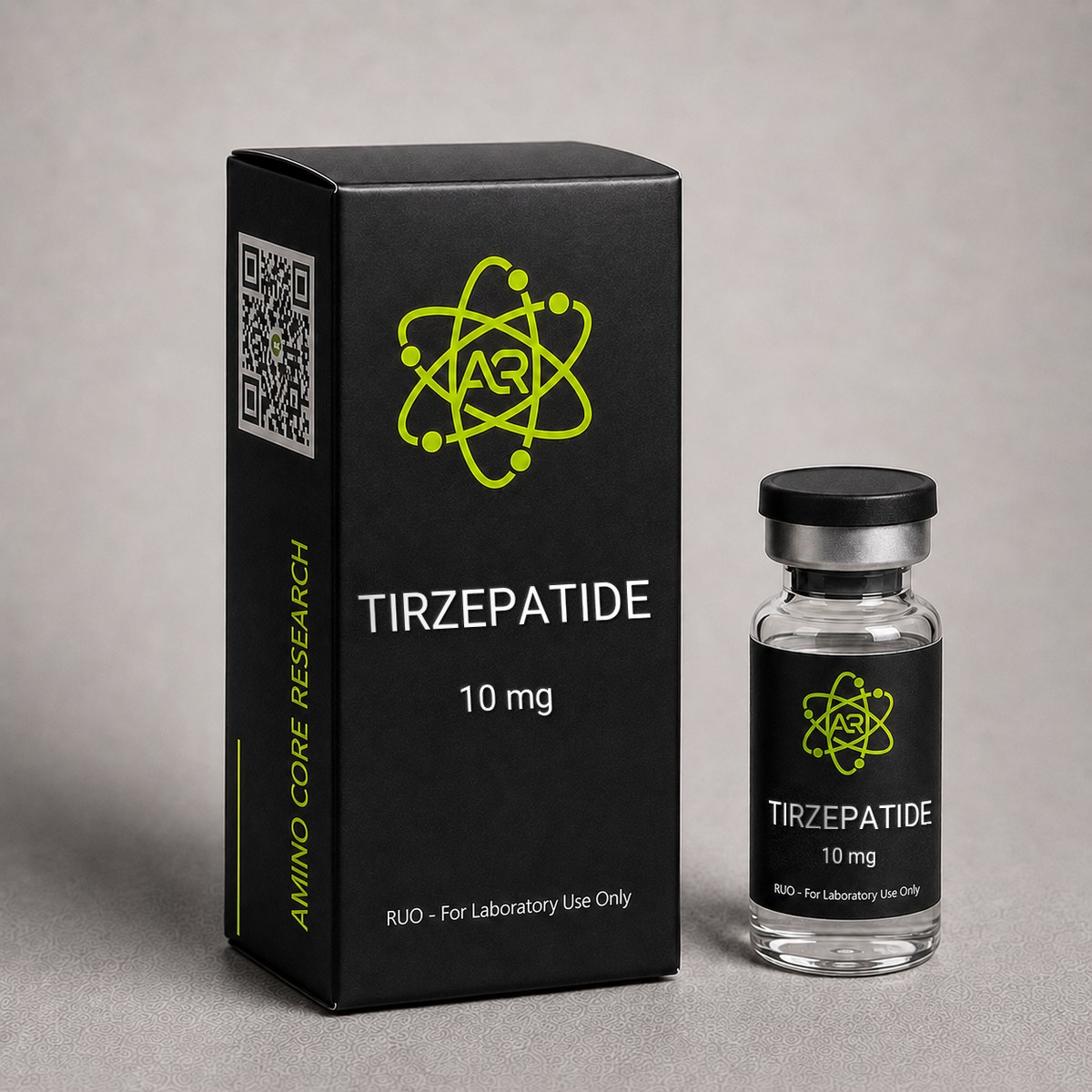
Tirzepatide (TIRZ) Peptide
Dual GLP-1/GIP receptor agonist (twincretin) with once-weekly pharmacokinetics. 39-amino acid GIP-backbone peptide with Aib2/Aib13 modifications and C-20 fatty diacid conjugation. comparative trial Phase 3: -20.9% body metabolic regulation research. First dual incretin studied for metabolic syndrome research.
$89.00 – $229.00
In stock — ships next business day
Best price — free shipping & bac water included
| Simple Peptide | AminoCore ✓ all‑in | |
|---|---|---|
| 30mg price | $168.00 | $179.00 |
| Shipping | +$13.00 | FREE |
| Bac Water | +$30.00 | FREE |
| Total paid | $211.00 | $179.00 save up to $32.00 |
Quick Facts
| SKU | AC-AMGLP2 |
|---|---|
| CAS Number | 2023788-19-2 |
| Molecular Formula | C225H348N48O68 |
| Molecular Weight | 4813.45 g/mol |
| Sequence | YXEGTFTSDYSIXLDKIAQKAFVQWLIAGGPSSGAPPPS (X = Aib at positions 2 and 13; Lys20 conjugated to γGlu-C18 fatty diacid) |
| Purity | ≥99% |
| Physical Form | Lyophilized Powder |
| Storage | Store at -20°C |
What is Tirzepatide?
Tirzepatide is a first-in-class 39-amino acid synthetic peptide designed as a dual agonist of the glucose-dependent insulinotropic polypeptide (GIP) receptor and the glucagon-like peptide-1 (GLP-1) receptor. With a molecular weight of 4813.45 g/mol and CAS registry number 2023788-19-2, it represents the first "twincretin" — a molecule capable of simultaneously activating two incretin hormone pathways. Developed by Eli Lilly and Company, Tirzepatide is based on the native GIP amino acid sequence with strategic modifications to enable dual receptor activity. The peptide contains two non-coded aminoisobutyric acid (Aib) residues at positions 2 and 13, which confer resistance to DPP-4 cleavage and enhance metabolic stability. A C-20 fatty diacid moiety is conjugated at lysine-20 via a gamma-glutamic acid and dual AEEA (aminoethyloxyethyloxyacetic acid) linker, enabling albumin binding and an extended half-life suitable for once-weekly administration. In preclinical binding assays, Tirzepatide demonstrates preferential affinity for the GIP receptor (EC₅₀ 0.135 nM) over the GLP-1 receptor (EC₅₀ 13.3 nM), a pharmacological profile that distinguishes it from selective GLP-1 receptor agonists. The clinical development program includes the SURPASS trials (type 2 glycemic homeostasis research) and comparative trial trials (weight management). Tirzepatide is available at AminoCore Research exclusively for laboratory and scientific investigation.
Mechanism of Action
Tirzepatide's unique pharmacology stems from its ability to simultaneously activate two incretin hormone receptors — GIP and GLP-1 — producing synergistic metabolic effects that exceed those achieved by activation of either receptor alone. GIP Receptor Activation Glucose-dependent insulinotropic polypeptide (GIP) is the dominant incretin hormone in healthy individuals, responsible for approximately 60-70% of the incretin effect on insulin secretion. Tirzepatide mimics native GIP with high potency at the GIP receptor, stimulating glucose-dependent insulin secretion from pancreatic beta cells. GIP receptor activation also influences adipose tissue biology — research suggests it may improve insulin sensitivity in adipocytes, enhance lipid storage capacity, and modulate energy expenditure, contributing to favorable effects on body composition. GLP-1 Receptor Activation Through its GLP-1 receptor activity, Tirzepatide suppresses glucagon secretion in a glucose-dependent manner, delays gastric emptying, and activates central satiety pathways in the hypothalamus and brainstem. These effects reduce food intake, lower postprandial glucose excursions, and promote metabolic regulation research. Synergistic Dual Incretin Signaling The combination of GIP and GLP-1 receptor activation produces effects greater than either pathway alone. Co-infusion studies in humans have demonstrated that simultaneous GIP and GLP-1 administration produces a synergistically increased insulin response and enhanced glucagonostatic effect compared to separate administration. Tirzepatide's biased agonism at the GLP-1 receptor — favoring cAMP signaling over beta-arrestin recruitment — may also contribute to its enhanced tolerability profile compared to selective GLP-1 receptor agonists. Effects on Energy Expenditure Preclinical research indicates that Tirzepatide increases tricarboxylic acid (TCA) cycle intermediate levels in brown adipose tissue, suggesting enhanced thermogenic activity independent of metabolic regulation research. This finding points to a direct metabolic effect on energy expenditure pathways.
Research & Clinical Studies
SURPASS-2 Trial: Glycemic Control vs. Semaglutide
The SURPASS-2 trial was a pivotal head-to-head comparison of Tirzepatide versus Semaglutide 1.0 mg in patients with type 2 glycemic homeostasis research. This 40-week, randomized, open-label, phase 3 trial enrolled 1,879 adults with type 2 glycemic homeostasis research inadequately controlled with metformin alone. Participants were randomized to receive once-weekly Tirzepatide (5 mg, 10 mg, or 15 mg) or once-weekly Semaglutide 1.0 mg. The primary endpoint was change in HbA1c from baseline to week 40. All three Tirzepatide doses demonstrated superior HbA1c reduction compared to Semaglutide 1.0 mg. Mean HbA1c reductions were: Tirzepatide 5 mg (−2.01%), Tirzepatide 10 mg (−2.24%), Tirzepatide 15 mg (−2.30%), versus Semaglutide 1.0 mg (−1.86%). The proportions of patients achieving HbA1c <7.0% were 82%, 86%, and 86% with Tirzepatide 5, 10, and 15 mg, respectively, compared to 79% with Semaglutide. Tirzepatide also produced greater metabolic regulation research: mean reductions of −7.6 kg, −9.3 kg, and −11.2 kg with Tirzepatide 5, 10, and 15 mg, compared to −5.7 kg with Semaglutide 1.0 mg. This trial provided the first clinical evidence that dual incretin receptor agonism could produce metabolic effects exceeding those of a potent selective GLP-1 receptor agonist.
[1] Frías JP, et al. Tirzepatide versus Semaglutide Once Weekly in Patients with Type 2 Diabetes. N Engl J Med. 2021;385(6):503-515. PubMed ↗
comparative trial-1 Trial: Body Weight Regulation Research
The comparative trial-1 trial was a landmark randomized, double-blind, placebo-controlled study evaluating Tirzepatide for weight management in adults without glycemic homeostasis research. Published in the New England Journal of Medicine in 2022, the trial enrolled 2,539 adults with BMI ≥30, or ≥27 with at least one weight-related comorbidity. Participants were randomized to once-weekly Tirzepatide (5 mg, 10 mg, or 15 mg) or placebo for 72 weeks, in addition to a reduced-calorie diet and increased physical activity. The co-primary endpoints were percentage change in body weight and achievement of ≥5% metabolic regulation research. Results were remarkable: at 72 weeks, mean percentage body weight changes were −15.0% (Tirzepatide 5 mg), −19.5% (Tirzepatide 10 mg), and −20.9% (Tirzepatide 15 mg), versus −3.1% with placebo. The proportion achieving ≥20% metabolic regulation research was 30%, 44%, and 48% for Tirzepatide 5, 10, and 15 mg, respectively, compared to 3% with placebo. Participants also experienced substantial improvements in cardiometabolic risk factors, including reductions in waist circumference, systolic and diastolic blood pressure, fasting insulin, and triglycerides, with increases in HDL cholesterol. The comparative trial-1 results established Tirzepatide as the most potent pharmacological weight-management agent evaluated in randomized clinical trials at that time.
[2] Jastreboff AM, et al. Tirzepatide Once Weekly for the Treatment of Obesity. N Engl J Med. 2022;387(4):327-340. PubMed ↗
SURPASS-4 Trial: Cardiovascular Safety Research
The SURPASS-4 trial evaluated Tirzepatide versus insulin glargine in patients with type 2 glycemic homeostasis research at high cardiovascular risk. This open-label, randomized trial enrolled 2,002 adults with type 2 glycemic homeostasis research and elevated cardiovascular risk (prior cardiovascular event, or high CV risk factors) inadequately controlled with 1-3 oral antiglycemic homeostasis research agents. Participants were randomized to Tirzepatide (5, 10, or 15 mg once weekly) or insulin glargine (titrated to fasting glucose <100 mg/dL) for up to 104 weeks. The primary endpoint was non-inferiority of Tirzepatide versus glargine for change in HbA1c. A prespecified cardiovascular safety meta-analysis (MACE-4: cardiovascular death, MI, stroke, or hospitalization for unstable angina) was also conducted. All Tirzepatide doses demonstrated superior HbA1c reduction compared to insulin glargine (−2.1% to −2.4% vs. −1.4%). Tirzepatide produced metabolic regulation research of 7.1 to 11.7 kg compared to weight gain of 1.9 kg with glargine. The cardiovascular safety meta-analysis across SURPASS trials showed a hazard ratio of 0.80 (95% CI, 0.57–1.11) for MACE-4 with Tirzepatide versus comparators, indicating no cardiovascular signal and a trend toward benefit. These findings in a high-risk cardiovascular population demonstrated that Tirzepatide could achieve both glycemic and weight targets superior to basal insulin while maintaining cardiovascular safety.
[3] Del Prato S, et al. Tirzepatide versus insulin glargine in type 2 diabetes and increased cardiovascular risk (SURPASS-4): a randomised, open-label, parallel-group, multicentre, phase 3 trial. Lancet. 2021;398(10313):1811-1824. PubMed ↗
comparative trial-2 Trial: Weight Management in Type 2 Glycemic homeostasis research
The comparative trial-2 trial evaluated Tirzepatide for weight management specifically in adults with metabolic syndrome research or overweight and type 2 glycemic homeostasis research — a population historically more resistant to pharmacological metabolic regulation research interventions. This randomized, double-blind, placebo-controlled trial enrolled 938 adults. Participants received once-weekly Tirzepatide (10 mg or 15 mg) or placebo for 72 weeks alongside lifestyle intervention. Co-primary endpoints were percentage change in body weight and proportion achieving ≥5% metabolic regulation research. At 72 weeks, mean body metabolic regulation researchs were −12.8% with Tirzepatide 10 mg and −14.7% with Tirzepatide 15 mg, versus −3.2% with placebo. The proportion achieving ≥15% metabolic regulation research was 32% and 40% for Tirzepatide 10 and 15 mg, respectively, compared to 2% with placebo. These results were particularly notable given that concurrent type 2 glycemic homeostasis research typically attenuates metabolic regulation research responses to GLP-1 pathway pharmacology. HbA1c reductions were −2.1% (10 mg) and −2.1% (15 mg) versus −0.5% (placebo), with 83% and 87% of Tirzepatide-treated participants achieving HbA1c <7.0%. Significant improvements in cardiometabolic risk factors including blood pressure, lipids, and liver enzymes were also observed, reinforcing the integrated metabolic benefits of dual incretin receptor agonism.
[4] Garvey WT, et al. Tirzepatide once weekly for the treatment of obesity in people with type 2 diabetes (comparative trial): a double-blind, randomised, multicentre, placebo-controlled, phase 3 trial. Lancet. 2023;402(10402):613-626. PubMed ↗
Preclinical Research: Brown Adipose Tissue Activation
Preclinical studies have investigated the metabolic mechanisms underlying Tirzepatide's effects beyond appetite suppression and glycemic control. Samms et al. published findings demonstrating that Tirzepatide increases tricarboxylic acid (TCA) cycle intermediate levels in brown adipose tissue (BAT) in mouse models, suggesting enhanced thermogenic activity independent of metabolic regulation research. Brown adipose tissue is a metabolically active tissue that dissipates energy as heat through the activity of uncoupling protein 1 (UCP1). In diet-induced obese mice, Tirzepatide treatment increased concentrations of citrate, isocitrate, α-ketoglutarate, succinate, fumarate, and malate in BAT — key intermediates in the mitochondrial energy metabolism cycle. These changes were not observed with pair-feeding alone, suggesting a direct pharmacological effect rather than a secondary consequence of reduced food intake. Additional preclinical findings suggest that Tirzepatide may influence lipid metabolism in white adipose tissue, potentially promoting a shift toward smaller, more insulin-sensitive adipocytes. GIP receptor activation on adipocytes may enhance lipid storage capacity and improve insulin sensitivity, contributing to improved metabolic health even at a given body weight. These preclinical insights suggest that Tirzepatide's metabolic benefits may extend beyond metabolic regulation research and glycemic control to include direct effects on tissue-level energy metabolism, potentially explaining the robust cardiometabolic improvements observed in clinical trials.
[5] Samms RJ, et al. Tirzepatide increases TCA cycle intermediate levels in brown adipose tissue independent of weight loss. Obesity. 2023;31(S2):27-28. PubMed ↗
[6] Willard FS, et al. Tirzepatide is an imbalanced and biased dual GIP and GLP-1 receptor agonist. JCI Insight. 2020;5(17):e140532. PubMed ↗
Chemical & Physical Properties
| Property | Value |
|---|---|
| IUPAC Name | Tirzepatide |
| Molecular Formula | C₂₂₅H₃₄₈N₄₈O₆₈ |
| Molecular Weight | 4813.45 g/mol |
| CAS Number | 2023788-19-2 |
| Amino Acid Count | 39 |
| Non-Coded Residues | Aib at positions 2 and 13 |
| Lipid Conjugation | C-20 fatty diacid at Lys20 via γGlu-AEEA-AEEA linker |
| Parent Sequence | Native GIP backbone |
| GIP Receptor EC₅₀ | 0.135 nM |
| GLP-1 Receptor EC₅₀ | 13.3 nM |
| Physical Form | White to off-white lyophilized powder |
| Solubility | Soluble in water; slightly soluble in DMSO and acetonitrile |
| Purity | ≥99% (HPLC verified) |
| C-Terminal | Amidated (-NH₂) |
| Storage Temperature | -20°C (long-term), 2-8°C (short-term) |
| Shelf Life | 24 months when stored properly at -20°C |
Handling & Reconstitution Guidelines
Reconstitution Protocol Tirzepatide lyophilized powder should be reconstituted using sterile bacteriostatic water (BAC water) or sterile phosphate-buffered saline (PBS, pH 7.4). Allow the vial to equilibrate to room temperature (15-25°C) before reconstitution. Inject diluent slowly along the inner wall of the vial using a sterile syringe. Do not direct the stream onto the lyophilized cake. Gently swirl until fully dissolved — the solution should be clear and colorless to slightly yellow. Do not vortex or shake vigorously. Recommended Diluent Volumes For a 5 mg vial: 1.0 mL BAC water yields a 5 mg/mL concentration. For a 10 mg vial: 2.0 mL BAC water yields a 5 mg/mL concentration. For a 15 mg vial: 3.0 mL BAC water yields a 5 mg/mL concentration. Adjust volumes based on experimental requirements. Post-Reconstitution Storage Store reconstituted Tirzepatide solution at 2-8°C and use within 28 days. For extended storage, aliquot into single-use volumes in sterile low-bind polypropylene tubes and freeze at -20°C. Avoid repeated freeze-thaw cycles. Handling Precautions Use standard laboratory PPE (nitrile gloves, safety glasses, lab coat). Work under aseptic conditions. Tirzepatide's C-20 fatty diacid moiety increases hydrophobicity — use low-protein-binding tubes, tips, and filters for quantitative work. The amidated C-terminus may exhibit altered solubility characteristics at extreme pH values; maintain solutions near physiological pH (6.5-7.5) for optimal stability.
Storage & Stability Information
Lyophilized Form (Unreconstituted) Store Tirzepatide lyophilized powder at -20°C in its original sealed container, protected from light and moisture. Properly stored lyophilized peptide maintains stability for up to 24 months. Short-term storage at 2-8°C is acceptable for up to 60 days. Avoid exposure to temperatures above 25°C. Reconstituted Solution Reconstituted Tirzepatide should be stored at 2-8°C and used within 28 days. For longer storage, aliquot into single-use volumes and freeze at -20°C for up to 3 months. Minimize freeze-thaw cycles to preserve peptide integrity and biological activity. Stability Considerations Tirzepatide's structural modifications — Aib residues at positions 2 and 13, and the C-20 fatty diacid conjugation — provide enhanced proteolytic stability compared to native incretin peptides. The albumin-binding moiety protects against renal filtration and enzymatic degradation in systemic circulation. However, reconstituted solutions should still be handled with standard peptide care. Monitor for precipitation, turbidity, or discoloration as indicators of degradation. Shipping Tirzepatide is shipped as a lyophilized powder with ice packs to maintain cold chain integrity. Upon receipt, immediately transfer to -20°C storage. Verify package integrity and temperature indicator upon delivery.
Frequently Asked Questions
What is Tirzepatide?
Tirzepatide is a first-in-class 39-amino acid dual agonist peptide targeting both the glucose-dependent insulinotropic polypeptide (GIP) receptor and the glucagon-like peptide-1 (GLP-1) receptor. With a molecular formula of C₂₂₅H₃₄₈N₄₈O₆₈ and molecular weight of 4813.45 g/mol (CAS 2023788-19-2), it represents the first "twincretin" to enter clinical development. It has been studied in the SURPASS and comparative trial clinical trial programs. AminoCore Research provides Tirzepatide exclusively for research purposes.
What makes Tirzepatide a "twincretin"?
The term "twincretin" refers to Tirzepatide's ability to simultaneously activate two incretin hormone receptors — GIP and GLP-1. While selective GLP-1 receptor agonists target only one pathway, Tirzepatide engages both incretin systems to produce synergistic metabolic effects. In vitro, it shows preferential GIP receptor affinity (EC₅₀ 0.135 nM) over GLP-1 receptor (EC₅₀ 13.3 nM). This dual mechanism was shown in the SURPASS-2 trial to produce superior glycemic and weight outcomes versus selective GLP-1R agonism with GLP-1 agonist peptide.
What clinical evidence supports Tirzepatide research?
Tirzepatide has been evaluated in extensive clinical programs: the SURPASS series (type 2 glycemic homeostasis research, including SURPASS-1 through 5 and SURPASS-CVOT) and the comparative trial series (weight management). In SURPASS-2, Tirzepatide demonstrated superior HbA1c and metabolic regulation researchs versus GLP-1 agonist peptide 1.0 mg. In comparative trial-1, the 15 mg dose produced 20.9% mean body metabolic regulation research at 72 weeks. The FDA approved Tirzepatide for type 2 glycemic homeostasis research (2022) and weight management (2023) based on evidence from over 7,700 trial participants.
How should Tirzepatide be stored?
Store lyophilized Tirzepatide at -20°C in a sealed container protected from light and moisture for up to 24 months of stability. After reconstitution, store at 2-8°C and use within 28 days. For extended storage of reconstituted peptide, prepare single-use aliquots in low-bind tubes and freeze at -20°C. Minimize freeze-thaw cycles to preserve peptide integrity and biological activity.
What purity level is available for Tirzepatide?
AminoCore Research provides Tirzepatide at ≥99% purity verified by HPLC analysis. Each vial is accompanied by a Certificate of Analysis (COA) documenting purity testing, identity confirmation, and analytical data for research quality assurance.
How is Tirzepatide reconstituted?
Reconstitute Tirzepatide lyophilized powder using sterile bacteriostatic water or PBS (pH 7.4). Allow the vial to equilibrate to room temperature, inject diluent slowly along the vial wall, and gently swirl until dissolved. The solution should be clear and colorless to slightly yellow. Use low-protein-binding labware due to the C-20 fatty diacid moiety. A typical volume is 1.0 mL per 5 mg vial.
How does Tirzepatide compare to GLP-1 agonist peptide in research?
In the head-to-head SURPASS-2 trial, Tirzepatide (15 mg) produced greater HbA1c reductions (−2.30% vs. −1.86%) and metabolic regulation research (−11.2 kg vs. −5.7 kg) than GLP-1 agonist peptide 1.0 mg at 40 weeks. In separate metabolic syndrome research trials, Tirzepatide 15 mg achieved 20.9% metabolic regulation research (comparative trial-1, 72 weeks) versus GLP-1 agonist peptide 2.4 mg achieving 14.9% (STEP 1, 68 weeks), though direct comparison is limited by differences in trial design and populations.
What sizes are available for Tirzepatide?
AminoCore Research offers Tirzepatide in three vial sizes: 5 mg, 10 mg, and 15 mg. All vials contain lyophilized powder at ≥99% purity (HPLC verified) with a Certificate of Analysis. Choose the appropriate size based on your research protocol and experimental requirements.
What is the molecular weight and CAS number of Tirzepatide?
Tirzepatide (LY3298176) has a molecular weight of 4813.45 g/mol and CAS number 2023788-19-2. Its molecular formula is C225H348N48O68. The peptide consists of 39 amino acids based on the GIP backbone with two alpha-aminoisobutyric acid (Aib) substitutions at positions 2 and 13, and a C20 fatty diacid moiety conjugated via a gamma-glutamate-2x(2-(2-aminoethoxy)ethoxy)acetic acid linker at Lys20. This lipidation enables albumin binding and supports the extended half-life of approximately 5 days that permits once-weekly dosing in research protocols.
How does Tirzepatide differ from Retatrutide in receptor targeting?
Tirzepatide is a dual agonist targeting the GIP and GLP-1 receptors, while Retatrutide (LY3437943) is a triple agonist that additionally activates the glucagon receptor. Tirzepatide shows biased signaling at GLP-1R (favoring cAMP over beta-arrestin recruitment) and full agonism at GIPR. Retatrutide's addition of glucagon receptor activity contributes to increased energy expenditure via hepatic and adipose effects, which may explain the greater weight reduction observed in Phase 2 retatrutide trials (-24.2%) compared with tirzepatide's SURMOUNT-1 results (-20.9%). Both are studied in metabolic and adiposity research models.
Is Tirzepatide sensitive to freeze-thaw cycles in research use?
Yes. Repeated freeze-thaw cycles can accelerate aggregation and degradation of the peptide backbone, particularly at the Aib-modified positions and the fatty acid-linker junction. Researchers typically aliquot the reconstituted solution into single-use volumes immediately after reconstitution and store aliquots at -20°C or -80°C. Reconstituted solution should be kept at 2-8°C for short-term use (up to 4 weeks) and protected from light. Vigorous shaking should be avoided; gentle swirling ensures the C20 diacid moiety does not promote surfactant-like foaming that reduces peptide recovery.
What solvent is recommended for reconstituting Tirzepatide in research?
Bacteriostatic water (0.9% benzyl alcohol) or sterile water for injection are the standard reconstitution solvents for research-grade Tirzepatide. The lyophilized powder should be reconstituted by directing the solvent stream against the vial wall rather than directly onto the powder, then allowed to dissolve without agitation for 2-3 minutes before gentle swirling. A typical concentration of 5 mg/mL (e.g., 10 mg peptide in 2 mL solvent) yields a clear, colorless solution. The presence of the fatty diacid tail confers slight amphiphilic character, so foaming should be avoided during handling.
For laboratory and research use only. This product is not for human or veterinary use. It is not a drug, supplement or food.
This product is not FDA approved for any indication, and is not intended to diagnose, treat, cure, or prevent any disease. All product information is derived from published preclinical research and does not constitute medical advice or claims.