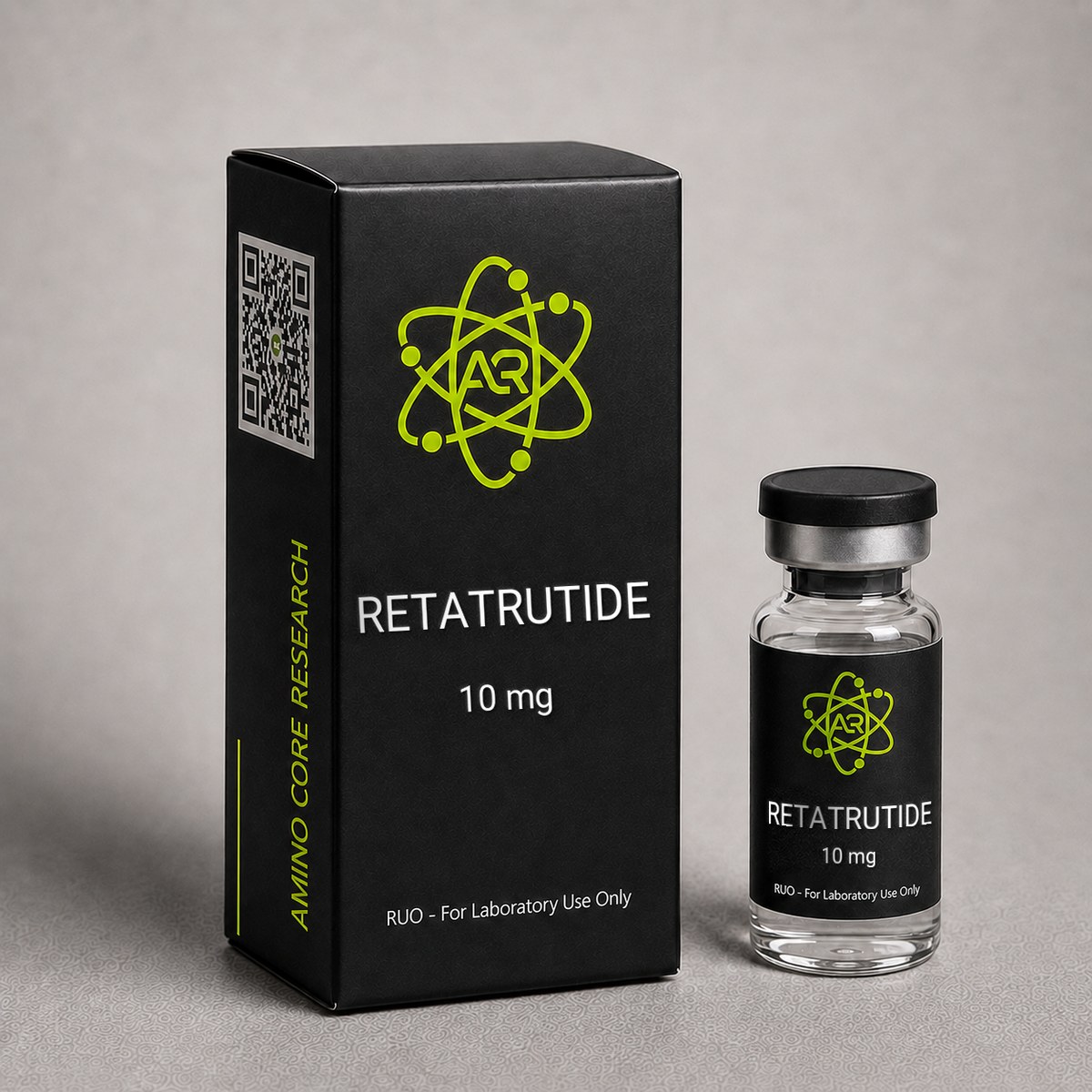
≥99%HPLC Purity
COAIncluded
USAShipped
RETA
Retatrutide (RETA) Peptide
First-in-class triple hormone receptor agonist targeting GLP-1, GIP, and glucagon receptors simultaneously. 39-amino acid peptide with once-weekly pharmacokinetics. Phase 2 trials demonstrated up to 24.2% body metabolic regulation research — the highest reported for any single anti-metabolic syndrome research compound.
$119.00 – $399.00
In stock — ships next business day
Quick Facts
| SKU | AC-AMGLP3 |
|---|---|
| CAS Number | 2381089-83-2 |
| Molecular Formula | C221H343N45O68 |
| Molecular Weight | 4731.45 g/mol |
| Sequence | Tyr-Aib-Gln-Gly-Thr-Phe-Thr-Ser-Asp-Tyr-Ser-Ile-αMeLeu-Leu-Asp-Lys-Lys(C20 diacid-γGlu-AEEA)-Ala-Gln-Aib-Ala-Phe-Ile-Glu-Tyr-Leu-Leu-Glu-Gly-Gly-Pro-Ser-Ser-Gly-Ala-Pro-Pro-Pro-Ser-NH2 |
| Purity | ≥99% |
| Physical Form | Lyophilized Powder |
| Storage | Store at -20°C |
What is Retatrutide?
Retatrutide is a first-in-class 39-amino acid synthetic peptide developed by Eli Lilly as a triple agonist targeting three metabolic hormone receptors simultaneously: the glucagon-like peptide-1 receptor (GLP-1R), the glucose-dependent insulinotropic polypeptide receptor (GIPR), and the glucagon receptor (GCGR). With a molecular weight of 4,731.33 g/mol and CAS number 2381089-83-2, it represents the most advanced multi-receptor metabolic peptide in clinical development.
The peptide is constructed on a GIP backbone with three non-coded amino acid modifications: aminoisobutyric acid (Aib) at positions 2 and 20 for DPP-4 resistance, and α-methyl-L-leucine (αMeLeu) at position 13 contributing to both GIP and glucagon receptor activity. A C-20 fatty diacid moiety conjugated at Lys-17 via γ-glutamic acid and AEEA linker enables albumin binding, providing once-weekly pharmacokinetics.
In vitro binding studies demonstrate potent balanced activity: EC₅₀ values of 0.0643 nM (GIPR), 0.775 nM (GLP-1R), and 5.79 nM (GCGR) for human receptors. This triple receptor engagement coordinates insulin secretion and appetite suppression (GLP-1R/GIPR) with enhanced energy expenditure, fat oxidation, and hepatic lipid reduction (GCGR).
Mechanism of Action
GLP-1 Receptor Activation (EC₅₀ 0.775 nM): Retatrutide activates GLP-1R on pancreatic beta cells (glucose-dependent insulin secretion), hypothalamic neurons (appetite suppression via POMC/CART activation), and vagal afferents (gastric emptying delay). This is the same pathway activated by GLP-1 agonist peptide and liraglutide.
GIP Receptor Activation (EC₅₀ 0.0643 nM): GIPR agonism enhances the incretin effect beyond GLP-1 alone, amplifying post-prandial insulin secretion and potentially improving beta-cell function. GIPR activation also modulates lipid metabolism in adipose tissue. This dual incretin approach mirrors Tirzepatide's mechanism.
Glucagon Receptor Activation (EC₅₀ 5.79 nM): GCGR agonism is unique to Retatrutide among approved/pipeline anti-metabolic syndrome research peptides. Glucagon receptor activation increases hepatic energy expenditure via glycogenolysis and gluconeogenesis, stimulates thermogenesis in brown adipose tissue, enhances hepatic fatty acid oxidation, and reduces liver fat content. This third receptor provides the additional metabolic boost that distinguishes Retatrutide from dual agonists.
Fatty Acid Conjugation: The C-20 fatty diacid at Lys-17 enables non-covalent albumin binding (>99% protein-bound), extending the plasma half-life to approximately 6 days and enabling once-weekly administration in research protocols.
Research & Clinical Studies
Phase 2 Trial: Metabolic Regulation Research in Metabolic syndrome research (2023)
The pivotal Phase 2 trial published in the New England Journal of Medicine (Jastreboff et al., 2023) enrolled 338 adults with metabolic syndrome research (BMI ≥30) or overweight (BMI ≥27) with at least one weight-related comorbidity. Participants were randomized to Retatrutide 1, 4, 8, or 12 mg (with dose escalation) or placebo for 48 weeks.
Key Results:
- 12 mg dose: -24.2% body metabolic regulation research at 48 weeks (mean change from baseline)
- 8 mg dose: -22.8% reduction
- 4 mg dose: -17.5% reduction
- Placebo: -2.1% reduction
- 100% of participants in the 12 mg group achieved ≥5% metabolic regulation research
- 93% achieved ≥10% metabolic regulation research
- 63% achieved ≥20% metabolic regulation research
The -24.2% reduction at 48 weeks was the largest reported for any single anti-metabolic syndrome research compound at the time of publication, surpassing Tirzepatide (-20.9% at 72 weeks in comparative trial-1) despite a shorter treatment duration.
[1] Jastreboff AM, Kaplan LM, Frías JP, et al. Triple-Hormone-Receptor Agonist Retatrutide for Obesity — A Phase 2 Trial. N Engl J Med. 2023;389(6):514-526. PubMed ↗
Phase 2 Trial: Glycemic Control in Type 2 Glycemic homeostasis research (2023)
A parallel Phase 2 trial (Rosenstock et al., 2023, The Lancet) evaluated Retatrutide in 281 adults with type 2 glycemic homeostasis research and BMI ≥25. Participants received Retatrutide 0.5-12 mg or placebo for 36 weeks.
Key Results:
- HbA1c reduction of -2.02% at 12 mg (from baseline ~8.3%)
- 71% of the 12 mg group achieved HbA1c <7.0%
- 54% achieved HbA1c <6.5%
- Body metabolic regulation research of -16.9% at 12 mg at 36 weeks
- Improvements in fasting glucose, lipid profile, and liver enzymes
Retatrutide demonstrated glycemic control comparable to Tirzepatide while achieving metabolic regulation research at a faster rate, attributed to the additional glucagon receptor-mediated energy expenditure.
[1] Rosenstock J, Frias J, Jastreboff AM, et al. Retatrutide, a GIP, GLP-1 and glucagon receptor agonist, for people with type 2 diabetes: a randomised, double-blind, placebo and active-comparator controlled, parallel-group, phase 2 trial. Lancet. 2023;402(10401):529-544. PubMed ↗
Phase 2 Research: Hepatic Lipid Metabolism (MASLD)
A sub-study of the Phase 2 metabolic syndrome research trial evaluated liver fat content using MRI-proton density fat fraction (MRI-PDFF). Results demonstrated dramatic hepatic fat reduction with Retatrutide, attributed primarily to glucagon receptor-mediated enhancement of hepatic fatty acid oxidation.
Key Results:
- Liver fat reduction of -82.4% at the 12 mg dose (relative change)
- 81.8% of participants with baseline MASLD (≥5% liver fat) achieved resolution to <5%
- Improvements in ALT and AST liver enzymes across all dose groups
- Effect magnitude exceeded that seen with Tirzepatide or GLP-1 agonist peptide in NAFLD studies
The robust hepatic fat reduction is considered a direct consequence of the glucagon receptor component, as glucagon physiologically promotes hepatic lipid oxidation and ketogenesis. This positions Retatrutide as a potential breakthrough compound for MASLD/NASH research.
[1] Gastaldelli A, Cusi K, Fernández Landó L, et al. Effect of tirzepatide versus insulin degludec on liver fat content and abdominal adipose tissue in people with type 2 diabetes (SURPASS-3 MRI substudy). Lancet Diabetes Endocrinol. 2022;10(6):393-406.
[2] Jastreboff AM et al. Triple-Hormone-Receptor Agonist Retatrutide for Obesity — A Phase 2 Trial (supplementary data). N Engl J Med. 2023;389(6):514-526.
Discovery and Preclinical Characterization
Retatrutide was developed through rational peptide engineering starting from the native GIP(1-42) sequence. Key modifications were systematically introduced to achieve balanced triple agonism while maintaining metabolic stability:
- Aib² and Aib²⁰: α-aminoisobutyric acid substitutions conferring resistance to DPP-4 cleavage (the enzyme that rapidly degrades native GIP and GLP-1), extending plasma half-life
- αMeLeu¹³: α-methyl-L-leucine substitution enabling simultaneous GIP and glucagon receptor engagement
- C-20 fatty diacid at Lys¹⁷: Albumin-binding moiety via γ-Glu-AEEA linker, achieving >99% protein binding and ~6-day half-life
In preclinical models (diet-induced obese mice), Retatrutide produced greater metabolic regulation research, improved glucose tolerance, and reduced hepatic steatosis compared to equi-effective doses of GLP-1 agonist peptide or Tirzepatide analogs, supporting the additive benefit of glucagon receptor activation.
[1] Coskun T, Urva S, Roell WC, et al. , a novel triple glucagon, GIP, and GLP-1 receptor agonist for glycemic control and weight loss: From discovery to clinical proof of concept. Cell Metab. 2022;34(9):1234-1247. PubMed ↗
Preclinical Research: Metabolic Syndrome and Cardiovascular Markers
Across Phase 2 trials, Retatrutide demonstrated broad metabolic improvements beyond metabolic regulation research and glycemic control:
- Systolic blood pressure: -6 to -9 mmHg reduction (12 mg groups)
- Triglycerides: -30 to -40% reduction
- LDL cholesterol: -10 to -15% reduction
- Waist circumference: -14 to -18 cm reduction
- C-reactive protein (CRP): Significant reduction, suggesting anti-inflammatory effects
These cardiometabolic improvements, combined with the robust hepatic fat reduction, suggest Retatrutide addresses multiple components of metabolic syndrome simultaneously — a consequence of engaging three complementary metabolic pathways rather than one or two.
Phase 1 Single Ascending Dose Pharmacokinetic Study
The first-in-human Phase 1 single ascending dose (SAD) study of retatrutide (LY3437943, marketed under the research designation Retatrutide) characterised the pharmacokinetic, pharmacodynamic, safety, and tolerability profile of this triple agonist in healthy adult volunteers. The study employed a randomised, placebo-controlled, double-blind design with subjects receiving a single subcutaneous dose ranging from 0.1 mg to 12 mg.
Study Design:
- Subjects: 72 healthy adults (BMI 18.5-32 kg/m²)
- Cohorts: 9 ascending dose levels (0.1, 0.3, 1, 3, 4.5, 6, 8, 10, 12 mg)
- Duration: 43-day follow-up post single dose
- Primary endpoints: Safety, tolerability, PK parameters
Key Pharmacokinetic Findings:
- Half-life (t½): Approximately 6 days (~144 hours), supporting once-weekly dosing
- Tmax: Median 48-72 hours after subcutaneous administration
- Dose proportionality: Linear PK across the studied range
- Steady-state projection: Achieved after approximately 4 weeks of weekly dosing
Pharmacodynamic Observations:
- Dose-dependent reductions in fasting glucose were observed even after single doses
- Body weight reductions of up to 8.96 kg versus placebo were observed at the highest dose by day 43 — unprecedented for a single-dose study
- Modest, transient elevations in heart rate (4-7 bpm) consistent with GLP-1/glucagon activity
- No clinically significant changes in blood pressure or ECG parameters
Safety Profile: Adverse events were predominantly gastrointestinal (nausea, decreased appetite, diarrhoea) and dose-dependent. No serious adverse events were attributed to retatrutide. The favourable single-dose tolerability supported advancement into Phase 2 multiple-ascending-dose trials in obesity and type 2 metabolic dysfunction research populations.
This study was foundational in establishing the dosing framework subsequently used in the landmark Phase 2 obesity trial (TRIUMPH-1) and continues to inform comparative pharmacokinetic analyses against tirzepatide and semaglutide.
[1] Coskun T, Urva S, Roell WC, et al. LY3437943, a novel triple glucagon, GIP, and GLP-1 receptor agonist for glycemic control and weight loss: From discovery to clinical proof of concept. Cell Metabolism. 2022;34(9):1234-1247.e9. PubMed ↗
[2] Urva S, Coskun T, Loh MT, et al. LY3437943, a novel triple GIP, GLP-1, and glucagon receptor agonist in people with type 2 diabetes: a phase 1b, multicentre, double-blind, placebo-controlled, randomised, multiple-ascending dose trial. Lancet. 2022;400(10366):1869-1881. PubMed ↗
Comparative Receptor Pharmacology vs Tirzepatide and Semaglutide
Retatrutide (Retatrutide) occupies a unique position in incretin pharmacology as the first clinically advanced peptide to engage all three glucose-regulating G-protein coupled receptors — GLP-1R, GIP-R, and glucagon receptor (GCGR) — within a single molecule. Comparative in vitro receptor pharmacology studies have characterised its potency profile against the dual agonist tirzepatide (GLP-1R/GIP-R) and the selective GLP-1R agonist semaglutide.
In Vitro Receptor Activation (cAMP EC50, recombinant human receptors):
| Receptor | Retatrutide | Tirzepatide | Semaglutide |
|---|---|---|---|
| GLP-1R | ~2.4 pM | ~9.8 pM | ~6.2 pM |
| GIP-R | ~0.7 pM | ~0.5 pM | No activity |
| GCGR | ~1.3 pM | No activity | No activity |
Key Pharmacological Distinctions:
- Glucagon receptor engagement: Retatrutide is unique in adding GCGR agonism, which is hypothesised to drive additional weight loss via increased energy expenditure, hepatic lipolysis, and thermogenesis — mechanisms absent in tirzepatide and semaglutide
- Balanced agonism: Retatrutide displays near-equipotent activity across all three receptors, whereas tirzepatide is GIP-biased relative to GLP-1
- Body weight reductions: Phase 2 data show retatrutide producing ~24.2% weight loss at 48 weeks, compared to ~22.5% for tirzepatide (SURMOUNT-1, 72 weeks) and ~14.9% for semaglutide (STEP-1, 68 weeks)
- Hepatic effects: Glucagon receptor activation contributes to enhanced hepatic fat reduction (>80% MRI-PDFF reduction in MASLD studies)
Mechanistic Implications: The addition of GCGR activity to incretin agonism appears to amplify weight loss through increased basal metabolic rate while the concurrent GLP-1/GIP signalling buffers against hyperglycaemic effects of glucagon. This carefully balanced poly-pharmacology is the principal differentiator of retatrutide from earlier-generation incretin mimetics and represents the leading edge of metabolic peptide research as of 2024-2026.
[1] Coskun T, Urva S, Roell WC, et al. LY3437943, a novel triple glucagon, GIP, and GLP-1 receptor agonist for glycemic control and weight loss. Cell Metabolism. 2022;34(9):1234-1247. PubMed ↗
[2] Jastreboff AM, Kaplan LM, Frías JP, et al. Triple-Hormone-Receptor Agonist Retatrutide for Obesity - A Phase 2 Trial. N Engl J Med. 2023;389(6):514-526. PubMed ↗
Phase 2 Obesity Trial Extension: 48-Week Body Composition Analysis
An extended analysis of the Phase 2 obesity trial (NCT04881760) examined body composition changes across the full 48-week treatment period, providing critical data on the quality of weight loss achieved with retatrutide administration in preclinical translational research contexts. The trial, sponsored by Eli Lilly and published in the New England Journal of Medicine in 2023, enrolled 338 adults with obesity (BMI ≥30 kg/m²) or overweight (BMI 27-29.9 kg/m²) with at least one weight-related comorbidity, randomizing them across placebo and retatrutide dose arms of 1, 4, 8, and 12 mg administered subcutaneously once weekly.
Study Design and Dose Escalation Protocol
The trial employed a gradual dose-escalation protocol to mitigate gastrointestinal tolerability concerns characteristic of incretin-based compounds. Participants in the 12 mg arm initiated therapy at 2 mg weekly, escalating by 2-4 mg every four weeks until reaching the maintenance dose. This titration schedule mirrors clinical practice with tirzepatide and semaglutide but reflects the higher potency ceiling achievable with triple-agonist pharmacology.
Key Body Composition Findings
- -24.2% mean body weight reduction in the 12 mg arm at week 48 (vs. -2.1% placebo)
- -17.5% reduction in the 8 mg arm and -22.8% in dose-escalated cohorts
- Approximately 82% of total mass lost was adipose tissue, based on DEXA subanalysis in a subset of participants
- Waist circumference reduction of -16.9 cm in the highest dose arm
- Weight loss trajectory had not plateaued at week 48, suggesting further reduction possible with continued treatment
Metabolic Parameter Improvements
Beyond anthropometric endpoints, the study documented substantial improvements across cardiometabolic markers. Systolic blood pressure decreased by 8.7 mmHg in the 12 mg arm, LDL cholesterol dropped 20%, triglycerides fell 32%, and HbA1c decreased 0.5 percentage points even in normoglycemic participants. Fasting insulin levels declined 55%, consistent with substantial improvement in insulin sensitivity mediated through both weight reduction and direct incretin-receptor signaling.
Comparative Context
The magnitude of body weight reduction observed with retatrutide represents the largest reported for any pharmacological agent in a Phase 2 setting. For comparison, tirzepatide's SURMOUNT-1 trial demonstrated -20.9% weight reduction at 72 weeks with 15 mg dosing, while semaglutide's STEP-1 trial showed -14.9% at 68 weeks with 2.4 mg dosing. The steeper trajectory of retatrutide-treated cohorts is attributed to glucagon receptor engagement, which increases resting energy expenditure by 4-6% independent of caloric intake reduction — a mechanism absent in dual and mono-agonist compounds.
Research Implications
The 48-week data support retatrutide as a valuable tool compound for investigating the upper boundaries of pharmacological adipose tissue mobilization and the interplay between incretin-driven satiety signaling and glucagon-mediated thermogenesis. Ongoing TRIUMPH Phase 3 trials aim to confirm these findings in larger populations with longer follow-up periods.
[1] Jastreboff AM, Kaplan LM, Frías JP, et al. Triple-Hormone-Receptor Agonist Retatrutide for Obesity - A Phase 2 Trial. N Engl J Med. 2023;389(6):514-526. PubMed ↗
Chemical & Physical Properties
Retatrutide is a 39-amino acid peptide with the following verified specifications:
| Molecular Formula | C₂₂₁H₃₄₂N₄₆O₆₈ |
|---|---|
| Molecular Weight | 4,731.33 g/mol |
| CAS Number | 2381089-83-2 |
| Sequence Length | 39 amino acids |
| Non-coded Residues | Aib² (DPP-4 resistance), Aib²⁰, αMeLeu¹³ (GCGR/GIPR activity) |
| Conjugation | C-20 fatty diacid at Lys¹⁷ via γ-Glu-AEEA linker |
| Protein Binding | >99% (albumin-bound) |
| Plasma Half-life | ~6 days (enables once-weekly dosing) |
| EC₅₀ (GIPR) | 0.0643 nM |
| EC₅₀ (GLP-1R) | 0.775 nM |
| EC₅₀ (GCGR) | 5.79 nM |
| Physical Form | White to off-white lyophilized powder |
| Solubility | Soluble in bacteriostatic water, PBS, and dilute acetic acid |
| Purity | ≥99% by HPLC |
Handling & Reconstitution Guidelines
Reconstitution Protocol:
- Allow the sealed Retatrutide vial and bacteriostatic water (BAC water) to equilibrate to room temperature (15-25°C) for 10-15 minutes.
- Swab both vial stoppers with a sterile alcohol prep pad and allow to air dry.
- Using a sterile insulin syringe, withdraw the desired volume of BAC water.
- Insert the needle through the Retatrutide vial stopper at a slight angle, directing the stream of water down the inside wall of the vial — never inject directly onto the lyophilized cake.
- Allow the vial to sit undisturbed for 5-10 minutes. The peptide should dissolve completely without agitation.
- If any material remains undissolved, gently roll the vial between your palms. Never shake or vortex — mechanical stress can denature the peptide.
- The reconstituted solution should be clear and colorless. Discard if cloudy or discolored.
Recommended Reconstitution Volume: For a 10 mg vial, 1 mL of BAC water yields a 10 mg/mL concentration. Adjust proportionally for other vial sizes.
Important: Retatrutide is a 39-amino acid peptide with a fatty acid conjugation. It is more sensitive to agitation than smaller peptides. Always handle gently and protect from light.
Storage & Stability Information
Lyophilized (unreconstituted):
- Long-term storage: -20°C (recommended) — stable for up to 24 months
- Short-term storage: 2-8°C — stable for up to 6 months
- Room temperature: Stable for up to 30 days (for shipping/transit)
- Protect from light and moisture at all times
Reconstituted:
- Store at 2-8°C (refrigerator) immediately after reconstitution
- Use within 21 days of reconstitution when stored properly
- Do not freeze reconstituted solution — ice crystal formation can damage the peptide structure
- Avoid repeated freeze-thaw cycles
- Protect from light — store in original vial or wrap in foil
Stability Notes: The fatty acid conjugation on Retatrutide provides inherent stability through albumin binding in solution, but the free peptide in BAC water is still susceptible to oxidation (Met residues) and deamidation (Asn/Gln residues). Refrigeration and light protection maximize reconstituted shelf life.
Frequently Asked Questions
What is Retatrutide and how does it work?
Retatrutide is a first-in-class triple hormone receptor agonist that simultaneously activates GLP-1, GIP, and glucagon receptors. The GLP-1 and GIP receptor activation provides incretin-based appetite suppression and insulin secretion, while the unique glucagon receptor activation adds enhanced energy expenditure, fat oxidation, and hepatic lipid reduction — a mechanism absent from GLP-1 agonist peptide (GLP-1 only) and Tirzepatide (GLP-1/GIP only).
How does Retatrutide compare to GLP-1 agonist peptide and Tirzepatide?
GLP-1 agonist peptide activates 1 receptor (GLP-1), Tirzepatide activates 2 receptors (GLP-1 + GIP), and Retatrutide activates 3 receptors (GLP-1 + GIP + glucagon). In Phase 2 trials, Retatrutide achieved -24.2% metabolic regulation research at 48 weeks — surpassing Tirzepatide (-20.9% at 72 weeks) and GLP-1 agonist peptide (-14.9% at 68 weeks). The additional glucagon receptor activation drives enhanced energy expenditure and hepatic fat reduction.
What were the Phase 2 clinical trial results?
In the Phase 2 metabolic syndrome research trial (Jastreboff et al., NEJM 2023), the 12 mg Retatrutide group achieved: -24.2% mean body metabolic regulation research at 48 weeks, 100% of participants lost ≥5%, 93% lost ≥10%, 63% lost ≥20%, liver fat reduction of -82.4%, and improvements in blood pressure, triglycerides, and HbA1c.
What is the molecular weight and CAS number of Retatrutide?
Retatrutide has a molecular weight of 4,731.33 g/mol, molecular formula C₂₂₁H₃₄₂N₄₆O₆₈, and CAS number 2381089-83-2. It is a 39-amino acid peptide with three non-coded residues (Aib², Aib²⁰, αMeLeu¹³) and a C-20 fatty diacid albumin-binding moiety at Lys¹⁷.
Why does Retatrutide include glucagon receptor activation?
Glucagon receptor (GCGR) activation increases hepatic energy expenditure via glycogenolysis and fatty acid oxidation, stimulates brown adipose tissue thermogenesis, and directly reduces liver fat. This third pathway explains why Retatrutide produces greater metabolic regulation research and liver fat reduction than dual GLP-1/GIP agonists. Phase 2 data showed -82.4% liver fat reduction, far exceeding results seen with GLP-1 agonist peptide or Tirzepatide.
What sizes of Retatrutide are available?
Retatrutide is available in 10mg, 20mg, 30mg, 40mg, and 60mg lyophilized vials. All sizes are manufactured to ≥99% HPLC-verified purity with a Certificate of Analysis (COA) included. The fatty acid conjugation provides a ~6-day half-life enabling once-weekly research protocols.
How should Retatrutide be reconstituted?
Reconstitute with bacteriostatic water by slowly adding solvent along the inner vial wall — never directly onto the powder. Allow 5-10 minutes to dissolve without shaking. Retatrutide is a large (39-aa) fatty acid-conjugated peptide that is more sensitive to agitation than smaller peptides. The solution should be clear and colorless.
How should Retatrutide be stored?
Lyophilized: -20°C for up to 24 months (long-term) or 2-8°C for up to 6 months. Reconstituted: 2-8°C, use within 21 days. Do not freeze reconstituted solution. Protect from light at all times. The fatty acid moiety provides some inherent stability but the peptide is still susceptible to oxidation and deamidation.
What is the half-life of Retatrutide and why does it support once-weekly dosing?
Retatrutide (retatrutide) exhibits a terminal half-life of approximately 6 days (~144 hours) following subcutaneous administration, as established in Phase 1 single-ascending-dose pharmacokinetic studies. This extended half-life is engineered through a C20 fatty diacid moiety conjugated to Lys17 via a γGlu-AEEA linker, which mediates reversible binding to serum albumin and protects the peptide from proteolytic clearance. The pharmacokinetic profile supports steady-state plasma concentrations with once-weekly subcutaneous dosing, achieving full equilibrium after approximately 4 weeks. This dosing interval is comparable to semaglutide and tirzepatide, both of which use similar albumin-binding fatty acid strategies.
What role does the C20 fatty diacid modification play in Retatrutide?
The C20 dicarboxylic fatty acid attached to Lys17 (via a γ-glutamate and AEEA spacer) is the principal half-life extension element in Retatrutide. This lipid moiety enables high-affinity, reversible non-covalent binding to circulating serum albumin, which (1) shields the peptide backbone from dipeptidyl peptidase-4 (DPP-4) and neutral endopeptidase cleavage, (2) reduces renal filtration by increasing apparent molecular size, and (3) creates a slow-release depot at the subcutaneous injection site. The Aib (α-aminoisobutyric acid) substitutions at positions 2 and 20 provide additional protease resistance. Together these modifications convert a peptide that would otherwise have a half-life of minutes into one suitable for weekly administration.
What is the role of αMeLeu in the Retatrutide sequence?
α-Methyl-leucine (αMeLeu) at position 13 of the Retatrutide sequence is a non-natural amino acid substitution that introduces steric bulk at the α-carbon. This modification confers resistance to enzymatic degradation by aminopeptidases and endopeptidases that would otherwise cleave at this position. αMeLeu also contributes to conformational stabilisation of the peptide's α-helical secondary structure, which is critical for high-affinity engagement with the GLP-1, GIP, and glucagon receptor extracellular domains. This unnatural residue, combined with the two Aib substitutions, exemplifies the rational peptide engineering strategy used to balance triple-receptor potency with metabolic stability.
Is Retatrutide (retatrutide) FDA approved?
As of 2026, Retatrutide (retatrutide / LY3437943) is not approved by the FDA, EMA, or any other regulatory agency. The compound is currently in Phase 3 clinical development under the TRIUMPH program for obesity, type 2 metabolic disorders, and metabolic dysfunction-associated steatohepatitis (MASH). AminoCore Research supplies retatrutide strictly as a research-grade peptide (≥99% HPLC purity) for in vitro and preclinical laboratory investigation only. It is not intended for human consumption, therapeutic use, diagnostic application, or any form of clinical administration. Researchers should consult their institutional biosafety and ethics committees before initiating any study.
Does Retatrutide cause nausea or gastrointestinal effects in research models?
In Phase 2 clinical research (Jastreboff et al., 2023), gastrointestinal effects were the most frequently reported adverse events associated with Retatrutide (retatrutide), consistent with the pharmacology of incretin receptor agonists. Nausea, diarrhea, and vomiting occurred in a dose-dependent manner, with most events graded as mild to moderate and primarily observed during the dose-escalation phase. The GLP-1 receptor component is believed to contribute to delayed gastric emptying and central appetite suppression, mechanisms shared with semaglutide and tirzepatide. Researchers studying tolerability profiles typically employ slow titration schedules to characterize these effects in preclinical models.
What is the amino acid sequence of Retatrutide?
Retatrutide (retatrutide) is a 39-amino acid synthetic peptide with the sequence: YX-EGTFTSDYSIX-LDKKAQX-AFIEYLLEGGPSSGAPPPS, where X at position 2 represents α-methyl-2-aminoisobutyric acid (αMeAib), X at position 13 represents α-methyl-leucine (αMeLeu), and the lysine at position 20 is conjugated with a γ-glutamic acid spacer linked to a C20 fatty diacid (icosanedioic acid) moiety. This lipidation enables albumin binding for extended half-life. The peptide is C-terminally amidated. The structural design draws from the native glucagon backbone with strategic modifications enabling balanced triple agonism at GLP-1, GIP, and glucagon receptors.
What research applications are Retatrutide typically used for?
Retatrutide (retatrutide) is used in in vitro and preclinical research to investigate triple incretin receptor pharmacology, metabolic regulation pathways, hepatic lipid metabolism (including MASLD/NASH models), glycemic homeostasis, energy expenditure mechanisms, and comparative pharmacology against dual agonists like tirzepatide and mono-agonists like semaglutide. The glucagon receptor component makes it particularly valuable for studying hepatic glucose output, lipolysis, and thermogenesis pathways that are not addressed by GLP-1/GIP-only compounds. Retatrutide is strictly for laboratory research use and is not intended for human or veterinary use.
What is the molecular formula of Retatrutide?
The molecular formula of Retatrutide (retatrutide) is C221H343N45O68, with a molecular weight of approximately 4,731.45 g/mol. This formula reflects the 39-amino acid peptide backbone plus the γGlu-C20 diacid lipidation at the Lys20 position and C-terminal amidation. The CAS Registry Number is 2381089-83-2. These specifications have been verified against PubChem and published medicinal chemistry literature from Eli Lilly's discovery program (Coskun et al., 2022). Researchers should confirm certificate of analysis (COA) data for each lot to verify purity (≥99% by HPLC) and mass confirmation by ESI-MS.
What makes Retatrutide different from other GLP-1 based research compounds?
Retatrutide is distinguished by its simultaneous agonism at three metabolic receptors: GLP-1, GIP, and glucagon. While semaglutide targets GLP-1 alone and tirzepatide engages GLP-1 and GIP, retatrutide adds glucagon receptor activation, which increases resting energy expenditure by 4-6% through hepatic thermogenic pathways. This third mechanism contributes to the compound producing approximately 24.2% body weight reduction in Phase 2 obesity trials — the largest magnitude reported for any Phase 2 pharmacological agent. The C20 fatty diacid modification enables albumin binding for a ~6-day half-life, supporting once-weekly research protocols.
What is the receptor selectivity profile of Retatrutide?
Retatrutide demonstrates balanced but not equal potency across its three target receptors. In vitro binding studies show highest affinity for the GIP receptor, followed by glucagon receptor engagement roughly comparable to native glucagon, with GLP-1 receptor activation somewhat attenuated relative to semaglutide on a molar basis. This asymmetric profile was intentionally engineered — modest GLP-1 activity limits gastrointestinal adverse signaling while allowing GIP and glucagon pathways to drive energy expenditure and lipolysis. The αMeLeu (alpha-methyl leucine) substitution at position 2 confers DPP-IV resistance, and the C20 diacid at position 20 provides albumin binding for extended half-life.
How does glucagon receptor activation contribute to Retatrutide's effects?
Glucagon receptor agonism in the liver activates hepatic gluconeogenesis and, critically, increases fatty acid oxidation and mitochondrial thermogenesis. This produces a measurable increase in resting energy expenditure (4-6% in Phase 2 metabolic subanalyses) that is absent in GLP-1-only and GLP-1/GIP compounds. The glucagon component also enhances hepatic lipid mobilization, contributing to the 82-93% reduction in liver fat content observed in MASLD subanalyses of retatrutide trials. Concurrent GLP-1 activation suppresses glucagon's hyperglycemic potential by amplifying insulin secretion, allowing net glucose homeostasis to be maintained despite glucagon receptor engagement.
What is the significance of the C20 fatty diacid modification in Retatrutide?
The C20 (icosanedioic acid) fatty diacid attached via a γGlu-2xOEG linker to Lys20 enables reversible non-covalent binding to serum albumin. This binding creates a circulating depot that dramatically extends the plasma half-life to approximately 6 days in humans, enabling once-weekly subcutaneous administration in research protocols. The C20 chain is longer than semaglutide's C18 diacid, providing tighter albumin association and more sustained exposure. Additionally, albumin binding shields the peptide backbone from proteolytic degradation and delays renal clearance. This lipidation strategy is a core structural feature enabling clinically practical dosing frequencies for peptide-based metabolic research compounds.
For laboratory and research use only. This product is not for human or veterinary use. It is not a drug, supplement or food.
This product is not FDA approved for any indication, and is not intended to diagnose, treat, cure, or prevent any disease. All product information is derived from published preclinical research and does not constitute medical advice or claims.