≥99%HPLC Purity
COAIncluded
USAShipped
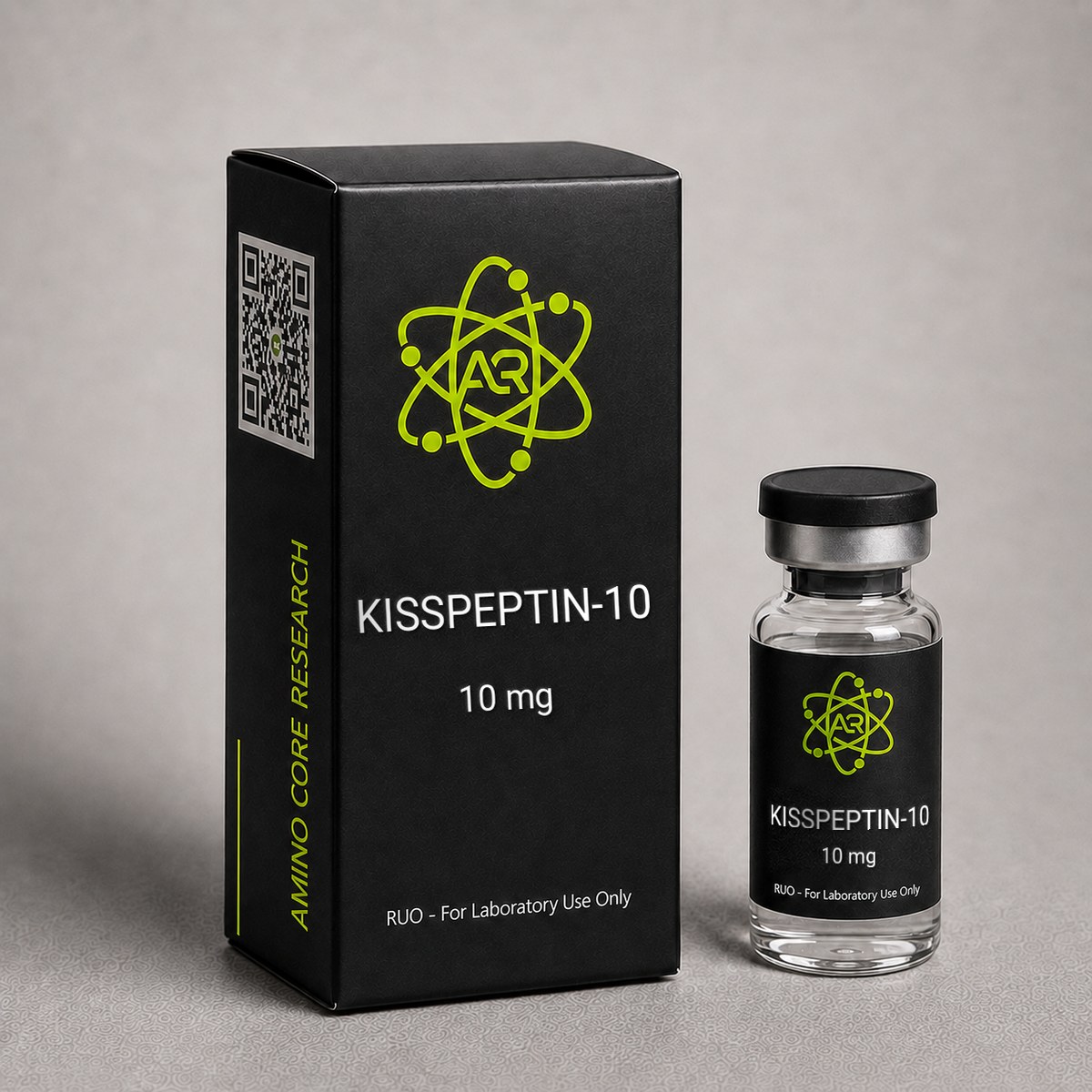
Kisspeptin-10 Peptide
C-terminal decapeptide fragment of kisspeptin. Studied for its activation of the GPR54 (KISS1R) receptor in endocrine research.
$55.00
In stock — ships next business day
Quick Facts
| SKU | ACR-KISS10 |
|---|---|
| CAS Number | 374675-21-5 |
| Molecular Formula | C63H83N17O14 |
| Molecular Weight | 1302.46 g/mol |
| Sequence | Tyr-Asn-Trp-Asn-Ser-Phe-Gly-Leu-Arg-Phe-NH2 |
| Purity | ≥99% |
| Physical Form | Lyophilized Powder |
| Storage | Store at -20°C |
What is Kisspeptin-10?
Kisspeptin-10 is a synthetic decapeptide corresponding to the C-terminal 10 amino acids (112-121) of the kisspeptin family, encoded by the KISS1 gene. Kisspeptins are the endogenous ligands for the GPR54 (KISS1R) receptor and are considered the most potent upstream activators of the GnRH neuronal system.
The discovery of kisspeptin signaling in 2003 fundamentally changed understanding of reproductive neuroendocrinology. Inactivating mutations in KISS1R cause hypogonadotropic hypogonadism, demonstrating the essential role of this pathway in GnRH regulation.
For laboratory research use only.
Mechanism of Action
Kisspeptin-10 (KP-10), also designated metastin 45-54, is the minimal biologically active C-terminal decapeptide derived from the 145-amino acid KISS1 precursor protein. Its biological activity is mediated almost exclusively through agonism of the G protein-coupled receptor 54 (GPR54), also known as KISS1R or the kisspeptin receptor. Research has demonstrated that KP-10 binds GPR54 with sub-nanomolar affinity, with reported EC50 values in the 1-3 nM range across multiple cell-based assays.
GPR54 (KISS1R) Activation
GPR54 is a class A rhodopsin-like GPCR predominantly coupled to Gαq/11. KP-10 binding triggers phospholipase C-β (PLCβ) activation, which hydrolyzes phosphatidylinositol 4,5-bisphosphate (PIP2) into inositol trisphosphate (IP3) and diacylglycerol (DAG). IP3 mobilises intracellular calcium from endoplasmic reticulum stores, while DAG activates protein kinase C (PKC). This calcium-PKC signaling cascade is the dominant pathway by which kisspeptin depolarises GnRH neurons in the hypothalamus.
MAPK/ERK1/2 Pathway
Secondary signaling through the mitogen-activated protein kinase (MAPK) cascade has been characterised, with sustained ERK1/2 phosphorylation observed in GPR54-expressing cells following KP-10 exposure. This pathway is implicated in the antimetastatic and tumor-suppressive properties originally attributed to the parent KISS1 gene product, metastin.
Hypothalamic-Pituitary-Gonadal (HPG) Axis Activation
The principal physiological action of KP-10 in research models is stimulation of gonadotropin-releasing hormone (GnRH) neurons located in the preoptic area and arcuate nucleus of the hypothalamus. GPR54 expression on GnRH neurons enables direct depolarisation upon kisspeptin binding. The resulting pulsatile GnRH release stimulates the anterior pituitary to secrete luteinizing hormone (LH) and follicle-stimulating hormone (FSH), which in turn act on gonadal tissue to drive steroidogenesis and gametogenesis.
Differential Pulse vs. Surge Generation
Two distinct populations of kisspeptin neurons have been identified: arcuate KNDy neurons (co-expressing kisspeptin, neurokinin B, and dynorphin) that govern pulsatile GnRH/LH secretion, and rostral periventricular (RP3V) neurons that mediate the preovulatory LH surge in females. KP-10 administration in research models recapitulates both pulse-generating and surge-generating effects depending on dose and timing.
Receptor Desensitisation
Prolonged or high-dose KP-10 exposure induces GPR54 internalisation and desensitisation via β-arrestin recruitment and GRK-mediated phosphorylation. This finding is significant for chronic dosing study designs, as continuous infusion produces tachyphylaxis whereas pulsatile administration sustains LH responsiveness — a phenomenon analogous to GnRH receptor desensitisation observed with GnRH analogs.
Research & Clinical Studies
Kisspeptin-10 Stimulates LH Secretion in Healthy Male Volunteers
A landmark clinical investigation by Dhillo and colleagues at Imperial College London provided the first human pharmacological characterisation of KP-10 administration on the hypothalamic-pituitary-gonadal axis. This study established kisspeptin-10 as a potent endogenous activator of reproductive hormone secretion in humans.
Study Design
The investigation enrolled healthy adult male volunteers in a randomised, double-blind, placebo-controlled crossover design. Participants received either KP-10 (administered via intravenous infusion at escalating doses) or saline vehicle, with serial blood sampling every 10 minutes for measurement of LH, FSH, and testosterone over a 90-minute infusion period and subsequent recovery window.
Key Results
- Plasma LH increased by approximately 3-fold above baseline during KP-10 infusion compared to placebo
- FSH demonstrated a smaller but statistically significant rise of approximately 1.5-fold over baseline
- Total testosterone rose approximately 2-fold, consistent with downstream Leydig cell stimulation
- Effects were dose-dependent across the infusion range tested
- No adverse cardiovascular or autonomic effects were observed
- Statistical significance was achieved with p < 0.01 for LH response
Research Context
This work established several critical principles for kisspeptin pharmacology research. First, peripheral administration of KP-10 produces robust central effects via the median eminence, where GnRH neuronal terminals lie outside the blood-brain barrier. Second, the gonadotropin response pattern (LH > FSH) mirrors that of native GnRH pulse, confirming that KP-10 acts upstream of GnRH rather than directly on pituitary gonadotrophs. Third, the rapid onset (within 30 minutes) and short half-life of KP-10 make it suitable for pulsatile dosing paradigms but limit its utility for sustained receptor occupancy studies. Subsequent investigations have extended these findings to women across menstrual cycle phases, hypogonadal patients, and individuals with hypothalamic amenorrhea, where KP-10 has demonstrated restoration of LH pulsatility.
[1] Dhillo WS, et al. Kisspeptin-54 stimulates the hypothalamic-pituitary gonadal axis in human males. J Clin Endocrinol Metab. 2005;90(12):6609-6615. PubMed ↗
[2] Jayasena CN, et al. Subcutaneous injection of kisspeptin-54 acutely stimulates gonadotropin secretion in women with hypothalamic amenorrhea. J Clin Endocrinol Metab. 2009;94(11):4315-4323. PubMed ↗
Kisspeptin-10 Restores LH Pulsatility in Hypothalamic Amenorrhea Models
One of the most informative clinical research applications of Kisspeptin-10 has been its use as a probe for the integrity of the hypothalamic-pituitary-gonadal (HPG) axis in conditions where gonadotropin-releasing hormone (GnRH) pulsatility is suppressed. A landmark investigation by Jayasena and colleagues at Imperial College London evaluated whether twice-daily subcutaneous administration of Kisspeptin-10 could restore luteinizing hormone (LH) secretion in women with hypothalamic amenorrhea (HA), a condition characterized by reduced GnRH pulse frequency and consequent hypogonadotropic hypogonadism.
Study Design
In this open-label investigation, women with confirmed hypothalamic amenorrhea received subcutaneous Kisspeptin-10 (6.4 nmol/kg) twice daily for two weeks. Serum LH, follicle-stimulating hormone (FSH), and estradiol were measured at baseline and following the chronic dosing regimen. Acute LH responses to a single injection were compared to LH responses measured after 14 days of repeated administration.
Key Findings
- Acute LH response: A single subcutaneous dose of Kisspeptin-10 produced a robust, rapid increase in serum LH in all participants, confirming preserved KISS1R-GnRH neuron signaling despite the underlying axis suppression.
- Tachyphylaxis with chronic dosing: After two weeks of twice-daily administration, the LH response to Kisspeptin-10 was significantly attenuated, consistent with desensitization of KISS1R or downstream GnRH neuron responsiveness.
- Translational implication: The findings established that Kisspeptin-10 can transiently restore gonadotropin output in HA, but that pulsatile or intermittent dosing regimens may be required to maintain receptor responsiveness — paralleling the long-known lesson from GnRH analog research.
Research Context
This work has been frequently cited in subsequent investigations examining whether kisspeptin-based protocols could one day serve as an alternative probe to GnRH in fertility-related research. Compared to Kisspeptin-54, the longer endogenous fragment, Kisspeptin-10 demonstrates a shorter plasma half-life (approximately 4 minutes in human studies) but comparable acute potency at KISS1R. Researchers have used this pharmacokinetic profile to model intermittent receptor activation with minimal cumulative exposure, which has been associated in preclinical work with reduced receptor internalization relative to continuous infusion paradigms.
The hypothalamic amenorrhea data also clarified that the kisspeptin signaling node sits upstream of GnRH neurons rather than parallel to them — a point of mechanistic importance, since it implies that any HPG-axis pathology distal to GnRH release (e.g., pituitary insufficiency) would not be rescued by Kisspeptin-10 stimulation. This has made Kisspeptin-10 a useful tool compound for differentiating hypothalamic versus pituitary causes of hypogonadotropism in laboratory models.
Subsequent mechanistic follow-up by the same group and others extended these findings to men with hypogonadotropic hypogonadism and to women with polycystic ovary syndrome (PCOS), where Kisspeptin-10 paradoxically produced exaggerated LH responses — consistent with the elevated KISS1R tone hypothesized in PCOS pathophysiology.
[1] Jayasena CN, Nijher GM, Chaudhri OB, et al. Subcutaneous injection of kisspeptin-54 acutely stimulates gonadotropin secretion in women with hypothalamic amenorrhea, but chronic administration causes tachyphylaxis. J Clin Endocrinol Metab. 2009;94(11):4315-4323. PubMed ↗
[2] Chan YM, Butler JP, Pinnell NE, et al. Kisspeptin resets the hypothalamic GnRH clock in men. J Clin Endocrinol Metab. 2011;96(6):E908-E915. PubMed ↗
Chemical & Physical Properties
Kisspeptin-10 is a synthetic decapeptide corresponding to amino acids 112-121 of the human KISS1 precursor protein (also numbered 45-54 of the metastin sequence). The C-terminal amidation is essential for high-affinity GPR54 binding; the free acid form exhibits dramatically reduced potency.
| Full Name | Kisspeptin-10 (KP-10) |
|---|---|
| Synonyms | Metastin (45-54), KiSS-1 (112-121) amide, Kp-10 |
| Molecular Formula | C₆₃H₈₃N₁₇O₁₄ |
| Molecular Weight | 1302.46 g/mol |
| CAS Number | 374675-21-5 |
| Sequence | H-Tyr-Asn-Trp-Asn-Ser-Phe-Gly-Leu-Arg-Phe-NH₂ |
| One-Letter Code | YNWNSFGLRF-NH₂ |
| Amino Acid Count | 10 residues |
| Origin / Developer | C-terminal fragment of the KISS1 gene product, first identified at Pennsylvania State University (1996) as a metastasis suppressor; decapeptide characterised by Kotani et al. and Ohtaki et al. (2001) |
| Key Modifications | C-terminal amidation (-NH₂) essential for GPR54 binding affinity; RFamide motif characteristic of the kisspeptin family |
| Receptor Target | GPR54 (KISS1R) — Gαq-coupled GPCR; reported EC50 ~1-3 nM |
| Physical Form | Lyophilized white powder |
| Solubility | Soluble in bacteriostatic water, sterile water, and 0.1% acetic acid; limited solubility in pure organic solvents |
| Purity | ≥99% by HPLC |
| Storage | -20°C lyophilized; 2-8°C reconstituted (short term) |
The peptide contains a tryptophan residue (Trp-3) susceptible to oxidative degradation, particularly under prolonged light exposure or in solutions containing trace metals or peroxides. Additionally, the C-terminal Arg-Phe-NH₂ motif is the pharmacophore recognised by GPR54 and shared with the broader RFamide peptide family, including RFRP-1, RFRP-3, and prolactin-releasing peptide, though these other RFamides do not appreciably activate GPR54.
Handling & Reconstitution Guidelines
Kisspeptin-10 is supplied as a sterile lyophilized powder and must be reconstituted prior to use in laboratory research applications. The decapeptide is moderately hydrophilic owing to its arginine- and tyrosine-rich C-terminal motif, and dissolves readily in aqueous solvents. Proper handling minimizes peptide loss to surfaces, prevents oxidation, and preserves KISS1R agonist potency.
Recommended Reconstitution Protocol
- Equilibrate the vial to ambient temperature for 20-30 minutes before opening to prevent moisture condensation on the lyophilized cake.
- Briefly centrifuge the sealed vial (or tap gently) to consolidate the powder at the bottom and avoid loss on the rubber stopper.
- Select the solvent: Bacteriostatic water (0.9% benzyl alcohol) or sterile water for injection is suitable for most laboratory work. For long-term stock solutions, sterile 0.1 M acetic acid (1-5%) improves solubility and stability of the basic peptide.
- Calculate the working concentration: A common stock is 1 mg/mL — for a 5 mg vial, add 5.0 mL of solvent. For a 10 mg vial, add 10.0 mL. This yields a convenient concentration for laboratory dilution series.
- Inject solvent slowly down the inner wall of the vial rather than directly onto the lyophilized cake to limit foaming.
- Swirl gently until fully dissolved. Do NOT vortex or shake vigorously — mechanical agitation can shear the peptide backbone and promote aggregation.
- Inspect the solution — it should appear clear and colorless. Any cloudiness or particulate matter indicates degradation or contamination.
Compound-Specific Handling Notes
- Surface adsorption: Like many short peptides, Kisspeptin-10 can adhere to plastic and glass surfaces. For dilute working solutions (<10 µg/mL), addition of 0.1% bovine serum albumin (BSA) as a carrier protein is recommended to minimize loss.
- Tyrosine oxidation: The Tyr10 residue at the C-terminus is essential for KISS1R binding and is susceptible to oxidation. Protect reconstituted solutions from prolonged light exposure and avoid repeated air introduction.
- pH sensitivity: Optimal stability is observed at pH 4-6. Strongly alkaline buffers should be avoided as they accelerate hydrolysis of the Arg-Phe-NH2 amide.
- Freeze-thaw: Aliquot reconstituted stock into single-use volumes to avoid repeated freeze-thaw cycles, which reduce biological activity.
This product is intended for in vitro laboratory research and is not for human or veterinary use. Standard personal protective equipment (gloves, lab coat, eye protection) should be worn when handling lyophilized or solubilized peptide.
Storage & Stability Information
Proper storage is critical to preserve the structural integrity and KISS1R agonist activity of Kisspeptin-10. As a decapeptide containing oxidation-sensitive tyrosine and an essential C-terminal amide (Arg-Phe-NH2), the compound is susceptible to both chemical degradation and physical aggregation if storage conditions are not controlled.
Lyophilized Powder Storage
- Long-term (recommended): Store at -20°C in the original sealed vial. Under these conditions, lyophilized Kisspeptin-10 remains stable for at least 24 months.
- Short-term: Storage at 2-8°C is acceptable for up to 4 weeks if -20°C storage is not available.
- Transit/ambient: Brief exposure to room temperature (up to 7 days) does not significantly affect peptide integrity, as the lyophilized form is intrinsically stable.
- Keep the vial tightly sealed and protected from moisture. Desiccant packaging is recommended for extended storage.
Reconstituted Solution Storage
- 2-8°C (refrigerated): Reconstituted Kisspeptin-10 in bacteriostatic water or sterile aqueous buffer is stable for approximately 7-10 days when refrigerated.
- -20°C or -80°C (frozen aliquots): For longer storage of reconstituted material, aliquot into single-use volumes and freeze. Stability of 3-6 months at -20°C and up to 12 months at -80°C has been reported for similar kisspeptin fragments.
- Avoid repeated freeze-thaw cycles — each cycle reduces biological activity and promotes aggregation.
Compound-Specific Stability Notes
- Tyrosine oxidation: The C-terminal Tyr residue is essential for receptor binding and is oxidation-prone. Store solutions under inert atmosphere (argon or nitrogen overlay) where feasible, and protect from prolonged light exposure.
- C-terminal amide hydrolysis: The Phe-NH2 amide is essential for KISS1R agonism and is hydrolyzed slowly in alkaline conditions. Maintain reconstituted solutions in mildly acidic to neutral buffer (pH 4-7).
- No disulfide bonds: Unlike some related neuropeptides, Kisspeptin-10 lacks cysteine residues, so disulfide scrambling is not a concern.
- Visual inspection: Discard any solution showing turbidity, color change, or visible precipitate, as these indicate degradation or microbial contamination.
For reproducible research outcomes, document the date of reconstitution and number of freeze-thaw cycles for each working aliquot.
Frequently Asked Questions
What is Kisspeptin-10?
Kisspeptin-10 is a decapeptide that activates the GPR54/KISS1R receptor, the most potent upstream activator of GnRH neurons. It is a critical regulator of the reproductive endocrine axis discovered in 2003. For research use only.
How does Kisspeptin-10 compare to GnRH in research models?
Kisspeptin-10 acts upstream of gonadotropin-releasing hormone (GnRH) in the reproductive axis. Whereas GnRH directly stimulates pituitary gonadotrophs to release LH and FSH, Kisspeptin-10 activates GPR54 receptors on hypothalamic GnRH neurons themselves, triggering endogenous GnRH release. Research has shown that the LH response to Kisspeptin-10 is abolished by GnRH receptor antagonists, confirming its proximal site of action. This upstream mechanism makes Kisspeptin-10 a valuable tool for investigating the central regulation of reproduction, including conditions of hypothalamic dysfunction where pituitary responsiveness to exogenous GnRH remains intact.
What is the molecular weight and CAS number of Kisspeptin-10?
Kisspeptin-10 has a molecular weight of 1302.46 g/mol and a molecular formula of C63H83N17O14. Its CAS Registry Number is 374675-21-5. The peptide sequence is Tyr-Asn-Trp-Asn-Ser-Phe-Gly-Leu-Arg-Phe-NH2 (YNWNSFGLRF-NH2), corresponding to the C-terminal decapeptide of the KISS1 gene product. The C-terminal amidation is critical for high-affinity binding to the GPR54 (KISS1R) receptor, and the RFamide motif at positions 9-10 is the principal pharmacophore. AminoCore Research supplies Kisspeptin-10 at ≥99% HPLC purity in lyophilized form.
How should Kisspeptin-10 be stored for research use?
Lyophilized Kisspeptin-10 should be stored at -20°C for long-term stability, with brief refrigeration at 2-8°C acceptable for short-term storage and ambient temperature tolerated only during shipping transit. After reconstitution in bacteriostatic water or sterile saline, the peptide should be kept at 2-8°C and used within 7-14 days to minimise degradation. The Trp-3 residue is susceptible to oxidation, so reconstituted solutions should be protected from light and avoid repeated freeze-thaw cycles. Aliquoting reconstituted material into single-use volumes is recommended for studies requiring multiple dosing time points.
Does Kisspeptin-10 cause receptor desensitisation with continuous dosing?
Yes — research has demonstrated that continuous or high-dose Kisspeptin-10 exposure induces GPR54 desensitisation via β-arrestin recruitment and receptor internalisation, leading to tachyphylaxis of the LH response. This phenomenon is analogous to GnRH receptor desensitisation observed with sustained GnRH agonist administration. Consequently, research protocols designed to sustain hypothalamic-pituitary-gonadal axis activation typically employ pulsatile or intermittent dosing paradigms rather than continuous infusion. This pharmacological behaviour is an important consideration when designing chronic-exposure study models versus acute-stimulation experiments.
What sizes of Kisspeptin-10 are available from AminoCore Research?
AminoCore Research supplies Kisspeptin-10 as a sterile lyophilized powder at ≥99% HPLC purity, typically in 5 mg and 10 mg vials. Each lot is accompanied by a certificate of analysis (COA) documenting purity, mass spectrometry confirmation of molecular weight (1302.46 g/mol), and identity verification. Larger research quantities may be available on request for institutional laboratory programs. All material is intended strictly for in vitro and preclinical laboratory research and is not for human or veterinary use.
How does Kisspeptin-10 compare to Kisspeptin-54 in research applications?
Kisspeptin-10 (KP-10) and Kisspeptin-54 (KP-54) are both C-terminal fragments of the KISS1 gene product and share the same essential RFamide motif (Arg-Phe-NH₂) required for KISS1R/GPR54 activation. KP-10 is the minimal active sequence and exhibits comparable acute potency at the receptor, but has a shorter plasma half-life (~4 minutes in humans) versus KP-54 (~28 minutes). This makes KP-10 useful in research models where transient, pulsatile receptor activation is desired, while KP-54 is favored for studies requiring sustained gonadotropin stimulation. Both fragments have been used to probe hypothalamic-pituitary-gonadal axis function in laboratory settings.
Does Kisspeptin-10 stimulate testosterone in male research models?
Research investigations have demonstrated that Kisspeptin-10 administration in healthy male volunteers produces a robust, dose-dependent increase in serum luteinizing hormone (LH), which in turn stimulates Leydig cell testosterone secretion. The testosterone rise is secondary to LH pulsatility rather than a direct gonadal effect, since KISS1R expression on testicular tissue is minimal compared to hypothalamic GnRH neurons. Studies have reported significant LH elevation within 30-60 minutes of subcutaneous administration, with testosterone increases observed in subsequent hours. This profile makes Kisspeptin-10 a useful probe for studying upstream regulation of the HPG axis in preclinical and clinical endocrinology research.
What is the role of the RF-amide motif in Kisspeptin-10 activity?
The C-terminal Arg-Phe-NH₂ (RFamide) motif of Kisspeptin-10 is essential for binding and activation of the KISS1R (GPR54) receptor. Structure-activity research has shown that removal of the C-terminal amide, substitution of the terminal phenylalanine, or modification of the penultimate arginine dramatically reduces receptor affinity and Gq/11 coupling efficiency. This RFamide pharmacophore is shared with other RFamide-related peptides (RFRPs), though Kisspeptin-10 shows high selectivity for KISS1R over related receptors. Researchers studying selective KISS1R agonism therefore preserve this motif when designing analogs, while modifications to the N-terminal residues can extend half-life without compromising receptor activation.
For laboratory and research use only. This product is not for human or veterinary use. It is not a drug, supplement or food.
This product is not FDA approved for any indication, and is not intended to diagnose, treat, cure, or prevent any disease. All product information is derived from published preclinical research and does not constitute medical advice or claims.