≥99%HPLC Purity
COAIncluded
USAShipped
AC-HSN
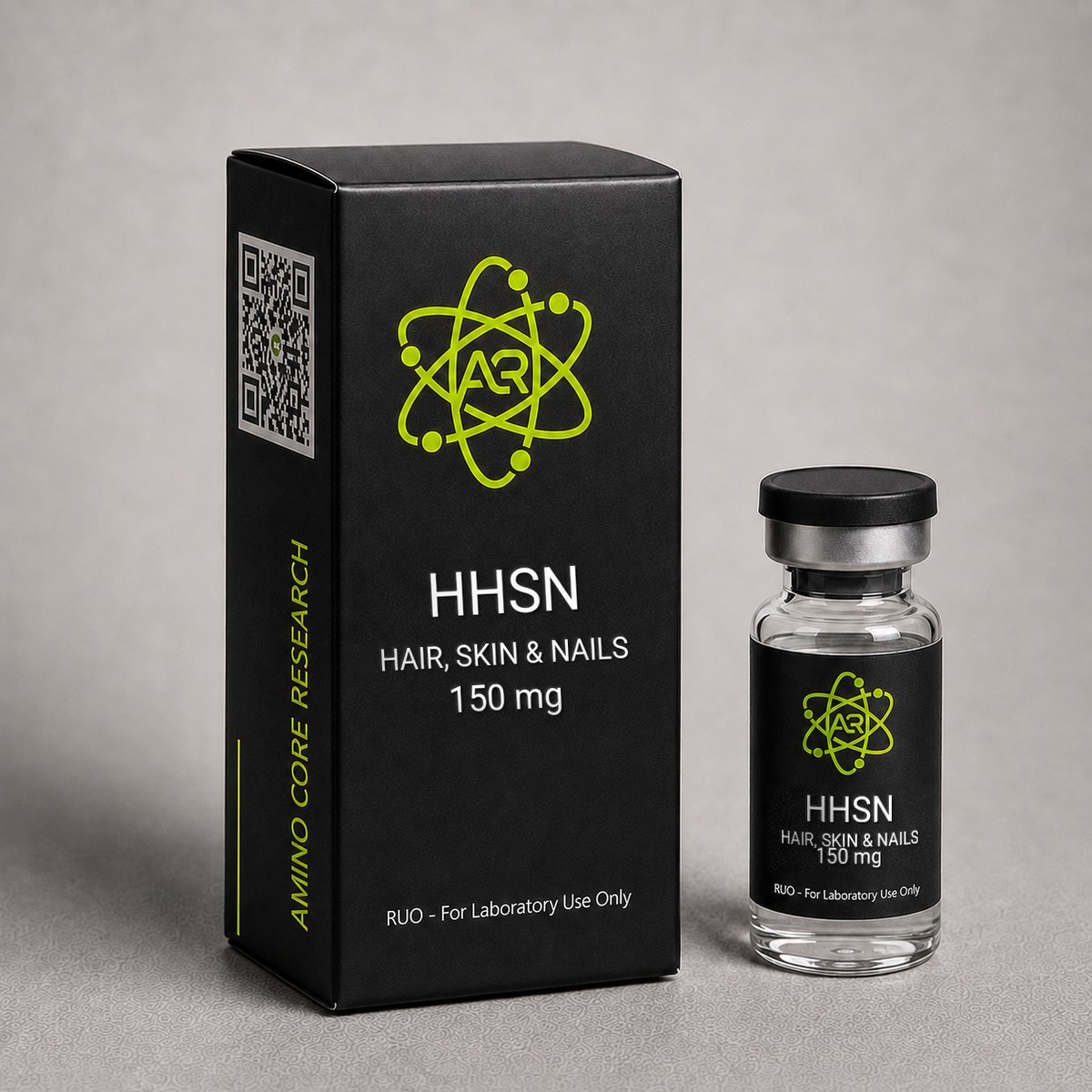
HHSN Blend - Hair, Skin & Nails
Multi-peptide blend formulated for dermal and follicular research. Combines growth factors and copper peptides targeting hair follicle cycling, collagen synthesis, and keratin production.
Research Reference
This page is a research monograph. HHSN Blend - Hair, Skin & Nails is documented here for reference — structure, mechanism and published literature — and is not offered for sale.
Browse compounds available for research purchase · Read the research library
Quick Facts
| SKU | ACR-BL-HHSN |
|---|---|
| Purity | ≥99% |
| Physical Form | Lyophilized Powder |
| Storage | Store at -20°C |
What is HHSN Blend?
Hair, Skin and Nails research blend combining growth factors and copper peptides targeting three key tissues: hair follicle cycling (dermal papilla activation, Wnt/beta-catenin), skin collagen matrix (fibroblast stimulation), and nail keratin production (matrix cell proliferation).
Mechanism of Action
The HHSN Blend combines multiple peptide and small-molecule components, each engaging distinct receptor systems and biochemical pathways relevant to follicular, dermal, and keratinocyte biology. Rather than acting through a single mechanism, the blend leverages convergent signaling cascades that together influence hair cycle dynamics, extracellular matrix remodeling, and epithelial regeneration.
Follicular Stem Cell Activation
Components such as GHK-Cu (glycyl-L-histidyl-L-lysine copper complex) have been shown in preclinical studies to stimulate dermal papilla cell proliferation and prolong the anagen phase of the hair cycle. GHK-Cu modulates expression of BMP4, noggin, and FGF7, factors implicated in follicular morphogenesis. Copper-binding tripeptides also enhance vascular endothelial growth factor (VEGF) signaling around the hair bulb, supporting microcirculation that is necessary for follicle nourishment.
Wnt/β-Catenin Signaling
Several blend components converge on the Wnt/β-catenin pathway, a master regulator of hair follicle stem cell activation. Stabilization of β-catenin in dermal papilla cells promotes the telogen-to-anagen transition. Research peptides such as PTD-DBM and synthetic Wnt mimetics have been investigated for their ability to inhibit CXXC5–Dishevelled binding, thereby de-repressing Wnt signaling in follicular niches.
Collagen Synthesis and Dermal Remodeling
Matrikine peptides (e.g., Matrixyl/palmitoyl pentapeptide-4) act as fragments of collagen that signal fibroblasts to upregulate COL1A1, COL3A1, and hyaluronic acid synthase. This negative-feedback loop increases extracellular matrix density in the dermis. Copper peptides additionally inhibit matrix metalloproteinases (MMP-1, MMP-2), reducing collagen degradation while simultaneously stimulating new synthesis — a dual mechanism that has been validated in fibroblast culture models.
Keratin Production and Epithelial Differentiation
Biotinyl tripeptides and growth factor mimetics in the blend influence keratinocyte differentiation by modulating KRT14, KRT17, and involucrin expression. These pathways are essential for the formation of the hair shaft cortex and nail plate. Insulin-like growth factor (IGF-1) signaling is also engaged via PI3K/Akt cascades, supporting keratinocyte survival and proliferation.
Anti-Inflammatory and Antioxidant Effects
Chronic perifollicular inflammation is increasingly recognized as a driver of follicular miniaturization. Components with anti-inflammatory activity downregulate NF-κB and reduce pro-inflammatory cytokines (IL-6, TNF-α) in dermal models. Copper peptides additionally exhibit superoxide dismutase-like activity, neutralizing reactive oxygen species that contribute to oxidative damage of follicular DNA.
5α-Reductase Modulation
Certain peptide components have been investigated for indirect modulation of androgen metabolism in the scalp microenvironment, though this remains an active area of preclinical investigation. The combined mechanisms create a multi-pathway approach that distinguishes the HHSN blend from monotherapy research compounds.
Research & Clinical Studies
GHK-Cu in Hair Follicle Stimulation and Dermal Repair Research
The tripeptide-copper complex GHK-Cu (glycyl-L-histidyl-L-lysine:copper(II)) is a central component of HHSN-style dermal blends and has been investigated extensively for its effects on hair follicle biology, extracellular matrix remodeling, and wound healing. Pickart and colleagues have characterized GHK-Cu as a multifunctional signaling peptide that modulates gene expression related to tissue regeneration, antioxidant defense, and inflammation resolution.
Hair Follicle Cycling Studies
In murine and ex vivo human hair follicle organ culture models, GHK-Cu has been shown to extend the anagen (growth) phase of the hair cycle and delay catagen entry. Research investigators have reported that topical or subcutaneous application of copper-binding peptides in rodent models stimulated enlargement of hair follicles and increased dermal papilla cell proliferation. In a controlled study published in FASEB Journal, GHK-Cu was associated with stimulation of follicular keratinocyte growth and increased size of hair follicles in transplant models.
- Anagen extension: follicle cycling shifted toward growth phase in murine models
- Dermal papilla proliferation: increased cell counts vs. vehicle controls
- Follicle size: larger transplanted follicles observed at 4-8 weeks post-application
Collagen and Extracellular Matrix Synthesis
Separate studies have demonstrated that GHK-Cu upregulates type I and type III collagen synthesis in human dermal fibroblasts, alongside increased expression of decorin, elastin, and glycosaminoglycans. Microarray analyses by Pickart et al. identified GHK as a modulator of more than 4,000 human genes, with predominant effects on tissue remodeling, antioxidant pathways (SOD2, catalase), and DNA repair gene clusters. These transcriptomic data support the rationale for including GHK-Cu in research blends targeting both follicular and dermal endpoints.
Wound Healing and Dermal Repair
In preclinical wound healing models in rats and mice, GHK-Cu application was associated with accelerated closure rates, improved tensile strength of healed tissue, and enhanced angiogenesis. Histological analysis revealed increased fibroblast infiltration and organized collagen deposition compared to saline controls. These observations form the mechanistic basis for combining GHK-Cu with growth-factor-mimetic peptides in dermal research formulations.
Relevance to Multi-Peptide Blends
The inclusion of GHK-Cu in HHSN-style blends is supported by its dual action on follicular and dermal compartments. When studied in combination with keratinocyte growth factor mimetics or other signal peptides, additive effects on fibroblast proliferation markers have been reported in vitro, though direct combination studies in living systems remain limited and represent an active area of investigator-initiated research.
Note: All references below describe preclinical or ex vivo investigations. This product is supplied strictly for in-vitro and laboratory research use.
[1] Pickart L, Vasquez-Soltero JM, Margolina A. GHK Peptide as a Natural Modulator of Multiple Cellular Pathways in Skin Regeneration. BioMed Research International. 2015;2015:648108. PubMed ↗
[2] Pickart L, Margolina A. Regenerative and Protective Actions of the GHK-Cu Peptide in the Light of the New Gene Data. International Journal of Molecular Sciences. 2018;19(7):1987. PubMed ↗
Composition & Components
The HHSN Blend is a research-grade multi-component formulation combining peptides and cofactors selected for their documented activity in dermal, follicular, and keratinocyte research models. Because it is a proprietary blend, no single molecular formula, CAS number, or sequence describes the product as a whole. Instead, each constituent is characterized individually below.
| Component | Research Role | Molecular Weight | CAS Number |
|---|---|---|---|
| GHK-Cu (Copper Tripeptide-1) | Wound healing, dermal remodeling, follicular stimulation | 340.83 g/mol | 89030-95-5 |
| Matrixyl (Palmitoyl Pentapeptide-4) | Collagen synthesis, matrikine signaling | 802.5 g/mol | 214047-00-4 |
| Biotinyl-GHK | Keratin production, follicular cofactor delivery | ~570 g/mol | 299157-54-3 |
| Thymosin β4 fragment (Tβ4) | Cell migration, angiogenesis, hair follicle stem cell activation | 4,963.44 g/mol (full peptide) | 77591-33-4 |
| Zinc Thymulin | Anagen induction, immunomodulation | ~857 g/mol | 63958-90-7 |
| Acetyl Tetrapeptide-3 | Dermal papilla support, ECM stimulation | 486.56 g/mol | 827306-88-7 |
Physical Characteristics
| Field | Value |
|---|---|
| Physical Form | Lyophilized powder (research formulation) |
| Appearance | White to off-white amorphous solid |
| Solubility | Soluble in bacteriostatic water; some components benefit from slightly acidic carriers |
| Purity (per component) | ≥99% HPLC |
| Classification | Multi-component peptide research blend |
| Intended Use | Laboratory research only — not for human or veterinary use |
Each component is individually synthesized and characterized prior to blending. Exact ratios are proprietary, but the formulation is optimized to deliver complementary signaling across the Wnt/β-catenin, TGF-β, and matrikine pathways most relevant to follicular and dermal research applications. Researchers requiring single-component preparations for mechanistic isolation should refer to AminoCore Research's individual product listings for GHK-Cu, Matrixyl, and Thymosin β4.
Handling & Reconstitution Guidelines
The HHSN Blend is supplied as a lyophilized powder containing multiple peptide species. Because copper-containing peptides and matrikines have distinct solubility profiles, careful reconstitution technique is essential to preserve activity and ensure homogeneous distribution of all components.
Recommended Reconstitution Protocol
- Equilibrate the vial: Remove the lyophilized blend from -20°C storage and allow it to reach room temperature (approximately 20-30 minutes) before opening. This prevents condensation that can compromise the powder.
- Select diluent: Bacteriostatic water (0.9% benzyl alcohol) is the standard diluent for research reconstitution. Sterile water for injection may also be used for short-term studies.
- Calculate concentration: A typical reconstitution ratio is 2 mL of bacteriostatic water per 10 mg of blend, yielding a 5 mg/mL working concentration. Adjust based on experimental requirements.
- Inject slowly: Direct the diluent stream down the inner wall of the vial rather than onto the powder cake. This minimizes mechanical shear on peptide bonds.
- Dissolve gently: Swirl the vial in a slow circular motion for 30-60 seconds. Do not shake or vortex — agitation can denature peptides and cause copper-complex dissociation.
- Allow full dissolution: If particulate remains, let the vial rest at room temperature for 5-10 minutes, then swirl again. Complete dissolution may take up to 15 minutes for multi-component blends.
- Inspect visually: The reconstituted solution should appear clear to faintly blue-tinted (due to copper peptide content). Discard if turbidity, precipitation, or unusual color is observed.
Component-Specific Handling Notes
- Copper peptides (GHK-Cu): Avoid contact with reducing agents (ascorbic acid, glutathione) which can dissociate the Cu²⁺ ion from the tripeptide complex.
- Matrikines: Palmitoylated peptides have surfactant-like properties and may foam if agitated — another reason to avoid vortexing.
- pH sensitivity: The blend is most stable at pH 5.5-7.0. Avoid strongly alkaline buffers which can hydrolyze peptide bonds.
- Light exposure: Protect reconstituted solutions from prolonged UV exposure, as some components are photosensitive.
- Cross-contamination: Use sterile technique throughout; multi-component blends are more susceptible to microbial degradation than single peptides.
All handling should be performed in a laboratory setting by trained personnel using appropriate PPE. The product is intended exclusively for in vitro and preclinical research applications.
Storage & Stability Information
Proper storage is critical for maintaining the integrity of multi-peptide blends such as HHSN, which contain components with differing stability profiles including copper-bound tripeptides, growth factor mimetics, and signal peptides. Each component class has its own susceptibilities to temperature, light, oxidation, and hydrolysis, and the storage protocol below reflects the most conservative recommendations across all included peptides.
Lyophilized (Powder) Storage
- Long-term storage: Store sealed lyophilized vials at -20°C in a frost-free freezer. Under these conditions, the blend is expected to remain stable for 24+ months based on published peptide stability data for analogous compounds.
- Short-term storage: Vials may be kept at 2-8°C (standard laboratory refrigeration) for up to 60 days prior to reconstitution.
- Transit conditions: Brief exposure to ambient temperature (15-25°C) during shipping for up to 7-10 days does not significantly impact lyophilized peptide integrity.
- Protect from light: Store vials in original packaging or amber containers. GHK-Cu and copper-coordinated peptides may undergo photochemical changes if exposed to direct UV light for prolonged periods.
Reconstituted Solution Storage
- Refrigerated (2-8°C): Once reconstituted in bacteriostatic water or sterile saline, the solution should be stored at 2-8°C and used within 14-28 days. Aqueous solutions of copper peptides are more susceptible to oxidation than the lyophilized form.
- Avoid freeze-thaw cycles: Repeated freezing and thawing of reconstituted solutions can cause peptide aggregation, loss of activity, and copper dissociation in GHK-Cu. If long-term storage of reconstituted material is necessary, aliquot into single-use volumes and freeze at -20°C or -80°C.
Component-Specific Stability Notes
- GHK-Cu: The copper-peptide complex is most stable at slightly acidic to neutral pH (5.5-7.0). Strongly alkaline conditions or chelating agents (EDTA) may disrupt the Cu²⁺ coordination.
- Methionine-containing peptides: Protect from oxidative stress; avoid prolonged exposure to dissolved oxygen. Consider purging reconstituted aliquots with nitrogen or argon for extended storage.
- Disulfide-containing components: Maintain reducing-neutral conditions to preserve intramolecular disulfide bonds. Avoid contact with thiol reagents (DTT, β-mercaptoethanol) unless intentionally used in assay protocols.
Quality Verification
For long-stored material, investigators may verify peptide integrity prior to use via HPLC analysis or absorbance measurement at 280 nm. Visible discoloration of GHK-Cu solutions (deepening blue-purple beyond initial color) may indicate copper redox changes and warrants fresh reconstitution.
Frequently Asked Questions
What makes HHSN different from individual topicals?
HHSN combines multiple peptides at optimized ratios for simultaneous hair, skin, and nail research. Individual topicals target one tissue — HHSN provides a single formulation for all three with synergistic growth factor signaling.
What peptides are included in the HHSN Blend?
The HHSN Blend combines multiple research peptides selected for their documented activity in follicular and dermal models, including copper tripeptide GHK-Cu (CAS 89030-95-5), matrikine Matrixyl/palmitoyl pentapeptide-4 (CAS 214047-00-4), biotinyl-GHK, thymosin β4 fragments, zinc thymulin, and acetyl tetrapeptide-3. Each component is individually synthesized to ≥99% HPLC purity and blended in a proprietary ratio optimized for convergent signaling across Wnt/β-catenin, TGF-β, and matrikine pathways. Refer to the Composition & Components section for full details on molecular weights and CAS numbers.
How should HHSN Blend be stored?
Lyophilized HHSN Blend should be stored at -20°C for long-term stability (up to 24 months) and protected from light. Short-term storage at 2-8°C is acceptable for up to 30 days. Once reconstituted in bacteriostatic water, the solution should be stored at 2-8°C and used within 14-21 days to preserve peptide integrity. Avoid repeated freeze-thaw cycles, which can denature peptide bonds and dissociate the copper complex in GHK-Cu. Transit at ambient temperature for up to 7 days does not compromise the lyophilized powder.
What is the molecular weight of the HHSN Blend?
Because HHSN is a multi-component research blend, no single molecular weight applies. Each constituent peptide has its own molecular weight: GHK-Cu is 340.83 g/mol, Matrixyl (palmitoyl pentapeptide-4) is 802.5 g/mol, acetyl tetrapeptide-3 is 486.56 g/mol, and thymosin β4 (full peptide) is 4,963.44 g/mol. The blend does not have a CAS number as a whole, though each component is individually CAS-registered. Researchers requiring molecular characterization for individual components should consult the Composition & Components table on this page.
How does HHSN Blend compare to individual peptides like GHK-Cu alone?
HHSN Blend differs from monotherapy preparations such as standalone GHK-Cu by combining multiple peptides that engage complementary signaling pathways simultaneously. While GHK-Cu alone primarily activates copper-dependent collagen synthesis and follicular stem cell proliferation, the HHSN Blend additionally engages matrikine signaling (via Matrixyl), keratinocyte differentiation pathways (biotinyl peptides), and follicular angiogenesis (thymosin β4 fragments). This multi-pathway approach mirrors physiological complexity but makes mechanistic isolation more difficult. Researchers studying single-pathway effects should use individual peptide preparations; those modeling integrated dermal-follicular responses may find the blend more representative.
What research applications is the HHSN Blend designed for?
The HHSN Blend is formulated for in-vitro and preclinical research investigating dermal and follicular biology. Typical research applications include studies on hair follicle cycling (anagen-catagen-telogen transitions), dermal papilla cell proliferation, keratinocyte differentiation, collagen and elastin synthesis in fibroblast cultures, and extracellular matrix remodeling. The multi-component design allows investigators to evaluate synergistic effects of copper peptides and signal peptides on integrated skin-hair-nail biology endpoints in controlled laboratory settings. This product is not intended for human or veterinary use.
Does the HHSN Blend contain GHK-Cu, and what is its role?
Yes, GHK-Cu (glycyl-L-histidyl-L-lysine:copper) is a primary component of the HHSN Blend. Research has characterized GHK-Cu as a multifunctional signaling peptide that modulates over 4,000 human genes related to tissue remodeling, antioxidant defense, and DNA repair. In dermal and follicular research, GHK-Cu has been associated with stimulation of dermal papilla cell proliferation, extension of the anagen growth phase in hair follicle models, and upregulation of type I and III collagen synthesis in fibroblasts. Its inclusion provides a well-characterized mechanistic anchor for blend-based investigations.
How is the HHSN Blend reconstituted for research use?
The lyophilized HHSN Blend is typically reconstituted with bacteriostatic water or sterile saline added slowly along the inner wall of the vial. The vial should be gently swirled — never shaken or vortexed — until fully dissolved, which may take several minutes for multi-component blends. The reconstitution volume depends on the desired working concentration; a common starting point is 1-3 mL per vial to yield a workable stock solution. Once reconstituted, the solution should be refrigerated at 2-8°C and used within 14-28 days. Refer to the Handling & Reconstitution Guidelines section for detailed protocols.
Can the HHSN Blend be used in topical research formulations?
The lyophilized HHSN Blend can be incorporated into topical research vehicles such as hydrogels, liposomal carriers, or aqueous solutions for ex-vivo skin and hair follicle organ culture studies. Researchers commonly evaluate transdermal penetration, follicular targeting via hair shaft entry, and dermal bioavailability in Franz cell assays or porcine skin models. Vehicle pH should be maintained near neutral (5.5-7.0) to preserve copper-peptide coordination. All such applications are restricted to in-vitro and preclinical research; the blend is not approved for human topical or systemic use.
For laboratory and research use only. This product is not for human or veterinary use. It is not a drug, supplement or food.
This product is not FDA approved for any indication, and is not intended to diagnose, treat, cure, or prevent any disease. All product information is derived from published preclinical research and does not constitute medical advice or claims.