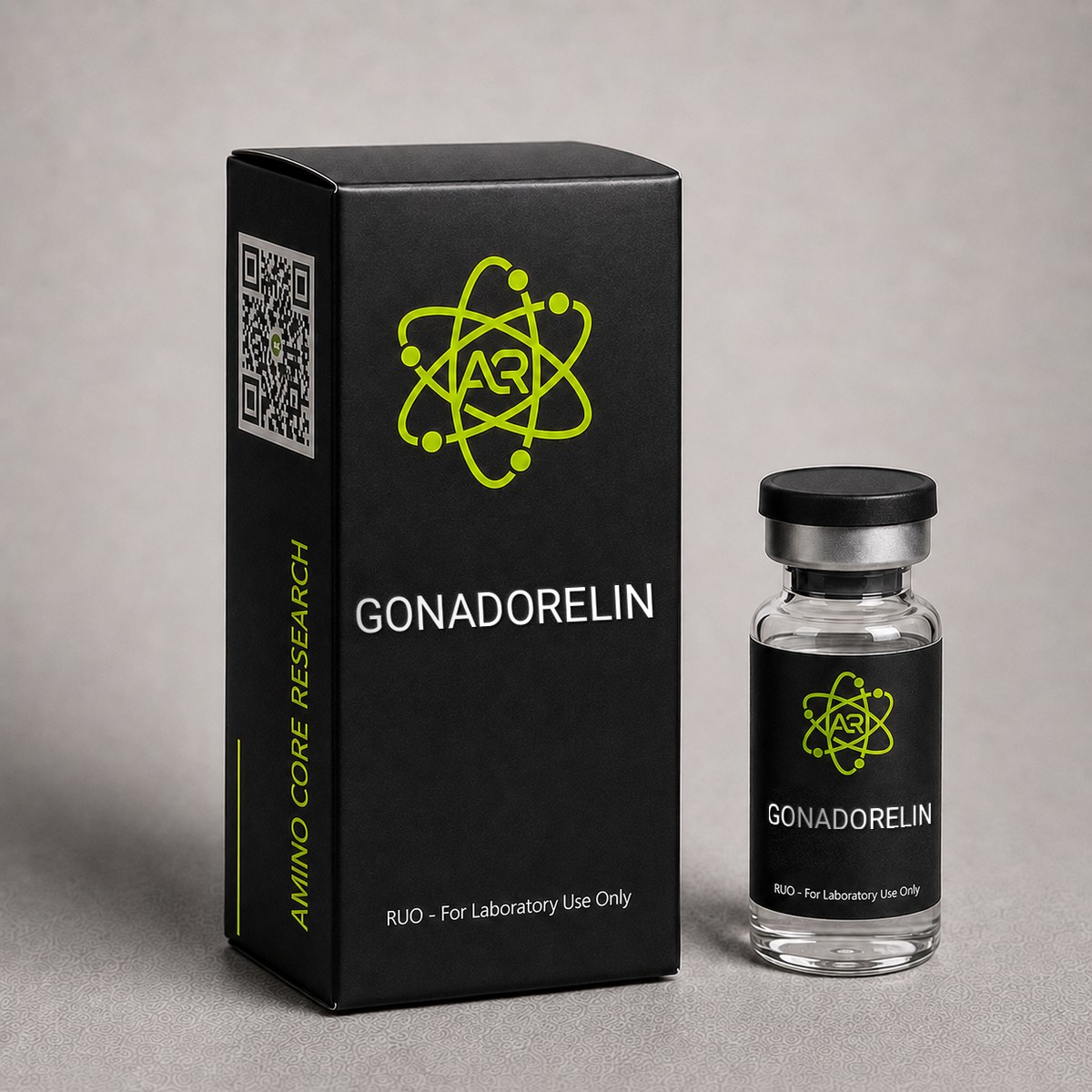
≥99%HPLC Purity
COAIncluded
USAShipped
Gonadorelin Peptide
Synthetic decapeptide identical to endogenous gonadotropin-releasing hormone (GnRH). Used in receptor binding and signaling studies.
Research Reference
This page is a research monograph. Gonadorelin is documented here for reference — structure, mechanism and published literature — and is not offered for sale.
Browse compounds available for research purchase · Read the research library
Quick Facts
| SKU | ACR-GNRH |
|---|---|
| CAS Number | 33515-09-2 |
| Molecular Formula | C55H75N17O13 |
| Molecular Weight | 1182.29 g/mol |
| Sequence | pGlu-His-Trp-Ser-Tyr-Gly-Leu-Arg-Pro-Gly-NH2 |
| Purity | ≥99% |
| Physical Form | Lyophilized Powder |
| Storage | Store at -20°C |
What is Gonadorelin?
Gonadorelin is a synthetic decapeptide identical to endogenous gonadotropin-releasing hormone (GnRH). Its sequence is pyroGlu-His-Trp-Ser-Tyr-Gly-Leu-Arg-Pro-Gly-NH2. GnRH is the master regulator of the reproductive endocrine axis, secreted in pulsatile fashion from hypothalamic neurons.
Gonadorelin binds to the GnRH receptor (GnRHR), a G-protein coupled receptor on anterior pituitary gonadotroph cells. Pulsatile activation stimulates LH and FSH secretion, while continuous activation causes receptor desensitization and gonadotropin suppression.
For laboratory research use only.
Mechanism of Action
Gonadorelin is a synthetic decapeptide identical in sequence to endogenous gonadotropin-releasing hormone (GnRH), also known as luteinizing hormone-releasing hormone (LHRH). Its biological activity is mediated through the gonadotropin-releasing hormone receptor (GnRHR), a class A (rhodopsin-like) G protein-coupled receptor expressed primarily on the surface of gonadotroph cells in the anterior pituitary gland. The mechanism of action is highly dependent on the pattern of receptor stimulation, with pulsatile exposure producing fundamentally different downstream effects than continuous exposure.
GnRH Receptor Binding and Gq Signaling
Upon binding to GnRHR, gonadorelin triggers receptor coupling to Gq/11 heterotrimeric G proteins. Activated Gαq stimulates phospholipase C-beta (PLC-β), which hydrolyzes phosphatidylinositol 4,5-bisphosphate (PIP2) into inositol 1,4,5-trisphosphate (IP3) and diacylglycerol (DAG). IP3 mobilizes calcium from intracellular endoplasmic reticulum stores, while DAG activates protein kinase C (PKC) isoforms. The resulting calcium-calmodulin and PKC signaling cascades drive exocytosis of preformed luteinizing hormone (LH) and follicle-stimulating hormone (FSH) secretory granules, as well as transcription of the gonadotropin subunit genes (CGA, LHB, FSHB).
Pulsatile vs. Continuous Stimulation
A defining feature of GnRH signaling is its dependence on pulsatile receptor activation. Physiologic GnRH pulses every 60-120 minutes maintain gonadotropin synthesis and secretion. In research models, pulsatile gonadorelin administration mimics this pattern and sustains LH/FSH release. In contrast, continuous gonadorelin exposure produces rapid GnRHR desensitization and downregulation, with internalization of receptor-ligand complexes via β-arrestin recruitment. This leads to suppression of gonadotropin output — the pharmacologic basis for using GnRH analogs in studies of reproductive axis suppression.
Downstream Endocrine Effects
Released LH acts on Leydig cells in testes or theca cells in ovaries to stimulate steroidogenesis (testosterone, androstenedione). FSH supports spermatogenesis in Sertoli cells and follicular maturation with aromatase induction in granulosa cells. The hypothalamic-pituitary-gonadal (HPG) axis is regulated by negative feedback from sex steroids and inhibins, which modulate both hypothalamic GnRH pulse generator activity and pituitary gonadotroph sensitivity.
Kisspeptin Upstream Regulation
GnRH neurons themselves are regulated by kisspeptin signaling through the KISS1R (GPR54) receptor. Gonadorelin acts downstream of this regulation, allowing researchers to bypass hypothalamic control and directly probe pituitary gonadotroph function in models of hypogonadotropic hypogonadism or pulse generator dysfunction.
Receptor Pharmacology
Gonadorelin binds the human GnRHR with high affinity (Ki in the low nanomolar range). Its short plasma half-life (2-10 minutes) results from rapid endopeptidase cleavage between Tyr5-Gly6 and Pro9-Gly10. This short duration of action is what permits pulsatile signaling but also necessitates frequent administration in research protocols, in contrast to long-acting GnRH agonists (leuprolide, triptorelin) and antagonists (cetrorelix, degarelix) used to model sustained axis suppression.
Research & Clinical Studies
Pulsatile Gonadorelin Restores Gonadotropin Secretion in Hypogonadotropic Hypogonadism
A landmark series of investigations established pulsatile gonadorelin administration as the standard research tool for probing pituitary gonadotroph competence in individuals with isolated GnRH deficiency (idiopathic hypogonadotropic hypogonadism, IHH) and Kallmann syndrome. These studies demonstrated that the pituitary in such subjects is intrinsically normal and that the defect lies upstream at the hypothalamic GnRH pulse generator.
Study Design
Subjects with IHH received subcutaneous gonadorelin delivered via portable infusion pump in pulses of 25-200 ng/kg every 90-120 minutes. Treatment duration ranged from weeks to months. Serial measurements of LH, FSH, testosterone (or estradiol), and inhibin B were taken alongside testicular volume, sperm counts, and ovarian ultrasound monitoring.
Key Findings
- Pulsatile gonadorelin restored physiologic LH and FSH secretory patterns within 24-48 hours of initiation, with pulse amplitude and frequency matching the imposed dosing schedule.
- In male subjects, serum testosterone normalized in >90% of cases within 4-8 weeks, with spermatogenesis initiation in approximately 75-80% of previously azoospermic subjects.
- In female subjects, ovulation was induced in ~90% of cycles with appropriate pulse frequency (every 90 minutes), with markedly lower rates of ovarian hyperstimulation compared to gonadotropin therapy.
- Continuous (non-pulsatile) gonadorelin infusion produced an initial flare followed by complete suppression of gonadotropin output within 7-14 days, confirming receptor desensitization kinetics.
Research Significance
These investigations established that gonadorelin is a physiologic mimetic of endogenous GnRH and provided the foundational evidence that pulse frequency is the critical variable encoding the LH:FSH ratio. Slower pulse frequencies favor FSH secretion, while faster frequencies favor LH — an observation that informed subsequent research into polycystic ovary syndrome (PCOS) and reproductive aging models.
[1] Crowley WF Jr, Filicori M, Spratt DI, Santoro NF. The physiology of gonadotropin-releasing hormone (GnRH) secretion in men and women. Recent Prog Horm Res. 1985;41:473-531. PubMed ↗
[2] Santoro N, Filicori M, Crowley WF Jr. Hypogonadotropic disorders in men and women: diagnosis and therapy with pulsatile gonadotropin-releasing hormone. Endocr Rev. 1986;7(1):11-23. PubMed ↗
Pulsatile Gonadorelin Therapy for Ovulation Induction in Hypothalamic Amenorrhea
One of the most extensively studied applications of Gonadorelin in clinical research has been the induction of ovulation in women with hypothalamic amenorrhea, a condition characterized by absent or deficient endogenous GnRH secretion. Because exogenous gonadotropins can produce supraphysiologic follicular recruitment and multiple gestations, pulsatile Gonadorelin offers a more physiologic approach by restoring the natural pulsatile signal to the pituitary.
Study design: A landmark prospective study by Martin et al. (1993) evaluated pulsatile Gonadorelin administration in 292 women with hypothalamic amenorrhea over 600 treatment cycles. Subjects received intravenous Gonadorelin pulses every 60-90 minutes via a portable infusion pump, with doses ranging from 2.5 to 20 mcg per pulse. Treatment continued through ovulation and luteal phase support.
Key results:
- Ovulation rate: ~90% per treatment cycle
- Cumulative conception rate: ~80% after 6 cycles
- Multiple pregnancy rate: <5%, dramatically lower than gonadotropin therapy (~25%)
- Ovarian hyperstimulation syndrome (OHSS): essentially absent (<1%)
- Miscarriage rate comparable to spontaneous pregnancy (~15%)
Mechanistic interpretation: The intravenous route produced superior results compared to subcutaneous administration, with researchers attributing this to more precise reproduction of the endogenous portal venous pulse pattern. Pulse intervals of 90 minutes yielded the most physiologic LH:FSH ratios and supported monofollicular development in >70% of cycles. This stands in sharp contrast to exogenous FSH/hMG protocols, which bypass pituitary regulation entirely and frequently produce multifollicular recruitment.
Research significance: This investigation established pulsatile Gonadorelin as the gold standard model for studying physiologic gonadotropin secretion in GnRH-deficient subjects. The data demonstrated that an intact pituitary-ovarian axis, when supplied with appropriately pulsatile GnRH input, retains the capacity for autoregulated, monofollicular ovulation — a finding with broad implications for understanding feedback loops in reproductive endocrinology research models.
Comparative context: Unlike long-acting GnRH analogs (leuprolide, triptorelin) which produce sustained receptor occupancy and downstream desensitization, native Gonadorelin's short half-life (~2-4 minutes) makes it uniquely suited for pulsatile delivery protocols. This pharmacokinetic profile preserves receptor sensitivity and prevents the pituitary downregulation that characterizes superagonist exposure. Subsequent comparative research has confirmed that no synthetic analog matches Gonadorelin's fidelity to the endogenous signaling pattern.
[1] Martin KA, Hall JE, Adams JM, Crowley WF Jr. Comparison of exogenous gonadotropins and pulsatile gonadotropin-releasing hormone for induction of ovulation in hypogonadotropic amenorrhea. J Clin Endocrinol Metab. 1993;77(1):125-9. PubMed ↗
GnRH Test: Diagnostic Use of Gonadorelin in Pituitary-Gonadal Axis Assessment
The Gonadorelin stimulation test (GnRH test) has served for decades as the principal research tool for evaluating pituitary gonadotrope reserve and distinguishing hypothalamic from pituitary causes of hypogonadism. Its diagnostic application provides a controlled probe of LH and FSH responsiveness that has informed thousands of investigations into central reproductive disorders.
Study design: A foundational evaluation by Bhasin and colleagues, building on protocols established by Snyder and others, examined the diagnostic accuracy of single-bolus Gonadorelin administration (100 mcg intravenous) in subjects with suspected hypogonadotropic hypogonadism. Serum LH and FSH were measured at baseline and at 15, 30, 45, 60, and 90 minutes post-injection. Subjects included those with constitutional delay of puberty, isolated GnRH deficiency (Kallmann syndrome), and acquired pituitary disorders.
Key results:
- Peak LH response in normal adults: 3-10 fold increase over baseline, typically at 30 minutes
- Peak FSH response: 1.5-3 fold increase, typically at 30-45 minutes
- Subjects with isolated GnRH deficiency showed blunted responses to single dose but restored responsiveness after 5-7 days of pulsatile priming
- Pituitary failure (panhypopituitarism) showed absent responses even with extended priming
- Sensitivity for distinguishing hypothalamic vs pituitary etiology when combined with priming: >90%
Mechanistic interpretation: The differential response pattern reflects the requirement for prior GnRH exposure to upregulate pituitary GnRH receptors and replenish gonadotropin stores. Naive gonadotropes in long-standing GnRH deficiency cannot mount a robust acute response, but the cells remain viable and recover function with pulsatile priming — distinguishing them from cells with intrinsic pituitary pathology.
Research significance: This methodology established the conceptual framework for understanding gonadotrope plasticity and remains central to reproductive endocrinology research. The test has been adapted for puberty timing studies in pediatric research, evaluation of functional hypothalamic amenorrhea in athletes, and characterization of polycystic ovary syndrome phenotypes, where exaggerated LH:FSH ratios provide pathophysiologic clues.
Comparative context: Compared to GnRH agonist stimulation tests using leuprolide (which produce sustained 24-hour responses), the Gonadorelin test offers a cleaner temporal window for studying acute gonadotrope kinetics. Its short duration of action allows repeated testing without cumulative receptor effects, making it especially valuable in longitudinal research designs tracking puberty progression or treatment response.
[1] Snyder PJ, Rudenstein RS, Gardner DF, Rothman JG. Repetitive infusion of gonadotropin-releasing hormone distinguishes hypothalamic from pituitary hypogonadism. J Clin Endocrinol Metab. 1979;48(5):864-8. PubMed ↗
[2] Job JC, Garnier PE, Chaussain JL, Toublanc JE, Canlorbe P. Effect of synthetic luteinizing hormone-releasing hormone on the release of gonadotropins in hypophyso-gonadal disorders of children and adolescents. J Pediatr. 1974;84(3):371-4. PubMed ↗
Chemical & Physical Properties
Gonadorelin is a linear decapeptide with N-terminal pyroglutamate and C-terminal glycinamide modifications that protect against exopeptidase degradation while retaining receptor agonist activity. The compound is structurally identical to mammalian endogenous GnRH/LHRH.
| Full Name | Gonadorelin (Gonadotropin-Releasing Hormone, GnRH, LHRH, Luliberin) |
|---|---|
| Synonyms | GnRH, LHRH, LH-RH, Luliberin, Gonadoliberin I, Factrel, Lutrelef |
| Molecular Formula | C₅₅H₇₅N₁₇O₁₃ |
| Molecular Weight | 1,182.29 g/mol |
| CAS Number | 33515-09-2 |
| Sequence | pGlu-His-Trp-Ser-Tyr-Gly-Leu-Arg-Pro-Gly-NH₂ |
| Amino Acid Count | 10 (decapeptide) |
| Key Modifications | N-terminal pyroglutamate (pGlu); C-terminal glycinamide (Gly-NH₂) |
| Origin / Discovery | Isolated and sequenced 1971 by Andrew V. Schally and Roger Guillemin (Nobel Prize 1977) |
| Receptor Target | Gonadotropin-releasing hormone receptor (GnRHR / GNRHR1), Gq-coupled GPCR |
| Physical Form | Lyophilized white to off-white powder |
| Solubility | Soluble in water, bacteriostatic water, 0.9% saline, and dilute acetic acid |
| Plasma Half-Life | 2-10 minutes (rapid endopeptidase cleavage) |
| Purity | ≥99% (HPLC) |
| Appearance in Solution | Clear, colorless |
Structural Notes: The Tyr5-Gly6 and Pro9-Gly10 bonds are primary sites of enzymatic cleavage by endopeptidase 24.15 and prolyl endopeptidase, accounting for the short biological half-life. Modifications at position 6 (D-amino acid substitutions) and position 10 (ethylamide replacement) form the basis of all clinically used long-acting GnRH agonists. Gonadorelin itself remains unmodified, preserving the native pulsatile pharmacology required for physiologic GnRHR signaling studies.
Stability Considerations: The peptide is sensitive to oxidation at the Trp3 residue and to hydrolysis in aqueous solution at elevated temperatures. The pyroglutamate N-terminus is relatively stable but can undergo slow ring opening under strongly acidic conditions.
Handling & Reconstitution Guidelines
Gonadorelin is supplied as a lyophilized white powder and requires proper reconstitution to maintain peptide integrity for research applications. The decapeptide is generally stable under standard laboratory handling conditions but, like all peptides, benefits from careful technique to preserve full biological activity.
Step-by-step reconstitution protocol:
- Remove the lyophilized vial from -20°C storage and allow it to equilibrate to room temperature for 20-30 minutes in a desiccator. This prevents condensation from forming on the cold powder when the seal is breached.
- Centrifuge the vial briefly (if equipment available) at 1,000-2,000 rpm for 30 seconds to consolidate any peptide that may have migrated to the vial walls during shipping.
- Select an appropriate reconstitution solvent. Bacteriostatic water (0.9% benzyl alcohol) or sterile water for injection are suitable for short-term research use; 0.1% acetic acid in sterile water improves solubility and stability for analytical applications.
- Calculate target concentration. A typical working concentration is 1 mg/mL (e.g., 2 mg Gonadorelin + 2 mL diluent) for stimulation test protocols, or 100 mcg/mL for pulsatile delivery research.
- Slowly inject the diluent down the inner wall of the vial, allowing it to drip onto the lyophilized cake rather than directly impacting the powder.
- Gently swirl the vial in a circular motion until the powder fully dissolves (typically <30 seconds). The solution should appear clear and colorless.
- Do not shake or vortex. Mechanical agitation can denature peptides and introduce air-water interface damage.
- Inspect for complete dissolution. Any visible particulates indicate degraded material and the vial should be discarded.
Compound-specific handling notes: Gonadorelin contains a tryptophan residue at position 3, which is susceptible to oxidation and photodegradation. Minimize exposure to direct light during reconstitution and aliquoting; amber tubes or foil-wrapped vials are preferred for storage of reconstituted solution. The pyroglutamate at position 1 confers resistance to N-terminal aminopeptidase cleavage but the molecule remains vulnerable to endopeptidase activity in unbuffered aqueous solution.
Aliquoting recommendation: For research protocols requiring repeated use, divide the reconstituted solution into single-use aliquots (50-200 µL) in low-binding polypropylene tubes immediately after reconstitution. This eliminates freeze-thaw cycling, which is the primary cause of activity loss in peptide research samples.
Frequently Asked Questions
What is Gonadorelin?
Gonadorelin is synthetic GnRH (gonadotropin-releasing hormone), a 10-amino acid peptide that controls LH and FSH secretion. Pulsatile administration stimulates gonadotropin release, while continuous exposure causes receptor desensitization. For research use only.
How does Gonadorelin compare to Triptorelin and other GnRH analogs?
Gonadorelin is the native GnRH decapeptide sequence (pGlu-His-Trp-Ser-Tyr-Gly-Leu-Arg-Pro-Gly-NH₂) with a plasma half-life of only 2-10 minutes, making it suitable for pulsatile administration that mimics physiologic hypothalamic signaling. Triptorelin, leuprolide, and goserelin are synthetic analogs with D-amino acid substitutions at position 6 that resist enzymatic degradation, producing half-lives of hours to weeks. These long-acting analogs initially stimulate gonadotropin release but, with continuous receptor occupancy, cause GnRHR desensitization and downregulation, ultimately suppressing the HPG axis. Gonadorelin is therefore the tool of choice for studies of pulse-dependent gonadotroph activation, while long-acting analogs are used to model sustained axis suppression.
What is the molecular weight and CAS number of Gonadorelin?
Gonadorelin has a molecular formula of C₅₅H₇₅N₁₇O₁₃, a molecular weight of 1,182.29 g/mol, and CAS number 33515-09-2. It is a decapeptide of 10 amino acid residues with an N-terminal pyroglutamate (pGlu) and a C-terminal glycinamide (Gly-NH₂). The sequence is pGlu-His-Trp-Ser-Tyr-Gly-Leu-Arg-Pro-Gly-NH₂, identical to endogenous mammalian gonadotropin-releasing hormone (GnRH/LHRH). AminoCore Research material is supplied as a lyophilized powder at ≥99% HPLC purity.
How should Gonadorelin be stored and reconstituted for research use?
Lyophilized gonadorelin should be stored at -20°C for long-term stability, with short excursions to 2-8°C acceptable during handling. Reconstitution is typically performed with sterile bacteriostatic water or 0.9% sodium chloride; a 5 mg vial in 1 mL yields a 5 mg/mL stock. The diluent should be added gently down the vial wall and the vial swirled — not shaken — to dissolve the peptide and avoid disrupting the Trp3 residue. Reconstituted solution should be stored at 2-8°C and used within 7-14 days, or aliquoted and frozen at -20°C for longer storage. Protect from light and avoid repeated freeze-thaw cycles.
Why does pulsatile Gonadorelin administration matter in research?
Pituitary gonadotroph cells respond to GnRH/gonadorelin in a frequency-dependent manner. Pulses every 60-120 minutes sustain LH and FSH secretion and maintain GnRHR expression, while continuous exposure rapidly desensitizes the receptor via β-arrestin-mediated internalization, suppressing gonadotropin output within 1-2 weeks. Slower pulse frequencies preferentially drive FSH biosynthesis, whereas faster frequencies favor LH — a property exploited in research on PCOS, hypothalamic amenorrhea, and reproductive aging. Gonadorelin's short half-life (2-10 minutes) is what enables this physiologic pulsatile pharmacology, distinguishing it from long-acting GnRH analogs.
What sizes of Gonadorelin are available from AminoCore Research?
AminoCore Research supplies Gonadorelin in standard research quantities of lyophilized powder at ≥99% HPLC purity. Each lot is supplied with a Certificate of Analysis documenting mass spectrometry confirmation of the 1182.29 g/mol molecular weight and purity verification. All material is intended strictly for in vitro and preclinical research use, not for human or veterinary administration. Quantity options typically span single-experiment vials through bulk research quantities suitable for extended pulsatile administration protocols in animal models. Refer to the product variant selector for current available sizes and pricing.
Does Gonadorelin cause pituitary desensitization like long-acting GnRH agonists?
Gonadorelin, when administered in a physiologic pulsatile pattern, does not cause pituitary desensitization — this is its defining pharmacologic advantage over long-acting analogs. Native GnRH has a plasma half-life of only 2-4 minutes, allowing GnRH receptors to recycle between pulses and maintaining gonadotrope responsiveness. In contrast, continuous exposure or long-acting analogs such as leuprolide and triptorelin produce sustained receptor occupancy that leads to receptor internalization, downregulation, and eventual suppression of LH and FSH secretion. Research models exploiting this difference use pulsatile Gonadorelin to stimulate gonadotropin output and continuous analog exposure to suppress it.
What is the typical Gonadorelin pulse interval used in research protocols?
Research protocols using pulsatile Gonadorelin administration typically employ pulse intervals of 60-120 minutes, with 90 minutes being the most common interval used to mimic endogenous GnRH secretion in the late follicular phase. Pulse doses generally range from 2.5 to 20 mcg per pulse depending on the research model and route of administration. Intravenous delivery via portable infusion pump produces the most physiologic pituitary response, while subcutaneous delivery offers logistical advantages with slightly broader pulse profiles. Faster pulse frequencies (every 60 minutes) favor LH-dominant secretion patterns, while slower frequencies (every 120-180 minutes) shift the ratio toward FSH — a phenomenon central to studies of frequency-encoded gonadotropin regulation.
How does Gonadorelin differ from synthetic GnRH analogs like leuprolide?
Gonadorelin is the native, unmodified decapeptide sequence of endogenous GnRH (pyroGlu-His-Trp-Ser-Tyr-Gly-Leu-Arg-Pro-Gly-NH2), while leuprolide and other agonists incorporate amino acid substitutions at position 6 that confer enzymatic resistance and dramatically extend half-life. Leuprolide contains D-Leu at position 6 and an ethylamide replacement at the C-terminus, increasing potency approximately 15-fold and extending action to hours or days depending on formulation. This pharmacokinetic difference fundamentally changes biological behavior: Gonadorelin supports physiologic pulsatile signaling and gonadotropin stimulation, while leuprolide produces sustained receptor occupancy leading to downregulation and gonadotropin suppression. Researchers select between them based on whether the experimental goal is axis stimulation or suppression.
For laboratory and research use only. This product is not for human or veterinary use. It is not a drug, supplement or food.
This product is not FDA approved for any indication, and is not intended to diagnose, treat, cure, or prevent any disease. All product information is derived from published preclinical research and does not constitute medical advice or claims.