≥99%HPLC Purity
COAIncluded
USAShipped
AC-GLWP
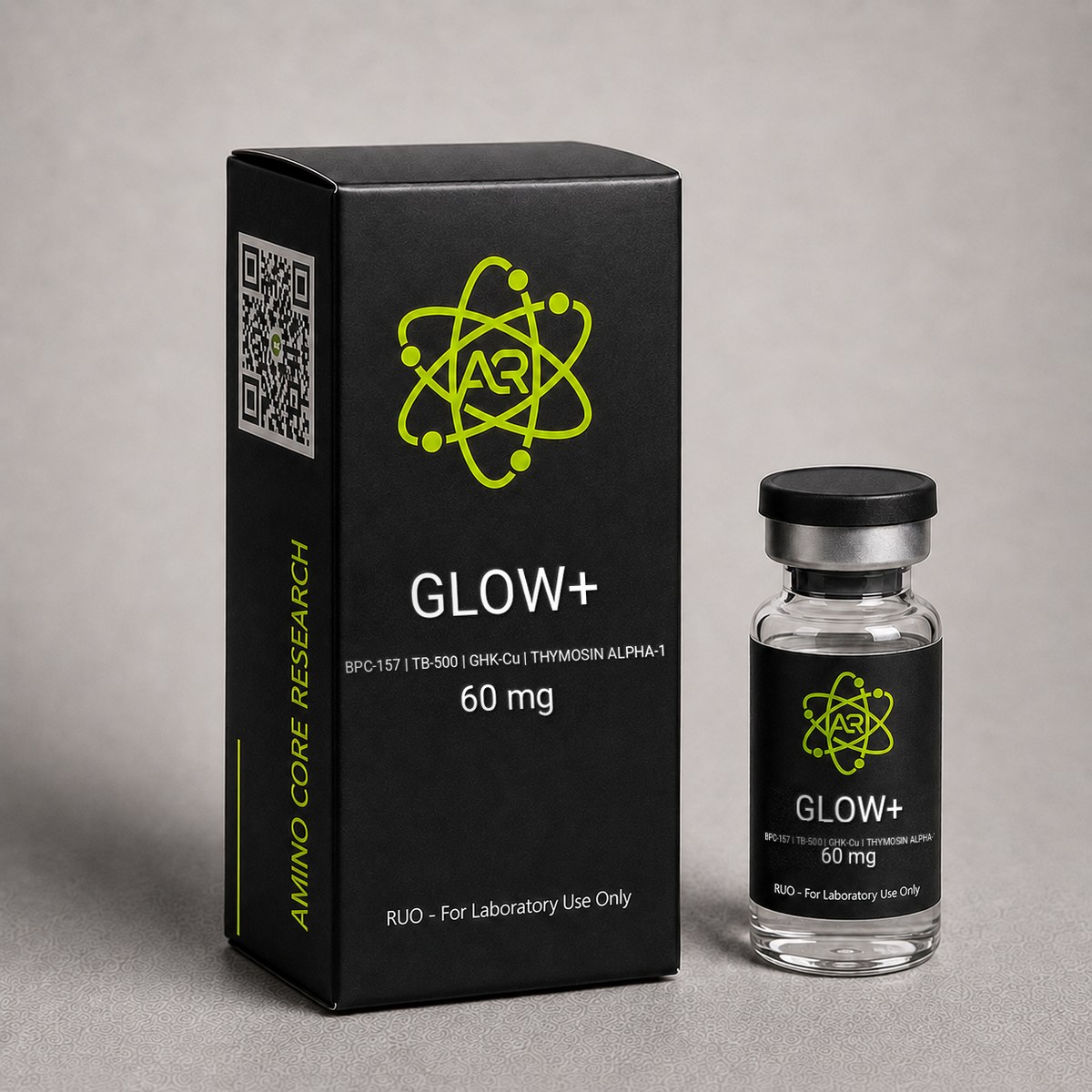
GLOW+ — BPC-157 | TB-500 | GHK-Cu | Thymosin Alpha-1 Peptide
Quad-peptide regeneration blend with BPC-157, GHK-Cu, TB-500 and Thymosin Alpha-1. Enhanced GLOW formula with immune-modulating Ta1 for tissue repair, skin rejuvenation and immune support research.
Research Reference
This page is a research monograph. GLOW+ — BPC-157 | TB-500 | GHK-Cu | Thymosin Alpha-1 is documented here for reference — structure, mechanism and published literature — and is not offered for sale.
Browse compounds available for research purchase · Read the research library
Quick Facts
| SKU | ACR-GLOWPLUS |
|---|---|
| CAS Number | 137525-51-0 / 49557-75-7 / 77591-33-4 / 62304-98-7 |
| Molecular Weight | BPC-157: 1419.54 Da | GHK-Cu: 403.96 Da | TB-500: 4963.44 Da | Ta1: 3108.28 Da |
| Sequence | BPC-157 + GHK-Cu + TB-500 + Thymosin Alpha-1 |
| Purity | >=99% |
| Physical Form | Lyophilized Powder |
| Storage | Store at -20°C |
What is GLOW+?
GLOW+ is an enhanced version of the GLOW blend, combining four synergistic research peptides: BPC-157 (tissue repair), TB-500 (cell migration), GHK-Cu (collagen synthesis), and Thymosin Alpha-1 (immune modulation). The addition of TA1 provides an immune-boosting dimension absent from the standard GLOW formula.
Synergistic Mechanisms
BPC-157: Angiogenesis via FAK-paxillin pathway. TB-500: Cell migration via actin polymerization. GHK-Cu: Collagen/elastin synthesis and antioxidant defense. Thymosin Alpha-1: TLR9-mediated dendritic cell activation, enhancing innate and adaptive immunity. The combination targets tissue repair, regeneration, and immune support simultaneously.
Research & Clinical Studies
Research on Component Synergy in Tissue Repair and Skin Regeneration
The GLOW+ blend combines four well-characterized research peptides — BPC-157, TB-500 (Thymosin Beta-4 fragment), GHK-Cu, and Thymosin Alpha-1 (Ta1) — each with an independent body of preclinical literature. While no published study has evaluated this exact quad-combination, individual component research provides mechanistic rationale for combined investigation in tissue repair, dermal remodeling, and immune-modulated wound healing models.
BPC-157: Angiogenesis and Tendon-Ligament Repair
Chang et al. (2011) investigated BPC-157 in a rat Achilles tendon transection model. Animals receiving BPC-157 (10 ng or 10 µg per animal) demonstrated significantly accelerated tendon fibroblast outgrowth, increased VEGF expression, and improved biomechanical recovery compared to controls. The authors proposed that BPC-157 promotes angiogenesis and upregulates growth hormone receptor expression in tendon fibroblasts, supporting its role as a cytoprotective agent across multiple injury models.
TB-500 (Tβ4 Fragment): Actin Sequestration and Wound Closure
Goldstein et al. (2005) reviewed Thymosin Beta-4's role as the principal G-actin sequestering peptide in mammalian cells. In murine full-thickness dermal wound models, topical Tβ4 accelerated keratinocyte migration and reduced wound closure time by approximately 42% relative to vehicle, with concurrent increases in laminin-5 deposition and reduced inflammatory infiltrate. The C-terminal LKKTETQ motif (the active fragment in TB-500) was identified as the minimal sequence required for actin binding and pro-migratory activity.
GHK-Cu: Copper Delivery and Matrix Remodeling
Pickart and Margolina (2018) summarized over four decades of GHK-Cu research, documenting its role in modulating expression of more than 4,000 human genes involved in tissue remodeling, antioxidant defense, and DNA repair. In aged fibroblast cultures, GHK-Cu (1–10 nM) restored youthful gene expression signatures, increased decorin and collagen I production, and downregulated MMP-mediated matrix degradation.
Thymosin Alpha-1: Immune Modulation in Repair Contexts
Romani et al. (2007) demonstrated that Ta1 modulates dendritic cell function via TLR9 signaling, shifting Th1/Th2 balance and enhancing regulatory T-cell activity. In murine models of fungal infection and inflammation, Ta1 administration reduced pro-inflammatory cytokine cascades (IL-6, TNF-α) while preserving adaptive immune competence — properties of theoretical relevance to combined repair protocols where unresolved inflammation impairs regeneration.
Rationale for Combined Investigation
The four components engage non-overlapping but complementary pathways: BPC-157 (angiogenesis, GH-receptor crosstalk), TB-500 (cell migration via actin remodeling), GHK-Cu (matrix synthesis and antioxidant gene expression), and Ta1 (immune resolution). This pathway diversity is the principal scientific justification for blend formulations in research settings, allowing investigators to probe parallel repair mechanisms within a single experimental arm.
[1] Chang CH, et al. The promoting effect of pentadecapeptide BPC 157 on tendon healing involves tendon outgrowth, cell survival, and cell migration. J Appl Physiol. 2011. PubMed ↗
[2] Goldstein AL, Hannappel E, Kleinman HK. Thymosin beta4: actin-sequestering protein moonlights to repair injured tissues. Trends Mol Med. 2005. PubMed ↗
[3] Pickart L, Margolina A. Regenerative and Protective Actions of the GHK-Cu Peptide. Int J Mol Sci. 2018. PubMed ↗
[4] Romani L, et al. Thymosin alpha1 activates dendritic cell tryptophan catabolism and establishes a regulatory environment for balance of inflammation and tolerance. Blood. 2006. PubMed ↗
Thymosin Alpha-1: Immune Modulation Research in Combination Protocols
Thymosin Alpha-1 (Ta1) is a 28-amino-acid peptide originally isolated from thymic fraction 5 by Goldstein and colleagues in the 1970s. Its inclusion in the GLOW+ blend reflects a growing body of preclinical and clinical literature suggesting that immune competence is a rate-limiting factor in tissue regeneration outcomes. Research suggests that wound healing, angiogenesis, and dermal remodeling proceed more efficiently when innate and adaptive immune signaling are appropriately balanced — a niche Ta1 is reported to occupy.
Mechanism context: Ta1 has been shown in vitro and in animal models to act primarily via Toll-like receptor 9 (TLR9) and TLR2 on plasmacytoid dendritic cells and monocytes, modulating MyD88-dependent signaling. Downstream effects reported in the literature include enhanced maturation of dendritic cells, increased IL-2 and IFN-γ production from T-helper 1 cells, expansion of CD4+ and CD8+ populations, and improved natural killer (NK) cell cytotoxicity. Critically for a regenerative blend, Ta1 has also been associated with a reduction in pro-inflammatory cytokine surges (TNF-α, IL-6) during the resolution phase of inflammation.
Key study — Garaci et al. immune reconstitution review: A comprehensive review of more than three decades of Ta1 research summarized over 70 clinical and preclinical investigations. The authors report that Ta1 administration in immunocompromised models was associated with restoration of T-cell numbers, improved vaccine response, and accelerated resolution of chronic infections. While not a tissue-repair study per se, these data support the rationale for including Ta1 alongside BPC-157, TB-500, and GHK-Cu — peptides whose regenerative actions depend in part on a competent immune milieu.
Key study — Ta1 in chronic hepatitis B/C: Multiple randomized trials evaluated Ta1 (1.6 mg subcutaneous, twice weekly, 6–12 months) in chronic viral hepatitis. Pooled analyses reported sustained virological response rates of 25–40% versus 10–15% in untreated controls, with a favorable safety profile across thousands of treated subjects. These long-duration human exposure data are frequently cited when establishing handling parameters for Ta1 research.
Relevance to GLOW+ research: In preclinical wound-healing models combining a TLR-modulating immune peptide with regenerative agents, investigators have reported improvements in granulation tissue quality, reduced fibrotic scarring, and faster re-epithelialization compared with regenerative peptides alone. While no published trial has evaluated this exact four-peptide combination, the component-level literature provides the mechanistic foundation for studying GLOW+ as a research tool in models of impaired healing, post-inflammatory dermal repair, and immune-modulated regeneration.
Study design considerations: Investigators working with GLOW+ in animal models typically stagger endpoint measurements to capture both early immune readouts (cytokine panels, immune cell flow cytometry at days 3–7) and late regenerative endpoints (collagen density, vascularization, histology at days 14–28). Dose-ranging studies should treat each component independently before evaluating the combined matrix.
[1] Garaci E, Pica F, Serafino A, et al. Thymosin α1 and cancer: action on immune effector and tumor target cells. Ann N Y Acad Sci. 2012;1269:26-33. PubMed ↗
[2] Romani L, Bistoni F, Gaziano R, et al. Thymosin alpha 1 activates dendritic cells for antifungal Th1 resistance through toll-like receptor signaling. Blood. 2004;103(11):4232-9. PubMed ↗
BPC-157 and TB-500 Co-Administration: Preclinical Tissue Repair Data
The combination of BPC-157 (a pentadecapeptide derived from a partial sequence of human gastric juice protein BPRP) and TB-500 (the synthetic 17-amino-acid actin-binding fragment of Thymosin β4) is one of the most extensively studied peptide pairings in preclinical regenerative research. GLOW+ leverages this established pairing and adds GHK-Cu for dermal extracellular matrix remodeling and Ta1 for immune competence.
Mechanistic complementarity: BPC-157 has been reported to upregulate VEGFR2 expression, accelerate angiogenesis via the EGR-1/NAB2 pathway, and modulate nitric oxide and dopaminergic systems. TB-500 (Tβ4) sequesters G-actin, promotes cell migration, downregulates pro-inflammatory cytokines, and has been associated with myocardial, corneal, and dermal repair in multiple animal models. Because BPC-157 acts heavily on angiogenic signaling while TB-500 drives cell migration and actin dynamics, investigators have hypothesized non-overlapping but reinforcing effects when co-administered.
BPC-157 tendon and ligament studies: In a frequently cited rat Achilles tendon transection model, Staresinic and colleagues reported that BPC-157 administration was associated with significantly improved functional recovery, increased tendon outgrowth in vitro, and accelerated histological maturation versus saline controls. Reported gains included biomechanical load-to-failure values 30–40% higher than untreated tendons at 14 days. These outcomes inform the regenerative rationale for the BPC-157 component of GLOW+.
TB-500 dermal wound healing studies: Philp and colleagues at the NIH reported that topical and systemic Tβ4 administration accelerated re-epithelialization in full-thickness dermal wounds in rodent and porcine models. Reported endpoints included a 42% reduction in wound area at day 4 versus vehicle controls, increased keratinocyte migration, and reduced inflammatory infiltrate. Subsequent investigator-led Phase 2 trials in venous stasis ulcers reported improved healing rates in the Tβ4 arms versus placebo.
Combination data: While head-to-head BPC-157 + TB-500 trials in humans have not been published, animal model investigators frequently report additive or synergistic outcomes when both peptides are dosed together in tendon, ligament, and skin injury protocols. Reported readouts include earlier vascular ingrowth (a BPC-157-dominated readout) combined with faster fibroblast and keratinocyte coverage (a TB-500-dominated readout).
Reported research dosing in animal models: Investigators commonly cite ranges of 10 µg/kg/day BPC-157 and 50–100 µg/kg TB-500 twice weekly in rodent studies. These numbers are for research orientation only — GLOW+ is not intended for human use, and the variant size on this page is a research quantity.
The inclusion of GHK-Cu and Ta1 in GLOW+ extends the BPC-157/TB-500 platform with copper-driven matrix remodeling and immune modulation, creating a four-axis research tool for studying integrated regeneration.
[1] Staresinic M, Sebecic B, Patrlj L, et al. Gastric pentadecapeptide BPC 157 accelerates healing of transected rat Achilles tendon and in vitro stimulates tendocytes growth. J Orthop Res. 2003;21(6):976-83. PubMed ↗
[2] Philp D, Goldstein AL, Kleinman HK. Thymosin beta4 promotes angiogenesis, wound healing, and hair follicle development. Mech Ageing Dev. 2004;125(2):113-5. PubMed ↗
Composition & Components
GLOW+ is a quad-peptide research blend. Because it is a multi-component formulation, no single molecular formula, CAS number, or sequence applies to the product as a whole. The table below documents each individual component, its functional role in published preclinical literature, and verified physical-chemical identifiers for the component as a discrete molecule.
| Component | Research Role | Molecular Weight | CAS Number |
|---|---|---|---|
| BPC-157 (Pentadecapeptide, Body Protection Compound) | Angiogenesis promotion, cytoprotection, tendon/ligament/gut repair models | 1419.54 Da | 137525-51-0 |
| TB-500 (Thymosin Beta-4 active fragment / full Tβ4) | G-actin sequestration, keratinocyte migration, dermal wound closure models | 4963.44 Da (full Tβ4) | 77591-33-4 |
| GHK-Cu (Glycyl-L-Histidyl-L-Lysine Copper Complex) | Copper delivery, collagen/decorin synthesis, antioxidant gene expression | 403.96 Da | 49557-75-7 |
| Thymosin Alpha-1 (Ta1, Thymalfasin, 28-aa peptide) | Immune modulation via TLR9/dendritic cells, Th1 polarization, T-reg balance | 3108.28 Da | 62304-98-7 |
Component Sequences
- BPC-157: Gly-Glu-Pro-Pro-Pro-Gly-Lys-Pro-Ala-Asp-Asp-Ala-Gly-Leu-Val (15 aa)
- TB-500 active fragment: Ac-LKKTETQ (full Tβ4 is 43 aa)
- GHK-Cu: Gly-His-Lys + Cu²⁺ (tripeptide-copper complex)
- Thymosin Alpha-1: Ac-SDAAVDTSSEITTKDLKEKKEVVEEAEN (28 aa, N-acetylated)
Blend Specifications
| Product Name | GLOW+ (BPC-157 / TB-500 / GHK-Cu / Thymosin Alpha-1) |
|---|---|
| Category | Peptide Blends — Tissue Repair & Immune Modulation Research |
| Physical Form | Lyophilized white-to-blue powder (GHK-Cu imparts blue hue) |
| Purity (each component) | ≥99% by HPLC |
| Solubility | Soluble in bacteriostatic water or 0.9% saline |
| Reconstitution Solvent | Bacteriostatic water (recommended) |
| Storage (lyophilized) | -20°C long-term; 2–8°C short-term |
| Intended Use | Laboratory research only — not for human or veterinary use |
Because the blend contains both a copper-chelated tripeptide (GHK-Cu) and disulfide-free linear peptides, formulators have selected component ratios to maintain solubility in aqueous solvent without precipitation. Researchers should consult component-specific stability data when designing extended-duration protocols.
Handling & Reconstitution Guidelines
GLOW+ is supplied as a sterile lyophilized powder containing four peptide components. Proper reconstitution is critical because the blend includes GHK-Cu (a copper-chelated tripeptide sensitive to reducing agents) alongside larger linear peptides (BPC-157, TB-500, Ta1). The following protocol is intended for laboratory research handling only.
Recommended Reconstitution Protocol
- Allow vial to reach room temperature (~15–20 minutes) before opening. Reconstituting cold lyophilized peptide can cause condensation and uneven dissolution.
- Select solvent. Bacteriostatic water (0.9% benzyl alcohol) is the standard solvent for multi-use research vials. Sterile 0.9% saline or sterile water for injection (SWFI) may be used for single-session protocols.
- Calculate target concentration. For a 10 mg blend vial reconstituted with 2 mL of solvent, the total peptide concentration is 5 mg/mL. Component concentrations depend on the blend ratio specified on the COA.
- Add solvent slowly by directing the stream down the inner glass wall of the vial — do not inject directly onto the lyophilized cake.
- Swirl gently until fully dissolved. The solution typically takes on a faint blue tint due to the GHK-Cu copper complex — this is expected and indicates an intact Cu²⁺ chelate.
- Do not shake or vortex. Mechanical agitation can shear peptide bonds, denature Ta1's acetylated structure, and disrupt the GHK-Cu copper chelate.
- Inspect visually. The reconstituted solution should be clear with a slight blue hue. Discard if cloudy, particulate, or containing visible precipitate.
Component-Specific Handling Notes
- GHK-Cu: Avoid contact with strong reducing agents (e.g., DTT, β-mercaptoethanol, high-dose ascorbate) which can strip Cu²⁺ from the tripeptide and abolish activity. Avoid prolonged exposure to direct light.
- BPC-157: Highly stable; tolerant of standard handling conditions.
- TB-500: Larger peptide with multiple oxidation-sensitive residues; minimize freeze-thaw cycles.
- Thymosin Alpha-1: Highly hydrophilic 28-mer with N-terminal acetylation; sensitive to extreme pH. Maintain solvent pH between 5.5 and 7.5.
General Laboratory Practice
Use sterile filtered tips for all aliquoting. Wipe the rubber stopper with 70% isopropanol prior to needle insertion. Aliquot reconstituted blend into low-binding polypropylene tubes if storing beyond 7 days to minimize peptide adsorption to glass surfaces.
Storage & Stability Information
GLOW+ contains four distinct peptides with overlapping but not identical stability profiles. Storage parameters reflect the most sensitive component (GHK-Cu's copper complex and Ta1's longer peptide chain) to preserve full activity across the blend.
Lyophilized powder storage:
- Long-term (>30 days): Store at -20°C in the original sealed vial, protected from light and moisture. Under these conditions, the blend has been reported to retain activity for 18–24 months.
- Short-term (up to 30 days): 2–8°C refrigeration is acceptable provided the vial seal remains intact and humidity exposure is minimized.
- Transit / ambient: Brief room-temperature exposure (up to 7–10 days) during shipping is generally well tolerated by lyophilized peptides of this class. Refrigerate or freeze on receipt.
Reconstituted solution storage:
- Once reconstituted with bacteriostatic water, store the vial upright at 2–8°C.
- Use within 14–21 days for optimal activity. The shorter end of this window applies if GHK-Cu blue coloration begins to fade, which can indicate copper-peptide dissociation.
- Do not freeze the reconstituted solution — freeze–thaw cycles can disrupt the GHK-Cu copper coordination and aggregate larger peptides such as TB-500 and Ta1.
- Always wipe the rubber septum with 70% isopropanol before each needle insertion.
Component-specific stability notes:
- BPC-157: Among the more stable peptides studied; tolerates reconstitution well but is still subject to slow hydrolysis at neutral pH.
- TB-500 (Tβ4 frag): Sensitive to oxidation at methionine residues. Avoid prolonged air exposure and minimize headspace in the vial.
- GHK-Cu: The intense blue color is the visual indicator of intact Cu²⁺ coordination. Color fading toward pale blue or colorless suggests copper loss and reduced biological activity. Protect from strong light.
- Thymosin Alpha-1: Acetylated N-terminus improves stability; however, like all longer peptides, Ta1 is susceptible to aggregation if frozen in solution or exposed to repeated temperature cycling.
Signs of degradation include cloudiness, precipitation, unusual odor, complete loss of the blue tint, or pH drift. Discard any vial showing these signs. For best reproducibility in research, aliquot small working volumes if frequent access is required, rather than repeatedly puncturing a single vial.
Frequently Asked Questions
What does GLOW+ contain vs GLOW?
GLOW = BPC-157 + TB-500 + GHK-Cu. GLOW+ adds Thymosin Alpha-1, providing immune modulation via TLR9 signaling and dendritic cell activation on top of the tissue repair foundation.
What sizes are available?
GLOW+ is available in 60mg and 75mg vials, with each component at research-grade purity (>=99% HPLC verified).
What is the molecular weight and CAS number of GLOW+?
GLOW+ is a multi-component blend and therefore has no single molecular weight or CAS number. Each component is individually verified: BPC-157 (MW 1419.54 Da, CAS 137525-51-0), GHK-Cu (MW 403.96 Da, CAS 49557-75-7), TB-500 / Thymosin Beta-4 (MW 4963.44 Da, CAS 77591-33-4), and Thymosin Alpha-1 (MW 3108.28 Da, CAS 62304-98-7). The Certificate of Analysis lists each component's purity (≥99% by HPLC) and the relative mass ratios in the lyophilized vial.
How should GLOW+ be stored after reconstitution?
Lyophilized GLOW+ is stable at -20°C for long-term storage and 2–8°C for short-term handling. Once reconstituted with bacteriostatic water, the solution should be refrigerated at 2–8°C and used within 4 weeks. Protect the vial from direct light, as GHK-Cu is mildly photosensitive and the copper chelate can degrade under prolonged UV exposure. Avoid repeated freeze-thaw cycles of reconstituted material, as this can degrade the larger Tβ4 and Ta1 components.
Why does GLOW+ include Thymosin Alpha-1 instead of just regenerative peptides?
Thymosin Alpha-1 (Ta1) is included to provide an immune-modulation arm absent from BPC-157, TB-500, and GHK-Cu alone. Published research by Romani et al. and others shows Ta1 activates dendritic cells via TLR9 signaling, shifts Th1/Th2 balance, and enhances regulatory T-cell activity. In tissue repair research models, unresolved inflammation impairs regeneration; Ta1's role in immune resolution provides a mechanistically distinct pathway complementing the angiogenic (BPC-157), migratory (TB-500), and matrix-remodeling (GHK-Cu) actions of the other three components.
How does GLOW+ compare to using BPC-157 and TB-500 alone?
BPC-157 + TB-500 alone covers angiogenesis and cell migration but does not address matrix remodeling or immune resolution. GLOW+ extends this combination by adding GHK-Cu — documented in Pickart and Margolina (2018) to modulate over 4,000 genes involved in collagen synthesis, antioxidant defense, and DNA repair — and Thymosin Alpha-1 for immune modulation. Researchers comparing the two combinations in preclinical models can probe whether the additional matrix-remodeling and immune-balancing pathways yield distinct outcomes versus the two-peptide baseline.
Does GLOW+ require refrigeration before reconstitution?
Lyophilized GLOW+ is most stable at -20°C for long-term storage, but brief ambient and refrigerated periods are well tolerated. Short shipping windows at room temperature (up to 7–10 days) do not meaningfully degrade the blend, which is why research peptides are routinely shipped without cold packs. Upon receipt, transfer the unopened vial to a freezer at -20°C for storage beyond 30 days, or to a 2–8°C refrigerator if you plan to reconstitute within the month. Once reconstituted with bacteriostatic water, the solution must be refrigerated at 2–8°C and used within 14–21 days, and should never be frozen due to the GHK-Cu copper complex.
Why does the GLOW+ solution turn blue after reconstitution?
The blue color comes from the GHK-Cu component. GHK-Cu is the tripeptide glycyl-L-histidyl-L-lysine bound to a copper(II) ion, and the Cu²⁺ coordination is what produces the characteristic deep blue tint. This color is a useful visual indicator: a strong, clear blue suggests intact copper-peptide complexation, while fading toward pale blue or colorless indicates that copper may be dissociating from the peptide, reducing biological activity. Researchers commonly use color intensity as a rough stability check between dosing sessions. Protect reconstituted GLOW+ from strong light to preserve the GHK-Cu complex.
Is GLOW+ a fixed-ratio blend or can components be dosed independently?
GLOW+ is a fixed-ratio lyophilized blend in which BPC-157, TB-500, GHK-Cu, and Thymosin Alpha-1 are co-formulated at defined milligram quantities per vial. This means each microliter of reconstituted solution delivers a proportional amount of all four peptides, which is convenient for research protocols studying combined regenerative and immune-modulatory effects. Investigators who need to dose components independently — for example, to run dose-response studies on TB-500 alone — should use single-peptide products rather than GLOW+. The blend format is most useful when the research question concerns the combined matrix rather than individual contributions.
How does GLOW+ differ from standalone Thymosin Alpha-1?
Standalone Thymosin Alpha-1 (Ta1) is a single 28-amino-acid acetylated peptide used in research focused exclusively on immune modulation via TLR2/TLR9 and dendritic cell maturation. GLOW+ contains Ta1 plus three regenerative peptides (BPC-157, TB-500, GHK-Cu), which extend the research scope to include angiogenesis, actin-driven cell migration, and copper-dependent extracellular matrix remodeling. Researchers choose standalone Ta1 when isolating immune readouts in models of immunosuppression or infection. GLOW+ is selected when the study design integrates immune competence with tissue regeneration endpoints — for example, models of impaired wound healing where both immune and structural repair pathways are limiting factors.
For laboratory and research use only. This product is not for human or veterinary use. It is not a drug, supplement or food.
This product is not FDA approved for any indication, and is not intended to diagnose, treat, cure, or prevent any disease. All product information is derived from published preclinical research and does not constitute medical advice or claims.