≥99%HPLC Purity
COAIncluded
USAShipped
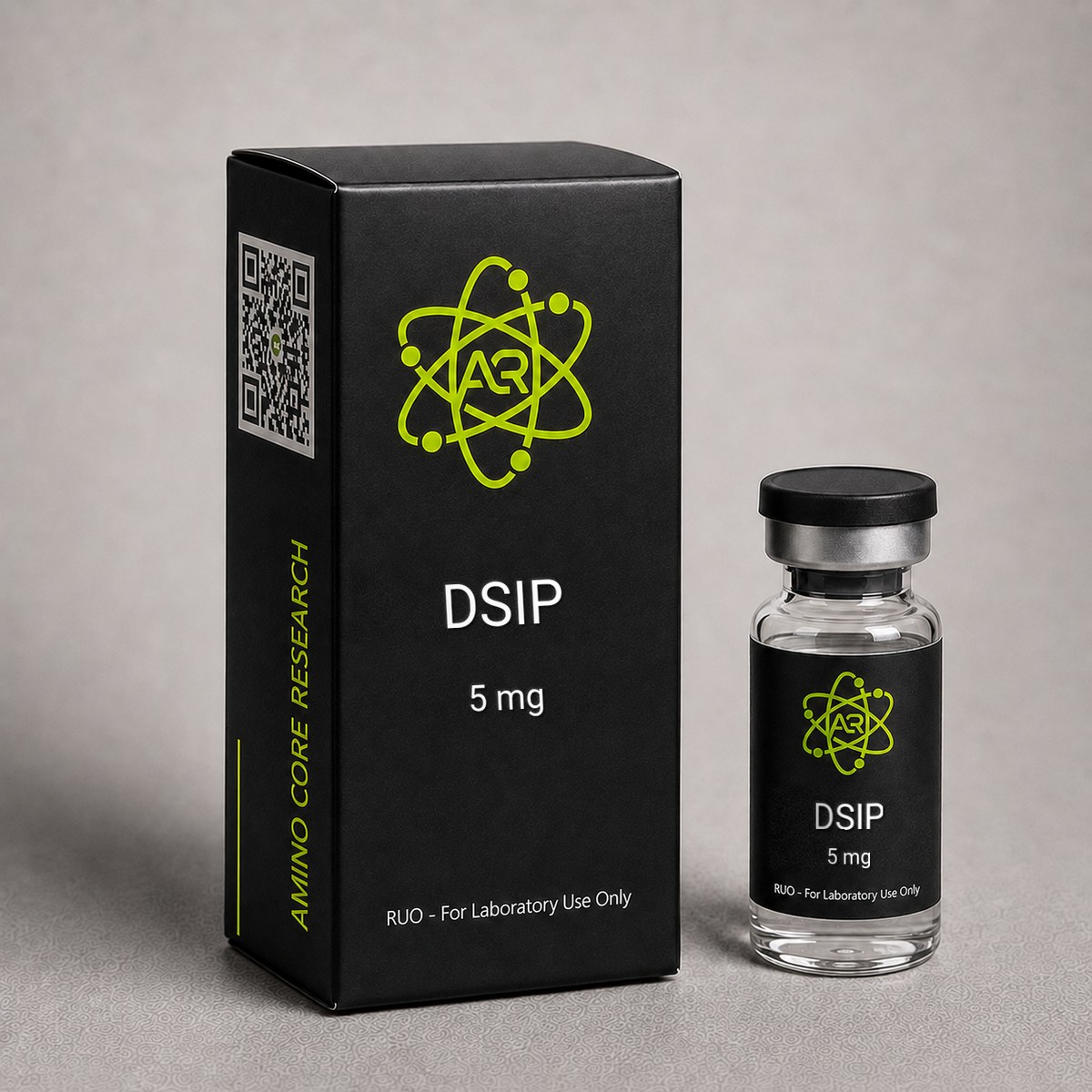
DSIP Peptide
Delta Sleep-Inducing Peptide. A nonapeptide originally isolated from cerebral venous blood, studied in neuroscience research.
$85.00
In stock — ships next business day
Quick Facts
| SKU | ACR-DSIP |
|---|---|
| CAS Number | 62568-57-4 |
| Molecular Formula | C35H48N10O15 |
| Molecular Weight | 848.81 g/mol |
| Sequence | Trp-Ala-Gly-Gly-Asp-Ala-Ser-Gly-Glu |
| Purity | ≥99% |
| Physical Form | Lyophilized Powder |
| Storage | Store at -20°C |
What is DSIP?
DSIP (Delta Sleep-Inducing Peptide) is a naturally occurring nonapeptide (Trp-Ala-Gly-Gly-Asp-Ala-Ser-Gly-Glu, WAGGDASGE) with MW 848.81 g/mol and CAS 62568-57-4. First isolated in 1974 from the cerebral venous blood of rabbits during induced sleep (Schoenenberger-Monnier group, Basel), DSIP promotes delta wave (Stage 3/4) sleep — the deepest, most restorative phase of the sleep cycle.
DSIP crosses the blood-brain barrier and acts on multiple neuroendocrine systems: it modulates GABA and glutamate signaling, suppresses cortisol and ACTH, enhances LH release, and regulates somatostatin/GH secretion patterns. Its research profile spans sleep medicine, stress physiology, circadian biology, and endocrine regulation.
Mechanism of Action
Delta Wave Enhancement: DSIP promotes EEG delta wave activity (0.5-4 Hz), increasing the duration and depth of Stage 3/4 slow-wave sleep without suppressing REM sleep. The mechanism involves modulation of GABAergic interneurons in the ventrolateral preoptic area (VLPO).
Cortisol/ACTH Suppression: DSIP reduces ACTH and cortisol secretion, potentially explaining stress-buffering effects. It normalizes the HPA axis response in chronic stress models.
Somatotropin Modulation: DSIP enhances the nocturnal GH pulse amplitude during delta sleep, connecting sleep architecture to growth hormone research.
Research & Clinical Studies
Research: Stress and HPA Axis
HPA axis modulation. Delta sleep-inducing peptide (DSIP) exhibits a distinctive profile as a stress-buffering nonapeptide whose anxiolytic and HPA-normalizing actions appear partially dissociable from its electroencephalographic sleep-promoting effects. In rodent models of acute restraint stress, exogenous DSIP administration attenuates the stress-induced rise in plasma corticosterone and ACTH, suggesting modulation at hypothalamic or pituitary loci rather than direct adrenal suppression. Microdialysis studies have demonstrated that DSIP can dampen stress-evoked release of corticotropin-releasing hormone (CRH) from the paraventricular nucleus, providing a mechanistic anchor for its glucocorticoid-attenuating effects.
Chronic stress and depressive-like phenotypes. In the chronic mild stress (CMS) paradigm—a well-validated rodent model of depression-related neurobiology—DSIP administration has been reported to reverse anhedonia-like deficits in sucrose preference and to normalize hyperactive HPA axis tone, including elevated basal corticosterone and blunted dexamethasone suppression. These effects parallel some actions of conventional antidepressants but emerge with a distinct time course and without classical monoaminergic receptor engagement, implying an upstream regulatory mechanism. Restoration of normal diurnal corticosterone rhythmicity has also been observed in stressed animals receiving DSIP, suggesting interaction with suprachiasmatic-paraventricular circuits governing circadian glucocorticoid output.
Neurochemical correlates. Mechanistic studies indicate DSIP modulates several stress-responsive neurotransmitter systems. It has been shown to influence central serotonergic and GABAergic tone, increase hippocampal and cortical GABA turnover, and attenuate stress-induced elevations in extracellular glutamate. DSIP also appears to interact with the opioid system; some of its anxiolytic effects are partially blocked by naloxone in selected paradigms, hinting at indirect engagement of endogenous opioid circuits. Additional reports document antioxidant effects in brain tissue under oxidative stress conditions, including reduced lipid peroxidation and preserved superoxide dismutase activity, which may contribute to neuroprotection during chronic stress exposure.
Catecholamine and metabolic stress responses. Beyond glucocorticoids, DSIP attenuates stress-induced sympathoadrenal activation, reducing plasma epinephrine and norepinephrine elevations in animals subjected to immobilization or cold stress. These autonomic effects extend to metabolic readouts: DSIP has been observed to blunt stress-induced hyperglycemia and to preserve glycogen stores, consistent with reduced catecholamine and glucocorticoid drive on hepatic glucose mobilization. Such findings position DSIP as a broad-spectrum stress-attenuating peptide influencing multiple efferent arms of the stress response.
Receptor pharmacology remains incompletely defined. Despite decades of investigation since Schoenenberger and Monnier's original isolation from rabbit cerebral venous blood in 1977, a high-affinity DSIP receptor has not been definitively cloned or characterized. The peptide's pleiotropic actions are thought to involve allosteric interactions with multiple targets, possible enzymatic interactions (including inhibition of certain peptidases), and indirect modulation of CRH and arginine vasopressin signaling within the hypothalamus. This pharmacological ambiguity has slowed translational development but continues to motivate basic neuroendocrinology research.
Research implications. Collectively, preclinical data support DSIP as a useful tool compound for probing stress-resilience mechanisms, HPA axis feedback, and the intersection of sleep regulation and neuroendocrine adaptation. Findings have not been validated in controlled human clinical trials of regulatory quality, and all current evidence remains within the preclinical research domain.
For in vitro and preclinical research only — not for human use.
[1] Khvatova EM, Samartzev VN, Zagoskin PP, Prudchenko IA, Mikhaleva II. Time-dependent effect of delta-sleep inducing peptide (DSIP) on the dynamics of respiration and oxidative phosphorylation in rat brain mitochondria. Peptides. 2003;24(2):307-311.
[2] Graf MV, Kastin AJ. Delta-sleep-inducing peptide (DSIP): a review. Neurosci Biobehav Rev. 1984;8(1):83-93. PubMed ↗
Research: Pain Modulation
DSIP has been investigated as an analgesic in chronic pain research. Studies report: potentiation of endogenous opioid analgesia (enhanced enkephalin activity), reduced pain perception in chronic headache patients (open-label trial), and modulation of nociceptive thresholds without opioid receptor dependence. The mechanism may involve delta-opioid receptor sensitization and serotonergic pain modulation.
DSIP and Opioid/Alcohol Withdrawal Research
One of the most promising DSIP research directions is substance withdrawal management. Clinical studies (Dick et al., 1984; Schneider-Helmert, 1985) reported DSIP administration during alcohol and opioid withdrawal: normalized sleep architecture disrupted by withdrawal, reduced anxiety and psychomotor agitation, decreased withdrawal symptom severity scores, and restored normal cortisol circadian patterns. The mechanism involves normalization of GABA/glutamate balance and HPA axis function — the two systems most disrupted during withdrawal states.
[1] Dick P et al. DSIP in the treatment of withdrawal syndromes from alcohol and opiates. Eur Neurol. 1984;23(5):356-363. PubMed ↗
DSIP and Endocrine Modulation
DSIP demonstrates broad endocrine modulatory effects: suppresses ACTH and cortisol (anti-stress), enhances LH release (reproductive axis), modulates somatostatin/GH patterns (increases nocturnal GH pulse), and normalizes TSH circadian rhythm. This multi-axis endocrine modulation is unusual for a single nonapeptide and suggests DSIP acts at a high level of neuroendocrine integration, possibly at the level of the suprachiasmatic nucleus (SCN) circadian pacemaker.
DSIP and Immune Function
Immunological research shows DSIP enhances NK cell activity, increases lymphocyte proliferation in response to mitogens, and modulates cytokine production (TNF-α suppression, IL-10 enhancement). The immunomodulatory effects are linked to its sleep-promoting activity — deep sleep (Stage 3/4) is when immune surveillance peaks, growth hormone is secreted, and tissue repair occurs. By enhancing delta sleep, DSIP indirectly supports immune function through the neuroimmune sleep-immunity axis.
Chemical Properties
| Sequence | Trp-Ala-Gly-Gly-Asp-Ala-Ser-Gly-Glu (WAGGDASGE) |
|---|---|
| Formula | C₃₅H₄₈N₁₀O₁₅ |
| MW | 848.81 g/mol |
| CAS | 62568-57-4 |
| Amino Acids | 9 (nonapeptide) |
| Origin | Endogenous, isolated from rabbit cerebral venous blood (1974) |
| Purity | ≥99% HPLC |
Handling & Reconstitution
Reconstitution solvent selection. DSIP is a hydrophilic, highly water-soluble nonapeptide owing to its three glycines, hydroxyl-bearing serine, and acidic Asp/Glu residues, with a calculated isoelectric point near pH 3.5. It readily dissolves in bacteriostatic water (0.9% benzyl alcohol) or sterile water for injection without requiring co-solvents, acidification, or sonication. For multi-aliquot research workflows, bacteriostatic water is generally preferred because the benzyl alcohol preservative suppresses microbial growth during the working period; sterile water is appropriate when a single-use aliquot is anticipated or when preservative-free conditions are required for downstream analytical work.
Reconstitution procedure. Prior to reconstitution, allow the lyophilized vial to reach room temperature inside its sealed packaging to prevent condensation onto the cake. Wipe the rubber stopper with 70% isopropanol and allow to dry. Using a sterile syringe, draw the desired volume of diluent and inject slowly down the inner wall of the vial—never directly onto the lyophilized peptide cake—to minimize foaming and shear-induced denaturation. Gently swirl the vial; do not shake or vortex aggressively, as mechanical agitation introduces air-water interfacial stress that can promote aggregation in linear peptides. Complete dissolution typically occurs within 30–60 seconds yielding a clear, colorless solution.
Concentration calculations. Standard preparations are summarized below:
| Vial Size | Diluent Volume | Final Concentration |
|---|---|---|
| 5 mg | 1.0 mL | 5.0 mg/mL |
| 5 mg | 2.0 mL | 2.5 mg/mL |
| 5 mg | 5.0 mL | 1.0 mg/mL |
| 2 mg | 1.0 mL | 2.0 mg/mL |
Researchers should select concentrations compatible with the precision of their measuring instruments and the volumetric requirements of their experimental model. Lower concentrations may be preferable for in vitro receptor binding studies, while higher concentrations reduce diluent volume in murine pharmacokinetic experiments.
Photoprotection during handling. The N-terminal tryptophan residue (Trp¹) confers significant UV sensitivity. Indole-ring photo-oxidation can produce N-formylkynurenine and kynurenine, structurally altering the peptide and confounding research results. Reconstituted vials should be wrapped in aluminum foil, stored in amber glassware, or kept inside opaque containers throughout the experimental period. When transferring solutions for analytical work, reduce ambient lighting where practical, and avoid prolonged exposure to laboratory UV transilluminators or unfiltered fluorescent lighting.
Aliquoting strategy. For studies extending beyond two weeks, prepare working aliquots immediately after reconstitution into low-binding polypropylene tubes (peptide adsorption to glass and standard polystyrene can be significant for sub-milligram quantities). Single freeze-thaw events at -20°C or -80°C are generally tolerated by DSIP, but repeated cycling should be avoided. Document reconstitution date, lot number, diluent type, and storage conditions on each aliquot to support reproducibility.
Sterile technique and safety. All reconstitution should occur within a laminar flow hood or equivalent clean environment using sterile, single-use syringes and filter needles where appropriate. Standard laboratory PPE—nitrile gloves, lab coat, and safety eyewear—is required. This product is for in vitro and preclinical research only; it is not intended for administration to humans or animals outside of approved research protocols.
Storage & Stability
Lyophilized powder storage. DSIP (Trp-Ala-Gly-Gly-Asp-Ala-Ser-Gly-Glu, MW 848.8 Da) in its solid lyophilized form is highly stable when stored desiccated at -20°C, with a documented shelf life of approximately 24 months under sealed, moisture-free conditions. For long-term archival storage exceeding two years, -80°C in an airtight container with desiccant (silica gel) is preferred to suppress residual hydrolytic activity and to limit any slow oxidation of the tryptophan side chain. Repeated removal of the vial from cold storage should be avoided; allow vials to equilibrate to room temperature inside a sealed container before opening to prevent atmospheric moisture from condensing onto the lyophilized cake, which can accelerate peptide bond hydrolysis and dimerization.
Reconstituted solution stability. Once reconstituted in bacteriostatic water (0.9% benzyl alcohol) or sterile water, DSIP solutions should be refrigerated at 2–8°C and used within approximately 14 days for research applications requiring high peptide integrity. Stability studies of related small linear peptides indicate that aqueous solutions stored at neutral pH and refrigerated temperatures retain >90% peptide content over two weeks, though degradation accelerates significantly above 25°C. Freezing reconstituted DSIP is generally discouraged because freeze-thaw cycles promote aggregation and partial precipitation, particularly at higher concentrations.
Photosensitivity considerations. DSIP is unusual among short peptides in containing an N-terminal tryptophan residue. Tryptophan's indole ring absorbs UV light strongly around 280 nm and is susceptible to photo-oxidation, generating N-formylkynurenine and kynurenine derivatives that fundamentally alter the molecule's identity and potential bioactivity. Vials—whether lyophilized or reconstituted—should therefore be stored in amber glass, wrapped in foil, or kept inside opaque secondary containers. Laboratory bench work involving DSIP solutions should minimize ambient fluorescent and UV exposure; transferring under reduced light conditions is recommended for sensitive analytical workflows.
Oxidation and pH sensitivity. Beyond photochemistry, tryptophan is also vulnerable to oxidation by reactive oxygen species, peroxides, and trace transition metals (Fe³⁺, Cu²⁺). Use of high-purity solvents and avoidance of metallic contamination during reconstitution helps preserve integrity. The aspartate (Asp⁵) and glutamate (Glu⁹) residues make DSIP modestly susceptible to acid-catalyzed isomerization and amide cleavage; storage at strongly acidic or alkaline pH should be avoided. The peptide is most stable in the slightly acidic to neutral pH window (approximately pH 5–7).
Quality monitoring. Researchers conducting longitudinal studies are advised to periodically verify peptide integrity by HPLC and mass spectrometry, monitoring for the appearance of oxidation products (+16 Da, +32 Da mass shifts indicating tryptophan oxidation) and hydrolytic fragments. Visible cloudiness, discoloration (yellowing), or particulates in reconstituted solution indicate degradation or contamination, and such material should not be used for quantitative research. For laboratory research use only — not for human or veterinary administration.
Frequently Asked Questions
What type of sleep does DSIP promote?
DSIP specifically promotes delta wave (Stage 3/4) slow-wave sleep — the deepest phase where tissue repair, immune function, and GH secretion peak. Importantly, it does not suppress REM sleep like benzodiazepines do.
How was DSIP discovered?
DSIP was isolated in 1974 by Schoenenberger and Monnier in Basel, Switzerland. They collected cerebral venous blood from rabbits during electrically induced sleep and purified the fraction that could induce delta sleep when administered to recipient animals.
Does DSIP affect growth hormone?
Yes, DSIP enhances the nocturnal GH pulse amplitude during delta sleep. Since 70% of daily GH secretion occurs during slow-wave sleep, DSIP research connects sleep architecture to the somatotropic axis.
Does DSIP have addictive potential?
No evidence of DSIP dependence or tolerance has been reported in research. Unlike benzodiazepines or Z-drugs, DSIP does not act through GABA-A receptor direct agonism and does not produce the reward circuit activation associated with addictive substances.
Is DSIP found naturally in humans?
Yes, DSIP is an endogenous nonapeptide found in human blood, CSF, and brain tissue. It is synthesized primarily in the hypothalamus and released into circulation. Levels fluctuate with circadian rhythm, peaking during the early sleep period. Exogenous DSIP supplementation augments the natural sleep-promoting signal.
How does DSIP compare to melatonin for sleep research?
Different mechanisms: melatonin signals darkness onset (circadian timing), while DSIP directly promotes delta wave sleep architecture (sleep depth). Melatonin helps with sleep onset; DSIP enhances sleep quality. They target complementary aspects of sleep physiology and are sometimes studied in combination.
What is delta wave sleep and why does it matter?
Delta sleep (Stage 3/4, slow-wave sleep) is the deepest sleep phase characterized by 0.5-4 Hz EEG waves. During delta sleep: 70% of daily growth hormone is secreted, immune surveillance peaks, tissue repair occurs, and memory consolidation (declarative) takes place. Decline in delta sleep is one of the earliest biomarkers of aging.
What is the molecular weight and CAS number of DSIP?
DSIP (Delta Sleep-Inducing Peptide) has a molecular weight of 848.81 g/mol and a CAS number of 62568-57-4. Its molecular formula is C35H48N10O15. DSIP is a nonapeptide composed of nine amino acids with the sequence Trp-Ala-Gly-Gly-Asp-Ala-Ser-Gly-Glu. It was first isolated in 1977 by Schoenenberger and Monnier from the cerebral venous blood of rabbits during electrically induced delta-wave sleep. The peptide is supplied as a lyophilized white powder at ≥99% HPLC purity for laboratory research applications.
How should DSIP be stored and reconstituted for research?
Lyophilized DSIP should be stored at -20°C for long-term stability, with short-term storage at 2-8°C acceptable for up to several weeks. For reconstitution, AminoCore Research recommends using bacteriostatic water or sterile water for injection at a concentration of 1-5 mg/mL. The diluent should be added slowly to the side of the vial — avoid direct streaming onto the lyophilized powder and never vortex aggressively, as mechanical shear can degrade the peptide. Once reconstituted, DSIP should be stored at 2-8°C and used within 7-10 days. Protect from light and repeated freeze-thaw cycles.
What sizes of DSIP are available from AminoCore Research?
DSIP is available from AminoCore Research in multiple vial sizes to accommodate different research protocols, typically including 2 mg and 5 mg lyophilized vials. All vials are supplied at ≥99% HPLC purity and shipped with a certificate of analysis (COA) documenting identity, purity, and mass spectrometry verification. DSIP is intended strictly for in vitro and preclinical laboratory research and is not for human consumption, diagnostic, or therapeutic use. Bulk quantities may be available upon request for institutional research programs.
How does DSIP compare to other nootropic peptides like Selank or Semax?
DSIP, Selank, and Semax are all short neuropeptides studied in cognitive and neuroprotection research, but they target different pathways. DSIP is a nonapeptide originally isolated for its association with delta-wave sleep EEG activity and has been investigated for stress, HPA axis modulation, and pain. Selank is an anxiolytic heptapeptide derived from tuftsin that modulates GABAergic and enkephalinergic systems. Semax is a heptapeptide ACTH(4-10) analog that influences BDNF and dopaminergic signaling for cognitive enhancement research. While Selank and Semax are primarily investigated for anxiety and cognition, DSIP research has focused on sleep architecture, stress resilience, and neuroendocrine balance.
For laboratory and research use only. This product is not for human or veterinary use. It is not a drug, supplement or food.
This product is not FDA approved for any indication, and is not intended to diagnose, treat, cure, or prevent any disease. All product information is derived from published preclinical research and does not constitute medical advice or claims.