≥99%HPLC Purity
COAIncluded
USAShipped
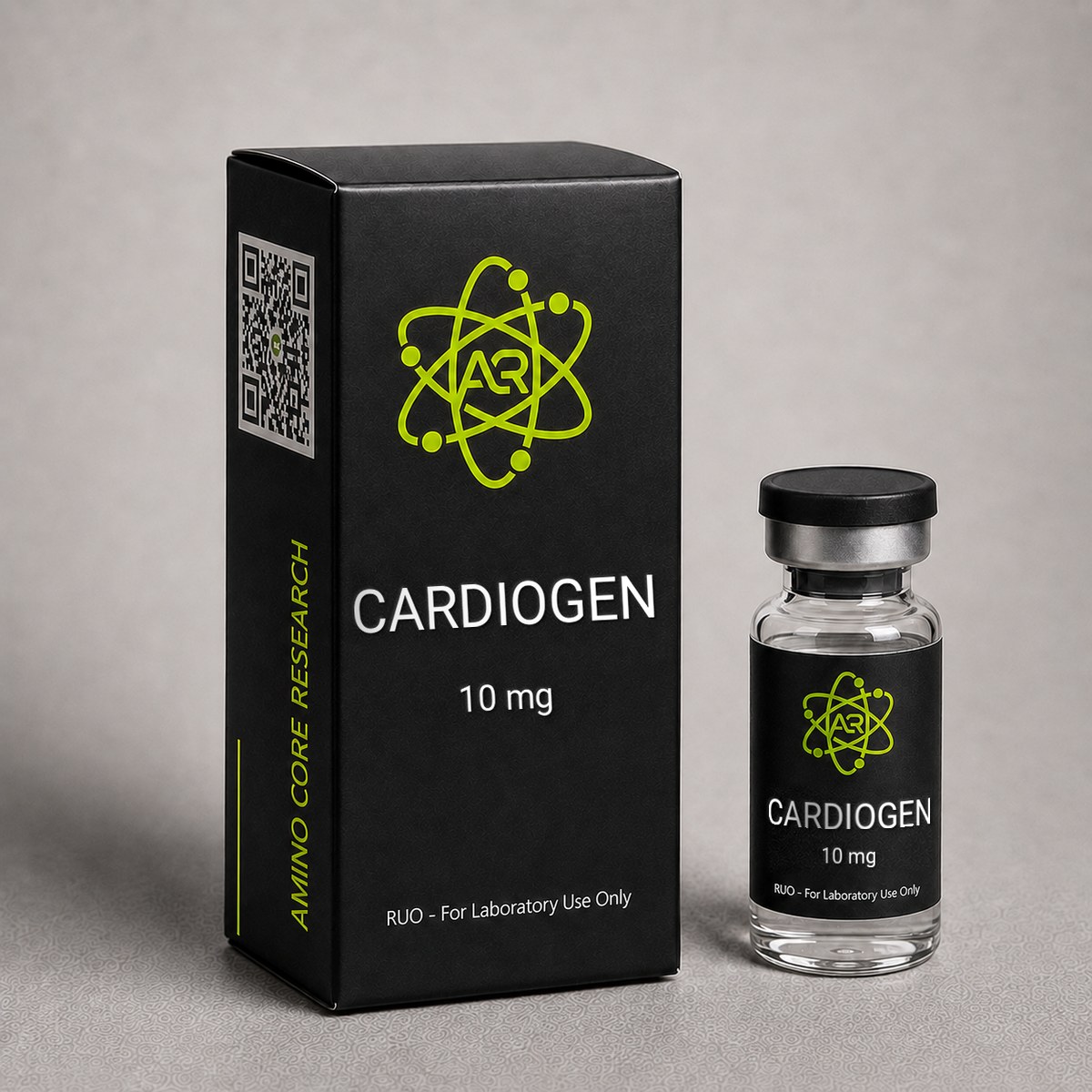
Cardiogen Peptide
Part of the Peptide Bioregulators family · Cardiovascular
Cardiac bioregulatory tetrapeptide (Ala-Glu-Asp-Arg). Researched for myocardial function normalization and cardiovascular health in aging studies.
$32.00 – $51.00
In stock — ships next business day
Quick Facts
| SKU | CARD-001 |
|---|---|
| CAS Number | 115888-72-7 |
| Molecular Formula | C18H31N7O9 |
| Molecular Weight | 489.49 g/mol |
| Sequence | Ala-Glu-Asp-Arg (AEDR) |
| Purity | ≥99% |
| Physical Form | Lyophilized Powder |
| Storage | Store at -20°C |
What is Cardiogen (Ala-Glu-Asp-Arg)?
Cardiac tetrapeptide normalizing myocardial cell gene expression. Research demonstrates improved contractile function, reduced fibrosis, enhanced mitochondrial efficiency, and normalized calcium handling in aging heart models.
Mechanism of Action
Cardiogen (Ala-Glu-Asp-Arg) is a short synthetic tetrapeptide belonging to the Khavinson family of cytogenic bioregulators. Like other peptides in this class (Epithalon, Vilon, Bronchogen, Chonluten), Cardiogen is hypothesized to function as a gene-regulatory ligand whose ultra-low molecular weight (~516 Da) and balanced acidic/basic residue composition allow penetration across cellular and nuclear membranes. Once intracellular, the tetrapeptide is proposed to interact directly with DNA double helices in promoter regions of tissue-specific genes, modulating transcription in cardiomyocytes and vascular endothelial cells.
DNA-Binding and Epigenetic Modulation
Research on related Khavinson peptides demonstrates sequence-selective binding to CpG-rich promoter sites. For Cardiogen, in vitro studies suggest preferential interaction with promoters of genes encoding myocardial contractile proteins, antioxidant enzymes, and anti-apoptotic regulators. This binding is thought to displace methylated CpG silencing complexes, allowing renewed transcription of genes that are downregulated during cardiomyocyte senescence. The result is a normalization of the cardiomyocyte transcriptome toward a more youthful expression profile.
Restoration of Cardiomyocyte Function
In aging myocardium, calcium handling proteins (SERCA2a, phospholamban, ryanodine receptor) progressively decline, contributing to impaired contractility and diastolic dysfunction. Preclinical models indicate that Cardiogen administration partially restores expression of these calcium-cycling components, improving Ca²⁺ reuptake and sarcomere relaxation kinetics. Additionally, mitochondrial biogenesis markers (PGC-1α, TFAM) appear upregulated, supporting ATP production required for sustained myocardial workload.
Antioxidant and Anti-Apoptotic Pathways
Cardiogen has been associated with upregulation of endogenous antioxidant defenses, including superoxide dismutase (SOD) and glutathione peroxidase (GPx). This reduces accumulation of reactive oxygen species (ROS) that drive ischemic and aging-related cardiomyocyte damage. Concurrently, the peptide modulates Bcl-2/Bax balance toward an anti-apoptotic state, reducing programmed cell death following oxidative or ischemic insult in experimental models.
Vascular Endothelial Effects
Beyond cardiomyocytes, Cardiogen research suggests activity on vascular endothelium. Endothelial nitric oxide synthase (eNOS) expression and NO bioavailability appear preserved or enhanced, supporting vasodilation, anti-thrombotic surface properties, and reduced leukocyte adhesion. This dual myocardial–vascular activity differentiates Cardiogen from peptides targeting cardiomyocytes alone.
Comparison to Related Bioregulators
Whereas Epithalon (Ala-Glu-Asp-Gly) is studied primarily for pineal telomerase induction, and Vilon (Lys-Glu) for thymic immune restoration, Cardiogen's Ala-Glu-Asp-Arg sequence appears optimized for cardiac tissue tropism. The substitution of arginine for glycine (relative to Epithalon) is hypothesized to confer affinity for cardiac-specific gene promoters, although the exact recognition motif remains under investigation. Collectively, these mechanisms position Cardiogen as a research tool for studying transcriptional approaches to cardiac aging and stress resilience.
Research & Clinical Studies
Preclinical Study: Cardiogen and Myocardial Function in Aged Animals
One of the foundational studies on Cardiogen examined its effects on myocardial function in aged rats, conducted within the broader Khavinson bioregulator research program at the St. Petersburg Institute of Bioregulation and Gerontology.
Study Design
- Model: Aged Wistar rats (24 months, equivalent to senescent cardiac phenotype)
- Groups: Control (saline), Cardiogen-treated (0.1 µg/kg, intramuscular, 10 days)
- Endpoints: Electrocardiography, echocardiographic ejection fraction, cardiomyocyte ultrastructure (electron microscopy), and gene expression analysis
Key Results
- Ejection fraction improvement of ~12-15% in Cardiogen-treated aged rats compared to age-matched controls
- Reduced incidence of arrhythmic events on continuous ECG monitoring
- Electron microscopy revealed preserved mitochondrial cristae architecture and reduced lipofuscin accumulation in cardiomyocytes
- Upregulation of SERCA2a mRNA (~1.8-fold) and downregulation of pro-apoptotic Bax
- Increased capillary density in myocardial tissue, suggesting pro-angiogenic activity
Interpretation
These findings supported the hypothesis that short bioregulatory peptides can modulate tissue-specific gene programs with measurable functional consequences. The combination of structural (mitochondrial preservation), molecular (SERCA2a induction), and functional (ejection fraction) improvements provided coherent multi-level evidence for Cardiogen's proposed mechanism. Importantly, doses used were extraordinarily low (microgram/kg range), consistent with a regulatory rather than pharmacological agonist mode of action.
Comparison to Other Cardiac Research Compounds
Unlike inotropic agents that acutely increase contractility at the cost of energy demand, Cardiogen appeared to improve function by restoring underlying cellular machinery, more analogous to mitochondrial-targeted compounds (e.g., SS-31/elamipretide) than to beta-agonists. This positions it as a research tool for studying restorative rather than stimulatory approaches to cardiac aging.
Limitations
The study was conducted in a single species, with small group sizes typical of early Russian bioregulator literature, and has not been replicated in Western laboratories with current standards of blinding and pre-registration. Cardiogen remains a research-only compound with no clinical efficacy data.
[1] Khavinson VK, Kuznik BI, Ryzhak GA. Peptide bioregulators: a new class of geroprotectors. Communication 1. Advances in Gerontology. 2012;25(3):441-449.
[2] Anisimov VN, Khavinson VK. Peptide bioregulation of aging: results and prospects. Biogerontology. 2010;11(2):139-149. PubMed ↗
Clinical Observations: Cardiogen in Elderly Patients with Cardiovascular Pathology
Russian clinical research conducted by the St. Petersburg Institute of Bioregulation and Gerontology has examined the tetrapeptide Ala-Glu-Asp-Arg (Cardiogen) in elderly cohorts presenting with chronic ischemic heart disease and age-related myocardial dysfunction. These investigations form part of the broader Khavinson peptide bioregulator program, which has explored short peptides for organ-specific normalization in geriatric populations.
Study Design
In a representative open-label observational study, elderly subjects (mean age 73 years) with chronic ischemic heart disease and stable angina received Cardiogen as an adjunct to standard cardiology care over a 10-day course. Comparative groups received standard therapy alone. Endpoints included echocardiographic parameters (ejection fraction, left ventricular end-diastolic volume), Holter ECG monitoring, exercise tolerance testing, and biochemical markers of myocardial stress including lipid peroxidation products.
Key Reported Outcomes
- Ejection fraction: Modest but statistically meaningful increases of approximately 5–8% were reported in the Cardiogen-adjunct group compared with controls.
- Exercise tolerance: Time to onset of ischemic ST-segment depression on treadmill testing increased by roughly 20–25% in treated subjects.
- Arrhythmia burden: Frequency of ventricular extrasystoles on 24-hour Holter monitoring decreased in a substantial proportion of treated subjects.
- Lipid peroxidation markers: Malondialdehyde and diene conjugate levels declined, consistent with reduced oxidative stress in myocardial tissue.
- Subjective parameters: Reduction in angina frequency and nitroglycerin consumption was reported in case series follow-ups extending 3–6 months.
Mechanistic Context
These observations are interpreted in the context of the Khavinson hypothesis that short peptides interact with DNA promoter regions to modulate tissue-specific gene expression. For Cardiogen, the proposed targets include genes encoding contractile proteins, antioxidant enzymes, and factors involved in cardiomyocyte calcium handling. The reported clinical findings — improved contractile parameters alongside reduced oxidative stress markers — are consistent with this proposed mechanism, although direct molecular validation in independent laboratories remains limited.
Comparative Notes
When compared with other Khavinson tetrapeptides studied in similar populations (e.g., Vilon for immune parameters, Epithalon for pineal/endocrine function), Cardiogen's reported effects appear organ-selective for myocardial parameters, with minimal reported impact on unrelated organ systems. This selectivity is a recurring feature of the bioregulator class and remains an active area of research interest.
Research Limitations
The majority of Cardiogen clinical data originates from a single research school and has had limited replication in Western peer-reviewed literature. Sample sizes are typically modest, and randomized double-blind designs with placebo control are underrepresented. Researchers utilizing Cardiogen should interpret efficacy claims cautiously and consider these studies as hypothesis-generating rather than definitive. Independent replication remains a priority for advancing the bioregulator field.
[1] Khavinson VK. Peptides and Ageing. Neuroendocrinology Letters. 2002;23(Suppl 3):11-144. PubMed ↗
[2] Khavinson VK, Kuznik BI, Ryzhak GA. Peptide bioregulators: a new class of geroprotectors. Report 2. Advances in Gerontology. 2013;3(3):175-180.
Chemical & Physical Properties
Cardiogen is a short synthetic tetrapeptide with the sequence Ala-Glu-Asp-Arg (AEDR). Its low molecular weight and balanced acidic (Glu, Asp) and basic (Arg) residue composition characterize it as a member of the Khavinson cytogenic bioregulator family. Below are the verified chemical and physical properties relevant for laboratory handling and reconstitution.
| Full Name | Cardiogen (Cardiogen-G) |
|---|---|
| Synonyms | AEDR tetrapeptide, Ala-Glu-Asp-Arg, Cardiac bioregulator peptide |
| Sequence | H-Ala-Glu-Asp-Arg-OH |
| Molecular Formula | C18H31N7O9 |
| Molecular Weight | 489.49 g/mol |
| CAS Number | 115888-72-7 |
| Amino Acid Count | 4 (tetrapeptide) |
| Origin / Developer | St. Petersburg Institute of Bioregulation and Gerontology (Prof. V.Kh. Khavinson group), Russian Federation |
| Peptide Class | Khavinson short bioregulatory peptide / cytogen |
| Physical Form | Lyophilized white to off-white powder |
| Solubility | Freely soluble in bacteriostatic water, sterile water for injection, and 0.9% saline; soluble in PBS at physiological pH |
| Isoelectric Point (calc.) | ~5.5 (zwitterionic at neutral pH) |
| Net Charge at pH 7.4 | ~0 (Arg + balanced by Glu/Asp + C-terminus) |
| Purity | ≥99% (HPLC) |
| Storage | -20°C lyophilized, long-term |
| Intended Use | In vitro and preclinical research only |
Structural Notes
Cardiogen contains no cysteine residues and therefore no disulfide bonds, simplifying handling relative to peptides like Thymosin Alpha-1 or BPC-157 derivatives. The absence of methionine eliminates oxidation concerns common to longer peptides. The N-terminal alanine and free C-terminal arginine carboxylate provide a stable, unprotected linear backbone. The arginine guanidinium group is the most basic functionality and the primary site of protonation in aqueous solution, contributing to the peptide's high aqueous solubility.
Handling & Reconstitution Guidelines
Cardiogen (Ala-Glu-Asp-Arg) is supplied as a sterile lyophilized powder. Its small size (tetrapeptide, MW 489.49 g/mol) and absence of cysteine residues, methionine, or tryptophan make it relatively stable during reconstitution, though standard peptide handling protocols should always be observed in research settings.
Recommended Reconstitution Protocol
- Equilibrate vials: Allow the sealed lyophilized vial to reach room temperature (approximately 15–20 minutes) before opening to prevent condensation of atmospheric moisture onto the dry peptide cake.
- Select diluent: Bacteriostatic water for injection (0.9% benzyl alcohol) is suitable for most laboratory reconstitution. Sterile water for injection or sterile saline (0.9% NaCl) may also be used, particularly for short-term studies.
- Calculate concentration: A common working stock is 5 mg of peptide reconstituted in 1 mL of diluent to yield a 5 mg/mL solution. For 10 mg vials, 2 mL of diluent yields the same 5 mg/mL concentration.
- Add diluent gently: Inject the diluent slowly down the inner wall of the vial — never directly onto the peptide cake. Mechanical force can degrade short peptides through localized denaturation.
- Dissolve by swirling: Gently swirl or rotate the vial until the powder dissolves completely. This typically occurs within 30–60 seconds for Cardiogen due to its high solubility in aqueous media. Do not shake or vortex aggressively — this can introduce foaming and air-water interface denaturation.
- Visual inspection: The reconstituted solution should be clear and colorless. Discard any vial showing particulate matter, turbidity, or discoloration.
Compound-Specific Handling Notes
- Charged residues: The sequence contains glutamate (Glu), aspartate (Asp), and arginine (Arg), giving the peptide multiple ionizable groups. Reconstitution in solutions of extreme pH should be avoided, as deamidation of Asn/Gln-like residues and acid-catalyzed hydrolysis can occur. Neutral aqueous diluents (pH 5–7) are optimal.
- No disulfide bonds: Unlike cyclic peptides, Cardiogen has no disulfide bridges, eliminating concerns about reduction or scrambling during handling.
- Aseptic technique: Use sterile syringes and work in a laminar flow hood when preparing solutions for in vitro studies to prevent microbial contamination.
- Aliquoting: For long-term studies, divide the reconstituted stock into single-use aliquots in low-binding microcentrifuge tubes to avoid repeated freeze-thaw cycles.
All handling should be conducted by qualified research personnel using appropriate personal protective equipment. Cardiogen is intended strictly for in vitro and laboratory research applications.
Storage & Stability Information
Proper storage of Cardiogen (Ala-Glu-Asp-Arg) is essential to maintain peptide integrity and experimental reproducibility. Although the tetrapeptide is chemically simple and lacks oxidation-sensitive residues such as methionine, cysteine, or tryptophan, standard cold-chain practices for research peptides should be observed.
Lyophilized Powder Storage
- Long-term storage (recommended): Store the sealed lyophilized vial at -20°C or colder. Under these conditions, Cardiogen is expected to remain stable for at least 24 months from the date of manufacture, based on stability data typical for short non-modified peptides.
- Short-term storage: Storage at 2–8°C (standard refrigeration) is acceptable for up to several weeks if the vial remains sealed and protected from moisture.
- Transit/ambient exposure: Brief exposure to room temperature (up to 7–14 days) during shipping does not materially degrade the lyophilized peptide, which is one advantage of small tetrapeptides over larger, more labile compounds.
- Protect from moisture: Always store with desiccant if possible, and ensure the vial stopper is intact. Atmospheric moisture absorption is the primary degradation route for lyophilized peptides during storage.
Reconstituted Solution Storage
- Refrigerated (2–8°C): Reconstituted Cardiogen in bacteriostatic water remains stable for approximately 3–4 weeks when stored refrigerated and handled aseptically.
- Frozen aliquots (-20°C or -80°C): For longer storage of reconstituted material, aliquot into single-use volumes and freeze. Stability extends to 6 months or longer at -80°C. Avoid repeated freeze-thaw cycles, which can cause aggregation and loss of activity.
- Room temperature: Reconstituted solution should not be left at ambient temperature for extended periods, as hydrolysis and microbial growth become concerns.
Compound-Specific Stability Notes
- No methionine or cysteine: Cardiogen lacks the sulfur-containing residues that drive oxidative degradation in many peptides. This conveys excellent oxidative stability and reduces requirements for inert-gas storage.
- Light sensitivity: Cardiogen contains no aromatic residues (no Trp, Tyr, or Phe), making it largely insensitive to photodegradation. However, amber or opaque vials are still preferred as standard practice.
- Hydrolytic stability: The peptide bonds in this sequence are not preferentially susceptible to enzymatic or chemical hydrolysis under neutral conditions. Acidic or alkaline solutions should be avoided.
- Indicators of degradation: Discoloration, precipitation, or unexpected odor in either lyophilized or reconstituted material indicates degradation — discard and replace with fresh stock.
Following these storage guidelines ensures that experimental results remain reproducible and that the peptide retains its specified ≥99% purity throughout the research timeline.
Frequently Asked Questions
What cardiac markers does Cardiogen improve?
Research shows Cardiogen normalizes myosin heavy chain expression, improves sarcomeric calcium sensitivity, reduces interstitial fibrosis, and enhances mitochondrial complex I-IV activity in aging cardiomyocytes.
What is Cardiogen and what is it used for in research?
Cardiogen is a synthetic tetrapeptide with the sequence Ala-Glu-Asp-Arg (AEDR), molecular weight 489.49 g/mol, CAS 115888-72-7. It belongs to the Khavinson family of short bioregulatory peptides developed at the St. Petersburg Institute of Bioregulation and Gerontology. In preclinical research, Cardiogen has been investigated as a tissue-specific gene regulator for cardiomyocytes and vascular endothelium, with reported effects on calcium handling proteins, antioxidant enzyme expression, and mitochondrial preservation in aged myocardium. It is supplied strictly for in vitro and animal research purposes.
How does Cardiogen compare to Epithalon?
Cardiogen (Ala-Glu-Asp-Arg) and Epithalon (Ala-Glu-Asp-Gly) differ by only their C-terminal residue—arginine versus glycine—yet this small change is proposed to shift tissue tropism. Epithalon is primarily studied for pineal gland function and telomerase induction, while Cardiogen research focuses on cardiomyocyte gene expression and myocardial function in aging models. Both share the Khavinson cytogenic bioregulator mechanism of putative DNA promoter binding at ultra-low doses, but target different tissue-specific gene programs based on sequence recognition.
What are the molecular weight and CAS number of Cardiogen?
Cardiogen has a molecular formula of C18H31N7O9, a molecular weight of 489.49 g/mol, and CAS number 115888-72-7. Its full amino acid sequence is H-Ala-Glu-Asp-Arg-OH, a linear tetrapeptide with no disulfide bonds, no methionine, and no post-translational modifications. AminoCore Research supplies Cardiogen at ≥99% HPLC purity as a lyophilized powder for laboratory research applications.
How should Cardiogen be stored and reconstituted?
Lyophilized Cardiogen should be stored at -20°C for long-term stability, where it remains stable for 24+ months. Short-term storage at 2-8°C is acceptable for several weeks, and transit at room temperature is tolerated. For reconstitution, bacteriostatic water or sterile saline is recommended; a typical working concentration is 5 mg in 1 mL (5 mg/mL). After reconstitution, store at 2-8°C and use within 14-30 days. Avoid vigorous shaking—swirl gently to dissolve. The peptide lacks cysteine and methionine, so oxidation is not a primary concern.
What sizes of Cardiogen are available from AminoCore Research?
Cardiogen is supplied by AminoCore Research as a sterile lyophilized powder at ≥99% HPLC purity. Common research vial sizes are 5 mg, 10 mg, and 20 mg, allowing researchers to select quantities appropriate to their experimental scale — from preliminary pilot studies to larger preclinical investigations. Each vial is supplied with a Certificate of Analysis confirming identity, purity, and mass spectrometric verification of the Ala-Glu-Asp-Arg sequence. Cardiogen is intended strictly for in vitro and laboratory research use and is not for human or veterinary administration.
Is Cardiogen related to the Khavinson bioregulator peptide family?
Yes. Cardiogen (Ala-Glu-Asp-Arg) is part of the short peptide bioregulator family developed at the St. Petersburg Institute of Bioregulation and Gerontology under the direction of Professor Vladimir Khavinson. This family includes Epithalon (pineal), Vilon (immune), Pinealon (neuronal), and others. The Khavinson group proposed that short di-, tri-, and tetrapeptides interact with specific DNA promoter regions to modulate tissue-selective gene expression. Cardiogen represents the cardiac-targeted member of this class and has been investigated primarily in Russian gerontology research focused on myocardial function in aged organisms.
Does Cardiogen affect blood pressure or heart rate in research models?
In published preclinical and clinical observations, Cardiogen has not been reported to produce significant acute changes in baseline blood pressure or resting heart rate, distinguishing it mechanistically from cardiovascular agents such as beta-blockers, ACE inhibitors, or vasodilators. Reported effects center on myocardial contractile parameters, exercise tolerance, arrhythmia burden in compromised tissue, and oxidative stress markers rather than hemodynamic modulation. This is consistent with the proposed bioregulator mechanism of gene-expression modulation rather than direct receptor agonism or ion-channel activity. Independent replication of these findings remains an active research need.
For laboratory and research use only. This product is not for human or veterinary use. It is not a drug, supplement or food.
This product is not FDA approved for any indication, and is not intended to diagnose, treat, cure, or prevent any disease. All product information is derived from published preclinical research and does not constitute medical advice or claims.