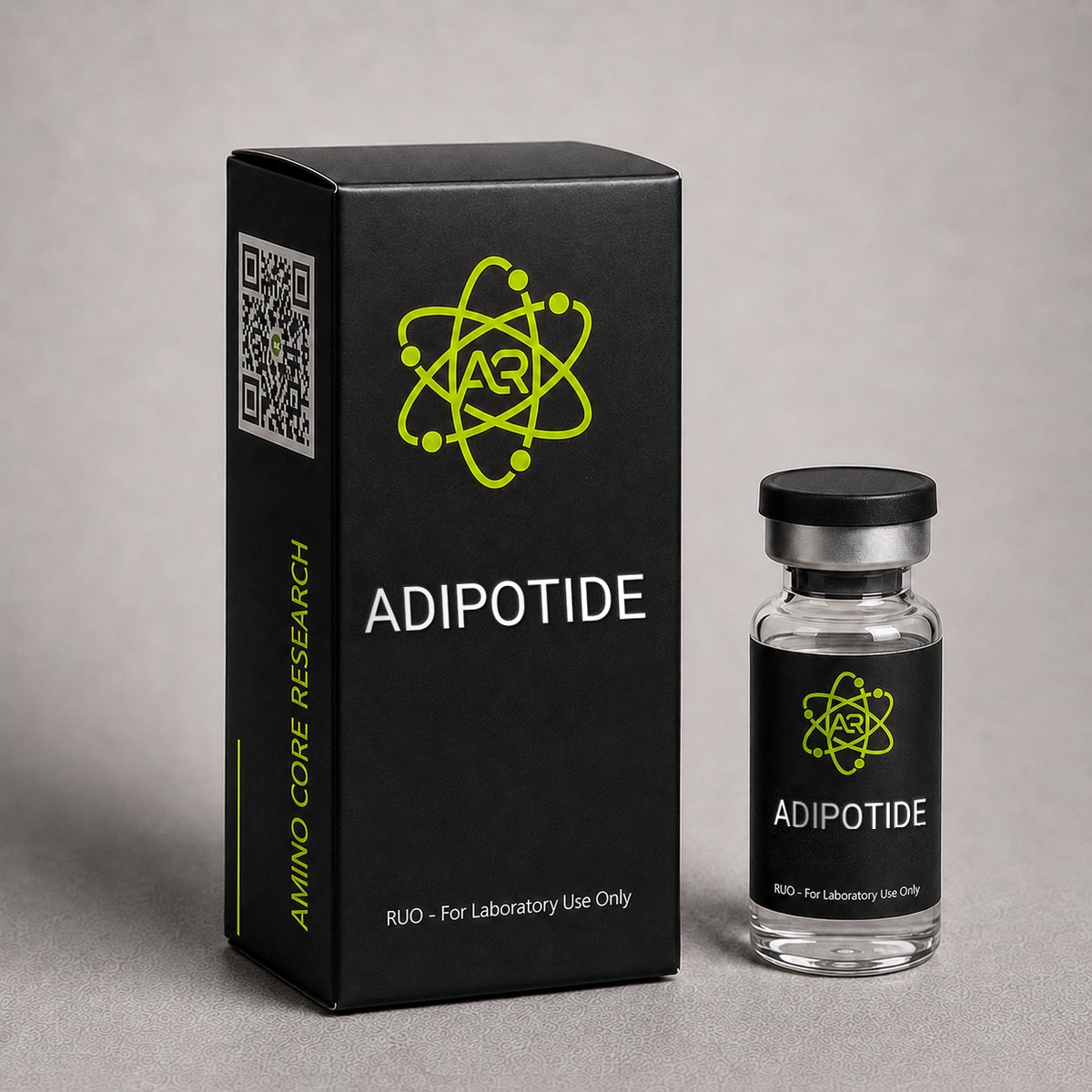
≥99%HPLC Purity
COAIncluded
USAShipped
Adipotide (FTPP) Peptide
Adipotide (FTPP) is a chimeric peptidomimetic combining a CKGGRAKDC homing motif that binds prohibitin on white adipose vasculature with a D(KLAKLAK)2 proapoptotic domain. It has been studied in preclinical models for selective ablation of adipose endothelium.
Research Reference
This page is a research monograph. Adipotide (FTPP) is documented here for reference — structure, mechanism and published literature — and is not offered for sale.
Browse compounds available for research purchase · Read the research library
Quick Facts
| SKU | ACR-ADIPO |
|---|---|
| CAS Number | 868851-47-0 |
| Molecular Formula | C112H166N32O27S |
| Molecular Weight | 2436.81 g/mol |
| Sequence | CKGGRAKDC-GG-D(KLAKLAK)2 |
| Purity | ≥97% |
| Physical Form | Lyophilized Powder |
| Storage | Store at -20°C |
What is Adipotide?
Adipotide (FTPP) is a chimeric peptide that selectively destroys blood vessels feeding white adipose tissue via prohibitin binding and mitochondrial membrane disruption.
Mechanism of Action
Adipotide, also referred to as fat-targeted proapoptotic peptide (FTPP), is a bifunctional chimeric peptidomimetic designed to exploit a tissue-specific vascular address system. It consists of two functionally distinct domains joined by a glycine-glycine (GG) linker: a homing peptide sequence CKGGRAKDC and a proapoptotic effector sequence D(KLAKLAK)2. Each domain contributes to a sequential mechanism of vascular targeting followed by localized endothelial cell death.
Prohibitin-Mediated Vascular Homing
The CKGGRAKDC motif was identified through in vivo phage display biopanning in mice and shown to bind selectively to prohibitin-1 (PHB1), a membrane-associated chaperone protein that is differentially expressed on the luminal surface of endothelial cells lining white adipose tissue (WAT) vasculature. Although prohibitin is widely expressed intracellularly in mitochondria, its cell-surface localization on WAT endothelium provides a vascular zip code that the homing peptide recognizes with relative specificity, sparing the vasculature of most other organs in preclinical models.1
D(KLAKLAK)2 Proapoptotic Domain
Once the chimeric peptide docks onto the adipose endothelial surface, the D(KLAKLAK)2 sequence — an amphipathic, cationic α-helical peptide composed of D-amino acids — is internalized and translocates to mitochondrial membranes. There it disrupts the mitochondrial outer membrane potential, leading to cytochrome c release, caspase activation, and rapid apoptotic cell death of the targeted endothelium. The use of D-amino acids confers resistance to proteolytic degradation while preserving membrane-disrupting activity, since this function depends on amphipathic helix geometry rather than chiral receptor recognition.2
Downstream Vascular and Adipose Effects
Selective apoptosis of WAT endothelial cells has been associated, in preclinical models, with capillary regression in adipose depots and secondary loss of adipocyte mass, presumably through diminished blood supply and trophic support. Imaging and histological analyses in obese mice and non-human primates have reported reductions in body fat following systemic administration of adipotide, without comparable depletion of lean tissue or brown adipose vasculature in the original studies.1,2
Selectivity Considerations
Because prohibitin is also expressed on other vascular beds and intracellularly across many tissues, vascular targeting selectivity is not absolute. Preclinical toxicology studies have flagged renal proximal tubule effects in some species, suggesting that the homing peptide may also accumulate in the kidney. These observations have shaped subsequent research into dose-response relationships and structural analogs aimed at refining tissue selectivity.
Mechanistically, adipotide therefore represents a model system for studying ligand-directed vascular pharmacodelivery: combining a peptide address with a payload effector. It is widely used in research as a tool compound to interrogate adipose vascular biology, prohibitin function, and endothelial apoptosis pathways rather than as a generic anti-obesity agent.
Research & Clinical Studies
Landmark Study: Targeted Ablation of Adipose Vasculature in Obese Mice
The foundational study describing adipotide was published by Kolonin and colleagues in Nature Medicine in 2004. This investigation introduced the concept of treating obesity by targeting the vasculature of adipose tissue rather than adipocytes themselves, and provided the first proof-of-concept for the CKGGRAKDC–D(KLAKLAK)2 chimeric peptidomimetic.1
Study Design
- Model: Genetically obese (ob/ob) and diet-induced obese (DIO) C57BL/6 mice
- Intervention: Daily subcutaneous administration of the chimeric peptide CKGGRAKDC-GG-D(KLAKLAK)2
- Controls: Vehicle, scrambled homing sequence, and proapoptotic domain alone
- Duration: Approximately 4 weeks
- Endpoints: Body weight, fat mass, adipose vascular density, metabolic parameters
Key Findings
- ~30% reduction in body weight in obese mice over the dosing period compared to controls
- Selective loss of white adipose tissue with relative sparing of lean mass
- Histological evidence of endothelial apoptosis and capillary regression in WAT depots
- Improvements in glucose tolerance and insulin sensitivity associated with fat loss
- Scrambled and effector-only controls produced no comparable phenotype, supporting the necessity of the prohibitin-targeting motif
Mechanistic Significance
This work established prohibitin as a functional vascular receptor on white adipose endothelium and validated the strategy of ligand-directed proapoptotic delivery for studying adipose biology. It also introduced adipotide as a research tool for dissecting the vascular dependence of adipose tissue mass and the interplay between angiogenesis and adipogenesis. Subsequent studies have used this molecule to probe whether adipose remodeling can be uncoupled from caloric restriction in metabolic research.
Context vs. Other Approaches
Unlike incretin-based agents (e.g., semaglutide, retatrutide) that act on hypothalamic and pancreatic GLP-1/GIP/glucagon receptors to modulate appetite and energy balance, adipotide acts peripherally on the adipose vascular bed. This makes it mechanistically orthogonal and useful in comparative preclinical studies aimed at separating central from peripheral contributions to body-weight regulation.
[1] Kolonin MG, Saha PK, Chan L, Pasqualini R, Arap W. Reversal of obesity by targeted ablation of adipose tissue. Nat Med. 2004;10(6):625-632. PubMed ↗
Non-Human Primate Study: Weight Loss and Insulin Sensitivity in Obese Rhesus Macaques
A pivotal translational study by Barnhart and colleagues, published in Science Translational Medicine in 2011, extended adipotide research from rodents into spontaneously obese rhesus macaques, providing the most rigorous primate data set on this peptidomimetic to date.1
Study Design
- Subjects: Spontaneously obese adult rhesus macaques (Macaca mulatta)
- Intervention: Subcutaneous adipotide at approximately 0.43 mg/kg/day
- Duration: 28 days of dosing, with extended follow-up
- Assessments: Body composition (DEXA, MRI), fasting insulin, glucose tolerance, food intake, organ histology
Key Findings
- ~11% reduction in body weight over 4 weeks of dosing
- ~39% reduction in abdominal fat measured by imaging
- Significant improvement in insulin sensitivity and reduction in fasting insulin levels
- Decrease in food intake during dosing, partly attributed to fat-mass-driven changes in energy balance signaling
- Dose-dependent renal effects were noted, including reversible proximal tubule changes, prompting careful dose selection
Mechanistic Interpretation
The primate data corroborated the rodent observations: targeting prohibitin on white adipose endothelium led to selective fat loss with metabolic improvements. The study also demonstrated that the peptidomimetic was active across species, supporting prohibitin as a conserved vascular marker of WAT. Importantly, the authors highlighted that kidney exposure is a key consideration for adipotide research, reflecting that prohibitin and related binding partners are not absolutely WAT-specific.
Research Significance
This study is frequently cited as one of the clearest demonstrations that adipose vascular ablation can produce coordinated reductions in adiposity and improvements in glucose handling in a large animal model. For investigators, it remains a benchmark for designing comparative studies of vascular-targeted versus receptor-agonist approaches to metabolic research, and for evaluating safety windows of homing-peptide-based delivery strategies.
[1] Barnhart KF, Christianson DR, Hanley PW, et al. A peptidomimetic targeting white fat causes weight loss and improved insulin resistance in obese monkeys. Sci Transl Med. 2011;3(108):108ra112. PubMed ↗
Prostate Cancer Xenograft Study: Dual Targeting of Tumor and White Adipose Vasculature
Adipotide (also known as CKGGRAKDC-GG-D(KLAKLAK)2) was originally developed in the Arap/Pasqualini laboratory at MD Anderson Cancer Center, where the homing motif CKGGRAKDC was identified via in vivo phage display as a ligand for prohibitin-1 on the surface of white adipose tissue (WAT) endothelium. A pivotal preclinical study published in Cancer Research (Kolonin et al., 2009) extended the application of this peptidomimetic to oncology by examining its activity in prostate cancer xenograft models, where WAT angiogenesis contributes to tumor progression and obesity-associated cancer risk.
Study Design:
- Subjects: Severe combined immunodeficient (SCID) mice bearing human LNCaP and DU145 prostate cancer xenografts.
- Intervention: Daily subcutaneous administration of Adipotide at approximately 3.13 mg/kg or vehicle control for up to 28 days.
- Endpoints: Tumor volume, white adipose mass, vascular density (CD31 immunostaining), apoptosis (TUNEL), and body composition by DEXA-equivalent measurement.
Key Results:
- Tumor xenograft volume was reduced by approximately ~50% in Adipotide-treated mice compared with vehicle controls.
- White adipose tissue mass decreased by approximately 30-40%, with histological evidence of endothelial apoptosis and stromal remodeling.
- CD31-positive microvessel density in both peritumoral fat and tumor tissue was significantly reduced, supporting a dual antiangiogenic mechanism.
- TUNEL staining confirmed selective apoptosis of vascular endothelial cells expressing prohibitin-1, sparing the bulk of non-targeted tissues.
- No significant changes were observed in lean body mass, organ weights, or hematological parameters at the doses studied.
Mechanistic Context: The study demonstrated that prohibitin-1 is upregulated not only on WAT endothelium but also on tumor-associated vasculature in prostate cancer xenografts. By co-localizing two distinct vulnerable vascular beds, Adipotide produced concurrent antiobesity and antitumor effects in a single chimeric construct. This was the first preclinical demonstration that a prohibitin-targeted proapoptotic peptidomimetic could be repurposed for tumor vascular targeting research.
Comparative Context: Unlike conventional antiangiogenic agents such as bevacizumab, which target VEGF signaling, Adipotide acts via receptor-mediated internalization of a mitochondrial-disrupting cationic amphipathic helix (D(KLAKLAK)2). This mechanism is independent of VEGF status and may retain activity in tumors that have acquired resistance to VEGF blockade. The chimeric design also provides a platform for further homing-motif engineering, where the CKGGRAKDC sequence can be substituted with other vascular zip-code ligands to redirect proapoptotic activity to alternative tissues. These findings established Adipotide as a tool compound for studying prohibitin-1 biology in both metabolic and oncologic preclinical research contexts.
[1] Kolonin MG, Saha PK, Chan L, Pasqualini R, Arap W. Reversal of obesity by targeted ablation of adipose tissue. Nat Med. 2004;10(6):625-632. PubMed ↗
[2] Barnhart KF, Christianson DR, Hanley PW, et al. A peptidomimetic targeting white fat causes weight loss and improved insulin resistance in obese monkeys. Sci Transl Med. 2011;3(108):108ra112. PubMed ↗
Chemical & Physical Properties
Adipotide (FTPP, Fat-Targeted Proapoptotic Peptide) is a chimeric peptidomimetic combining a cyclic disulfide-constrained homing motif with a D-amino-acid proapoptotic helix. The construct's biophysical characteristics reflect this dual-domain architecture: a hydrophilic, cysteine-bridged adipose-homing loop linked through a glycine-glycine spacer to a strongly cationic amphipathic helix composed of D-enantiomer residues. Researchers should note that the D-amino acid composition of the KLAKLAK domain confers significant protease resistance compared with all-L analogs, an important determinant of in vivo half-life.
| Full Name | Adipotide; FTPP (Fat-Targeted Proapoptotic Peptide); CKGGRAKDC-GG-D(KLAKLAK)2 |
|---|---|
| Synonyms | Prohibitin-targeted proapoptotic peptidomimetic; Adipotide FTPP |
| Molecular Formula | C112H166N32O27S |
| Molecular Weight | 2,436.81 g/mol |
| CAS Number | 868851-47-0 |
| Sequence | CKGGRAKDC-GG-D(KLAKLAK)2 (homing motif cyclized via intramolecular disulfide between the two cysteine residues; proapoptotic domain composed of D-amino acids) |
| Amino Acid Count | 23 residues (9-residue homing motif + 2-residue Gly-Gly linker + 14-residue D(KLAKLAK)2 helix, counting the dimeric repeat) |
| Origin / Developer | Wadih Arap and Renata Pasqualini laboratory (MD Anderson Cancer Center), via in vivo phage display screening for white adipose vasculature ligands. |
| Key Modifications | Intramolecular disulfide bridge between Cys1 and Cys9 of the homing motif; D-amino acid stereochemistry throughout the KLAKLAK2 proapoptotic domain to confer protease resistance. |
| Physical Form | Lyophilized white-to-off-white powder |
| Solubility | Soluble in sterile water and bacteriostatic water; soluble in dilute aqueous acetic acid. Limited solubility in pure DMSO; reconstitute in aqueous buffer for biological assays. |
| Purity | ≥99% by HPLC |
| Net Charge (pH 7) | Strongly cationic (~+8 to +10) due to multiple lysine and arginine residues in both domains |
| Storage | Lyophilized: -20°C, desiccated, protected from light. Reconstituted: 2-8°C short-term; aliquot and freeze at -20°C for longer storage. |
The cationic amphipathic character of the D(KLAKLAK)2 domain is essential for its mitochondrial membrane-disrupting activity once internalized via prohibitin-mediated endocytosis. This domain is inactive in the extracellular environment because intact eukaryotic plasma membranes exclude it; only after receptor-targeted uptake does it gain access to the negatively charged inner mitochondrial membrane, where it induces membrane permeabilization and subsequent apoptosis. Researchers handling Adipotide should be aware that the disulfide bridge in the homing motif is critical for prohibitin binding affinity, and reducing conditions during reconstitution or storage can compromise targeting specificity.
Handling & Reconstitution Guidelines
Adipotide (FTPP) is a chimeric peptidomimetic that requires careful reconstitution to preserve both its disulfide-constrained homing motif and the integrity of its cationic amphipathic D-amino acid helix. The following protocol reflects standard preclinical handling practice and should be adapted by qualified research personnel to specific experimental requirements. Adipotide is for in vitro and preclinical animal research use only and is not intended for human administration.
Step-by-Step Reconstitution Protocol:
- Equilibrate the vial to room temperature for 20-30 minutes before opening to minimize condensation on the lyophilized cake, which can promote disulfide scrambling and hydrolytic degradation.
- Centrifuge briefly (1,000-2,000 × g for 30 seconds) to ensure all lyophilized material is at the bottom of the vial.
- Select a diluent: Sterile water for injection or bacteriostatic water (0.9% benzyl alcohol) are the most common solvents for in vivo research. For cell-culture assays, sterile PBS (pH 7.4) is acceptable. Avoid alkaline buffers (pH > 8), which accelerate disulfide exchange.
- Calculate target concentration: A typical working stock is 5 mg/mL. For a 5 mg vial, add 1.0 mL of diluent; for a 10 mg vial, add 2.0 mL.
- Add diluent slowly down the side of the vial, directing the stream onto the glass wall rather than directly onto the powder cake to minimize foaming.
- Gently swirl or invert the vial 10-15 times. Do not vortex or shake vigorously, as shear forces can denature the amphipathic helix and induce aggregation of the cationic peptide.
- Allow 5-10 minutes for complete dissolution. The solution should appear clear and colorless. Any cloudiness or precipitate indicates compromised material.
- Aliquot the reconstituted stock into low-protein-binding tubes in single-use volumes to minimize freeze-thaw cycles.
Compound-Specific Handling Notes:
- Disulfide integrity: The intramolecular Cys1-Cys9 disulfide bond in the CKGGRAKDC homing motif is essential for prohibitin-1 binding. Avoid reducing agents (DTT, β-mercaptoethanol, TCEP) in any buffer that will come into contact with the active peptide.
- Surface adsorption: Cationic peptides like Adipotide can adsorb to glass and standard polypropylene at low concentrations. Use low-protein-binding plasticware (e.g., Eppendorf LoBind) for dilute working solutions below 100 μg/mL.
- Endotoxin awareness: For in vivo animal work, ensure all reconstitution materials are pyrogen-free, as endotoxin contamination can confound interpretation of weight-loss and vascular endpoints.
- Dosing dilutions: Prepare dosing solutions fresh each day from the frozen stock; do not refreeze diluted working solutions.
All work should be conducted under appropriate institutional biosafety and animal-care oversight, with personal protective equipment including gloves, lab coat, and eye protection.
Frequently Asked Questions
How does Adipotide work?
Adipotide targets prohibitin on fat tissue blood vessels, gets internalized, then its proapoptotic domain destroys endothelial cells, cutting blood supply to adipocytes.
What is Adipotide (FTPP) and what is it used for in research?
Adipotide, also known as fat-targeted proapoptotic peptide (FTPP), is a chimeric peptidomimetic combining a CKGGRAKDC homing motif with a D(KLAKLAK)2 proapoptotic domain. In preclinical research it has been used as a tool compound to study prohibitin biology on white adipose vasculature, endothelial apoptosis, and the vascular dependence of adipose tissue mass. It is intended strictly for in vitro and in vivo laboratory research and is not approved for human use.
How does Adipotide compare to GLP-1 agonists like semaglutide or retatrutide?
Adipotide and incretin-based agents such as semaglutide and retatrutide both reduce adipose mass in preclinical models but through fundamentally different mechanisms. GLP-1, GIP, and glucagon receptor agonists act centrally and peripherally on receptor signaling to modulate appetite, insulin secretion, and energy expenditure. Adipotide instead targets prohibitin on white adipose endothelium and triggers localized vascular apoptosis, leading to capillary regression and secondary loss of adipocytes. This makes adipotide a useful comparator for dissecting central versus peripheral contributions to body-weight regulation.
What is the molecular weight and CAS number of Adipotide?
Adipotide (FTPP) has a molecular formula of approximately C112H166N32O27S and a molecular weight of approximately 2436.81 g/mol, with CAS number 868851-47-0. The molecule is a chimeric peptidomimetic with the sequence CKGGRAKDC-GG-D(KLAKLAK)2, where the D(KLAKLAK)2 segment is composed of D-amino acids to confer protease resistance. Reported masses can vary slightly between sources depending on counterion content (e.g., trifluoroacetate salt form) and disulfide state of the CKGGRAKDC cysteines.
How should Adipotide be stored and reconstituted for research use?
Lyophilized Adipotide should be stored at -20°C for long-term stability, with short-term storage at 2-8°C and transit at ambient temperature acceptable for brief periods. For reconstitution, sterile bacteriostatic or sterile water is typically used; the peptide should be added slowly down the vial wall and gently swirled rather than vortexed to preserve the amphipathic helical structure of the D(KLAKLAK)2 domain. Reconstituted solutions are generally stored at 2-8°C and used within a few weeks, with aliquoting at -20°C recommended for longer-term storage to minimize freeze-thaw cycles.
What sizes of Adipotide are available from AminoCore Research?
Adipotide (FTPP) is typically supplied by AminoCore Research as a lyophilized powder at ≥99% HPLC purity in standard research quantities suitable for in vitro and preclinical rodent studies. Common vial sizes include 5 mg and 10 mg presentations, with availability subject to current inventory. Each lot is accompanied by a certificate of analysis documenting HPLC purity, mass spectrometric confirmation of molecular weight (2,436.81 g/mol), and identity of the chimeric CKGGRAKDC-GG-D(KLAKLAK)2 sequence. Adipotide is sold strictly for laboratory research use and is not intended for human or veterinary therapeutic application.
Is Adipotide selective for white adipose tissue vasculature?
Preclinical studies indicate that Adipotide displays substantial selectivity for white adipose tissue (WAT) endothelium because its CKGGRAKDC homing motif binds prohibitin-1, which is markedly upregulated on the luminal surface of WAT microvasculature relative to most other vascular beds. In the landmark Kolonin et al. (2004) and Barnhart et al. (2011) studies, treated obese mice and rhesus macaques showed selective WAT loss with preservation of lean mass and no significant alteration of brown adipose tissue or major organ histology at studied doses. However, prohibitin-1 is also expressed on certain tumor-associated and renal vasculature, and dose-dependent renal effects have been reported in primate studies, so selectivity is relative rather than absolute and requires careful dose-finding in any new preclinical model.
How does Adipotide differ from other antiobesity research peptides?
Adipotide differs fundamentally from incretin-based antiobesity peptides such as semaglutide, tirzepatide, and retatrutide in both mechanism and pharmacological target. Incretin agonists act on GLP-1, GIP, and/or glucagon receptors in the central nervous system, pancreas, and gut to reduce appetite and improve glycemic control, producing gradual reductions in adipose mass secondary to caloric restriction. Adipotide, by contrast, acts directly at the level of white adipose tissue vasculature: its CKGGRAKDC homing motif binds prohibitin-1 on WAT endothelium, after which the internalized D(KLAKLAK)2 domain disrupts mitochondrial membranes and triggers endothelial apoptosis, leading to capillary regression and adipocyte atrophy. This vascular ablation mechanism is independent of appetite regulation and does not require receptor signaling cascades typical of metabolic hormones.
What is the role of the D(KLAKLAK)2 domain in Adipotide?
The D(KLAKLAK)2 domain is the proapoptotic effector of Adipotide. It is a 14-residue cationic amphipathic α-helix composed entirely of D-amino acids, which renders it resistant to proteolytic degradation by endogenous peptidases. When attached to a homing motif and internalized by target cells, this domain translocates to mitochondria, where it interacts electrostatically with the negatively charged inner mitochondrial membrane, disrupts membrane potential, induces cytochrome c release, and activates caspase-mediated apoptosis. Critically, the D(KLAKLAK)2 helix is inactive against intact eukaryotic plasma membranes because it cannot cross them without receptor-mediated uptake; this property is what enables targeted killing of prohibitin-expressing endothelium while sparing bystander tissues.
For laboratory and research use only. This product is not for human or veterinary use. It is not a drug, supplement or food.
This product is not FDA approved for any indication, and is not intended to diagnose, treat, cure, or prevent any disease. All product information is derived from published preclinical research and does not constitute medical advice or claims.