


Introduction: Why Blend Quality Assessment Is Different
Evaluating the quality of a single peptide is relatively straightforward: confirm the identity by mass spectrometry, assess the purity by HPLC, and verify the quantity through net peptide content determination. Evaluating a peptide blend multiplies this complexity by the number of components — and adds a layer of challenges that single-peptide analysis never encounters. Each component must be independently identified and quantified within a mixture, the ratios between components must be verified, and the analytical methods must be capable of distinguishing degradation products of one peptide from intact molecules of another.
Key Peptide Blend Components - Entity Profiles
| Peptide | CAS Number | Molecular Weight | Primary Mechanism | Key Researchers | Analytical Challenge |
|---|---|---|---|---|---|
| BPC-157 (Body Protection Compound-157) |
137525-51-0 | 1419.55 Da | VEGF receptor activation, NO synthase modulation | Sikiric et al. (Zagreb), Klicek et al. | C-terminal amide instability, des-amido formation |
| TB-500 (Thymosin Beta-4) |
77591-33-4 | 4963.44 Da | Actin sequestration, G-actin binding | Sosne et al. (Wayne State), Philp et al. | Multiple charge states in ESI-MS, ion suppression |
| KPV (Lys-Pro-Val tripeptide) |
180653-60-5 | 341.45 Da | MC1R receptor agonism, anti-inflammatory | Getting et al. (Queen Mary), Brzoska et al. | Low molecular weight, early elution, matrix interference |
Key Peptide Blend Components
| Peptide | CAS Number | Molecular Weight | Primary Mechanism | Key Researcher |
|---|---|---|---|---|
| BPC-157 (Body Protection Compound-157) | 137525-51-0 | 1419.53 Da | Ghrelin receptor (GHS-R1a) activation | Sikiric P. (Zagreb) |
| TB-500 (Thymosin Beta-4) | 77591-33-4 | 4963.44 Da | Actin sequestration, angiogenesis | Goldstein A. (NIH) |
| MGF (Mechano Growth Factor) | 946870-92-4 | 2948.4 Da | IGF-1 receptor splice variant | Goldspink G. (London) |
For blends like the Wolverine (two peptides), GLOW (three peptides), and KLOW (four peptides), these analytical challenges scale directly with formulation complexity. This article provides practical guidance for researchers who need to assess whether a blend product meets acceptable quality standards — whether reviewing a vendor's certificate of analysis, evaluating whether to commission independent testing, or designing quality control protocols for their own research programs. For broader context on peptide blends, see our peptide blends research guide. For background on how blends are manufactured, see our article on how peptide blends are made.
What a Credible Blend CoA Should Contain
A certificate of analysis (CoA) is only as useful as the information it provides. For a single peptide, a minimum acceptable CoA includes HPLC purity and mass spectrometry identity confirmation. For a blend, the minimum standard is substantially higher because each component must be independently verified. A credible blend CoA should include the following elements.[1]
First, mass spectrometry data for each component — not a single MS spectrum of the mixture, but clear identification of each peptide's molecular ion. For a Wolverine blend, this means confirming masses at approximately 1,419 Da (BPC-157) and 4,963 Da (TB-500). For a GLOW blend, add approximately 467 Da (GHK-Cu). For a KLOW blend, add approximately 342 Da (KPV). Without per-component MS confirmation, there is no definitive evidence that all labeled peptides are actually present in the vial.
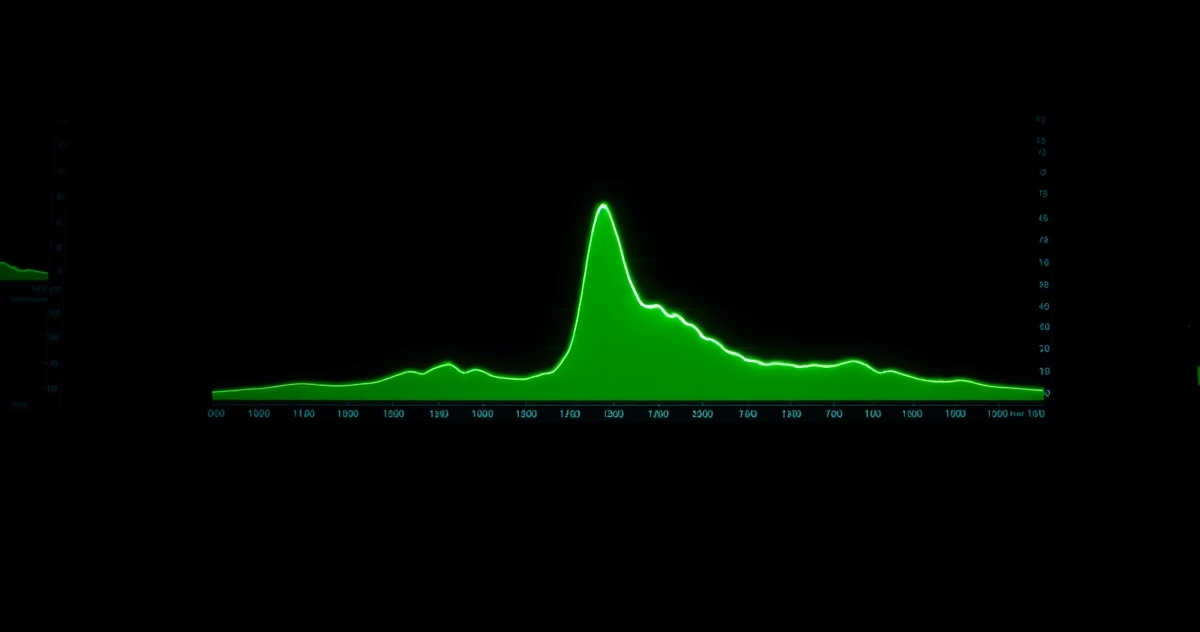
Second, HPLC chromatography showing resolved peaks for each component with individual purity assessments. The chromatogram should demonstrate baseline or near-baseline resolution between component peaks, allowing independent quantification of each peptide. A single broad, unresolved peak for a multi-peptide blend provides no information about individual component purity or ratios.
Third, quantification of each component confirming the labeled amounts. This requires either calibrated HPLC with peptide-specific response factors or an independent quantification method such as amino acid analysis. Simply reporting total peptide content without per-component breakdown is insufficient for a blend.
Fourth, net peptide content (NPC) data for each component used in the blending process. As discussed in our article on how blends are made, NPC accuracy directly determines ratio accuracy in the finished product. A CoA that reports NPC-corrected quantities provides substantially more confidence than one reporting only gross powder weights.
For general guidance on interpreting peptide quality documentation, see our detailed article on certificates of analysis.
HPLC Analysis of Multi-Component Blends
Reversed-phase HPLC is the workhorse analytical method for peptide purity assessment, but its application to blends introduces specific challenges that researchers should understand when evaluating CoA data.[2]
Resolution Between Components
The ability to independently quantify each peptide depends on chromatographic resolution — the degree to which adjacent peaks are separated on the chromatogram. For the Wolverine blend, resolution is generally straightforward because BPC-157 (1,419 Da, moderately hydrophobic) and TB-500 (4,963 Da, with different hydrophobicity) have sufficiently different physicochemical properties to elute at distinct retention times on standard C18 columns.
For the GLOW blend, the three components span a wide molecular weight range (467 to 4,963 Da), which generally aids resolution. GHK-Cu is a small, hydrophilic copper complex that typically elutes early, while BPC-157 and TB-500 elute later under standard gradient conditions. However, the copper ion can interact with silanol groups on the column, potentially causing peak tailing or altered retention for GHK-Cu.
The KLOW blend presents the greatest resolution challenge because KPV (342 Da) and GHK-Cu (467 Da) are both small tripeptides with potentially similar chromatographic behavior. If the HPLC method has not been specifically optimized for this separation, these two peaks may partially or fully co-elute, making independent quantification unreliable. A CoA showing only three peaks for a four-peptide blend is a significant red flag indicating inadequate chromatographic resolution.[2]
Impurity Attribution
In a single-peptide chromatogram, any peak other than the main peptide peak represents an impurity of that specific peptide. In a blend chromatogram, additional peaks could represent impurities from any component, degradation products from peptide-peptide interactions, or even intact components that co-elute with impurities from a different peptide. This ambiguity makes purity assessment inherently less definitive for blends than for individual peptides.[2]
A high-quality blend CoA will address this by providing individual HPLC data for each component peptide before blending (demonstrating pre-blend purity) in addition to the final blend chromatogram. This allows the researcher to compare pre-blend and post-blend chromatograms to identify any new peaks that appeared during the blending and lyophilization process — peaks that would indicate processing-induced degradation.
Mass Spectrometry: The Identity Confirmation
Mass spectrometry provides the definitive identity confirmation for each peptide in a blend. Two common techniques are used: MALDI-TOF (matrix-assisted laser desorption/ionization time-of-flight) and ESI-MS (electrospray ionization mass spectrometry).[1]
MALDI-TOF is well-suited for blend analysis because it can simultaneously detect all components in a mixture from a single sample preparation. A MALDI spectrum of a properly formulated Wolverine blend should show clear molecular ion peaks at approximately 1,419 Da and 4,963 Da. A GLOW blend should show three ions; a KLOW blend should show four. The absence of an expected ion is a definitive indicator that the corresponding peptide is missing or present at very low levels.
ESI-MS, often coupled with HPLC (LC-MS), provides both chromatographic separation and mass identification in a single analysis. This is the most informative approach for blend quality assessment because it allows each HPLC peak to be identified by its mass, resolving the impurity attribution ambiguity described above. If a CoA includes LC-MS data, it provides substantially higher confidence than HPLC and MS data presented separately.
A CoA that provides only HPLC data without any mass spectrometry is a significant red flag for a blend product. Without MS confirmation, there is no definitive evidence that the HPLC peaks correspond to the labeled peptides rather than impurities, degradation products, or incorrect peptides. For detailed information on analytical methods, see our article on HPLC testing for peptides.
The Net Peptide Content Problem
Net peptide content (NPC) is the percentage of actual peptide in a given mass of powder — the remainder being counterions (typically acetate or trifluoroacetate), residual moisture, and residual salts from purification. NPC values for research-grade peptides typically range from 60% to 85%, meaning that 10 mg of "peptide powder" may contain only 6 to 8.5 mg of actual peptide.[1][3]
For individual peptides, NPC affects dosing accuracy but does not affect identity or purity. For blends, NPC is critical because it directly determines whether the component ratios match the label. Consider a Wolverine blend labeled as "10 mg BPC-157 + 10 mg TB-500." If the manufacturer used gross powder weight without NPC correction, and the BPC-157 powder had an NPC of 82% while the TB-500 powder had an NPC of 68%, the actual peptide content would be 8.2 mg BPC-157 and 6.8 mg TB-500 — a 1.2:1 ratio rather than the intended 1:1. For a KLOW blend with four components each potentially having different NPC values, the cumulative ratio error can be substantial.
A manufacturer who reports NPC values for each component and describes using NPC-corrected weights for blending demonstrates a significantly higher level of formulation rigor than one who reports only gross weights. For more on NPC and its implications, see our guide to peptide purity.
Red Flags: Signs of Substandard Quality
Based on the analytical principles above, the following observations should prompt caution or further investigation when evaluating a peptide blend product.
A CoA showing only a single HPLC peak for a multi-peptide blend suggests either that the components are co-eluting (inadequate method) or that only one peptide is actually present. A CoA lacking mass spectrometry data for any component provides no definitive identity confirmation. A CoA reporting only total peptide content without per-component quantification cannot verify that the labeled ratios are accurate. A KLOW blend CoA showing only three chromatographic peaks instead of four suggests that the two tripeptides (KPV and GHK-Cu) are not resolved.
A lyophilized cake that appears collapsed, discolored (yellow or brown), or wet upon receipt suggests improper lyophilization or moisture ingress during storage. A reconstituted solution that is cloudy, contains visible particulates, or shows unexpected color (brown in a copper-containing blend suggests copper reduction) indicates potential degradation. Significant batch-to-batch variation in CoA data — different retention times, different peak shapes, or different purity values between lots — suggests inconsistent manufacturing processes.
Any blend product sold without a CoA should be avoided entirely for research applications where data quality matters.
The Case for Third-Party Testing
Vendor-provided CoAs represent the manufacturer's own quality assessment. For research applications where data integrity is critical — publishable studies, dose-response characterizations, or any experiment where the peptide composition is a key variable — independent third-party testing provides an additional layer of verification that is particularly valuable for blends.[3]
Third-party laboratories can confirm the identity of each component by MS, independently quantify each peptide to verify ratios, assess purity under analytical conditions that may differ from (and complement) the vendor's methods, and detect contaminants or degradation products that the vendor's methods might not resolve. The cost of third-party testing for a blend (typically involving HPLC and MS analysis) is modest relative to the cost of the blend itself and the value of the research it supports.
For researchers who routinely use blends, establishing a relationship with a third-party analytical laboratory and periodically testing representative samples from each vendor provides ongoing quality assurance that complements vendor CoAs. For detailed guidance, see our article on third-party testing for research peptides.
Quality Checklist for Blend Evaluation
The following checklist summarizes the key quality criteria that researchers can apply when evaluating any peptide blend product. Does the CoA include mass spectrometry data confirming the identity of each labeled component? Does the HPLC chromatogram show resolved peaks for each component, with individual purity values reported? Are per-component quantities reported (not just total peptide content)? Was NPC correction applied during the blending process? For GHK-Cu-containing blends, is copper content confirmed? Is pre-blend individual peptide quality data available? Does the lyophilized cake appear uniform, non-collapsed, and properly colored? Does the reconstituted solution appear clear and free of particulates? Is the vendor responsive to requests for additional analytical data or batch records?
No single criterion is sufficient on its own, but a blend product that satisfies all of these criteria provides substantially greater confidence than one that satisfies only a few. Researchers should calibrate their quality requirements to the criticality of their application — routine screening work may tolerate less rigorous documentation, while publishable research demands the highest available quality assurance.
Summary
Evaluating peptide blend quality requires more sophisticated analytical assessment than evaluating individual peptides. Each component must be independently identified, quantified, and assessed for purity within a multi-component mixture — a task complicated by chromatographic resolution challenges, impurity attribution ambiguity, and the NPC-dependent accuracy of component ratios. The analytical challenges scale with blend complexity, making KLOW quality assessment substantially more demanding than Wolverine assessment. A credible blend CoA should include per-component MS identity confirmation, resolved HPLC chromatography with individual purity values, and NPC-corrected component quantities. Red flags include single-peak chromatograms for multi-peptide blends, absent MS data, and visual indicators of degradation. Independent third-party testing provides the highest confidence for critical research applications. Researchers who systematically apply these quality criteria position themselves to distinguish reliable blend products from those that may compromise their research outcomes.