

Introduction: From Amino Acids to Research Peptides
Every research peptide — whether it is a 5-amino-acid fragment used in a binding assay or a 39-amino-acid therapeutic candidate like GLP dual agonist peptide — is manufactured through a chemical process that assembles individual amino acid building blocks into a defined sequence, purifies the product, and delivers it in a stable form suitable for laboratory use. The method that dominates modern peptide production is solid-phase peptide synthesis (SPPS), a technology invented by Robert Bruce Merrifield in 1963 (for which he received the Nobel Prize in Chemistry in 1984) and refined over six decades into the industrial workhorse that now produces therapeutic peptides at multi-ton scale.[1][2]
Understanding how peptides are made is not merely academic for researchers who use them. Synthesis methodology directly determines peptide purity, the types of impurities present, the feasibility of specific modifications, and the cost of production. This guide covers the complete manufacturing pathway from raw materials to finished lyophilized product. For specific subtopics, see our detailed articles on solid-phase peptide synthesis (SPPS), peptide purification methods, custom peptide synthesis, and peptide modifications and conjugates.
The Logic of Solid-Phase Peptide Synthesis
The fundamental insight behind SPPS is elegantly simple: rather than assembling a peptide in solution (where intermediate products must be isolated and purified at each step), the growing peptide chain is anchored to an insoluble solid support (resin), and all reagents, solvents, and byproducts are removed by simple filtration and washing between each step. This eliminates the need for intermediate purification, enables the use of excess reagents to drive reactions to completion, and makes the entire process amenable to automation.[1][2]
Peptides are synthesized from the C-terminus to the N-terminus — the reverse of the biological direction of ribosomal translation. The first amino acid is attached to the resin through a cleavable linker, and subsequent amino acids are added one at a time in a repetitive cycle of deprotection, coupling, and washing until the complete sequence is assembled. Each amino acid added to the chain must have its alpha-amino group temporarily protected (to prevent uncontrolled polymerization) and its reactive side chains permanently protected (to prevent unwanted side reactions during chain assembly). After the sequence is complete, the peptide is cleaved from the resin and all protecting groups are removed simultaneously.[1][2]
The Fmoc/tBu Strategy: Modern SPPS
The Fmoc/tBu (9-fluorenylmethyloxycarbonyl/tert-butyl) protecting group strategy is the dominant method for contemporary peptide synthesis. It has largely replaced the older Boc/Bn (tert-butyloxycarbonyl/benzyl) strategy because it uses milder chemistry, avoids the corrosive hydrogen fluoride required for Boc/Bn final cleavage, and provides orthogonal protecting group removal — meaning the temporary N-alpha protection (Fmoc) and the permanent side-chain protection (tBu-based groups) are removed by completely different chemical mechanisms, allowing independent control over each.[1][2][3]
The Repetitive Cycle
Each amino acid addition in Fmoc SPPS follows a four-step cycle. First, the Fmoc group on the resin-bound amino acid is removed (deprotected) by treatment with a base — typically 20% piperidine in dimethylformamide (DMF). Piperidine abstracts a proton from the fluorenyl ring, triggering beta-elimination that releases the Fmoc group as dibenzofulvene, which piperidine then scavenges to prevent side reactions. Second, the resin is washed extensively with DMF to remove the piperidine and deprotection byproducts. Third, the next Fmoc-protected amino acid is activated and coupled to the free amino group on the resin-bound peptide using coupling reagents. Fourth, the resin is washed again to remove excess amino acid, coupling reagents, and byproducts. This four-step cycle is repeated for each amino acid in the sequence.[1][2]
Coupling Reagents
The coupling step — forming a new amide bond between the incoming amino acid's carboxyl group and the resin-bound peptide's free amino group — requires chemical activation. The carboxyl group of the incoming amino acid must be converted to a more reactive species (an active ester) that will react efficiently with the amine. Modern coupling reagents include HATU (hexafluorophosphate azabenzotriazole tetramethyl uronium), HBTU (hexafluorophosphate benzotriazole tetramethyl uronium), and the combination of DIC (N,N'-diisopropylcarbodiimide) with OxymaPure — each generating highly reactive esters that drive amide bond formation to near-completion. The choice of coupling reagent affects reaction speed, completeness, and the risk of epimerization (racemization at the alpha carbon), which would produce diastereomeric impurities.[2][3]
Side-Chain Protection
Many amino acids have reactive side chains (lysine's amine, cysteine's thiol, serine's hydroxyl, aspartate's carboxyl, histidine's imidazole, and others) that must be protected during chain assembly to prevent unwanted side reactions. In the Fmoc/tBu strategy, these are protected with acid-labile groups: tert-butyl (tBu) for hydroxyl and carboxyl side chains, tert-butyloxycarbonyl (Boc) for amines, trityl (Trt) for cysteine and histidine, and pentamethyldihydrobenzofuransulfonyl (Pbf) for arginine. All of these side-chain protecting groups are stable to the basic conditions used for Fmoc removal but are cleaved simultaneously by the trifluoroacetic acid (TFA) treatment used for final cleavage — the orthogonality that makes the Fmoc/tBu strategy so versatile.[2][3]
Cleavage and Global Deprotection
After the complete sequence has been assembled on the resin, the peptide must be released (cleaved) from the solid support and all side-chain protecting groups must be removed. In Fmoc/tBu chemistry, both operations are accomplished simultaneously by treatment with a cleavage cocktail — typically 95% TFA with scavengers such as triisopropylsilane (TIS), water, and ethanedithiol (EDT). The scavengers are critical: they trap the highly reactive carbocations released during protecting group removal, preventing these species from reattacking the peptide and forming modification artifacts. The choice of scavenger cocktail depends on the specific amino acids in the sequence — cysteine-containing peptides, for example, require thiol scavengers to prevent cation-mediated alkylation of free thiol groups.[1][2]
The cleavage step typically takes 2-3 hours. The TFA solution containing the released peptide is then filtered to remove the spent resin, and the peptide is precipitated by addition to cold diethyl ether. This crude peptide precipitate is collected by centrifugation or filtration and is ready for purification.
Purification: From Crude to Research-Grade
The crude peptide from SPPS contains the desired full-length product along with a variety of impurities: deletion peptides (sequences missing one or more amino acids due to incomplete coupling), truncation peptides (shortened sequences from incomplete deprotection), modification byproducts (side reactions during synthesis or cleavage), and residual protecting group fragments. The purity of the crude product depends on the length and difficulty of the sequence but is typically 50-80% for well-optimized syntheses of moderate-length peptides. For a detailed discussion of purification strategies, see our article on peptide purification methods.[2]
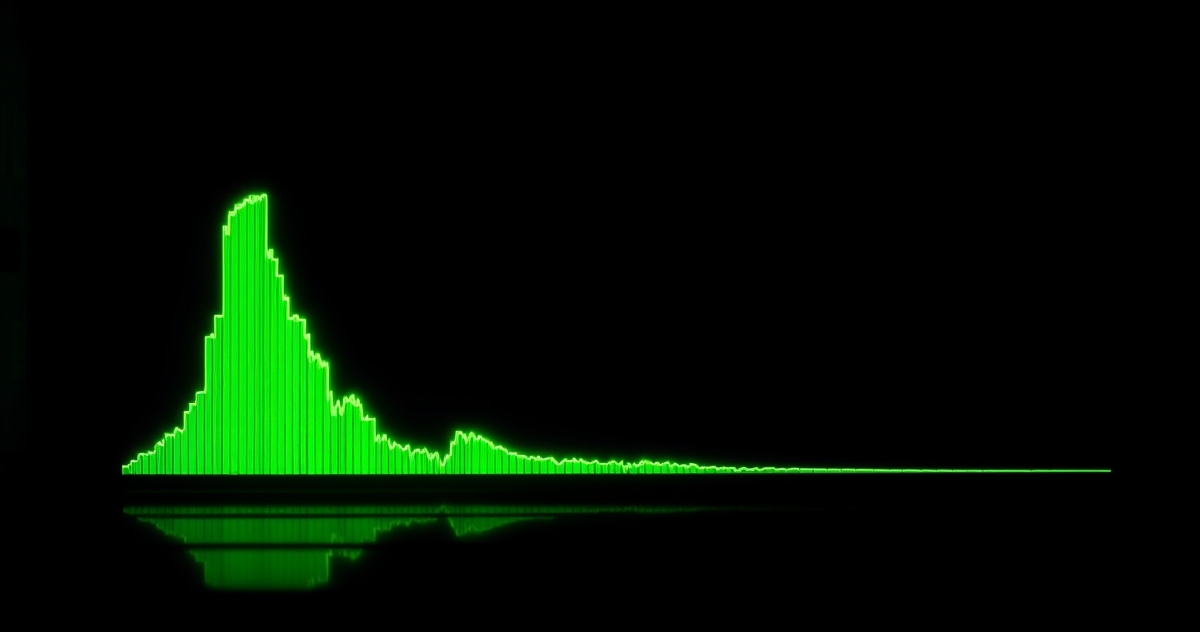
Preparative reverse-phase high-performance liquid chromatography (RP-HPLC) is the standard purification method. The crude peptide is dissolved and loaded onto a C18 or C8 column, and a gradient of increasing organic solvent (typically acetonitrile) in water with a small amount of TFA elutes the components based on hydrophobicity. The target peptide elutes as a defined peak that is collected, while impurities with different retention times are separated. Multiple rounds of preparative HPLC may be needed for high-purity requirements. The purified fractions are pooled and analyzed by analytical HPLC (for purity assessment) and mass spectrometry (for molecular weight confirmation). For detailed discussion of HPLC testing for peptides, see our dedicated article.
Quality Control and Characterization
Before a synthesized peptide is released for use, it undergoes quality control testing. The minimum analytical package for research-grade peptides includes analytical HPLC (purity determination, typically reported as percent area of the main peak), mass spectrometry (molecular weight confirmation — ESI-MS or MALDI-TOF, confirming the observed mass matches the theoretical mass), and visual inspection of the lyophilized product. Higher-grade peptides may also undergo amino acid analysis (quantitative amino acid composition), peptide content determination (measuring the actual peptide mass versus total mass including salts, water, and counterions), endotoxin testing (for in vivo applications), and sterility testing. These analytical results are documented in the Certificate of Analysis (CoA), which should accompany every research peptide purchase. Third-party testing provides an additional layer of quality assurance independent of the manufacturer.[2]
Lyophilization: The Final Step
The purified peptide in aqueous solution is converted to a dry, stable solid through lyophilization (freeze-drying). The solution is frozen rapidly, then placed under vacuum while the temperature is carefully controlled — allowing the ice to sublimate directly to water vapor without passing through a liquid phase. The result is a fluffy white powder or cake that is dramatically more stable than the aqueous solution: chemical degradation pathways (hydrolysis, oxidation, aggregation) are minimized in the absence of bulk water. Lyophilized peptides are sealed under nitrogen or vacuum in glass vials for storage and shipping. For a comprehensive discussion of lyophilized peptide science, see our article on lyophilized peptides.[2]
Special Synthesis Considerations
Disulfide Bond Formation
Peptides containing disulfide bonds — such as AOD-9604 (Cys183-Cys189) and oxytocin — require an additional post-synthesis step to form the intramolecular covalent bond between cysteine residues. During SPPS, cysteine side chains are protected (typically with trityl groups) to prevent premature oxidation. After cleavage and deprotection, the free thiol groups are oxidized under controlled conditions (air oxidation at dilute concentration, or directed oxidation using reagents like DMSO or iodine) to form the desired disulfide bridge. For peptides with multiple disulfide bonds, regioselective protection strategies are required to ensure the correct pairing pattern.[2]
Lipidation
The fatty acid modifications that extend the half-life of modern therapeutic peptides — such as the C-18 fatty diacid chain on GLP-1 agonist peptide and the C-20 unsaturated fatty diacid on GLP dual agonist peptide — are introduced either during SPPS (by coupling a fatty acid building block to a specific lysine side chain on the resin-bound peptide) or post-synthetically (by conjugating the fatty acid to the purified peptide in solution). Lipidation dramatically changes the peptide's pharmacokinetic profile by enabling albumin binding in circulation, extending the half-life from minutes to days or weeks. For more on these modifications, see our article on peptide modifications and conjugates.[3]
Peptide Blends
Research peptide blends — such as the Wolverine Blend (BPC-157 + TB-500) and GLOW Blend — are manufactured by synthesizing each component peptide individually, purifying each to the required purity standard, and then combining them in defined ratios during the final formulation and lyophilization step. The components are not synthesized as a single chimeric molecule; each retains its independent sequence and activity. For detailed information on blend manufacturing, see our article on how peptide blends are made and our guide to evaluating peptide blend quality.
Scale: From Milligrams to Tons
The same fundamental Fmoc SPPS chemistry operates across a remarkable range of scale. Research-grade synthesis typically produces milligrams to grams of peptide using automated benchtop synthesizers. Clinical supply manufacturing produces kilograms using large-scale automated systems. Commercial pharmaceutical manufacturing of peptides like GLP-1 agonist peptide and GLP dual agonist peptide operates at multi-ton annual scale using industrial SPPS reactors with batch sizes measured in hundreds of liters. Recent innovations — including wash-free SPPS protocols that reduce solvent waste by up to 95%, microwave-assisted synthesis that accelerates coupling and deprotection kinetics, and continuous-flow SPPS that improves efficiency for long sequences — are driving down manufacturing costs and improving sustainability at all scales.[3][4]
The scalability of SPPS is one reason why peptide therapeutics have become commercially viable at unprecedented volumes. The production challenges that created supply shortages for injectable GLP-1 agonist peptide and GLP dual agonist peptide were primarily related to the massive demand surge rather than inherent manufacturing limitations — the chemistry itself scales effectively. In contrast, small-molecule oral GLP-1 agonists like orforglipron (discussed in our article on oral vs injectable GLP-1 agonists) use conventional organic chemistry synthesis, which may offer cost advantages at the largest commercial scales.
What Determines Peptide Cost?
The cost of a synthetic peptide is driven by sequence length (longer peptides require more coupling cycles, more reagents, and accumulate more impurities that reduce yield), amino acid composition (unusual or modified amino acids are more expensive as building blocks), modifications (disulfide bonds, lipidation, PEGylation, and other post-synthetic modifications add processing steps), purity requirements (higher purity demands more extensive HPLC purification, reducing final yield), and scale (larger batches are more cost-efficient per milligram). A standard 10-amino-acid peptide at 95% purity might cost a few hundred dollars for research quantities, while a 40-amino-acid peptide with modifications at 99% purity could cost thousands. For researchers planning studies, understanding these cost drivers enables informed decisions about custom peptide synthesis specifications.
Summary
Research peptides are manufactured through solid-phase peptide synthesis (SPPS) using the Fmoc/tBu protecting group strategy — an iterative process of deprotection, coupling, and washing that assembles amino acids one at a time on an insoluble resin support. The crude product is purified by preparative HPLC, characterized by analytical HPLC and mass spectrometry, and lyophilized into the stable powder form used in laboratories worldwide. The same fundamental chemistry scales from milligram research quantities to multi-ton pharmaceutical production. Understanding this manufacturing pathway helps researchers interpret purity data, evaluate supplier quality, design experiments with appropriate peptide specifications, and appreciate why modifications like lipidation and disulfide bond formation add complexity and cost to the final product.